We report a measurement of the exclusive B+ meson decay to the D-s(()*K-)(+)pi(+) final state using 657 x 10(6) B (B) over bar pairs collected at the gamma(4S) resonance with the Belle detector at the KEKB asymmetric-energy e(+)e(-) collider. We use D-s* -> D-s(-) -> phi pi(-), (K) over bar*(892)K-0(-) and (KSK-)-K-0 decay modes for D-s(()*()) reconstruction and measure the following branching fractions: B(B+ -> Ds-K+pi(+)) = (1.71(-0.07)(+0.08)(stat)(-0.20)(+0.20)(syst) +/- 0.15(B-int)) x 10(-4) and B(B+ -> D-s*K--(+)pi(+)) = (1.31(-0.12)(+0.13)(stat)(-0.25)(+0.25)(syst) +/- 0.12(B-int)) x 10(-4). The uncertainties are due to statistics, experimental systematic errors, and uncertainties of intermediate branching fractions, respectively.
Using the CLEO II detector operating at the CESR ee collider, we have measured the structure functions in the decay τ → πππντ , based on a sample corresponding to 4 × 10 produced τ -pair events. We determine the integrated structure functions, which depend only on the three pion invariant mass, as well as the structure functions differential in the Dalitz plot. We extract model independent limits on non-axial-vector contributions from the measured structure functions as less than 16.6% of the total branching fraction, at the 95% confidence level. Separating the non-axial-vector contributions into scalar and vector contributions, we measure that scalars (vectors) contribute with less than 9.4% (7.3%) to the total branching ratio, at the 95% confidence level. PACS numbers: 13.25.Jx, 13.35.Dx, 14.40.Cs, 14.60.Fg Typeset using REVTEX
We report new measurements of the differential and total branching ratios for inclusive B decay to D, D and D and the first measurement of the same quantities for inclusive B decay to D. Here B is the mixture of Bd and Bu from Υ(4S) decay. Furthermore, since more than one charm particle (or antiparticle) of the same kind can be produced in B decay, here “inclusive B branching ratio” is used to mean the average number of charm particles and their antiparticles of a certain species produced in B decay. We obtain the following results (the first error is statistical, the second systematic of this analysis, the third is propagated from other measurements): B(B → DX) = (0.636 ± 0.014 ± 0.019 ± 0.018),B(B → DX) = (0.235 ± 0.009 ± 0.009 ± 0.024),B(B → DX) = (0.247 ± 0.012 ± 0.018 ± 0.018),B(B → DX) = (0.239 ± 0.011 ± 0.014 ± 0.009). The following ratio of branching ratios is not affected by most of the systematic errors: B(B → DX)/B(B → DX) = (1.03±0.07±0.09±0.08). We also report the first measurement of the momentumdependent D polarization and a new measurement of the D polarization in inclusive B decay. Using these measurements and other CLEO results and making some additional assumptions, we calculate the average number of c and c̄ quarks produced in B decay to be 〈nc〉 = 1.10 ± 0.05.
We describe a measurement of B−B0 mixing parameters exploiting a method of partial reconstruction of the decay chains B → Dπ and B → Dρ. Using 9.6 ×10BB pairs collected at the Cornell Electron Storage Ring, we find χd = 0.198 ± 0.013 ± 0.014, |yd| < 0.41 at 95% confidence level, and |Re(ǫB)| < 0.034 at 95% confidence level.
Using ee annihilation data collected by the CLEO II detector at CESR, we have observed the decay D s → ωπ. This final state may be produced through the annihilation decay of the D s , or through final state interactions. We find a branching ratio of Γ(D s → ωπ)/Γ(D s → ηπ) = 0.16 ± 0.04 ± 0.03, where the first error is statistical and the second is systematic. PACS numbers: 13.25.Ft, 14.40.Lb
We report the first observation of B → ηX transitions with high momentum η mesons. We observe 39.0 ± 11.6 B decay events with 2.0 < pη′ < 2.7 GeV/c, the high momentum region where background from b → c processes is suppressed. We discuss the physical interpretation of the signal, including the possibility that it is due to b → sg transitions. Given that interpretation, we find B(B → ηXs) = (6.2 ± 1.6(stat) ± 1.3(sys) +0.0 −1.5(bkg)) × 10 −4 for 2.0 < pη′ < 2.7 GeV/c. Typeset using REVTEX
We report on a study of exclusive radiative decays of the Υ(1S) resonance collected with the CLEO II detector operating at CESR. We present the first observation of the radiative decays Υ(1S)→ γππ and Υ(1S)→ γππ. For the dipion mass regime mππ >1.0 GeV we obtain B(Υ(1S)→ γπ π)=(6.3 ± 1.2±1.3)×10 and B(Υ(1S)→ γππ)=(1.7±0.6±0.3)×10 . The observed γππ events are consistent with the hypothesis Υ(1S)→ γf2(1270). Typeset using REVTEX
Using a sample of 4.7 fb−1 integrated luminosity accumulated with the CLEO II detector at the Cornell Electron Storage Ring (CESR), we investigate the mass spectrum and resonant structure in τ → Kππντ decays. We measure the relative fractions of K1(1270) and K1(1400) resonances in these decays, as well as the K1 masses and widths. Our fitted K1 resonances are somewhat broader than previous hadroproduction measurements, and in agreement with recent LEP results from tau decay. The larger central value of our measured width supports models which attribute the small τ → Kππντ branching fraction to larger K1 widths than are presently tabulated. We also determine the Ka − Kb mixing angle θK . PACS numbers: 13.10+q, 13.35.Dx, 14.40.Aq
We report new measurements of the diierential and total branching ratios for inclusive B decay to D 0 , D + and D + and the rst measurement of the same quantities for inclusive B decay to D 0. Here B is the mixture of B d and Bu from (4S) decay. Furthermore, since more than one charm particle (or antiparticle) of the same kind can be produced in B decay, here \inclusive B branching ratio" is used to mean the average number of charm particles and their antiparticles of a certain species produced in B decay. We obtain the following results (the rst error is statistical, the second systematic of this analysis, the third is propagated from other measurements): B(B ! D 0): We also report the rst measurement of the momentum-dependent D 0 polarization and a new measurement of the D + polarization in inclusive B decay. Using these measurements and other CLEO results and making some additional assumptions, we calculate the average number of c and c quarks produced in B decay to be
Based on an a high statistics e + e ? ! cc data sample, we report on the inclusive rate for charmed baryons to decay into particles using charm-event tagging. We select e + e ? ! cc events which have a clear anti-charm tag and measure the content in the hemisphere opposite the tag (charge conjugate modes are implicit). This allows us to determine the product branching fraction: B = B(c ! c X) B((c ! X), where c represents a sum over all charmed baryons produced in e + e ? fragmentation at p s=10.5 GeV, given our speciic tags. We obtain B = (1.87 0.03 0.33)%.
Using the CLEO II detector operating at the CESR e + e ? collider, we have measured the structure functions in the decay ! 0 0 , based on a sample corresponding to 4 10 6 produced-pair events. We determine the integrated structure functions, which depend only on the three pion invariant mass, as well as the structure functions diierential in the Dalitz plot. We extract model independent limits on non-axial-vector contributions from the measured structure functions as less than 16:6% of the total branching fraction, at the 95% conndence level. Separating the non-axial-vector contributions into scalar and vector contributions, we measure that scalars (vectors) contribute with less than 9:4% (7:3%) to the total branching ratio, at the 95% conndence level.
Using data taken with the CLEO II detector, we have studied the decays (0:074 0:010 0:015)% where the rst errors are statistical and the second errors are the estimate of our systematic uncertainty. We also present a new upper limit B(D 0 ! K 0 S K 0 S 0) < 0:059% at the 90% conndence level and the rst measurement of B(D 0 ! K + K ? 0) = (0:14 0:04)%.
Using data collected with the CLEO II detector at the Cornell Electron Storage Ring, we have studied the decays of tau leptons produced through e + e ? annihilation into nal states containing K 0 S mesons, observed through their decays to + ?. We present branching fractions for decays to ve nal S h ? , where K 0 h ? denotes the sum of the processes involving K 0 ? and K 0 K ? particle combinations. Substructure and mass spectra in these nal states are also addressed.
We have observed a signal for the decay D∗+ → D+γ at a significance of 4 standard deviations. From the measured branching ratio B(D∗+ → D+γ)/B(D∗+ → D+π0) = 0.055 ± 0.014 ± 0.010 we find B(D∗+ → D+γ) = 0.017 ± 0.004 ± 0.003, where the first uncertainty is statistical and the second is systematic. We also report the highest precision measurements of the remaining D∗+ branching fractions. PACS numbers: 13.20.Fc, 13.40.Hq, 14,40.Lb, 12.39.Fe SLAC-PUB-9758 hep-ex/9711011 Stanford Linear Accelerator Center, Stanford University, Stanford, CA 94309 Work supported in part by the U.S. Department of Energy contract DE-AC03-76SF00515 J. Bartelt, S. E. Csorna, V. Jain, K. W. McLean, S. Marka, R. Godang, K. Kinoshita, I. C. Lai, P. Pomianowski, S. Schrenk, G. Bonvicini, D. Cinabro, R. Greene, L. P. Perera, G. J. Zhou, B. Barish, M. Chadha, S. Chan, G. Eigen, J. S. Miller, C. O’Grady, M. Schmidtler, J. Urheim, A. J. Weinstein, F. Würthwein, D. W. Bliss, G. Masek, H. P. Paar, S. Prell, V. Sharma, D. M. Asner, J. Gronberg, T. S. Hill, D. J. Lange, R. J. Morrison, H. N. Nelson, T. K. Nelson, J. D. Richman, D. Roberts, A. Ryd, M. S. Witherell, R. Balest, B. H. Behrens, W. T. Ford, H. Park, J. Roy, J. G. Smith, J. P. Alexander, C. Bebek, B. E. Berger, K. Berkelman, K. Bloom, V. Boisvert, D. G. Cassel, H. A. Cho, D. S. Crowcroft, M. Dickson, S. von Dombrowski, P. S. Drell, K. M. Ecklund, R. Ehrlich, A. D. Foland, P. Gaidarev, L. Gibbons, B. Gittelman, S. W. Gray, D. L. Hartill, B. K. Heltsley, P. I. Hopman, J. Kandaswamy, P. C. Kim, D. L. Kreinick, T. Lee, Y. Liu, N. B. Mistry, C. R. Ng, E. Nordberg, M. Ogg, J. R. Patterson, D. Peterson, D. Riley, A. Soffer, B. Valant-Spaight, C. Ward, M. Athanas, P. Avery, C. D. Jones, M. Lohner, C. Prescott, J. Yelton, J. Zheng, G. Brandenburg, R. A. Briere, A. Ershov, Y. S. Gao, D. Y.-J. Kim, R. Wilson, H. Yamamoto, T. E. Browder, Y. Li, J. L. Rodriguez, T. Bergfeld, B. I. Eisenstein, J. Ernst, G. E. Gladding, G. D. Gollin, R. M. Hans, E. Johnson, I. Karliner, M. A. Marsh, M. Palmer, M. Selen, J. J. Thaler, K. W. Edwards, A. Bellerive, R. Janicek, D. B. MacFarlane, P. M. Patel, A. J. Sadoff, R. Ammar, P. Baringer, A. Bean, D. Besson, D. Coppage, C. Darling, R. Davis, S. Kotov, I. Kravchenko, N. Kwak, L. Zhou, S. Anderson, Y. Kubota, S. J. Lee, J. J. O’Neill, S. Patton, R. Poling, T. Riehle, A. Smith, M. S. Alam, S. B. Athar, Z. Ling, A. H. Mahmood, H. Severini, S. Timm, F. Wappler, A. Anastassov, J. E. Duboscq, D. Fujino, K. K. Gan, T. Hart, K. Honscheid, H. Kagan, R. Kass, J. Lee, M. B. Spencer, M. Sung, A. Undrus, R. Wanke, A. Wolf, M. M. Zoeller, B. Nemati, S. J. Richichi, W. R. Ross, P. Skubic, M. Bishai, J. Fast, J. W. Hinson, N. Menon, D. H. Miller, E. I. Shibata, I. P. J. Shipsey, M. Yurko, S. Glenn, S. D. Johnson, Y. Kwon, S. Roberts, E. H. Thorndike, C. P. Jessop, K. Lingel, H. Marsiske, M. L. Perl, V. Savinov, D. Ugolini, R. Wang, X. Zhou, T. E. Coan, V. Fadeyev, I. Korolkov, Y. Maravin, I. Narsky, V. Shelkov, J. Staeck, R. Stroynowski, I. Volobouev, J. Ye, M. Artuso, F. Azfar, A. Efimov, M. Goldberg, D. He, S. Kopp, G. C. Moneti, R. Mountain, S. Schuh, T. Skwarnicki, S. Stone, G. Viehhauser, and X. Xing Permanent address: Brookhaven National Laboratory, Upton, NY 11973. Permanent address: University of Texas, Austin TX 78712. Permanent address: Lawrence Livermore National Laboratory, Livermore, CA 94551. Permanent address: BINP, RU-630090 Novosibirsk, Russia. Permanent address: Yonsei University, Seoul 120-749, Korea.
 B. Eisenstein合作论文数259R. Ammar合作论文数233
 Alice L. Bean合作论文数Department of Physics & Astronomy, College of Liberal Arts & Sciences, University of Kansas231
 David Cinabro合作论文数College of Liberal Arts and Sciences, Wayne State University;U.S. Department of Energy228
 David G. Cassel合作论文数Department of Physics, College of Arts & Sciences, Cornell University227
 Marina Artuso合作论文数Department of Physics, College of Art and Sciences, Syracuse University227
 A. Mahmood合作论文数University at Albany227M. Selen合作论文数227
 Klaus Honscheid合作论文数Department of Physics, College of Arts and Sciences, The Ohio State University226
 Ron Poling合作论文数School of Physics and Astronomy, College of Science and Engineering, University of Minnesota226Dl Hartill合作论文数225d riley合作论文数225
 Jean Etienne Duboscq合作论文数Cornell University224J. Hinson合作论文数224E. Nordberg合作论文数223Rj Morrison合作论文数222
 Persis Drell合作论文数Physics Department, School of Humanities and Sciences, Stanford University;School of Engineering, Stanford University222Dl Kreinick合作论文数221K. Mclean合作论文数220Ei Shibata合作论文数218
 Horst Severini合作论文数Homer L. Dodge Department of Physics and Astronomy, Dodge Family College of Arts and Sciences, The University of Oklahoma;Oklahoma Center for High Energy Physics218S. Kopp合作论文数218M. S. Alam合作论文数215Kw Edwards合作论文数214Bk Heltsley合作论文数214Hp Paar合作论文数213T. Bergfeld Et Al合作论文数213
 Roy A. Briere合作论文数Department of Physics, Mellon College of Science, Carnegie Mellon University211
 Ralf Ehrlich合作论文数AGR211B. E. Berger合作论文数Inst Phys & Math Universe, Univ Tokyo209Nb Mistry合作论文数208M. Marsh合作论文数207S. Timm合作论文数207S. W. Gray合作论文数206
 T. E. Coan合作论文数206
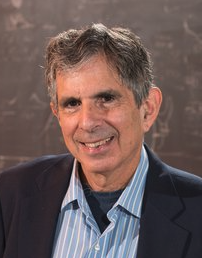 Sheldon Stone合作论文数Department of Physics, College of Arts and Sciences, Syracuse University206
 K. K. Gan合作论文数Department of Physics, College of Arts and Sciences, The Ohio State University205Gd Gollin合作论文数202S. J. Richichi合作论文数202
 David Asner合作论文数202Patrick L. Skubic合作论文数201A. Sadoff合作论文数200A. Wolf合作论文数197C. Bebek合作论文数196Mm Zoeller合作论文数196S. Athar合作论文数196R. Hans合作论文数195Jon Urheim合作论文数194D. Peterson合作论文数193




