We study the processes e+e- -> K+K-a degrees a degrees a degrees y, K degrees SK +/- a -/+ a degrees a degrees y, and K degrees SK +/- a -/+ a+a-y in which an energetic photon is radiated from the initial state. The data were collected with the BABAR detector at the SLAC National Accelerator Laboratory. About 1200, 2600, and 6000 events, respectively, are selected from a data sample corresponding to an integrated luminosity of 469 fb-1. The invariant mass of the hadronic final state defines the effective e+e- center-of-mass energy. The center-of-mass energies range from threshold to 4.5 GeV. From the mass spectra, the first ever measurements of the e+e- -> K+K-a degrees a degrees a degrees, e+e- -> K degrees SK +/- a -/+ a degrees a degrees, and e+e- -> K degrees SK +/- a -/+ a+a- cross sections are performed. The contributions from the intermediate states that include eta, phi, rho, K*(892), and other resonances are presented. We observe the J=psi and psi(2S) in most of these final states and measure the corresponding branching fractions, many of them for the first time.
A new mechanism has been proposed to simultaneously explain the presence of dark matter and the matter-antimatter asymmetry in the universe. This scenario predicts exotic $B$ meson decays into a baryon and a dark sector anti-baryon ($\psi_D$) with branching fractions accessible at $B$ factories. We present a search for $B \rightarrow \Lambda \psi_D$ decays using data collected by the $BABAR$ experiment at SLAC. This reaction is identified by fully reconstructing the accompanying $B$ meson and requiring the presence of a single $\Lambda$ baryon in the remaining particles. No significant signal is observed, and bounds on the $B \rightarrow \Lambda \psi_D$ branching fraction are derived in the range $0.13 - 5.2\times 10^{-5}$ for $1.0 < m_{\psi_D} < 4.2$ GeV/$c^{2}$. These results set strong constraints on the parameter space allowed by the theory.
We study the processes ${e}^{+}{e}^{\ensuremath{-}}\ensuremath{\rightarrow}{K}^{+}{K}^{\ensuremath{-}}{\ensuremath{\pi}}^{0}{\ensuremath{\pi}}^{0}{\ensuremath{\pi}}^{0}\ensuremath{\gamma}$, ${K}_{S}^{0}{K}^{\ifmmode\pm\else\textpm\fi{}}{\ensuremath{\pi}}^{\ensuremath{\mp}}{\ensuremath{\pi}}^{0}{\ensuremath{\pi}}^{0}\ensuremath{\gamma}$, and ${K}_{S}^{0}{K}^{\ifmmode\pm\else\textpm\fi{}}{\ensuremath{\pi}}^{\ensuremath{\mp}}{\ensuremath{\pi}}^{+}{\ensuremath{\pi}}^{\ensuremath{-}}\ensuremath{\gamma}$ in which an energetic photon is radiated from the initial state. The data were collected with the BABAR detector at the SLAC National Accelerator Laboratory. About 1200, 2600, and 6000 events, respectively, are selected from a data sample corresponding to an integrated luminosity of $469\text{ }\text{ }{\mathrm{fb}}^{\ensuremath{-}1}$. The invariant mass of the hadronic final state defines the effective ${e}^{+}{e}^{\ensuremath{-}}$ center-of-mass energy. The center-of-mass energies range from threshold to 4.5 GeV. From the mass spectra, the first ever measurements of the ${e}^{+}{e}^{\ensuremath{-}}\ensuremath{\rightarrow}{K}^{+}{K}^{\ensuremath{-}}{\ensuremath{\pi}}^{0}{\ensuremath{\pi}}^{0}{\ensuremath{\pi}}^{0}$, ${e}^{+}{e}^{\ensuremath{-}}\ensuremath{\rightarrow}{K}_{S}^{0}{K}^{\ifmmode\pm\else\textpm\fi{}}{\ensuremath{\pi}}^{\ensuremath{\mp}}{\ensuremath{\pi}}^{0}{\ensuremath{\pi}}^{0}$, and ${e}^{+}{e}^{\ensuremath{-}}\ensuremath{\rightarrow}{K}_{S}^{0}{K}^{\ifmmode\pm\else\textpm\fi{}}{\ensuremath{\pi}}^{\ensuremath{\mp}}{\ensuremath{\pi}}^{+}{\ensuremath{\pi}}^{\ensuremath{-}}$ cross sections are performed. The contributions from the intermediate states that include $\ensuremath{\eta}$, $\ensuremath{\phi}$, $\ensuremath{\rho}$, ${K}^{*}(892)$, and other resonances are presented. We observe the $J/\ensuremath{\psi}$ and $\ensuremath{\psi}(2S)$ in most of these final states and measure the corresponding branching fractions, many of them for the first time.
Using the entire BaBar Υ(4S) data set, the first two-dimensional unbinned angular analysis of the semileptonic decay B→ D ℓ^- ν_ℓ is performed, employing hadronic reconstruction of the tag-side B meson from Υ(4S)→ BB. Here, ℓ denotes the light charged leptons e and μ. A novel data-driven signal-background separation procedure with minimal dependence on simulation is developed. This procedure preserves all multi-dimensional correlations present in the data. The expected sin^2θ_ℓ dependence of the differential decay rate in the Standard Model is demonstrated, where θ_ℓ is the lepton helicity angle. Including input from the latest lattice QCD calculations and previously available experimental data, the underlying form factors are extracted using both model-independent (BGL) and dependent (CLN) methods. Comparisons with lattice calculations show flavor SU(3) symmetry to be a good approximation in the B_(s)→ D_(s) sector. Using the BGL results, the CKM matrix element |V_cb|=(41.09± 1.16)× 10^-3 and the Standard Model prediction of the lepton-flavor universality violation variable ℛ(D)=0.300± 0.004, are extracted. The value of |V_cb| from B→ D ℓ^- ν_ℓ tends to be higher than that extracted using B→ D ℓ^- ν_ℓ. The Standard Model ℛ(D) calculation is at a 1.97σ tension with the latest HFLAV experimental average.
A dedicated measurement of additional radiation in e+e- -> mu+mu- gamma and e+e- -> pi+ pi- gamma initial-state radiation events is presented using the full BABAR data sample. For the first time results are presented at next -to-and next-to-next-to-leading order, with one and two additional photons, respectively, for radiation from the initial and final states. Comparison with predictions from PHOKHARA and AFKQED Monte Carlo generators is performed, revealing discrepancies in the one-photon rates and angular distributions for the former. This disagreement has a negligible effect on the BABAR measurement of the e+e- -> pi+ pi-(gamma) cross section, but could affect other measurements significantly. This study sheds a new light on the longstanding discrepancy in this channel that affects the theoretical prediction of hadronic vacuum polarization contributions to the muon magnetic moment anomaly.
A new dark sector antibaryon, denoted ψ_{D}, could be produced in decays of B mesons. This Letter presents a search for B^{+}→ψ_{D}+p (and the charge conjugate) decays in e^{+}e^{-} annihilations at 10.58 GeV, using data collected in the BABAR experiment. Data corresponding to an integrated luminosity of 398 fb^{-1} are analyzed. No evidence for a signal is observed. Branching fraction upper limits in the range from 10^{-7}-10^{-5} are obtained at 90% confidence level for masses of 1.0<m_{ψ_{D}}<4.3 GeV/c^{2}. The result is also reinterpreted to provide the first limits on a supersymmetric model with R-parity violation and a light neutralino.
We report on the first search for electron-muon lepton flavor violation (LFV) in the decay of a b quark and b antiquark bound state. We look for the LFV decay ϒ(3S)→e^{±}μ^{∓} in a sample of 118 million ϒ(3S) mesons from 27 fb^{-1} of data collected with the BABAR detector at the SLAC PEP-II e^{+}e^{-} collider operating with a 10.36 GeV center-of-mass energy. No evidence for a signal is found, and we set a limit on the branching fraction B[ϒ(3S)→e^{±}μ^{∓}]<3.6×10^{-7} at 90% C. L. This result can be interpreted as a limit Λ_{NP}/g_{NP}^{2}>80 TeV on the energy scale Λ_{NP} divided by the coupling-squared g_{NP}^{2} of relevant new physics (NP).
Kinetic energy (KE) of intracardiac blood flow reflects myocardial work spent on accelerating blood and provides a mechanistic window into diastolic filling dynamics. Diastolic dysfunction may represent an early stage in the development of heart failure (HF). Here we evaluated the hemodynamic effects of impaired diastolic function in subjects with and without HF, testing the hypothesis that left ventricular KE differs between controls, subjects with subclinical diastolic dysfunction (SDD), and patients with HF. We studied 77 subjects [16 controls, 20 subjects with SDD, 16 heart failure with preserved ejection fraction (HFpEF), 9 heart failure with mildly reduced ejection fraction (HFmrEF), and 16 heart failure with reduced ejection fraction (HFrEF) patients, age- and sex-matched at the group level]. Cardiac magnetic resonance at 1.5 T included intracardiac four-dimensional (4-D) flow and cine imaging. Left ventricular KE was calculated as 0.5 × m × v2. Systolic KE was similar between groups (P > 0.4), also after indexing to stroke volume (P = 0.25), and was primarily driven by ventricular emptying rate (P < 0.0001, R2 = 0.52). Diastolic KE was higher in patients with heart failure than in controls (P < 0.05) but similar between SDD and HFpEF (P > 0.18), correlating with inflow conditions (E-wave velocity, P < 0.0001, R2 = 0.24) and end-diastolic volume (P = 0.0003, R2 = 0.17) but not with average e' (P = 0.07). Diastolic KE differs between controls and heart failure, suggesting more work is spent filling the failing ventricle, whereas systolic KE does not differentiate between well-matched groups with normal ejection fractions even in the presence of relaxation abnormalities and heart failure. Mechanistically, KE reflects the acceleration imparted on the blood and is driven by variations in ventricular emptying and filling rates, volumes, and heart rate, regardless of underlying pathology.NEW & NOTEWORTHY Here we present the first study of left ventricular kinetic energy in individuals with subclinical diastolic dysfunction and in heart failure patients with preserved or impaired systolic function. Kinetic energy differs between groups in diastole, and reflects altered filling and emptying processes. Kinetic energy analysis should be considered in studies seeking to characterize myocardial energetics comprehensively.
Abstract Background Interatrial block (IAB) on electrocardiography (ECG) and reduced P wave voltage reflect atrial abnormalities which may contribute to development of atrial fibrillation (AF). Purpose We aimed to assess the value of a recently proposed ECG risk score that combines the morphology, voltage and length of the P wave (MVP score) for prediction of incident AF in a prospective population-based setting. Material and methods The study population is based on the large, prospective Malmö Preventative Project (MPP) cohort. We included subjects without a history of AF, with a readable ECG in sinus rhythm and an echocardiography performed in 2002–2006 (n=983, mean age 70±5 years, 38% females). Median follow-up was 4.2 (IQR 3.7–4.8) years. ECGs were digitally processed using the Glasgow algorithm. Advanced IAB (aIAB) was defined as a P-wave ≥120 ms and biphasic morphology (+/−) in inferior leads, partial IAB (pIAB) as P-wave ≥120 ms and a monophasic positive morphoology in inferior leads. MVP score was calculated based on the P-wave morphology in inferior leads, voltage in lead 1, and P-wave duration (Table 1).Incident AF events (n=66, 7%) were obtained from the Swedish Hospital Discharge Register and Cause of Death Register. Cox regression analysis and Kaplan Meier curve analysis were used to study the association of echocardiographic and P-wave characteristics with the risk of new onset AF. Results At baseline the mean MVP score was 1±1, none of the subjects had MVP score above 4. MVP score correlated with left atrial (LA) area: Pearson r=0.192, p<0.001. After adjustment for age, gender and LA enlargement expressed as LA area >20 cm2, new onset AF was associated with MVP score 4 (HR 6.17, 95% CI 1.76–21.64 compared to those with MVP score <4, Figure 1). Neither aIAB (univariate HR 1.93 CI 95% 0.82–4.56), nor pIAB (univariate HR 1.16 CI 95% 0.52–2.55) predicted incident AF. Conclusion In a population-based elderly epidemiological cohort, the ECG-based MVP score was significantly associated with incident AF, independently of LA enlargement. Funding Acknowledgement Type of funding sources: Private grant(s) and/or Sponsorship. Main funding source(s): The Swedish Heart-Lung Foundation
Axionlike particles (ALPs) are predicted in many extensions of the standard model, and their masses can naturally be well below the electroweak scale. In the presence of couplings to electroweak bosons, these particles could be emitted in flavor-changing B meson decays. We report herein a search for an ALP, a, in the reaction B^{±}→K^{±}a, a→γγ using data collected by the BABAR experiment at SLAC. No significant signal is observed, and 90% confidence level upper limits on the ALP coupling to electroweak bosons are derived as a function of ALP mass, improving current constraints by several orders of magnitude in the range 0.175 GeV<m_{a}<4.78 GeV.
Collider searches for dark sectors, new particles interacting only feebly with ordinary matter, have largely focused on identifying signatures of new mediators, leaving much of dark sector structures unexplored. In particular, the existence of dark matter bound states (darkonia) remains to be investigated. This possibility could arise in a simple model in which a dark photon (A^{'}) is light enough to generate an attractive force between dark fermions. We report herein a search for a J^{PC}=1^{--} darkonium state, the ϒ_{D}, produced in the reaction e^{+}e^{-}→γϒ_{D}, ϒ_{D}→A^{'}A^{'}A^{'}, where the dark photons subsequently decay into pairs of leptons or pions, using 514 fb^{-1} of data collected with the BABAR detector. No significant signal is observed, and we set bounds on the γ-A^{'} kinetic mixing as a function of the dark sector coupling constant for 0.001<m_{A^{'}}<3.16 GeV and 0.05<m_{ϒ_{D}}<9.5 GeV.
We study the processes e(+)e(-) -> pi+ pi-pi(0)pi(0)pi(0)pi(0)gamma and pi(+) pi(-) pi(0)pi(0)pi eta gamma in which an energetic photon is radiated from the initial state. The data were collected with the BABAR detector at the SLAC National Accelerator Laboratory. About 7300 and 870 events, respectively, are selected from a data sample corresponding to an integrated luminosity of 469 fb(-1). The invariant mass of the hadronic final state defines the effective e(+)e(-) center-of-mass energy. The center-of-mass energies range from threshold to 4.5 GeV. From the mass spectra, the first ever measurements of the e(+)e(-) -> pi(+)pi(-) pi(0)pi(0)pi(0)pi(0) and the e(+)e(-) -> pi(+)pi(-) pi(0)pi(0)pi(0)eta cross sections are performed. The contributions from omega pi(0)pi(0)pi(0), eta pi(+)pi(-)pi(0), omega eta, and other intermediate states are presented. We observe the J=psi and psi(2S) in most of these final states and measure the corresponding branching fractions, many of them for the first time.
We study the processes e(+)e(-) -> 2(pi(+)pi(-))pi(0)pi(0)pi(0)gamma and 2(pi(+)pi(-))pi(0)pi(0)eta gamma in which an energetic photon is radiated from the initial state. The data were collected with the BABAR detector at SLAC. About 14 000 and 4700 events, respectively, are selected from a data sample corresponding to an integrated luminosity of 469 fb(-1). The invariant mass of the hadronic final state defines the effective e(+)e(-) center-of-mass energy. The center-of-mass energies range from threshold to 4.5 GeV. From the mass spectra, the first ever measurements of the e(+)e(-) -> 2(pi(+)pi(-))pi(0)pi(0)pi(0) and the e(+)e(-) -> 2(pi(+)pi(-))pi(0)pi(0)eta cross sections are performed. The contributions from omega pi(+)pi(-)pi(0)pi(0), eta 2(pi(+)pi(-)), and other intermediate states are presented. We observe the J/psi and psi(2S) in most of these final states and measure the corresponding branching fractions, many of them for the first time.
Abstract Background Hemodynamic force analysis has been proposed as a noninvasive marker of cardiac function. In a recent study, longitudinal (apical-to-basal) hemodynamic forces were derived from anatomical MRI images and found decreased in heart failure with preserved ejection fraction (HFpEF) patients compared to controls, indicating a potential use for prognostication and testing of therapeutic response. This issue has not been investigated using the reference method of measurement. Purpose To investigate whether intraventricular hemodynamic forces computed using gold-standard cardiac magnetic resonance flow maps can reproducibly differentiate between healthy controls and HFpEF patients. Methods 4D flow data were acquired in 59 subjects through cardiac magnetic resonance imaging using a 1.5T scanner (Siemens Healthcare, Erlangen, Germany). Hemodynamic forces within the LV were computed across the cardiac cycle using the Navier-Stokes equation to find the global pressure gradient, which was then integrated over the LV volume to produce the instantaneous hemodynamic force (unit: Newton) and subsequently normalized to ventricular volume, resulting in a force-volume index (N/l). Average longitudinal forces (root mean square, FRMS) were quantified over the entire cardiac cycle, with and without volume normalization. Results We studied 33 healthy subjects, 14 patients with HFpEF, 6 patients with HFmEF and 6 patients with HFrEF. Groups were similar with regards to sex, cardiac output, heart rate, systolic and diastolic blood pressure, and body surface area. Volume-normalized FRMS did not differ between controls and HFpEF (0.86±0.19 vs. 0.75±0.19 N/l, p=0.08) while lower values were found in HFmEF (0.60±0.19 N/l, p=0.004) and HFrEF (0.38±0.15 N/l, p<0.0001) compared to controls (Figure 1A). There was a significant positive correlation between EF and FRMS, both for the entire population (R2 = 0.54, Figure 1B) and for patients (R2 = 0.67, p<0.0001 for both). Importantly, non-normalized FRMS did not differ between controls (Figure 1C, 0.10±0.03 N) and HFpEF (0.09±0.03 N, p=0.25), HFmEF (0.11±0.02 N, p=0.18) or HFrEF (0.09±0.02 N, p=0.67). Moreover, no correlation was seen between non-normalized FRMS and EF (Figure 1D). Conclusions Hemodynamic forces computed from reference standard 4D flow CMR data do not differentiate between healthy controls and HFpEF patients regardless of whether volume normalization is used or not. Our findings do not support a role for hemodynamic forces in HFpEF assessment. Figure 1. (A) Volume-normalized hemodynamic forces over the entire cardiac cycle (lines: average values, shaded area: ±1SD for HFpEF), and (B) variation of volume-normalized average force, FRMS, with left ventricular ejection fraction (LVEF). (C), (D): When indexing to LV volume was not performed, the differences between groups was attenuated, and no correlation was seen between EF and FRMS. Funding Acknowledgement Type of funding source: Public grant(s) – National budget only. Main funding source(s): Swedish Heart and Lung Foundation, Region of Scania
J. P. Lees, V. Poireau, V. Tisserand, E. Grauges, A. Palano, G. Eigen, D. N. Brown, Yu. G. Kolomensky, M. Fritsch, H. Koch, T. Schroeder, R. Cheaib, C. Hearty, T. S. Mattison, J. A. McKenna, R. Y. So, V. E. Blinov, A. R. Buzykaev, V. P. Druzhinin, V. B. Golubev, E. A. Kozyrev, E. A. Kravchenko, A. P. Onuchin, S. I. Serednyakov, Yu. I. Skovpen, E. P. Solodov, K. Yu. Todyshev, A. J. Lankford, B. Dey, J. W. Gary, O. Long, A. M. Eisner, W. S. Lockman, W. Panduro Vazquez, D. S. Chao, C. H. Cheng, B. Echenard, K. T. Flood, D. G. Hitlin, J. Kim, Y. Li, D. X. Lin, T. S. Miyashita, P. Ongmongkolkul, J. Oyang, F. C. Porter, M. Röhrken, Z. Huard, B. T. Meadows, B. G. Pushpawela, M. D. Sokoloff, L. Sun, ∗ J. G. Smith, S. R. Wagner, D. Bernard, M. Verderi, D. Bettoni, C. Bozzi, R. Calabrese, G. Cibinetto, E. Fioravanti, I. Garzia, E. Luppi, V. Santoro, A. Calcaterra, R. de Sangro, G. Finocchiaro, S. Martellotti, P. Patteri, I. M. Peruzzi, M. Piccolo, M. Rotondo, A. Zallo, S. Passaggio, C. Patrignani, † B. J. Shuve, H. M. Lacker, B. Bhuyan, U. Mallik, C. Chen, J. Cochran, S. Prell, A. V. Gritsan, N. Arnaud, M. Davier, F. Le Diberder, A. M. Lutz, G. Wormser, D. J. Lange, D. M. Wright, J. P. Coleman, E. Gabathuler, ‡ D. E. Hutchcroft, D. J. Payne, C. Touramanis, A. J. Bevan, F. Di Lodovico, § R. Sacco, G. Cowan, Sw. Banerjee, D. N. Brown, C. L. Davis, A. G. Denig, W. Gradl, K. Griessinger, A. Hafner, K. R. Schubert, R. J. Barlow, ¶ G. D. Lafferty, R. Cenci, A. Jawahery, D. A. Roberts, R. Cowan, S. H. Robertson, R. M. Seddon, N. Neri, F. Palombo, L. Cremaldi, R. Godang, ∗∗ D. J. Summers, P. Taras, G. De Nardo, C. Sciacca, G. Raven, C. P. Jessop, J. M. LoSecco, K. Honscheid, R. Kass, A. Gaz, M. Margoni, M. Posocco, G. Simi, F. Simonetto, R. Stroili, S. Akar, E. Ben-Haim, M. Bomben, G. R. Bonneaud, G. Calderini, J. Chauveau, G. Marchiori, J. Ocariz, M. Biasini, E. Manoni, A. Rossi, G. Batignani, S. Bettarini, M. Carpinelli, †† G. Casarosa, M. Chrzaszcz, F. Forti, M. A. Giorgi, A. Lusiani, B. Oberhof, E. Paoloni, M. Rama, G. Rizzo, J. J. Walsh, L. Zani, A. J. S. Smith, F. Anulli, R. Faccini, F. Ferrarotto, F. Ferroni, ‡‡ A. Pilloni, G. Piredda, ‡ C. Bünger, S. Dittrich, O. Grünberg, M. Heß, T. Leddig, C. Voß, R. Waldi, T. Adye, F. F. Wilson, S. Emery, G. Vasseur, D. Aston, C. Cartaro, M. R. Convery, J. Dorfan, W. Dunwoodie, M. Ebert, R. C. Field, B. G. Fulsom, M. T. Graham, C. Hast, W. R. Innes, ‡ P. Kim, D. W. G. S. Leith, ‡ S. Luitz, D. B. MacFarlane, D. R. Muller, H. Neal, B. N. Ratcliff, A. Roodman, M. K. Sullivan, J. Va’vra, W. J. Wisniewski, M. V. Purohit, J. R. Wilson, A. Randle-Conde, S. J. Sekula, H. Ahmed, M. Bellis, P. R. Burchat, E. M. T. Puccio, M. S. Alam, J. A. Ernst, R. Gorodeisky, N. Guttman, D. R. Peimer, A. Soffer, S. M. Spanier, J. L. Ritchie, R. F. Schwitters, J. M. Izen, X. C. Lou, F. Bianchi, F. De Mori, A. Filippi, D. Gamba, L. Lanceri, L. Vitale, F. Martinez-Vidal, A. Oyanguren, J. Albert, A. Beaulieu, F. U. Bernlochner, G. J. King, R. Kowalewski, T. Lueck, I. M. Nugent, J. M. Roney, A. Sibidanov, R. J. Sobie, N. Tasneem, T. J. Gershon, P. F. Harrison, T. E. Latham, R. Prepost, and S. L. Wu
Many scenarios of physics beyond the standard model predict the existence of new gauge singlets, which might be substantially lighter than the weak scale. The experimental constraints on additional scalars with masses in the MeV to GeV range could be significantly weakened if they interact predominantly with leptons rather than quarks. At an e^{+}e^{-} collider, such a leptophilic scalar (ϕ_{L}) would be produced predominantly through radiation from a τ lepton. We report herein a search for e^{+}e^{-}→τ^{+}τ^{-}ϕ_{L}, ϕ_{L}→ℓ^{+}ℓ^{-} (ℓ=e, μ) using data collected by the BABAR experiment at SLAC. No significant signal is observed, and we set limits on the ϕ_{L} coupling to leptons in the range 0.04<m_{ϕ_{L}}<7.0 GeV. These bounds significantly improve upon the current constraints, excluding almost entirely the parameter space favored by the observed discrepancy in the muon anomalous magnetic moment below 4 GeV at 90% confidence level.
We report on a precision measurement of the ratio R_{τμ}^{ϒ(3S)}=B(ϒ(3S)→τ^{+}τ^{-})/B(ϒ(3S)→μ^{+}μ^{-}) using data collected with the BABAR detector at the SLAC PEP-II e^{+}e^{-} collider. The measurement is based on a 28 fb^{-1} data sample collected at a center-of-mass energy of 10.355 GeV corresponding to a sample of 122 million ϒ(3S) mesons. The ratio is measured to be R_{τμ}^{ϒ(3S)}=0.966±0.008_{stat}±0.014_{syst} and is in agreement with the standard model prediction of 0.9948 within 2 standard deviations. The uncertainty in R_{τμ}^{ϒ(3S)} is almost an order of magnitude smaller than the only previous measurement.
Author(s): Lees, JP; Poireau, V; Tisserand, V; Grauges, E; Palano, A; Eigen, G; Brown, DN; Kolomensky, YG; Fritsch, M; Koch, H; Schroeder, T; Cheaib, R; Hearty, C; Mattison, TS; McKenna, JA; So, RY; Blinov, VE; Buzykaev, AR; Druzhinin, VP; Golubev, VB; Kozyrev, EA; Kravchenko, EA; Onuchin, AP; Serednyakov, SI; Skovpen, YI; Solodov, EP; Todyshev, KY; Lankford, AJ; Dey, B; Gary, JW; Long, O; Eisner, AM; Lockman, WS; Panduro Vazquez, W; Chao, DS; Cheng, CH; Echenard, B; Flood, KT; Hitlin, DG; Kim, J; Li, Y; Miyashita, TS; Ongmongkolkul, P; Porter, FC; Rohrken, M; Huard, Z; Meadows, BT; Pushpawela, BG; Sokoloff, MD; Sun, L; Smith, JG; Wagner, SR; Bernard, D; Verderi, M; Bettoni, D; Bozzi, C; Calabrese, R; Cibinetto, G; Fioravanti, E; Garzia, I; Luppi, E; Santoro, V; Calcaterra, A; De Sangro, R; Finocchiaro, G; Martellotti, S; Patteri, P; Peruzzi, IM; Piccolo, M; Rotondo, M; Zallo, A; Passaggio, S; Patrignani, C; Shuve, BJ; Lacker, HM; Bhuyan, B; Mallik, U; Chen, C; Cochran, J; Prell, S; Gritsan, AV; Arnaud, N; Davier, M; Le Diberder, F; Lutz, AM | Abstract: © 2020 authors. Published by the American Physical Society. Published by the American Physical Society under the terms of the "https://creativecommons.org/licenses/by/4.0/" Creative Commons Attribution 4.0 International license. Further distribution of this work must maintain attribution to the author(s) and the published article's title, journal citation, and DOI. Using the initial-state radiation method, the e+e-→KSKL cross section from 1.98 to 2.54 GeV is measured in a data sample of 469 fb-1 collected with the BABAR detector. The results are used in conjunction with previous BABAR results for the e+e-→K+K-, e+e-→π+π-, e+e-→π+π-η, and e+e-→ωππ cross sections to investigate the nature of the resonance structure recently observed by the BESIII experiment in the e+e-→K+K- cross section.
J. P. Lees, V. Poireau, V. Tisserand, E. Grauges, A. Palano, G. Eigen, D. N. Brown, Yu. G. Kolomensky, M. Fritsch, H. Koch, T. Schroeder, R. Cheaib, C. Hearty, T. S. Mattison, J. A. McKenna, R. Y. So, V. E. Blinov, A. R. Buzykaev, V. P. Druzhinin, V. B. Golubev, E. A. Kozyrev, E. A. Kravchenko, A. P. Onuchin, S. I. Serednyakov, Yu. I. Skovpen, E. P. Solodov, K. Yu. Todyshev, A. J. Lankford, B. Dey, J. W. Gary, O. Long, A. M. Eisner, W. S. Lockman, W. Panduro Vazquez, D. S. Chao, C. H. Cheng, B. Echenard, K. T. Flood, D. G. Hitlin, J. Kim, Y. Li, D. X. Lin, T. S. Miyashita, P. Ongmongkolkul, J. Oyang, F. C. Porter, M. Röhrken, Z. Huard, B. T. Meadows, B. G. Pushpawela, M. D. Sokoloff, L. Sun, J. G. Smith, S. R. Wagner, D. Bernard, M. Verderi, D. Bettoni, C. Bozzi, R. Calabrese, G. Cibinetto, E. Fioravanti, I. Garzia, E. Luppi, V. Santoro, A. Calcaterra, R. de Sangro, G. Finocchiaro, S. Martellotti, P. Patteri, I. M. Peruzzi, M. Piccolo, M. Rotondo, A. Zallo, S. Passaggio, C. Patrignani, B. J. Shuve, H. M. Lacker, B. Bhuyan, U. Mallik, C. Chen, J. Cochran, S. Prell, A. V. Gritsan, N. Arnaud, M. Davier, F. Le Diberder, A. M. Lutz, G. Wormser, D. J. Lange, D. M. Wright, J. P. Coleman, E. Gabathuler, D. E. Hutchcroft, D. J. Payne, C. Touramanis, A. J. Bevan, F. Di Lodovico,28,∥ R. Sacco, G. Cowan, Sw. Banerjee, D. N. Brown, C. L. Davis, A. G. Denig, W. Gradl, K. Griessinger, A. Hafner, K. R. Schubert, R. J. Barlow, G. D. Lafferty, R. Cenci, A. Jawahery, D. A. Roberts, R. Cowan, S. H. Robertson, R. M. Seddon, N. Neri, F. Palombo, L. Cremaldi, R. Godang, D. J. Summers, P. Taras, G. De Nardo, C. Sciacca, G. Raven, C. P. Jessop, J. M. LoSecco, K. Honscheid, R. Kass, A. Gaz, M. Margoni, M. Posocco, G. Simi, F. Simonetto, R. Stroili, S. Akar, E. Ben-Haim, M. Bomben, G. R. Bonneaud, G. Calderini, J. Chauveau, G. Marchiori, J. Ocariz, M. Biasini, E. Manoni, A. Rossi, G. Batignani, S. Bettarini, M. Carpinelli, G. Casarosa, M. Chrzaszcz, F. Forti, M. A. Giorgi, A. Lusiani, B. Oberhof, E. Paoloni, M. Rama, G. Rizzo, J. J. Walsh, L. Zani, A. J. S. Smith, F. Anulli, R. Faccini, F. Ferrarotto, F. Ferroni,A. Pilloni, G. Piredda, C. Bünger, S. Dittrich, O. Grünberg, M. Heß, T. Leddig, C. Voß, R. Waldi, T. Adye, F. F. Wilson, S. Emery, G. Vasseur, D. Aston, C. Cartaro, M. R. Convery, J. Dorfan, W. Dunwoodie, M. Ebert, R. C. Field, B. G. Fulsom, M. T. Graham, C. Hast, W. R. Innes, P. Kim, D.W. G. S. Leith, S. Luitz, D. B. MacFarlane, D. R. Muller, H. Neal, B. N. Ratcliff, A. Roodman, M. K. Sullivan, J. Va’vra, W. J. Wisniewski, M. V. Purohit, J. R. Wilson, A. Randle-Conde, S. J. Sekula, H. Ahmed, M. Bellis, P. R. Burchat, E. M. T. Puccio, M. S. Alam, J. A. Ernst, R. Gorodeisky, N. Guttman, D. R. Peimer, A. Soffer, S. M. Spanier, J. L. Ritchie, R. F. Schwitters, J. M. Izen, X. C. Lou, F. Bianchi, F. De Mori, A. Filippi, D. Gamba, L. Lanceri, L. Vitale, F. Martinez-Vidal, A. Oyanguren, J. Albert, A. Beaulieu, F. U. Bernlochner, G. J. King, R. Kowalewski, T. Lueck, I. M. Nugent, J. M. Roney, A. Sibidanov , R. J. Sobie, N. Tasneem, T. J. Gershon, P. F. Harrison, T. E. Latham, R. Prepost, and S. L. Wu
 Gerald Eigen合作论文数Department of Physics and Technology, University of Bergen1111
 William T. Ford合作论文数Department of Physics, College of Arts and Sciences, University of Colorado Boulder1057
 Klaus Honscheid合作论文数Department of Physics, College of Arts and Sciences, The Ohio State University1004
 A. V. Gritsan合作论文数Johns Hopkins University983
 P. M. Patel合作论文数978
 Jeffrey D. Richman合作论文数Physics Department, University of California, Santa Barbara971J. D. Lange合作论文数967
 Romulus Godang合作论文数Department of Physics, College of Arts and Sciences, University of South Alabama;University of Mississippi943
 Steve Playfer合作论文数School of Physics and Astronomy, University of Edinburgh;Institute for Particle and Nuclear Physics, University of Edinburgh889
 Frank C. Porter合作论文数The Division of Physics, Mathematics and Astronomy, California Institute of Technology874
 Concezio Bozzi合作论文数Istituto Nazionale di Fisica Nucleare Sezione di Ferrara872Serednyakov Sergey Ivanovich合作论文数Budker Institute of Nuclear Physics, Siberian Division, Russian Academy of Sciences868
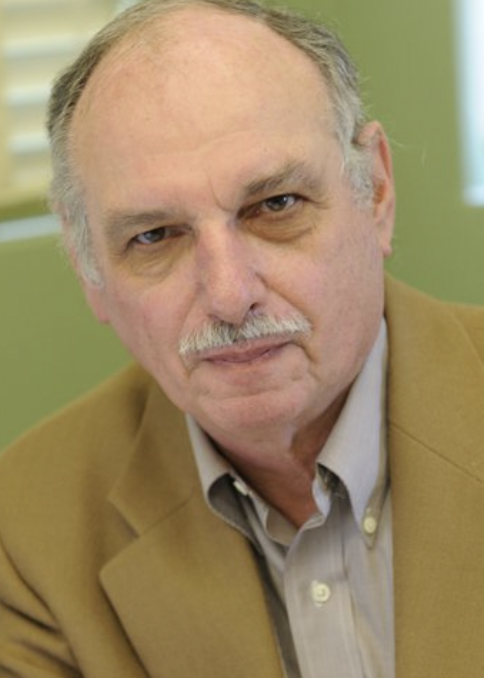 David Hitlin合作论文数Division of Physics Mathematics and Astronomy, California Institute of Technology867G. Finocchiaro合作论文数857C. P. Jessop合作论文数855
 Lucien Cremaldi合作论文数Department of Physics and Astronomy, University of Mississippi853
 Terry L. Schalk合作论文数Division of Physical & Biological Sciences, Department of Physics, University of California, Santa Cruz;Santa Cruz Institute for Particle Physics, University of California, Santa Cruz849George Lafferty合作论文数School of Physics and Astronomy, The University of Manchester848
 j a mckenna合作论文数University of British Columbia844Am Eisner合作论文数842
 Roger Barlow合作论文数School of Computing and Engineering, University of Huddersfield842T. S. Mattison合作论文数839M. Verderi合作论文数837
 Andrew J. Lankford合作论文数Department of Physics & Astronomy, School of Physical Sciences, University of California, Irvine835
 Richard D. Kass合作论文数Department of Physics, College of Arts and Sciences, The Ohio State University835S. Prell合作论文数833
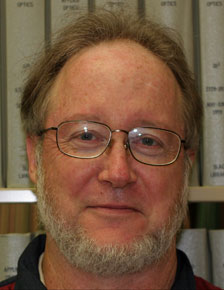 Bill Lockman合作论文数Santa Cruz Institute for Particle Physics, Department of Physics, University of California, Santa Cruz831
 Gr Bonneaud合作论文数University of Paris831
 Antimo Palano合作论文数University of Bari830
 James Cochran合作论文数Department of Physics and Astronomy, College of Liberal Arts and Sciences, Iowa State University827
 Francesca Di Lodovico合作论文数Department of Physics, Faculty of Natural, Mathematical & Engineering Sciences, King’s College London826
 Glen Cowan合作论文数Centre for Particle Physics and Astronomy, Department of Physics, Royal Holloway, University of London826Erwin Gabathuler合作论文数University of Liverpool824Jean-Pierre Lees合作论文数Laboratoire d'Annecy-le-Vieux de Physique des Particules824
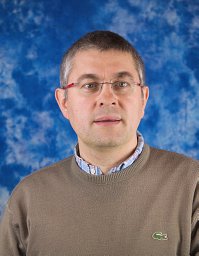 Vincent Tisserand合作论文数Laboratoire de Physique Corpusculaire de Clermont-Ferrand824
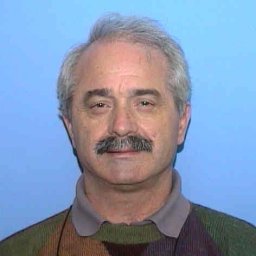 Fernando Palombo合作论文数Department of Physics, University of Milan823Ve Blinov合作论文数818S. Passaggio合作论文数816Vladimir B. Golubev合作论文数Novosibirsk State University814Ap Onuchin合作论文数811
 Abolhassan Jawahery合作论文数Department of Physics, College of Computer, Mathematical, & Natural Sciences, University of Maryland811
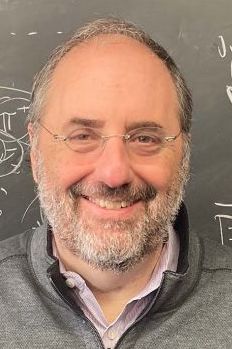 Claudio Campagnari合作论文数Physics Department, University of California Santa Barbara;CERN809Gp Wormser合作论文数807Brian Meadows合作论文数807
 David Nathan Brown合作论文数Physics Division, Lawrence Berkeley National Laboratory806
 Michael Sokoloff合作论文数Department of Physics, University of Cincinnati805Evgeny Solodov合作论文数804Pierpaolo Patteri合作论文数801
 Bjarne Sandvik Stugu合作论文数Department of Physics and Technology University of Bergen799




