Steel is essential to modern society, but is carbon dioxide equivalents (CO2e) intensive. Iron ore, steel consumption, production and associated CO2e emissions were modeled by country to 2100. The modeling consisted of collating historic data, projecting steel and scrap consumption and projecting steel production for four scenarios to 2100. The scenarios were: •Status Quo - DRI remains 8% of world steel production; 71% of steel is made in Blast Furnace-oxygen (OBC) steelmaking; remainder Electric Furnace (EF).•DRI increases to 15% of world steel production; EF changes relative to the scrap recycled portion. Balance of steel made via OBC.•EF and DRI contribution same as (2). 25% of pig iron via Electric Smelting Furnace (ESF).•DRI increases to 65% of world steel production in combination with scrap, increasing the EF technology contribution. Balance of steel made via OBC. Results showed a decrease in CO2e of ≈ 20% for scenarios 3 and 4 in comparison to status quo. Scenario 3 places emphasis on non-beneficiated ores in ESF and OBC processes for pig iron production. Scenario 4 relies on a beneficiated high grade ore supply chain that allows the production of DRI suitable for the EF process. Production chain iron ore yield losses are significantly more for the High Grade DRI-EF process (Scenario 4, 28%) compared to non-beneficiated DRI-ESF process (Scenario 3, 13%). Cases considered indicate maximising the recycling of scrap is advantageous to minimise CO2e. Scrap recycling is expected to be constrained by the residual elements.
Global nickel demand is projected to double by 2050 to support low-carbon technologies and renewable energy production. However, biomass carbon emissions from clearing vegetation for nickel mining are rarely included in corporate sustainability reports or considered in mineral sourcing decisions. Here, we compiled data for 481 nickel mines and undeveloped deposits to show that the footprint of nickel mining could be 4 to 500 times greater than previously reported (depending on the mine site), and thus the environmental impacts of nickel products, including batteries, have been underestimated to date. We found large variation in biomass losses among mines, and, in many cases, these unaccounted carbon emissions were significant relative to other Scope 1 and Scope 2 emissions from nickel extraction and processing. Reporting emissions from biomass losses from mining is key for strategic decision making on where to source nickel needed for effective climate action.
As climate change and biodiversity loss intensify, the deep seabed beckons as a source of metals for batteries. Initiating this new exploitation conflicts with international agreements to decelerate biodiversity loss through wider protections of ecosystem integrity. The poor record of terrestrial mining must not be an excuse to mine the ocean floor. Improved oversight and biodiversity protection as miners increase production on land will produce a better global biodiversity outcome.
•Mining-induced displacement is a severely under researched social policy problem.•Through global data sources and historic remote sensing we analyse this problem.•The main output of most mining activity is hazardous waste.•We confirm waste as the principal source of human displacement globally in mining.•Resources to fuel urbanisation and energy transition targets will drive increases in waste.
Mostly produced as a by-product of zinc (Zn) mining, cadmium (Cd) is used in solar photovoltaic cells, battery storage, alloys, pigments, plating, and in nuclear reactors. However, it is also a regulated toxic substance with a long history of environmental and health impacts. As the mining of both Zn and Cd will need to increase to support the global energy transition, the status of Cd as either a resource or a pollutant has major implications for global supply chains and environmental management. Here, we present a new global, site-specific database and analysis of Cd resources in Zn-bearing mineral deposits and mines. Our database, which exceeds past Cd studies in scope, transparency and replicability is made available in full to support future assessments of Cd and Zn resources, mine production and associated risks. It includes 927 sites subject to detailed geological data compilation and analysis. Collectively, these sites suggest a new global resource estimate of 3.3 Mt Cd (95% confidence interval: 2.7-6.1 Mt). A preliminary geospatial analysis of sites in our database and mine toxicity indicators was also conducted. It shows that: - A human population of approximately 3.27 million live within 10 km of sites containing Cd resources, - similar to 31% of the world's Cd resources sit within 20 km of International Union for the Conservation of Nature protected areas, and - Some 28% of Cd mobilised annually by mining originates from areas hosting seasonal or permanent surface water cover. As similar to 27% of Cd resources are in countries that do not refine it, our study highlights the need for further research exploring global Cd trade flows and associated emissions. Heavy metal pollution in mining and metal production regions is an ongoing challenge, and our global dataset refines our understanding of its magnitude and distribution.
National inventories of mineral resources invariably exclude critical minerals produced as smelter-refinery by-products due to insufficient data. This study addresses this gap through the development of a comprehensive database of Australia's critical minerals resources in mines and mineral deposits combined with extensive geochemical data analysis. We provide a description of how such a database can be constructed for any country using publicly available information and consider a range of uncertainties arising from the use of proxy data to estimate critical mineral grades. A detailed analysis of Australian critical mineral resource endowments is presented alongside a review and discussion of reporting mechanisms and transparency. Our results show that despite statistical uncertainties, data complexities and limited prior accounting, estimated Australian endowments of a range of critical metals which currently remain unreported are likely to be substantial (e.g., an additional 4.2 Mt Co). This Australian case study suggests that the global development of similar databases is likely to reveal substantially greater endowments of critical metals than previously recognised, providing confidence in the ability to simplify the previously complex assessment of critical minerals required for the modern world's technological needs.
Mineral resources are essential for reaching net-zero ambitions by 2050. There is a rising diversity of metals in electricity generation and storage technologies, as well as for mobility technologies. However, little is known about the future supply of minor elements historically mined in low volumes such as indium, tellurium, germanium, or tantalum. Those minor elements are found in lower concentrations in the ores of major elements and therefore rarely form economic deposits on their own. Such elements are often produced as byproducts of a host (or "target commodity", which underpins the bulk of a mine's profitability) in ore, e.g., in porphyry ore, tellurium is a byproduct where copper is the host. As a result, the primary supply of those minor elements depends on the supply of the major elements. Such dependency has not been accounted for in scenarios of the mineral supply. To address this gap, we developed a methodology to harmonize scattered data of mineral resource estimates and to calculate the mass ratio between the byproduct and the host in ores and concentrates, called the byproduct-to-host (BtH) ratio. We collected crude ore tonnage and element grades, among other key data, from the state-of-the-art literature and publicly available mining company reports. Our data set covers 3422 deposits across 141 countries providing 22 275 BtH ratios. The future supply of minor elements can be derived by multiplying the primary production of host elements by the developed BtH ratios, noting the limitations of data representativity. The open-access nature of this work facilitates the enrichment and update of this data set in the coming years.
Given that metals, minerals and energy resources extracted through mining are fundamental to human society, it follows that accurate data describing mine production are equally important. Although there are often national statistical sources, this typically includes data for metals (e.g., gold), minerals (e.g., iron ore) or energy resources (e.g., coal). No such study has ever compiled a national mine production data set which includes basic mining data such as ore processed, grades, extracted products (e.g., metals, concentrates, saleable ore) and waste rock. These data are crucial for geological assessments of mineable resources, environmental impacts, material flows (including losses during mining, smelting-refining, use and disposal or recycling) as well as facilitating more quantitative assessments of critical mineral potential (including possible extraction from tailings and/or waste rock left by mining). This data set achieves these needs for Australia, providing a world-first and comprehensive review of a national mining industry and an exemplar of what can be achieved for other countries with mining industry sectors.
This chapter reviews the platinum group metals, focusing particularly on current economic resources and production trends. Most of the world's platinum group metals (PGMs) are found in South Africa, with moderate amounts in Russia and Zimbabwe and minor amounts in Canada and other countries. Based on a detailed compilation of reported resources for 2010, there are about 90 400t of PGMs globally, compared with current annual production of about 465t. It is clear that there are abundant amounts of PGMs to meet growing global demands for some decades. The primary constraints which are already proving challenging for the PGMs sector are environmental and social in nature – such as economic benefits sharing, energy and emissions intensity, water consumption and impacts on water resources. Overall, PGMs can certainly provide a range of metals for sustainable materials and technologies into the future, but they will come at increasing environmental and social costs which need to be carefully assessed and managed to ensure the most sustainable outcomes for the countries involved and also global issues such as greenhouse gas emissions and climate change risks.
Rhenium (Re) is essential to modern transportation because of its key role in the aerospace and petrochemical sectors and has been assessed as critical due to its complex supply chains and limited options for effective substitutes. Efforts to estimate global Re resources are complicated by its production as a ' by-product of a by-product ' - i.e., its extraction as a by-product from molybdenum (Mo) concentrates, which in turn are commonly by-products from copper (Cu) mining, leading to very limited reporting of Re grades in mineral deposits. This has rendered past estimates of global Re resources subject to high uncertainty and variability.This study addresses this key issue using a new detailed database of mineral deposits reported to host Re that also includes deposits which are inferred to contain Re based on their Cu and Mo contents (using Re proxies). We also present an analysis of historical Re production and uses, and a review of Re mineralogy and key mineral deposit types. We estimate that 618 deposits hosting resources of Cu, Mo and other metals, which are dominated by porphyry Cu +/- Mo deposits, host somewhere between-55,000-140,000 t Re. Our best estimate of -83,000 t Re is 3-4 times that of previous global Re resource estimates, and yet does not include other nickel, platinum group element or tungsten-related deposits that may also host Re. With current global demand at only-50 t Re/yr, our minimum global estimate would be sufficient to meet global demand for centuries, unless a major shift in the use of Re takes place to boost future demand. As has been demonstrated to be the case for other critical metals, the pertinent questions around future supply of Re appear not to be related to total quantity of mineral resources, but rather which mines and refineries will offer lower costs and more environmentally/socially sustainable and responsible supply chains.
Nickel (Ni) is fundamentally important to the modern world for stainless steel, specialty alloys, electroplating, batteries, and other uses. Global Ni demand is expected to soar as the world transitions to a net-zero greenhouse gas emissions economy based on electric vehicles and energy storage batteries linked to renewable energy systems. This means that understanding the current Ni sector, especially known Ni resources, reserves, and mining (i.e., current and likely future sources of this metal), is crucial to enabling this energy transition, including the likely environmental, social, and governmental challenges that may prevent the development or may hinder the continuation of future and current Ni mining operations. This paper achieves this by presenting a comprehensive global assessment of reported Ni deposits and projects for the year 2018. All of these are classified by mineral deposit type to understand the relative importance of the different mineral systems that are mined for Ni and allocate each site a primary and secondary mineral deposit type. We also compare our results for 2018 with the results of a previous study focused on 2011 data to understand how deposits and projects have evolved over time and coincident with production. The majority of Ni has been and will continue to be sourced from laterites and magmatic sulfide systems; other deposits have produced only minor amounts of Ni. Our database indicates that globally some 627 Ni deposits remain with in-ground resources and/or reserves, including 148 and 86 laterite, 248 and 93 magmatic sulfide, 33 and 14 hydrothermal, and three and two tailings Ni-containing code-and noncode-compliant resources, respectively. Projects with reserve estimates include 38 laterite reserves, 70 magmatic sulfide, and three hydrothermal Ni-containing reserves. These data yield 350.2 million metric tonnes (Mt) of contained Ni in resources distributed as 190.2, 124.1, and 35.4 Mt Ni in laterite, magmatic sulfide, and hydrothermal resources, respectively. Reserves contain 47.12 Mt of Ni split into 25.97, 20.14, and 1.01 Mt Ni in laterite, magmatic sulfide, and hydrothermal reserves, respectively. Comparison of these data to 2011 data indicates that sulfide deposits are effectively keeping pace with depletion by mining, whereas laterite resources are lower than in 2011, perhaps reflecting the fact that the latter can be more comprehensively assessed during the early stage of laterite resource and reserve estimation. This suggests that although current resources are sufficient to enable current production to be sustained, the expected increase in demand for Ni may act to constrain supply. This may also be exacerbated by the increasing environmental, social, and governmental challenges facing the minerals industry globally, with a number of projects that have faced delays or problems associated with these challenges also outlined in this study. Our study also highlights the variable level of sustainability reporting undertaken by different companies involved in Ni mining and exploration. One potential approach to more effective environmental and social engagement would be improvements in this area, allowing more transparent engagement with social and environmental stakeholders. Overall, known Ni resources and reserves are sufficient to continue current levels of production for several decades to come (assuming all of this material can be mined); however, the Ni mining sector faces a number of challenges that may change this, including increased demand from electric vehicles and batteries and potential supply restrictions relating to increased environmental, social, and governmental challenges to the mining industry globally.
The Great Artesian Basin (GAB) is one of the world's largest groundwater systems and supports a wide variety of springs, associated ecosystems, and cultural values. Historically, groundwater was extracted from the GAB with little regard for sustainable management, with much of the groundwater from artesian bores wasted through evaporation and seepage. By the late twentieth century, agriculture still dominated groundwater extraction; however, water use for mining and petroleum projects began increasing, a trend that continues. In particular, the Olympic Dam mining project in South Australia has been extracting groundwater since 1983 from a wellfield located on the southwestern margins of the GAB, an area containing a vast array of culturally significant, ecologically unique, and sensitive springs, including iconic mound springs. The extraction rate has increased over time, leading to concerns about impacts on the springs and their associated values. There are plans to expand the mine that would potentially increase the extraction rate further. This chapter reviews the hydrogeological setting of the springs of the southwestern GAB and their cultural and environmental values and synthesizes and analyses the available groundwater monitoring data associated with the wellfield. The case highlights the critical importance of detailed spatial and temporal hydrogeological monitoring, including both spring flow rates and groundwater level/pressure data, and the need to link monitoring and management of such sites to key cultural and environmental values.
The growing focus on environmental responsibility from the community, investors and regulators presents immense challenges and opportunities to mining companies. Titanium and zirconium minerals are vital, unrecyclable, and often irreplaceable components of modern infrastructure and technology. The companies which supply these minerals often have a long-history of sustainability reporting. Such reports have been used here to analyse energy usage, carbon dioxide emissions and water usage from mining and processing these minerals. Mining operations and titanium-slag producers in Australia, Canada, China, Mozambique, Madagascar, Norway, and South Africa were analysed. This paper presents both site-specific data as well as data generalized to heavy mineral sand (HMS) deposits vs igneous hard-rock style deposits, as well as those products which have undergone beneficiation. In terms of averages, energy use was higher for HMS (yearly average of between 0.90 - 2.95 GJ/t valuable heavy mineral (VHM)) compared to ilmenite-dominant hard-rock mining (yearly average of between 0.21 - 0.49 GJ/t ilmenite) and Ti-slag production required between-similar to 10 - 14 GJ/t of saleable product (including titanium slag and pig-iron). Emissions from ilmenite-dominant hard rock mining produced similar to 0.01 t CO2e/t ilmenite concentrate while HMS mining produced 0.07-0.38 t CO2e/t of VHM; emissions from beneficiating ilmenite into Ti-slag add significantly to this (0.62-1.21 t CO2e/t of saleable product, weighted by value). Overall, hard-rock mining operations consumed <5 kL/t ilmenite concentrate while HMS consumed 10-26 kL/t VHM. On the other hand, beneficiating hard-rock ilmenite into slag increases water-use by similar to 220 kL/t of saleable product. Finally, in terms of land use, it was determined that an average of 4.3 ha per 1 Mt of ore was disturbed in HMS operations (no data was available for hard-rock operations). While average results comparing HMS, hard-rock and beneficiated products were broadly comparable to existing LCA literature, data used in LCA literature is not consistent with specific sites and using generalized data to infer site-specific data will often lead to erroneous estimates. These observations taken together are particularly important to downstream purchasers, as well as the investment community who do not fund entire industries, but fund and back specific projects; the decision made on which site or company to invest in is increasingly determined by environmental, social and governance (ESG) related factors. This paper not only provides quantitative indications of these factors for Ti/Zr production, but also guidance for improving sustainability reporting in the industry. An improvement in the quality, quantity and consistency in this data, as this paper explains, will allow for greater information to guide investment and ESG outcomes for Ti/Zr industries.
The deep seafloor is regarded as a potentially large source of the minerals needed for producing batteries to fuel the transition to a low-carbon energy system, but rapid, unrestrained mining would have severe impacts on deep-ocean ecosystems and should be avoided. We propose alternative pathways forward.
Titanium (Ti), zirconium (Zr), hafnium (Hf), vanadium (V), garnet, and rare earth elements (REO) and their associated minerals are essential for modern society. Despite this, comprehensive public understanding of Ti and Zr resources and reserves (including garnet, Hf contained in zircon, V in titanomagnetite, and REO contained in co/by-product monazite) has been limited.This has led to uncertainty over the possibility of supply shortages in these minerals and has also led to confusion over which Ti and Zr minerals may be in short supply. Addressing this, we compile an extensive database of the world’s known Ti and Zr mineral deposits including ore grades, co-products, mineral quality, and geological settings. Our data indicate that 327 mineral deposits in 25 countries contain a collective 2,648 Mt TiO2 in ilmenite, rutile and leucoxene, 155 Mt of Zr minerals, 23.5 Mt of V, 16.2 Mt of REO and 17.5 Mt of garnet. Just 31% of TiO2 exists within traditional sedimentary deposits (placer and palaeo-placer deposits, but here referred to as sedimentary), with the remainder contained within igneous (54%), metamorphic (1%), and laterite deposits (14%). For igneous TiO2, 58% is contained within ilmenite, 42% in titanomagnetite, and <1% in rutile. 93% of total zirconium minerals are contained in sedimentary deposits. Forward modelling presented in this paper indicates that Ti and Zr resources and reserves are sufficient to meet global demand for several decades. Overall, this unique study presents extensive data on Zr, Ti, Hf, V, garnet and REO resources, makes comments on the future availability of these elements and will therefore be a practical resource for researchers, policymakers, and investors alike.
Mining supplies metals and minerals to meet the material and energy needs of the modern world. Typically, mineral resources are widely considered to be ‘finite’ in nature, yet, paradoxically, global production and reported reserves and resources continue to grow. This paper synthesizes an extensive array of data on the long-term trends in cumulative mine production, reserves and resources at a global level as well detailed case studies of Australia, a global leader in many sectors of mining, and lithium, a new metal with rapidly growing demand. Overall, the paper shows that growing mine production has been clearly matched by growing reserves and resources, although there are numerous complex social, environmental and governance factors which are already affecting mines and are expected to increasingly affect mining into the future. Thus it is not possible at present to determine the ‘ultimately recoverable resource’, especially as this is a dynamic quantity dependent on a variety of inter-related factors (e.g., exploration, social issues, technology, market dynamics, environmental risks, governance aspects, etc.). This finding reinforces the need for continuing detailed studies of all metals and minerals to understand their individual supply and use dynamics to help modern society meet its needs and sustainable development goals.
Abstract The modern world needs an ever-increasing amount and variety of metals and minerals to meet demands for energy, telecommunications, infrastructure, transport vehicles and the like. Despite the basic perception of mining being unsustainable, there has been a radical shift in thinking about mining and sustainable development in recent decades, led by the introduction of numerous guidelines, schemes and protocols to address specific issues and improve reporting and accountability by mines and mining companies – in simple terms, using certification-type schemes to justify a sustainable or responsible approach to mining based on more ethical underpinnings. This chapter presents a unique and concise synthesis of these complex issues and outlines how mining can be described as responsible, sustainable or perhaps ethical even – or not as the case may be.
The mining and supply of metal and mineral resources are crucial for the operation of the modern world—energy, food, transport, telecommunications, infrastructure, etc. There are a variety of geological processes which lead to the formation of mineral deposits containing one or more metals or minerals of interest for mining. A mineral deposit is clearly finite in size, leading to the need to continually find more mineable deposits to continue to meet growing demands. Over time, the mining industry globally has been very successful in finding new deposits, developing new technologies for mining and ore processing, as well as combining these two to mine ever lower grades at existing deposits. Once mined, a metal or mineral is used in a product or service and is then either disposed of or recycled. The mining, use and disposal or recycling of resources is known as the "resource cycle." As mining grows, so too do the environmental and social impacts—exemplified by declining ore grades, mountains of tailings and waste rock, risks to water resources, catastrophic failures, social issues, regulatory challenges, etc. There are a variety of increasingly supported frameworks to improve resource efficiency and lead to more sustainable environmental and social outcomes—including the circular economy, sustainability reporting, responsible certification and others. Whilst mineral deposits may be geologically finite, the modern world is not in danger of resource depletion but has to balance an increasingly complex set of often competing social, environmental and economic issues to ensure a more sustainable resource cycle.
 Simon Jowitt合作论文数School of Resources and Environmental Engineering, Hefei University of Technology30
 Tim Werner合作论文数School of Geography, Earth and Atmospheric Sciences, Faculty of Science, The University of Melbourne25
 Damien Giurco合作论文数Institute for Sustainable|University of Technology Sydney21
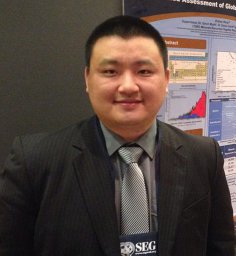 Zhehan Weng合作论文数Geoscience Australia17
 Stephen Northey合作论文数Institute for Sustainable Futures, University of Technology Sydney16
 Steve Mohr合作论文数Inst Sustainable Futures, Univ Technol Sydney16
 Mohan Yellishetty合作论文数Department of Civil Engineering, Monash University14
 Leah M Mason合作论文数12
 Jayantha Kodikara合作论文数Department of Civil Engineering, Faculty of Engineering, Monash University10
 Nawshad Haque合作论文数CSIRO8
 Tim Prior合作论文数7
 Ana Deletic合作论文数Water Research Centre, School of Civil and Environmental Engineering, Faculty of Engineering, Queensland University of Technology6
 Tim Fletcher合作论文数School of Agriculture, Food and Ecosystem Sciences, Faculty of Science, University of Melbourne5
 Cameron Perks合作论文数4j c behrisch合作论文数3Minmeng Tang合作论文数3d browne合作论文数3
 Barbara Reck合作论文数School of the Environment, Yale University3Reza Memary合作论文数3
 Thomas E. Graedel合作论文数Yale School of the Environment, Yale University3Tamie R. Weaver合作论文数School of Earth Sciences;University of Melbourne;School of Earth Sciences, University of Melbourne3Mobashwera Kabir合作论文数3
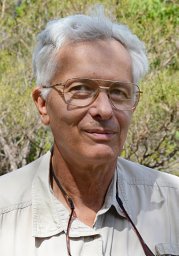 Mark Diesendorf合作论文数Institute of Environmental Studies;University of New South Wales;Institute of Environmental Studies, University of New South Wales3
 Ester van der Voet合作论文数Centre of Environmental Science, Leiden University3Srijib Chakrabarti合作论文数3
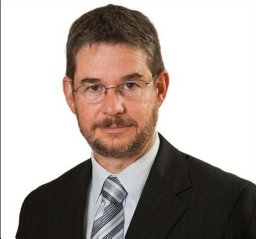 Tony Ladson合作论文数Institute for Sustainable Water Resources, Monash University3Ilyas Nursamsi合作论文数2
 Charles Roche合作论文数Acknowledging both their centrality and contribution to this research.2
 Cristina Madrid-Lopez合作论文数2
 juergen h peterseim合作论文数Inst Sustainable Futures, Univ Technol Sydney2James Paterson合作论文数Geography and the Lived Environment, School of GeoSciences, The University of Edinburgh2
 Laura Sonter合作论文数Centre for Biodiversity and Conservation Science, Faculty of Science, The University of Queensland2
 A.M. Schipper (Aafke)合作论文数Department of Environmental Science, Institute for Water and Wetland Research, Faculty of Science, Radboud University Nijmegen2
 Lisa Levin合作论文数Integrative Oceanography Division, Scripps Institution of Oceanography, University of California, San Diego2
 Amon Diva J合作论文数2
 Andrew Hoadley合作论文数Monash Energy Institute, Faculty of Information Technology, Monash University2Bonnie J. Glaister合作论文数2David Huston合作论文数Geoscience Australia2Carol Boyle合作论文数2
 Richard Karel Valenta合作论文数2
 Matthew J. Currell合作论文数School of Civil, Environmental and Chemical Engineering, RMIT University2
 Monique Retamal合作论文数Institute for Sustainable;University of Technology;Institute for Sustainable, University of Technology2
 Mikael Höök合作论文数Department of Earth Sciences, Natural Resources and Sustainable Development, Uppsala Universitet2
 Geoffrey M. Evans合作论文数Centre for Advanced Particle Processing, University of Newcastle2
 René Kleijn合作论文数Center of Environmental Science, Leiden University2
 Ranjith Pathegama Gamage (兰吉特·帕伽玛·加米奇)合作论文数Department of Civil and Environmental Engineering, Faculty of Engineering, Monash University;College of Civil and Transportation Engineering, Shenzhen University2Anke Wendelborn合作论文数2S. A. Clayton合作论文数1N. Haque合作论文数1




