In this article, a novel nonfragile bumpless transfer control (NBTC) design policy is developed for discrete-time switched positive systems (DTSPSs) that are entire composed of unstable subsystems. The core concept is to utilize the positive effect of the switching mechanism to counteract divergence of the state caused by the unstable subsystems. Furthermore, to account for the impact of uncertain parameter variations on the control strategy and to bound the control amplitude discontinuity at switching times, a time-varying nonfragile bumpless transfer controller is considered. Building upon the dwell-time and gain matrix decomposition framework, the linear vector inequalities criterion provides an opportunity to assess stability and p1-gain performance. Ultimately, a communication network model is established to demonstrate the usefulness of our approach and to show the broad application.
This paper addresses the problem of bumpless transfer quantized control for continuous-time switched delayed systems in the absence of stable subsystems. First, we propose an original characterization of bumpless transfer performance called quantization-dependent bumpless transfer performance to simultaneously mitigate abrupt large multi-source control bumps resulting from both quantization and switching. Second, to overcome the limitations of the multiple Lyapunov-Krasovskii functionals method associated with the min-switching law under switched delayed systems, a novel dwell-time-dependent Lyapunov-Krasovskii functional is proposed along with a hybrid switching strategy. Sufficient conditions are established to guarantee both asymptotic stability and quantization-dependent H infinity bumpless transfer performance of the closed-loop systems. Finally, a switched RLC circuit model is exploited to illustrate the effectiveness and applicability of our method.
This paper is concerned with the fixed-time tracking control problem for strict-feedback systems with unknown nonlinearities, suddenly strong disturbances, and event-triggered input. A novel prescribed performance fixed-time control methodology is proposed to handle this problem. In the control design, a new finite-time performance function is combined with a fixed-time tracking performance function, which not only constrains the operation range of the tracking error but also relaxes the initial condition. Then, the linkage between the prescribed performance function (PPF) and the tracking error is established, thus making the proposed novel scheme better cope with suddenly strong disturbances in order to reduce the risk of the singularity problem of the conventional PPF. In addition, the designed scheme does not require complex error transformations and does not have any requirements for the initial system values, which simplifies the overall design of the scheme. Moreover, owing to the introduction of the event-triggered method, the scheme is more cost-effective in terms of control cost. Finally, the above theoretic findings are illustrated by simulation studies.
This research explores the synchronization problem in directed networks (DNs) under an intermittent communication controller, employing an event-triggered transmission technique that relies on sampling data. Upon analyzing the prior relevant results, it was observed that the derived synchronization conditions are closely related to the number of nodes in networks, reflecting the increasing computational complexity as the number of nodes grows, which makes obtaining a solution within a finite time challenging. To overcome this difficulty, this paper designs a novel intermittent controller and establishes a piecewise time-dependent Lyapunov-Krasovskii functional (PTDLKF) predicated on work and rest intervals of operation for the synchronization system. Next, an event-triggered synchronization method based on sampling data is explored to derive sufficient conditions that ensure asymptotic convergence of synchronization errors in the intermittent context. Importantly, the verification of matrix conditions in the established synchronization criterion is not contingent on the node count in networks. Finally, two simulation examples are provided to substantiate the applicability of the formulated synchronization method in the intermittent communication
Switched positive T-S fuzzy delayed systems (TSFDSs) that arise in taking into account the positivity restriction on the input, output and state variables, are investigated in both discrete and continuous-time domains. The presented article analyzes their stability and disturbance rejection properties with respect to of l(1)-gain (L-1-gain) under dwell time ranges. Particularly, the considered system consists of all unstable subsystems. The original contribution of this article consists in the following features: i) the time-scheduled multiple linear copositive Lyapunov-Krasovskii functional (LCLKF) is proposed; ii) the information on allowed switching behavior and the lower and upper bounds on switching intervals is fully employed; iii) no restriction is introduced on the stability of subsystems; iv) the gained criteria built upon linear vector inequalities (LVIs) to check the non-increasing property of the functional. Eventually, simulation examples verify the effectiveness of the presented methodology.
In this article, the output tracking problem for switched positive polynomial fuzzy systems with delays and external inputs is addressed through a hysteresis state-dependent switching scheme. In particular, this switching scheme effectively limits the frequent switching while allowing the existence of unbounded tracking errors for all subsystems. Unlike existing works on fuzzy controller design, we ensure that the fuzzy controllers do not degenerate into a non-fuzzy form and expand the feasible region by introducing the global bound information of membership functions. The sufficient conditions to verify output tracking performance are obtained by employing linear copositive Lyapunov-Krasovskii functional-based tools. Furthermore, these conditions are expressed as the sum-of-squares problems that can be solved efficiently. Lastly, our theoretical results are presented for the application of the proposed control design strategy to two examples, which show the effectiveness and superiority.
This paper investigates distributed l(infinity) filtering problem for discrete-time switched delayed systems (DTSDSs) in sensor networks (SNs) with dynamic event-triggered communication. Given that the presence of attacks can compromise the integrity and availability of data, as well as the critical role of switching signals in shaping the behavior of switched systems, a novel event-driven distributed filter is explored in scenarios where the switching signal of the controller experiences a denial-of-service (DoS) attack, characterized by bounded attack frequency and duration. It is significant to mention that the persistent and recurrent nature of attacks compromises the transmission of switching signals, resulting in significant asynchronous discrepancies between the switching of the filtering error system (FES) and the controller. To address the asynchronous behavior induced by DoS attacks, a piecewise time-dependent Lyapunov-Krasovskii functional (PTLKF) tailored to the characteristics of DTSDSs is proposed. Subsequently, sufficient conditions with reduced conservatism are formulated to ensure the exponential stability of the FES, while also guaranteeing an enhanced l(infinity) disturbance attenuation performance. Finally, two simulation examples are provided to exemplify the superiority and applicability of the proposed filtering technique.
This paper investigates reachable set estimation for T-S fuzzy switched positive systems (FSPSs) subject to componentwise uniformly bounded disturbance in a scenario where all subsystems are unstable. In this scenario, by introducing a hysteresis switching strategy, the reachable set estimation regions of all subsystems are permitted to exceed the one of whole switched positive systems. Unlike previous ellipsoidal bounds, a distinctive feature is the formulation of a hyper-pyramid to capture the bounds of the reachable set inside the positive orthant, which originates from the strength of multiple linear copositive Lyapunov functions (LCLFs). Moreover, effective sufficient conditions are presented by linear vector inequality. The analysis framework is further extended to controller synthesis. From the perspective of multi-objective optimization, an algorithm is presented to obtain the controller gains and the Pareto solutions. To avoid potential infeasibility, a value approach is given to decouple the objective functions from the feasible region. Finally, numerical simulation on the resistor inductor capacitor (RLC) circuit validates the effectiveness and advantages of the proposed control strategy.
This study investigates the cooperative localization problems for mobile sensor networks under malicious attacks, which manipulate relative measurements to mislead the localization process. A distributed attack-resilient cooperative localization algorithm is proposed, addressing the inter-node state dependencies in relative measurements by employing the covariance intersection method. Specifically, by designing an innovation-based saturation mechanism that assigns smaller coefficients for unreasonably large innovations, the adverse impact of the attacks is confined. Within this framework, the consistency of all sensors' estimates is maintained, and the error covariance matrices are ensured to be bounded. Compared with the existing extended Kalman filter-based positioning approaches, the employed cubature integral rules avoid evaluating Jacobian matrix and improve the performance of nonlinear state estimation. Finally, two cases are conducted to validate the presented strategy.
This article investigates the linear dissipative filter design issue for discrete-time switched positive systems (DTSPSs) defined on the nonnegative quadrant under dwell time constraints. Unlike usual results on dissipativity filtering, a new methodology for designing linear dissipative filters, by means of both upper-bound and lower-bound positive filters, as well as linear dissipative inequality, is developed here. The design procedure is valid that ensures that: i) the filtering error system maintains positivity and possesses asymptotic stability; ii) the resulting system has linear dissipativity performance subject to linear supply rates, which can induce l(1)-gain performance by tuning the weighting vectors. The solvability conditions for the dissipative filter are stated as linear vector inequalities (LVIs) and a matrix decomposition approach is applied to design filter gain matrices. Ultimately, two practical examples are employed to illustrate the theory development.
This paper performs a finite-time analysis (FTA) and implements the finite-time anti-disturbance synchronization (FTADS) control for general switched delayed neural networks (SDNNs) in a continuous-time context. While the prevailing results for SDNNs typically mandate the finite-time stability of individual subnetworks, this investigation explores a more inclusive scenario in which all subnetworks of SDNNs may exhibit finite-time instability. To address this, an innovative and less conservative FTA framework is established by developing a novel time-dependent multiple Lyapunov-Krasovskii functional (TDMLF) approach and incorporating a ranged dwell time (RDT) switching strategy. For SDNNs influenced by multiple disturbances, a FTADS criterion is established within the proposed finite-time design framework, demonstrating that the relevant synchronization error can achieve the desired finite-time boundedness. In the end, the reliability and superiority of the presented FTA approach and anti-disturbance synchronization control technique are thoroughly substantiated via two demonstration examples.
This paper is concerned with the high-performance leader-following problem for the high-order heterogeneous nonlinear multiagent systems under a directed graph. It is focused on the cases where the system dynamics of each agent is totally unknown; the system nonlinearities are radially unbounded; the control directions may switch between positive and negative. They render the existing distributed control solutions infeasible. To conquer this challenge, a distributed model-free robust funnel control strategy is put forward in this paper. It achieves output synchronization with the predefined settling time and accuracy even after the control direction switching. Moreover, it is static, continuous and strikingly simple, without invoking the Nussbaum-gain technique, the sliding-mode control method, or the tools for identification, approximation, estimation, filtering, etc. The theoretical findings are illustrated by a comparative simulation on a team of inverted pendulum systems.
The target enclosing control problem for autonomous vehicles with uncertainties necessitates simultaneous consideration of control optimality, robustness, and safety-guided performance constraints. This paper presents a performance-prescribed optimal control algorithm using control barrier function (CBF)-based reinforcement learning (RL) to address the above problem, which contains two key contributions. First, a special CBF-based argument term is developed and embedded into the reward function to characterize environmental feedback regarding the risk of violating constraints, which enables the controller to confine enclosing errors within declared boundaries with minimal intervention. Second, a critic-only neural network is utilized to synthesize the optimal control policy, where a novel fixed-time updating law is presented to accelerate the weight convergence to ideal values within a fixed settling time, thereby enhancing the online learning ability and further improving control performance. Theoretical outcomes related to learning convergence, safety, stability, and robustness are rigorously verified. Simulations reveal that the proposed strategy outperforms the previously designed enclosing controllers based on the non-RL and RL ways in terms of complying with prescribed safety constraints and optimizing long-term performance.
ABSTRACTThis investigation primarily centers on the reachable‐set‐based bumpless transfer control (BTC) for the synchronization of switched neutral‐type neural networks (SNNNs). In order to mitigate the conservatism inherent in the traditional state‐dependent switching strategies (SDSSs) and combined switching strategies (CSSs), an improved CSS leveraging the historical information of neuron states and neutral delay is developed. By constructing a time‐dependent multiple Lyapunov‐Krasovskii functional (TDMLF) technique, a less conservative criterion for reachable set estimation (RSE) is first established. In the subsequent, the established design framework is further employed by the BTC for the synchronization of SNNNs. The corresponding synchronization criterion is derived, which ensures that the resultant synchronization error influenced by bounded external inputs can be confined to an anticipated bounded set. Also, the underlying control bumps at switching instants during switching instants are effectively constrained to a specific level. Ultimately, the practicability and superiority of the proposed design framework are confirmed via two simulation examples.
This article is concerned with the optimal event-based sensor transmission strategy for wireless networked control systems (WNCSs), which aims to minimize the linear quadratic Gaussian (LQG) cost under the communication rate constraints. A sufficient and necessary condition for the convergence of LQG cost is derived. Then, under this condition, the optimal event-based transmission strategy (OETS) is obtained by proposing a search algorithm. Compared with the existing works, the real-time state information of the channel is not required. Finally, the validity of the results is illustrated through a numerical example.
In this paper, we propose a dwell-time-dependent non-fragile feedback dissipativity analysis method for discrete-time switched positive systems (DTSPSs) with actuator faults. A hybrid switching mechanism, consisting of time-dependent and state-dependent switchings, is developed, which fully takes into account their respective advantages. By constructing linear copositive storage functions (LCSFs), the linear type of dissipative inequality is presented subject to linear supply rate constraints. Further, through the joint implementation of switching mechanism and the dwell-time-dependent non-fragile controllers, the verification of strict (q, r)- alpha-dissipativity for the addressed system is achieved. The linear vector inequality (LVI) scheme is proposed to attain less conservative sufficient conditions. Ultimately, the main advantages of the proposed technique are tested in simulation researches through two engineering examples.
This research is concerned with the integrated L∞ anti-disturbance synchronization control problem for continuous-time switched neural networks (SNNs). Different from the relevant synchronization results about SNNs, multiple disturbances and unknown delays are simultaneously addressed in a uniform framework. By constructing the novel Lyapunov function and the ameliorative combined switching strategy, an L∞ performance analysis framework with less conservativeness is then established, where each individual subnetwork is unnecessary to possess a prescribed L∞ performance index. By designing an appropriate disturbance observer and transforming the delay-dependent neuron activation function into a bounded disturbance, an integrated L∞ anti-disturbance synchronization control paradigm is also presented on the basis of the proposed analysis framework. Finally, three illustrative examples are employed to substantiate the applicability and superiority of the developed theoretical results.
This article is concerned with the prescribed performance tracking control problem for the strict-feedback systems with unknown nonlinearities and unmatched disturbances. The challenge lies in the realization of a complete performance specification for trajectory tracking in the sense of quantitatively regulating the peak value, overshoot, settling time, and accuracy while ensuring that the initial condition holds naturally. To this end, an error transformation, equipped with a shifting function, is introduced and incorporated with a new-type barrier function. Then, a class of performance functions is exploited to quantify the settling times and steady-state bounds of the intermediate errors. Moreover, to improve the flexibility of formulating performance specifications for the tracking error, a pair of asymmetric performance boundaries are further designed. With their combination, a novel robust prescribed performance control (PPC) approach is proposed in this article. It not only achieves the quantitative performance guarantees but also preserves the unique simplicity of PPC, evading the needs for function approximation, parameter identification, disturbance estimation, derivative calculation, or command filtering. The above theoretical findings are confirmed via three simulation studies.
This paper explores the controlled multi-networks of complex dynamical networks in which nodes are assumed to represent nonlinear dynamical systems. This multi-network systemic structure is assumed to be endowed by adequate communication networks in which, for study sake, the intra-node and the out-node inter-connections are distinguished. In turn, via multi-networks operating at control stabilized steady-state orbits (hidden isolated equilibrium or oscillation) of its node systems, possibly with faulty interconnections, certain confluence parallels between Siljak's coordinator and Chen's random-pinning supervisory controls emerge. Thus these findings are summarized in three novel propositions emphasizing their identical or similar roles. The supervisory control integrated complex multi-networks with locally stabilized nonlinear node dynamical systems emerge of paramount importance in the engineering cybernetics.
This work is concerned with the L-1 bumpless transfer control issue for switched positive delayed systems on finite horizons. A bumpless transfer input scheme and a state-dependent limited frequency switching scheme, induced by the transient control input discontinuities during controller switching and by the frequent switching for multiple subsystems, respectively, are jointly introduced. The main advantages of the presented schemes are that the amplitude of the control input discontinuities and the frequent switches are all reduced by the dual design of bumpless transfer controllers for subsystems and a state-dependent limited frequency switching scheme. By utilizing the multiple linear copositive Lyapunov functionals, sufficient conditions are also offered so as to achieve the desirable closed-loop performances, including positivity, finite-time boundedness, bumpless transfer property and a prescribed L-1-gain property. Finally, a practical example is borrowed which validates the proposed schemes.
 Jun Zhao (赵军)合作论文数College of Information Science and Engineering, Northeastern University133
 Yuanwei Jing (井元伟)合作论文数College of Information Science and Engineering, Northeastern University114
 Mile J. Stankovski合作论文数SS Cyril and Methodius University(),31
 Norman E. Gough合作论文数School of Computing and Information Technology;University of Wolverhampton25
 Jovan Stefanovski合作论文数Control and Informatics Division, HS Streževo18
 Hong Sang (桑红)合作论文数15
 Tao Ren (任涛)合作论文数Northeastern University14
 Jiqiang Wang (王继强)合作论文数College of Energy and Power Engineering, Nanjing University of Aeronautics and Astronautics13
 Peng Wang (王鹏)合作论文数School of Mathematics and Statistics, Fuzhou University13
 Si-Ying Zhang (张嗣瀛)合作论文数School of Automation, Qingdao University13
 Ruicheng Ma (马瑞诚)合作论文数School of Mathematics and Statistics, Liaoning University11
 Jie Lian (连捷)合作论文数Institute of Artificial Intelligence and Multi-modal Complex Control, School of Control Science and Engineering, Dalian University of Technology11
 Cvetko Andreeski合作论文数11Jiahe Xu合作论文数11
 Vesna Ojleska Latkoska合作论文数11
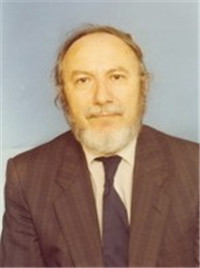 Miomir Vukobratović (乌克布拉托维奇)合作论文数Robotics Laboratory, Mihailo Pupin Institute10
 Xiaoping Liu合作论文数Department of Electrical Engineering, Lakehead University10
 Hong Yue (岳红)合作论文数Institute of Automation, Chinese Academy of Sciences10
 Ying Zhao合作论文数9
 Oliver Iliev合作论文数9
 Zoran Gacovski合作论文数FON University9Tatjana D. Kolemisevska-Gugulovska合作论文数9A.T. Dinibütün合作论文数8
 Yan Zheng合作论文数8
 LiLi Li (李莉莉)合作论文数8
 Taifang Li (李太芳)合作论文数渤海大学工学院8
 Antoni Izworski合作论文数8
 Jozef B. Lewoc合作论文数8Wang Min合作论文数7
 Qing-Kui Li (李庆奎)合作论文数7Z. A. Icev合作论文数7
 Rui Wang (汪锐)合作论文数School of Mechanics and Aerospace Engineering, Dalian University of Technology7
 Goran Stojanovski合作论文数SS Cyril and Methodius University(),7Slawomir Skowronski合作论文数7T.D. Kolemisevska-Gugulovska合作论文数6Ih Ting合作论文数6Mingshun Wang合作论文数6
 Shihong Gao (高世红)合作论文数School of Automation and Software Engineering, Shanxi University6
 Yucheng Zhou (周玉成)合作论文数Research Institute of Wood Industry, Chinese Academy of Forestry6
 Dan Ma (马丹)合作论文数College of Information Science and Engineering, Northeastern University6
 Honghai Liu (刘洪海)合作论文数School of Biomedical Engineering, State Key Laboratory of Robotics and Systems, Harbin Institute of Technology, Shenzhen;School of Computing, University of Portsmouth; Shanghai Jiao Tong University6Antonina Kieleczawa合作论文数6CHEN Zhao-na合作论文数5
 Drilon Bunjaku合作论文数Fac Elect & Comp Engn, Univ Prishtina5Chao Shen合作论文数5
 Zhongzhi Hu (胡忠志)合作论文数Institute for Aero Engine, Tsinghua University5Xin Li合作论文数5Nan Jiang (姜囡)合作论文数College of Information Science and Engineering, Northeastern University5




