This paper presents a predicted target architecture of an integrated manufacturing and management system, based on a metropolitan-type infranet and an industrial process control and monitoring network.Such systems are severely required by prospective users, especially large-scale manufacturing enterprises.Nevertheless, neither big manufacturers of computer integrated manufacturing systems nor big manufacturers of computer integrated systems are apt to develop combined computer integrated manufacturing and management systems.Considering that, a team of volunteer design and research workers initiated some work oriented toward facilitating future development of such combined systems.Since the combined systems will be novel ones, prior results of research work conducted for the manufacturing systems or the management systems separately will not be valid, since the actual requirements will have to cover the needs of both manufacturing and managerial applications.This refers to, among other things, to performance evaluation.To evaluate performance, a method developed for packet switching networks with end-to-end acknowledgement was applied.The network is modelled as a set of closed routes consisting of a user and a series of service stations (communication links, switches, host processes).The paper describes the investigations carried out for the case study.Some consideration is given to the performance evaluation accuracy, basing on the validation work results obtained from analytical work, simulation and measurements on the Polish pilot wide area network.
This paper discusses professional practice with regards to the role of translators and interpreters in contemporary Poland. One of the significant changes currently taking place in Poland and many other countries is increasing integration with Europe and the world as a whole. Translators and interpreters have a very important role in this integration process. They are at the forefront of talks and discussion about integration and increasing interaction between Poland and the rest of the world, including in technology development and transfer. Ethical behaviour by both translators and the organisations that employ them, whether on a short or long term basis, is very important. Unfortunately, unethical behaviour by translation agencies, including non- and under payment, is not uncommon and has, for instance, led to translators blacklisting some of them. There are also codes of ethics for translators, for instance from the American Translators Association. However, further work is required in the area. In particular, there is a need for case studies to examine issues arising in practice and how best and most ethically they can be dealt with, as well as to learn from past mistakes and develop good practice for the future.
This study is both a master-plan and a start-up in order to aggregate the new ideas both from the domains of > and >. This intended aggregation would be selective, tensioned through innovation and originality, taken care on a possible better world within this century. The expressed, yet, presentation is a kind of invitation to enlarge this stage-text, also to propose other applications, and finally to draw up the proper conclusions attending the heritage, challenge and perspectives to focus on the ideal of a possible better world within this century. The sub_title of this study is: Interactive Modelling Space-Time, Information / Tacit and Explicit Knowledge. Are we there yet? Have we an innate or/and an obtained stance?
The paper describes an approach to designing and developing computer networks intended for application in sport, in particular, in tennis. This includes input from an expert end-user (tennis player). The objective function maximises service quality for all users. The optimum network topology proposed is a three part butterfly topology. The design model involves multiple threads with each thread connecting a user to applications and the approach aims to develop the first thread as a template for subsequent threads. The paper also discusses the potential impacts of the increasing use of computers in sport and how to maximise positive and reduce negative impacts.
The paper presents the exemplary industrial system models from the event-driven simulator up to Approximate network analytical performance evaluation system tool (Anapest). The basic approximations assumed in Anapest are roughly discussed together with the basic network configuration for which the tool was developed. The two basic ways of Anapest validation, i.e. the internal network measuring tool Sitwa and event-driven simulation are depicted. In addition, the major network performance evaluation projects run till now described, together with the basic outcome from Anapest.
This paper proposes an approach to definition of the closed architecture of control systems intended for applications similar to the Computer Integrated Manufacturing and Management system (CIMMs). The general architecture is defined basing the robust control consideration. The detailed three-partite architecture is derived from the democratic service assumed for the network users. A performance evaluation method is proposed for validation / optimization of the system performance.
The paper describes the ways of creation of the dynamics model of objects used in automatic control systems. In a closed control system, a continuous controller of the PID type is applied. To obtain a stable automatic control system, the controller settings should be selected. These parameters depend on the object dynamics, the kind of disturbances occurring in the system and the quality criteria accepted. There was undertaken the problem of creation of simplified object dynamics descriptions used in investigations for closed automatic control systems. Analytical, graphical and simulation methods were proposed for determination of parameters in simplified systems. The investigations were performed in Matlab Simulink simulation programs. The selection of the dynamic parameters of objects was made for the Küpfmüller model and the Strejc models (of the second, third and fourth order). The use of simulation methods will enable showing in a practical way, how to realize the object dynamics measurements. The investigations conducted confirmed the possibility of using the method proposed and, in particular, the method of the moments of the step response of the object for determination of simplified control object models. The simulation results obtained show how the solutions proposed may be applied in a practical way.
 Antoni Izworski合作论文数49
 Slawomir Skowronski合作论文数41Antonina Kieleczawa合作论文数31
 Marion A. Hersh合作论文数17
 Nicolae Bulz合作论文数Romanian Academy, National Institute for Economical Research10
 Peter Kopacek合作论文数Institute of Robotics, Vienna University of Technology9
 Georgi M. Dimirovski合作论文数Faculty of Electrical Engineering and Information Techologies, Ss. Cyril and Methodius University in Skopje8
 Iwona Chomiak-Orsa合作论文数7
 Larry Stapleton合作论文数M.A. Science, Dublin University (Trinity College), 19924
 Erich Leitgeb合作论文数3
 Vesna Ojleska Latkoska合作论文数3Kiejna, A.合作论文数2Luqi Wu合作论文数2Mike Fitzgibbon合作论文数1mihaela maria iulia t buia合作论文数1Anita Kealy合作论文数1Frederick Kile合作论文数1
 Amy Stapleton合作论文数Mitrajectoires, F-59655 Villeneuve Dascq, France1Emil Petre合作论文数1Blach, L.合作论文数1David Elliott合作论文数1
 Tadeusz Czachorski合作论文数IITIS-PAN, Gliwice, Poland1
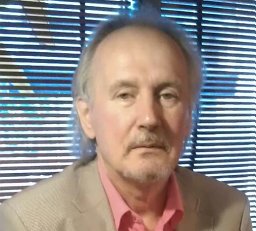 Kauko Leiviska合作论文数Control Engn Lab, Univ Oulu1
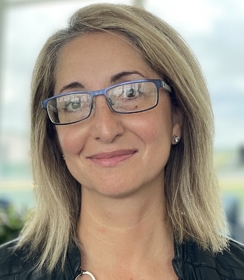 Corina Sas合作论文数Department of Computing and Communications, School of Computing and Communications, Lancaster University1
 Karolin Eva Kappler合作论文数1Wiebina Heesterman合作论文数1
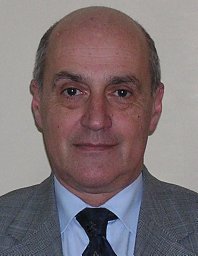 Florin Gheorghe Filip合作论文数Romanian Academy1
 Tibor Vámos合作论文数Computer and Automation Research Institute, Hungarian Academy of Sciences;Budapest Technical University1Man-Wook Han合作论文数1Sorin Sergiu Chelmu合作论文数Bioterra University of Bucharest1Vladimir Rasvan合作论文数1Ana Bazac合作论文数1Dietrich Brandt合作论文数University of London1Amalia Strateanu合作论文数Center for Studies and Researchers Agroforestry Biodiversity, Romanian Academy1
 William D. Tucker合作论文数University of the Western Cape1
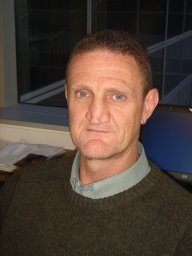 Dave Webb合作论文数University of Western Australia1
 Eugen Bobasu合作论文数1
 Alexandru Bogdan合作论文数1
 Alan Cottey合作论文数1László Z. Karvalics合作论文数1




