High Energy Photon Source (HEPS) has strict restrictions to the vibration levels on storage ring slab. To assess the impact of vibrations reasonably, it is imperative to study the vibration attenuation on-site. To investigate the vibration propagation characteristics across a range of frequencies at the HEPS site, a series of measurements were performed. A shaker was utilized to artificially produce vertical sinusoidal excitations ranging from 10Hz up to 100 Hz. The vibration attenuation was recorded along the bare ground at these varying frequencies. A decay formula was derived, and a key parameter range was identified. These attenuation formulae were incorporated into the beam dynamics model, allowing an assessment of the vibration impact from a high-power water-cooling pump situated near the HEPS storage ring (SR).The vibration measurement data collected from the slab of the SR tunnel adjacent to the pump correlated well with the evaluation results. This study establishes a vibration decay formula for varying frequencies at HEPS, completes the vibration beam dynamics model, and provides a foundation for accurately assessing vibration influences for both internal and external vibration sources around the HEPS campus. Furthermore, it serves as a reference for research methodologies concerning vibration propagation on the ground.
The high-energy photon source (HEPS) is the first fourth-generation synchrotron light source facility in China. The HEPS injector consists of a linear accelerator (Linac) and a full energy booster. The booster captures the electron beam from the Linac and increases its energy to the value required for the storage ring. The full-energy beam could be injected to the storage ring directly or after “high-energy accumulation.” On November 17, 2023, the key booster parameters successfully reached their corresponding target values. These milestone results were achieved based on numerous contributions, including nearly a decade of physical design, years of equipment development and installation, and months of beam commissioning. As measured at the extraction energy of 6 GeV, the averaged beam current and emittance reached 8.57 mA with 5 bunches and 30.37 nm rad with a single-bunch charge of 5.58 nC, compared with the corresponding target values of 6.6 mA and 35 nm rad, respectively. This paper presents the physical design, equipment development, installation, and commissioning process of the HEPS booster.
高能同步辐射光源(HEPS)是中国第一台第四代高能同步辐射光源,其加速器由直线加速器、增强器、储存环及输运线组成.报道了HEPS直线加速器的初期束流调试重要进展.HEPS直线加速器是一台500 MeV S波段常温直线加速器,由热阴极电子枪、聚束系统、主直线加速器构成.在按时完成设备加工、安装和老练的基础上,于2023年3月9日启动束流调试,当天实现束流全线贯通.3月14日束流能量达到500 MeV,束团电荷量达到2.5 nC.经过测量,直线加速器出口束流能散0.4%,能量稳定度0.06%,水平和垂直几何发射度分别为233 nm和145 nm.目前直线加速器束团电荷量可达到7.0 nC,相关束流调试正在进行.
The High Energy Photon Source (HEPS) is a greenfield 4th-generation light source. Its storage ring energy is 6 GeV and its ring cir-cumference is 1,360 m. One year after the HEPS complex buildings were constructed (Figure 1 ), we report here considerable progress, despite the COVID pandemic’s impact on supply chain and on-site personnel leading to unanticipated delays.
A circular electron positron collider was proposed in IHEP when the Higgs boson was discovered at CERN two years ago. Studies on main parameters, collider related issues, such as lattice design, beam-beam simulation, collective effects, beamstrahlung, and injection scheme, are being carried on. Some preliminary results are given, and the whole project is described.
The China Spallation Neutron Source (CSNS) is an accelerator based multidiscipline user facility planned to be constructed in Dongguan, Guangdong, China. The CSNS complex consists of an negative hydrogen linear accelerator, a rapid cycling proton synchrotron accelerating the beam to 1.6GeV energy, a solid tungsten target station, and instruments for spallation neutron applications. The facility operates at 25Hz repetition rate with an initial design beam power of 120kW and is upgradeable to 500kW. The primary challenge is to build a robust and reliable user's facility with upgrade potential at a fraction of “world standard” cost. We report the status, design, R&D, and upgrade outlook including applications using spallation neutron, muon, fast neutron, and proton, as well as related programs including medical therapy and accelerator-driven sub-critical reactor (ADS) programs for nuclear waste transmutation.
 Wen Kang (康文)合作论文数University of Chinese Academy of Sciences;Institute of High Energy Physics, Chinese Academy of Sciences4
 Weimin Pan (潘卫民)合作论文数4
 Sheng Wang (王生)合作论文数Institute of High Energy Physics, Chinese Academy of Sciences;University of Chinese Academy of Sciences3
 Jianshe Cao (曹建社)合作论文数中国科学院高能物理研究所3Haiyi Dong (董海义)合作论文数3
 Gang Xu (徐刚)合作论文数School of Physics, Huazhong University of Science and Technology3
 Yi Jiao (焦毅)合作论文数Institute of High Energy Physics, Chinese Academy of Sciences;University of Chinese Academy of Sciences3Huamin Qu合作论文数2Ping He合作论文数2
 Jing Zhang (张旌)合作论文数2Qiang Ye (叶强)合作论文数2
 Xin Qi (齐欣)合作论文数中国科学院大学高能物理研究所2
 Jingyi Li (李京祎)合作论文数中国科学院大学高能物理研究所2
 Ling Kang (康玲)合作论文数中国科学院高能物理研究所2
 Yanfeng Sui (随艳峰)合作论文数Institute of High Energy Physics, Chinese Academy of Sciences;University of Chinese Academy of Sciences2
 Cai Meng (孟才)合作论文数Institute of High Energy Physics, Chinese Academy of Sciences;University of the Chinese Academy of Sciences2
 Jian Li (李剑)合作论文数School of Electrical Engineering, Chongqing University2
 Qing Qin (秦庆)合作论文数School of Physics, Peking University;Institute of High Energy Physics, Chinese Academy of Sciences;University of Chinese Academy of Sciences2Fengli Long (龙锋利)合作论文数2Zonghua Zhang合作论文数1Min Zhou合作论文数1Kaixi Huang合作论文数1xiaoping li合作论文数1Lan Dong合作论文数1Zhongxiong Xu合作论文数1shi caitu合作论文数1yuan guo合作论文数1
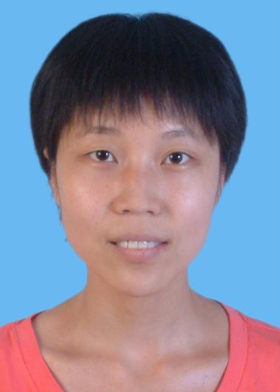 Dou Wang (王逗)合作论文数University of Chinese Academy of Sciences;Institute of High Energy Physics, Chinese Academy of Sciences1
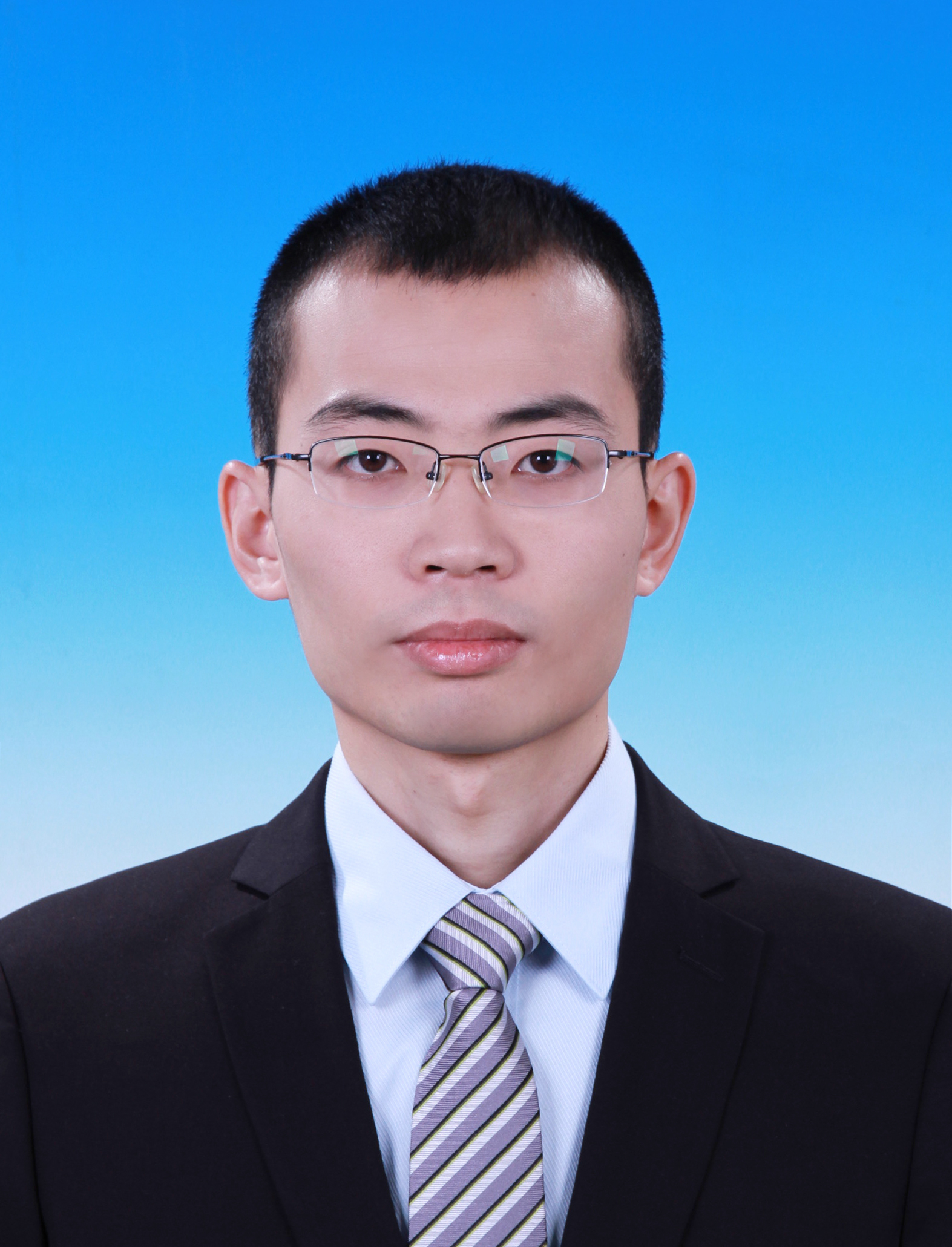 Yiwei Wang (王毅伟)合作论文数University of Chinese Academy of Sciences;Institute of High Energy Physics, Chinese Academy of Sciences1
 Yuemei Peng (彭月梅)合作论文数Institute of High Energy Physics, Chinese Academy of Sciences;University of Chinese Academy of Sciences1Changdong Deng (邓昌东)合作论文数1
 Yuanbai Chen (陈元柏)合作论文数Institute of High Energy Physics, Chinese Academy of Sciences1teng yue合作论文数1Wei Tao (魏涛)合作论文数1Chuang Zhang (张闯)合作论文数1
 D.Y. He合作论文数1x lou合作论文数1yi sun合作论文数1Sun Hong合作论文数1ming xiao合作论文数1Ji Feng合作论文数1Sha Bai合作论文数1
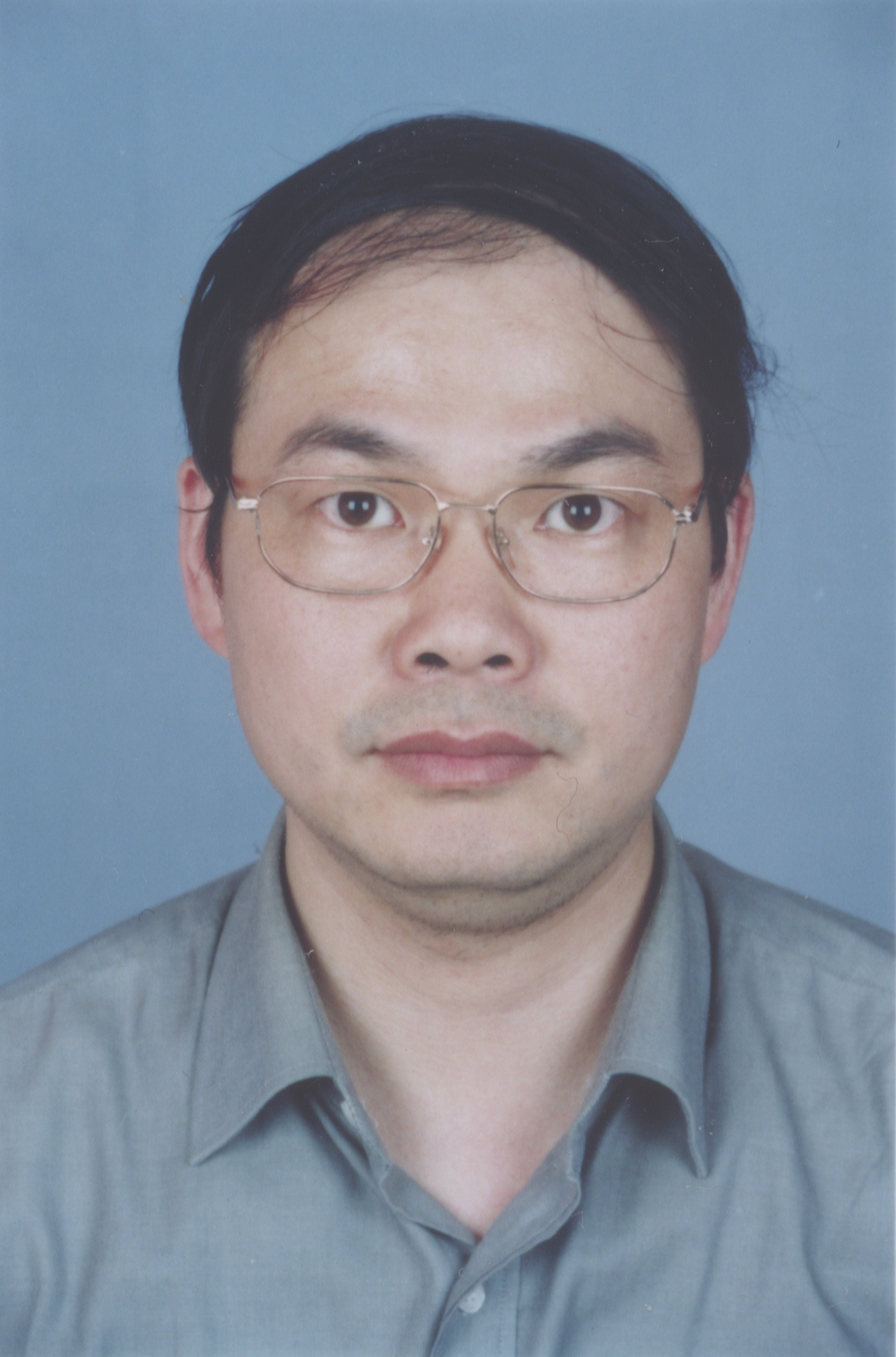 Tao Zhu (朱涛)合作论文数Institute of Physics, Chinese Academy of Sciences;University of Chinese Academy of Sciences1
 Yuan Zhang (张源)合作论文数Institute of High Energy Physics, Chinese Academy of Sciences;University of Chinese Academy of Sciences1
 Pei Zhang (张沛)合作论文数中国科学院大学高能物理研究所1
 Junhui Yue (岳军会)合作论文数中国科学院大学高能物理研究所1
 Wen Yin (殷雯)合作论文数Institute of High Energy Physics, Chinese Academy of Sciences;University of Chinese Academy of Sciences1
 Taoguang Xu (徐韬光)合作论文数中国科学院大学高能物理研究所1




