We report the first measurement of the Q2 distribution of X(3915) produced by single-tag two-photon interactions. The decay mode used is X(3915) & RARR; J/& psi;& omega;. The covered Q2 region is from 1.5 (GeV/c)2 to 10.0 (GeV/c)2. We observe 7.9 1 3.1(stat) 1 1.5(syst) events, where we expect 4.1 10.7 events based on the Q2 = 0 result from the no-tag two-photon process, extrapolated to higher Q2 region using the cc over bar model of Schuler, Berends, and van Gulik. The shape of the distribution is also consistent with this model; we note that statistical uncertainties are large.
We report preliminary results from a study of hadronic transitions of the χbJ (nP) states of bottomonium at Belle. The P-wave states are reconstructed in transitions to the Υ(1S) with the emission of an ω meson. The transitions of the n = 2 triplet states provide a unique laboratory in which to study nonrelativistic quantum chromodynamics, as the kinematic threshold for production of an ω and Υ(1S) lies between the J = 0 and J = 1 states. A search for the χbJ (3P) states is also reported.
We present a measurement of the W boson mass in W-->e(nu) decays using 1 fb-1 of data collected with the D0 detector during Run II of the Fermilab Tevatron collider. With a sample of 499830 W-->e(nu) candidate events, we measure M(W)=80.401+/-0.043 GeV. This is the most precise measurement from a single experiment.
K. Abe, K. Abe, R. Abe, T. Abe, I. Adachi, Byoung Sup Ahn, H. Aihara, M. Akatsu, Y. Asano, T. Aso, V. Aulchenko, T. Aushev, A. M. Bakich, Y. Ban, E. Banas, W. Bartel, A. Bay, P. K. Behera, A. Bondar, A. Bozek, M. Bračko, J. Brodzicka, T. E. Browder, B. C. K. Casey, P. Chang, Y. Chao, B. G. Cheon, R. Chistov, S.-K. Choi, Y. Choi, M. Danilov, L. Y. Dong, J. Dragic, A. Drutskoy, S. Eidelman, V. Eiges, Y. Enari, C. Fukunaga, N. Gabyshev, A. Garmash, 10 T. Gershon, A. Gordon, R. Guo, F. Handa, T. Hara, Y. Harada, N. C. Hastings, H. Hayashii, M. Hazumi, E. M. Heenan, I. Higuchi, T. Higuchi, T. Hojo, T. Hokuue, Y. Hoshi, K. Hoshina, S. R. Hou, W.-S. Hou, H.-C. Huang, T. Igaki, Y. Igarashi, T. Iijima, K. Inami, A. Ishikawa, R. Itoh, M. Iwamoto, H. Iwasaki, Y. Iwasaki, H. K. Jang, J. Kaneko, J. H. Kang, J. S. Kang, P. Kapusta, N. Katayama, H. Kawai, Y. Kawakami, N. Kawamura, T. Kawasaki, H. Kichimi, D. W. Kim, Heejong Kim, H. J. Kim, H. O. Kim, Hyunwoo Kim, S. K. Kim, T. H. Kim, K. Kinoshita, P. Krokovny, R. Kulasiri, S. Kumar, A. Kuzmin, Y.-J. Kwon, J. S. Lange, 36 G. Leder, S. H. Lee, J. Li, D. Liventsev, R.-S. Lu, J. MacNaughton, G. Majumder, F. Mandl, S. Matsumoto, T. Matsumoto, 47 H. Miyake, H. Miyata, G. R. Moloney, T. Mori, T. Nagamine, Y. Nagasaka, E. Nakano, M. Nakao, J. W. Nam, Z. Natkaniec, K. Neichi, S. Nishida, O. Nitoh, S. Noguchi, T. Nozaki, S. Ogawa, F. Ohno, T. Ohshima, T. Okabe, S. Okuno, S. L. Olsen, Y. Onuki, W. Ostrowicz, H. Ozaki, P. Pakhlov, H. Palka, C. W. Park, H. Park, K. S. Park, L. S. Peak, J.-P. Perroud, M. Peters, L. E. Piilonen, N. Root, H. Sagawa, S. Saitoh, Y. Sakai, M. Satapathy, A. Satpathy, 5 O. Schneider, S. Schrenk, C. Schwanda, 13 S. Semenov, K. Senyo, R. Seuster, M. E. Sevior, H. Shibuya, V. Sidorov, J. B. Singh, S. Stanič, ∗ M. Starič, A. Sugi, A. Sugiyama, K. Sumisawa, T. Sumiyoshi, 47 K. Suzuki, S. Suzuki, S. K. Swain, T. Takahashi, F. Takasaki, K. Tamai, N. Tamura, M. Tanaka, G. N. Taylor, Y. Teramoto, S. Tokuda, T. Tomura, S. N. Tovey, W. Trischuk, † T. Tsuboyama, T. Tsukamoto, S. Uehara, K. Ueno, Y. Unno, S. Uno, S. E. Vahsen, G. Varner, K. E. Varvell, C. C. Wang, C. H. Wang, J. G. Wang, M.-Z. Wang, Y. Watanabe, E. Won, B. D. Yabsley, Y. Yamada, A. Yamaguchi, Y. Yamashita, M. Yamauchi, H. Yanai, J. Yashima, Y. Yuan, Y. Yusa, Z. P. Zhang, V. Zhilich, and D. Žontar
We report the first evidence for X(3872) production in two-photon interactions by tagging either the electron or the positron in the final state, exploring the highly virtual photon region. The search is performed in e^{+}e^{-}→e^{+}e^{-}J/ψπ^{+}π^{-}, using 825 fb^{-1} of data collected by the Belle detector operated at the KEKB e^{+}e^{-} collider. We observe three X(3872) candidates, where the expected background is 0.11±0.10 events, with a significance of 3.2σ. We obtain an estimated value for Γ[over ˜]_{γγ}B(X(3872)→J/ψπ^{+}π^{-}) assuming the Q^{2} dependence predicted by a cc[over ¯] meson model, where -Q^{2} is the invariant mass squared of the virtual photon. No X(3915)→J/ψπ^{+}π^{-} candidates are found.
The enhancement of charged-particle pairs with large pseudorapidity difference and small azimuthal angle difference, often referred to as the ``ridge signal'', is a phenomenon widely observed in high multiplicity proton-proton, proton-ion and deutron-ion collisions, which is not yet fully understood. In heavy-ion collisions, the hydrodynamic expansion of the Quark-Gluon Plasma is one of the possible explanations of the origin of the ridge signal. Measurements in the $e^+e^-$ collision system, without the complexities introduced by hadron structure in the initial state, can serve as a complementary probe to examine the formation of a ridge signal. The first measurement of two-particle angular correlation functions in high multiplicity $e^+e^-$ collisions at $\sqrt{s}=10.52$ GeV is reported. The hadronic $e^+e^-$ annihilation data collected by the Belle detector at KEKB are used in this study. Two-particle angular correlation functions are measured over the full azimuth and large pseudorapidity intervals which are defined by either the electron beam axis or the event thrust as a function of charged particle multiplicity. The measurement in the event thrust analysis, with mostly outgoing quark pairs determining the reference axis, is sensitive to the region of additional soft gluon emissions. No significant ridge signal is observed with either coordinates analyses. Near side jet correlations appear to be absent in the thrust axis analysis. The measurements are compared to predictions from various event generators and expected to provide new constraints to the phenomenological models in the low energy regime.
In the Standard Model (SM) charmless hadronic decays B_s^0 →η^'η proceed via tree-level b→ u and penguin b→ s transitions. Penguin transitions are sensitive to Beyond-the-Standard-Model (BSM) physics scenarios and could affect the branching fractions and CP asymmetries in such decays. Once branching fractions for two-body decays B_s →ηη, ηη^', η^'η^' are measured, and the theoretical uncertainties are reduced, it would be possible to extract CP violating parameters from the data using the formalism based on SU(3)/U(3) symmetry. To achieve this goal, at least four of these six branching fractions need to be measured. Only the branching fraction for B_s^0 →η^'η^' has been measured so far.
We report the first measurement of the D^∗ - meson polarization in the decay B^0 → D^*-τ^+ν_τ using the full data sample of 772× 10^6 BB̅ pairs recorded with the Belle detector at the KEKB electron-positron collider. Our result, F_L^D^∗ = 0.60 ± 0.08 ( stat) ± 0.04 ( sys), where F_L^D^∗ denotes the D^∗- meson longitudinal polarization fraction, agrees within about 1.7 standard deviations of the standard model prediction.
We report the first measurement of the $D^{ast -}$ meson polarization in the decay $B^0 to D^{*-} tau^+nu_{tau}$ using the full data sample of 772$times 10^6$ $Bbar{B}$ pairs recorded with the Belle detector at the KEKB electron-positron collider. Our result, $F_L^{D^ast} = 0.60 pm 0.08 ({rm stat}) pm 0.04 ({rm sys})$, where $F_L^{D^ast}$ denotes the $D^{ast-}$ meson longitudinal polarization fraction, agrees within about $1.7$ standard deviations of the standard model prediction.
We present a measurement of $R_{K^{ast}}$, the ratio of the branching fractions ${cal B}(Bto K^ast mu^+ mu^-)$ and ${cal B}(Bto K^ast e^+ e^-)$, for both charged and neutral $B$ mesons. The ratio for charged $B$ mesons, $R_{K{^{ast +}}}$, is the first measurement ever performed. The analysis is based on a data sample of $711~mathrm{fb}^{-1}$, containing $772times 10^{6}$ $Bbar B$ events, recorded at the $Upsilon(4S)$ resonance with the Belle detector at the KEKB asymmetric-energy $e^+e^-$ collider.
We report an experimental determination of the isospin of Λ_c(2765)^+/Σ_c(2765)^+ using 980 fb^-1 data in the e^+e^- annihilation around √(s) = 10.6 GeV collected by the Belle detector located at the KEKB collider. The isospin partners are searched for in the Σ_c(2455)^++/0π^0 channels, and no evidence was obtained. Thus the isospin is determined to be zero, and the particle is established to be a Λ_c.
We report a search for charmless hadronic decays of charged B mesons to the final states K^0_S K^0_S K^± and K^0_S K^0_Sπ^± . The results are based on a 711 fb^-1 data sample that contains 772 × 10^6 B B̅ pairs, and was collected at the Υ(4S) resonance with the Belle detector at the KEKB asymmetric-energy e^+e^- collider. For B^±→ K^0_S K^0_S K^± decays, the measured branching fraction and direct CP asymmetry are [10.64±0.49(stat)± 0.44(syst)]×10^-6 and [-0.6±3.9(stat)± 3.4(syst)] respectively. In the absence of a statistically significant signal for B^±→ K^0_S K^0_Sπ^±, we set the 90 upper limit on its branching fraction at 1.14 × 10^-6.
We report a measurement of the differential cross section of pi(0) pair production in single-tag two-photon collisions, gamma*gamma -> pi(0) pi(0), in e(+) e(-) scattering. The cross section is measured for Q(2) up to 30 GeV2, where Q(2) is the negative of the invariant mass squared of the tagged photon, in the kinematic range 0.5 GeV < W < 2.1 GeV and vertical bar cos theta*vertical bar < 1.0 for the total energy and pion scattering angle, respectively, in the gamma*gamma center-of-mass system. The results are based on a data sample of 759 fb(-1) collected with the Belle detector at the KEKB asymmetric-energy e(+) e(-) collider. The transition form factor of the f(0)(980) and that of the f(2)(1270) with the helicity-0, -1, and -2 components separately are measured for the first time and are compared with theoretical calculations.
C. P. Shen, 35 C. Z. Yuan, I. Adachi, H. Aihara, D. M. Asner, V. Aulchenko, A. M. Bakich, A. Bala, B. Bhuyan, M. Bischofberger, A. Bozek, M. Bračko, T. E. Browder, V. Chekelian, A. Chen, P. Chen, B. G. Cheon, K. Chilikin, I.-S. Cho, K. Cho, V. Chobanova, Y. Choi, D. Cinabro, J. Dalseno, 56 M. Danilov, 34 J. Dingfelder, Z. Doležal, Z. Drásal, A. Drutskoy, 34 D. Dutta, K. Dutta, S. Eidelman, D. Epifanov, H. Farhat, J. E. Fast, T. Ferber, A. Frey, V. Gaur, N. Gabyshev, S. Ganguly, R. Gillard, Y. M. Goh, B. Golob, 23 J. Haba, T. Hara, K. Hayasaka, H. Hayashii, Y. Hoshi, W.-S. Hou, H. J. Hyun, T. Iijima, 35 A. Ishikawa, R. Itoh, Y. Iwasaki, T. Julius, D. H. Kah, J. H. Kang, E. Kato, T. Kawasaki, C. Kiesling, D. Y. Kim, H. J. Kim, J. B. Kim, J. H. Kim, K. T. Kim, Y. J. Kim, K. Kinoshita, J. Klucar, B. R. Ko, P. Kodyš, S. Korpar, 23 P. Križan, P. Krokovny, T. Kumita, A. Kuzmin, Y.-J. Kwon, S.-H. Lee, R. Leitner, J. Li, Y. Li, J. Libby, C. Liu, Y. Liu, Z. Q. Liu, D. Liventsev, P. Lukin, D. Matvienko, K. Miyabayashi, H. Miyata, G. B. Mohanty, A. Moll, 56 T. Mori, N. Muramatsu, R. Mussa, Y. Nagasaka, E. Nakano, M. Nakao, Z. Natkaniec, M. Nayak, E. Nedelkovska, C. Ng, N. K. Nisar, S. Nishida, O. Nitoh, S. Ogawa, S. Okuno, S. L. Olsen, W. Ostrowicz, P. Pakhlov, 34 C. W. Park, H. Park, H. K. Park, T. K. Pedlar, T. Peng, R. Pestotnik, M. Petrič, L. E. Piilonen, M. Ritter, M. Röhrken, A. Rostomyan, S. Ryu, H. Sahoo, T. Saito, Y. Sakai, S. Sandilya, L. Santelj, T. Sanuki, Y. Sato, V. Savinov, O. Schneider, G. Schnell, 15 C. Schwanda, K. Senyo, O. Seon, M. Shapkin, V. Shebalin, T.-A. Shibata, J.-G. Shiu, B. Shwartz, A. Sibidanov, F. Simon, 56 P. Smerkol, Y.-S. Sohn, A. Sokolov, E. Solovieva, S. Stanič, M. Starič, M. Steder, M. Sumihama, T. Sumiyoshi, U. Tamponi, 64 K. Tanida, G. Tatishvili, Y. Teramoto, T. Tsuboyama, M. Uchida, S. Uehara, Y. Unno, S. Uno, P. Urquijo, S. E. Vahsen, C. Van Hulse, P. Vanhoefer, G. Varner, V. Vorobyev, M. N. Wagner, C. H. Wang, P. Wang, X. L. Wang, M. Watanabe, Y. Watanabe, E. Won, H. Yamamoto, J. Yamaoka, Y. Yamashita, S. Yashchenko, Y. Yook, Y. Yusa, C. C. Zhang, Z. P. Zhang, V. Zhilich, and A. Zupanc
We present a new measurement of the CKM matrix element $|V_{cb}|$ from $ B^{0} rightarrow D^{*}ell nu$ decays, reconstructed with full Belle data set ($711 , rm fb^{-1}$). Two form factor parameterisations, based on work by the CLN and BGL groups, are used to extract the product $mathcal{F}(1)eta_{rm EW}|V_{cb}|$ and the decay form factors, where $mathcal{F}(1)$ is the factor normalisation and $eta_{rm EW}$ is a small electroweak correction. In the CLN parameterisation we find $mathcal{F}(1)eta_{rm EW}|V_{cb}| = (35.06 pm 0.15 pm 0.54) times 10^{-3}$, $rho^{2}=1.106 pm 0.031 pm 0.007$, $R_{1}(1)=1.229 pm 0.028 pm 0.009$, $R_{2}(1)=0.852 pm 0.021 pm 0.006$. In the BGL parameterisation we find $mathcal{F}(1)eta_{rm EW}|V_{cb}|= 38.73 pm 0.25 pm 0.60$, which is higher but consistent with the determination from inclusive semileptonic $B$ decays when correcting for $mathcal{F}(1)eta_{rm EW}$. This is the most precise measurement of $mathcal{F}(1)eta_{rm EW}|V_{cb}|$ and form factors that has ever been carried out, and the first direct study of the BGL form factor parameterisation in an experimental measurement.
Abstract We present the first measurement of the Michel parameters η ‾ and ξκ in the radiative leptonic decay of the τ lepton using 703 fb-1 of data collected with the Belle detector at the KEKB e + e − collider. The Michel parameters are measured by an unbinned maximum likelihood fit to the kinematic information of e + e − → τ + τ − → ( π + π 0 ν ‾ ) ( l − ν ν ‾ γ ) ( l = e or μ ) . The preliminary values of the measured Michel parameters are η ‾ = − 2.0 ± 1.5 ± 0.8 and ξ κ = 0.6 ± 0.4 ± 0.2 , where the first error is statistical and the second is systematic.
B. Pal, A. J. Schwartz, A. Abdesselam, I. Adachi, 12 H. Aihara, D. M. Asner, T. Aushev, 25 R. Ayad, T. Aziz, V. Babu, I. Badhrees, 30 S. Bahinipati, A. M. Bakich, E. Barberio, P. Behera, V. Bhardwaj, B. Bhuyan, J. Biswal, A. Bobrov, 52 A. Bozek, M. Bračko, 26 T. E. Browder, D. Červenkov, V. Chekelian, A. Chen, B. G. Cheon, R. Chistov, K. Cho, V. Chobanova, Y. Choi, D. Cinabro, J. Dalseno, 66 N. Dash, Z. Doležal, Z. Drásal, A. Drutskoy, 41 D. Dutta, S. Eidelman, 52 H. Farhat, J. E. Fast, B. G. Fulsom, V. Gaur, A. Garmash, 52 R. Gillard, Y. M. Goh, P. Goldenzweig, D. Greenwald, O. Grzymkowska, J. Haba, 12 T. Hara, 12 K. Hayasaka, H. Hayashii, X. H. He, W.-S. Hou, K. Inami, A. Ishikawa, Y. Iwasaki, W. W. Jacobs, I. Jaegle, H. B. Jeon, D. Joffe, K. K. Joo, T. Julius, K. H. Kang, E. Kato, T. Kawasaki, C. Kiesling, D. Y. Kim, H. J. Kim, K. T. Kim, M. J. Kim, S. H. Kim, K. Kinoshita, P. Kodyš, S. Korpar, 26 P. Križan, 26 P. Krokovny, 52 T. Kuhr, R. Kumar, T. Kumita, A. Kuzmin, 52 Y.-J. Kwon, I. S. Lee, C. H. Li, H. Li, L. Li, L. Li Gioi, J. Libby, D. Liventsev, 15 P. Lukin, 52 T. Luo, M. Masuda, D. Matvienko, 52 K. Miyabayashi, H. Miyata, R. Mizuk, 41 G. B. Mohanty, S. Mohanty, 75 A. Moll, 66 H. K. Moon, T. Mori, R. Mussa, E. Nakano, M. Nakao, 12 T. Nanut, Z. Natkaniec, M. Nayak, N. K. Nisar, 1 S. Nishida, 12 S. Ogawa, S. Okuno, P. Pakhlov, 41 G. Pakhlova, 25 C. W. Park, H. Park, S. Paul, T. K. Pedlar, L. Pesántez, R. Pestotnik, M. Petrič, L. E. Piilonen, C. Pulvermacher, J. Rauch, E. Ribežl, M. Ritter, A. Rostomyan, S. Ryu, H. Sahoo, Y. Sakai, 12 S. Sandilya, T. Sanuki, Y. Sato, V. Savinov, T. Schlüter, O. Schneider, G. Schnell, 16 C. Schwanda, Y. Seino, K. Senyo, O. Seon, I. S. Seong, V. Shebalin, 52 T.-A. Shibata, J.-G. Shiu, B. Shwartz, 52 F. Simon, 66 Y.-S. Sohn, A. Sokolov, E. Solovieva, S. Stanič, M. Starič, J. Stypula, M. Sumihama, T. Sumiyoshi, U. Tamponi, 74 Y. Teramoto, K. Trabelsi, 12 M. Uchida, S. Uehara, 12 T. Uglov, 42 S. Uno, 12 P. Urquijo, Y. Usov, 52 C. Van Hulse, P. Vanhoefer, G. Varner, A. Vinokurova, 52 A. Vossen, M. N. Wagner, C. H. Wang, M.-Z. Wang, X. L. Wang, M. Watanabe, Y. Watanabe, K. M. Williams, E. Won, J. Yamaoka, J. Yelton, C. Z. Yuan, Y. Yusa, Z. P. Zhang, V. Zhilich, 52 V. Zhulanov, 52 and A. Zupanc 26
We report the first measurement of the lepton forward-backward asymmetry A_ FB as a function of the squared four-momentum of the dilepton system, q^2, for the electroweak penguin process B → X_s ℓ^+ ℓ^- with a sum of exclusive final states, where ℓ is an electron or a muon and X_s is a hadronic recoil system with an s quark. The results are based on a data sample containing 772×10^6 BB̅ pairs recorded at the Υ(4S) resonance with the Belle detector at the KEKB e^+ e^- collider. A_ FB for the inclusive B → X_s ℓ^+ ℓ^- is extrapolated from the sum of 10 exclusive X_s states whose invariant mass is less than 2 GeV/c^2. For q^2 > 10.2 GeV^2/c^2, A_ FB < 0 is excluded at the 2.3σ level, where σ is the standard deviation. For q^2 < 4.3 GeV^2/c^2, the result is within 1.8σ of the Standard Model theoretical expectation.
We have searched for the decay ${B}^{0}\ensuremath{\rightarrow}\ensuremath{\phi}\ensuremath{\gamma}$ using the full Belle data set of $772\ifmmode\times\else\texttimes\fi{}{10}^{6}$ $B\overline{B}$ pairs collected at the $\mathrm{\ensuremath{\Upsilon}}(4\text{S})$ resonance with the Belle detector at the KEKB ${e}^{+}{e}^{\ensuremath{-}}$ collider. No signal is observed, and we set an upper limit on the branching fraction of $\mathcal{B}({B}^{0}\ensuremath{\rightarrow}\ensuremath{\phi}\ensuremath{\gamma})<1.0\ifmmode\times\else\texttimes\fi{}{10}^{\ensuremath{-}7}$ at the 90% confidence level. This is the most stringent limit on this decay mode to date.
 Hiroaki Aihara (相原博昭)合作论文数Kavli Institute for The Physics and Mathematics of the Universe, Department of Physics, School of Science, The University of Tokyo792
 Olivier Schneider合作论文数High Energy Physics Laboratory, Institute of Physics, School of Basic Sciences, Ecole Polytechnique Fédérale De Lausanne783
 Thomas E. Browder合作论文数University of Hawaii776
 Y. Sakai合作论文数765
 Hisaki Hayashii合作论文数Department of Physics, Nara Women's University;Faculty of Science, Nara Women's University758Shoji Uno (宇野彰二)合作论文数Institute of Particle and Nuclear Studies, High Energy Accelerator Research Organization751
 Leo Piilonen合作论文数Department of Physics, College of Science, Virginia Polytechnic Institute and State University744
 Byung Gu Cheon合作论文数Department of Physics, College of Natural Sciences, Hanyang University740Osamu Nitoh (仁藤修)合作论文数Institute of Engineering, Division of Advanced Applied Physics, Tokyo University of Agriculture and Technology;Department of Applied Physics, Graduate School of Engineering, Faculty of Engineering, Tokyo University of Agriculture and Technology736H. Miyata合作论文数729
 Ryosuke Itoh (伊藤領介)合作论文数Institute of Particle and Nuclear Studies, High Energy Accelerator Research Organization727
 Andrew Bakich合作论文数School of Physics, University of Sydney723S. Okuno合作论文数708Y. Hoshi合作论文数705C. H. Wang合作论文数702
 Tagir Aushev合作论文数Moscow Institute of Physics and Technology701Andrzej Bożek合作论文数Department of Leptonic Interactions, Institute of Nuclear Physics700
 Ichiro Adachi (足立一郎)合作论文数Institute of Particle and Nuclear Studies, High Energy Accelerator Research Organization697
 Katsumi Senyo (千代勝実)合作论文数Institute of Arts and Sciences, Yamagata University697T. Sumiyoshi合作论文数Tokyo Metropolitan University694Y.-J. Kwon合作论文数690Starič M.合作论文数688Bračko M.合作论文数684S. Nishida合作论文数664
 Toru Iijima (飯嶋徹)合作论文数Tau-Lepton Data Analytics Laboratory, Kobayashi-Maskawa Institute, Nagoya University;Division of Experimental Studies, Kobayashi-Maskawa Institute, Nagoya University664
 Eunil Won合作论文数Department of Physics, Korea University658Nikolay I. Gabyshev合作论文数Budker Institute of Nuclear Physics657
 Kenkichi Miyabayashi (宮林謙吉)合作论文数Faculty Division of Natural Sciences, Nara Women's University;Institute of Particle and Nuclear Studies, High Energy Accelerator Research Organization;Department of Physics, Nara Women's University654Dmitri Liventsev合作论文数Department of Physics and Astronomy, College of Liberal Arts and Sciences, Wayne State University653
 Kenji Inami (居波賢二)合作论文数Department of Physics, Graduate School of Science, Nagoya University;High Energy Accelerator Research Organization648
 S. Stanic合作论文数Institute of Applied Physics, University of Tsukuba647
 Martin Sevior合作论文数School of Physics, Faculty of Science, The University of Melbourne646
 Ishikawa Akira (石川朗)合作论文数Kobe University640Eiichi Nakano (中野英一)合作论文数Institute of Science, Department of Physics, Graduate School of Science, Osaka Metropolitan University635
 Mikihiko Nakao (中尾幹彦)合作论文数Institute of Particle and Nuclear Studies, High Energy Accelerator Research Organization634T. Ohshima合作论文数Department of Physics, Nagoya University630
 Kay Kinoshita合作论文数Department of Physics, University of Cincinnati626A. Kuzmin合作论文数Numerical simulations of multiphase flows in microchannels623Victor Zhilich合作论文数Budker Institute of Nuclear Physics621B. Golob合作论文数618
 Pavel Pakhlov合作论文数Department of Physics of Elemental Particles, Moscow Institute of Physics and Technology;Department of Experimental Nuclear Physics and Cosmophysics, MEPhI;Department of Discrete Mathematics, MIEM HSE;School of Electronic Engineering, HSE Tikhonov Moscow Institute of Electronics and Mathematics605
 Ruslan Chistov合作论文数Department of High Energies Physics, Institute for Theoretical and Experimental Physics604
 Satoru Ogawa (小川了)合作论文数Department of Physics, Faculty of Science, Toho University603
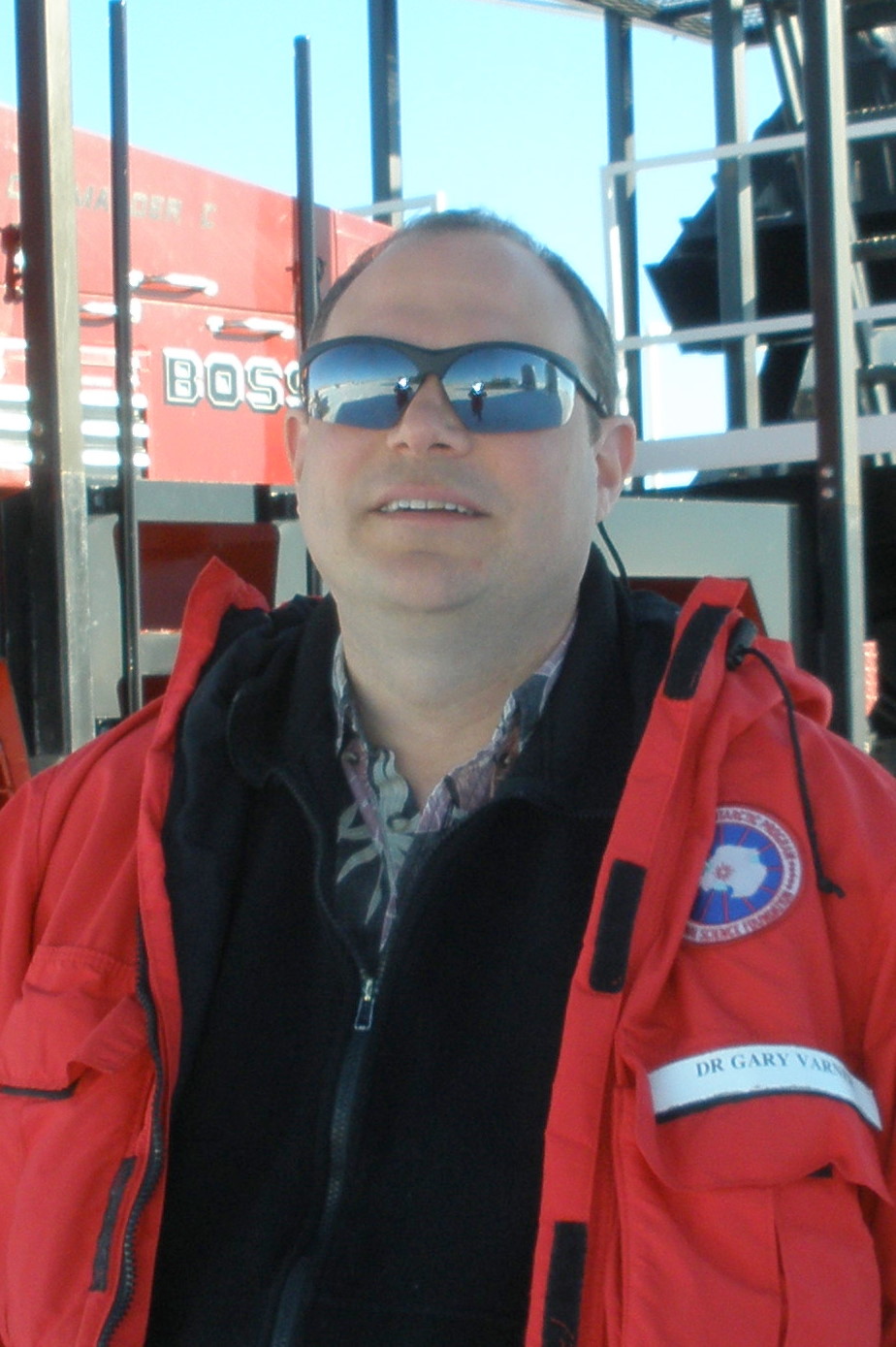 Gary Varner合作论文数University of Hawaii602Shingo Kataoka (寺岡伸悟)合作论文数Department of Gerontology, Faculty of Health Sciences, Akdeniz University;Institute of Yamato Area and Kii Peninsula, Nara Women's University;Nara Prefectural University596Jeremy Peter Dalseno合作论文数Instituto Galego de Física de Altas Enerxías, Universidade de Santiago de Compostela589Unno Y.合作论文数581b shwartz合作论文数580Iwasaki Y.合作论文数578




