About 1 million patients are treated for stenosis of coronary arteries by percutaneous balloon angioplasty annually worldwide. In many cases a so called stent is inserted into the vessel to keep it mechanically open. Restenosis is observed in about 20–30% of these cases, which can be treated by irradiating the stented vessel segment. In our approach, we utilized the stent itself as radiation source by ion implanting 32P. Investigations of the surface properties were performed with special emphasis on activity retention. Clinical data of about 400 patients showed radioactive stents can suppress instent restenosis, but a so called edge effect appeared, which can be avoided by the new “drug eluting stents”.
Worldwide about one million patients require treatment of stenosed coronary arteries annually. Often a tubular stainless steel mesh (stent) is implanted to mechanically support the injured vessel. Restenosis, an abundant complication (20%–30%) can be prevented, if the vessel is treated with ionizing radiation. Stents can deliver radiation if they are made radioactive. The radio isotope P32 is well suited when ion implanted. Radioactive ions sources require high efficiency to keep the radioactive inventory small. Reliability, ease of operation, and maintenance are mandatory. A small emittance is important to minimize losses during mass separation and beam transport. A 2.45 GHz ECR source was developed for the implantation of P32. The source consists of two coils for the axial and a permanent hexapole for the radial confinement. The microwaves are fed in radially by a loop connected to a silver plated brass tube surrounding the plasma chamber. The plasma chamber is made from Pyrex. Neutron activated phosphorus, containing 30 ppm P32, is introduced from the rear end on a rod. As support gas D2 is used. By this P+32 can be separated from (31PD)+. The extraction is done in two steps: 60 kV–30 kV–ground. Mass separation is accomplished by a double focusing 90° magnet (radius 500 mm). During four years of operation about 1000 radioactive stents per year have been provided for animal experiments and clinical trials. Only one maintenance to exchange the extraction system due to degradation of high voltage stability was required so far.
In the last few years, radioactive stents has been proved to inhibit neointima formation. This paper describes the actual status of producing such radioactive stents. After a short discussion of the different radioisotopes suitable for radioactive stents, potential production methods are discussed. The ion beam implantation of P-32 applied at the Karlsruhe Research Centre shall be described in more detail.
In the last years radioactive stents proved to inhibit neointima formation. This report describes the actual status of producing such radioactive stents. Different methods of radioactive Stent production are considered. The ion beam implantation of P-32 applied at the Research Center Karlsruhe will be described in more detail. (orig.)
Fabrication of microstructures by X-ray deep lithography (XRDL), galvanoforming, and plastic molding (German acronym LIGA) has made its way from Forschungszentrum Karlsruhe to many labs throughout the world. The acronym ANKA stems from Angstrom and Karlsruhe to indicate the main spectral range and the location. ANKA is designed to satisfy the needs of XRDL as well as of X-ray analysis, in particular, of microstructures. Industrial demand of service in both fields will play a major role for ANKA. The main design parameters of the storage ring are an electron energy of 2.5 GeV, magnetic field of 1.5 T, and an ensuing characteristic wavelength of 0.2 nm. The lattice has fourfold symmetry with four dispersion-free straight sections, each about 4 m long. The optics is a double DBA structure with four 22.50 bending magnets per cell resulting in a compact medium-emittance design with a circumference of 97.2 m and an emittance in the range of 40 to 80 nmrad. Four 500 MHz RF cavities are placed one in the middle of each cell. In this way, only one straight section is needed for injection leaving three for optional insertion devices. Electron current will be 200 mA in a first phase. Lifetime will exceed 17 h. Dynamic aperture is large enough to insert wigglers and wavelength shifters and to double the current when upgrading the RF system. 14 out of 32 available bending magnet radiation ports will be equipped with beamlines in the first phase.
The LIGA process has become an accepted technology for fabrication of three-dimensional microstructures. The main process step of this technology is the deep X-ray lithography with synchrotron radiation (SR). In order to get a good aspect ratio the critical wavelength of the SR has to be 0.2 nm. Creating the radiation in a normal bending magnet with a flux density of 1.65 T the electron beam must have an energy of 2.36 GeV. For the generation of this characteristic SR a design of storage ring with a fourfold symmetry is proposed. Each quadrant has a DRA structure with 2 quadrupoles for matching the betatron functions to the desired values within the straight sections. Both the bending magnets and the quadrupoles of the DBA arc are split in order to insert the sextupoles. The ring has a circumference of 70.0 m with an emittance of 7110-7 mar-ad. The design allows the insert.ion of two wigglers at a later stage each with a length of 3 m.
A subject of increasing application of cyclotron machines is the “RadionuclideTechnique inMechanical Engineering” (RTM), a measuring system that enables wear and corrosion diagnostics of components of operating machines, apparatus or processing plants. The three components of the RTM-system, the thin layer-activation at the cyclotron, the measuring methods and the measuring instruments for application in industry, have been developed systematically at KfK over more than 15 years and are being used increasigly by industry in Germany, Japan and the United States. The present development of RTM to modern problems in engineering and material research as well as the successful application in new industrial areas will be reported.
Excitation functions were measured for (p, 2n) and (p, pn) reactions on 99.9% enriched 124Xe from threshold up to 44 MeV. The (p, 2n) reaction is much stronger than the (p, pn) channel; above 36 MeV, however, the two processes have almost equal cross sections. Differential yields of 123I were measured experimentally as a function of proton energy and were also calculated from the excitation functions. Our experimental and theoretical yield data are consistent within 15%, but are lower by a factor of 2 than the literature experimental values. Our studies show that the optimum energy range for the production of 123I is Ep = 29 → 23 MeV. The theoretically expected thick target yield of 123I at 6.6 h after EOB is 11.2 mCi/μAh, and is in agreement with the high-current experimental production yields.
Routine production of radioisotopes for medical diagnostics places high demands on target technology and chemistry, with regards to reliability, production efficiency and quality. The following topics will be discussed: automation, material problems and radiation damage in the target area, target window, cooling problems, safety philosophy, chemistry and quality control. Examples of targets for the production of 1-123, Br-77 and the Rb-81/Kr-81m generator system will be presented.
Die Stromdichte‐Potentialkurven von mit 5·10 15 ‐10 17 Ionen cm ‐2 Ne, Ar, Cu, Pb und Au implantiertem reinem Fe in 1 N H 2 SO 4 ‐Lösung werden mit der von unbehandeltem reinem Fe verglichen.
The influence of ion implantation on the aqueous corrosion of pure iron in IN H 2 SO 4 was studied. The iron was bombarded with 5 × 10 15 –10 17 ions.cm −2 of Ne, Ar, Cu, Pb and Au. The current density-potential curves of the implanted samples were measured and compared with that of untreated pure iron. Ne + and Cu + bombardments lead to a slightly higher corrosion rate in comparison with untreated iron. Pb + depressed the corrosion rate by orders of magnitude, Au + enhanced it by a factor of more than ten. The effect is attributed to a reduction or an increase of the activity of the electrode surface with respect to the cathodic hydrogen evolution reaction, i.e. the ion implantation influences strongly the exchange current density of the hydrogen evolution reaction. A marked influence of the implantation on the anodic behaviour of the corroding metal could also be observed.
AbstractDie Impedanzmessungen zeigen deutlich, daß das Elektrodenverhalten nicht allein durch Ladungstransferstufen unter Einbeziehung verschiedener adsorbierter Zwischenstufemsondern auch durch die Einflüsse von Elektrokristallisationsschritten und Oberflächenrelaxationsphänomenen bestimmt wird.
An ion source for fully stripped light ions (12C6+ up to 20Ne10+) is under development. In the first stage of the source a plasma is created and in the second stage ionisation to high charge states takes place. The required high electron energy and density is achieved by microwave heating at electron cyclotron resonance (ECR) frequency in the magnetic field of two superconducting solenoids and an additional permanent hexapolar magnet. Currents up to several 100 nA at 26 MeV/N will be obtainable in the scattering chamber. A general description of the set-up with details of the magnetic field configuration and vacuum system will be given.
 K. Nishiyama合作论文数6D. Quitmann合作论文数5D. Riegel合作论文数5V. Bechtold合作论文数5J. Möllenbeck合作论文数5F. Schulz合作论文数4Jose Hadijuana合作论文数4P. Fehsenfeld合作论文数4George C Schatz合作论文数3L. Friedrich合作论文数3W.J. Lorenz合作论文数3M. Von Hartrott合作论文数3Klaus Schloesser合作论文数3M. v. Hartrott合作论文数3H. KASTEN合作论文数2Ernst W. Otten合作论文数2R. Neugart合作论文数2M. Deimling合作论文数2W. J. LORENZ合作论文数2
 E. W. Otten合作论文数2H Ferber合作论文数2R. Molinet合作论文数2H. Folger合作论文数2G.K. Wolf合作论文数2
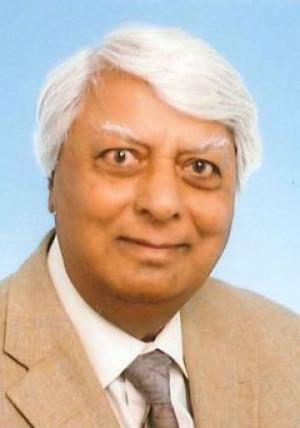 Syed M. Qaim合作论文数Institut fur Neurowissenschaften und Medizin, Forschungszentrum Julich GmbH, Helmholtz-Gemeinschaft Deutscher Forschungszentren2M.E. Lösel合作论文数2Ferenc Tárkányi合作论文数2A. Goldmann合作论文数2Gerhard Stöcklin合作论文数2Lothar Koch合作论文数2S. Goering合作论文数1W. Kneis合作论文数1w menz合作论文数1Yu. Severgin合作论文数1willem janssens合作论文数1jacques van geel合作论文数1A. A. El Miligy合作论文数1Ralph Steininger合作论文数1RM LAMBRECHT合作论文数1john mcginley合作论文数1HO Moser合作论文数1johann kaltenbaek合作论文数1h unseld合作论文数1H. Rebel合作论文数1Bertagnolli, H.合作论文数1K. Bekk合作论文数1S. Heise合作论文数1R. Schütz合作论文数1Dieter Einfeld合作论文数1




