Extreme, tsunami-like wave runup events in the absence of earthquakes or landslides have been attributed to trapped waves over shallow bathymetry, long waves created by atmospheric disturbances, and long waves generated by abrupt breaking. These runup events are associated with inland excursions of hundreds of meters and periods of minutes. While the theory of radiation stress implies that nearshore energy transfer from the carrier waves to the infragravity waves can also lead to very large runup, there have not been observations of runup events induced by this process with magnitudes and periods comparable to the other three mechanisms. This work presents observations of several runup events in the US Pacific Northwest that are comparable to extreme runup events related to the other three mechanisms. It also discusses possible generation mechanisms and shows that energy transfer from carrier waves to bound infragravity waves is a plausible generation mechanism. In addition, a method to predict and forecast extreme runup events with similar characteristics is presented.
Wave runup is an important process due to its effects on sediment transport and its role in coastal hazards. Despite decades of research on this topic, much uncertainty still exists in the estimation and prediction of runup. A recent numerical study has shown that there is appreciable variability in runup among wave groups on a dissipative beach due to sequencing of bichromatic waves and the resulting merging of bores. The current work further explores, in a highly controlled laboratory setting, runup variability due to wave sequencing. It is found that considerable runup variability exists among wave groups, and that this variability can differ greatly depending on the incident wave conditions. The observations suggest that the largest runup results from a higher number of bore merging events and involves a carrier wave that is positioned behind the infragravity wave crest, while the smallest runup results from a lower number of bore merging events and a carrier wave in front of the infragravity wave. A relationship is presented between runup variability and wave height, wave length, and the number of waves in a group. It is also found that an increase in runup variability is associated with an increase, at the first bore merging event, in the surface elevation at the crest of the carrier wave. Runup variability is also larger when the first bore merging event occurs further offshore, and when the local surface slope of the infragravity wave is higher.
This study uses a machine learning algorithm, the bagged regression tree, to detect error patterns within 24-h forecasts of significant wave height time series. The input to the machine learning algorithm were bulk parameter outputs of the numerical wave model (Wave Watch III) and wind information from the Global Forecast System at buoy locations along the California-Oregon border in the United States. The output of the algorithm were predictions of hourly deviations between numerical model output and buoy observations of significant wave height. When these deviations were applied as corrections to the forecasts, error metrics root-meansquared-error, bias, percent error, and scatter index were reduced in several different experiments, confirming that the error pattern was successfully detected by the machine learning algorithm. Furthermore, the detected error pattern was consistent between buoys at different locations, as presented in a geo-spatial application of the machine learning algorithm. As a descriptive tool, the algorithm delineated regions of similar error within the context of model phase space (significant wave height and mean wave period (Tm01)). Specifically, the algorithm detected significant wave height overestimations for significant wave heights greater than 3.4 m, wave period greater than 9.1 s, and waves coming from the W-NW quadrant.Also, for significant wave heights greater than the 95th percentile value (5.4 m), the algorithm detected differences in model phase space associated with mean error patterns.
The occurrence of swash larger than those predicted by the Rayleigh distribution is examined using a phase-resolved numerical model. Multiple realizations of spectral boundary conditions and beach configurations are considered in the analysis. Planar beaches characterized by surf similarity parameters between 0.3 and 0.6 are found to be more likely to produce unusually large swash. Maximum runup is found to correlate with the maximum infragravity (IG) wave height at the location of swash initiation, the landwardmost continuously wet point. The analysis is extended to beaches with bilinear profiles, where the foreshore slope is steeper than the shoaling slope. It is found that the still water level plays a controlling role in the magnitude of large swash. For these beaches it is found that the still water level with respect to the beach toe influences both the IG and shortwave height at swash initiation. Similar to the planar beach case, swash is found to be maximized when the sum of both IG and shortwave height is maximum; this occurs at toe depths 2-3 times the offshore significant wave height.
Despite decades of efforts aimed at equity, women continue to be underrepresented among STEM faculty at research-intensive universities,1National Science FoundationWomen, minorities, and persons with disabilities in science and engineering: 2011. Special Report NSF 11–309, National Science Foundation, Division of Science Resource Statistics.https://www.nsf.gov/statistics/women/Date accessed: January 12, 2019Google Scholar where they experience structural barriers to access, promotion, and retention.2Gardner SK "I couldn't wait to leave the toxic environment": a mixed methods study of women faculty satisfaction and departure from one research institution.J Women High Educ. 2012; 5: 71-95Google Scholar Funded by the National Science Foundation ADVANCE programme, Oregon State University researchers intentionally recruited high-level, influential administrators and faculty to engage in institutional transformation work, through the attainment of deep, nuanced, and emotional understandings of how barriers operate at both the individual and institutional level. The innovative portion of OREGON STATE ADVANCE involves an intensive immersion seminar modelled on the university's longstanding seminar for curricula transformation. The ADVANCE seminar, with a curriculum based on Systems of Oppression theories, enables participants to construct and implement action plans that apply their new knowledge to transform institutional policies and practices within their sphere of influence. Although theories of Systems of Oppression are core to women and gender studies, Oregon State University was the first ADVANCE institution to centre these theories to challenge and change academic STEM culture. These theories recognise that discrimination is not the result of individual bad actors but of systematically related, self-reproducing institutional structures and ideologies.3Hill Collins P Toward a new vision: race, class and gender as categories of analysis and connection.Race, Sex and Class. 1993; 1: 25-45Google Scholar, 4McIntosh P White privilege: unpacking the invisible knapsack.Peace and Freedom. 1989; July/August; : 10-12Google Scholar, 5Pharr S Homophobia: a weapon of sexism. The Women's Project, Little Rock, Arkansas1988Google Scholar Furthermore, these theories recognise that systems of gender do not exist apart from systems of race or ethnicity, sexuality, and other differences. Moreover, individuals do not experience gender isolation but are shaped by other forms of difference.3Hill Collins P Toward a new vision: race, class and gender as categories of analysis and connection.Race, Sex and Class. 1993; 1: 25-45Google Scholar, 6Crenshaw K Mapping the margins: intersectionality, identity politics, and violence against women of color.Stanford Law Review. 1991; 3: 1241-1299Crossref Google Scholar These systems obscure the origins and operations of power, so that the workings of power seem natural, inherent, and merited.7Johnson A Privilege, power, and difference. McGraw-Hill, New York2017Google Scholar The theories provide a method to account for the persistence of discrimination, despite the good intentions of individuals, by making visible the systems that purposefully distribute power inequitably across social differences to reproduce and maintain the dominance of an elite social group.7Johnson A Privilege, power, and difference. McGraw-Hill, New York2017Google Scholar Transforming academic STEM requires shifting power relations and restructuring institutional arrangements to create more equitable and just policies, processes, and structures. Oregon State University's immersion seminar uses critical pedagogies8Bothwell M, Furman K, Driskill Q-L, Warner R, Shaw S, Ozkan-Haller T. Empowering faculty and administrators to re-imagine a socially just institution through use of critical pedagogies. 2018 CoNECD—The Collaborative Network for Engineering and Computing Diversity Conference; Crystal City, Virginia; 2018 April 28-May 2, 2018.Google Scholar to introduce participants to theories of Systems of Oppression, helps them apply these theories to their work, and facilitates their development of action plans to bring about structural change. The seminar meets for 9 days, 6 hours a day, across 2 consecutive weeks and includes various follow-up meetings. Co-facilitated by a faculty member from liberal arts and another faculty member from STEM, the seminar fosters crucial intellectual analyses of systems of power, with attention to gender and its intersections with other forms of difference and deep personal reflective and affective engagement. To date, 125 individuals have participated in nine seminars, including the university president, provost, 22 deans and associate deans, and 20 heads of department. An additional seminar involved staff of University Relations and Marketing, focusing on their role as brand managers and storytellers, and resulted in intentional critiquing of the university's public relations materials. Data (from interviews, surveys, and conversations) indicate that participants gain a nuanced understanding of Systems of Oppression, both their broad historical and contemporary effects and those specific to Oregon State University. Participants indicated that several concepts were new to them (eg, intersectionality, binaries, and microaggressions) and that these presented effective ways to construct institutional hierarchies. The cohorts emerged with a shared language to discuss challenges around equity and justice and to imagine a transformed institution. As one participant noted: "[The ADVANCE seminar was] a life-changing programme. Everybody walked out…thinking they had the responsibility to make things better, look at things quite differently".9Oregon State UniversityOREGON STATE ADVANCE.http://advance.oregonstate.edu/aboutDate accessed: October 11, 2018Google Scholar Data also suggest that the seminar is effective in advancing structural changes that lead to women and marginalised groups' greater institutional participation and advancement. Action plans and their implementation show notable changes to college processes and policies, ranging from increased emphasis on raising awareness of gender and diversity issues, to changes in hiring and promotion practices, and advancement of women into leadership roles. Inclusion of both administrators and faculty in the seminar ensures that top-down policy changes find buy-in from the faculty, and bottom-up efforts are enabled and supported by leadership. An example of substantial structural change involved the College of Engineering. The College Dean's action plan included a goal to increase recruitment and hiring of women in the faculty, which necessitated structural changes to the recruitment and hiring processes. These structural changes consisted of including a formally-trained Search Advocate on search committees, requiring the chair of the search to complete Search Advocate training, communicating in the position announcement an expectation for a commitment by all faculty to equity and inclusion, and requiring a formal statement from the candidate to show their commitment, and finally, articulating screening criteria to be as inclusive as possible and aligning advancement of candidates with these criteria. The effect of screening is assessed at each point of candidate advancement to ensure that candidates from particular demographic groups are not disproportionately eliminated.10Bothwell M, Akkaraju P, McGuire J, Tran T, Zigler A. Advancing the College of Engineering strategic goal of becoming a national model of inclusivity and collaboration. 2018 CoNECD—The Collaborative Network for Engineering and Computing Diversity Conference; Crystal City, Virginia; April 28-May 2, 2018.Google Scholar As a result, the percentage of women among the College of Engineering's tenure-line faculty increased from 15% in 2014 to 20% in 2017, propelling the College from ranking 16th among research-intensive land grant universities (in terms of the percentage of women faculty in 2014) to 3rd in 2017. As of 2018, the College of Engineering has more than doubled the number of women faculty. Evidence suggests that the OREGON STATE ADVANCE is an effective intervention for catalysing institutional transformation in diversity and advancing the role of women in academic STEM. By centring theories of Systems of Oppression, the seminar ensures that analysis and application are systemic and structural in addition to personal and behavioural, disrupting the normative workings of gender in higher education and demanding solutions that revolutionise the structures, policies, and processes that maintain naturalised gender hierarchies. Participants learn to behave better as individuals, but, more importantly, they plan and implement concrete action plans to shift the dynamics of institutional power toward greater equity and justice for everyone. The evaluation data indicate that the effort is substantially effecting Oregon State University in terms of hiring practices, promotion, retention, and institutional culture. The approach could benefit other institutions aiming to transform academic disciplines to be more equitable for women and other underrepresented groups. For more on the #LancetWomen initiative see https://www.thelancet.com/lancet-women For more on the #LancetWomen initiative see https://www.thelancet.com/lancet-women All authors report grants from the National Science Foundation during the conduct of the study.
This article describes the model development and preliminary progress of an on-going research study on the effects of nonlinearities in ocean wave input and power-take-off (PTO) control on wave energy conversion system dynamics and efficiency. The model system employed and progress on recent developments are: (1) nonlinear wave modeling in the ocean, generation and propagation in a wave basin, and (2) nonlinear PTO control algorithm. An overview of the holistic analytical, numerical and experimental research approach/work plan is presented. To provide a simple means for analysis, comparison and performance evaluation, the WEC-Sim numerical platform is used for model implementation and system dynamic simulation. Analytical and numerical predictions of the nonlinear wave fields in a wave basin using the nonlinear Fourier analysis (NLFA) technique and corresponding nonlinear wavemaker theory and a plan for future validation using a comprehensive series of experimental test data as well as ocean wave measurements are described. Efficiency of the nonlinear PTO control and a future evaluation work plan by comparing numerical simulations with results of WEC model test data under corresponding wave conditions of the experimental studies without the presence of the WEC system are also presented.
In the presence of strong winds, ocean surface waves dissipate significant amounts of energy by breaking. Here, breaking rates and wave-following turbulent dissipation rate measurements are compared with numerical WAVEWATCH III estimates of bulk energy dissipation rate. At high winds, the measurements suggest that turbulent dissipation becomes saturated; however, the modeled bulk dissipation continues to increase as a cubic function of wind speed. Similarly, the mean square slope (i.e., the steepness) of the measured waves becomes saturated, while the modeled mean squared slope grows linearly with wind speed. Only a weak relation is observed between breaker fraction and wind speed, possibly because these metrics do not capture the scale (e.g., crest length) of the breakers. Finally, the model skill for basic parameters such as significant wave height is shown to be sensitive to the dissipation rate, indicating that the model skill may be compromised under energetic conditions.
An alternative metric for assessing nearshore hydrodynamic impact due to Wave Energy Converter (WEC) arrays is presented that is based on the modeled changes in alongshore radiation stress gradients in the lee of the array. The metric is developed using a previously observed relationship between measured radiation stresses and alongshore current magnitudes. Next, a parametric study is conducted using the spectral model SWAN to analyze the nearshore impact of different WEC array designs. A realistic range of array configurations, locations, and incident wave conditions are examined and conditions that generate alongshore radiation stress gradients exceeding a chosen impact threshold on a uniform beach are identified. Finally, the methodology is applied to two permitted WEC test sites to assess the applicability of the results to sites with more realistic bathymetries. For these sites, the overall trends seen in the changes in wave height, direction, and radiation stress gradients in the lee of the array are similar to those seen in the parametric study. However, interactions between the wave field and real bathymetry induce additional alongshore variability in wave-induced forcing. Results indicate that array-induced changes can exceed the natural variability up to 15% of the time with certain array designs and locations.
Surface wave instrumentation floats with tracking were deployed by helicopter ahead of five large storms off the Oregon coast. The buoys drifted freely with the wave motions, surface currents, and wind. The buoys use a 9-DoF inertial measurement unit that fuses the measurements of accelerometers, magnetometers, and gyroscopes to measure acceleration in the global North-West-Up reference frame. Rapid sampling (25  Hz) allows for the observation of both propagating wave motions and wave breaking events. Bulk wave parameters and wave spectra are calculated from the motion of the buoys using conventional methods, and breaking wave impacts are identified in the raw acceleration data using a new algorithm based on a short-time Fourier transform. The number of breaking waves is used to infer breaker fraction, which is found to depend on bulk wave steepness as previously shown in the literature. The magnitude and duration of acceleration during breaking is used in a new quantification of breaker intensity, which increases with wave height, period, and steepness. There is significant variance of breaker intensity in a given wave field, such that intense breakers still occur in relatively mild wave fields. The buoy observations are compared to the output of the WaveWatch III forecast model, with evaluation of an empirical breaker prediction scheme applied to WaveWatch III output.
In this research, a three-dimensional coupled wave-circulation model, including meteorological forcing, freshwater inflow and time varying open boundary conditions, for New River Inlet is validated. A mechanistic approach is taken to investigate how various wave-current interaction mechanisms affect the nearshore circulation, plume expansion and surface wave field in the plume region of a relatively small partially mixed tidal estuarine system. More specifically, focus is comparing four different modeling cases including: (1) a three-dimensional ocean circulation model (no wave effects), (2) a coupled wave-circulation model, (3) a coupled wave and circulation model including vertical mixing enhancement due to wave breaking, and (4) a wave model without surface current effects. Findings reveal forces are applied by incoming waves due to various wave-current interaction mechanisms. Wave momentum released by incoming waves pushes the outgoing freshwater ebb plume back to the shoreline and prevents the plume from expanding freely towards the open ocean. Findings also reveals that releasing wave-dissipated energy in the expanding plume region enhances vertical mixing, mixes down freshwater, and therefore thickens the plume. These results are congruent with observations at the mouth of the Columbia River.
We present an examination of unusually large runup events that were observed on January 16, 2016 on the west coast of the United States. Although these events resemble small tsunamis, no earthquake or significant atmospheric disturbances were observed during this time. Coincidental observations of long and rapidly increasing peak wave periods and moderately large wave heights both on- and off-shelf suggest that long and large swells generated by distant storms were possibly the cause of these events.
Three large wave events are simulated with Wave Watch III using different wind inputs and physics packages. The modeled output, including spectral shape and bulk parameter time series, are compared with National Data Buoy Center buoy observations offshore of Newport, Oregon. The atmospheric conditions that generate these large waves include a strong southerly wind along with a distant cyclone. The energetic contributions of these simultaneously occurring atmospheric features result in a wave field characterized by bimodal energy spectra for two events and unimodal energy spectra for the third event. The analysis of model output evaluates bulk parameter time series of significant wave height, mean period, and mean wave direction derived from partitioned energy spectra. A consistent underestimation in wave energy approaching from the southwestern direction is found for the output associated with all model configurations. This wave energy is generated by the southerly wind. An overestimation in swell energy approaching from the northwest is also found for all model configurations. The model configuration that most accurately reproduces the southerly wave energy results in the best performance for the overall bulk parameters.
Sneaker waves are responsible for many casualties and beach rescues in the Pacific Northwest (PNW) region of the USA. In this paper, a catalogue of these events from 2005 to mid-2017 in Oregon and Northern California is presented. The events are grouped depending on the local characteristics into those involving structures, semi-enclosed beaches, and open-coast beaches. It was found that sneaker waves occurred between the months of October and April, which is also the time of the year of most storm activity in the PNW. The majority of the events are associated with long-period swell approaching the coast. Beach slope and significant wave height were not found to correlate with sneaker wave incidents. However, total water level analysis reveals that the run-up level was expected to reach the beachgoers for the majority of the investigated cases indicating that a forecasting system to warn beachgoers is possible.
The U.S. Gulf Coast provides a valuable setting to study deeply connected natural and human interactions and feedbacks that have led to a complex, interconnected coastal system that is under increased pressure from accelerating environmental stressors such as sea level rise, intensifying hurricanes, and coastal development. Promoting the resilience and maintaining the habitability of the Gulf Coast into the future will need improved understanding of the coupled natural-human coastal system, as well as effective sharing of this understanding in support of decision-making and policies. This report from the National Academies identifies three critical areas of research that encompass high-priority gaps in scientific knowledge that, if addressed, will increase understanding of the coupled natural-human system along the Gulf Coast. Critical Area 1: How will coastal landforms and coastal ecosystems along the Gulf Coast respond to rapidly changing conditions (both natural and human induced), especially given the expectation for continued relative sea level rise acceleration? Critical Area 2: How will human settlement and economic activity along the Gulf Coast respond to evolving coastal landforms and ecosystems under rapidly changing conditions? Critical Area 3: How can improved understanding of both near- and long-term evolution of the Gulf Coast coupled natural-human system be applied to inform stakeholder decisions made at local, state, and regional scales? How does the coupled natural-human system evolve when decision-making is updated as scientific understanding advances? The 12 research gaps are categorized into natural (physical and ecological) processes, the human system, and the coupled natural-human system. A research agenda undertaken to meet these gaps should focus on interactions and feedbacks critical to coupled system evolution; support collaborative, multidisciplinary research; encourage integrated observational and modeling efforts; offer longitudinal, multi-decadal research opportunities; deliver accessible, updated data and model results; and coordinate at a high level. Barriers to and opportunities for effective communication between scientists and stakeholders are also discussed.
 Martin Smith合作论文数Division of Marine Science and Conservation, Nicholas School of the Environment, Duke University;Economics Department, Trinity College of Arts & Sciences, Duke University32
 Sarah W. Cooksey合作论文数31Margaret Spring合作论文数31
 Steve Murawski合作论文数Department of Biological Oceanography, College of Marine Science, University of South Florida31
 John Orcutt合作论文数Institute of Geophysics and Planetary Physics, University of California,San Diego31
 Douglas Wartzok合作论文数31
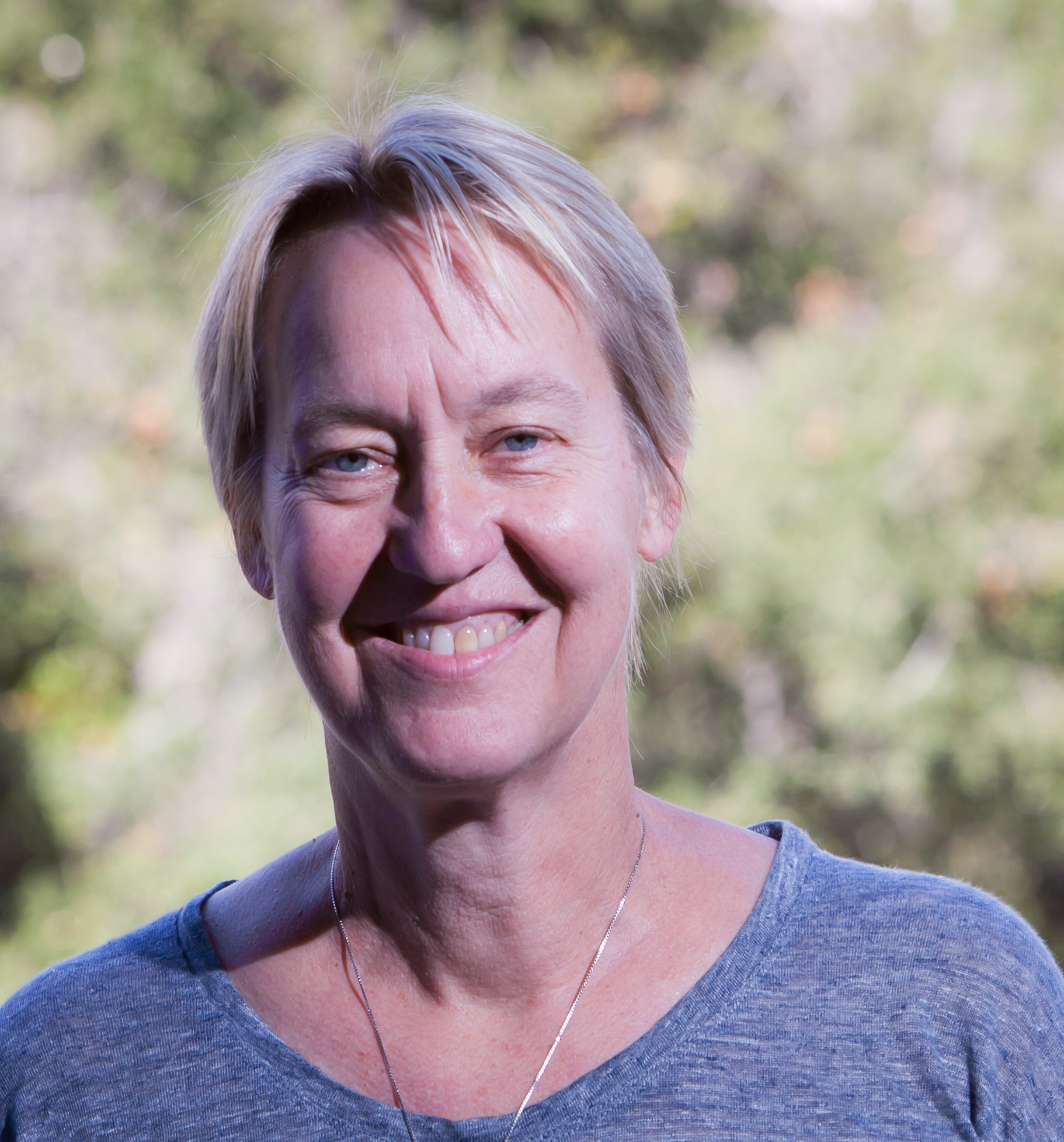 E. Virginia Armbrust合作论文数School of Oceanography, University of Washington31Lisa D. White, Joyce R. Blueford, Y合作论文数31
 Susan Humphris合作论文数Department of Geology and Geophysics, Woods Hole Oceanographic Institution31David Halpern合作论文数30
 Claudia Benitez-Nelson合作论文数School of the Earth, Ocean and Environment, McCausland College of Arts and Sciences, University of South Carolina30
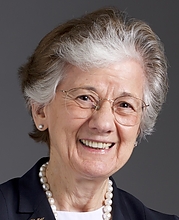 Rita R. Colwell合作论文数Institute for Advanced Computer Studies, University of Maryland;Bloomberg School of Public Health, Johns Hopkins University;Canon US Life Sciences, Inc.;CosmosID, Inc.30
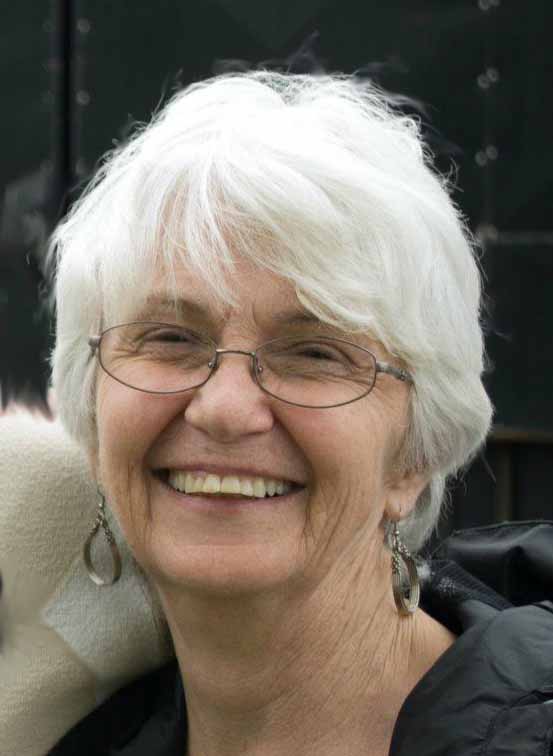 Bonnie J. McCay (Bonnie McCay)合作论文数Department of Human Ecology, School of Environmental & Biological Sciences, Rutgers, The State University of New Jersey30
 Kevin Arrigo合作论文数Department of Earth System Science, School of Sustainablity, Stanford University29
 Merrick C. Haller合作论文数Department of Civil, Construction, and Environmental Engineering, Oregon State University24Cortis Cooper合作论文数22
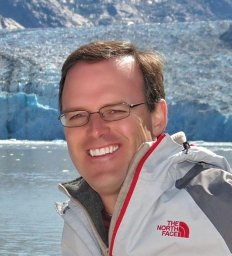 Robert Hallberg合作论文数Geophysical Fluid Dynamics Laboratory, National Oceanic and Atmospheric Administration;Princeton University22Don Walsh合作论文数21
 James A. Estes合作论文数Department of Ecology and Evolutionary Biology, University of California, Santa Cruz18
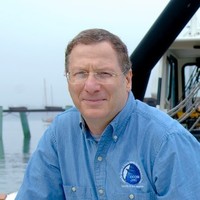 Larry A. Mayer (Larry Mayer)合作论文数Center for Coastal and Ocean Mapping, University of New Hampshire;School of Marine Science and Ocean Engineering, University of New Hampshire18
 James T. Kirby合作论文数Center for Applied Coastal Research, Department of Civil and Environmental Engineering, University of Delaware14Steven E. Ramberg合作论文数13
 Robert Duce合作论文数Department of Oceanography, College of Geosciences, Texas A&M University13
 Edward A. Boyle合作论文数Department of Earth, Atmospheric and Planetary Sciences, Massachusetts Institute of Technology13
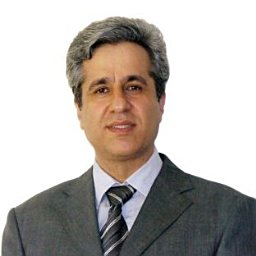 Saeed Moghimi合作论文数Tarbiat Modarres University12
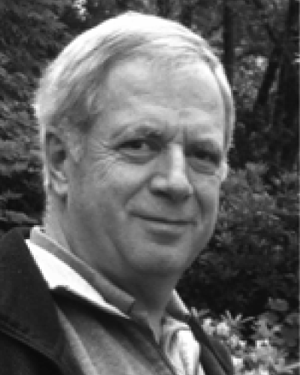 Robert A. Holman合作论文数College of Oceanic and Atmospheric Sciences, Oregon State University10St Rao合作论文数9Anke Kamrath合作论文数9Amanda Purcell合作论文数9Laurie Geller合作论文数9Lauren Everett合作论文数9Raymond J. Ban合作论文数9Robert S. Winokur合作论文数9Heather Coleman合作论文数9Shubha Banskota合作论文数9Pamela Lewis合作论文数9William B. Gail合作论文数9Ronald Nick Keener合作论文数9John R. Nordgren合作论文数9
 Heidi Cullen合作论文数9Aristides A. N. Patrinos合作论文数9Laura Myers合作论文数9Amanda Staudt合作论文数9Andy Brown合作论文数9Michael Hudson合作论文数9Katherine Thomas合作论文数9Alex Morgan合作论文数9Rob Greenway合作论文数9Shelly Freeland合作论文数9




