A. Cerrie,26 L. Cerritor ,28 Y.C. Chen, 1 M. Chertok,7 G. Chiarelli,42 G. Chlachidze, 15 K. Cho,25 D. Chokheli,13 A. Clark,18 C. Clarke, 54 M.E. Convery, 15 J. Conway, 7 M. Corboz,15 M. Cordelli,17 C.A. Cox,7 D.J. Cox, 7 M. Cremonesi, 42 D. Cruz,48 J. Cuevas y,9 R. Culbertson, 15 N. d’Ascenzov,15 M. Dattagg,15 P. de Barbaro, 45 L. Demortier,46 M. Deninno,6 M. D’Erricokk,40 F. Devoto, 21 A. Di Cantoll ,42 B. Di Ruzzap,15 J.R. Dittmann, 5 S. Donati ll ,42 M. D’Onofrio,27 M. Dorigott ,49 A. Driutti rrss,49 K. Ebina,53 R. Edgar, 32 A. Elagin,48 R. Erbacher, 7 S. Errede, 22 B. Esham, 22 R. Eusebi, 48 S. Farrington, 39
The observation of the $Y(4140)$ structure in $B^\pm\rightarrow J/\psi\,\phi K^\pm$ decays produced in $\bar{p} p $ collisions at $\sqrt{s}=1.96~\TeV$ is reported with a statistical significance greater than 5 standard deviations. A fit to the $J/\psi\,\phi$ mass spectrum is performed assuming the presence of a Breit-Wigner resonance. The fit yields a signal of $19^{+6}_{-5}$ resonance events, and resonance mass and width of $4143.4^{+2.9}_{-3.0}(\mathrm{stat})\pm0.6(\mathrm{syst})~\MeVcc$ and $15.3^{+10.4}_{-6.1}(\mathrm{stat})\pm2.5(\mathrm{syst})~\MeVcc$ respectively. The parameters of this resonance-like structure are consistent with values reported from an earlier CDF analysis.
A measurement of the inclusive production cross section of isolated prompt photons in proton-antiproton collisions at center-of-mass energy $\sqrt{s}$=1.96TeV is presented. The results are obtained using the full Run II data sample collected with the Collider Detector at the Fermilab Tevatron, which corresponds to an integrated luminosity of 9.5fb$^{-1}$. The cross section is measured as a function of photon transverse energy, $E_T^{\gamma}$, in the range 30$ < E_T^{\gamma} <$500GeV and in the pseudorapidity region $|\eta^{\gamma}|<$1.0. The results are compared with predictions from parton-shower Monte Carlo models at leading order in quantum chromodynamics (QCD) and from next-to-leading order perturbative QCD calculations. The latter show good agreement with the measured cross section.
We present the CDF measurement of the diboson WW and WZ production cross section in a final state consistent with leptonic W decay and jets originating from heavy flavor quarks, based on the full Tevatron Run II dataset. The analysis of the di-jet invariant mass spectrum allows the observation of 3.7 sigma evidence for the combined production processes of either WW or WZ bosons. The different heavy flavor decay pattern of the W and Z bosons and the analysis of the secondary-decay vertex properties allow to independently measure the WW and WZ production cross section in a hadronic final state. The measured cross sections are consistent with the standard model predictions and correspond to signal significances of 2.9 and 2.1 sigma for WW and WZ production, respectively.
A measurement of vector boson (V) production in conjunction with a D*(2010)(+) meson is presented. Using a data sample corresponding to 9.7 fb(-1) of proton-antiproton collisions at center-of-mass energy root s = 1.96 TeV produced by the Fermilab Tevatron, we reconstruct V + D*+ samples with the CDF II detector. The D*+ is fully reconstructed in the D*(2010)(+) -> D-0 (-> K-pi(+))pi(+) decay mode. This technique is sensitive to the associated production of vector boson plus charm or bottom mesons. We measure the ratio of production cross sections sigma(W + D*) = sigma(W) = [1.75 +/- 0.13(stat) +/- 0.09(stat)]% and sigma(Z + D*)/sigma(Z) = [1.5 +/- 0.4(stat) +/- 0.2(stat)]% and perform a differential measurement of d sigma(W + D*)/dp(T)(D*). Event properties are utilized to determine the fraction of V + D*(2010)(+) events originating from different production processes. The results are in agreement with the predictions obtained with the PYTHIA program, limiting possible contribution from non-standard-model physics processes.
Our study of vector boson (V ) production in conjunction with a D*(2010)+ meson is presented. Using a data sample correponding to 9.7 fb-1 p of proton-antiproton collisions at center-of-mass energy √s = 1:96 TeV produced by the Fermilab Tevatron, we reconstruct V +D*+ samples with the CDF II detector. The D*+ is fully reconstructed in the D*(2010)+ → D0(→ K- π+)π+ decay mode. This technique is sensitive to the associated production of vector boson plus charm or bottom mesons. We measure the ratio of production cross sections σ(W +D*)/ σ(W) = [1.75±0.13(stat)±0:09(syst)]% and σ(Z +D*)/ σ(Z) = [1:5±0:4(stat)_0:2(syst)]%. Event properties are utilized to determine the fraction of V +D*(2010)+ events originating from different production processes. Our results are in agreement with the predictions obtained with the pythia program, limiting possible contribution from non-standard-model physics processes.
We report a measurement of the forward-backward asymmetry, $A_{FB}$, in $b\bar{b}$ pairs produced in proton-antiproton collisions and identified by muons from semileptonic $b$-hadron decays. The event sample was collected at a center-of-mass energy of $\sqrt{s}=1.96$ TeV with the CDF II detector and corresponds to 6.9 fb$^{-1}$ of integrated luminosity. We obtain an integrated asymmetry of $A_{FB}(b\bar{b})=(1.2 \pm 0.7)$\% at the particle level for $b$-quark pairs with invariant mass, $m_{b\bar{b}}$, down to $40$ GeV/$c^2$ and measure the dependence of $A_{FB}(b\bar{b})$ on $m_{b\bar{b}}$. The results are compatible with expectations from the standard model.
At the Fermilab Tevatron proton-antiproton (pp¯) collider, Drell-Yan lepton pairs are produced in the process pp¯→e+e−+X through an intermediate γ∗/Z boson. The forward-backward asymmetry in the polar-angle distribution of the e− as a function of the e+e−-pair mass is used to obtain sin2θlepteff, the effective leptonic determination of the electroweak-mixing parameter sin2θW. The measurement sample, recorded by the Collider Detector at Fermilab (CDF), corresponds to 9.4 fb−1 of integrated luminosity from pp¯ collisions at a center-of-momentum energy of 1.96 TeV, and is the full CDF Run II data set. The value of sin2θlepteff is found to be 0.23248±0.00053. The combination with the previous CDF measurement based on μ+μ− pairs yields sin2θlepteff=0.23221±0.00046. This result, when interpreted within the specified context of the standard model assuming sin2θW=1−M2W/M2Z and that the W- and Z-boson masses are on-shell, yields sin2θW=0.22400±0.00045, or equivalently a W-boson mass of 80.328±0.024 GeV/c2.
T. Aaltonen, S. Amerio, D. Amidei, A. Anastassov, A. Annovi, J. Antos, G. Apollinari, J. A. Appel, T. Arisawa, A. Artikov, J. Asaadi, W. Ashmanskas, B. Auerbach, A. Aurisano, F. Azfar, W. Badgett, T. Bae, A. Barbaro-Galtieri, V. E. Barnes, B. A. Barnett, P. Barria, P. Bartos, M. Bauce, F. Bedeschi, S. Behari, G. Bellettini, J. Bellinger, D. Benjamin, A. Beretvas, A. Bhatti, K. R. Bland, B. Blumenfeld, A. Bocci, A. Bodek, D. Bortoletto, J. Boudreau, A. Boveia, L. Brigliadori, C. Bromberg, E. Brucken, J. Budagov, H. S. Budd, K. Burkett, G. Busetto, P. Bussey, P. Butti, A. Buzatu, A. Calamba, S. Camarda, M. Campanelli, F. Canelli, B. Carls, D. Carlsmith, R. Carosi, S. Carrillo, B. Casal, M. Casarsa, A. Castro, P. Catastini, D. Cauz, V. Cavaliere, A. Cerri, L. Cerrito, Y. C. Chen, M. Chertok, G. Chiarelli, G. Chlachidze, K. Cho, D. Chokheli, A. Clark, C. Clarke, M. E. Convery, J. Conway, M. Corbo, M. Cordelli, C. A. Cox, D. J. Cox, M. Cremonesi, D. Cruz, J. Cuevas, R. Culbertson, N. d’Ascenzo, M. Datta, P. de Barbaro, L. Demortier, M. Deninno, M. D’Errico, F. Devoto, A. Di Canto, B. Di Ruzza, J. R. Dittmann, S. Donati, M. D’Onofrio, M. Dorigo, A. Driutti, K. Ebina, R. Edgar, R. Erbacher, S. Errede, B. Esham, S. Farrington, J. P. Fernández Ramos, R. Field, G. Flanagan, R. Forrest, M. Franklin, J. C. Freeman, H. Frisch, Y. Funakoshi, C. Galloni, A. F. Garfinkel, P. Garosi, H. Gerberich, E. Gerchtein, S. Giagu, V. Giakoumopoulou, K. Gibson, C. M. Ginsburg, N. Giokaris, P. Giromini, V. Glagolev, D. Glenzinski, M. Gold, D. Goldin, A. Golossanov, G. Gomez, G. Gomez-Ceballos, M. Goncharov, O. González López, I. Gorelov, A. T. Goshaw, K. Goulianos, E. Gramellini, C. Grosso-Pilcher, J. Guimaraes da Costa, S. R. Hahn, J. Y. Han, F. Happacher, K. Hara, M. Hare, R. F. Harr, T. Harrington-Taber, K. Hatakeyama, C. Hays, J. Heinrich, M. Herndon, A. Hocker, Z. Hong, W. Hopkins, S. Hou, R. E. Hughes, U. Husemann, M. Hussein, J. Huston, G. Introzzi, M. Iori, A. Ivanov, E. James, D. Jang, B. Jayatilaka, E. J. Jeon, S. Jindariani, M. Jones, K. K. Joo, S. Y. Jun, T. R. Junk, M. Kambeitz, T. Kamon, P. E. Karchin, A. Kasmi, Y. Kato, W. Ketchum, J. Keung, B. Kilminster, D. H. Kim, H. S. Kim, J. E. Kim, M. J. Kim, S. H. Kim, S. B. Kim, Y. J. Kim, Y. K. Kim, N. Kimura, M. Kirby, K. Kondo, D. J. Kong, J. Konigsberg, A. V. Kotwal, M. Kreps, J. Kroll, M. Kruse, T. Kuhr, M. Kurata, A. T. Laasanen, S. Lammel, M. Lancaster, K. Lannon, G. Latino, H. S. Lee, J. S. Lee, S. Leo, S. Leone, J. D. Lewis, A. Limosani, E. Lipeles, A. Lister, Q. Liu, T. Liu, S. Lockwitz, A. Loginov, D. Lucchesi, A. Lucà, J. Lueck, P. Lujan, P. Lukens, G. Lungu, J. Lys, R. Lysak, R. Madrak, P. Maestro, S. Malik, G. Manca, A. Manousakis-Katsikakis, L. Marchese, F. Margaroli, P. Marino, K. Matera, M. E. Mattson, A. Mazzacane, P. Mazzanti, R. McNulty, A. Mehta, P. Mehtala, C. Mesropian, T. Miao, D. Mietlicki, A. Mitra, H. Miyake, S. Moed, N. Moggi, C. S. Moon, R. Moore, M. J. Morello, A. Mukherjee, Th. Muller, P. Murat, M. Mussini, J. Nachtman, Y. Nagai, J. Naganoma, I. Nakano, A. Napier, J. Nett, T. Nigmanov, L. Nodulman, S. Y. Noh, O. Norniella, L. Oakes, S. H. Oh, Y. D. Oh, T. Okusawa, R. Orava, L. Ortolan, C. Pagliarone, E. Palencia, P. Palni, V. Papadimitriou, W. Parker, G. Pauletta, M. Paulini, C. Paus, T. J. Phillips, G. Piacentino, E. Pianori, J. Pilot, K. Pitts, C. Plager, L. Pondrom, S. Poprocki, K. Potamianos, A. Pranko, F. Prokoshin, F. Ptohos, G. Punzi, I. Redondo Fernández, P. Renton, M. Rescigno, F. Rimondi, L. Ristori, A. Robson, T. Rodriguez, S. Rolli, M. Ronzani, R. Roser, J. L. Rosner, F. Ruffini, A. Ruiz, J. Russ, V. Rusu, W. K. Sakumoto, Y. Sakurai, L. Santi, K. Sato, V. Saveliev, A. Savoy-Navarro, P. Schlabach, E. E. Schmidt, T. Schwarz, L. Scodellaro, F. Scuri, S. Seidel, Y. Seiya, A. Semenov, F. Sforza, S. Z. Shalhout, T. Shears, P. F. Shepard, M. Shimojima, M. Shochet, I. Shreyber-Tecker, A. Simonenko, K. Sliwa, J. R. Smith, F. D. Snider, H. Song, V. Sorin, R. St. Denis, M. Stancari, D. Stentz, J. Strologas, Y. Sudo, A. Sukhanov, I. Suslov, K. Takemasa, Y. Takeuchi, J. Tang, M. Tecchio, P. K. Teng, J. Thom, E. Thomson, V. Thukral, D. Toback, S. Tokar, K. Tollefson, T. Tomura, D. Tonelli, S. Torre, D. Torretta, P. Totaro, M. Trovato, F. Ukegawa, S. Uozumi, F. Vázquez, G. Velev, C. Vellidis, C. Vernieri, M. Vidal, R. Vilar, J. Vizán, M. Vogel, G. Volpi, P. Wagner, R. Wallny, S. M. Wang, D. Waters, W. C. Wester III, D. Whiteson, A. B. Wicklund, S. Wilbur, H. H. Williams, J. S. Wilson, P. Wilson, B. L. Winer, P. Wittich, S. Wolbers, H. Wolfe, T. Wright, X. Wu, Z. Wu, K. Yamamoto, D. Yamato, T. Yang, U. K. Yang, Y. C. Yang, W.-M. Yao, G. P. Yeh, K. Yi, J. Yoh, K. Yorita, T. Yoshida, G. B. Yu, I. Yu, A. M. Zanetti, Y. Zeng, C. Zhou, and S. Zucchelli
An updated measurement of the single top quark production cross section is presented using the full data set collected by the Collider Detector at Fermilab (CDF), corresponding to $9.5\text{ }\text{ }{\mathrm{fb}}^{\ensuremath{-}1}$ of integrated luminosity from proton-antiproton collisions at 1.96 TeV center-of-mass energy. The events selected contain an imbalance in the total transverse momentum, jets identified as containing $b$ quarks, and no identified leptons. The sum of the $s$- and $t$-channel single top quark cross sections is measured to be $3.5{3}_{\ensuremath{-}1.16}^{+1.25}\text{ }\text{ }\mathrm{pb}$ and a lower limit on the magnitude of the top-to-bottom quark coupling, $|{V}_{tb}|$ of 0.63, is obtained at the 95% credibility level. These measurements are combined with previously reported CDF results obtained from events with an imbalance in total transverse momentum, jets identified as originating from $b$ quarks, and one identified lepton. The combined cross section is measured to be $3.0{2}_{\ensuremath{-}0.48}^{+0.49}\text{ }\text{ }\mathrm{pb}$ and a lower limit on $|{V}_{tb}|$ of 0.84 is obtained at the 95% credibility level.
At the Fermilab Tevatron proton-antiproton (p (p) over bar) collider, Drell-Yan lepton pairs are produced in the process p (p) over bar -> e(+)e(-) + X through an intermediate gamma*/Z boson. The forward-backward asymmetry in the polar-angle distribution of the e(-) as a function of the e(+)e(-)-pair mass is used to obtain sin(2) theta(lept)(eff), the effective leptonic determination of the electroweak-mixing parameter sin(2) theta(W). The measurement sample, recorded by the Collider Detector at Fermilab (CDF), corresponds to 9.4 fb(-1) of integrated luminosity from p (p) over bar collisions at a center-of-momentum energy of 1.96 TeV, and is the full CDF Run II data set. The value of sin(2) theta(lept)(eff) is found to be 0.23248 +/- 0.00053. The combination with the previous CDF measurement based on mu(+)mu(-) pairs yields sin(2) theta(lept)(eff) = 0.23221 +/- 0.00046. This result, when interpreted within the specified context of the standard model assuming sin(2) theta(W) = 1 - M-W(2)/M-Z(2) and that the W- and Z-boson masses are on-shell, yields sin(2) theta(W) = 0.22400 +/- 0.00045, or equivalently a W-boson mass of 80.328 +/- 0.024 GeV/c(2).
We measure the forward-backward asymmetry of the production of top-quark and antiquark pairs in proton-antiproton collisions at center-of-mass energy root s = 1.96 TeV using the full data set collected by the Collider Detector at Fermilab (CDF) in Tevatron Run II corresponding to an integrated luminosity of 9.1 fb(-1). The asymmetry is characterized by the rapidity difference between top quarks and antiquarks (Delta y) and measured in the final state with two charged leptons (electrons and muons). The inclusive asymmetry, corrected to the entire phase space at parton level, is measured to be A(FB)(t (t) over bar) = 0.12 +/- 0.13, consistent with the expectations from the standard model (SM) and previous CDF results in the final state with a single charged lepton. The combination of the CDF measurements of the inclusive A(FB)(t (t) over bar) in both final states yields A(FB)(t (t) over bar) 0.160 +/- 0.045, which is consistent with the SM predictions. We also measure the differential asymmetry as a function of Delta y. A linear fit to A(FB)(t (t) over bar) (vertical bar Delta y vertical bar),assuming zero asymmetry at Delta y = 0, yields a slope of alpha = 0.14 +/- 0.15, consistent with the SM prediction and the previous CDF determination in the final state with a single charged lepton. The combined slope of A(FB)(t (t) over bar) (vertical bar Delta y vertical bar) the two final states is alpha = 0.227 +/- 0.057, which is 2.0 sigma larger than the SM prediction.
A measurement of vector boson ($V$) production in conjunction with a $D^{*}(2010)^+$ meson is presented. Using a data sample corresponding to $9.7\, {\rm fb}^{-1}$ of ^Mproton-antiproton collisions at center-of-mass energy $\sqrt{s}=1.96\rm~ TeV$ produced by the Fermilab Tevatron, we reconstruct $V+D^{*+}$ samples with the CDF~II detector. The $D^{*+}$ is fully reconstructed in the $D^{*}(2010)^+ \rightarrow D^{0}(\to K^-\pi^+)\pi^+$ decay mode. This technique is sensitive to the associated production of vector boson plus charm or bottom mesons. We measure the ratio of production cross sections $\sigma(W+D^{*})/\sigma(W)$ = $[1.75\pm 0.13 {\rm (stat)}\pm 0.09 {\rm (syst)}]\% $ and $\sigma(Z+D^{*})/\sigma(Z)$ = $[1.5\pm 0.4 {\rm (stat)} \pm 0.2 {\rm (syst)}]\% $ and perform a differential measurement of $d\sigma(W+D^{*})/dp_T(D^{*})$. Event properties are utilized to determine the fraction of $V+D^{*}(2010)^+$ events originating from different production processes. The results are in agreement with the predictions obtained with the {\sc pythia} program, limiting possible contribution from non-standard-model physics processes.
An updated measurement of the single top quark production cross section is presented using the full data set collected by the Collider Detector at Fermilab (CDF), corresponding to 9.5 fb(-1) of integrated luminosity from proton-antiproton collisions at 1.96 TeV center-of-mass energy. The events selected contain an imbalance in the total transverse momentum, jets identified as containing b quarks, and no identified leptons. The sum of the s- and t-channel single top quark cross sections is measured to be 3.53(-1.16)(+1.25) pb and a lower limit on the magnitude of the top-to-bottom quark coupling, vertical bar V-tb vertical bar of 0.63, is obtained at the 95% credibility level. These measurements are combined with previously reported CDF results obtained from events with an imbalance in total transverse momentum, jets identified as originating from b quarks, and one identified lepton. The combined cross section is measured to be 3.02(-0.48)(+0.49) pb and a lower limit on vertical bar V-tb vertical bar of 0.84 is obtained at the 95% credibility level.
A search for a Higgs boson with suppressed couplings to fermions, h(f), assumed to be the neutral, lower-mass partner of the Higgs boson discovered at the Large Hadron Collider, is reported. Such a Higgs boson could exist in extensions of the standard model with two Higgs doublets, and could be produced via p (p) over bar -> H(+/-)h(f) -> W*h(f)h(f) -> 4 gamma + X where H (+/-) is a charged Higgs boson. This analysis uses all events withat least three photons in the final state from proton-antiproton collisions at a center-of-mass energy of 1.96 TeV collected by the Collider Detector at Fermilab, corresponding to an integrated luminosity of 9.2 fb(-1). No evidence of a signal is observed in the data. Values of Higgs-boson masses between 10 and 100 GeV/c(2) are excluded at 95% Bayesian credibility.
 Peter J. Bussey合作论文数School of Physics & Astronomy, University of Glasgow286
 K. Goulianos合作论文数268
 Rainer Wallny合作论文数Department of Physics, ETH Zürich;Institute for Particle Physics and Astrophysics, ETH Zürich267
 Arie Bodek合作论文数Department of Physics and Astronomy, School of Arts & Sciences, University of Rochester267
 Bruce Barnett合作论文数William H. Miller III Department of Physics and Astronomy, Krieger School of Arts and Sciences, Johns Hopkins University267
 Daniela Bortoletto合作论文数Department of Physics, University of Oxford267
 Massimo Casarsa合作论文数Istituto Nazionale di Fisica Nucleare265
 Luc Demortier合作论文数Laboratory of Experimental High Energy Physics, The Rockefeller University264
 Manfred Paulini合作论文数Department of Physics, Mellon College of Science, Carnegie Mellon University263K. Lannon合作论文数263
 James Russ合作论文数262
 Luca Scodellaro合作论文数Instituto de Física de Cantabria, Consejo Superior de Investigaciones Cientificas262
 Jacobo Konigsberg合作论文数Institute for High Energy Physics and Astrophysics, University of Florida;Department of Physics, College of Liberal Arts and Sciences, University of Florida262
 Peter Wittich合作论文数Laboratory for Elementary Particle Physics, Department of Physics, The College of Arts&Sciences, Cornell University260
 Ben Kilminster合作论文数Physik-Institut, University of Zurich258A. Anastassov合作论文数257
 Matthew Herndon合作论文数Department of Physics, University of Wisconsin–Madison257B. Blumenfeld合作论文数257
 Javier Cuevas Maestro合作论文数Universidad de Oviedo;European Organization for Nuclear Research257
 John Strologas合作论文数Department of Physics, University of Ioannina256
 Jay R. Dittmann合作论文数Department of Physics, College of Arts and Sciences, Baylor University255
 Robert M Roser合作论文数Idaho National Laboratory254
 Tara Shears合作论文数Department of Physics, School of Physical Sciences, Faculty of Science and Engineering, University of Liverpool253I. Gorelov合作论文数253
 Austin Napier合作论文数Department of Physics and Astronomy, School of Arts and Sciences, Tufts University253
 Joey W Huston合作论文数Department of Physics & Astronomy, College of Natural Science, Michigan State University253
 Niccolò Moggi合作论文数Department of Industrial Engineering, University of Bologna253
 Heather Kay Gerberich合作论文数On Point Technology, LLC252
 Giorgio Apollinari合作论文数Fermi National Accelerator Laboratory252R. Forrest合作论文数252
 Arthur Wicklund合作论文数Argonne National Laboratory252
 Steven Errede合作论文数Department of Physics, The Grainger College of Engineering, University of Illinois Urbana-Champaign252Toru Okusawa合作论文数252Alvin Laasanen合作论文数Purdue University251I. A. Suslov合作论文数251
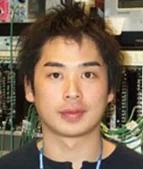 Kohei Yorita (寄田浩平)合作论文数School of Advanced Science and Engineering, Faculty of Science and Engineering, Waseda University251Andrew Beretvas合作论文数251
 Ray Culbertson合作论文数Fermi National Accelerator Laboratory251
 Lee G. Pondrom合作论文数Department of Physics, University of Wisconsin–Madison251
 Stephen Wolbers合作论文数Fermi National Accelerator Lab251
 Duncan Carlsmith合作论文数Department of Physics, College of Letters & Science, University of Wisconsin-Madison251
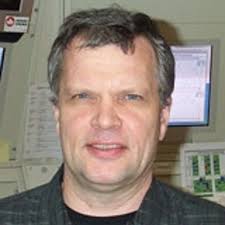 Risto Orava合作论文数University of Helsinki;Helsinki Institute of Physics251S. M. Farrington合作论文数250G. Flanagan合作论文数250
 Melissa Franklin合作论文数Department of Physics, Harvard University250
 Fedor Prokoshin合作论文数Joint Institute for Nuclear Research250
 Davit Chokheli合作论文数Georgian Technical University;Joint Institute for Nuclear Research250C. Grosso-Pilcher合作论文数250
 Pavel Murat合作论文数Fermi National Accelerator Laboratory250




