As recent enhancements to the OpenMP specification become available in its implementations, there is a need to share the results of experimentation in order to better understand the OpenMP implementation’s behavior in practice, to identify pitfalls, and to learn how the implementations can be effectively deployed in scientific codes. We report on experiences gained and practices adopted when using OpenMP to port a variety of ECP applications, mini-apps and libraries based on different computational motifs to accelerator-based leadership-class high-performance supercomputer systems at the United States Department of Energy. Additionally, we identify important challenges and open problems related to the deployment of OpenMP. Through our report of experiences, we find that OpenMP implementations are successful on current supercomputing platforms and that OpenMP is a promising programming model to use for applications to be run on emerging and future platforms with accelerated nodes.
We present qcor - a language extension to C++ and compiler implementation that enables heterogeneous quantum-classical programming, compilation, and execution in a single-source context. Our work provides a first-of-its-kind C++ compiler enabling high-level quantum kernel (function) expression in a quantum-language agnostic manner, as well as a hardware-agnostic, retargetable compiler workflow targeting a number of physical and virtual quantum computing backends. qcor leverages novel Clang plugin interfaces and builds upon the XACC system-level quantum programming framework to provide a state-of-the-art integration mechanism for quantum-classical compilation that leverages the best from the community at-large. qcor translates quantum kernels ultimately to the XACC intermediate representation, and provides user-extensible hooks for quantum compilation routines like circuit optimization, analysis, and placement. This work details the overall architecture and compiler workflow for qcor, and provides a number of illuminating programming examples demonstrating its utility for near-term variational tasks, quantum algorithm expression, and feed-forward error correction schemes.
includes characterizing which modules have been ported to multi-accelerator nodes, initial performance analyses, the status of software integration, and a current vision of successes, obstacles, and next steps. As such this report contains not only an accurate snapshot of each sub-project's current status, but also represents an unprecedentedly broad account of experiences porting large scientific applications to next-generation HPC architectures.
GRChombo is an open-source code for performing Numerical Relativity time evolutions, built on top of the publicly available Chombo software for the solution of PDEs. Whilst GRChombo uses standard techniques in NR, it focusses on applications in theoretical physics where adaptability, both in terms of grid structure, and in terms of code modification, are key drivers.
control strategies. In addition, we are making available to the SASC the DOE sensitive technologies list.
Program synthesis is an active research field in academia, national labs, and industry. Yet, work directly applicable to scientific computing, while having some impressive successes, has been limited. This report reviews the relevant areas of program synthesis work for scientific computing, discusses successes to date, and outlines opportunities for future work. This report is the result of the Workshop on Program Synthesis for Scientific Computing was held virtually on August 4-5 2020 (https://prog-synth-science.github.io/2020/).
The Last Journey is a large-volume, gravity-only, cosmological N -body simulation evolving more than 1.24 trillion particles in a periodic box with a side length of 5.025 Gpc. It was implemented using the HACC simulation and analysis framework on the BG/Q system Mira. The cosmological parameters are chosen to be consistent with the results from the Planck satellite. A range of analysis tools have been run in situ to enable a diverse set of science projects and, at the same time, keep the resulting data amount manageable. Analysis outputs have been generated starting at redshift z ∼ 10 to allow for construction of synthetic galaxy catalogs using a semianalytic modeling approach in postprocessing. As part of our in situ analysis pipeline, we employ a new method for tracking halo substructures, introducing the concept of subhalo cores. The production of multiwavelength synthetic sky maps is facilitated by generating particle light cones in situ, also beginning at z ∼ 10. We provide an overview of the simulation setup and generated data products; a first set of analysis results is presented. A subset of the data is publicly available.
Population count is a primitive used in many applications. Commodity processors have dedicated instructions for achieving high-performance population count. Motivated by the productivity of high-level synthesis and the importance of population count, in this paper we investigated the OpenCL implementations of population count algorithms, and evaluated their performance and resource utilizations on an FPGA. Based on the results, we select the most efficient implementation. Then we derived a reduction pattern from a representative application of population count. We parallelized the reduction with atomic functions, and optimized it with vectorized memory accesses, tree reduction, and compute-unit duplication. We evaluated the performance of the reduction kernel on an Intel® Xeon® CPU and an Intel ® Iris™ Pro integrated GPU, and an FPGA card that features an Intel ® Arria ® 10 FPGA. When DRAM memory bandwidth is comparable on the three computing platforms, the FPGA can achieve the highest kernel performance for large workload. On the other hand, we described performance bottlenecks on the FPGA. To make FPGAs more competitive in raw performance compared to high-performant CPU and GPU platforms, it is important to increase external memory bandwidth, minimize data movement between a host and a device, and reduce OpenCL runtime overhead on an FPGA.
One of the challenges for optimizing compilers is to predict whether applying an optimization will improve its execution speed. Programmers may override the compiler's profitability heuristic using optimization directives such as pragmas in the source code. Machine learning in the form of autotuning can assist users in finding the best optimizations for each platform. In this paper we propose a loop transformation search space that takes the form of a tree, in contrast to previous approaches that usually use vector spaces to represent loop optimization configurations. We implemented a simple autotuner exploring the search space and applied it to a selected set of PolyBench kernels. While the autotuner is capable of representing every possible sequence of loop transformations and their relations, the results motivate the use of better search strategies such as Monte Carlo tree search to find sophisticated loop transformations such as multilevel tiling.
Team is currently working on such specifications and will be publishing them on our website in the near future.
Version 4.0 of the ECP Proxy App Suite is practically unchanged from the previous release. The current set of proxies has proven useful for many aspects of benchmarking and co-design and we see little reason to alter the suite. Although there have been few changes to the ECP suite, the team has been hard at work in other areas. In the area of Machine Learning (ML) we have now created a separate proxy suite dedicated to this scientific applications of ML.
We construct an emulator for the halo mass function over group and cluster mass scales for a range of cosmologies, including the effects of dynamical dark energy and massive neutrinos. The emulator is based on the recently completed Mira-Titan Universe suite of cosmological $N$-body simulations. The main set of simulations spans 111 cosmological models with 2.1 Gpc boxes. We extract halo catalogs in the redshift range $z=[0.0, 2.0]$ and for masses $M_{200\mathrm{c}}\geq 10^{13}M_\odot/h$. The emulator covers an 8-dimensional hypercube spanned by {$\Omega_\mathrm{m}h^2$, $\Omega_\mathrm{b}h^2$, $\Omega_\nu h^2$, $\sigma_8$, $h$, $n_s$, $w_0$, $w_a$}; spatial flatness is assumed. We obtain smooth halo mass functions by fitting piecewise second-order polynomials to the halo catalogs and employ Gaussian process regression to construct the emulator while keeping track of the statistical noise in the input halo catalogs and uncertainties in the regression process. For redshifts $z\lesssim1$, the typical emulator precision is better than $2\%$ for $10^{13}-10^{14} M_\odot/h$ and $<10\%$ for $M\simeq 10^{15}M_\odot/h$. For comparison, fitting functions using the traditional universal form for the halo mass function can be biased at up to 30\% at $M\simeq 10^{14}M_\odot/h$ for $z=0$. Our emulator is publicly available at \url{https://github.com/SebastianBocquet/MiraTitanHMFemulator}.
It may be desirable to execute deep learning model inferences on an integrated GPU at the edge. While such GPUs are much less powerful than discrete GPUs, it is able to deliver higher floating-point operations per second than a CPU located on the same die. For edge devices, the benefit of moving to lower precision with minimal loss of accuracy to obtain higher performance is also attractive. Hence, we chose 14 deep learning models for image classification to evaluate their inference performance with the OpenVINO toolkit. Then, we analyzed the implementation of the fastest inference model of all the models. The experimental results are promising. Compared to the performance of full-precision (FP32) models, the speedup of the 8-bit (INT8) quantization ranges from 1.02 to 1.56 on an Intel® Xeon® 4-core CPU, and the speedup of the FP16 models ranges from 1.1 to 2 on an Intel® IrisTM Pro GPU. For the FP32 models, the GPU is on average 1.5X faster than the CPU.
Field-programmable gate arrays (FPGAs) are becoming promising heterogeneous computing components. In the meantime, high-level synthesis has been pushing the FPGA-based development from a register-transfer level to a high-level-language design flow using the OpenCL and C/C++ programming languages. The performance of binary search applications is often associated with irregular memory access patterns to off-chip memory. In this paper, we implement the binary search algorithms using OpenCL, and evaluate their performance on an Intel Arria 10 based FPGA platform. Based on the evaluation results, we optimize the grid search in XSBench by vectorizing and replicating the binary search kernel. We identify the computational overhead in the implementations of the vectorizable binary search algorithms, and overcome it by grouping work-items into work-groups. Our optimizations improve the performance of the grid search using the classic binary search by a factor of 1.75 on the FPGA.
An autotuning is an approach that explores a search space of possible implementations/configurations of a kernel or an application by selecting and evaluating a subset of implementations/configurations on a target platform and/or use models to identify a high performance implementation/configuration. In this paper, we develop an autotuning framework that leverages Bayesian optimization to explore the parameter space search. We select six of the most complex benchmarks from the application domains of the PolyBench benchmarks (syr2k, 3mm, heat-3d, lu, covariance, and Floyd-Warshall) and apply the newly developed LLVM Clang/Polly loop optimization pragmas to the benchmarks to optimize them. We then use the autotuning framework to optimize the pragma parameters to improve their performance. The experimental results show that our autotuning approach outperforms the other compiling methods to provide the smallest execution time for the benchmarks syr2k, 3mm, heat-3d, lu, and covariance with two large datasets in 200 code evaluations for effectively searching the parameter spaces with up to 170,368 different configurations. We compare four different supervised learning methods within Bayesian optimization and evaluate their effectiveness. We find that the Floyd-Warshall benchmark did not benefit from autotuning because Polly uses heuristics to optimize the benchmark to make it run much slower. To cope with this issue, we provide some compiler option solutions to improve the performance.
As opposed to the Open Computing Language (OpenCL) programming model in which host and device codes are generally written in different languages, the SYCL programming model can combine host and device codes for an application in a type-safe way to improve development productivity. In this paper, we chose the HACCmk routine, a representative compute-bound kernel, as a case study on the performance of the SYCL programming model targeting a heterogeneous computing device. More specifically, we introduced the SYCL programming model, presented the OpenCL and SYCL implementations of the routine, and compared the performance of the two implementations using the offline and online compilation on Intel® IrisTM Pro integrated GPUs. We found that the overhead of online compilation may become significant compared to the execution time of a kernel. Compared to the performance of OpenCL implementations, the SYCL implementation can maintain the performance using the offline compilation. The number of execution units in a GPU are critical to improving the raw performance of a compute-bound kernel.
Domain-specific languages (DSLs) are both pervasive and powerful, but remain difficult to integrate into large projects. As a result, while DSLs can bring distinct advantages in performance, reliability, and maintainability, their use often involves trading off other good software-engineering practices. In this paper, we describe an extension to the Clang C++ compiler to support syntax plugins, and we demonstrate how this mechanism allows making use of DSLs inside of a C++ code base without needing to separate the DSL source code from the surrounding C++ code.
Base64 encoding has many applications on the Web. Previous studies investigated the optimizations of Base64 encoding algorithm on central processing units (CPUs). In this paper, we describe the optimizations of the algorithm on heterogeneous computing platforms. More specifically, we explain the algorithm, convert the algorithm to kernels written in CUDA C/C++ and Open Computing Language (OpenCL), optimize the CUDA and OpenCL applications with CUDA and OpenCL streams which can overlap data transfers with kernel computations, and vectorize the CUDA and OpenCL kernels to improve kernel throughput. We evaluate the impact of the number of streams upon the kernel performance on an NVIDIA Pascal P100 graphics processing unit (GPU) and a Nallatech 385A card that features an Intel Arria 10 GX1150 field-programmable gate array (FPGA). We also measure the performance and power of the applications on the CPU, GPU, and FPGA to know the advantage of each platform and the benefit of kernel offloading. The experiments show that using vector data types in the kernels is not for performance, and more work-items is better than large vectors per work-item on the GPU. OpenCL and CUDA streams can achieve almost the same performance on the GPU, but streams should be used with caution when GPU resources are underutilized. On the FPGA, kernel vectorization using 16 vector lanes can achieve the highest performance when the number of streams is one. However, increasing the vector width per work-item and the number of streams can decrease the kernel computation time for each stream, and thereby reduce the number of concurrent operations across the streams. While the raw performance on the GPU is 3.1X higher than that on the FPGA, the FPGA consumes 3.4X less power. A comparison with a state-of-the-art implementation on an Intel CPU server shows an increasing benefit of kernel offloading.
OpenCL promotes code portability, and natively supports vectorized data types, which allows developers to potentially take advantage of the single-instruction-multiple-data instructions on CPUs, GPUs, and FPGAs. FPGAs are becoming a promising heterogeneous computing component. In our study, we choose a kernel used in frequent pattern compression as a case study of OpenCL kernel vectorizations on the three computing platforms. We describe different pattern matching approaches for the kernel, and manually vectorize the OpenCL kernel by a factor ranging from 2 to 16. We evaluate the kernel on an Intel Xeon 16-core CPU, an NVIDIA P100 GPU, and a Nallatech 385A FPGA card featuring an Intel Arria 10 GX1150 FPGA. Compared to the optimized kernel that is not vectorized, our vectorization can improve the kernel performance by a factor of 16 on the FPGA. The performance improvement ranges from 1 to 11.4 on the CPU, and from 1.02 to 9.3 on the GPU. The effectiveness of kernel vectorization depends on the work-group size.
As opposed to the Open Computing Language (OpenCL) programming model in which host and device codes are written in different languages, the SYCL programming model can combine host and device codes for an application in a type-safe way to improve development productivity. In this paper, we chose two medical imaging applications (Heart Wall and Particle Filter) in the Rodinia benchmark suite to study the performance and programming productivity of the SYCL programming model. More specifically, we introduced the SYCL programming model, shared our experience of implementing the applications using SYCL, and compared the performance and programming portability of the SYCL implementations with the OpenCL implementations on an Intel Xeon CPU and an Iris Pro integrated GPU. The results are promising. For the Heart Wall application, the SYCL implementation is on average 15% faster than the OpenCL implementation on the GPU. For the Particle Filter application, the SYCL implementation is 3% slower than the OpenCL implementation on the GPU, but it is 75% faster on the CPU. Using lines of code as an indicator of programming productivity, the SYCL host program reduces the lines of code of the OpenCL host program by 52% and 38% for the Heart Wall and Particle Filter applications, respectively.
 Zheming Jin合作论文数Argonne National Laboratory37
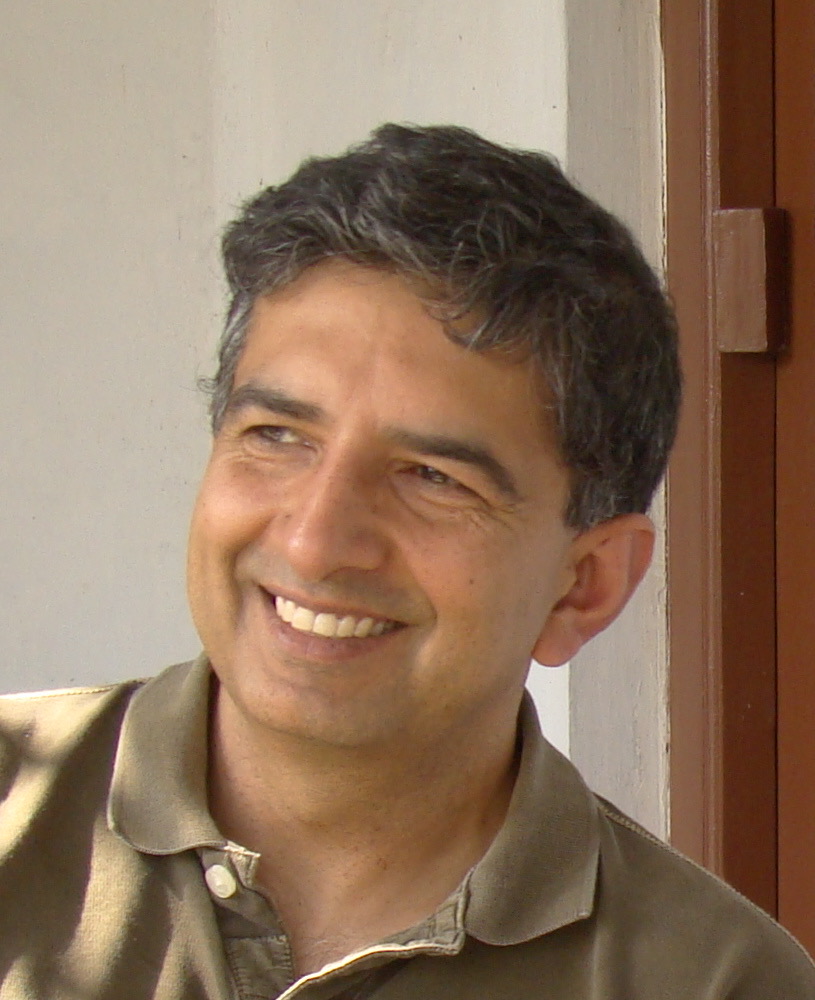 Salman Habib合作论文数Computational Science Division, Argonne National Laboratory;Kavli Institute for Cosmological Physics, University of Chicago;Northwestern Argonne Institute of Science and Engineering31
 Katrin Heitmann合作论文数High Energy Physics Division, Argonne National Laboratory;Kavli Institute for Cosmological Physics, University of Chicago28
 Adrian C. Pope合作论文数Argonne National Laboratory24
 Nicholas Frontiere合作论文数23
 Franck Cappello合作论文数Mathematics and Computer Science Division, Argonne National Laboratory11
 Yuri Alexeev合作论文数NVIDIA9
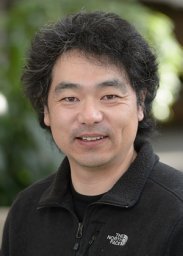 Kazutomo Yoshii合作论文数Div Math & Comp Sci, Argonne Natl Lab9Vitali A. Morozov合作论文数9
 Johannes Doerfert合作论文数Saarland University7
 Richard Easther合作论文数Department of Physics, Faculty of Science, University of Auckland7Juliana Kwan合作论文数6
 Michael Kruse合作论文数6
 Fred Chong合作论文数Department of Computer Science, University of Chicago;Infleqtion;Argonne National Laboratory6Joe Insley合作论文数5
 Esteban Rangel合作论文数Northwestern Univ, Evanston, IL 60208 USA5
 O. Gutsche合作论文数Fermilab5Silvio Rizzi合作论文数5
 Robert M Roser合作论文数Idaho National Laboratory5
 Tom Peterka合作论文数Argonne National Laboratory5
 J.-L. Vay合作论文数Lawrence Berkeley National Laboratory5
 Zarija Lukić合作论文数Berkeley Lab;Computational Cosmology Center5
 Peter Nugent合作论文数Computational Research Division, Lawrence Berkeley National Laboratory;Computational Cosmology Center, Lawrence Berkeley National Laboratory5
 Steven A. Gottlieb合作论文数Department of Physics, College of Arts and Sciences, University Graduate School, Indiana University Bloomington5Danila Korytov合作论文数4Patricia Larsen合作论文数4Xin-Chuan Wu合作论文数University of Chicago, Chicago, IL, USA4Mustafa A. Amin合作论文数4
 Nikhil Padmanabhan合作论文数Department of Astronomy, Yale University4Eve Kovacs合作论文数4
 Earl Lawrence合作论文数4
 Amol Upadhye合作论文数4
 Venkatram Vishwanath合作论文数Argonne Natl Lab4Jeff Keasler合作论文数4
 Katherine Riley合作论文数Argonne National Laboratory4
 George Zagaris合作论文数Computational Science and Engineering, University of Illinois at Urbana-Champaign4
 Thomas D. Uram合作论文数Argonne National Laboratory4Patricia Fasel合作论文数4
 David Daniel合作论文数Los Alamos National Laboratory4Ramesh Balakrishnan合作论文数3Anders Borgland合作论文数3Hillary L. Child合作论文数3D. Petravick合作论文数3Jack Wells合作论文数3
 Brett Viren合作论文数3Romain E. Cledat合作论文数3Katy Clough合作论文数3
 Vinay B. Ramakrishnaiah合作论文数Computer, Computational, and Statistical Sciences Division, Los Alamos National Laboratory3
 Saran Tunyasuvunakool合作论文数Google3




