Abstract This chapter proposes a map of comprehensive world social process which affects not only degrees in the achievement of human rights, but also the kinds of claims that are made to authoritative decision for redress of deprivations and nonfulfillments. This world social process expands the generalized image of “man” striving to maximize “values” by applying “institutions” to “resources,” and includes a number of distinguishable, but interrelated, features. The chapter discusses these features in greater detail, namely: participants, perspectives, situations, base values, strategies and outcomes. The chapter highlights the continuous flow of deprivations and nonfulfillments in the shaping and sharing of values which characterizes both the internal social processes of different particular communities and the more comprehensive social process of the larger global community. It also considers human rights dimensions and policies at stake in all social interaction and in all authoritative decision by which such interaction is regulated.
Abstract This chapter focuses on claims for freedom from discrimination because of nonconforming political belief. It starts with a factual background on deprivations imposed upon individuals owing to their political or other opinions. In particular, it considers political deprivations in relation to enlightenment, power, well-being, wealth, skill, affection, respect, and rectitude. It then examines basic community policies regarding the differential treatment of individual human beings entirely on the basis of political and other opinions, a practice that is clearly incompatible with the values of human dignity. It also discusses a range of prescriptions against discrimination on the basis of political or other opinions before concluding with an overview of future developments on freedom from political discrimination and persecution.
Abstract This chapter examines the emergence and continuing development of a global constitutive process of authoritative decision and its significance for the protection of human rights. It first considers the major features of contemporary constitutive process, namely: participation, nation-states, international governmental organizations, political parties, pressure groups, private associations, and the individual. It then explores the perspectives of the effective elites of the world, which infuse the global processes of authoritative and controlling decision, before discussing the diplomatic, parliamentary, diplomatic–parliamentary, adjudicative, and executive arenas in which all the effective participants in world power process interact. It also analyzes the base values for influencing decision, as well as the strategies employed in global constitutive process and the outcomes of such process. Finally, it describes the global bill of rights that is emerging from the different human rights prescriptions.
Abstract This chapter discusses the responsibility of states to protect aliens from discrimination in the context of human rights prescriptions. It starts with a factual background on deprivations imposed upon individuals on the ground that they do not possess the “nationality” of the imposing state. Among the most important value deprivations imposed upon aliens are denial of full participation in the making of community decisions, “denial of justice,” and deprivations with respect to wealth, skill, and enlightenment. The chapter proceeds by considering basic community policies aimed at protecting aliens from discrimination and the development of a unique customary international law for the special protection of aliens. In particular, it examines two different standards about the responsibility of states to protect aliens from discrimination: the doctrine of “national treatment,” or “equality of treatment,” and the “minimum international standard.” Finally, it highlights future prospects for prescriptions that relate to alien “protection” or “discrimination”.
Abstract This chapter proposes a comprehensive public order of human dignity and the basic policies that ought to accompany it. It first considers an observational standpoint that must be established in identification with the whole of humankind and with the explicit postulation of a comprehensive set of preferences about the shaping and sharing of all human dignity values. It then examines the perspectives of a comprehensive world public order, with emphasis on a rational clarification of community policies and preferences relating to respect, power, enlightenment, well-being, wealth, skill, affection, and rectitude. It also discusses the constitutive perspectives appropriate to a public order of human dignity, along with arenas, bases of power, strategies, and outcomes. Finally, it analyzes various conceptions of common interests in human rights of individuals relating to optimum public order as well as the conditions that affect the fulfillment or deprivation of human rights.
Abstract This chapter describes a comprehensive set of goal values for postulation, clarification, and implementation of human rights in the largest community of humankind, first by discussing the rising common demands for such rights, namely: demands relating to respect, power, enlightenment, well-being, wealth, skill, affection, and rectitude. It then considers the responses of both transnational and national processes of authoritative decision to these demands, arguing that human dignity values are not being fulfilled and that large-scale deprivations of individuals and groups continue to prevail everywhere. It also examines conditions affecting deprivations and nonfulfillments of human dignity values, along with the intellectual confusion about human rights. In particular, it evaluates a number of jurisprudential approaches that contribute to human rights theory, including the natural law approach, the historical approach, the positivist approach, and the social science approach. The chapter concludes by proposing a policy-oriented framework of inquiry about human rights.
Abstract This chapter considers claims relating to a basic equality of opportunity and freedom from discrimination. It begins with a discussion of the general norm of nondiscrimination that is rapidly emerging as an accepted prescription of international law, citing in particular the stated purpose of the United Nations Charter to “achieve international cooperation in promoting and encouraging respect for human rights and for fundamental freedoms for all without distinction as to race, sex, language, or religion.” It also examines other international instruments that promote nondiscrimination, including the Universal Declaration of Human Rights, the International Covenants on Human Rights, the International Convention on the Elimination of All Forms of Racial Discrimination, and the Proclamation of Teheran issued by the International Conference on Human Rights in 1968.
Abstract This chapter focuses on respect as the core value of human rights. It begins with a discussion of four particular outcomes of respect: a fundamental freedom of choice for all individuals regarding participation in all value processes; equality of opportunity for all individuals to enjoy the widest range of effective choice in their interactions with others; additional rewards in deference to individuals who make key contributions to common interests; and an aggregate pattern of social interactions in which all individuals are protected in the utmost freedom of choice and from possible coercion. The chapter also considers the different kinds of claims that individuals make upon constitutive process for the protection and fulfillment of respect, namely: claims relating to outcomes, participation, perspectives, situations, base values, and strategies. Finally, it discusses the importance of projecting and clarifying general community policies in order to realize the four outcomes of the “respect” value.
Abstract This chapter focuses on claims relating to freedom from religious discrimination. It begins with a factual background on discrimination based upon religious beliefs and expressions, which forms the basis for some of the most serious deprivations of civil and political rights. In particular, it considers religious discrimination in the areas of rectitude, power, enlightenment, well-being, affection, and respect. It then examines basic community policies on religious discrimination, highlighting the importance of individual freedom of inquiry and commitment to community consensus about shaping and sharing of values. It also discusses trends in the transformation of the concepts of religious toleration and freedom of religion into national prescription and practice before concluding with an analysis of the inclusive context of religious and other basic freedoms of belief.
Abstract This chapter considers claims relating to racial discrimination. It begins with a factual background on the issue of race and racial discrimination, and more specifically the value deprivations, both historical and continuing, imposed through “racial” discrimination and its equivalences. It then examines basic community policies that honor shared respect, which in turn requires nondiscrimination for reasons irrelevant to potentialities and is a fundamental component in any rational conception of human dignity. It also discusses the emergence of the more general norm of nondiscrimination, with particular emphasis on various prescriptions against racial discrimination articulated by international instruments such as the United Nations Charter, the Universal Declaration of Human Rights, and the International Convention on the Elimination of All Forms of Racial Discrimination, as well as special national legislation aimed at preventing and eradicating racial discrimination (for example, the United States's Civil Rights Act of 1964).
If the inhabitants of this distraught globe are to dwell in harmony, one psychological presupposition is common consciousness of the peril in which we live, and of the cooperative measures by which the menace can be averted. Perpetual crisis is likely to reverse the trend of historical development from progress toward a world commonwealth of free men, toward a world order in which the garrison-prison state reintroduces caste bound social systems. The internal consequences of militarization are gradual and far-reaching. Beginning as advisers of the civilian arm of government, soldiers and policemen gain stature even in states which possess strong traditions of civilian supremacy. Both socialism and capitalism postulate a higher level of freedom than is compatible with the garrison-prison system. The world revolutionary pattern of our epoch can take either of two forms, depending upon the influence of certain psychological factors. One major possibility is the garrison-prison state.
No serious and protracted crisis in Sino-Japanese affairs can fail to affect the future of political institutions in both contending states. The present crisis has become acute at a time when civilian institutions are in desperate need of curative years of peace and recovery. If this crisis is long drawn out and tension rises to the breaking point, the first victim, it appears, may be the business elements in Japanese society. If the crisis spreads, the Soviet Union may become involved. Unlike the bureaucratic state of pre-war days, the Soviet state speedily relinquished all compromises with private business, and abolished the free market. The system of party supremacy introduced an important new element into the pattern of the bureaucratic state. The current Sino-Japanese crisis broke out when the skill struggle within the Soviet Union had reached a phase which induced a temporary paralysis.
The garrison state hypothesis was first published about a quarter of a century ago. The simplest version of the garrison state hypothesis is that the arena of world politics is moving toward the domination of specialists on violence. The garrison state construct proposes a model in which the sequence marches from the relatively mixed elite pattern of the nineteenth century to military-police dominance in the impending future. The garrison state construct obviously belongs primarily to the third and fourth of the intellectual tasks, since it deals directly with trend and projection. The garrison state hypothesis is put forward as a matter-of-fact statement of expectation. A recurring ground for hope of world unity and peace among advocates of a voluntarily unified world community is the destructiveness of contemporary weapons. Hence the precondition of the garrison state outcome is likely to be fulfilled.
The deprivations with which we are here concerned are those imposed upon individuals on the ground that they do not possess the "nationality" of the imposing state. By nationality we refer to the "characterizations" states make of individuals for the purpose of controlling and protecting them for the many comprehensive concerns of states., Since the larger transnational community honors states in the conferment and withdrawal of "nationality" upon many different grounds-including place of birth, blood relation, subjective identification of individuals, and various activities-these characterizations may bear little relation to the actual facts of particular community membership and, hence, to reasonable differentiations in terms of common interest in the larger community of mankind. It is our thesis that most deprivations imposed through these characterizations are made unlawful, not merely by the historic law of the responsibility of states, but also by a newly emerged general norm of nondiscrimination which seeks to forbid all generic differentiations among people in access
 Myres S. Mcdougal合作论文数19lungchu chen合作论文数14Ms Mcdougal合作论文数12John Mchale合作论文数4Boris Pregel合作论文数4Jay Stanley合作论文数3ivan a vlasic合作论文数2w michael reisman合作论文数2Ithiel de Sola Pool合作论文数2Dwight Waldo合作论文数2Wm Reisman合作论文数2Myres S. McDougal合作论文数2L CHEN合作论文数2Daniel Lerner合作论文数2Carl J Friedrich合作论文数2Dorothy Blumenstock合作论文数2Kurt Lang合作论文数1harold j laski合作论文数1myres s mcdougal合作论文数1katherine jocher合作论文数1howard w odum合作论文数1Rc Donnelly合作论文数1Hans Speier合作论文数1Alfred E. Cohn合作论文数1Lc Green合作论文数1Arthu H. Brand Blanshard合作论文数1charles warren合作论文数1Neal E. Miller合作论文数1David Peter Sachs合作论文数1L Chen合作论文数1
 W. Michael Reisman合作论文数Yale Law School, Yale University1
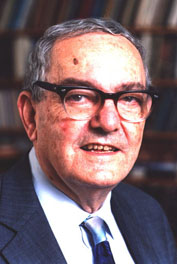 Herbert A. Simon (司马贺)合作论文数School of Computer Science, Carnegie Mellon University1Schoenfeld C A合作论文数1David M. Rubin合作论文数U. S. Geological Survey1Taylor Cole合作论文数1
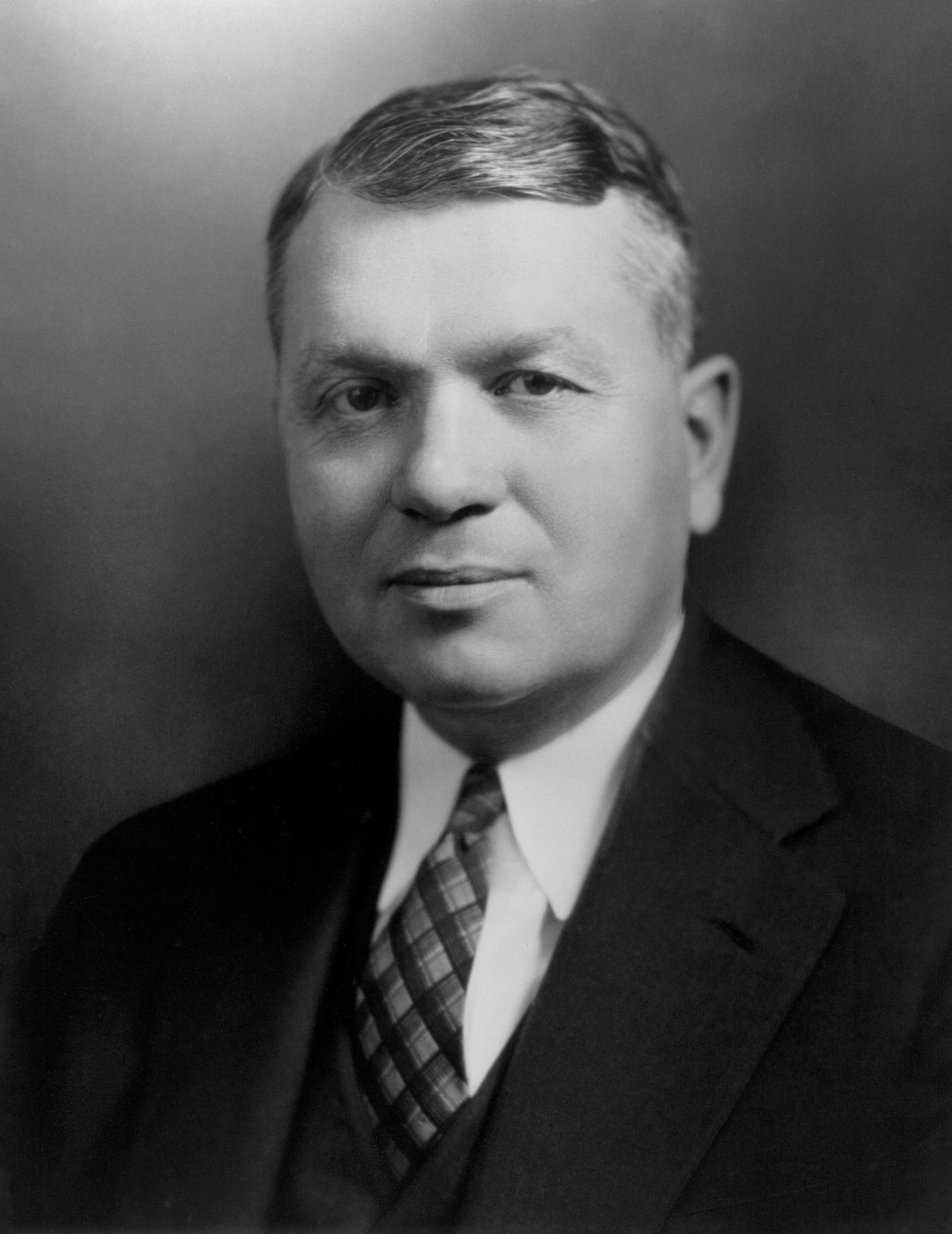 Harold Urey合作论文数University of California, San Diego1
 Frank H. Knight合作论文数Michigan State University1Bronislaw Malinowski合作论文数1
 Joel Migdal合作论文数University of Washington1Edwin G. Conklin合作论文数1W. Phillips Davison合作论文数1Karl T. Compton合作论文数1Bruce Lannes Smith合作论文数1Joseph La Palombara合作论文数1Philip C. Jessup合作论文数1
 Theodor W. Adorno合作论文数university of north carolina at chapel hill1




