Disclaimer/Complaints regulations If you believe that digital publication of certain material infringes any of your rights or (privacy) interests, please let the Library know, stating your reasons. In case of a legitimate complaint, the Library will make the material inaccessible and/or remove it from the website. Please Ask the Library: http://uba.uva.nl/en/contact, or a letter to: Library of the University of Amsterdam, Secretariat, Singel 425, 1012 WP Amsterdam, The Netherlands. You will be contacted as soon as possible.
Disclaimer/Complaints regulations If you believe that digital publication of certain material infringes any of your rights or (privacy) interests, please let the Library know, stating your reasons. In case of a legitimate complaint, the Library will make the material inaccessible and/or remove it from the website. Please Ask the Library: https://uba.uva.nl/en/contact, or a letter to: Library of the University of Amsterdam, Secretariat, Singel 425, 1012 WP Amsterdam, The Netherlands. You will be contacted as soon as possible.
B. Adeva a, O. Adriani b, M. Aguilar-Benitez c, H. Akbari d, j. Alcaraz c, A. Aloisio e, G. Alverson f, M.G. Alviggi e, G. Ambros i s, Q. An h, H. Anderhub i, A.L. Anderson J, V.P. Andreev k, T. Angelov J, L. An tonov ~, D. Antreasyan m, p. Arce c, A. Arefiev n, T. A zemoon o, T. Aziz P, P.V.K.S. Baba h, p. Bagnaia q, J.A. Bakken r, L. Baksay s, R.C. Ball o, S. Banerjee P, J. Bao a, R. Barill~re a, L. Barone q, R. Batt iston g, A. Bay t, U. Becker J, F. Behner i, j. Behrens i, S. Beingessner u, Gy.L. Bencze v,a, j. Berdugo c, p. Berges J, B. Bertucci g, B.L. Betev ~, A. Biland i, G.M. Bilei 8, R. Bizzarri q, J.J. Blaising u, p. B16meke w, B. Blumenfe ld d, G.J. Bobbink x, M. Bocciolini b, R. Bock w, A. B6hm w.a, B. Borgia q, D. Bouri lkov ~, M. Bourquin t, D. Boutigny u, B. Bouwens x, E. Brambil la e, J.G. Branson Y, I.C. Brock z, F. Bruyant a, C. Buisson aa, A. Bujak ab, J.D. Burger J, J.P. Burq aa, j. Busenitz s, X.D. Cai h, M. Capell ac, M. Caria g, G. Carl ino e, F. Carminat i b, A.M. Cartacci b, M. Cerrada ~, F. Cesaroni q, Y.H. Chang J, U.K. Chaturvedi h, M. Chemar in aa, A. Chen aa, C. Chen ae, G.M. Chen a~, H.F. Chert at, H.S. Chen ae M. Chert J, M.L. Chen o, W.Y. Chen h, G. Chiefari ~, C.Y. Chien d, M. Chmeissani o, C. Civinini b, I. Clare J, R. Clare J, H.O. Cohn ag, G. Coignet u, N. Colino a, V. C o m m i c h a u w, G. Confor to b, A. Cont in m.a, F. Crijns ah, X.Y. Cui h, T.S. Dai J, R. D'Alessandro b, R. de Asmund i s ¢, A. Degr6 a,u, K. Deiters J, E. D6nes v,a, p. Denes r, F. DeNotar is tefani q, M. Dh ina ~, D. DiBi tonto s, M. Diemoz q, H.R. Dimi t rov ~, C. Dionisi q,
B. Adeva a, O. Adriani b, M. Aguilar-Benitez c, H. Akbari d, j . Alcaraz c, A. Aloisio e, G. Alverson f, M.G. Alviggi e, Q. An ~, H. Ande rhub h, A.L. Anderson i, V.P. Andreev J, T. Angelov i, L. An tonov k, D. Antreasyan ~, P. Arce c, A. Arefiev m, T. Azemoon n, T. Aziz o, P.V.K.S. Baba g, P. Bagnaia P, J.A. Bakken q, L. Baksay r, R.C. Ball n, S. Banerjee o, j. Bao d, L. Barone P, A. Bay s, U. Becker i, j. Behrens h, S. Beingessner t, Gy.L. Bencze u,a, j. Berdugo c, P. Berges i, B. Bertucci P, B.L. Betev k, A. Biland h, R. Bizzarri P, J.J. Blaising t, p. Bl/Smeke v, B. Blumenfe ld d, G.J. Bobbink w, M. Bocciolini b, R. Bock v, A. B/Shm v,a, B. Borgia P, D. Bouri lkov k, M. Bourquin s, D. Boutigny t, B. Bouwens w, J.G. Branson x, I.C. Brock Y, F. Bruyant a, C. Buisson z, A. Bujak aa, J.D. Burger i, j .p . Burq z, j. Busenitz r, X.D. Cai g, M. Capell ab, F. Carbonara ~, P. Cardenal ~, F. Carmina t i b, A.M. Cartacci b, M. Cerrada ~, F. Cesaroni P, Y.H. Chang i, U.K. Chaturvedi g, M. Chemar in z, A. Chen a~, C. Chen ad G.M. Chen ~d, H.F. Chen ae, H.S. Chen ad, M. Chen i, M.L. Chen n, W.Y. Chen g, G. Chiefari ~, C.Y. Chien d, F. Chollet t, C. Civinini b, I. Clare i, R. Clare i, H.O. Cohn ~f, G. Coignet t, N. Colino a, V. C o m m i c h a u v, G. Confor to b, A. Cont in a, F. Crijns w, X.Y. Cui g, T.S. Dai i, R. D'Alessandro b, R. de Asmundi s e, A. Degr6 a,t, K. Deiters i, E. D6nes u,a, p. Denes q, F. DeNotar is tefani o, M. Dh ina h, D. DiBi tonto r, M. Diemoz P, F. Diez-Hedo a, H.R. Dimi t rov k, C. Dionisi P, R. Divih a, M.T. Dova g, E. Drago ~, T. Driever w, D. Duchesneau s, P. Duinker w, I. Duran ~, H. E1 M a m o u n i z, A. Engler Y, F.J. Eppling i, F.C. Ern6 w, p. Ex te rmann ~, R. Fabbret t i ag, G. Faber h, M. Fabre h, S. Falciano P, Q. Fan g, S.J. Fan ah, O. Fackler ab, j. Fay ~, J. Feh lmann h, T. Ferguson Y, G. Fernandez ~, F. Ferroni P'~, H. Fesefeldt v, j . Field ~, F. Fi l thaut w, G. Finocchiaro P, P.H. Fisher d, G. Forconi ~, T. Fo r eman w, K. Freudenre ich h, W. Friebel ai, M. Fukush ima i, M. Gai l loud aj, m b o c ac z Yu. Galakt ionov , E. Gallo , S.N. Ganguli , P. Garcia-Abia , S.S. Gau , D. Gele , S. Genti le P, M. G l a u b m a n r, S. Goldfarb n, Z.F. Gong a~, E. Gonzalez c, A. Gordeev m, P. G6tt l icher v, D. Gou jon s, G. Grat ta ~k, C. Grinnell i, M. Gruenewald ak, M. Guanzirol i g, J.K. Guo ~h, A. Gur tu °7 H.R. Gustafson n, L.J. Gutay ~a, H. Haan v, A. Hasan g, D. Hauschi ldt w, C.F. He ah, T. Hebbeker v, M. Heber t x, G. Her ten i, U. Her ten v, A. Herv6 ~, K. Hilgers v, H. Hofer h, H. Hoorani g, L.S. Hsu ac, G. Hu g, G.Q. Hu ah, B. IUe z, M.M. Ilyas g, V. Innocente e.~, E. Isiksal h, H. Janssen a, B.N. Jin ad, L.W. Jones n, A. Kasser aj, R.A. Khan g, Yu. Kamyshkov m,~f y . Karyotakis t,a, M. Kaur g, S. Khokhar g, V. Khoze J, M.N. Kienzle-Focacci ~, W. Kinn ison a~, D. Kirkby ak, W. Kittel w, A. Kl imentov m A.C. K/Snig w, O. Kornad t v, V. Koutsenko m.i, R.W. Kraemer Y, T. Kramer i, V.R. Krastev k, a m g m s b W. Krenz v, j . Kr izmanic d, K.S. K u m a r , V. K u m a r , A. Kun in , V. Lalieu , G. Landi , e z h a h K. Lanius a, D. Lanske v, S. Lanzano , P. Lebrun , P. Lecomte , P. Lecoq , P. Le Coultre , D. Lee a~, I. Leedom f, J.M. Le Goff a, L. Leis tam a, R. Leiste a~, M. Lenti b, E. Leonardi o, J. Lettry h, P.M. Levchenko J, X. Leytens w, C. Li ~'g, H.T. Li ad, J.F. Li g, L. Li h, p. j . Li ~h, Q. Li g, X.G. Li aa, j . y . Liao ah, Z.Y. Lin a~, F.L. Linde Y, B. L i n d e m a n n v, D. Linnhofer h, R. Liu g, Y. Liu ~, W. L o h m a n n ~i, E. Longo P, Y.S. Lu aa, J.M. Lubbers a, K. LiJbelsmeyer v,
Holography has been used successfully in combination with conventional optics for the first time in a large cryogenic bubble chamber. the 15-foot bubble chamber at Fermilab, during a physics run. The innovative system combined the reference beam with the object beam, irradiating a conical volume of similar to 1.4 m(3). Bubble tracks from neutrino interactions with a width of similar to 120 mu m have been recorded with good contrast. The ratio of intensities of the object light to the reference light striking the him is called the beam branching ratio. We obtained in our experiment an exceedingly small minimum-observable ratio of (0.54 +/- 0.21) x 10(-7). The technology has the potential for a wide range of applications. (C) 1999 Elsevier Science B.V. All rights reserved.
The L3 central tracking detector has been in operation since the start-up of LEP (Large Electron Positron collider) in 1989. This detector consists of a Time Expansion Chamber (TEC), a layer of Plastic Scintillating Fibers and a Z-chamber. The TEC gives a high spatial resolution and an excellent multi-track reconstruction capability. The fibers are designed to calibrate the drift velocity with high precision. The Z-Chamber provides TEC with accurate information about the z-coordinates of the tracks. A description of the design and the infrastructure of these three detectors, including the readout and data acquisition system, is given. The performance of the detectors during the 1990 and 1991 LEP running periods is presented.
We present a study of the global event shape variables thrust and heavy jet mass, of energy-energy correlations and of jet multiplicities based on 250 000 hadronic Z0 decays. The data are compared to new QCD calculations including resummation of leading and next-to-leading logarithms to all orders. We determine the strong coupling constant αs (91.2 GeV) = 0.125±0.003 (exp) ± 0.008 (theor). The first error is the experimental uncertainty. The second error is due to hadronization uncertainties and approximations in the calculations of the higher order corrections.
We report on a study of energetic, isolated photons in a sample of ∼ 320 000 Z0 hadronic decays. Energetic isolated photons probe the short-distance structure of QCD. We compare our data with the prediction of several QCD-based calculations. A search for new processes with one or two photons in the hadronic final state is also presented. No evidence for physics beyond the standard model is found.
From an exposure of the Fermilab 15-foot bubble chamber to the Tevatron quadrupole triplet neutrino beam, we have determined the ratio of neutral-current (NC) to charged-current (CC) interactions to be 0.288 +/- 0.032 for events with visible hadron momentum above 10 GeV/c. The mean nu (nuBAR) event energy is 150 (110) GeV, which is higher than that for any previous beam. This result agrees with those from previous experiments at lower energies. The NC/CC ratio is derived for a combined sample of nu and nuBAR events. A value of 0.274 +/- 0.038 is obtained for the dominant nu-component assuming nuBAR NC/CC = 0.39 +/- 0.08. For events with visible hadron momentum above 25 GeV/c, where the neutral hadron contamination remaining in the NC sample is assumed to be negligible, the combined NC/CC is 0.323 +/- 0.025 and the K0 production rates are 0.375 +/- 0.064 per CC and 0.322 +/- 0.073 per NC event. The corresponding LAMBDA-rates are 0.161 +/- 0.030 per CC and 0.113 +/- 0.030 per NC event. The K0 and LAMBDA-distributions of the fractional hadron energy variable z in NC events are consistent with those in CC events.
Inclusive J production in Z0 decays is observed via the leptonic decay mode J → ℓ+ℓ− (ℓ = e,μ). We measure the branching ratio Br(Z0 → J + X) = (4.1 ± 0.7 (stat.) ± 0.3 (sys.)) × 10−3. We have calculated the fraction of the J mesons from b-hadron decay and find a branching ratio of Br(b → J + X)= (1.3±0.2(stat.)±0.2(sys.)) × 10−2. We determine the average fractional energy of bottom hadrons 〈XE > = 0.70±0.03 (stat.)+0.02−0.01 (sys.) using the momentum spectrum of the J mesons. From a study of the angle between the J and the most energetic jet, we set an upper limit on the branching ratio Br(Z0 → qqg∗;g∗ → J + X) < 7.0 × 10⁻⁴at 90% confidence level.
The structure of hadronic events fromZ 0 decay is studied by measuring event shape variables, factorial moments, and the energy flow distribution. The distributions, after correction for detector effects and initial and final state radiation, are compared with the predictions of different QCD Monte Carlo programs with optimized parameter values. These Monte Carlo programs use either the second order matrix element or the parton shower evolution for the perturbative QCD calculations and use the string, the cluster, or the independent fragmentation model for hadronization. Both parton shower andO(α 2 s matrix element based models with string fragmentation describe the data well. The predictions of the model based on parton shower and cluster fragmentation are also in good agreement with the data. The model with independent fragmentation gives a poor description of the energy flow distribution. The predicted energy evolutions for the mean values of thrust, sphericity, aplanarity, and charge multiplicity are compared with the data measured at different center-of-mass energies. The parton shower based models with string or cluster fragmentation are found to describe the energy dependences well while the model based on theO(α 2 s calculation fails to reproduce the energy dependences of these mean values.
We have measured the forward-backward asymmetry in e+e−→bband e+e−→cc processes using hadronic events containing muons or electrons. The data sample corresponds to 4100000 hadronic decays of the Z0. From a fit to the single lepton and dilepton p and pT spectra, we determine Abb=0.086±0.015±0.007andAcc=0.083±0.038±0.027 at the effective center-of-mass energy √s=91.24 GeV. These measurements yield a value of the electroweak mixing angle sin2θw=0.2336±0.0029.
A more precise determination of the B0-B0 mixing parameter in Z0 decays based on a fourfold increase in statistics has been made using the 1990 and 1991 L3 data. The analysis of the dilepton events, muons and electrons, gives: χB = 0.121 ± 0.017 (stat) ± 0.006 (sys). Using the value of χd measured at the γ(4S) we derive the following limit for χs:χs > 0.16 (90% CL).
We have measured the total and differential cross sections of the reaction e+ e- --> gamma-gamma(gamma) at center-of-mass energies around 91 GeV, with an integrated luminosity of 14.2 pb-1. The results are in good agreement with QED predictions. We set lower limits, at 95% confidence level, on the QED cutoff parameters of LAMBDA+ > 139 GeV, LAMBDA- > 108 GeV and on the mass of an excited electron of m(e*) > 127 GeV. We searched for Z0 rare decays with photonic signatures in the final state. Upper limits, at 95% confidence level, for the branching ratio of ZO decaying into pi-0-gamma/gamma-gamma, eta-gamma and gamma-gamma-gamma are 1.2 x 10(-4), 1.8 x 10(-4), 3.3 x 10(-5) respectively.
We have measured the total and differential cross sections of the reaction e+e− → γγ(γ) at center-of-mass energies around 91 GeV, with an integrated luminosity of 14.2 pb−1. The results are in good agreement with QED predictions. We set lower limits, at 95% confidence level, on the QED cutoff parameters of Λ+ > 139 GeV, Λ− > 108 GeV and on the mass of an excited electron of me∗ > 127 GeV. We searched for Z0 rare decays with photonic signitures in the final state. Upper limits, at 95% confidence level, for branching ratio of Z0 decaying into π0γ/γγ, νγ and γγγ are 1.2 × 10⁻⁴, 1.8 × 10⁻⁴, 3.3 × 10⁻⁵ respectively.
 G. Alverson合作论文数36D. Antreasyan合作论文数36H. Anderhub合作论文数35M. Aguilar-Benitez合作论文数Centro de Investigaciones Energeticas, Medioambientales y Tecnologicas, CIEMAT35A. Aloisio合作论文数33Juan Alcaraz合作论文数33
 Tofigh Azemoon合作论文数33L. Antonov合作论文数32
 Jiming Bao合作论文数Department of Electrical and Computer Engineering, Cullen College of Engineering, University of Houston;Texas Center for Superconductivity, University of Houston32
 Tariq Aziz合作论文数Department of High Energy Physics, Tata Institute of Fundamental Research32L. Baksay合作论文数32Bruna Bertucci合作论文数31g chiefari合作论文数31Cy Chien合作论文数31Bl Betev合作论文数31A. Arefiev合作论文数31T. Angelov合作论文数31M. Bocciolini合作论文数31R. Bizzarri合作论文数30Maurice H. Bourquin合作论文数30Jeremie Berdugo合作论文数30
 Bernardo Adeva Andany合作论文数Department of Particle Physics, Faculty of Physics, Universidade de Santiago de Compostela30A. Biland合作论文数Eidgenössische Technische Hochschule, ETH Zürich30U. Herten合作论文数29E. Drago合作论文数29T. Foreman合作论文数29S. Beingessner合作论文数29J. Rose合作论文数29
 Jean-Jacques J Blaising合作论文数29P. Berges合作论文数29
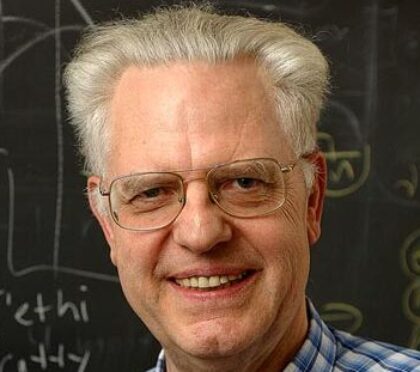 Ulrich Becker合作论文数Laboratory for Nuclear Science, Massachusetts Institute of Technology;Department of Physics, Massachusetts Institute of Technology29I. Leedom合作论文数29
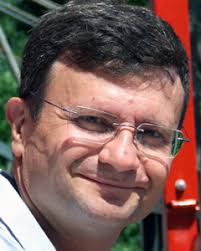 Oscar Adriani合作论文数Dipartimento di Fisica e Astronomia, Università degli Studi di Firenze;Istituto Nazionale di Fisica Nucleare29Guy G. Coignet合作论文数29C GRINNELL合作论文数28M. MacDermott合作论文数28F. Crijns合作论文数28Rc Ball合作论文数28M. Capell合作论文数28G. Forconi合作论文数28Robert Leiste合作论文数28Hans Hofer合作论文数28
 Bruno Borgia合作论文数28T. Spickermann合作论文数28K. Deiters合作论文数27C. Dionisi合作论文数27R. Morand合作论文数27M. Dhina合作论文数27T. Driever合作论文数27




