Autonomous driving systems require a comprehensive understanding of the environment, achieved by extracting visual features essential for perception, planning, and control. However, models trained solely on single-task objectives or generic datasets often lack the contextual information needed for robust performance in complex driving scenarios. In this work, we present a unified encoder trained across a diverse set of computer vision tasks essential for urban driving, including depth estimation, pose estimation, 3D scene flow estimation, and semantic, instance, panoptic, and motion segmentation. This single-encoder approach not only integrates these complementary visual cues, inspired by the diversity of visual cues used in human driving perception, but also enables a compact and inference-efficient model that embeds a rich, navigation-relevant latent space. Indeed, the unified encoder learns to embed multi-task knowledge into a shared representation, allowing for better downstream task adaptation, particularly for steering estimation. To ensure the efficient learning across tasks within a unified encoder, we propose a multi-scale pose decoder and employ knowledge distillation from a multi-backbone teacher model. Our experiments demonstrate that (1) the unified encoder achieves strong generalization across all visual tasks, comparable to state-of-the-art dedicated models, and (2) its frozen latent representations significantly outperform both fine-tuned models and ImageNet-pretrained baselines for steering estimation. These results underscore how multi-task feature learning, inspired by the diversity of perceptual cues used in human driving, offers an efficient and context-rich foundation for autonomous driving systems.
We study online fine-tuning of pretrained control policies for autonomous driving using Real-Time Recurrent Reinforcement Learning (RTRRL), a memory-efficient algorithm that updates policy parameters at every time step without backpropagation through time. We extend RTRRL to support LrcSSM, a recently proposed nonlinear diagonal state-space model, and combine offline behavioral cloning with online RTRRL fine-tuning to adapt policies to distribution shifts at deployment. We validate the approach in the CarRacing simulation and on a 1:10-scale RoboRacer platform equipped with an event camera, where a pretrained policy is fine-tuned online during real-world line-following. To our knowledge, this is the first demonstration of online RL fine-tuning with event-camera observations on standard (non-spiking) hardware in closed-loop control. LrcSSM-based policies improve fastest and most consistently across both settings.
General-purpose large language models (LLMs) that rely on in-context learning do not reliably deliver the scientific understanding and performance required for drug discovery tasks. Simply increasing model size or introducing reasoning tokens does not yield significant performance gains. To address this gap, we introduce the MMAI Gym for Science, a one-stop shop molecular data formats and modalities as well as task-specific reasoning, training, and benchmarking recipes designed to teach foundation models the 'language of molecules' in order to solve practical drug discovery problems. We use MMAI Gym to train an efficient Liquid Foundation Model (LFM) for these applications, demonstrating that smaller, purpose-trained foundation models can outperform substantially larger general-purpose or specialist models on molecular benchmarks. Across essential drug discovery tasks - including molecular optimization, ADMET property prediction, retrosynthesis, drug-target activity prediction, and functional group reasoning - the resulting model achieves near specialist-level performance and, in the majority of settings, surpasses larger models, while remaining more efficient and broadly applicable in the domain.
State Space Models (SSMs) are inherently recurrent along the sequence dimension, yet depth-recurrence - reusing the same block repeatedly across layers, as recently applied in looped transformers - has not been explored in this model family. We show that a looped SSM with k parameters iterated L times consistently closely matches or outperforms a standard SSM with k · L independent parameters across four architectures (LRU, S5, LinOSS, LrcSSM) and six time series classification benchmarks, despite operating within a strictly smaller hypothesis space, as we formally establish. Since the larger model contains the looped model as a special case, this dominance cannot be explained by expressivity and instead points to parameter sharing across depth as a beneficial inductive bias that simplifies optimization. These results demonstrate that depth-recurrence is orthogonal to sequence-recurrence and independently beneficial. We further show that input reshaping is an equally neglected design axis: concatenating timesteps for low-dimensional inputs, or flattening and rechunking the joint feature-time dimension for high-dimensional ones, yields accuracy gains of 1-6
Steering estimation is a critical task in autonomous driving, traditionally relying on 2D image-based models. In this work, we explore the advantages of incorporating 3D spatial information through hybrid architectures that combine 3D neural network models with recurrent neural networks (RNNs) for temporal modeling, using LiDAR-based point clouds as input. We systematically evaluate four hybrid 3D models, all of which outperform the 2D-only baseline, with the Graph Neural Network (GNN) - RNN model yielding the best results. To reduce reliance on LiDAR, we leverage a pretrained unified model to estimate depth from monocular images, reconstructing pseudo-3D point clouds. We then adapt the GNN-RNN model, originally designed for LiDAR-based point clouds, to work with these pseudo-3D representations, achieving comparable or even superior performance compared to the LiDAR-based model. Additionally, the unified model provides semantic labels for each point, enabling a more structured scene representation. To further optimize graph construction, we introduce an efficient connectivity strategy where connections are predominantly formed between points of the same semantic class, with only 20% of inter-class connections retained. This targeted approach reduces graph complexity and computational cost while preserving critical spatial relationships. Finally, we validate our approach on the KITTI dataset, achieving a 71 improvement over 2D-only models. Our findings highlight the advantages of 3D spatial information and efficient graph construction for steering estimation, while maintaining the cost-effectiveness of monocular images and avoiding the expense of LiDAR-based systems.
Diffusion model-based approaches have shown promise in data-driven planning, but there are no safety guarantees, thus making it hard to be applied for safety-critical applications. To address these challenges, we propose a new method, called SafeDiffuser, to ensure diffusion probabilistic models satisfy specifications by using a class of control barrier functions. The key idea of our approach is to embed the proposed finite-time diffusion invariance into the denoising diffusion procedure, which enables trustworthy diffusion data generation. Moreover, we demonstrate that our finite-time diffusion invariance method through generative models not only maintains generalization performance but also creates robustness in safe data generation. We test our method on a series of safe planning tasks, including maze path generation, legged robot locomotion, and 3D space manipulation, with results showing the advantages of robustness and guarantees over vanilla diffusion models.
Surgical workflow analysis is essential in robot-assisted surgeries, yet the long duration of such procedures poses significant challenges for comprehensive video analysis. Recent approaches have predominantly relied on transformer models; however, their quadratic attention mechanism restricts efficient processing of lengthy surgical videos. In this paper, we propose a novel hierarchical input-dependent state space model that leverages the linear scaling property of state space models to enable decision making on full-length videos while capturing both local and global dynamics. Our framework incorporates a temporally consistent visual feature extractor, which appends a state space model head to a visual feature extractor to propagate temporal information. The proposed model consists of two key modules: a local-aggregation state space model block that effectively captures intricate local dynamics, and a global-relation state space model block that models temporal dependencies across the entire video. The model is trained using a hybrid discrete-continuous supervision strategy, where both signals of discrete phase labels and continuous phase progresses are propagated through the network. Experiments have shown that our method outperforms the current state-of-the-art methods by a large margin (+2.8
We present LFM2, a family of Liquid Foundation Models designed for efficient on-device deployment and strong task capabilities. Using hardware-in-the-loop architecture search under edge latency and memory constraints, we obtain a compact hybrid backbone that combines gated short convolutions with a small number of grouped query attention blocks, delivering up to 2x faster prefill and decode on CPUs compared to similarly sized models. The LFM2 family covers 350M-8.3B parameters, including dense models (350M, 700M, 1.2B, 2.6B) and a mixture-of-experts variant (8.3B total, 1.5B active), all with 32K context length. LFM2's training pipeline includes a tempered, decoupled Top-K knowledge distillation objective that avoids support mismatch; curriculum learning with difficulty-ordered data; and a three-stage post-training recipe of supervised fine-tuning, length-normalized preference optimization, and model merging. Pre-trained on 10-12T tokens, LFM2 models achieve strong results across diverse benchmarks; for example, LFM2-2.6B reaches 79.56
Bio-inspired neural networks have the potential to advance our understanding of neural computation and improve the state-of-the-art of AI systems. Bio-electrical synapses directly transmit neural signals, by enabling fast current flow between neurons. In contrast, bio-chemical synapses transmit neural signals indirectly, through neurotransmitters. Prior work showed that interpretable dynamics for complex robotic control, can be achieved by using chemical synapses, within a sparse, bio-inspired architecture, called Neural Circuit Policies (NCPs). However, a comparison of these two synaptic models, within the same architecture, remains an unexplored area. In this work we aim to determine the impact of using chemical synapses compared to electrical synapses, in both sparse and all-to-all connected networks. We conduct experiments with autonomous lane-keeping through a photorealistic autonomous driving simulator to evaluate their performance under diverse conditions and in the presence of noise. The experiments highlight the substantial influence of the architectural and synaptic-model choices, respectively. Our results show that employing chemical synapses yields noticeable improvements compared to electrical synapses, and that NCPs lead to better results in both synaptic models.
Autonomous vehicle navigation is a key challenge in artificial intelligence, requiring robust and accurate decision-making processes. This research introduces a new end-to-end method that exploits multimodal information from a single monocular camera to improve the steering predictions for self-driving cars. Unlike conventional models that require several sensors which can be costly and complex or rely exclusively on RGB images that may not be robust enough under different conditions, our model significantly improves vehicle steering prediction performance from a single visual sensor. By focusing on the fusion of RGB imagery with depth completion information or optical flow data, we propose a comprehensive framework that integrates these modalities through both early and hybrid fusion techniques. We use three distinct neural network models to implement our approach: Convolution Neural Network - Neutral Circuit Policy (CNN-NCP) , Variational Auto Encoder - Long Short-Term Memory (VAE-LSTM) , and Neural Circuit Policy architecture VAE-NCP. By incorporating optical flow into the decision-making process, our method significantly advances autonomous navigation. Empirical results from our comparative study using Boston driving data show that our model, which integrates image and motion information, is robust and reliable. It outperforms state-of-the-art approaches that do not use optical flow, reducing the steering estimation error by 31 of optical flow data, combined with advanced neural network architectures (a CNN-based structure for fusing data and a Recurrence-based network for inferring a command from latent space), to enhance the performance of autonomous vehicles steering estimation.
Autonomous driving presents a complex challenge, which is usually addressed with artificial intelligence models that are end-to-end or modular in nature. Within the landscape of modular approaches, a bio-inspired neural circuit policy model has emerged as an innovative control module, offering a compact and inherently interpretable system to infer a steering wheel command from abstract visual features. Here, we take a leap forward by integrating a variational autoencoder with the neural circuit policy controller, forming a solution that directly generates steering commands from input camera images. By substituting the traditional convolutional neural network approach to feature extraction with a variational autoencoder, we enhance the system's interpretability, enabling a more transparent and understandable decision-making process. In addition to the architectural shift toward a variational autoencoder, this study introduces the automatic latent perturbation tool, a novel contribution designed to probe and elucidate the latent features within the variational autoencoder. The automatic latent perturbation tool automates the interpretability process, offering granular insights into how specific latent variables influence the overall model's behavior. Through a series of numerical experiments, we demonstrate the interpretative power of the variational autoencoder-neural circuit policy model and the utility of the automatic latent perturbation tool in making the inner workings of autonomous driving systems more transparent.
Dataset Distillation seeks to summarize a large dataset by generating a reduced set of synthetic samples. While there has been much success at distilling small datasets such as CIFAR-10 on smaller neural architectures, Dataset Distillation methods fail to scale to larger high-resolution datasets and architectures. In this work, we introduceDatasetDistillation withDomainShift (D3S), a scalable distillation algorithm, made by reframing the dataset distillation problem as adomain shiftone. In doing so, we derive a universal bound on the distillation loss, and provide a method for efficiently approximately optimizing it. We achieve state-of-the-art results on Tiny-ImageNet, ImageNet-1k, and ImageNet-21K over a variety of recently proposed baselines, including high cross-architecture generalization. Additionally, our ablation studies provide lessons on the importance of validation-time hyperparameters on distillation performance, motivating the need for standardization.
There is an ever-growing zoo of modern neural network models that can efficiently learn end-to-end control from visual observations. These advanced deep models, ranging from convolutional to Vision Transformers, from small to gigantic networks, have been extensively tested on offline image classification tasks. In this paper, we study these vision models with respect to the open-loop training to closed-loop generalization abilities, i.e., deployment realizes a causal feedback loop that is not present during training. This causality gap typically emerges in robotics applications such as autonomous driving, where a network is trained to imitate the control commands of a human. In this setting, two situations arise: 1) Closed-loop testing in-distribution, where the test environment shares properties with those of offline training data. 2) Closed-loop testing under distribution shifts and out-of-distribution. Contrary to recently reported results, we show that under proper training guidelines, all vision architectures perform indistinguishably well on in-distribution deployment, resolving the causality gap. In situation 2, We observe that scale is the strongest factor in improving closed-loop generalization regardless of the choice of the model architecture. Our results predict the trend that in the future we will see larger and larger models being used in offline-training-online-deployment imitation learning tasks in robotic applications.
Simulators are powerful tools for autonomous robot learning as they offer scalable data generation, flexible design, and optimization of trajectories. However, transferring behavior learned from simulation data into the real world proves to be difficult, usually mitigated with compute-heavy domain randomization methods or further model fine-tuning. We present a method to improve generalization and robustness to distribution shifts in sim-to-real visual quadrotor navigation tasks. To this end, we first build a simulator by integrating Gaussian Splatting with quadrotor flight dynamics, and then, train robust navigation policies using Liquid neural networks. In this way, we obtain a full-stack imitation learning protocol that combines advances in 3D Gaussian splatting radiance field rendering, crafty programming of expert demonstration training data, and the task understanding capabilities of Liquid networks. Through a series of quantitative flight tests, we demonstrate the robust transfer of navigation skills learned in a single simulation scene directly to the real world. We further show the ability to maintain performance beyond the training environment under drastic distribution and physical environment changes. Our learned Liquid policies, trained on single target manoeuvres curated from a photorealistic simulated indoor flight only, generalize to multi-step hikes onboard a real hardware platform outdoors.
Modern deep learning requires large volumes of data, which could contain sensitive or private information that cannot be leaked. Recent work has shown for homogeneous neural networks a large portion of this training data could be reconstructed with only access to the trained network parameters. While the attack was shown to work empirically, there exists little formal understanding of its effective regime which datapoints are susceptible to reconstruction. In this work, we first build a stronger version of the dataset reconstruction attack and show how it can provably recover the \emph{entire training set} in the infinite width regime. We then empirically study the characteristics of this attack on two-layer networks and reveal that its success heavily depends on deviations from the frozen infinite-width Neural Tangent Kernel limit. Next, we study the nature of easily-reconstructed images. We show that both theoretically and empirically, reconstructed images tend to "outliers" in the dataset, and that these reconstruction attacks can be used for \textit{dataset distillation}, that is, we can retrain on reconstructed images and obtain high predictive accuracy.
Developing autonomous agents that can interact with changing environments is an open challenge in machine learning. Robustness is particularly important in these settings as agents are often fit offline on expert demonstrations but deployed online where they must generalize to the closed feedback loop within the environment. In this work, we explore the application of recurrent neural networks to tasks of this nature and understand how a parameterization of their recurrent connectivity influences robustness in closed-loop settings. Specifically, we represent the recurrent connectivity as a function of rank and sparsity and show both theoretically and empirically that modulating these two variables has desirable effects on network dynamics. The proposed low-rank, sparse connectivity induces an interpretable prior on the network that proves to be most amenable for a class of models known as closed-form continuous-time neural networks (CfCs). We find that CfCs with fewer parameters can outperform their full-rank, fully-connected counterparts in the online setting under distribution shift. This yields memory-efficient and robust agents while opening a new perspective on how we can modulate network dynamics through connectivity.
We approach designing a state-space model for deep learning applications through its dual representation, thetransfer function, and uncover a highly efficient sequence parallel inference algorithm that isstate-free: unlike other proposed algorithms, state-free inference does not incur any significant memory or computational cost with an increase in state size. We achieve this using properties of the proposed frequency domain transfer function parametrization, which enables direct computation of its corresponding convolutional kernel's spectrum via a single Fast Fourier Transform. Our experimental results across multiple sequence lengths and state sizes illustrates, on average, a 35% training speed improvement over S4 layers -- parametrized in time-domain -- on the Long Range Arena benchmark, while delivering state-of-the-art downstream performances over other attention-free approaches. Moreover, we report improved perplexity in language modeling over a long convolutional Hyena baseline, by simply introducing our transfer function parametrization. Our code is available at https://github.com/ruke1ire/RTF.
Modern end-to-end learning systems can learn to explicitly infer control from perception. However, it is difficult to guarantee stability and robustness for these systems since they are often exposed to unstructured, high-dimensional, and complex observation spaces (e.g., autonomous driving from a stream of pixel inputs). We propose to leverage control Lyapunov functions (CLFs) to equip end-to-end vision-based policies with stability properties and introduce stability attention in CLFs (att-CLFs) to tackle environmental changes and improve learning flexibility. We also present an uncertainty propagation technique that is tightly integrated into att-CLFs. We demonstrate the effectiveness of att-CLFs via comparison with classical CLFs, model predictive control, and vanilla end-to-end learning in a photo-realistic simulator and on a real full-scale autonomous vehicle.
Intelligent intersection managers can improve safety by detecting dangerous drivers or failure modes in autonomous vehicles, warning oncoming vehicles as they approach an intersection. In this work, we present FailureNet, a recurrent neural network trained end-to-end on trajectories of both nominal and reckless drivers in a scaled miniature city. FailureNet observes the poses of vehicles as they approach an intersection and detects whether a failure is present in the autonomy stack, warning cross-traffic of potentially dangerous drivers. FailureNet can accurately identify control failures, upstream perception errors, and speeding drivers, distinguishing them from nominal driving. The network is trained and deployed with autonomous vehicles in the MiniCity. Compared to speed or frequency-based predictors, FailureNet's recurrent neural network structure provides improved predictive power, yielding upwards of 84% accuracy when deployed on hardware.
We propose a new dataset distillation algorithm using reparameterization and convexification of implicit gradients (RCIG), that substantially improves the state-of-the-art. To this end, we first formulate dataset distillation as a bi-level optimization problem. Then, we show how implicit gradients can be effectively used to compute meta-gradient updates. We further equip the algorithm with a convexified approximation that corresponds to learning on top of a frozen finite-width neural tangent kernel. Finally, we improve bias in implicit gradients by parameterizing the neural network to enable analytical computation of final-layer parameters given the body parameters. RCIG establishes the new state-of-the-art on a diverse series of dataset distillation tasks. Notably, with one image per class, on resized ImageNet, RCIG sees on average a 108\% improvement over the previous state-of-the-art distillation algorithm. Similarly, we observed a 66\% gain over SOTA on Tiny-ImageNet and 37\% on CIFAR-100.
 Daniela Rus合作论文数Computer Science & Artificial Intelligence Laboratory, Schwarzman College of Computing, Massachusetts Institute of Technology;Liquid AI;SymphonyAI;Symbotic;MBZUAI57
 Mathias Lechner合作论文数Liquid AI;Computer Science and Artificial Intelligence Laboratory, Massachusetts Institute of Technology47
 Radu Grosu合作论文数Cyber-Physical Systems Division, Vienna University of Technology;Pyrosoma AI39
 Alexander Amini合作论文数Computer Science & Artificial Intelligence Laboratory, Massachusetts Institute of Technology;Liquid AI;Themis AI27
 Johnson Wang (尊玄)合作论文数Massachusetts Institute of Technology CSAIL13
 Wei Xiao合作论文数Computer Science and Artificial Intelligence Laboratory, Massachusetts Institute of Technology11
 Makram Chahine合作论文数Electrical Engineering & Computer Science Department, Massachusetts Institute of Technology;Computer Science and Artificial Intelligence Laboratory, Schwarzman College of Computing, Massachusetts Institute of Technology7
 Noel Loo合作论文数Computer Science & Artificial Intelligence Lab, Schwarzman College of Computing, Massachusetts Institute of Technology7
 Thomas A. Henzinger合作论文数Institute of Science and Technology Austria7
 Lucas Liebenwein合作论文数MIT, Cambridge, MA 02139 USA6
 David Lung合作论文数Cyber Phys Syst, Tech Univ Wien5
 Guodong Wang合作论文数Chinese Acad Sci, Kunming Inst Zool, State Key Lab Genet Resources & Evolut, Kunming, Peoples R China5
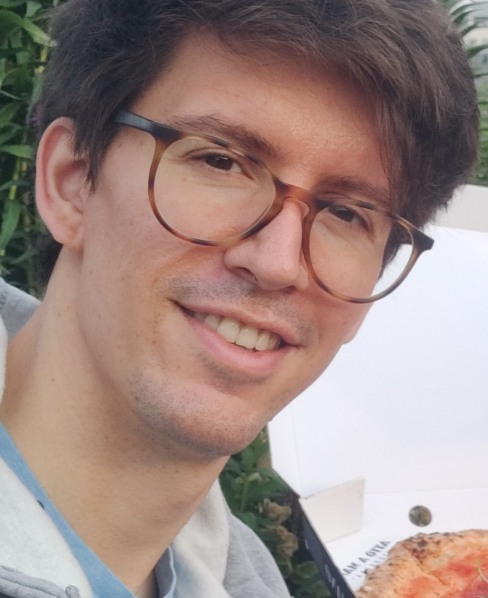 Tim Seyde合作论文数MIT CSAIL4Magdalena Fuchs合作论文数4
 Zahra Babaiee合作论文数Technische Universität Wien4Patrick Chareyre合作论文数3Mirjana Maras合作论文数3
 Mónika Farsang合作论文数Technische Universität Wien;Women in AI3Victoria Beneder合作论文数3Anass Bairouk合作论文数3Andreas Brandstätter合作论文数3
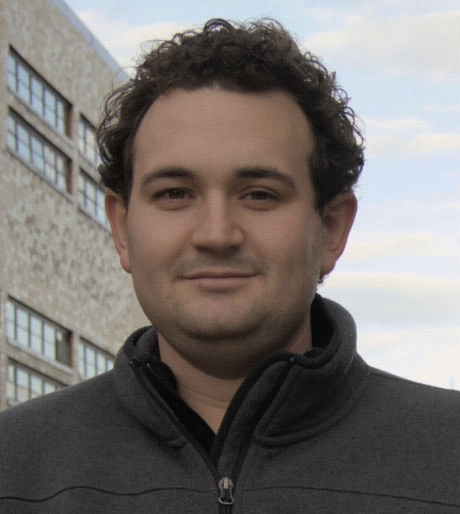 Aaron Ray合作论文数3
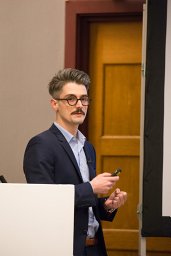 Marc Blanchon合作论文数ImViA, Univ Bourgogne Franche Comte3
 Axel Brunnbauer合作论文数Technische Universitát Wien TU Wien3
 Stephen Larson合作论文数Department of Neuroscience, University of California, San Diego3
 Max Tschaikowski合作论文数Institut für Informatik, Ludwig-Maximilians-Universität Munich3
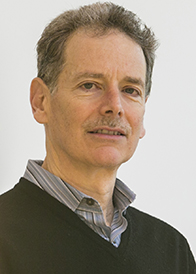 Scott A. Smolka合作论文数Department of Computer Science, College of Engineering and Applied Sciences, Stony Brook University3
 Gerald Teschl合作论文数Faculty of Mathematics, University of Vienna3
 Luigi Berducci合作论文数Institute of Computer Engineering, Technische Universität Wien2Sophie A. Neubauer合作论文数2Philipp Neubauer合作论文数2
 Alaa Maalouf合作论文数Computer Science & Artificial Intelligence Laboratory, Massachusetts Institute of Technology;John A. Paulson School of Engineering and Applied Sciences, Harvard University2Sophie Gruenbacher合作论文数Tech Univ Wien TU Wien, Vienna, Austria2
 Lianhao Yin合作论文数Corresponding author.2
 Judy Borowski合作论文数University of Tuebingen2
 Yutong Ban (班雨桐)合作论文数Distributed Robotics Laboratory, Computer Science & Artificial Intelligence Laboratory, Massachusetts Institute of Technology;Surgical Artificial Intelligence and Innovation Laboratory, Massachusetts General Hospital, Harvard Medical School2
 Yamamoto Hideaki合作论文数Graduate School of Biomedical Engineering, Tohoku University2
 Xiao Li (李潇)合作论文数Institute of Robotics, School of Mechanical Engineering, Shanghai Jiaotong University2
 Giorgio Ferrari合作论文数Polytechnic University of Milan,Department of Electronics, Information and Bioengineering2
 Padraig Gleeson合作论文数Department of Physiology;University College London;Department of Physiology, University College London2
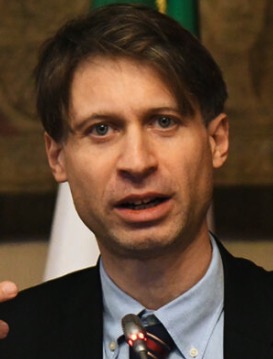 Enrico Prati合作论文数Dipartimento di Fisica Aldo Pontremoli, Università degli Studi di Milano;Istituto di Fotonica e Nanotecnologie, Consiglio Nazionale delle Ricerche;Politecnico di Milano2
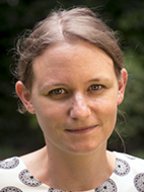 Manuela Waldner合作论文数Graz University of Technology2
 Manuel Zimmer合作论文数2Takashi Tanii合作论文数2
 Andrey Palyanov合作论文数Institute of Cytology and Genetics, Lavrentieva 10, Novosibirsk 630090, Russia2Simon Herlin合作论文数1Joshua Rountree合作论文数1
 Rom Parnichkun合作论文数The University of Tokyo;Liquid AI1
 Giovanni Idili合作论文数1




