As tools for designing and manufacturing hardware become more accessible, smaller producers can develop and distribute novel hardware. However, processes for supporting end-user hardware troubleshooting or routine maintenance aren't well defined. As a result, providing technical support for hardware remains ad-hoc and challenging to scale. Inspired by patterns that helped scale software troubleshooting, we propose a workflow for asynchronous hardware troubleshooting: SplatOverflow. SplatOverflow creates a novel boundary object, the SplatOverflow scene, that users reference to communicate about hardware. A scene comprises a 3D Gaussian Splat of the user's hardware registered onto the hardware's CAD model. The splat captures the current state of the hardware, and the registered CAD model acts as a referential anchor for troubleshooting instructions. With SplatOverflow, remote maintainers can directly address issues and author instructions in the user's workspace. Workflows containing multiple instructions can easily be shared between users and recontextualized in new environments. In this paper, we describe the design of SplatOverflow, the workflows it enables, and its utility to different kinds of users. We also validate that non-experts can use SplatOverflow to troubleshoot common problems with a 3D printer in a usability study. Project Page: https://amritkwatra.com/research/splatoverflow.
We demonstrate SplatOverflow, a workflow for asynchronous hardware troubleshooting. SplatOverflow creates a novel boundary object, the SplatOverflow scene, that users reference to communicate about hardware. A scene comprises a 3D Gaussian Splat of the user's hardware registered onto the hardware's CAD model. The splat captures the current state of the hardware, and the registered CAD model acts as a referential anchor for troubleshooting instructions. In this demo, attendees will be able to create and navigate a SplatOverflow scene and explore how it can be used to coordinate complex troubleshooting tasks asynchronously.
This paper proposes an iterative water-filling algorithm (IWF) for the energy-efficiency (EE) maximization problem of the multi-user multiple-input and multiple-output (MIMO) broadcast channel (BC). This algorithm is termed as IWF-EE-BC and has two levels of operations. The inner level computes solutions, by an algorithm, is named as water-filling for the EE of the BC, which is implemented within a single iteration, with the short name: WF-EE-BC1. The solutions by WF-EE-BC1 are the optimal solutions of the auxiliary energy-efficiency maximization problems. Each term of the added throughput part in these auxiliary problems is decoupled in power variables for all users. Then the outer level determines when to output a good solution to the considered problem, based on the results obtained by the inner level. The considered problem has complex-valued matrix optimization variables, beyond the range of the optimization problems whose optimization variables are often real-valued variables. Particularly, it is a semi-definite optimization problem (SDO) with a more complicated form of the objective function, over the field of complex numbers. Since existing results on optimization algorithms, including SDO ones, cannot guarantee convergence of IWF-EE-BC, the novel fixed point method is designed and used. Overcoming these difficulties, this paper obtains convergence of IWF-EE-BC, with efficiency.
Seams are areas of overlapping fabric formed by stitching two or more pieces of fabric together in the cut-and-sew apparel manufacturing process. In SeamPose, we repurposed seams as capacitive sensors in a shirt for continuous upper-body pose estimation. Compared to previous all-textile motion-capturing garments that place the electrodes on the clothing surface, our solution leverages existing seams inside of a shirt by machine-sewing insulated conductive threads over the seams. The unique invisibilities and placements of the seams afford the sensing shirt to look and wear similarly as a conventional shirt while providing exciting pose-tracking capabilities. To validate this approach, we implemented a proof-of-concept untethered shirt with 8 capacitive sensing seams. With a 12-participant user study, our customized deep-learning pipeline accurately estimates the relative (to the pelvis) upper-body 3D joint positions with a mean per joint position error (MPJPE) of 6.0 cm. SeamPose represents a step towards unobtrusive integration of smart clothing for everyday pose estimation.
We propose an Iterative Water-Filling algorithm for Energy-Efficiency maximization problem of the Multi-User Multiple-Input Multiple-Output Multiple-Access-Channel (MU-MIMO-MAC) system, named as IWF-EE-MIMO. The algorithm can be regarded as two levels of operations. The inner level of IWF-EE-MIMO aims at computing the solution to each user of the family, while other users keeping their previous power allocation, in turn. The outer level of IWF-EE-MIMO aims at determining when to accept a good solution to the considered problem based on the results obtained by the inner level. For our designed algorithms in this paper, WF-EE-MIMO1, as the subordinate algorithm, is only used for the inner level. IWF-EE-MIMO, as the main algorithm, computes the solution to the considered problem. Note that IWF-EE-MIMO includes WF-EE-MIMO1, to avoid confusion. The considered problem is of non-linear fractional semi-definite optimization in complex-valued matrix optimization variables, beyond the range of standard (semi-definite) optimization theory. Thus, the optimality condition of the considered maximization problem needs to be created. Under this creation, for the considered problem, convergence or optimality of IWF-EE-MIMO is obtained with its efficiency.
In light microscopy, eyepiece graticules are commonly used to gauge the size of objects at the micron scale. While this is a relatively simple tool to use, not all microscopes possess this feature. Furthermore, calibrating an eyepiece graticule with a stage micrometer can be time-consuming, particularly for inexperienced microscopists. Similarly, calculating the size of individual objects may also take some time. We present an open-source program to determine the size of objects under a microscope using Python and OpenCV. Taking photos of a stage micrometer under a microscope, we identify gradations on the micrometer and calculate the distance between lines on the micrometer in pixels. From this, we can infer the size of objects from bright-field microscopy images. We believe this will improve access to quantitative microscopy techniques and increase the speed at which samples may be analyzed by light microscopy. Future studies may aim to integrate this with machine learning for object identification.
In the incoming communication system, especially for the battery constrained Internet of Things devices, consumption of power resources will be a critical performance metric. This point shows importance when throughput minimal requirement and interference limit have been carried out. This paper investigates such a power allocation problem in a multiple-parallel-channel wireless system to minimize the sum power consumed by the entire system, while meeting the sum power constrains for each group of channels and the whole system as well as meeting the throughput constraints for each of the groups and the system. Sum power minimization itself is also a key issue for margin-adaptive loading. Resorting to geometric concepts, an algorithm named as the group virtual bottom power water-filling (GVB-PWF) is proposed to solve the problem, including the large-scale problems, which computes the exact solution with a low degree of the polynomial computational complexity. Optimality of the proposed algorithm is also proved strictly. To the best of our knowledge, no prior algorithm in the open literature offered such an optimal solution to the proposed problem, with the merit of exactness and efficiency. Simulation results demonstrate that the proposed power allocation algorithm uses less power about 25%, compared with the popular primal-dual interior-point method with the same amount of computations.
We present the first unsupervised deep learning method for pollen analysis using bright-field microscopy. Using a modest dataset of 650 images of pollen grains collected from honey, we achieve family level identification of pollen. We embed images of pollen grains into a low-dimensional latent space and compare Euclidean and Riemannian metrics on these spaces for clustering. We propose this system for automated analysis of pollen and other microscopic biological structures which have only small or unlabelled datasets available.
Energy efficiency (EE) is a critical performance measure in the next generation wireless communication systems, especially for battery-constrained Internet of Things (IoT) devices. We investigate the power allocation optimization problem in a multi-channel wireless system for EE maximization, subject to the sum power and the throughput constraints over each group of assigned channels, as well as the total power constraint. Resorting to geometric interpretation on the constraints, we propose the group virtually ceiled and bottomed water-filling (GVC-WF) algorithm to solve this EE maximization problem. Our proposed algorithm computes the exact optimal solution with a quadratic polynomial computational complexity. With the optimality and computational advantages, our proposed algorithm is suitable for power allocation in large-scale wireless systems. Simulation results demonstrate that our proposed power allocation algorithm improves the energy efficiency by more than 40%, as compared to the conventional Dinkelbach's method with the same amount of computations.
To determine whether convolutional neural network (CNN) can be used to predict whether an embryo capable of achieving a pregnancy will ultimately miscarry or lead to live birth based on Artificial Intelligence (AI) analysis of time-lapse (TLM) embryo images.
Honey has been collected and used by humankind as both a food and medicine for thousands of years. However, in the modern economy, honey has become subject to mislabelling and adulteration making it the third most faked food product in the world. The international scale of fraudulent honey has had both economic and environmental ramifications. In this paper, we propose a novel method of identifying fraudulent honey using machine learning augmented microscopy.
With files proactively stored at base stations (BSs), mobile edge caching enables direct content delivery without remote file fetching, which can reduce the end-to-end delay while relieving backhaul pressure. To effectively utilize the limited cache size in practice, cooperative caching can be leveraged to exploit caching diversity, by allowing users served by multiple base stations under the emerging user-centric network architecture. This paper explores delay-optimal cooperative edge caching in large-scale user-centric mobile networks, where the content placement and cluster size are optimized based on the stochastic information of network topology, traffic distribution, channel quality, and file popularity. Specifically, a greedy content placement algorithm is proposed based on the optimal bandwidth allocation, which can achieve (1 - 1/e)-optimality with linear computational complexity. In addition, the optimal user-centric cluster size is studied, and a condition constraining the maximal cluster size is presented in explicit form, which reflects the tradeoff between caching diversity and spectrum efficiency. Extensive simulations are conducted for analysis validation and performance evaluation. Numerical results demonstrate that the proposed greedy content placement algorithm can reduce the average file transmission delay up to 45 percent compared with the non-cooperative and hit-ratio-maximal schemes. Furthermore, the optimal clustering is also discussed considering the influences of different system parameters.
In this paper, we investigate the power allocation in a multi-user wireless system to maximize the energy efficiency, while meeting the power constrains of each individual user and the whole system. Specifically, a geometric ceiled-water-filling algorithm is proposed to solve this non-linear fractional optimization problem, which can compute exact solutions with a low degree of polynomial computational complexity. Optimality of the proposed algorithm is strictly proved with mathematical analysis. In addition, the proposed algorithm is further extended to the general case with the minimum system-level throughput constraint, considering the quality of service requirement. To the best of our knowledge, no prior algorithm in the open literature offered such optimal solutions to the target problems, with the merit of exactness and the efficiency. Simulation results demonstrate that the proposed power allocation algorithms can improve the energy efficiency by nearly 50%, compared with the conventional Dinkelbach’s method with the same amount of computations.
For the demand side management, the elastic power loads can be scheduled to achieve load balancing and to minimize the fluctuation of the overall load. In a process of power supply, the inelastic power loads can be regarded as a group of parameters. Then the demand response can be utilized to realize the optimal allocation of the elastic power loads. Importantly, the power load balancing can reduce the cost from power generations since no cost is spent on the requirement of frequency control. This paper focuses on the optimal allocation of the elastic load for load balancing. A load balancing problem, with the node and the group power upper bound constraints, is investigated in this paper. Water-filling algorithm is proposed for exactly and efficiently computing the optimal solutions to the power load balancing optimization problem with lower degree polynomial computational complexity. The proposed algorithm can be applied to solve the target optimization problems with large-scale due to utilization of non-derivative water-filling method. To the best of the authors' knowledge, there is no existing algorithm reported in the open literature that can compute the exact solution to the target problem.
Energy harvesting (EH) plays an important role in greener wireless communication systems. Causality of EH increases challenge. Guaranteeing the throughput as a quality of service (QoS), we aim at using the least power, e.g. for broadband satellite communications. Solving this target problem requires exactness and efficiency. The proposed generalized water-filling approach computes the solution to the sum power minimization problem while meet EH and QoS constraints with K epochs. The proposed algorithm with the assumption of predictable channel power gains and incoming harvested energy, possesses distinguished features: exact numerical values of the solution, i.e., the exact solution, to the target problem; and a low degree polynomial complexity, not beyond O(K-2.2), which is lower than a cubic polynomial complexity in K. Since EH problems are new emergence, the conventional water fillings cannot solve the proposed problem, under the merit of exactness and less complexity. The two advantages, exactness and the efficiency, are very suitable for a real-time optimal power allocation. Really, the proposed algorithm is simple, but the reason of its optimality is profound and then omitted here. Optimality of the proposed algorithm is guaranteed. Numerical results illustrate the steps and demonstrate the efficiency of the proposed algorithm. To the best of the authors' knowledge, there is no existing reference to provide such a solution under the merit of the mentioned two advantages, including the most popular interior point method.
This paper aims at solving two classes of energy efficiency (EE) maximization problems in multiple channels wireless communication systems. First, the EE maximization problem with sum power constraint is solved based on the geometric water-filling approach; and second, the approach is extended into the EE maximization problem with additional least throughput requirement constraint. Our proposed algorithms make use of the water-filling structure of the optimal solution and provide exact and computation efficient solution to the energy-efficient power allocation problems. The proposed algorithms also have excellent scalability, which is applicable for large-scale wireless communication systems. Optimality of the proposed algorithms is strictly proved, and the proposed algorithms only require low-degree polynomial computational complexity. Numerical results are presented to demonstrate the efficiency of the proposed algorithms. To the best of our knowledge, no prior algorithms in the existing literature could provide such solutions to the EE maximization problems under the merit of exactness and the efficiency.
Incentives for distributed optimization are investigated in two types of scenarios in which network users have private valuations (objective functions). A network center aims at maximizing the sum of users' valuations in the first scenario or the sum of its own valuations in the second scenario. It is shown that nontrivial strategies can be found by a user so that it can improve its own utility by providing false information to the center without leading a distributed algorithm to diverge. It demonstrates that a dual variable based pricing mechanism in distributed optimization cannot guarantee truthful reporting. While truthful reporting can be realized by using the classic Groves mechanism in the first scenario, the possibility of incentivizing truthful reporting in the second scenario depending on whether the center is willing to consider the valuations of the users in addition to those of its own.
Mobile edge caching has the potential to reduce file transmission delay as well as core network load, by utilizing the cache of base stations to store content with high hit rates. However, in practice, the performance of mobile edge caching can be constrained by BS cache size. Traffic steering can enable end users to obtain requested file directly from the cache of a non-homing BS without remote file fetching, and thus enlarge the set of cached contents by exploiting the content diversity in space. On the other hand, traffic steering can also degrade spectrum efficiency, due to the higher path loss of steered users. In this paper, we investigate the performance of traffic steering on mobile edge caching, taking into account the tradeoff between content diversity and spectrum efficiency. The average file transmission delay is derived by applying stochastic geometry, under constraints of cache size and radio resources. Specifically, a greedy content placement algorithm is proposed, which can achieve near-optimal delay performance with low polynomial computational complexity. Simulation results demonstrate that the average file transmission delay can be reduced up to 55% when 10% contents can be stored in cache, by introducing traffic steering in mobile edge caching.
To enhance the reliability of the power grid, further processing of the power demand to achieve load balancing is regarded as a critical step in the context of smart grids with Internet of Things technology. In this paper, dynamic offline and online scheduling algorithms are proposed to minimize the power fluctuations by applying a geometric water-filling approach. For the offline approach, full information in the power demand is available, possibly by predicting from the power utilities. We present an exact approach in order to allocate the elastic loads based on the inelastic load’s information considering the group-and node-power upper constraints. For the online approach, the reference level is computed dynamically using historical demand data to minimize the fluctuation in the grid, and the elastic loads can only be scheduled in the future time slots. Two dynamic algorithms are investigated to achieve load balancing in the power grid without influencing user experience by real-time reference level adjustment. Facilitated by the proposed methodologies, the power utilities can significantly reduce the cost of improving the power capacity, and the consumers are able to enjoy more stable electrical power.
 Lian Zhao合作论文数Department of Electrical, Computer, and Biomedical Engineering, Faculty of Engineering and Architectural Science, Toronto Metropolitan University42
 Sheng Zhou (周盛)合作论文数Department of Electronic Engineering, Tsinghua University9
 Zhisheng Niu (牛志升)合作论文数Department of Electronic Engineering, Tsinghua University;School of Information Science and Technology, Tsinghua University9
 Mushu Li合作论文数Department of Electrical and Computer Engineering, Ryerson University, Toronto, ON, Canada5
 Bala Venkatesh合作论文数Centre for Urban Energy, Toronto Metropolitan University;Department of Electrical and Computer Engineering, Toronto Metropolitan University5
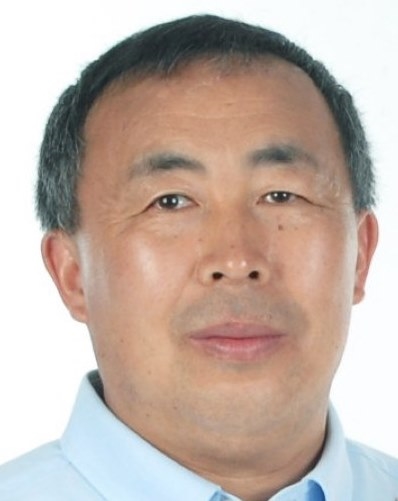 Xuemin (Sherman) Shen (沈学民)合作论文数Department of Electrical and Computer Engineering, University of Waterloo4
 Shan Zhang (张珊)合作论文数School of Cyber Science and Technology, Beihang University4
 Gerard Glowacki合作论文数3
 Alexis Gkantiragas合作论文数Computational Melittology Lab3
 Alagan Anpalagan合作论文数Department of Electrical, Computer, and Biomedical Engineering, Toronto Metropolitan University3
 Amritansh Kwatra合作论文数Department of Information Science, Cornell Ann S. Bowers College of Computing and Information Science, Cornell University;Cornell Tech, Cornell University2
 Zaiyi Liao (廖再毅)合作论文数2
 Peng Yang (杨鹏)合作论文数Department of Computer Science and Engineering, College of Engineering, Southern University of Science and Technology;Department of Statistics and Data Science, Southern University of Science and Technology2
 Fabian Yap Kok Peng合作论文数Division of Paediatric Medicine, KK Women's and Children's Hospital;Duke-NUS Medical School, National University of Singapore2
 Mya-Thway Tint合作论文数2
 Keith Godfrey合作论文数Faculty of Medicine, University of Southampton;MRC Lifecourse Epidemiology Unit, University of Southampton;National Institute for Health Research2Lee Ying合作论文数2
 Hongwei Li (李洪伟)合作论文数School of Computer Science & Engineering, University of Electronic Science & Technology of China2
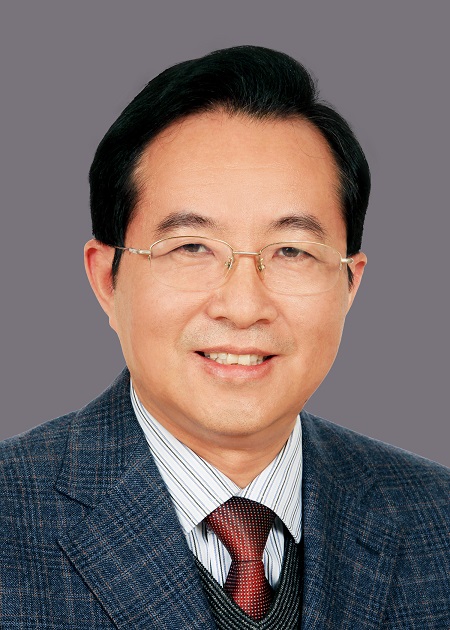 Jianhua Lu (陆建华)合作论文数Department of Electronic Engineering, School of Information Science and Technology, Tsinghua University;School of Aerospace Engineering, Tsinghua University2
 Waleed Ejaz合作论文数Dept Elect & Comp Engn, Ryerson Univ2
 Katsuya Suto合作论文数Department of Ophthalmology, Gunma University School of Medicine2Thijs Roumen合作论文数1Francois Guimbretiere合作论文数1Ilan Mandel合作论文数1Ritik Batra合作论文数1Tobias M Weinberg合作论文数1Liangen Zeng合作论文数1
 Chi-Jung Lee (李其蓉)合作论文数SciFi Lab, Cornell University;Department of Information Science, Cornell University1Stephen Lott合作论文数1Erin L Faught合作论文数1Reika Yoshitsugu合作论文数1Sayaka Hari合作论文数1Manuel Molina-Oya合作论文数1
 Antonio Jerez-Calero合作论文数1Cristina Hickman合作论文数1Constance T. R. M. Stumpel合作论文数1Mamoru Tanaka合作论文数1
 Jose Uberos合作论文数1
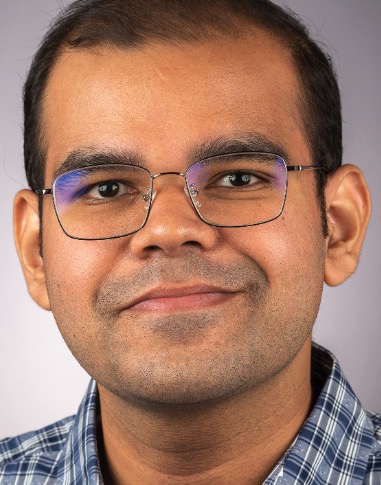 Saif Mahmud合作论文数Cornell University1yujun kuang (邝育军)合作论文数1Rishabh Hariharan合作论文数1
 Catherine Tianhong Yu (于天泓)合作论文数Cornell University1Ruidong Zhang (张瑞东)合作论文数1Julieta Berenice Rivera-Zavala合作论文数1
 Fiona McGovern合作论文数Teagasc Animal & Grassland Research and Innovation Centre1
 Frank Campion合作论文数1Chikako Oyabu合作论文数1
 Jonas Malmsten合作论文数Ronald O Perelman and Claudia Cohen Center for Reproductive Medicine, Weill Cornell Medicine1Qiansheng Zhan合作论文数Weill Cornell Med, Ronald O Perelman & Claudia Cohen Ctr Reprod Med, New York, NY 10065 USA1




