Introduction: Data on long-term outcomes following A2/A2B to B kidney transplants since the 2014 kidney allocation system (KAS) changes are few. The primary aim of this study is to report our 7-year experience with A2/A2B to B kidney transplants and to compare post-transplant outcomes of A2/A2B to a concurrent group of B to B kidney transplants. Additionally, the study evaluates the impact of pre-transplant anti-A1 titers on survival outcomes in A2/A2B transplants. Methods: This retrospective, single-center analysis included all adults who received A2/A2B to B deceased donor kidney transplants from December 2014 to June 2021 compared to B to B recipients. The effects of pre-transplant IgM/IgG titers, stratified as <= 1:8 and >= 1:16, on death-censored, rejection-free, and overall graft survival were tested. Results: Fifty-three A2/A2B and 114 B to B adults were included with a median follow-up time of 32 months. Overall graft survival, patient survival, and rejection-free graft survival did not differ between the two groups. There were no differences between the groups' overall kidney function values (p > .80) or their temporal trajectories (time by group interaction p > .11). Unadjusted death-censored graft survival was lower in A2/A2B to B compared to B recipients (p = .03), but the effect was not significant (p = .195) after adjusting for any readmissions (p = .96), rejection episodes (p < .001) or BK infection (p = .76). We did not detect an effect of pre-transplant titer group on death-censored (p = .59), rejection-free (p = .61), or overall graft survival (p = .26) Conclusions: A2/A2B to B kidney transplants have comparable overall patient and graft survival, rejection-free graft survival, and longitudinal renal function compared to B to B transplants at our center. Allograft survival outcomes were not significantly different between patients with low and high pre-transplant anti-A1 IgM/IgG titers.
INTRODUCTION:Utilization of hepatitis C viremic (HCV+) deceased donor kidneys (DDKT) for aviremic recipients increases opportunities for transplantation with excellent short-term outcomes. Our primary aim was to understand longer-term outcomes, specifically assessing kidney and liver function in the first year posttransplant. METHODS:This was a retrospective single-center study of adult DDKT recipients of HCV+ kidneys (cases) matched 1:1 to recipients of HCV- kidneys (comparators). Between-group outcomes were analyzed using comparisons of means and proportions, survival analysis methods, and multivariable mixed effects models. RESULTS:Sixty-five cases and 65 comparators had statistically comparable demographic and clinical characteristics. There were no between-group differences in serum creatinine or estimated glomerular filtration rate at month 12 (p = .662) or in their trajectories over months 1-12 (p > .292). Within the first 60 days, rates of liver function values >3 times upper limit of normal among cases were comparable to comparators for aspartate aminotransferase (AST) (14% vs. 6%, p = .242) and higher for alanine transaminase (ALT) (23% vs. 6%, p = .011). AST declined during the first 8 weeks (p = .005) and stabilized for both groups (p = .406) during the following 10 months. ALT declined during the first 8 weeks (p < .001), continued to decline over months 3-12 (p = .016), and the trajectory was unrelated to antiviral therapy initiation among cases. CONCLUSIONS:Aviremic recipients of HCV+ kidneys had comparable kidney outcomes to matched recipients of HCV- kidneys. Despite more HCV+ recipients having an elevation in ALT within the first 60 days, ALT values normalized with no identified liver complications attributed to HCV.
BACKGROUND:Severe renal dysfunction is common among liver transplant (LT) candidates and often prompts simultaneous liver-kidney transplantation (SLKT) consideration. In view of 2017 United Network of Organ Sharing (UNOS) criteria for SLKT, we investigated the likelihood and predictors of renal recovery among patients who met the aforementioned criteria yet received liver transplant alone (LTA). METHODS:We retrospectively analyzed relative renal recovery (RRR; increase in eGFR to >30 ml/min) in adult LTA recipients between 1/2009 and 1/2019. RESULTS:Of 1165 LT recipients, 54 met 2017 UNOS criteria, with 37 receiving LTA. RRR occurred in 84% of LTA recipients, none of whom had pre-LT eGFR <20 ml/min. Sustained RRR (>180 days) occurred in 43% of patients. While prolonged pre-LT severe renal impairment (eGFR <30 ml/min) predicted failure to have sustained RRR (HR .19 per 90-day, CI .04-.87, p < .005), having an eGFR measurement of >30 ml/min within 90 days pre-LT (HR 5.52, CI 1.23-24.79, p .01) associated with achieving sustained RRR. Sustained RRR was protective against the composite outcome of renal replacement therapy, kidney transplant, and death (HR .21, p .01). CONCLUSION:LT candidates who meet 2017 UNOS criteria for SLKT yet undergo LTA can still have relative renal recovery post-LT, exceeding 80% on short-term follow-up and 40% on long-term follow-up. eGFR trends within 90 days pre-LT can predict sustained renal recovery, which appears protective of adverse outcomes. These recovery rates advocate for applying the more restrictive criteria for SLKT outlined in this article and increasing utilization of the safety net (SN) policy for those who do not meet the proposed criteria.
Nocardiosis is a rare, life-threatening opportunistic infection caused by bacteria in the environment that predominantly affects immunocompromised patients. Nocardiosis most commonly involves the lungs but can disseminate to other organs. Disseminated nocardiosis, defined as Nocardia infection involving 2 or more organ systems, requires early detection and treatment because of high morbidity and mortality. We report 2 cases of disseminated nocardiosis with pulmonary and central nervous system involvement in kidney transplant recipients. Nocardiosis should be suspected in immunocompromised patients with fever and lung mass, although atypical presentations involving almost any organ can be seen. Solid organ transplant recipients are at greatest risk for Nocardia infection within the first 1 to 2 years after transplantation. However, the patients presented here developed disseminated nocardiosis several years after transplantation, which has important implications. Nocardiosis is treated with 2 to 6 weeks of empiric induction antibiotics, followed by 6 to 12 months of maintenance antibiotics based on antimicrobial susceptibility testing.
LSRI-GWRC would like to thank Chelsea Technologies Ltd. (Surrey, UK) for their application to our laboratory-based testing program and for providing the FastBallast device and the expendable supplies for analysis. Mary Burkitt-Gray and Kevin Oxborough at Chelsea Technologies Ltd. provided operational training support prior to the start of testing and were also instrumental in helping to troubleshoot technical/operational issues that occurred during testing. This work was supported by a grant from the United States Department of Transportation Maritime Administration’s Maritime Environmental and Technical Assistance Program.
Purpose: During the COVID-19 pandemic, telehealth utilization has allowed for the delivery of healthcare while protecting patients, caregivers, healthcare workers, and the community from exposure. We examined the effect of the COVID-19 pandemic on utilization of telehealth in the care of all solid organ transplant patients in all phases of transplant care at our center. Methods: All patients seen at Vanderbilt University Medical Center for solid organ transplant during any phase of care (referral, evaluation, waitlist, or posttransplantation) from July 1, 2019 through October 31, 2020 were included in this retrospective analysis. Patients seen from July 1, 2019 through February 29, 2020 were identified as a Pre-COVID-19 era cohort. Patients seen from March 1, 2020 through October 31, 2020 were the COVID-19 era cohort. Pretransplant phases of care included referral, evaluation and waitlist;those transplanted were considered posttransplant. Telehealth visits included telemedicine, defined as those conducted by face-to-face (F2F) videoconferencing, and telephone. Results: Total visit number for all solid organs (kidney, liver, heart, lung, and pancreas) were similar between eras (12585 vs. 13677) [Figure]. There was a significant increase in the use of telehealth in the COVID-19 era for all organ types with the pre-era ranging from 1.2-4.3% while post ranged from 22.4-45.6% [Table]. Telemedicine was not used during the pre-COVID-19 era and its use increased to 17.5-23.7% of all visits by organ type during the COVID-era. Conclusions: The COVID-19 pandemic has accelerated the use of telehealth in all phases and types of solid organ transplantation. The use of telemedicine although increased represents a minority of total visits and the increased use of telephone visits suggest barriers may remain to more widespread adoption of F2F technology that warrant further investigation. (Table Presented).
Background. Transplantation of hepatitis C viremic (HCV+) deceased donor kidney transplants (DDKT) into aviremic (HCV–) recipients is a strategy to increase organ utilization. However, there are concerns around inferior recipient outcomes due to delayed initiation of direct-acting antiviral (DAA) therapy and sustained HCV replication when implemented outside of a research setting. Methods. This was a retrospective single-center matched cohort study of DDKT recipients of HCV+ donors (cases) who were matched 1:1 to recipients of HCV– donors (comparators) by age, gender, race, presence of diabetes, kidney donor profile index, and calculated panel-reactive antibody. Data were analyzed using summary statistics, t-tests, and chi-square tests for between-group comparisons, and linear mixed-effects models for longitudinal data. Results. Each group consisted of 50 recipients with no significant differences in baseline characteristics. The 6-mo longitudinal trajectory of serum creatinine and estimated glomerular filtration rate did not differ between groups. All recipients had similar rates of acute rejection and readmissions (all P > 0.05). One case lost the allograft 151 d posttransplant because of acute rejection, and 1 comparator died on postoperative day 7 from cardiac arrest. HCV+ recipients initiated DAA on average 29 ± 11 d posttransplant. Ninety-eight percent achieved sustained virologic response at 4 and 12 wks with the first course of therapy; 1 patient had persistent HCV infection and was cured with a second course of DAA. Conclusions. Aviremic recipients of HCV+ DDKT with delayed DAA initiation posttransplant had similar short-term outcomes compared with matched recipient comparators of HCV– donors.
A 52-year-old man with HIV well-controlled on antiretroviral therapy, hypertension, and end-stage kidney disease status post–deceased donor kidney transplant presented with a 2-week history of shortness of breath and cough. Upon admission for multifocal pneumonia and disseminated cytomegalovirus and herpes zoster infection, he had acute kidney injury with serum creatinine 3 mg/dl (baseline 1.4–2.0 mg/dl). He improved with ganciclovir therapy; however, his acute kidney injury persisted (serum creatinine 2.4 mg/dl) and he had a serum BK virus polymerase chain reaction of 13.6 million copies/ml. There was no hematuria or proteinuria.
Background:As the organ-shortage crisis continues to worsen, many patients in need of a kidney transplant have turned to social media to find a living donor. The effect of social media on living kidney donation is not known. The goal of this study is to investigate the influence of social media on those interested in donating a kidney.Methods:Self-referrals for living kidney donation from December 2016 to March 2019 were retrospectively reviewed. Age, sex, race, and relationship of individuals petitioned through social media (SM) were compared with those petitioned through verbal communication (VC). Data were analyzed using chi-squared tests, with z tests of column proportions, and multivariable logistic regression.Results:A total of 7817 individuals (53% SM, 36% VC, and 10% other) were self-referred for living kidney donation. The analysis sample included 6737 adults petitioned through SM (n=3999) or VC (n=2738). Half (n=3933) of the individuals reported an altruistic relationship, and 94% of these respondents were petitioned through SM. Although univariate analyses indicated that SM respondents were younger, more likely female, more likely White, and more likely to have directed altruistic intent than those petitioned through VC (all P<0.05), multivariable logistic regression demonstrated that only decreased age, female sex, and relationship were significantly related to likelihood of SM use (all P<0.001).Conclusions:The use of SM to petition living kidney donors is prevalent and accounts for a greater proportion of respondents compared with VC. SM respondents tend to be younger, female, and altruistic compared with VC. Directed altruistic interest in kidney donation is almost exclusively generated through SM.
LSRI-GWRC would like to thank the American Marine University Research Institute Inc. for their application to our laboratory-based testing program and for providing the Nano Bubble Ozone Technology 2.5 horsepower (NBOT 2.5-HP) ballast water treatment (BWT) testing unit. Brian Domrese of NanoPure Tech provided installation and operational training and technical support prior to the start of and during testing. Dr. Peter Moeller of the National Oceanic and Atmospheric Administration’s (NOAA) National Ocean Service (NOS) in Charleston, South Carolina provided technical advice and assistance during implementation of bench scale testing. This work was supported by the United States Maritime Administration (United States Department of Transportation; Washington, D. C.) and the United States Environmental Protection Agency’s Great Lakes Restoration Initiative.
The evaluation and care of non-US citizen, non-US residents who wish to come to the United States to serve as international living kidney donors (ILKDs) can pose unique challenges. We surveyed US transplant programs to better understand practices related to ILKD care. We distributed the survey by email and professional society list-servs (Fall 2018, assessing 2017 experience). Eighty-five programs responded (36.8% program response rate), of which 80 considered ILKD candidates. Only 18 programs had written protocols for ILKD evaluation. Programs had a median of 3 (range: 0,75) ILKD candidates who initiated contact during the year, from origin countries spanning 6 continents. Fewer (median: 1, range: 0,25) were approved for donation. Program-reported reasons for not completing ILKD evaluations included visa barriers (58.6%), inability to complete evaluation (34.3%), concerns regarding follow-up (31.4%) or other healthcare access (28.6%), and financial impacts (21.4%). Programs that did not evaluate ILKDs reported similar concerns. Staff time required to evaluate ILKDs was estimated as 1.5-to-3-times (47.9%) or >3-times (32.9%) that needed for domestic candidates. Among programs accepting ILKDs, on average 55% reported successful completion of 1-year follow-up. ILKD evaluation is a resource-intensive process with variable outcomes. Planning and commitment are necessary to care for this unique candidate group.
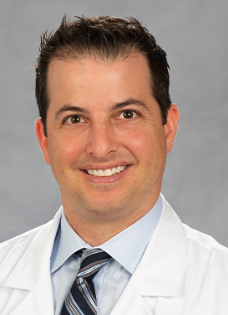 David S. Goldberg合作论文数Division of Digestive Health & Liver Diseases, Department of Medicine, Miller School of Medicine, University of Miami22
 J. Harold Helderman合作论文数Department of Pathology, Microbiology and Immunology, Vanderbilt University Medical Center19
 Irene D. Feurer合作论文数19Beatrice P. Concepcion合作论文数15Forbes Rachel C合作论文数14Shawar S合作论文数Department of Internal Medicine, University of Texas Medical Branch12Anthony Langone合作论文数11Derek E. Moore合作论文数9B. P. Concepcion合作论文数8
 Ruchi Naik合作论文数6R. Forbes合作论文数5Christine N. Polkinghorne合作论文数4Edward Y. Zavala合作论文数4Lana M. Fanberg合作论文数4Scott A Rega合作论文数4TenEyck Matthew合作论文数4
 Kelsey Prihoda合作论文数4
 Deonna R Moore合作论文数3Laura Hickman合作论文数3Laura A. Binari合作论文数3Heidi Saillard合作论文数3
 Kimberly Beesley合作论文数3A. Dreher合作论文数3
 Agnes B. Fogo合作论文数Department of Pathology, Microbiology and Immunology, Vanderbilt University Medical Center3
 Euan Reavie合作论文数Phytoplankton and Paleolimnology Lab, Natural Resources Research Institute, University of Minnesota Duluth;Water Initiative, Natural Resources Research Institute, University of Minnesota Duluth3Olivia Anders合作论文数2A. Langone合作论文数2
 Nicole Mays合作论文数2Miller Geraldine G合作论文数2Jared V. Grice合作论文数2
 Alissar El Chediak合作论文数2Deonna Moore合作论文数2Julia Hunt合作论文数2Deborah Crowe合作论文数2James R Johnston合作论文数2Jiawei Cui合作论文数2Trey McGonigle合作论文数2Shi Huang合作论文数2Ellen Shukhman合作论文数2K. Umanath合作论文数2Mary Balcer合作论文数2Didier Mandelbrot合作论文数2Jefferson L Triozzi合作论文数2D. Hale合作论文数2S. Rega合作论文数2
 Ashley Spann合作论文数Department of Biomedical Informatics, Vanderbilt University Medical Center;Department of Medicine, Vanderbilt University Medical Center2R. C. Forbes合作论文数2
 Alexandra Shingina合作论文数Dept Gastroenterol Hepatol & Nutr, Vanderbilt Univ2
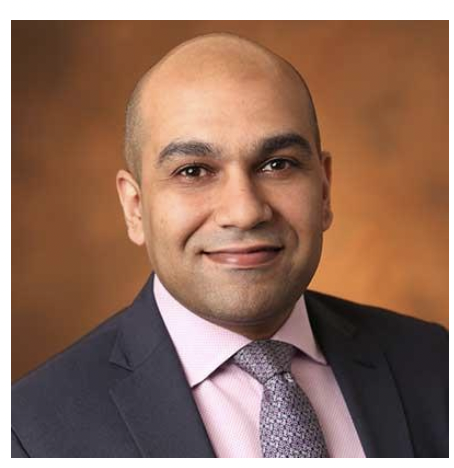 Manhal Izzy合作论文数Division of Gastroenterology, Hepatology, and Nutrition, Vanderbilt University Medical Center2




