Invasive species have once been called a "grand experiment in evolution" but natural replicates of such experiments are often scarce. When two allied species acquire invasive capacities and coinvade a new environment, it remains unclear if similar genetic basis underlies adaptation to the new environment and how the two species can coexist in that environment. Here, we investigate the parallel adaptation of two tropical drosophilid species of the genus Zaprionus, Zaprionus indianus (the African fig fly) and Zaprionus tuberculatus, to arid agrarian environments following their introduction in Egypt during the last four decades. We found the two species to have distinct spatial distribution. Population genomic analyses showed correlated differentiation levels at orthologous genes before and after introduction in both species, mostly in genes associated with thermal adaptations and circadian rhythms. Species-specific outliers contained on the other hand multiple chemoreceptor and xenobiotic detoxification genes indicating that adaptations to different host fruits may promote species coexistence. In agreement with these findings, we found the Egyptian populations to have parallel higher resistance to desiccation in both species and the two species to have distinct fruit preference. These results provide a significant step toward understanding the mechanisms underlying the simultaneous invasive success of both species, which have also recently invaded the Americas and Europe, and of which one at least is a notorious pest.
The blind and wingless bee louse fly (Braula coeca) is an aberrant member of the family Drosophilidae that lives as a parasitic inquiline in the hive of the Western honey bee (Apis mellifera). The analysis of its genome identifies a case of horizontal transposon transfer and a striking parallel evolution in a set of ecologically-relevant gene families.
Social insects' nests harbor intruders known as inquilines,1 which are usually related to their hosts.2,3 However, distant non-social inquilines may also show convergences with their hosts,4,5 although the underlying genomic changes remain unclear. We analyzed the genome of the wingless and blind bee louse fly Braula coeca, an inquiline kleptoparasite of the western honey bee, Apis mellifera.6,7 Using large phylogenomic data, we confirmed recent accounts that the bee louse fly is a drosophilid8,9 and showed that it had likely evolved from a sap-breeder ancestor associated with honeydew and scale insects' wax. Unlike many parasites, the bee louse fly genome did not show significant erosion or strict reliance on an endosymbiont, likely due to a relatively recent age of inquilinism. However, we observed a horizontal transfer of a transposon and a striking parallel evolution in a set of gene families between the honey bee and the bee louse fly. Convergences included genes potentially involved in metabolism and immunity and the loss of nearly all bitter-tasting gustatory receptors, in agreement with life in a protective nest and a diet of honey, pollen, and beeswax. Vision and odorant receptor genes also exhibited rapid losses. Only genes whose orthologs in the closely related Drosophila melanogaster respond to honey bee pheromone components or floral aroma were retained, whereas the losses included orthologous receptors responsive to the anti-ovarian honey bee queen pheromones. Hence, deep genomic convergences can underlie major phenotypic transitions during the evolution of inquilinism between non-social parasites and their social hosts.
The genomic processes enabling speciation and the coexistence of species in sympatry are still largely unknown. Here we describe the whole genome sequencing and assembly of three closely-related species from the butterfly genus Morpho : Morpho achilles (Linnaeus, 1758), M. helenor (Cramer, 1776) and M. deidamia (Hübner, 1819). These large blue butterflies are emblematic species of the Amazonian rainforest. They live in sympatry in a wide range of their geographical distribution and display parallel diversification of dorsal wing colour pattern, suggesting local mimicry. By sequencing, assembling and annotating their genomes, we aim at uncovering pre-zygotic barriers preventing gene flow between these sympatric species. We found a genome size of 480 Mb for the three species and a chromosomal number ranging from 2n = 54 for M. deidamia to 2n = 56 for M. achilles and M. helenor . We also detected inversions on the sex chromosome Z that were differentially fixed between species, suggesting that chromosomal rearrangements may contribute to their reproductive isolation. The annotation of their genomes allowed us to recover in each species at least 12,000 protein-coding genes and to discover duplications of genes potentially involved in pre-zygotic isolation like genes controlling colour discrimination ( L-opsin ). Altogether, the assembly and the annotation of these three new reference genomes open new research avenues into the genomic architecture of speciation and reinforcement in sympatry, establishing Morpho butterflies as a new eco-evolutionary model.
Sex-ratio (SR) meiotic drivers are X-linked selfish genetic elements that promote their own transmission by preventing the production of Y-bearing sperm, which usually lowers male fertility. The spread of SR drivers in populations is expected to trigger the evolution of unlinked drive suppressors, a theoretically predicted co-evolution that has been observed in nature. Once completely suppressed, the drivers are expected either to decline if they still affect the fitness of their carriers, or to evolve randomly and possibly get fixed if the suppressors eliminate their deleterious effects. To explore this issue, we used the Paris sex-ratio system of Drosophila simulans in which drive results from the joint effect of two elements on the X chromosome: a segmental duplication and a deficient allele of the HP1D2 gene. We set up six experimental populations starting with 2/3 of X chromosomes carrying both elements (XSR) in a fully suppressing background. We let them evolve independently during almost a hundred generations under strong sexual competition, a condition known to cause the rapid disappearance of unsuppressed Paris XSR in previous experimental populations. In our study, the fate of XSR chromosomes varied among populations, from extinction to their maintenance at a frequency close to the starting one. While the reasons for these variable outcomes are still to be explored, our results show that complete suppression can prevent the demise of an otherwise deleterious XSR chromosome, turning a genetic conflict into cooperation between unlinked loci. Observations in natural populations suggest a contrasting fate of the two elements: disappearance of the duplication and maintenance of deficient HP1D2 alleles.
Adaptive introgression is ubiquitous in animals but experimental support for its role in driving speciation remains scarce. In the absence of conscious selection, admixed laboratory strains of Drosophila asymmetrically and progressively lose alleles from one parental species and reproductive isolation against the predominant parent ceases after 10 generations. Here, we selectively introgressed during one year light pigmentation genes of D. santomea into the genome of its dark sibling D. yakuba, and vice versa. We found that the pace of phenotypic change differed between the species and the sexes, and identified through genome sequencing common as well as distinct introgressed loci in each species. Mating assays showed that assortative mating between introgressed flies and both parental species persisted even after four years (∼ 60 generations) from the end of the selection. Those results indicate that selective introgression of as low as 0.5% of the genome can beget morphologically-distinct and reproductively-isolated strains, two prerequisites for the delimitation of new species. Our findings hence represent a significant step towards understanding the genome-wide dynamics of speciation-through-introgression.
Loci under balancing selection, where multiple alleles are maintained, offer a relevant opportunity to investigate the role of natural selection in shaping genetic dominance: the high frequency of heterozygotes at these loci has been shown to enable the evolution of dominance among alleles. In the butterfly Heliconius numata , mimetic wing color variations are controlled by an inversion polymorphism of a circa 2 Mb genomic region (supergene P ), with strong dominance between sympatric alleles. To test how differences in dominance observed on wing patterns correlate with variations in expression levels throughout the supergene region, we sequenced the complete transcriptome of heterozygotes at the prepupal stage and compared it to corresponding homozygotes. By defining dominance based on non-overlapping ranges of transcript expression between genotypes, we found contrasting patterns of dominance between the supergene and the rest of the genome; the patterns of transcript expression in the heterozygotes were more similar to the expression observed in the dominant homozygotes in the supergene region. Dominance also differed among the three subinversions of the supergene, suggesting possible epistatic interactions among their gene contents underlying dominance evolution. We found the expression pattern of the melanization gene cortex located in the P -region to predict wing pattern phenotype in the heterozygote. We also identify new candidate genes that are potentially involved in mimetic color pattern variations highlighting the relevance of transcriptomic analyses in heterozygotes to pinpoint candidate genes in non-recombining regions.
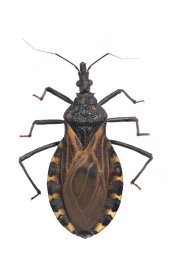
We provide in this study a very large DNA dataset on Rhodnius species including 36 samples representing 16 valid species of the three Rhodnius groups, pictipes, prolixus and pallescens. Samples were sequenced at low-depth with whole-genome shotgun sequencing (Illumina technology). Using phylogenomics including 15 mitochondrial genes (13.3 kb), partial nuclear rDNA (5.2 kb) and 51 nuclear protein-coding genes (36.3 kb), we resolve sticking points in the Rhodnius phylogeny. At the species level, we confirmed the species-specific status of R. montenegrensis and R. marabaensis and we agree with the synonymy of R. taquarussuensis with R. neglectus. We also invite to revisit the species-specific status of R. milesi that is more likely R. nasutus . We proposed to define a robustus species complex that comprises the four close relative species: R. marabaensis, R. montenegrensis, R. prolixus and R. robustus. As Psammolestes tertius was included in the Rhodnius clade, we strongly recommend reclassifying this species as R. tertius . At the Rhodnius group level, molecular data consistently supports the clustering of the pictipes and pallescens groups, more related to each other than they are to the prolixus group. Moreover, comparing mitochondrial and nuclear tree topologies, our results demonstrated that various introgression events occurred in all the three Rhodnius groups, in laboratory strains but also in wild specimens. We demonstrated that introgressions occurred frequently in the prolixus group, involving the related species of the robustus complex but also the pairwise R. nasutus and R. neglectus . A genome wide analysis highlighted an introgression event in the pictipes group between R. stali and R. brethesi and suggested a complex gene flow between the three species of the pallescens group, R. colombiensis, R. pallescens and R. ecuadoriensis . The molecular data supports also a sylvatic distribution of R. prolixus in Brazil (Pará state) and the monophyly of R. robustus . As we detected extensive introgression events and selective pressure on mitochondrial genes, we strongly recommend performing separate mitochondrial and nuclear phylogenies and to take advantages of mito-nuclear conflicts in order to have a comprehensive evolutionary vision of this genus.
The genome size of five Rhodnius species (R. milesi, R. nasutus, R. neivai, R. prolixus, and R. robustus) and two Psammolestes species (P. coroedes and P. tertius) were estimated using flow cytometry and/or k-mer distributions in genome sequences. Phylogenetic generalized linear mixed models highlighted significant genome size variations among species and between sexes, with R. prolixus showing the largest genome. In this study we provide the first data on female genome size in Triatominae. For five species, female genome size did not differ from males, except for R. robustus, where females had smaller genomes. Genome size estimations based on the k-mer distribution method were less than those estimated from flow cytometry, but both methods exhibited the same pattern of sexual differences. Further genomic studies are needed to infer whether genome size variation could be an adaptive trait in Rhodnius.
Population genetics seeks to illuminate the forces shaping genetic variation, often based on a single snapshot of genomic variation. However, utilizing multiple sampling times to study changes in allele frequencies can help clarify the relative roles of neutral and non-neutral forces on short time scales. This study compares whole-genome sequence variation of recently collected natural population samples of Drosophila melanogaster against a collection made approximately 35 years prior from the same locality-encompassing roughly 500 generations of evolution. The allele frequency changes between these time points would suggest a relatively small local effective population size on the order of 10,000, significantly smaller than the global effective population size of the species. Some loci display stronger allele frequency changes than would be expected anywhere in the genome under neutrality-most notably the tandem paralogs Cyp6a17 and Cyp6a23, which are impacted by structural variation associated with resistance to pyrethroid insecticides. We find a genome-wide excess of outliers for high genetic differentiation between old and new samples, but a larger number of adaptation targets may have affected SNP-level differentiation versus window differentiation. We also find evidence for strengthening latitudinal allele frequency clines: northern-associated alleles have increased in frequency by an average of nearly 2.5% at SNPs previously identified as clinal outliers, but no such pattern is observed at random SNPs. This project underscores the scientific potential of using multiple sampling time points to investigate how evolution operates in natural populations, by quantifying how genetic variation has changed over ecologically relevant timescales.
Chromosomal inversions are ubiquitous in genomes and often coordinate complex phenotypes, such as the covariation of behavior and morphology in many birds, fishes, insects or mammals(1-11). However, why and how inversions become associated with polymorphic traits remains obscure. Here we show that despite a strong selective advantage when they form, inversions accumulate recessive deleterious mutations that generate frequency-dependent selection and promote their maintenance at intermediate frequency. Combining genomics and in vivo fitness analyses in a model butterfly for wing-pattern polymorphism, Heliconius numata, we reveal that three ecologically advantageous inversions have built up a heavy mutational load from the sequential accumulation of deleterious mutations and transposable elements. Inversions associate with sharply reduced viability when homozygous, which prevents them from replacing ancestral chromosome arrangements. Our results suggest that other complex polymorphisms, rather than representing adaptations to competing ecological optima, could evolve because chromosomal rearrangements are intrinsically prone to carrying recessive harmful mutations.
The coexistence of closely-related species in sympatry is puzzling because ecological niche proximity imposes strong competition and reproductive interference. A striking example is the widespread wing pattern convergence of several blue-banded Morpho butterfly species with overlapping ranges of distribution. Here we perform a series of field experiments using flying Morpho dummies placed in a natural habitat. We show that similarity in wing colour pattern indeed leads to interspecific territoriality and courtship among sympatric species. In spite of such behavioural interference, demographic inference from genomic data shows that sympatric closely-related Morpho species are genetically isolated. Mark-recapture experiments in the two most closely-related species unravel a strong temporal segregation in patrolling activity of males. Such divergence in phenology reduces the costs of reproductive interference while simultaneously preserving the benefits of convergence in non-reproductive traits in response to common ecological pressures. Henceforth, the evolution of multiple traits may favour species diversification in sympatry by partitioning niche in different dimensions.
AbstractThe emergence and persistence of closely-related species in sympatry is puzzling because the potential gene flow and the common local selective pressures may lead to either merging or competitive exclusion. Some species ofMorphobutterflies occurring in sympatry display highly similar wing colour patterns. Associated with erratic flight abilities, their bright colouration may limit predator success and discourage future attacks. The evolution of similar colouration in sympatric species is thus likely under local selection by predators (i.e. escape mimicry). Such phenotypic similarity may promote interspecific territoriality and/or reproductive interference, questioning how closely-related co-mimetic species become sexually isolated and coexist in sympatry. We performed a series of field experiments using flyingMorphodummies placed in a natural habitat where wild males commonly patrol. Analysing the interactions of wildMorphowith different dummies, we show that similarity in wing colour pattern leads to interspecific territoriality and courtship among sympatric species. Using genomic data, we then showed that sympatricMorphospecies are surprisingly strictly isolated despite their close relatedness and the observed heterospecific interactions. Finally, using a mark-recapture experiment, we discovered a strong temporal segregation in patrolling activity of males from two co-mimetic sister species. Such divergence in phenology may favour sympatry between closely-related species, despite behavioural interferences induced by the local convergence in colour pattern. Altogether, our findings show that temporal segregation may facilitate the co-existence of closely-related species sharing the same ecological niche, suggesting that phenological shifts may represent an overlooked factor of sympatric speciation. Our study therefore highlights how the evolution of multiple traits may favour species diversification in sympatry by partitioning niche in different dimensions.
The emergence and persistence of closely-related species in sympatry is puzzling because the potential gene flow and the common local selective pressures may lead to either merging or competitive exclusion. Some species of Morpho butterflies occurring in sympatry display highly similar wing colour patterns. Associated with erratic flight abilities, their bright colouration may limit predator success and discourage future attacks. The evolution of similar colouration in sympatric species is thus likely under local selection by predators (i.e. escape mimicry). Such phenotypic similarity may promote interspecific territoriality and/or reproductive interference, questioning how closely-related co-mimetic species become sexually isolated and coexist in sympatry. We performed a series of field experiments using flying Morpho dummies placed in a natural habitat where wild males commonly patrol. Analysing the interactions of wild Morpho with different dummies, we show that similarity in wing colour pattern leads to interspecific territoriality and courtship among sympatric species. Using genomic data, we then showed that sympatric Morpho species are surprisingly strictly isolated despite their close relatedness and the observed heterospecific interactions. Finally, using a mark-recapture experiment, we discovered a strong temporal segregation in patrolling activity of males from two co-mimetic sister species. Such divergence in phenology may favour sympatry between closely-related species, despite behavioural interferences induced by the local convergence in colour pattern. Altogether, our findings show that temporal segregation may facilitate the co-existence of closely-related species sharing the same ecological niche, suggesting that phenological shifts may represent an overlooked factor of sympatric speciation. Our study therefore highlights how the evolution of multiple traits may favour species diversification in sympatry by partitioning niche in different dimensions.
While natural selection favours the fittest genotype, polymorphisms are maintained over evolutionary timescales in numerous species. Why these long-lived polymorphisms are often associated with chromosomal rearrangements remains obscure. Combining genome assemblies, population genomic analyses, and fitness assays, we studied the factors maintaining multiple mimetic morphs in the butterfly Heliconius numata . We show that the polymorphism is maintained because three chromosomal inversions controlling wing patterns express a recessive mutational load, which prevents their fixation despite their ecological advantage. Since inversions suppress recombination and hamper genetic purging, their formation fostered the capture and accumulation of deleterious variants. This suggests that many complex polymorphisms, instead of representing adaptations to the existence of alternative ecological optima, could be maintained primarily because chromosomal rearrangements are prone to carrying recessive harmful mutations.
Dimorphic traits are ubiquitous in nature, but the evolutionary factors leading to dimorphism are largely unclear. We investigate a potential case of sexual mimicry in Drosophila erecta, in which females show contrasting resemblance to males. We map the genetic basis of this sex-limited colour dimorphism to a region containing the gene tan. We find a striking signal of ancient balancing selection at the 'male-specific enhancer' of tan, with exceptionally high sequence divergence between light and dark alleles, suggesting that this dimorphism has been adaptively maintained for millions of years. Using transgenic reporter assays, we confirm that these enhancer alleles encode expression differences that are predicted to generate this pigmentation dimorphism. These results are compatible with the theoretical prediction that divergent phenotypes maintained by selection can evolve simple genetic architectures.
Significance Host plant specialization is a major cause of diversification in insects. The specialization of the fly Drosophila sechellia on the toxic fruits of noni has been a source of great scientific value, but selection is old enough that genetic variation does not seem useful in mapping the causative genes. On the island of Mayotte, we discovered a population of the related species Drosophila yakuba that is strongly associated with noni compared with generalist mainland populations. We then leveraged genomic variation to reconstruct the recent divergence history of this population and identify the potential targets of selection. Our top candidates included genes that confer tolerance to noni's toxin in D. sechellia . These findings establish a new model for recurrent ecological specialization.
 Amir Yassin合作论文数Laboratoire “Populations, Génétique et Evolution”, CNRS9
 John E. Pool合作论文数Laboratory of Genetics, University of Wisconsin-Madison7
 David Ogereau合作论文数Yvette Cedex;De ´partement de biologie Universite ´ Paris-Sud 11;and;De ´partement de biologie, Universite ´ Paris-Sud 117
 Violaine Llaurens合作论文数Département de Biologie, Institut National Agronomique Paris-Grignon (INAPG),6Jean R David合作论文数Laboratoire “Populations, Génétique et Evolution”, CNRS4
 Vincent Debat合作论文数CNRS Laboratoire Populations, Génétique et Evolution 91198 Gif sur Yvette Cedex France4Catherine Montchamp-Moreau合作论文数4
 Justin Britt Lack合作论文数Department of Zoology, Oklahoma State University4Mathieu Chouteau合作论文数*Institut de Recherche en Biologie Ve´ge´tale, Universite´ de Montre´al4Jeremy D Lange合作论文数3Hugues Parrinello合作论文数3
 Camille Le Roy合作论文数Institut de Systématique, Evolution, Biodiversité (ISYEB), Muséum National d'Histoire Naturelle, CNRS; Sorbonne Université, EPHE, Université des Antilles; 57 rue Cuvier CP50, 75005 Paris France3
 Mathieu Joron合作论文数Galton Laboratory;University College London;Galton Laboratory, University College London3
 Jonathan Filée合作论文数Laboratoire de Microbiologie et Génétique Moléculaire, CNRS UMR-51003Elisabeth Authier合作论文数2Marie Merle合作论文数2Erina A Ferreira合作论文数Lab Evolut Genomes Comportement & Ecol, Univ Paris Saclay2
 Paul Jay合作论文数AgroParisTech, Univ Paris Saclay2
 Camille Roux合作论文数Université Lille Nord de France2Mougel Florence合作论文数2
 Carlos Eduardo Almeida合作论文数2Michel Cazemajor合作论文数2
 Myriam Harry合作论文数2
 Annabel Whibley合作论文数Cambridge Institute of Medical Research2
 Pierre R Gerard合作论文数Université2
 Frederic Hospital合作论文数2Joanna Lledo合作论文数1
 Carolina Prediger合作论文数1
 Issa Mze Hassani合作论文数1Raymond Tobler合作论文数Vetmeduniv Vienna, Inst Populat Genet, Vet Pl 1, A-1210 Vienna, Austria1Ahmed M El-Sabrout合作论文数1
 Emily K Delaney合作论文数Dept Evolut & Ecol, Univ Calif Davis1
 Henry Chung合作论文数Department of Entomology, Michigan State University1
 Steve Chenoweth合作论文数School of the Environment, Faculty of Science, The University of Queensland1Folly-Ramos Elaine合作论文数1Annemarie Dutrillaux合作论文数1Legout Hélène合作论文数1
 Fabrice Requier合作论文数Centre d’Etudes Biologiques de Chizé, UPR1934;UE Entomologie, INRA;Centre d’Etudes Biologiques de Chizé, UE Entomologie1
 de Oliveira Jader合作论文数Faculdade de Ciências Farmacêuticas, Universidade Estadual Paulista - Araraquara1
 Julie Carcaud合作论文数Université de Toulouse, Université Paris-Sud1
 Berenger Jean-michel合作论文数1Johanning Evan J合作论文数1
 Artyom Kopp合作论文数College of Biological Sciences, University of California, Davis1
 Reddiex Adam J合作论文数School of Biological Sciences, University of Queensland1Stöbe Petra合作论文数1
 Thaddeus Seher合作论文数Department of Evolution and Ecology, University of California, Davis1
 Marc Girondot合作论文数UMR;Université Paris;MNHN Paris, Collège de France;MNHN Paris, Université Paris1
 Nicolas Derome合作论文数Québec Océan;Département de Biologie;Université Laval;Département de Biologie, Université Laval1
 Manuela Lopez-Villavicencio合作论文数Laboratoire d'Ecologie;Systematique et Evolution;Laboratoire d'Ecologie|Systematique et Evolution1




