We demonstrate a mass-producible, high-power, wavelength-tunable blue laser using SiON-GaN integrated waveguides. Our approach enables single-mode operation, high reliability, and scalable fabrication, offering a promising solution for advanced visible photonic applications.
Measurement-based quantum computation with optical time-domain multiplexing is a promising method to realize a quantum computer from the viewpoint of scalability. Fault tolerance and universality are also realizable by preparing appropriate resource quantum states and electro-optical feedforward that is altered based on measurement results. While linear feedforward has been realized and become a common experimental technique, nonlinear feedforward was unrealized until now. In this paper, we demonstrate that a fast and flexible nonlinear feedforward realizes the essential measurement required for fault-tolerant and universal quantum computation. Using non-Gaussian ancillary states, we observed 10% reduction of the measurement excess noise relative to classical vacuum ancilla.
We report a typical experimental demonstration of how widely nonlinear optical processes can be engineered by arbitrarily manipulating the relevant optical fields including the phase of nonlinear polarization as a function of interaction length
We report on an interference-filter-stabilized external cavity diode laser (ECDL) using a gallium-nitride-based violet laser diode. Surface-activated-bonded glass substrates were employed as cat’s eye output couplers in order to suppress power degradation due to optical damage. From the results of a long-term frequency-stabilization test, mode-hop-free operation for about one week was demonstrated. After a continuous operation of about three weeks, the power degradation was less than 10%. The results show the potential of such interference-filter-stabilized ECDLs for practical and portable quantum technologies such as atomic clocks or atomic interferometers.
We demonstrate nonlinear feedforward combined with non-Gaussian ancillae localized in time, which realizes nonlinear quadrature measurement. Our technology in principle enables fault-tolerant universal quantum computation by improving prepared ancillae.
Quantum non-Gaussian gate is a missing piece to the realization of continuous-variable universal quantum operations in an optical system. In a measurement-based implementation of the cubic phase gate, a lowest-order non-Gaussian gate, non-Gaussian ancillary states that have a property we call nonlinear squeezing are required. This property, however, has never been experimentally verified. In this paper, we generate a superposition between a vacuum state and a single-photon state whose nonlinear squeezing is maximized by the optimization of the superposition coefficients. The nonlinear squeezing is observed via real-time quadrature measurements, meaning that the generated states are compatible with real-time feedforward and are suitable as ancillary states for the cubic phase gate in the time domain. Moreover, by increasing the number of photons, it is expected that nonlinear squeezing can be further improved. The idea presented here can be readily extended to higher-order phase gates [P. Marek et al., Phys. Rev. A 97, 022329 (2018)]. As such, this work presents an important step to extend continuous-variable quantum information processing from Gaussian regime to non-Gaussian regime.
High-power tunable lasers with good longitudinal and transverse modes are fundamental tools for exploring quantum physics. Here we report a high-power continuous-wave injection-locked titanium:sapphire laser with a low-loss cavity configuration, where only a laser crystal was installed in the laser cavity. Although the transverse mode was affected by a thermal lens formed in the laser crystal, the focal length of the thermal lens could be shifted via the temperature of the laser crystal holder or the pump power. As a result, we found a condition that 10 W single-frequency oscillation with a good transverse mode and a slope efficiency of 51% were achieved.
We demonstrate a programmable optical quantum gate with a 25ns-latency digital feedforward. Such a flexible, stable, and fast feedforward enables large-scale universal continuous-variable quantum computation in time domain.
Here we report our recent experimental progresses in optical quantum information processing. In particular, the following topics are included. First, we extend the heralding scheme to multi-mode states and demonstrate heralded creation of qutrit states. Next, we demonstrate storage of single-photon states and synchronized release of them. Then, we demonstrate real-time acquisition of quadrature values of heralded states by making use of an exponentially rising shape of wave-packets. Finally, we demonstrate cluster states in an arbitrarily long chain in the longitudinal direction.
We propose general methodology of deterministic single-mode quantum interaction nonlinearly modifying single quadrature variable of a continuous-variable system. The methodology is based on linear coupling of the system to ancillary systems subsequently measured by quadrature detectors. The nonlinear interaction is obtained by using the data from the quadrature detection for dynamical manipulation of the coupling parameters. This measurement-induced methodology enables direct realization of arbitrary nonlinear quadrature interactions without the need to construct them from the lowest-order gates. Such nonlinear interactions are crucial for more practical and efficient manipulation of continuous quadrature variables as well as qubits encoded in continuous-variable systems.
We exploit quantum information processing on a traveling wave of light, expecting emancipation from thermal noise, easy coupling to fiber communication, and potentially high operation speed. Although optical memories are technically challenging, we have an alternative approach to apply multi-step operations on traveling light, that is, continuous-variable one-way computation. So far our achievement includes generation of a one-million-mode entangled chain in time-domain, mode engineering of nonlinear resource states, and real-time nonlinear feedforward. Although they are implemented with free space optics, we are also investigating photonic integration and performed quantum teleportation with a passive liner waveguide chip as a demonstration of entangling, measurement, and feedforward. We also suggest a loop-based architecture as another model of continuous-variable computing.
Continuous-variable quantum information processing with optical field quadrature amplitudes is advantageous in deterministic creation of Gaussian entanglement. On the other hand, non-Gaussian state preparation and operation are currently limited, but heralding schemes potentially overcome this difficulty. Here, we summarize our recent progress in continuous-variable quantum optical experiments. In particular, we have recently succeeded in creation of ultra-large-scale cluster-type entanglement with full inseparability, multiplexed in the time domain; storage and on-demand release of heralded single-photon states, which is applied to synchronization of two heralded single-photon states; real-time quadrature measurements regarding non-Gaussian single-photon states with exponentially rising wavepackets; squeezing with relatively broader bandwidth by using triangle optical parametric oscillator.
Real-time controls based on quantum measurements are powerful tools for various quantum protocols. However, their experimental realization has been limited by mode mismatch between the temporal mode of quadrature measurement and that heralded by photon detection. Here, we demonstrate real-time quadrature measurement of a single-photon wave packet induced by photon detection by utilizing continuous temporal-mode matching between homodyne detection and an exponentially rising temporal mode. Single photons in exponentially rising modes are also expected to be useful resources for interactions with other quantum systems.
We present a concept of non-Gaussian measurement composed of a non-Gaussian ancillary state, linear optics, and adaptive heterodyne measurement, and on the basis of this we also propose a simple scheme of implementing a quantum cubic gate on a traveling light beam. In analysis of the cubic gate in the Heisenberg representation, we find that nonlinearity of the gate is independent from nonclassicality; the nonlinearity is generated solely by a classical nonlinear adaptive control in a measurement-and-feedforward process, while the nonclassicality is attached by the non-Gaussian ancilla that suppresses excess noise in the output. By exploiting the noise term as a figure of merit, we consider the optimum non-Gaussian ancilla that can be prepared within reach of current technologies and discuss performance of the gate. It is a crucial step towards experimental implementation of the quantum cubic gate.
We experimentally demonstrate real-time quadrature measurement of a highly pure single-photon state whose temporal wave-packet mode is in an exponentially rising shape generated by an asymmetric optical parametric oscillator.
We report demonstration of a dynamically controllable squeezing gate for a dynamically changing input state. This gate can follow changes of MHz order and can be used as a feedforward in teleportation-based non-Gaussian quantum gate.
Squeezing is a nonlinear Gaussian operation that is a key component in the construction of other nonlinear Gaussian gates. In our implementation of the squeezing gate, the amount and the orientation of the squeezing can be controlled by an external driving signal with a 1-MHz operational bandwidth. This provides another way to view dynamic Gaussian processing. In particular, the gate can be immediately employed as the feedforward needed for the deterministic implementation of the quantum cubic phase gate, which is a key piece of universal quantum information processing.
 Akira Furusawa (古澤明)合作论文数Department of Applied Physics, School of Engineering, The University of Tokyo13
 Hidehiro Yonezawa合作论文数School of Engineering & Information Technology, The University of New South Wales Canberra9
 Radim Filip合作论文数Department of Optics, Faculty of Science, Palacky University7
 Petr Marek合作论文数Dept Opt, Palacky Univ5
 Atsushi Sakaguchi合作论文数5
 Warit Asavanant合作论文数OptQC Corp.4
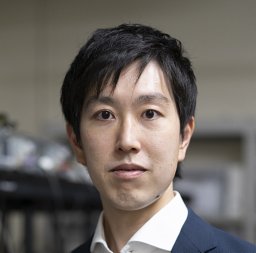 Shuntaro Takeda (武田俊太郎)合作论文数Department of Applied Physics, School of Engineering, The University of Tokyo;Institute of Engineering Innovation, School of Engineering, The University of Tokyo4
 Kazunori Miyata合作论文数Department of Ophthalmology, Miyata Eye Hospital4Yu Shiozawa合作论文数3Masaya Kobayashi合作论文数3
 Kan Takase合作论文数Dept Appl Phys, Univ Tokyo3Takahiro Serikawa合作论文数Dept Appl Phys, Univ Tokyo3Shunya Konno合作论文数3Tetsushi Takano合作论文数NICHIA Corp3Jun-ichi Yoshikawa合作论文数3Elanor H. Huntington合作论文数School of Information Technology and Electrical Engineering;University College;University of New South Wales;University College, University of New South Wales3Yosuke Hashimoto合作论文数2Kenzo Makino合作论文数2
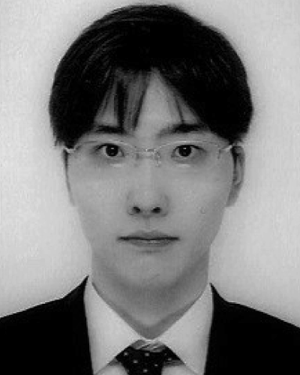 Naoto Takanashi合作论文数2Hideaki Ohdan合作论文数2Fumiya Hanamura合作论文数Dept Appl Phys, Univ Tokyo2Masayuki Katsuragawa合作论文数University of Electro-Communications2
 Shota Yokoyama合作论文数School of Engineering & Information Technology, The University of New South Wales Canberra2Chiaki Ohae合作论文数2Soma Tahara合作论文数1Masanori Okada合作论文数1Fumiya Okamoto合作论文数1Weiyong Liu合作论文数1Masaru Suzuki合作论文数1
 Jian Zheng合作论文数1Mitsuyoshi Yukawa合作论文数1
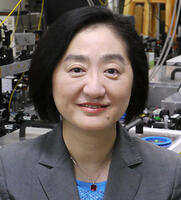 Kaoru Minoshima (美濃島薫)合作论文数Institute for Advanced Science, The University of Electro-Communications;Department of Engineering Science, Graduate School of Informatics and Engineering, The University of Electro-Communications1
 Peter Van Loock合作论文数Institute of Physics, Mainz University1Shigenari Suzuki合作论文数1




