Variational quantum algorithms are a leading approach to near-term quantum computing, but their scalability can be limited by barren plateaus and the sampling cost of resolving small changes in the loss landscape. Here, we study the trainability of passive linear-optical quantum circuits and introduce a framework based on the ratio of sample variance to circuit variance. This ratio determines the number of circuit samples required to resolve local loss differences and gradients to proportional accuracy. We apply this framework to photon-number observables and identify both trainable and non-trainable regimes. Supported by analytic results and a numerically observed polynomial decay of the circuit variance, we find that fixed-order photon-number polynomials require only polynomially many samples as the system size grows, whereas high-order polynomials and observables based on output probabilities generally require exponentially many samples. Within the trainable regime, we further identify classes of observables in which quantum estimation achieves a polynomial speed-up over multiple classical methods. Within this family, neural network observables provide one practical construction that allow measurement outcomes to be efficiently processed into the desired polynomial. These results establish photonic variational quantum computing as a promising platform for near-term applications.
Photonic quantum processors naturally produce intrinsically stochastic measurement outcomes, offering a hardware-native source of structured randomness that can be exploited during machine-learning training. Here we introduce Photonic Quantum-Enhanced Knowledge Distillation (PQKD), a hybrid quantum photonic–classical framework in which a programmable photonic circuit generates a compact conditioning signal that constrains and guides a parameter-efficient student network during distillation from a high-capacity teacher. PQKD replaces fully trainable convolutional kernels with dictionary convolutions: each layer learns only a small set of shared spatial basis filters, while sample-dependent channel-mixing weights are derived from shot-limited photonic features and mapped through a fixed linear transform. Training alternates between standard gradient-based optimisation of the student and sampling-robust, gradient-free updates of photonic parameters, avoiding differentiation through photonic hardware. Across MNIST, Fashion-MNIST and CIFAR-10, PQKD traces a controllable compression–accuracy frontier, remaining close to teacher performance on simpler benchmarks under aggressive convolutional compression. Performance degrades predictably with finite sampling, consistent with shot-noise scaling, and exponential moving-average feature smoothing suppresses high-frequency shot-noise fluctuations, extending the practical operating regime at moderate shot budgets.
High-precision optical frequency measurement underpins modern science and technology, yet conventional spectroscopic techniques struggle to resolve sublinewidth spectral features. Here we introduce a platform for super-resolved frequency estimation based on a mode-selective atomic Raman quantum memory implemented in warm caesium vapour. By precisely engineering the light-matter interaction, the memory coherently stores the optimal temporal mode with high fidelity and retrieves it on demand, achieving mode crosstalk as low as 0.34%. To estimate the separation between two spectral lines, we experimentally measure the mean squared error of the frequency estimate, reaching a sensitivity of 1/20 of the linewidth and a (34 ± 4)-fold enhancement in precision over direct intensity measurements. This enhanced frequency resolution, combined with on-demand storage, retrieval and mode-conversion capabilities, establishes a pathway towards multifunctional memory-based time-frequency sensors and their integration within quantum networks.
We experimentally demonstrate a novel route towards efficient quantum memories, leveraging light-matter interference in alkali-based memories. Simulations show that this protocol allows for high efficiencies ( > 95%) with broadband operation, while significantly reducing technical overhead.
Understanding topological features in networks is crucial for unravelling complex phenomena across fields such as neuroscience, condensed matter, and high-energy physics. However, identifying higher-order topological structures – such as k-cliques, fundamental building blocks of complex networks – remains a significant challenge. Here we develop a universal programmable photonic quantum processor that enables the encoding of arbitrary complex-weight networks, providing a direct pathway to uncovering their topological structures. We demonstrate how this quantum approach can identify weighted k-cliques and estimate Betti numbers by leveraging the Gaussian boson sampling algorithm's ability to preferentially select high-weight, dense subgraphs. The unique capabilities of our programmable quantum processor allow us to observe topological phase transitions and identify clique percolation phenomena directly from the entropy of the sampling results. These findings showcase how photonic quantum computing can be applied to analyse the topological characteristics of real-world complex networks, opening new possibilities for quantum-enhanced data analysis.
Certifying genuine nonclassical correlations over long distances is essential for device-independent quantum information. In photonic platforms, however, this remains challenging due to photon loss, which opens the detection loophole, rendering violations increasingly difficult for less-efficient detectors. Eberhard showed that using nonmaximally entangled states lowers the detection-efficiency threshold to 66.7%, but existing photonic approaches are restricted to short distances with linear transmittance scaling. Conversely, single-photon event-ready schemes extend the distance with favorable square-root scaling with channel transmittance, yet still demand detection efficiencies above 82.6%. Here, we propose the first all-photonic, heralded entanglement distribution protocol that unifies these two advances: It achieves a postselection-free violation at the Eberhard limit while preserving twin-field-like scaling. We identify the loss independent of the vacuum component amplitude of the prepared state as the source of this enhancement. Our approach addresses both resilience to loss and scalability, providing a practical route toward long-distance, loophole-free Bell tests and device-independent applications with current technology.
Transition-Edge Sensors (TESs) are very effective photon-number-resolving (PNR) detectors that have enabled many photonic quantum technologies. However, their relatively slow thermal recovery time severely limits their operation rate in experimental scenarios compared to leading non-PNR detectors. In this work, we develop an algorithmic approach that enables TESs to detect and accurately classify photon pulses without waiting for a full recovery time between detection events. We propose two machine-learning-based signal processing methods: one supervised learning method and one unsupervised clustering method. By benchmarking against data obtained using coherent states and squeezed states, we show that the methods extend the TES operation rate to 800 kHz, achieving at least a four-fold improvement, whilst maintaining accurate photon-number assignment up to at least five photons. Our algorithms will find utility in applications where high rates of PNR detection are required and in technologies which demand fast active feed-forward of PNR detection outcomes.
Future optical quantum technologies, such as quantum networks, distributed quantum computing and sensing, demand efficient, broadband quantum memories. However, achieving high efficiency without introducing noise, reducing bandwidth, or limiting scalability remains a challenge. Here, we present an approach to enhance quantum memory protocols by leveraging constructive light-matter interference, leading to an increase in memory efficiency without increasing atomic density or laser intensity. We implement this method in a Raman quantum memory in warm cesium vapor and achieve more than a threefold improvement in total efficiency, reaching (34.3 +/- 8.4)%, while retaining GHz-bandwidth operation and low noise levels. Numerical simulations predict that this approach can boost efficiencies in systems limited by atomic density, such as cold atomic ensembles, from 65% to beyond 96%, while in warm atomic vapors, it could reduce the laser intensity needed to reach a given efficiency by over an order-of-magnitude, exceeding 95% total efficiency. Furthermore, our method preserves the single-mode nature of the memory at high efficiencies. This protocol is applicable to various memory architectures, paving the way toward scalable, efficient, low-noise, and high-bandwidth quantum memories. Published by Optica Publishing Group under the terms of the Creative Commons Attribution 4.0 License. Further distribution of this work must maintain attribution to the author(s) and the published article's title, journal citation, and DOI.
We report a machine-learning-based algorithm that allows transition-edge sensors to distinguish photon number traces at a repetition rate that overcomes their slow recovery time. Detector tomography is performed to benchmark the algorithm’s performance.
Reliably characterized pulses are the starting point of any application of ultrafast techniques. Unfortunately, experimental constraints do not always allow for optimizing the characterization conditions. This dictates the need for refined analysis methods. Here we show that neural networks can provide a viable characterization when applied to data from interferometry for direct electric-field reconstruction (SPIDER). We have adopted a cascade of convolutional networks, addressing the multiparameter structure of the interferogram with a reasonable computing power. In particular, the necessity of precalibration is reduced, thus pointing toward the introduction of neural networks in more generic arrangements.
We introduce and demonstrate a new approach for enhancing quantum memory protocols, leveraging constructive light-matter interference within the memory. We implement this method with a Raman quantum memory in warm Cesium vapor, and demonstrate a more than three-fold improvement in total efficiency from (10.4±0.5)% to (34.3±8.4)% with the same peak control pulse intensity, whilst retaining the GHz-bandwidth of the memory and observing no increase in the measured noise. Numerical simulations further explore the performance of this method across different regimes, including low atomic density systems and scenarios with limited laser intensity. For systems limited by atomic density, such as cold atomic systems, we predict our method can boost the efficiency from 65% to beyond 96%, while the same method applied to warm atomic vapors could potentially exceed 95% efficiency with an order-of-magnitude reduction in intensity requirements. We also explore the effect on modal capacity and find that our protocol preserves the single-mode nature of the memory at significantly higher efficiencies. This protocol is broadly applicable to various quantum memory architectures, paving the way toward scalable, efficient, low-noise, and high-bandwidth quantum memories.
A hybrid interface of solid-state single-photon sources and atomic quantum memories is a long sought-after goal in photonic quantum technologies. Here, we demonstrate deterministic storage and retrieval of light from a semiconductor quantum dot in an atomic ensemble quantum memory at telecommunications wavelengths. We store single photons from an indium arsenide quantum dot in a high-bandwidth rubidium vapor–based quantum memory, with a total internal memory efficiency of (12.9 ± 0.4)%. The signal-to-noise ratio of the retrieved light field is 18.2 ± 0.6, limited only by detector dark counts.
At the dynamic nexus of artificial intelligence and quantum technology, quantum neural networks (QNNs) play an important role as an emerging technology in the rapidly developing field of quantum machine learning. This development is set to revolutionize the applications of quantum computing. This article reviews the concept of QNNs and their physical realizations, particularly implementations based on quantum optics . We first examine the integration of quantum principles with classical neural network architectures to create QNNs. Some specific examples, such as the quantum perceptron, quantum convolutional neural networks, and quantum Boltzmann machines are discussed. Subsequently, we analyze the feasibility of implementing QNNs through photonics. The key challenge here lies in achieving the required non-linear gates, and measurement-induced approaches, among others, seem promising. To unlock the computational potential of QNNs, addressing the challenge of scaling their complexity through quantum optics is crucial. Progress in controlling quantum states of light is continuously advancing the field. Additionally, we have discovered that different QNN architectures can be unified through non-Gaussian operations. This insight will aid in better understanding and developing more complex QNN circuits.
Photonic quantum technologies are a rapidly developing field. We seek new ways for storing more information in a single photon. One of the promising ways for multidimensional storage is using temporal modes of single photons (either time-bin or structured modes such as Hermitte-Gaussian modes) enabling us to send more information per photon using their theoretically unlimited dimensionality [1], [2]. Moreover, temporal modes offer high stability, ease of detection and creation.
Gaussian boson sampling (GBS) has the potential to solve complex graph problems, such as clique finding, which is relevant to drug discovery tasks. However, realizing the full benefits of quantum enhancements requires large-scale quantum hardware with universal programmability. Here we have developed a time-bin-encoded GBS photonic quantum processor that is universal, programmable and software-scalable. Our processor features freely adjustable squeezing parameters and can implement arbitrary unitary operations with a programmable interferometer. Leveraging our processor, we successfully executed clique finding on a 32-node graph, achieving approximately twice the success probability compared to classical sampling. As proof of concept, we implemented a versatile quantum drug discovery platform using this GBS processor, enabling molecular docking and RNA-folding prediction tasks. Our work achieves GBS circuitry with its universal and programmable architecture, advancing GBS toward use in real-world applications.
Ultrafast laser micro-fabrication has found a wide range of applications in the past decades. In particular, it is possible to create advanced photonics chips based on three-dimensional optical waveguides. Significant potential has been demonstrated in areas such as topological photonics[1] and quantum technologies[2]. Traditional fabrication methods create optical waveguides by focusing ultrafast laser into transparent materials, such as fused silica or borosilicate glass, producing localized refractive index modification. Here, we demonstrate that our recently reported Spherical Phase Induced Multi-Core Waveguides (SPIM-WGs)[3] overcome some constraints of traditional waveguide fabrication techniques, enabling new functionalities in quantum applications.
A summary is given of recent progress in photonic quantum simulation and computation. Non-error-corrected machines performing specialised tasks have already demonstrated a quantum advantage over the best algorithms running on conventional computers, and practical applications for such machines are being explored. Meanwhile, designs for error-corrected fault-tolerant quantum computers based on light are reducing the performance requirements for individual components and systems, although the engineering challenges are severe. Light also plays a central role in other platforms for quantum computing and simulation, from control of individual atomic qubits to remote entanglement of separate processing nodes, along with an important role in communications and other long-distance networks.
The efficient storage and on-demand retrieval of quantum optical states that are compatible with the telecommunications band is a requirement for future terrestrial-based quantum optical networking. Spectrum in the telecommunications band minimizes optical fiber-propagation losses, and broad optical bandwidth facilitates high-speed networking protocols. Here we report on a telecommunicationswavelength- and bandwidth-compatible quantum memory. Using the Off-Resonant Cascaded Absorption protocol in hot 87Rb vapor, we demonstrate a total internal memory efficiency of 20.90(1)% with a Doppler-limited storage time of 1.10(2) ns. We characterize the memory performance with weak coherent states and measure a signal-to-noise ratio of 1.9(1) x 104 for an average input photon number of 0.084.
One of the core questions of quantum physics is how to reconcile the unitary evolution of quantum states, which is information-preserving and time-reversible, with evolution following the second law of thermodynamics, which, in general, is neither. The resolution to this paradox is to recognize that global unitary evolution of a multi-partite quantum state causes the state of local subsystems to evolve towards maximum-entropy states. In this work, we experimentally demonstrate this effect in linear quantum optics by simultaneously showing the convergence of local quantum states to a generalized Gibbs ensemble constituting a maximum-entropy state under precisely controlled conditions, while introducing an efficient certification method to demonstrate that the state retains global purity. Our quantum states are manipulated by a programmable integrated quantum photonic processor, which simulates arbitrary non-interacting Hamiltonians, demonstrating the universality of this phenomenon. Our results show the potential of photonic devices for quantum simulations involving non-Gaussian states.
We inject squeezed vacuum and weak coherent light into a multiport interferometer and measure the output photon statistics. Our work explores the capabilities of a displacement field in Gaussian boson sampling.
 Joshua Nunn合作论文数ORCA Computing Ltd85
 Kolthammer W S合作论文数51
 Patrick Ledingham合作论文数Hybrid Quantum Networks Lab, University of Southampton;Quantum, Light and Matter Group, University of Southampton36
 Saunders Dylan J合作论文数Griffith University, University of Oxford33
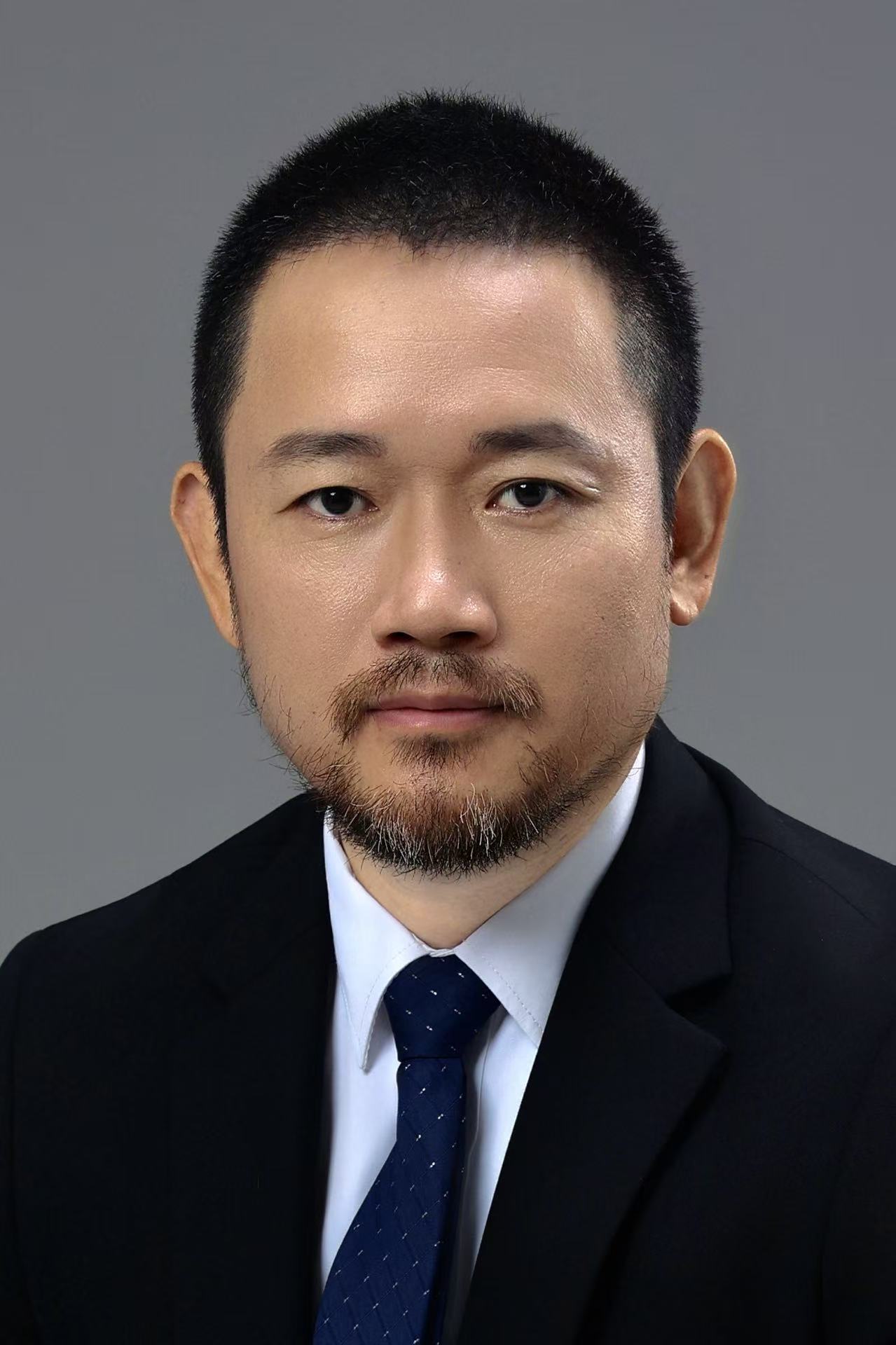 Xianmin Jin (金贤敏)合作论文数School of Physics and Astronomy, Shanghai Jiao Tong University32Andreas Eckstein合作论文数Department of Physics, University of Oxford30
 Konrad Banaszek合作论文数Centre of New Technologies, University of Warsaw;Faculty of Physics, University of Warsaw29Brian J Smith合作论文数Department of Respiratory Medicine, The Queen Elizabeth Hospital;Bendigo Hospital;Austin Hosp, Melbourne29
 Christophe Dorrer合作论文数Bell Labs28
 Alfred U'Ren合作论文数Instituto de Ciencias Nucleares, Universidad Nacional Autonoma de Mexico28
 Nathan K. Langford合作论文数Centre for Quantum Computer Technology;School of Physical Sciences;University of Queensland;School of Physical Sciences, University of Queensland27
 Benjamin Brecht合作论文数26
 Adam S. Wyatt合作论文数Clarendon Laboratory, University of Oxford25
 Michael G. Raymer合作论文数Department of Physics, University of Oregon24
 Peter G. R. Smith合作论文数School of Electronics and Computer Science, Faculty of Engineering and Physical Sciences, University of Southampton;Optoelectronics Research Centre, University of Southampton;Covesion Ltd23
 Animesh Datta合作论文数Department of Physics, University of Warwick23
 Marco Barbieri合作论文数Dipartimento di Scienze, Università degli Studi Roma Tre22
 Benjamin J. Metcalf合作论文数University of Oxford, Oxford University22
 Piotr Wasylczyk合作论文数Clarendon Laboratory;University of Oxford;Clarendon Laboratory, University of Oxford22
 Robert Kosut合作论文数SC Solutions21Munns J H D合作论文数21
 Christine Silberhorn合作论文数Paderborn University21
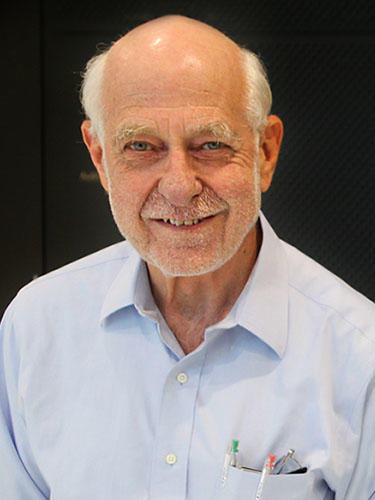 Herschel A. Rabitz合作论文数Princeton Materials Institute, Princeton University21
 Dieter Jaksch合作论文数Institute for Quantum Physics, Department of Physics, Universität Hamburg;Keble College, University of Oxford21Kevin C Lee合作论文数20
 Duncan England合作论文数National Research Council of Canada20
 Peter J. Mosley合作论文数Clarendon Laboratory;University of Oxford;Clarendon Laboratory, University of Oxford20
 William R. Clements合作论文数State Key Laboratory for Mesoscopic Physics and School of Physics, Peking University19
 Lijian Zhang (张利剑)合作论文数College of Engineering and Applied Sciences, Nanjing University19John N. Sweetser合作论文数Combustion Research Facility;Sandia National Labs;Combustion Research Facility, Sandia National Labs19
 Michael Sprague合作论文数Dept. of Med. Biophys., Univ. of Toronto;c;Dept. of Med. Biophys., Univ. of Toronto18
 Peter Humphreys合作论文数Google DeepMind18Benjamin J. Sussman合作论文数Molecular Photonics;Steacie Institute for Molecular Sciences;National Research Council of Canada;National Research Council of Canada, Steacie Institute for Molecular Sciences18
 Eilon Poem合作论文数Quantum Transistors18t f m champion合作论文数17
 Krzysztof T. Kaczmarek合作论文数17
 James C. Gates合作论文数Optoelectronics Research Centre;University of Southampton;Optoelectronics Research Centre, University of Southampton17
 Thomas Gerrits合作论文数National Institute of Standards and Technology17
 Bell, B.A.合作论文数Dept. of Electr. & Electron. Eng., Univ. of Bristol;c;Dept. of Electr. & Electron. Eng., Univ. of Bristol16Thomas-Peter, N.合作论文数16Hendrik B. Coldenstrodt-Ronge合作论文数16
 Raj B.Patel合作论文数Department of Physics, Faculty of Natural Sciences, Imperial College London16
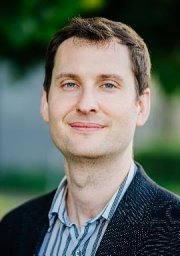 Tim Bartley合作论文数Max Planck Institute for the Science of Light, Günther-Scharowsky-Str. 1, Bau 24, 91058 Erlangen, Germany15Justin Spring合作论文数15
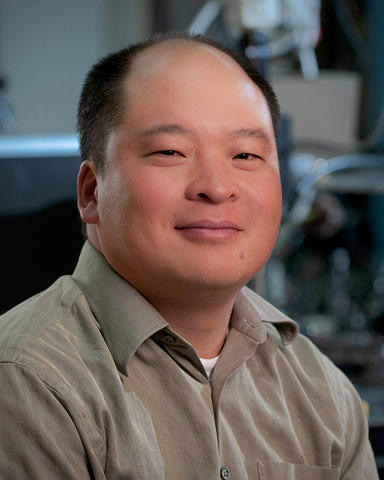 Sae Woo Nam合作论文数University of Colorado Boulder;National Institute of Standards and Technology15
 J. S. Lundeen合作论文数14
 Thomas Shaji合作论文数14
 Guillaume S. Thekkadath合作论文数National Research Council of Canada14
 Simon-Pierre Gorza合作论文数Université Libre de Bruxelles14




