We present the compilation catalogue of redshift-independent distances included in the HyperLEDA database. It is actively maintained to be up-to-date, and the current version counts 6640 distance measurements for 2335 galaxies compiled from 430 published articles. Each individual series is recalibrated onto a common distance scale based on a carefully selected set of high-quality measurements. This information together with data on HI line-width, central velocity dispersion, magnitudes, diameters, and redshift is used to derive a homogeneous distance estimate and physical properties of galaxies, such as their absolute magnitudes and intrinsic size.
AbstractThe Polar Large Telescope (PLT) project is primarily aimed at undertaking large, wide band synoptic astronomical surveys in the infrared in order to provide critical data to the forthcoming generation of observational facilities such as ALMA, JWST, LSST and the E–ELT, and to complement the observations obtained with them. Sensitive thermal IR surveys beyond 2.3 μm cannot be carried out from any existing ground based observatory and the Antarctic Plateau is the only place on the ground where it can be envisaged, thanks to its unique atmospheric and environmental properties, such as the turbulence profile (image quality), the low opacity and the reduced thermal background emission of the sky. These unique conditions enable high angular resolution wide field surveys in the near thermal infrared (2.3–5 μm). This spectral range is particularly well suited to tackling key astrophysical questions such as: i) investigating the nature of the distant universe, the first generation of stars and the latest stages of stellar evolution, ii) understanding transient phenomena such as gamma ray-bursts and Type Ia supernovae, iii) increasing our knowledge of extra-solar planets. Further instruments may broaden the expected science outcomes of such a 2–4 m class telescope especially for the characterization of galaxies at very large distance to provide new clues in the mysteries of dark matter and energy. Efforts will be made to merge this project with other comparable projects within an international consortium.
Transition-type dwarf (TTD) galaxies share characteristics of early-and late-type dwarfs. Thus, they are suspected to be the thread that connects them. We selected 19 TTD galaxies in the nearby Universe (cz < 2900 km s(-1)) from the Sloan Digital Sky Survey. They span the luminosity range from similar to-14.5 to -19.0 mag in the B band, and are located in different environments.We derive their single stellar population parameters and star formation histories, using the full spectrum fitting technique with two independent population synthesis models. Irrespective of the synthesis models, we find that these dwarfs have a relatively young mean age (around 1-2 Gyr) and low metallicities (similar to-0.7 dex). Moreover, they had approximately constant star formation rates until a few Gyr ago, associated with strong metal enrichment during the first few Gyr of their evolution. We compare these results with the results from Koleva et al., who studied dwarf elliptical (dE) galaxies in the same luminosity range. We find that (1) both samples occupy the same region in the luminosity-metallicity relation, (2) the build-up of the stellar mass in both types of galaxies is very similar, with most of the stars already formed 5 Gyr ago and (3) contrary to the dEs, TTDs are forming stars at present, but after 1 Gyr of passive evolution, their star formation histories would appear identical to that of dEs. As far as the stellar population is concerned, the transformation of TTDs into dEs is definitely possible. A star-forming dwarf galaxy can be stripped of at least a fraction of its gas, and its star formation rate can be reduced to that of the TTDs of the present sample. Continued gas removal may drive a galaxy to the state of a gas-depleted bona fide dE. However, we cannot exclude a scenario where a star-forming galaxy is rapidly transformed into an early type without passing through a noticeable 'transition' phase, as suggested by the relatively small fraction of observed dEs with an interstellar medium. We cannot exclude swinging back and forth between a late-type dwarf and a TTD (in the case of episodic star formation) or an early-type dwarf and a TTD (in the case of gas infall).
The Antarctic plateau offers exceptional atmospheric and environmental conditions for astronomical observations over a wide range of wavelengths and uniquely favorable to infrared astronomy. Exceptional low sky brightness throughout the near- and mid-infrared and a telescope facility complying with the highest possible dynamic range for photometry, angular resolution and the widefield leads to the possibility of a modest-sized 2m off-axis telescope achieving comparable sensitivity to that of a larger ground-based 8-10m class telescope or a same sized space-based ones.
The contribution of the ISO satellite to the advances of infrared astronomy will certainly be tremendous. However, ground-based mid-infrared astronomy can still bring a lot, especially if one disposes of a high-quality site. Thanks to the excellence of the CFHT site on Mauna Kea, the 10 micron camera C10 proved to be a powerful instrument to complete ISO observations by combining high spatial resolution and very good sensitivity.
In order to face the challenge of collecting data for deep extragalactic samples it is necessary to identify new galaxies and to collect the main information on them: coordinates, magnitudes, diameters and axis ratios, position angles and morphological types. The DENIS project is a great opportunity to do that. It is the first time that such a survey is undertaken by getting CCD images directly at the telescope for an entire hemisphere. This new way of making a survey provides us with incredibly high quality images compared with photographic counterparts.
 Georges Paturel合作论文数13j borsenberger合作论文数8
 N. Epchtein合作论文数8francois sibille合作论文数7p fouque合作论文数6
 Gary Allan Mamon合作论文数Institut d'Astrophysique de Paris6th le bertre合作论文数5Ch Petit合作论文数5
 Stefan Kimeswenger合作论文数Institut fur Astrophysik, Leopold-Franzens-Universitat Innsbruck5
 Daniel Rouan合作论文数CNRS;Observatoire de Paris, Laboratoire d’Etudes Spatiales et d’Instrumentation5philip m merlin合作论文数4B. De Batz合作论文数4didier tiphene合作论文数4
 Francois Lacombe合作论文数Mauna Kea Technol4stefan wagner合作论文数Heidelberg Univ3josef hron合作论文数3Gerard Simon合作论文数3
 Thierry Forveille合作论文数Grenoble Planetology and Astrophysics Institute, Observatoire des Sciences de l'Univers de Grenoble3Cecile Loup合作论文数3Philippe Prugniel合作论文数3M. C. Marthinet合作论文数3
 Pierre Drossart合作论文数3F. Billebaud合作论文数3Michel Dennefeld合作论文数3Jerome Le Rousseau合作论文数3Annie C. Robin合作论文数Observatoire de Besançon3
 E. Deul合作论文数3
 Maria-Rosa Cioni合作论文数Leibniz Institute for Astrophysics Potsdam;University of Potsdam3
 Daniel Egret合作论文数Observatoire Astronomique de Strasbourg;Universit e Louis;Observatoire Astronomique de Strasbourg, Universit e Louis3Paolo Persi合作论文数3Christophe L. Alard合作论文数Institut d'Astrophysique de Paris3
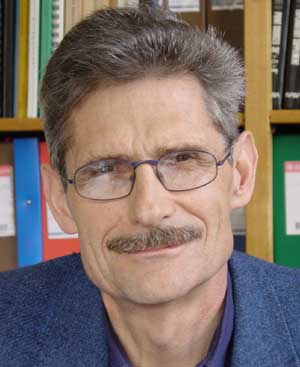 Alain Omont合作论文数Institut d'Astrophysique de Paris, CNRS3
 Christine Joblin合作论文数Centre National de la Recherche Scientifique3Maud Langlois合作论文数2jean monin合作论文数2p o lagage合作论文数2e copet合作论文数2Gilles Theureau合作论文数Observatoire de Paris2J. L. Monin合作论文数2Daniel Gautier合作论文数2
 Harm Habing合作论文数Leiden University2
 Gil Moretto合作论文数2Sebastien Derriere合作论文数2Lajos G Balazs合作论文数2
 Benoît Mosser合作论文数Laboratoire d'Etudes Spatiales et d'Instrumentation en Astrophysique, Paris Observatory;France Universite Numerique2A. Holl合作论文数2Charling Tao合作论文数1a m ulla合作论文数1luc audaire合作论文数1




