The T980 crystal collimation experiment is underway at the Tevatron to determine if this technique could increase 980 GeV beam-halo collimation efficiency at high-energy hadron colliders such as the Tevatron and the LHC. T980 also studies various crystal types and parameters. The setup has been substantially enhanced during the Summer 2009 shutdown by installing a new O-shaped crystal in the horizontal goniometer, as well as adding a vertical goniometer with two alternating crystals (O-shaped and multi-strip) and additional beam diagnostics. First measurements with the new system are quite encouraging, with channeled and volume-reflected beams observed on the secondary collimators as predicted. Investigation of crystal collimation efficiencies with crystals in volume reflection and channeling modes are described in comparison with an amorphous primary collimator. Results on the system performance are presented for the end-of-store studies and for entire collider stores. The first investigation of colliding beam collimation simultaneously using crystals in both the vertical and horizontal plane has been made in the regime with horizontally channeled and vertically volume-reflected beams. Planning is underway for significant hardware improvements during the FY10 summer shutdown and for dedicated studies during the final year of Tevatron operation and also for a "post-collider beam physics running" period.
The T-980 bent crystal collimation experiment at the Tevatron has recently acquired substantial enhancements. First, two new crystals - a 16-strip one manufactured and characterized by the INFN Ferrara group and a quasi-mosaic crystal manufactured and characterized by the PNPI group. Second, a two plane telescope with 3 high-resolution pixel detectors per plane along with corresponding mechanics, electronics, control and software has been manufactured, tested and installed in the E0 crystal region. The purpose of the pixel telescope is to measure and image channeled (CH), volume-reflected (VR) and multiple volume-reflected (MVR) beam profiles produced by bent crystals. Third, an ORIGIN-based system has been developed for thorough analysis of experimental and simulation data. Results of analysis are presented for different types of crystals used from 2005 to present for channeling and volume reflection including pioneering tests of two-plane crystal collimation at the collider, all in comparison with detailed simulations.
W. Scandale , A. Carnera , G. Della Mea , D. De Salvador , R. Milan , A. Vomiero , S. Baricordi , P. Dalpiaz , M. Fiorini , V. Guidi , G. Martinelli , A. Mazzolari , E. Milan , G. Ambrosi , P. Azzarello , R. Battiston , B. Bertucci , W. J. Burger , M. Ionica , P. Zuccon , G. Cavoto , R. Santacesaria , P. Valente , E. Vallazza , A. G. Afonin , V. T. Baranov , Y. A. Chesnokov , V. I. Kotov , V. A. Maisheev , I. A. Yazynin , S. V. Afanasiev , A. D. Kovalenko , A. M. Taratin , A. S. Denisov , Y. A. Gavrikov , Y. M. Ivanov , V. G. Ivochkin , S. V. Kosyanenko , A. A. Petrunin , V. V. Skorobogatov , V. M. Suvorov , D. Bolognini , D. Lietti , S. Hasan , M. Prest j
In the TESLA superconducting linear collider project, collisions occur at zero crossing angle. The option to rapidly dump the spent beams after the collision has been favoured recently to avoid the inconveniencies of large beam losses and beam line activation. For these reasons, the design of the beam and beamstrahlung extraction lines must be interplayed with those of the final focus optics and synchrotron radiation masking. We propose a system where the beam extraction is downward and where the beam and beamstrahlung power is dumped at 240 m from the IP. The power deposition along the beam lines and beam transmission to the dump are found to be acceptable.
High energy and large intensity of beams in the linear collider TESLA [1] require a careful study of how to dispose both electron and positron beams after collision. To minimize uncontrollable activation of the collider equipment the beams are transferred to a dump foreseen for this purpose. To exclude the local overheating of the water dumps due to the high power of the beams (2×10 W in the pulse and ≈8x10 W on average) the last should be distributed on a area not less than 30 cm at the dump input [2]. The important feature of the TESLA project is that a new type of a positrons source will be used. The positrons are generated in a conversion target on which γ-radiation emitted by spent electrons in a wiggler is stricken. To provide the required intensity of the positrons not less than 70 % of the colliding electrons must be used. To ensure the necessary positron beam emittance the spot size of the γ-radiation on the target should not exceed 0.7 mm [3]. The choice of the transfer line structure for the electron beam from the extraction system up to dump, the definition of electromagnetic elements and the beam parameters are considered.
In the TESLA superconducting linear collider project, collisions occur at zero crossing angle. The option to rapidly dump the spent beams after the collision has been favoured recently to avoid the inconveniencies of large beam losses and beam line activation. For these reasons, the design of the beam and beamstrahlung extraction lines must be interplayed with those of the final focus optics and synchrotron radiation masking. We propose a system where the beam extraction is downward and where the beam and beamstrahlung power is dumped at 240 m from the IP. The power deposition along the beam lines and beam transmission to the dump are found to be acceptable.
In the TESLA superconducting linear collider project, collisions occur at zero crossing angle. While the outgoing beams are extracted at about 40 m after the interaction point, the beamstrahlung photons travel further upstream along the incoming final focus beam line. Moreover, the option to rapidly dump the spent beams after the collision has been favoured recently to avoid the inconveniencies of large beam losses and beam line activation. For these reasons, the design of the beam and beamstrahlung extraction lines is interplayed with those of the final focus optics and synchrotron radiation masking. We propose a system where the beam extraction is downward and where the beam and beamstrahlung power is dumped at 240 m from the IP. The power deposition along the beam lines and beam transmission to the dump are found to be acceptable.
 E. Merker合作论文数4N. Walker合作论文数3A. I. Drozhdin合作论文数3Olivier Napoly合作论文数3g annala合作论文数2V. Guidi合作论文数2j zagel合作论文数2
 Richard O'Reilly合作论文数Immunology & Microbial Pathoge, Weill Cornell Graduate School of Medical Sciences, Cornell University2
 Ralf Brinkmann合作论文数2Walter Scandale合作论文数2Dean A. Still合作论文数2Yu a Chesnokov合作论文数Institute of High Energy Physics, Protvino, Moscow Region, Russia2
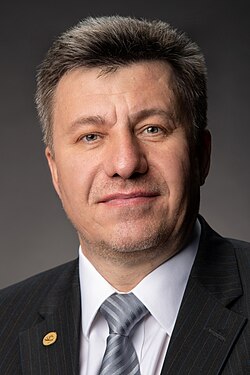 Vladimir Shiltsev合作论文数Fermi National Accelerator Laboratory2P. Zuccon合作论文数1V. Guidi合作论文数1E. Vallazza合作论文数1A. Mazzolari合作论文数1M. Ionica合作论文数1v m suvorov合作论文数1R. Milan合作论文数1S. Kwan合作论文数1
 Vladimir Ivochkin合作论文数1Y. Gavrikov合作论文数1a prosser合作论文数1R. Tesarek合作论文数1
 Valentina Previtali合作论文数1R. Battiston合作论文数1G. Ambrosi合作论文数1A. Carnera合作论文数1AD Kovalenko合作论文数1Sv Afanasiev合作论文数1R. Brinkmann合作论文数1
 Viktoriya Zvoda合作论文数University of Illinois at Chicago1y ivanov合作论文数1P. Dalpiaz合作论文数1Wj Burger合作论文数1V. V. Skorobogatov合作论文数1yu a chesnokov合作论文数1
 r assmann合作论文数Lab Nazl Frascati1
 Todd R. Johnson合作论文数College of P ..., The University of Texas School of Biomedical Informatics at Houston1
 Gianluca Cavoto合作论文数Dipartimento di Fisica, Sapienza Università di Roma1G. Martinelli合作论文数1Nikolai Mokhov合作论文数Theory and Modeling Group, Fermi National Accelerator Laboratory1Nikolai V Mokhov合作论文数1
 Alberto Vomiero合作论文数Department of Molecular Sciences and Nanosystems, Ca' Foscari University1
 I. V. Kotov合作论文数Institute of High Energy Physics1
 Sergiy Denysov合作论文数Department of Computer Science, Faculty of Technology, Art and Design, Oslo Metropolitan University1




