Abstract Conceptually grounded hierarchies of functional heads should not be rejected, but they cannot (and must not) be too specific. Those composed by sequences of auxiliary verbs are not able to account for the various alignments of the same functional heads in certain areas of the spine. Multiple orders among aspectual and root modal projections give rise to meaning differences based on scope. These sequences are filtered by a series of (morphological and semantic) local output conditions. Some of them are accounted for by extending Chomsky’s (1986) distinction between C-selection and S-selection to auxiliary verbs. Passive auxiliaries may raise across root-modals and some aspectual verbs. Perfect auxiliaries are also able to raise across epistemic modals, which are not anchored to tense. Aux-raising and Aux-doubling are parallel processes (subject to dialectal and typological differences, but with no meaning consequences) in the syntax of both auxiliaries and prepositions.
This article analyzes four interpretations of the adverb siempre ‘always’ that do not belong to general Spanish. The continuative and the progressive-comparative interpretations are argued to be calques of Italian, often attested in Rioplatense Spanish. In the first one, siempre is equivalent to Eng. still or ‘continue to + infinitive’, while in the second one it admits paraphrases with more and more, less and less, and the adverbs gradually and progressively. The third interpretation, in which siempre is roughly equivalent to after all, finally, and ‘end up + gerund’, will be argued to be concessive-adversative. This reading is more frequent in Mexico and Central America, but it is also attested in other American countries. The fourth reading is the attenuated interpretation, registered in part of the Andean area. In this meaning, siempre is equivalent to roughly or so so. It is argued that, with the possible exception of the last reading (whose origin is insecure), these different meanings of siempre coincide in the interpretation of this adverb as a universal quantifier, while they differ in the semantic nature of the quantified variable.
Abstract In the Spanish secondary education, first-language teaching is conceived of as a mixture of instrumental skills (writing and reading) and grammar. It is fair to say, though, that the connection between both domains has never been pursued in a harmonic, truly interdisciplinary, fashion. Instrumental techniques are typically associated to normative guidelines and communicative approaches, whereas grammar is seen as a set of mechanical exercises. Here we argue in favor of approaching grammar from a scientific point of view. This does not mean that secondary school students should necessarily become apprentice scientists, but rather that they should get used to describing and analyzing linguistic objects in the same way they are taught to describe and analyze other objects of the world in other courses. We further claim that this scientific take should have an impact on what concepts are taught and how they are trained. We briefly discuss some contemporary concepts that we think could be incorporated in secondary education, as just one possible example of what could be done. We also argue that traditional grammatical exercises should be complemented with problem-raising strategies.
The first part of the chapter explains why there is a close relationship between the meanings of words and the syntactic structure of the sentences and phrases in which they occur. Paradoxically, most of these relationships have traditionally been neglected by lexicographers. In the second part, we outline how the main Spanish dictionaries address different aspects of the syntax. In the third part, we show the way in which some of these relationships (valency, regime, mode, verbal alternations, etc.) are, or might be, approached in general dictionaries. In the last part of the chapter, we raise several questions concerning the limits posed by the relationship between dictionary and syntax. Some of these problems can be solved, to a large extent, by new technologies. Others relate to the possible intervention of factors that cannot be addressed by lexicographers in isolation, but rather through their collaboration with grammarians, lexicologists, semanticists, and pragmatists.
Analyses of secondary predication based on the aspectual properties of predicative complements are almost standard today. This paper shows that these approaches are not restrictive enough and make a large number of incorrect predictions. It also shows that the meaning of the main (or primary) predicate is essential to restrict the secondary one. Throughout the text, a pragmatically based analysis of the necessary restrictions is compared with one grounded on semantic paradigms, and several examples are proposed of how the latter may be articulated and developed. Event-related states in secondary predication are shown to be necessary, and are claimed to follow from a series if fine-grained semantic notions crucially related to the meaning of the primary verb.
Este trabajo aborda la utilidad, la validez y el uso de varias nociones gramaticales, casi todas sintácticas. Nuestro objetivo es evaluar si algunos conceptos frecuentes en las asignaturas de lengua de secundaria y bachillerato deberían ser reemplazados por otros, o bien debería modificarse en alguna medida el contenido que actualmente se les otorga. Defendemos tales posibilidades, que justificamos con el argumento principal de que el análisis gramatical debe relacionar las formas con los significados y ha de favorecer la reflexión sobre el conocimiento inconsciente que cada hablante tiene de su propia lengua, además de sobre el uso que los hablantes hacen de las expresiones lingüísticas. Por motivos expositivos, consideraremos cuatro tipos de nociones gramaticales: aquellas que se aplican y son útiles; aquellas que también son útiles, pero que apenas se aplican; aquellas que se suelen aplicar, pese a ser poco útiles; y, finalmente, aquellas que podrían resultar útiles y que raramente se aplican. Planteamos esta discusión para defender la necesidad de establecer un perímetro terminológico estable para secundaria y bachillerato, basado en gran medida en el reciente Glosario de términos gramaticales (2019).
Synchronic morphology deals with word structures and their presence in the linguistic consciousness of speakers, whereas diachronic morphology analyzes the historical changes undergone by infectional and derivational afxes, as well as their respective paradigms. The main objective of this chapter is to recall that the division is not as crystal clear as this simple characterization suggests. A large number of morphophonological alternations may be described synchronically but must be explained diachronically. Even so, speakers make correct deductions by choosing lexical and infectional afxes corresponding to segments that only historical analyses would recognize as morphemes. In some cases, synchronic and diachronic criteria may lead to diferent morphological segmentations of derived words. These options are compatible with each other, given that their respective goals do not coincide. Finally, some morphophonological processes are shared by synchronic and diachronic analyses, together with general morphological patterns, such as the formation of cyclic derivational chains.
Definiteness effects have been attested in the literature for some DPs complementing HAVE (= English have and their counterparts in other languages). In this paper, which focuses on English and Spanish, demonstrative DPs are shown to be affected by the type-token distinction in HAVE contexts: the internal argument of HAVE receives a type reading in these cases and rejects a to-ken interpretation. The “type restriction on demonstrative DPs” (TRD) is shown to follow from the need for narrow focus NPs complementing HAVE to receive a hearer-new reading, a well-known property of presentational structures. Type readings of demonstrative DPs are shown to meet this condition. Apparent exceptions to the TRD effect include (i) DPs in so-called “remainder contexts”; (ii) structures in which the relevant DP is the subject of a small clause (sometimes with a non-overt predicate); and (iii) structures containing a number of anti-assertive operators. The contexts in (i) are shown to be hearer-new, in spite of being definite. Those in (ii) and (iii) provide DPs which escape the narrow focus interpretation that gives ride to this variety of the definiteness effect.
En este artículo se analiza la Gramática de Construcciones como marco teórico, así como algunas de sus conexiones con otros enfoques, sean antiguos o modernos. El objetivo del trabajo no es oponerse a este modelo en su conjunto o defender una teoría alternativa a él, sino valorar sus aspectos positivos y destacar a la vez aquellos que no lo son tanto, examinados por un lingüista no constructivista. Entre los aciertos de ese marco teórico se resalta especialmente la concepción escalar o gradual de la composicionalidad, con notables consecuencias para la relación léxico-sintaxis. Entre los aspectos menos positivos se menciona la atribución de significado a las construcciones mismas, así como las dificultades que el modelo presenta para incorporar las relaciones sintácticas que se establecen a distancia.
Este artículo constituye una descripción de las principales características de los volúmenes dedicados a la morfología y la sintaxis en la Nueva gramática de la lengua española que la RAE y la ASALE publicaron en 2009. El texto presta especial atención a la forma en que se analizó la variación lingüística en esa obra e introduce asimismo algunas reflexiones sobre los factores que condicionan la elaboración de tratados gramaticales en la actualidad.
This article is a description of the main characteristics of the volumes on morphology and syntax in the New Grammar of the Spanish Language that RAE and ASALE published in 2009. The text pays particular attention to the way in which linguistic variation was analysed in this work, and also offers some reflections on the factors influence drawing up grammatical treatises today.
En este trabajo se exponen las características principales del Glosario de términos gramaticales (GTG), obra publicada en 2019 por la Asociación de Academias de la Lengua Española (ASALE) y dirigida a los profesores de español de todos los países hispanohablantes. El GTG es un pequeño diccionario de gramática que consta de unas 500 entradas, a las que se suman unos 50 cuadros y esquemas. Se diferencia de otros muchos diccionarios de lingüística en su contenido, sus destinatarios y el carácter didáctico de su tono expositivo. Las entradas contienen referencias cruzadas, informaciones fundamentales y complementarias (diferenciadas tipográficamente), oposiciones conceptuales, referencias bibliográficas a las dos gramáticas comprehensivas más recientes y otras informaciones similares. El GTG, que contiene asimismo gran número de gráficos, no evita los puntos controvertidos, sino que los presenta de forma simplificada y accesible. No se centra tampoco en las cuestiones normativas, sino en los conceptos de morfología y de sintaxis que deben conocer, manejar y adaptar los docentes para llevar a cabo su labor en las aulas.
espanolEste articulo constituye una descripcion de las principales caracteristicas de los volume-nes dedicados a la morfologia y la sintaxis en la Nueva gramatica de la lengua espanola que la RAE y la ASALE publicaron en 2009. El texto presta especial atencion a la forma en que se analizo la variacion linguistica en esa obra e introduce asimismo algunas reflexiones sobre los factores que condicionan la elaboracion de tratados gramaticales en la actualidad. EnglishThis article is a description of the main characteristics of the volumes on morphology and syntax in the New Grammar of the Spanish Language that RAE and ASALE published in 2009. The text pays particular attention to the way in which linguistic variation was analysed in this work, and also offers some reflections on the factors influence drawing up grammati-cal treatises today. francaisCet article est une description des principales caracteristiques des ouvrages consacres a la morphologie et a la syntaxe dans la Nueva gramatica de la lengua espanola (Nouvelle gram-maire de la langue espagnole) publiee en 2009 par la RAE (Academie royale espagnole) et l’ASALE. Le texte accorde beaucoup d’attention a la facon dont la variation linguistique a ete analysee dans cet ouvrage. Il donne aussi quelques reflexions sur les facteurs qui condi-tionnent l’elaboration actuelle des traites de grammaire. euskaraArtikulu honetan, RAEk eta ASALEk 2009an argitaratu zuten Nueva gramatica de la lengua espanola lanean morfologiari eta sintaxiari eskainitako bolumenen ezaugarri nagusiak deskribatzen dira. Testuak arreta berezia jartzen du obra horretako hizkuntza-bariazioa az-tertzeko moduan, eta, era berean, hausnarketa batzuk egiten ditu gaur egun gramatika-tra-tatuak egitea baldintzatzen duten faktoreei buruz.
Unconditionals (UCs) are sentences expressing the irrelevance of a number of potential options or counterarguments to the content of some particular utterance, as in Whether or not it rains, I'll go for a walk. The specific semantic relationship that UCs hold with conditionals, concessives and free relatives has been analyzed in the last years, but the syntactic structures that UCs display in the Romance languages have not been investigated in depth. In this chapter, a detailed syntactic classification of Romance UC structures is proposed, with particular attention to Spanish. This classification combines V or C initial structures with the presence/absence of ever-like markers in relatives. It is argued that the key factor unifying all UC varieties in Romance is the subjunctive mood, here interpreted as an epistemic modal in UC patterns. Ever-indefinites provide similar meanings in English's UCs because they are licensed in intensional environments. Mood-doubling, a distinctive property of UCs in Romance, results from the split of sentential operators, a phenomenon also attested in other conjoined structures.
Interpretaciones de la redundancia en la gramática y en el léxico La redundancia en el lenguaje se ha analizado desde hace años en la teoría de la información sin utilizar recursos propiamente gramaticales. También se ha censurado en la lengua común, a la vez que se ha admitido tradicionalmente como privilegio de los escritores. En este artículo se muestra que la redundancia está incardinada en el sistema gramatical del español, en el que adquiere diversas interpretaciones. Se explica en estas páginas la relación que existe entre la redundancia y la estructura informativa de la oración, así como las diversas formas en que laprimera puede reinterpretarse como una forma de concordancia léxica. Se prestaespecial atención a la redundancia que se observa en los procesos de incorporaciónde preposiciones como prefijos, así como a la que existe en ciertas estructuras queexpresan sintácticamente el pasado. También se analizan los numerosos epítetosque admite la lengua no literaria en estructuras adjetivales y adverbiales, y seinterpretan como estructuras en las que la sintaxis puede hacer visibles ciertoscomponentes semánticos de las piezas léxicas que los hablantes desean resaltar.
The Lexical Integrity Hypothesis (LIH) holds that words are syntactic atoms, implying that syntactic processes and principles do not have access to word segments. Interestingly, when this widespread “negative characterization” is turned into its positive version, a standard picture of the Morphology-Syntax borderline is obtained. The LIH is both a fundamental principle of Morphology and a test bench for morphological theories. As a matter of fact, the LIH is problematic for both lexicalist and anti-lexicalist frameworks, which radically differ in accepting or rejecting Morphology as a component of grammar different from Syntax. Lexicalist theories predict no exceptions to LIH, contrary to fact. From anti-lexicalist theories one might expect a large set of counterexamples to this hypothesis, but the truth is that attested potential exceptions are restricted, as well as confined to very specific grammatical areas. Most of the phenomena taken to be crucial for evaluating the LIH are briefly addressed in this article: argument structure, scope, prefixes, compounds, pronouns, elliptical segments, bracketing paradoxes, and coordinated structures. It is argued that both lexicalist and anti-lexicalist positions crucially depend on the specific interpretations that their proponents are willing to attribute to the very notion of Syntax: a broad one, which basically encompasses constituent structure, binary branching, scope, and compositionality, and a narrow one, which also coverts movement, recursion, deletion, coordination, and other aspects of phrase structure. The objective differences between these conceptions of Syntax are shown to be determinant in the evaluation of LIH’s predictions.
This study reviews the so-called competences listed in various official documents. The ostensible role of such competences is to determine which aspects of a school subject must be assimilated, carried out and applied by the students. This paper underlines the redundancy and vagueness that can be seen in some official descriptions of the so-called “competence in linguistic communication”, such as the conception (erroneous, we think) that communication and formalist perspectives are incompatible. We will compare competences linked to science subjects with those associated to non-science subjects in order to point out the asymmetries between them, which contribute to reinforcing (unfairly and unjustifiably) the perception of language study as unscientific . Finally, we propose a series of competences that we think should be promoted in secondary and baccalaureate language classrooms.
Aquest treball ofereix una revisió crítica de les anomenades competències, presents en diferents textos oficials, la funció és la de determinar quins aspectes d'una matèria han de ser assimilats, desenvolupats i aplicats pels estudiants. Es destaquen aquí la redundància i la vaguetat d'algunes formulacions oficials de l'anomenada "competència en comunicació lingüística", així com la concepció (errònia, al nostre entendre) que els enfocaments comunicatiu i formalista són incompatibles. L'article planteja també una comparació entre les competències associades a les matèries de ciències i aquelles que es vinculen a les de lletres, amb l'objectiu d'assenyalar les asimetries que s'estableixen entre elles i que contribueixen al fet que es consolidi (injusta i injustificadament) un visió no científica de l'estudi de la llengua. Finalment, es proposa un seguit de competències que, creiem, haurien afavorir a les classes de llengua de Secundària i Batxillerat.
1. En los ultimos anos se han publicado en Espana numerosas guias de lenguaje no sexista. Han sido editadas por universidades, comunidades autonomas, sindicatos, ayuntamientos y otras instituciones. Las que identifico con siglas o abreviaturas en la relacion que aparece al final constituyen tan solo una muestra de ese extenso catalogo. Antepondre un guion a la pagina citada: MUR-8, UPM-10, UGT-14, etc.
 Angel J. Gallego合作论文数Univ Autonoma Barcelona8
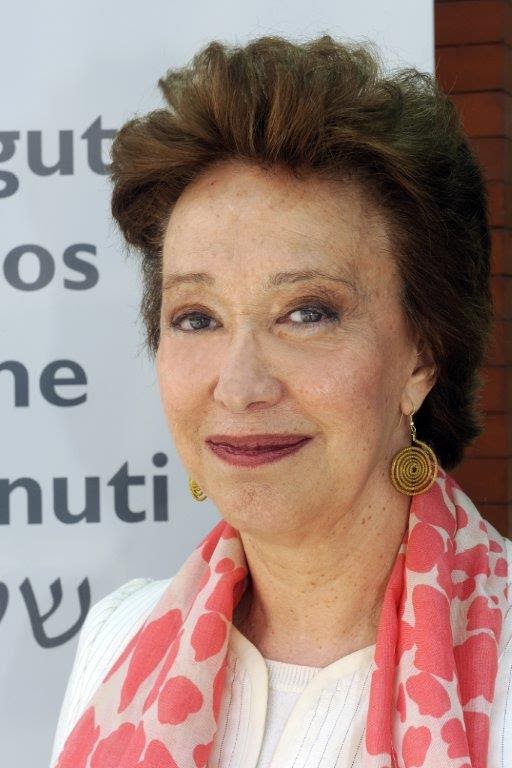 Violeta Demonte合作论文数Instituto Universitario de Investigación de Estudios de la Mujer, Universidad Autónoma de Madrid5
 Juan Moreno合作论文数Dept Evolutionary Ecol, Museo Nacl Ciencias Nat CSIC2Ana Bravo合作论文数1
 Maria Auxiliadora Barrios Rodriguez合作论文数Dept Lengua Espanola, Univ Complutense Madrid1
 Hector San Martin Gutierrez合作论文数Departamento de Administración de Empresas, Facultad de Ciencias Económicas y Empresariales, Universidad de Cantabria1Javier Gutierrez-Rexach合作论文数1Carme Picallo合作论文数1Joel Rini合作论文数1
 Ricardo Mairal合作论文数University of Granada1




