Microglia are the immune cells of the central nervous system and are thought to be key players in both physiological and disease conditions. Several microglial features are poorly conserved between mice and human, such as the function of the neurodegeneration-associated immune receptor Trem2. Induced pluripotent stem cell (iPSC)-derived microglia offer a powerful opportunity to generate and study human microglia. However, human iPSC-derived microglia often exhibit activated phenotypes in vitro, and assessing their impact on other brain cell types remains challenging due to limitations in current co-culture systems. Here, we developed fully defined brain microtissues, composed of human iPSC-derived neurons, astrocytes, and microglia, co-cultured in 2D or 3D formats. Our microtissues are stable and self-sufficient over time, requiring no exogenous cytokines or growth factors. All three cell types exhibit morphologies characteristic of their in vivo environment and show functional properties. Co-cultured microglia develop more homeostatic phenotypes compared to microglia exposed to exogenous cytokines. Hence, these tri-cultures provide a unique approach to investigate cell-cell interactions between brain cell types. We found that astrocytes and not neurons are sufficient for microglial survival and maturation, and that astrocyte-derived M-CSF is essential for microglial survival. Single-cell and single-nucleus RNA sequencing analyses nominated a network of reciprocal communication between cell types. Brain microtissues faithfully recapitulated pathogenic α-synuclein seeding and aggregation, suggesting their usefulness as human cell models to study not only normal but also pathological cell biological processes.
Competition between life science companies is critical to ensure innovative therapies are efficiently developed. Anticompetitive behavior may harm scientific progress and, ultimately, patients. One well-established category of anticompetitive behavior is the 'interlocking directorate'. It is illegal for companies' directors to 'interlock' by also serving on the boards of competitors. We evaluated overlaps in the board membership of 2,241 public life science companies since 2000. We show that a robust network of interlocking companies is present among these firms. At any given time, 10-20 percent of board members are interlocked; the number of interlocks has more than doubled in the last two decades. Over half of these interlocked firms report over $5 million in historical revenue, exceeding a legal threshold that makes an interlocking directorate a violation of antitrust law. Those interlocks are only illegal if the companies compete, even in part. Using the disease categories for which companies have sponsored clinical trials, we discover that a few markets are responsible for a large fraction of interlocks. We show that in dozens of cases, companies share directors with the very firms they identify as their biggest competitive threats. We provide a data-driven roadmap for policymakers, regulators, and companies to further investigate the contribution of anticompetitive behavior to increased healthcare costs and to enforce the law against illegal interlocks between firms.
An analysis of the overlap of authors and inventors in a comprehensive citation map of patents to the biomedical research literature reveals significant and persistent disparities within the commercialization process.
Hematopoietic cell transplantation after myeloablative conditioning has been used to treat various genetic metabolic syndromes but is largely ineffective in diseases affecting the brain presumably due to poor and variable myeloid cell incorporation into the central nervous system. Here, we developed and characterized a near-complete and homogeneous replacement of microglia with bone marrow cells in mice without the need for genetic manipulation of donor or host. The high chimerism resulted from a competitive advantage of scarce donor cells during microglia repopulation rather than enhanced recruitment from the periphery. Hematopoietic stem cells, but not immediate myeloid or monocyte progenitor cells, contained full microglia replacement potency equivalent to whole bone marrow. To explore its therapeutic potential, we applied microglia replacement to a mouse model for Prosaposin deficiency, which is characterized by a progressive neurodegeneration phenotype. We found a reduction of cerebellar neurodegeneration and gliosis in treated brains, improvement of motor and balance impairment, and life span extension even with treatment started in young adulthood. This proof-of-concept study suggests that efficient microglia replacement may have therapeutic efficacy for a variety of neurological diseases.
Competition between life science companies is critical to ensure innovative therapies are efficiently developed to improve human health. Anticompetitive behavior may harm scientific progress and, ultimately, patients. One well-established category of anticompetitive behavior is the “interlocking directorate.” It is illegal for companies’ directors to “interlock” by also serving on the boards of competitors. To investigate anticompetitive behavior in the life sciences, we evaluated overlaps in the board membership of 2,241 public life science companies since 2000. At any given time, 10-20% of board members are interlocked; their tenures are 50% longer than non-interlocked directors. The number of interlocks has more than doubled in the last two decades. Interlocking directorates are particularly prevalent in oncology, neurology, immunology, and respiratory disease. Over half of all companies with more than $5 million in revenue are interlocked. A significant fraction of the life sciences industry is engaged in anticompetitive—and potentially illegal—behavior.
A citation map connecting patents to biomedical publications provides insights that can be used to better evaluate productivity, diversity and translational impact.
 Nathan Kahrobai合作论文数4
 Anoop Manjunath合作论文数Sunnybrook Research Institute4Arya Gowda合作论文数2
 Yoo Yongjin合作论文数Department of Biomedical Sciences, Seoul National University College of Medicine2
 Marius Wernig合作论文数Chemical and Systems Biology, Stanford University/Department of Pathology, Stanford University2
 James Zou合作论文数Department of Biomedical Data Science, Stanford University;InterVenn Biosciences;Chan Zuckerberg Biohub2
 Tony Wyss-Coray合作论文数Department of Neurology and Neurological Sciences, School of Medicine, Stanford University2
 Thomas Sudhof合作论文数Department of Molecular and Cellular Physiology, School of Medicine, Stanford University2
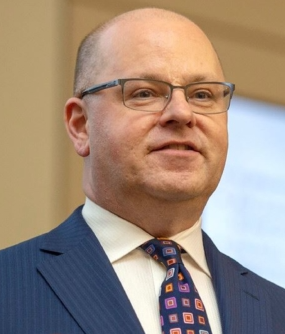 Mark A. Lemley合作论文数Stanford Law School, Stanford University;Lex Lumina PLLC2Ryo Yamamoto合作论文数1Paul Marcoux合作论文数1Esha A. Umbarkar合作论文数1
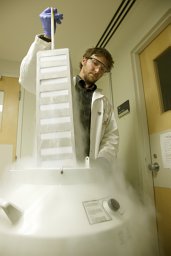 Gernot Neumayer合作论文数Sch Med, Stanford Univ1Zijun Sun合作论文数Sch Med, Stanford Univ1
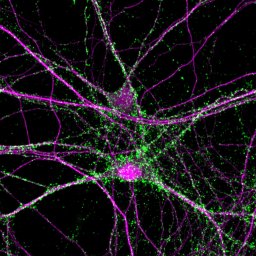 Jin-Zhao Wang (王今朝)合作论文数Sch Life Sci, South China Normal Univ1
 Jaya Manjunath合作论文数Dept Dermatol, George Washington Sch Med1
 Manuel A Mohr合作论文数Swiss Fed Inst Technol, Dept Biosyst Sci & Engn, Basel, Switzerland1Shuchen Song合作论文数1
 Mu Zhou (周牧)合作论文数School of Medicine, Tsinghua University1
 Kumar Kevin K合作论文数Vanderbilt Kennedy Center, Vanderbilt University1
 Erik Ullian合作论文数School of Medicine, University of California, San Francisco1
 Shuyuan Zhang合作论文数Children's Research Institute, University of Texas Southwestern Medical Center1
 Marius Mader合作论文数1
 Christian Thome合作论文数Institute of Physiology and Pathophysiology, Heidelberg University;Bernstein Center for Computational Neuroscience (BCCN) Heidelberg/Mannheim1
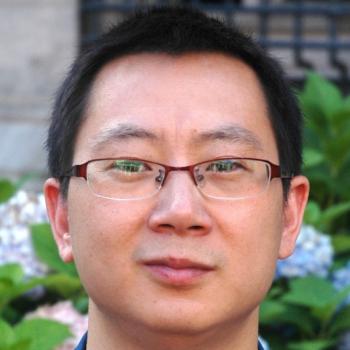 Xiaoke Chen合作论文数Biology Department, Stanford University1Bennett F Chris合作论文数1
 Uenaka Takeshi合作论文数Kobe University Graduate School of Medicine, Kobe University Hospital1Frank L. Heppner合作论文数1Y. Shibuya合作论文数1Ying Sun合作论文数1
 Benjamin Liou合作论文数1
 Shu Liu合作论文数1
 Michael Bassik合作论文数Department of Genetics, Stanford University1
 Hiromitsu (Hiro) Nakauchi合作论文数Department of Genetics, Stanford University1
 Hilal Lashuel合作论文数Life Sciences Brain Mind Institute, EPFL1




