Creating interior layout designs has numerous applications, including virtual reality, architectural visualization and real estate planning. Generating realistic and functional indoor scenes requires a nuanced understanding of spatial configurations and human-centered design principles. We propose InteriorAgent, an LLM-agent-driven framework for text-to-3D indoor scene generation that produces scenes with visual quality and functional utility that significantly surpass prior works. We achieve this through several key advantages of InteriorAgent: (1) encoding of interior design principles with a novel scene description language, (2) aesthetics and functionality through synthesis tools that satisfy design principles, (3) realism and prompt adherence with optimization tools that ensure ergonomics and iterative constraint satisfaction, (4) extensibility with a framework that allows incorporating even mature, complex tools like diffusion models, LLMs and 3D generation repositories. We evaluate InteriorAgent through a user study, where participants strongly favor its generated scenes over prior state-of-the-art methods. Additionally, we demonstrate novel applications uniquely enabled by InteriorAgent, including language-based scene editing and seamless tool integration for new tasks. Code and data will be publicly released.
Problems in differentiable rendering often involve optimizing scene parameters that cause motion in image space. The gradients for such parameters tend to be sparse, leading to poor convergence. While existing methods address this sparsity through proxy gradients such as topological derivatives or lagrangian derivatives, they make simplifying assumptions about rendering. Multi-resolution image pyramids offer an alternative approach but prove unreliable in practice. We introduce a method that uses locally orderless images, where each pixel maps to a histogram of intensities that preserves local variations in appearance. Using an inverse rendering objective that minimizes histogram distance, our method extends support for sparsely defined image gradients and recovers optimal parameters. We validate our method on various inverse problems using both synthetic and real data.
We present a novel method to differentiate integrals of discontinuous functions, which are common in inverse graphics, computer vision, and machine learning applications. Previous methods either require specialized routines to sample the discontinuous boundaries of predetermined primitives, or use reparameterization techniques that suffer from high variance. In contrast, our method handles general discontinuous functions, expressed as shader programs, without requiring manually specified boundary sampling routines. We achieve this through a program transformation that converts discontinuous functions into piecewise constant ones, enabling efficient boundary sampling through a novel segment snapping technique, and accurate derivatives at the boundary by simply comparing values on both sides of the discontinuity. Our method handles both explicit boundaries (polygons, ellipses, Bézier curves) and implicit ones (neural networks, noise-based functions, swept surfaces). We demonstrate that our system supports a wide range of applications, including painterly rendering, raster image fitting, constructive solid geometry, swept surfaces, mosaicing, and ray marching.
Neural fields excel at representing continuous visual signals but typically operate at a single, fixed resolution. We present a simple yet powerful method to optimize neural fields that can be prefiltered in a single forward pass. Key innovations and features include: (1) We perform convolutional filtering in the input domain by analytically scaling Fourier feature embeddings with the filter's frequency response. (2) This closed-form modulation generalizes beyond Gaussian filtering and supports other parametric filters (Box and Lanczos) that are unseen at training time. (3) We train the neural field using single-sample Monte Carlo estimates of the filtered signal. Our method is fast during both training and inference, and imposes no additional constraints on the network architecture. We show quantitative and qualitative improvements over existing methods for neural-field filtering.
We introduce a theoretical framework for differentiable surface evolution that allows discrete topology changes through the use of topological derivatives for variational optimization of image functionals. While prior methods for inverse rendering of geometry rely on silhouette gradients for topology changes, such signals are sparse. In contrast, our theory derives topological derivatives that relate the introduction of vanishing holes and phases to changes in image intensity. As a result, we enable differentiable shape perturbations in the form of hole or phase nucleation. We validate the proposed theory with optimization of closed curves in 2D and surfaces in 3D to lend insights into limitations of current methods and enable improved applications such as image vectorization, vector-graphics generation from text prompts, single-image reconstruction of shape ambigrams and multiview 3D reconstruction.
Coordinate-based neural networks parameterizing implicit surfaces have emerged as efficient representations of geometry. They effectively act as parametric level sets with the zero-level set defining the surface of interest. We present a framework that allows applying deformation operations defined for triangle meshes onto such implicit surfaces. Several of these operations can be viewed as energy-minimization problems that induce an instantaneous flow field on the explicit surface. Our method uses the flow field to deform parametric implicit surfaces by extending the classical theory of level sets. We also derive a consolidated view for existing methods on differentiable surface extraction and rendering, by formalizing connections to the level-set theory. We show that these methods drift from the theory and that our approach exhibits improvements for applications like surface smoothing, mean-curvature flow, inverse rendering and user-defined editing on implicit geometry.
Multi-Layer Perceptrons (MLPs) make powerful functional representations for sampling and reconstruction problems involving low-dimensional signals like images, shapes and light fields. Recent works have significantly improved their ability to represent high-frequency content by using periodic activations or positional encodings. This often came at the expense of generalization: modern methods are typically optimized for a single signal. We present a new representation that generalizes to multiple instances and achieves state-of-the-art fidelity. We use a dual-MLP architecture to encode the signals. A synthesis network creates a functional mapping from a low-dimensional input (e.g. pixel-position) to the output domain (e.g. RGB color). A modulation network maps a latent code corresponding to the target signal to parameters that modulate the periodic activations of the synthesis network. We also propose a local-functional representation which enables generalization. The signal's domain is partitioned into a regular grid, with each tile represented by a latent code. At test time, the signal is encoded with high-fidelity by inferring (or directly optimizing) the latent code-book. Our approach produces generalizable functional representations of images, videos and shapes, and achieves higher reconstruction quality than prior works that are optimized for a single signal.
Road safety is compromised today by the inadequacies in driver license testing. Testing is typically still performed manually, and efforts aimed at automating testing are stymied by the cost of outfitting a testing track with sensors. We demonstrate a low-cost, smartphone-based system for automating key aspects of the driver license test. We have a pilot deployment of our system at an official testing track in India. We will present an analysis of license test results obtained from this pilot, comparing the smartphone-based testing results with manual evaluation.
Can a smartphone administer a driver license test? We ask this question because of the inadequacy of manual testing and the expense of outfitting an automated testing track with sensors such as cameras, leading to less-than-thorough testing and ultimately compromising road safety. We present ALT, a low-cost smartphone-based system for automating key aspects of the driver license test. A windshield-mounted smartphone serves as the sole sensing platform, with the front camera being used to monitor driver's gaze, and the rear camera, together with inertial sensors, being used to evaluate driving maneuvers such as parallel parking. The sensors are also used in tandem, for instance, to check that the driver scanned their mirror during a lane change. The key challenges in ALT arise from the variation in the subject (driver) and the environment (vehicle geometry, camera orientation, etc.), little or no infrastructure support to keep costs low, and also the limitations of the smartphone (low-end GPU). The main contributions of this paper are: (a) robust detection of driver's gaze by combining head pose and eye gaze information, and performing auto-calibration to accommodate environmental variation, (b) a hybrid visual SLAM technique that combines visual features and a sparse set of planar markers, placed optimally in the environment, to derive accurate trajectory information, and (c) an efficient realization on smartphones using both CPU and GPU resources. We perform extensive experiments, both in controlled settings and on an actual driving test track, to validate the efficacy of ALT.
Road safety is compromised today by the inadequacies in driver license testing. Testing is typically still performed manually, and efforts aimed at automating testing are stymied by the cost of outfitting a testing track with sensors. We demonstrate a low-cost, smartphone-based system for automating key aspects of the driver license test. We have a pilot deployment of our system at an official testing track in India. We will present an analysis of license test results obtained from this pilot, comparing the smartphone-based testing results with manual evaluation.
Defocus magnification is the process of rendering a shallow depth-of-field in an image captured using a camera with a narrow aperture. Defocus magnification is a useful tool in photography for emphasis on the subject and for highlighting background bokeh. Estimating the per-pixel blur kernel or the depth-map of the scene followed by spatially-varying re-blurring is the standard approach to defocus magnification. We propose a single-step approach that directly converts a narrow-aperture image to a wide-aperture image. We use a conditional adversarial network trained on multi-aperture images created from light-fields. We use a novel loss term based on a composite focus measure to improve generalization and show high quality defocus magnification.
Post-capture control of the focus position of an image is a useful photographic tool. Changing the focus of a single image involves the complex task of simultaneously estimating the radiance and the defocus radius of all scene points. We introduce RefocusGAN, a deblur-then-reblur approach to single image refocusing. We train conditional adversarial networks for deblurring and refocusing using wide-aperture images created from light-fields. By appropriately conditioning our networks with a focus measure, an in-focus image and a refocus control parameter δ , we are able to achieve generic free-form refocusing over a single image.
The problem of estimating scene-depth from a single image has seen great progress lately. Recent unsupervised methods are based on view-synthesis and learn depth by minimizing photometric reconstruction error. In this paper, we introduce Structured Adversarial Training (StrAT) to this problem. We generate multiple novel views using depth (or disparity), with the stereo-baseline changing in an increasing order. Adversarial training that goes from easy examples to harder ones produces richer losses and better models. The impact of StrAT is shown to exceed traditional data augmentation using random new views. The combination of an adversarial framework, multiview learning, and structured adversarial training produces state-of-the-art performance on unsupervised depth estimation for monocular images. The StrAT framework can benefit several problems that use adversarial training.
Road safety is a major public health issue the world over. Many studies have found that the primary factors responsible for road accidents center on the driver and her/his driving. Hence, there is the need to monitor driver's state and her/his driving, with a view to providing effective feedback. Our proposed demo is of HAMS, a windshield-mounted, smartphone-based system that uses the front camera to monitor the driver and back camera to monitor her/his driving behaviour. The objective of HAMS is to provide ADAS-like functionality with low-cost devices that can be retrofitted onto the large installed base of vehicles that lack specialized and expensive sensors such as LIDAR and RADAR. Our demo would show HAMS in action on an Android smartphone to monitor the state of the driver, specifically such as drowsiness, distraction and gaze, and vehicle ranging, lane detection running on pre-recorded videos from drives.
Smartphones have become the de-facto capture devices for everyday photography. Unlike traditional digital cameras, smartphones are versatile devices with auxiliary sensors, processing power, and networking capabilities. In this work, we harness the communication capabilities of smartphones and present a synchronous/co-ordinated multi-camera capture system. Synchronous capture is important for many image/video fusion and 3D reconstruction applications. The proposed system provides an inexpensive and effective means to capture multi-camera media for such applications. Our coordinated capture system is based on a wireless protocol that uses NTP based synchronization and device specific lag compensation. It achieves sub-frame synchronization across all participating smartphones of even heterogeneous make and model. We propose a new method based on fiducial markers displayed on an LCD screen to temporally calibrate smart-phone cameras. We demonstrate the utility and versatility of this system to enhance traditional videography and to create novel visual representations such as panoramic videos, HDR videos, multi-view 3D reconstruction, multi-flash imaging, and multi-camera social media.
The current document blur/quality estimation algorithms rely on the OCR accuracy to measure their success. A sharp document image, however, at times may yield lower OCR accuracy owing to factors independent of blur or quality of capture. The necessity to rely on OCR is mainly due to the difficulty in quantifying the quality otherwise. In this work, we overcome this limitation by proposing a novel dataset for document blur estimation, for which we physically quantify the blur using a capture set-up which computationally varies the focal distance of the camera. We also present a selective search mechanism to improve upon the recently successful patch-based learning approaches (using codebooks or convolutional neural networks). We present a thorough analysis of the improved blur estimation pipeline using correlation with OCR accuracy as well as the actual amount of blur. Our experiments demonstrate that our method outperforms the current state-of-the-art by a significant margin.
 Ravi Ramamoorthi合作论文数Center for Visual Computing, Jacobs School of Engineering, University of California, San Diego6
 Manmohan Chandraker合作论文数Department of Computer Science & Engineering, Jacobs School of Engineering, University of California, San Diego;Visual Computing Center, Jacobs School of Engineering, University of California, San Diego5
 Parikshit Sakurikar合作论文数Center for Visual Information Technology, International Institute of Information Technology5
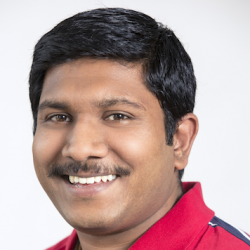 Akshay Nambi合作论文数Microsoft Research4
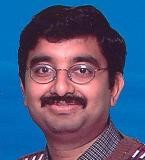 Venkat Padmanabhan合作论文数Microsoft Research India4
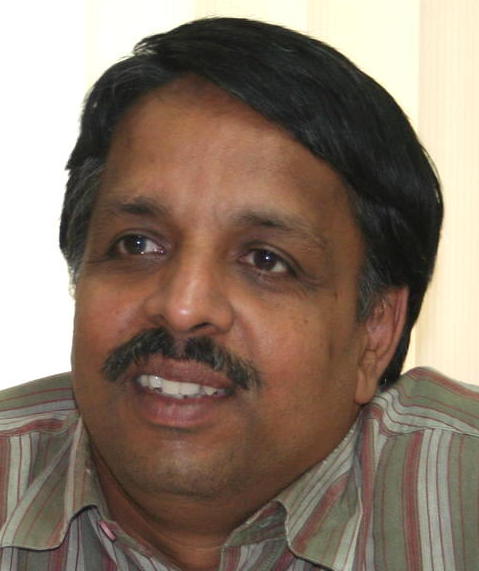 P.J. Narayanan合作论文数International Institute of Information Technology (IIIT-H)4
 Anurag Ghosh合作论文数Robotics Institute, Carnegie Mellon University3
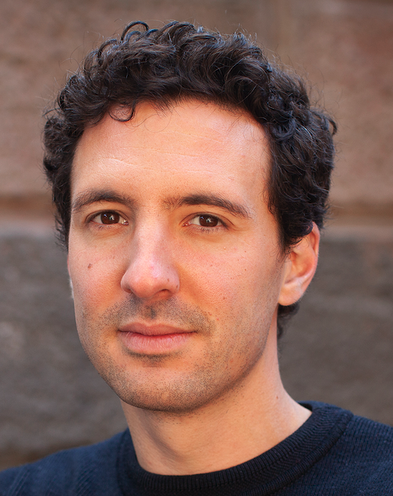 Michaël Gharbi合作论文数Reve2
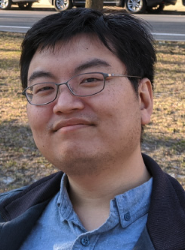 Tzu-Mao Li (李子懋)合作论文数Department of Computer Science and Engineering, Jacobs School of Engineering, University of California, San Diego;Center for Visual Computing, Jacobs School of Engineering, University of California, San Diego2
 Wesley Chang合作论文数1Yash Belhe合作论文数1
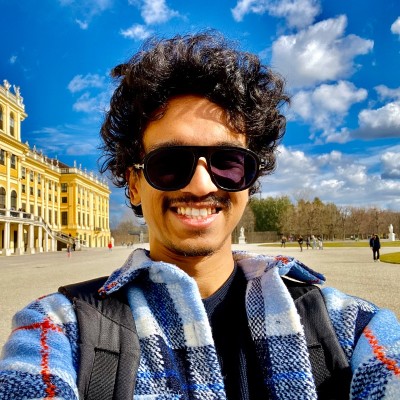 Vijay Lingam合作论文数Amazon Web Services1Aditya Virmani合作论文数1Harshvardhan Kalra合作论文数1
 Pranjal Kumar Rai合作论文数IIIT Hyderabad, CVIT, Hyderabad, India1
 Sajal Maheshwari合作论文数IIIT Hyderabad1
 Kunal Gupta合作论文数University of California San Diego1
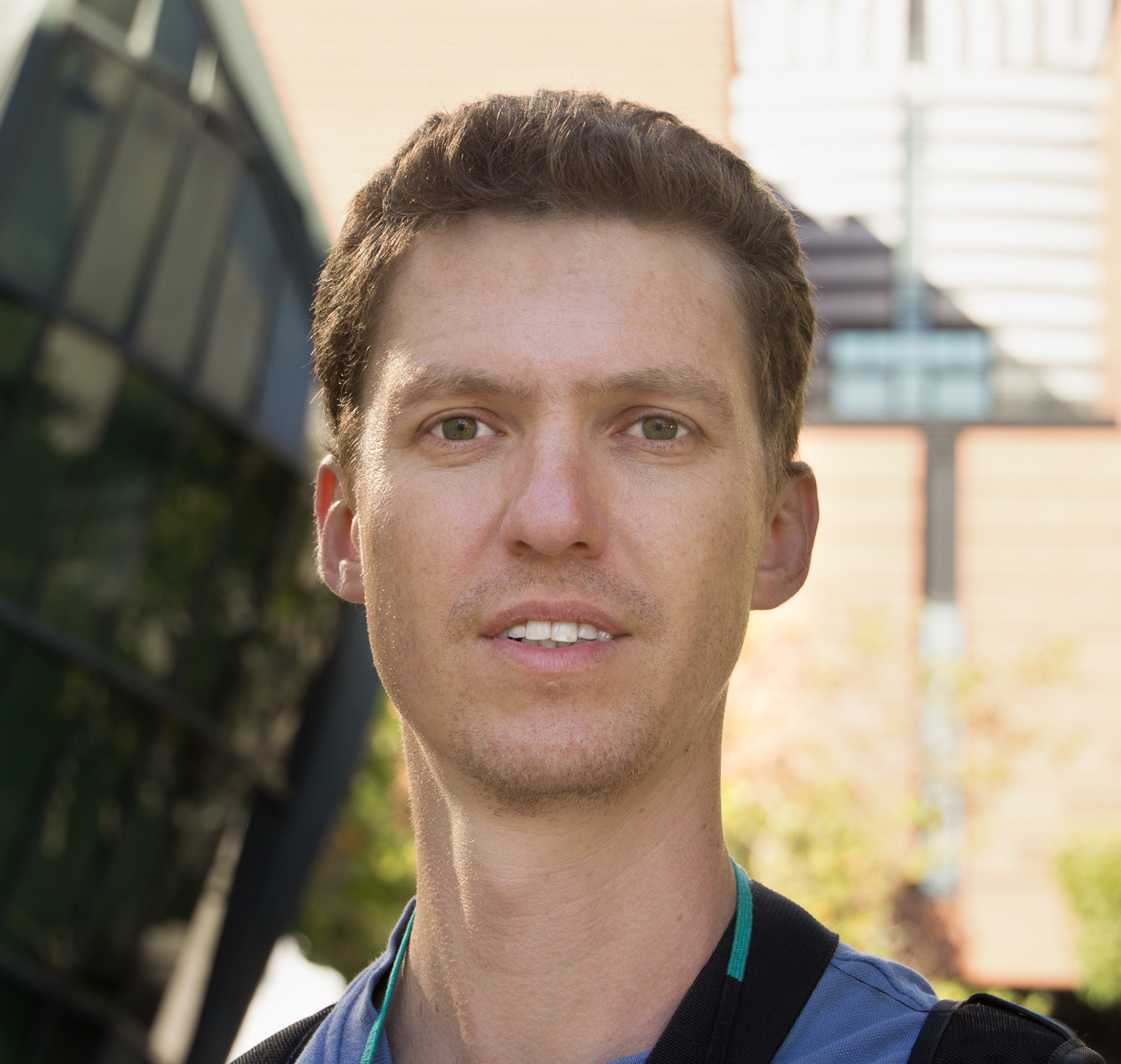 Eli Shechtman合作论文数Imaging Lab, Adobe Research1
 Ravi Bhandari合作论文数IIT Bombay1
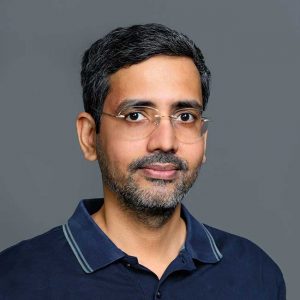 Vineet Gandhi合作论文数Center for Visual Information Technology, International Institute of Information Technology, Hyderabad;Kohli Center for Intelligent Systems, International Institute of Information Technology, Hyderabad;Animaker Inc.1Shruthi Bannur合作论文数Microsoft Research1
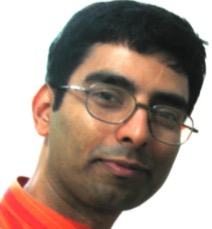 Bhaskaran Raman合作论文数Department of Computer Science and Engineering, Indian Institute of Technology - Bombay1
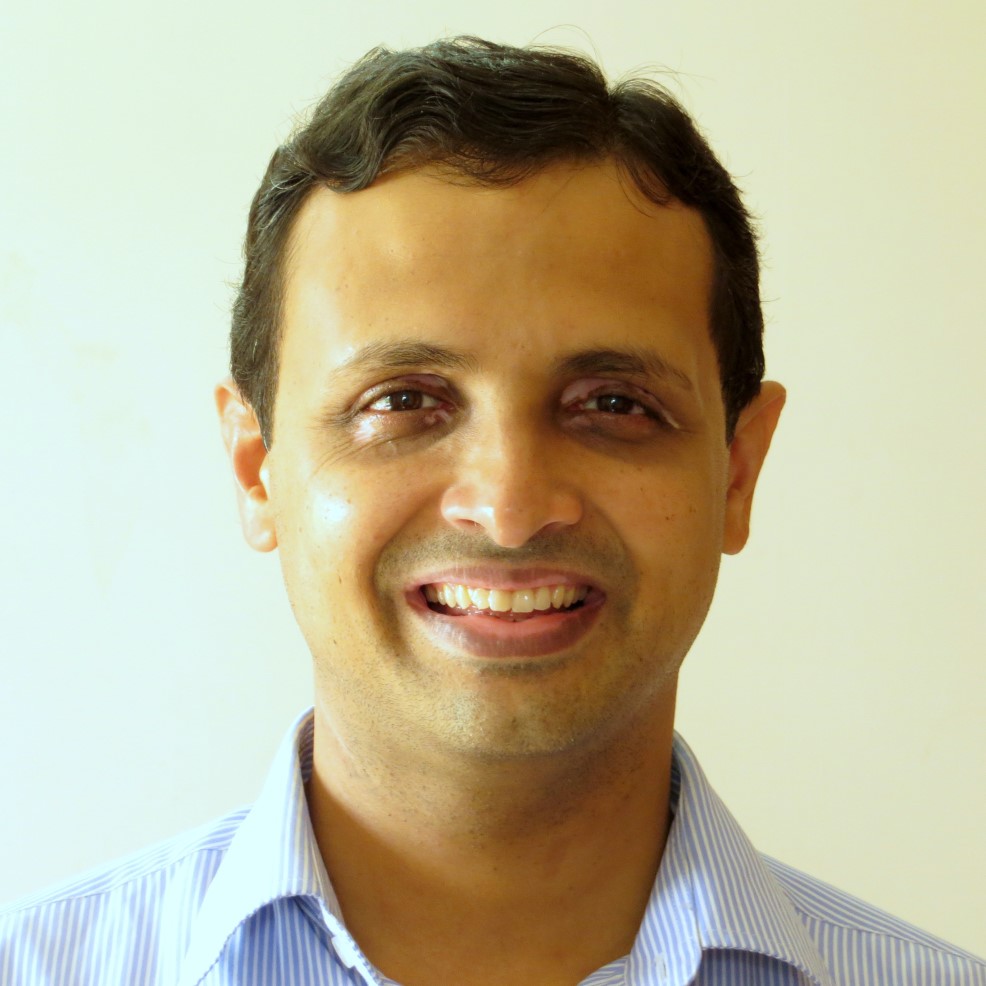 Vineeth N Balasubramanian合作论文数Department of Computer Science and Engineering, Indian Institute of Technology, Hyderabad;Department of Artificial Intelligence, Indian Institute of Technology, Hyderabad1
 Connelly Barnes合作论文数Adobe Research1
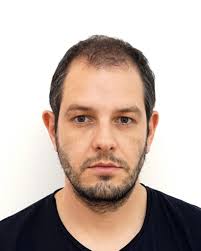 Iliyan Georgiev合作论文数Adobe Research1
 Rajvi Shah合作论文数IIIT Hyderabad, CVIT1
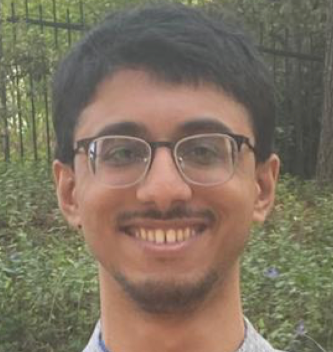 Nithin Raghavan合作论文数University of California Berkeley1




