Sustainability has become a priority for many sectors of the economy, including the e-commerce sector, and the concept of eco-commerce is emerging as a key concept to support this goal. This article highlights the importance of eco-commerce as a strategic factor for companies pursuing sustainability in the SME sector, harmonizing business goals with environmental concerns. The case study considers the implementation of specific solutions in four key areas of the sector studied: business model, operational materials, order management and image communication. In addition, the empirical section also includes constraints related to the implementation of eco-commerce elements in the organization's structures, such as the cost of internal eco-innovations, changes in operational processes and the need to change organizational culture. The increasing role of process automation, especially the aforementioned operational processes related to sales and after-sales activities, is due to growing economic challenges, such as rising purchasing volumes, declining margins, rising transaction costs and intensifying competition. In order to meet these challenges, organizations must demonstrate a high degree of adaptability and self-organizational intelligence, which in the case under review takes sustainability as a leading aspect. The research process also included a review of academic and industry literature to systematize concepts related to the use of eco-commerce strategies in the context of sustainability. Findings from the analysis can inform the development of key operational practices and sustainable strategies for companies operating in the e-commerce sector.
The implementation of artificial intelligence (AI) in the medical field promises significant benefits, including increased diagnostic accuracy, better patient outcomes, and streamlined healthcare processes. The article delves into the initial stages and obstacles encountered in the practical application of AI in medicine, drawing on the experience of the Medical University of Wrocław (WMU) and the Wrocław University of Economics (WUEB). The aim of the article is to describe the main reasons determining the need to digitize information resources used by medical entities such as hospitals and academic centers in order to share knowledge and provide innovative solutions. It discusses the emergence of digital medicine centers and the methodologies used to create them, shedding light on the multifaceted nature of medical data, including electronic health records, biobank repositories, and clinical trial datasets. Against this background, the possibility of using artificial intelligence methods was shown. The article has been prepared using research methods such as literature analysis, available reports and project guidelines, and the qualitative methods like a analysis of documentation, analysis of IT solutions, interviews with project participants, participatory observations and analysis of the studied case study. This paper provides invaluable insights and recommendations for institutions starting to implement AI in a medical context, highlighting the importance of interdisciplinary collaboration, meticulous data analysis, and a comprehensive strategy.
Artificial intelligence tools are currently being implemented in most IT solutions. The range of their capabilities and their ever-improving quality are leading to increasing confidence in these solutions. One such area where the use of generative artificial intelligence is becoming increasingly widespread is translation science. The development of free tools to support translation processes is influencing the spread of their use even in professional text translation processes. The research on the scope and validity of the use of AI tools in translation processes was inspired by the cooperation of the authors of this article in Dutch translation. This article presents the first stage of the author’s research dedicated to identifying and assessing the quality of translation processes supported by AI tools. The article aims to perform a bibliometric analysis of the scholarly interest in the topic of the use of AI in translation processes.
Information and Communication Technologies (ICT) enables supporting decision-making processes on an increasingly broader spectrum of quality problems that have previously been difficult to quantify. One such process is academic tutoring, which aims to support student development. The quality of this process depends on the appropriate tutor selection for the tutee. The key determinant of the success of this process is the matching of the parties to this relationship. So far, all stages of the process were carried out traditionally and pairs were selected based on students' indications, which was subject to many errors. The aim is to create a concept of transforming the tutor and tutee matching process using ICT with a multi-criteria analysis. The co-participant observation conducted at the Wroclaw University of Economics and Business was used to build the concept. We believe that technologies supporting multi-criteria analysis can improve the quality of the above processes. With the right pairing, collaboration can generate much more value for both sides, and the multi-criteria analysis could be performed by artificial intelligence-based systems using artificial neural networks.
Business continuity is possible through maintaining market position, while growth requires gaining competitive advantage. This can only be achieved through systematic attention to the consumer and the development of the product offering. These factors primarily determine the success of an organization. Against this backdrop, the trend towards personalization of goods delivered to consumers is becoming increasingly evident. The answer to these business problems is the creation of buyerseller relationships in which the consumer becomes a prosumer: a consumer who provides opinions, suggests solutions, tests and evaluates the advantages and disadvantages of the product. Therefore, the search for methods and tools that allow for the identification of groups of consumers susceptible to cooperation with the organization - to varying degrees - becomes a very important scientific and business problem. This is why the authors of this article defined the aim of the article as the analysis of the possibility of using semantic networks for the categorization of consumers and defining the category of prosumers. The results presented in the article were obtained through the application of triangulation of research methods, such as analytical literature review, computer simulation conducted using Protégé software, and research experiment consisting of simulation of selected problem situations.
AI assistants allow the automation of routine tasks performed by humans, thereby supporting the optimization of business processes within enterprises. By leveraging large language models (LLMs), they help retrieve relevant content and knowledge to undertake activities within business processes. Assistants also aid in preparing content constituting the output of individual steps in business processes. The development of an assistant using generative artificial intelligence to support and automate student service processes in the dean's office work area is a very innovative solution. It should be noted that this area of the university's activities has not used advanced technological solutions so far. Thus, the special contribution of the article is to explore such a possibility and develop a prototype solution. This article aims to show how efficiently create a knowledge base for an AI-powered assistant. For this paper, processes refer to questions answering from students at the Wroclaw University of Economics and Business. As part of a practical study, a database of 350 sample questions generated by actual students was collected, which was then analyzed using language models, which then identified key topics in the AI agent's knowledge base.
In recent years, one of the most pressing issues facing society is the protection and conservation of our planet's resources. The United Nations 2030 Agenda for Sustainable Development, adopted by 193 countries in 2015, defines a global model for sustainable development. According to the agendas guidelines, the modernisation efforts of highly developed countries should be focused on the eradication of poverty in all its forms, while pursuing a set of economic, social and environmental goals. Energy management, the acquisition and use of renewable energy sources, innovation and attention to environmental sustainability are some of the agenda's goals. This trend includes innovations to create renewable energy sources, which are managed and monitored using artificial intelligence (AI) solutions. Therefore, the aim of this article is to highlight the importance of AI in accelerating renewable energy creation. As a research method, we used bibliometric analysis based on a set of publications from the Scopus database to achieve the stated objective. The VOSviewer programme was also used to analyse the collected bibliographic data on publications. The research shows that authors are increasingly interested in AI and renewable energy topics in recent years, as evidenced by the growing number of publications in this area.
The Sustainable Development Goals (SDGs) defined in the UN resolution guide the development and socio-economic transformation that should be achieved by 2030. One of the defined goals is to ensure access to quality education and promote lifelong learning. The problem of universal access to education in developed countries may seem to be of little concern because, systemically, every child is subject to compulsory schooling. However, if one looks at the problem of the quality of educational processes and the creation of educational solutions to support development at every stage of life, the picture changes greatly. The increasing use of AI in educational processes using simulation and gamification is also an important factor influencing the development of educational tools and processes. As a contribution to the discussion in this area, the authors of this article wished to present the results of a study which presents the impact of the development of distance learning technologies on the accessibility of teaching and the educational offerings of universities in the 2020–2022 pandemic period. The research conducted as well as the conclusions of this research provided the impetus to broaden the research perspective to include new problems. This contributed to the formulation of further research questions, enabling a more holistic view of the problem of achieving the fourth sustainable development goal of providing quality education and promoting lifelong learning. In this article, the authors present a synthesis of the results of the conducted research on the scope of educational needs of young adults, professionally active and studying part-time. The research conducted for this article used research tools such as a literature analysis and a survey conducted in two sections.
Digital competences and the use of social media are two key features that characterize modern society. The aim of this article is to demonstrate the relationship between the use of social media and the digital competences of Polish students. The article contains a presentation of the results of the authors' research carried out in 2018 and 2024, respectively, aimed at identifying and discussing changes that occurred during this period in the use of social media and the perception of digital competences by students of technical and economic faculties. The main conclusion of the research is a higher assessment of digital competences of students using social media and a change in students' preferences regarding the use of specific social networking sites. The results showed that students use Tik Tok, X (formerly Twitter) and Instagram more often and are more cautious in assessing their own digital competences.
Inequality is one of the problems of the modern world. Discrimination of various kinds can affect many areas of life. The growing importance of data in the modern world makes it all the more important to ensure that the methods used to analyze it do not return results in which unfairness is present. Unfortunately, there may be situations where there is unfairness in the predictions of machine learning models. In recent years, several IT solutions have been developed to mitigate this phenomenon. One of them is Fairlearn, a Python library dedicated to this type of task. This article presents a comparative analysis of parity constraints used in Fairlearn algorithms. The purpose of this article is to identify which of the constraints is best suited for mitigating gender bias in binary classification models. The following research methods were used: literature review, experiment and comparative analysis. The evaluation of constraints will be based on the value of measures: disparity in recall and disparity in selection rate for the column containing information about the person's gender. The values of these measures, achieved by binary classification models in which the Threshold Optimizer algorithm with selected parity constraints was implemented, will be compared in order to identify which of the Fairlearn parity constraints is best suited for mitigating gender bias in binary classification models.
The decarbonization of European economies is an established reality that has been accelerating in recent years. The focus of EU policy is on the dynamic transformation of the energy balances of Member States, which most significantly impacts economies reliant on coal. In the context of emerging megatrends, this study sets out to determine the extent of changes occurring in the economies of European Union countries in relation to the Green Deal paradigm. The objective of this article is to introduce a comprehensive method developed by the authors for assessing the dynamics of energy transformation in the European Union countries under study. This method is divided into two phases. Initially, countries are classified according to the energy transformation dynamics matrix. Subsequently, the actual assessment of energy transformation dynamics is conducted using a novel composite indicator, the ETPI (Energy Transition Progress Index), based on analyses for 2022 and 2013 using Eurostat data. The results identify leaders in energy transformation, such as Sweden, Germany, Denmark, France, Italy, Spain, Austria, Finland, and the Netherlands, while highlighting significant challenges facing Poland and Bulgaria.
The educational field is increasingly using solutions that support personal development. One is academic tutoring, which helps students search for career paths. Academic tutoring is a complex process that requires a lot of human resources. Technology, such as artificial intelligence (AI), can support selected stages of this process, especially when matching appropriate tutors for tutees. This research aims to present the concept of enhancing academic tutoring with AI, especially at the stage of connecting tutor-tutee. The research was developed using a case study based on participant observation conducted at the Wroclaw University of Economics and Business (WUEB) and based on it, the process was visualized using the Business Process Model and Notation (BPMN), indicating the current state of and elements of the process that could be improved. The use of AI solutions can enhance the efficiency of academic tutoring, starting with tools that analyze the content of submissions made by tutors and tutees. In addition, AI tools could also evaluate the results of tests such as Gallup and automatically match tutors and tutors based on these results. The designed procedure concept reduces the length of the process and, as a result, facilitates the work of academic tutoring program coordinators. It can also improve the match between tutor and tutee, leading to more effective collaboration and better tutee performance.
The digitalisation of society as well as of individual branches of the economy determines the speed of economic growth and the ability to adapt new technologies to business and social processes. That is why analyzing the degree and pace of digitalization of individual countries is so important for assessing the economic potential of European Union countries. A very important phenomenon analysed is also the capacity for convergence of countries with a much lower degree of digitalisation. The aim of the article is an research of the convergence of the level of digitisation of individual European Union countries on the basis of the analysis of the DESI index. The research used statistical data available from European Union studies between 2017-2022. Statistica 13 was used to carry out the statistical analyses. The results of the conducted research do not inspire optimism as the expected catch-up effect is definitely lower than predicted.
Every software needs hardware to be run on. Nowadays we encounter urgent need to mitigate the adverse effects of climate change. It prompted a paradigm shift towards the development of low carbon dioxide (CO2) emission hardware infrastructure. This scientific paper presents a thorough analysis of the current state of low CO2 emission hardware infrastructure, highlighting its significance in achieving sustainable and environmentally friendly technological advancements. The paper begins by highlighting the global greenhouse gas emissions and their significance in changing the climate. It emphasizes the crucial role of hardware infrastructure in this context, as the energy consumption and carbon footprint of data centers, communication networks, and other hardware-intensive systems continue to rise. Next, in the paper have been analyzed various strategies and technologies that have been developed to reduce CO2 emissions during computations. These include energy efficient designs, advanced cooling techniques, renewable energy integration, audits and controls, and optimization algorithms such modern AI tools. The advantages and limitations of each approach are discussed, with a focus on their potential for widespread adoption and scalability. The paper concludes by outlining the future prospects and challenges associated with low CO2 emission hardware infrastructure. It emphasizes the need for continued research and innovation to overcome existing barriers and accelerate the adoption of environmentally friendly hardware systems on a global scale.
An intelligent city is a center that effectively manages its resources to ensure a high standard of living for its residents while maintaining ecological awareness. The effective management of energy poses a significant problem in major urban areas, mostly attributable to the intricate nature and criticality of energy networks. Intelligent energy management in residential structures is crucial to smart city efficiency. Energy management involves demand management, peak load reduction, and carbon dioxide emission reduction. Risk management, efficiency, and sustainable development are integral elements of every energy management strategy in smart cities. Risk elimination, effectiveness, and environmentally friendly growth are fundamental components that form an essential part of energy management strategies in smart cities. They are an indispensable condition for the transformation from the traditional model based on conventional sources to a more sustainable system using renewable energy. The article is a literature review presenting the role of smart grids in creating smart cities.
One of the effects of globalization is the increase in the intensity and importance of international cooperation. The context of internationalization of the functioning of organizations and international contracts has influenced the need to popularize translation services. In the case of everyday language or basic communication processes, the lack of clarity and an appropriate level of quality of translations between any language of the world can cause minor problems and communication problems. However, in the case of contracts, political protocol or legal regulations, the quality of translation processes between languages is very important. Despite the high popularity of IT translation tools, there is still a need for the services of professional, traditional translators, especially when translation processes involve highly specialized vocabulary or highly formalized studies, such as legal regulations. The aim of the article is a comparative analysis of two tools using LLM in the processes of translating legal texts into less popular languages, such as Dutch and Polish. In order to assess the possibility and quality of translation of popular translators such as DeepL and Google Translate, the authors used a scientific experiment in which a sworn translator from Dutch took part, assessing the quality and unambiguity of the translations made by IT tools.
Changes in legal regulations cause that moving in them can cause difficulties. Regulations scattered throughout various legal and normative acts or in the act itself may be problematic. This also affects people who are educated at Doctoral Schools. Situations in which the doctoral student is not sure of his status or the possibilities he can obtain financial resources may be problematic. The presented fragment of the semantic network is to be a tool that allows free navigation through the legal regulation regarding education at the doctoral school. Ultimately, the presented semantic network is a template that specific regulations of a given doctoral school can supplement.
The aim of this article is to identify the possibility of developing a set of good practices that fit into the idea of effective sustainability management. According to the authors, this is possible through the implementation of the EFQM model in organisations. However, in order to confirm this thesis, it is necessary to identify the guidelines of the model and assess the status of implementation of the above model in selected organisations.
Educational processes have undergone significant evolution over recent years. The evolution of educational processes is a source of consideration in numerous academic and professional publications. This has been influenced on the one hand, by information and communication technologies, the development of which has affected all areas of human activity; on the other hand, expectations regarding the content of educational processes as well as the emphasis on the development of soft skills have changed significantly. At the interface of these two predictors influencing the evolution of educational processes, the question arose: how often is the use of creative problem-solving methods in educational processes addressed in the literature, and is this trend maintained in the case of processes using advanced ICT? The above determinants influenced the choice of the aim of the research conducted by the authors of this article, which is to identify the range of publications and trends in scientific studies devoted to techniques, tools, and approaches to the implementation of educational processes.
Sustainable city development is an approach to city planning and management that takes into account the balance between economic, social and environmental aspects in order to ensure sustainable social development, environmental protection and ensuring a high quality of life for residents.
 Michał Flieger合作论文数21
 Andrzej Grenczuk合作论文数Wrocław University of Economics20Kamila Łuczak合作论文数12Wieslawa Gryncewicz合作论文数11
 Maja Leszczynska合作论文数9Kazimierz Perechuda合作论文数8
 Antoni Izworski合作论文数7
 Jozef B. Lewoc合作论文数7
 Wojciech Bolesław Cieslinski合作论文数Fac Sport Sci, Univ Sch Phys Educ Wroclaw6estera piwonikrzeszowska合作论文数Wroclaw Univ Econ6Slawomir Skowronski合作论文数6
 Dorota Jelonek合作论文数Czestochowa Technical University;Management Department;Management Department, stochowa Technical University6
 Smolag Klaudia合作论文数Wydział Zarządzania, Politechnika Częstochowska5
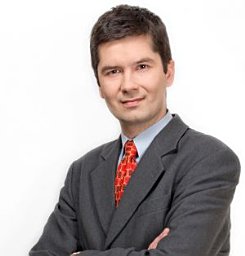 Maciej Pondel合作论文数Wroclaw University of Economics5Antonina Kieleczawa合作论文数5Alicja Kołtonowska合作论文数4Paulina Szurant合作论文数4Beata Butryn合作论文数3Maciej Krajewski合作论文数3Konrad Liszczyk合作论文数3Bartłomiej Mrozek合作论文数3
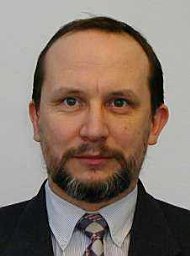 Krzysztof Hauke合作论文数Wroclaw University of Economics3Radosław Kłus合作论文数2Maciej Wach合作论文数2wojciech cieślicki合作论文数2
 Filip Wójcik合作论文数2Katarzyna Golusińska合作论文数2
 Katarzyna Tryczyńska合作论文数Uniwersytet Wroclawski2Juliusz Migasiewicz合作论文数2
 Piotr Staszkiewicz合作论文数2Kotwica, A.合作论文数2
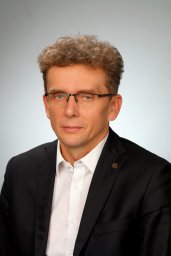 Andrzej Rokita合作论文数2
 Agnieszka Siennicka (Rydlewska)合作论文数2
 Georgi M. Dimirovski合作论文数Faculty of Electrical Engineering and Information Techologies, Ss. Cyril and Methodius University in Skopje2
 Kazimierz Witkowski合作论文数2
 Artur Rot合作论文数2jakub mierzynski合作论文数2
 Marek Szajt合作论文数Technical University of Czestochowa2Marion A. Hersh合作论文数2Piotr Tutak合作论文数1David Chudán合作论文数1Paweł Siewiera合作论文数1
 Joanna Martusewicz合作论文数1Bartosz Blaicke合作论文数1
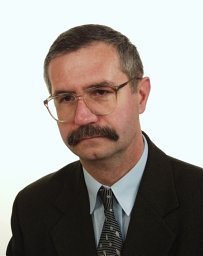 andrzej chluski合作论文数Fac Management, Czestochowa Tech Univ1
 Agata Kozina合作论文数Wroclaw Univ Econ & Business1
 Ewa Walaszczyk合作论文数Department of Process Management, Wroclaw University of Economics and Business1Anna Manowska合作论文数1
 Anna Bluszcz合作论文数Dept Safety Engn, Silesian Tech Univ1




