Lessonia corrugata is found in moderate to high wave-exposed environments in Tasmania, Australia, and has recently become of commercial interest for aquaculture. However, knowledge about its fundamental biology is lacking. Here, we studied the reproduction of L. corrugata at three sites with different levels of wave exposure for five consecutive seasons. Temporal reproduction was assessed by determining the percentage of fertile blade tissue which was classified into four maturation stages: vegetative tissue, pre-mature sorus, mature sorus, empty sorus. Zoospore viability was evaluated by determining the number of spores released, their size and the length of time that they were able to swim. We found that L. corrugata was reproductive in all seasons except Austral spring. During winter, thalli exhibited a larger area of mature sori and released more zoospores than autumn and summer seasons, a trend that aligns with the seawater's elevated nutrient concentrations. After 8 h, more than 50% of zoospores stopped swimming, although swimming zoospores were observed up to 52 h after release, and those from the most exposed site swam longer than those from the sheltered sites. In conclusion, L. corrugata was found to be a 'seasonal anticipator' for reproduction, and this appears mediated by wave exposure. These findings provide critical insight that will enhance the collection of high-performing brood stock and facilitate the cultivation of this species.
Introduction: Global degradation of natural ecosystems demands urgent action to stem losses and, where possible, identify opportunities for scalable restoration. Giant kelp forests, formed by Macrocystis pyrifera, have declined by similar to 95% along eastern Tasmania in recent decades, with limited propagule supply constraining recovery. Direct interventions to restore giant kelp have been attempted here since the 1990s, although attempts have been constrained by methodological and logistical limitations, underscoring the challenges of scaling restoration in subtidal marine environments. Objectives: This study details the methodological development of a rapid and forest-scale in situ approach to reseed threatened giant kelp forests that have declined. Methods: Here we provide an overview of the "holdfast-graft" method, as a forest-scale technique to reseed reefs with mass-produced hatchery-reared giant kelp sporophytes seeded to twine. Taking inspiration from true grafting of terrestrial vascular plants, we apply an analogous approach of effectively binding the equivalent of a "scion" (i.e., hatchery-reared giant kelp sporophytes) to a "root-stock" (i.e., holdfast stubs of other common seaweed species). By comparing rates of kelp sporophyte attachment between twine seeded to holdfast stubs and directly to boulders, as well as seeded gravel, we evaluate the effectiveness of this method. Results: We reveal a 40-fold higher rate of kelp sporophyte attachment to the reef when twine was wrapped around holdfast stubs compared to twine wrapped over boulders or deployments of hatchery seeded-gravel methods. Refinement of the "holdfast-graft" method led to targeted wrapping of short 60-cm seeded twine lengths directly to individual holdfast stubs, enabling rapid and forest-scalable deployment by divers. Conclusions: The "holdfast-graft" method represents an efficient and scalable method for out-planting giant kelp.
Kelps have a long history of human use and exploitation. Knowledge of past harvesting practices offers insights into environmental baselines and the contemporary management and conservation of these critically important ecosystems. In Tasmania, Australia, giant kelp ( Macrocystis pyrifera ) was commercially harvested for alginate production from 1964 to 1973, but those forests have since undergone precipitous declines due primarily to climate change. We reviewed a collection of archival data and sources to describe the history, methods, and scale of this understudied and largely forgotten industry. We calculated that >65,000 tonnes (wet weight) of Macrocystis were harvested from eastern Tasmania over a decade (mean annual harvest = 6531 t), making it one of the largest wild harvest industries to ever exist in the region. However, the industry had challenges finding sufficient biomass to sustain operations, ultimately driving its closure in less than a decade. Feasibility surveys prior to harvesting suggested much greater kelp availability than was ultimately realized, perhaps motivating overexpansion. Against a backdrop of climate change in this ocean warming hotspot, harvest efforts grew wider and more intensive, and during summer months when stocks were lowest, almost all exploitable biomass was harvested. It remains unclear whether harvesting contributed to the decline of Tasmanian Macrocystis forests, but it may have reduced their resilience and exacerbated other stressors, particularly in heavily harvested areas. This historical review provides a rare opportunity to examine the past scale and use of now-endangered Macrocystis forests and also to help inform the contemporary management and conservation of seaweed resources.
Rapid ocean warming is affecting kelp forests globally. While the sporophyte life stage has been well studied for many species, the microscopic life stages of laminarian kelps have been understudied, particularly regarding spatial and temporal variations in thermal tolerance and their interaction. We investigated the thermal tolerance of growth, survival, development, and fertilization of Ecklonia radiata gametophytes, derived from zoospores sampled from two sites in Tasmania, Australia, throughout a year, over a temperature gradient (3-30°C). For growth we found a relatively stable thermal optimum at ~20.5°C and stable thermal maxima (25.3-27.7°C). The magnitude of growth was highly variable and depended on season and site, with no consistent spatial pattern for growth and gametophyte size. Survival also had a relatively stable thermal optimum of ~17°C, 3°C below the optimum for growth. Gametophytes grew to single cells between 5 and 25°C, but sporophytes were only observed between 10 and 20°C, indicating reproductive failure outside this range. The results reveal complex effects of source population and season of collection on gametophyte performance in E. radiata, with implications when comparing results from material collected at different localities and times. In Tasmania, gametophytes grow considerably below the estimated thermal maxima and thermal optima that are currently only reached during summer heatwaves, whereas optima for survival (~17°C) are frequently reached and surpassed during heatwaves, which may affect the persistence and recruitment of E. radiata in a warmer climate.
We found that an innovative nursery approach, where Lessonia corrugata seeded spools were cultivated by spinning to increase the water motion relative to non-spinning spools, had higher growth in both the nursery and at-sea stages. Using this method, we compared the at-sea growth of sporophytes cultivated on spinning spools at different depths (1 m, 3 m, 5 m) and seasons (timing of out-planting). Finally, we compared the at-sea growth of sporophytes cultivated on spinning spools vs. non-spinning sporophytes at 3-m depth. In the nursery, sporophytes on spinning spools developed significantly faster than those on non-spinning spools: blade length was 4.6 and 2.5 cm, and holdfast area was 0.10 and 0.03 cm 2 for spinning and non-spinning spools, respectively. At-sea L. corrugata in spring had significantly greater biomass production at 3 m and 5 m (3.0 kg m −1 and 2.4 kg m −1 , respectively) and up to 96% survival. In summer, 100% of deployed kelps died at all depths. Growth was faster at 5 m (0.3 ± 0.06 kg m −1 ) in autumn and at 3 and 5 m (1.1 ± 0.1 kg m −1 and 0.8 ± 0.1 kg m −1 , respectively) in winter. At sea, sporophytes from the spinning spools grew significantly 60% larger, and survival was ~ 3 times greater over 3 months than sporophytes from non-spinning. Overall, this study shows that spinning seeded spools in the nursery improves the growth at sea, spring is the best season for out-planting L. corrugata , and 3 or 5 m depth is best for production.
Kelp forests provide vital ecosystem services such as carbon storage and cycling, and understanding primary production dynamics regarding seasonal and spatial variations is essential. We conducted surveys at three sites in southeast Tasmania, Australia, that had different levels of water motion, across four seasons to determine seasonal primary production and carbon storage as living biomass for kelp beds of Lessonia corrugata (Order Laminariales). We quantified blade growth, erosion rates, and the variation in population density and estimated both the net biomass accumulation (NBA) per square meter and the carbon standing stock. We observed a significant difference in blade growth and erosion rates between seasons and sites. Spring had the highest growth rate (0.02 g C · blade-1 · d-1 ) and NBA (1.62 g C · m-2 · d-1 ), while summer had the highest blade erosion (0.01 g C · blade-1 · d-1 ), with a negative NBA (-1.18 g C · m-2 · d-1 ). Sites exhibiting lower blade erosion rates demonstrated notably greater NBA than sites with elevated erosion rates. The sites with the highest water motion had the slowest erosion rates. Moreover, the most wave-exposed site had the densest populations, resulting in the highest NBA and a greater standing stock. Our results reveal a strong seasonal and water motion influence on carbon dynamics in L. corrugata populations. This knowledge is important for understanding the dynamics of the carbon cycle in coastal regions.
Abstract Tasmania is an island state in south-eastern Australia that has a long and rich history of seaweed use, research, and development. It is a cool-temperate system with 750 macroalgal species currently described. Tasmanian Aboriginal peoples have lived on this land for at least 40,000 years utilising seaweed as food, shelter, water carriers and medicine, as well as for ceremonial reasons. Modern taxonomic investigations began with French naturalist Jacques-Julien Houtou de La Billardière in 1791, and there are 184 type specimens of seaweeds originating from Tasmania. Ecological and physiological studies of seaweed in Tasmania have focussed on the dominant large brown seaweeds (Laminariales and Fucales) and have contributed significantly to the global understanding of these systems, particularly related to community resilience, seaweed-urchin interactions, their habitat-forming role for other species, responses to global change, and restoration of lost habitat. Ocean warming and changing oceanography have caused a 95% decline in surface canopy cover of Macrocystis pyrifera in eastern Tasmania since the 1950s and led to a focus on restoring these lost forests. Tasmanian seaweed communities have a uniquely high proportion (up to ∼90%) of seaweeds that rely solely on CO2 for photosynthesis, which has implications for responses to ocean acidification. Tasmania has industries that use brown seaweeds for fucoidan extraction and beach-cast harvest for alginates, fertilisers, and feeds for agriculture. New aquaculture initiatives include integrated multi-trophic aquaculture, offshore kelp mariculture and Asparagopsis cultivation for bioactive products to reduce methane emissions in ruminants, as and the development of unexploited species including Caulerpa spp. for food.
The distribution and productivity of seaweeds, including kelps, are strongly influenced by changes in temper-ature and inorganic nitrogen (Ni) availability. However, their tolerances, sensitivities, and capacity to adjust to these changes can vary across their complex life cycle (microscopic and macroscopic stages). For the early life stages of Macrocystis, this study investigated the effect of the nitrate: ammonium ratio on physiological traits and gametophyte development at a range of temperatures (6.5 to 26.5 degrees C). Thermal performance curves (TPCs) were utilized to determine and predict the effect of temperature on meiospore germination success (%), gametophyte size (mu m(2)), sex ratio and physiological traits (photosynthetic efficiency and nitrate and ammonium uptake rates). We found that the presence of NH4+ led to negative NO3- uptake rates in Macrocystis pyrifera gametophytes and reduced growth rates, and results suggest that thermal tolerance windows might vary between developmental stages and physiological traits. Our findings indicate that reduced meiospore germination and gametophyte size induced by suboptimal temperatures and increased NH(4)(+)concentrations can lead to lower physiological perfor-mance that might subsequently affect adult individuals and populations. Knowledge of the Ni uptake kinetics and source preferences across different life cycle phases can be crucial for conservation and aquaculture purposes as it might increase species productivity and persistence in a changing ocean.
Abstract Kelp aquaculture is an emerging industry outside of Asia. To be successful, this industry requires a reliable production of seedstock, the optimisation of which greatly benefits from a detailed physiological understanding of the microscopic life-cycle stages of the cultured species. This study investigated the impact of six zoospore densities (10–278 mm−2) on the subsequent development of Ecklonia radiata gametophytes and sporophytes. The results showed that germination rates and sex ratio were unaffected by initial zoospore density, but there were significant effects on gametophyte size and sporophyte production. After two weeks, female gametophytes were largest at an initial zoospore density of 40 mm−2 while male gametophytes grew largest at densities below 40 mm−2, but after four weeks gametophyte size showed a negative relationship with initial zoospore density. Significantly more sporophytes developed at initial zoospore densities below 40 individuals mm−2 and no sporophytes were observed at the highest density (271 zoospores mm−2). These results clearly show the importance of initial zoospore density in optimising the nursery stage of kelp aquaculture.
The fucoid Phyllospora comosa has sparked interest from the industry as a potential commercial aquaculture species. However, information on the feasibility of culturing this species, including maximising spawning and fertilisation, remains limited. This study aimed to identify optimal conditions for spawning and early development of P. comosa under laboratory conditions. We tested spawning and germination success across lunar phase (new moon vs full moon), temperature (15 °C, 18 °C, 21 °C), light (35 μmol photons m−2 s−1 vs 0 μmol photons m−2 s−1) and exposure (desiccated vs submerged). Lunar cycles were compared over three consecutive months. Fifty fertile P. comosa male and female thalli were collected from Port Fairy, Victoria, Australia, every 2 weeks to coincide with full and new moon phases from February to April 2017. Spawning of eggs and sperm was achieved in all treatment combinations. However, there was no consistent effect of lunar phase, light, temperature or exposure, with high temporal variability amongst treatment groups. Percentage germination after 24 h in static culture varied between 35 and 90%, and overall embryo mortality was high (> 65%) after 7 days, but did not differ amongst spawning cue treatments. The high mortality observed at day 7 did not appear to be linked to insufficient egg or sperm densities nor excess sperm (polyspermy). Overall results indicate flexibility in spawning conditions which is advantageous for integration into aquaculture.
The rapid growth of marine macroalgal cultivation amplifies the potential impacts of seaweed diseases. Here, we combine microscopy and molecular analysis to describe two novel European species, Olpidiopsis palmariae and O. muelleri spp. nov., that infect the commercially important red algae Palmaria and Porphyra, respectively. A Scottish variety of Olpidiopsis porphyrae, a devastating pathogen of Pyropia previously thought to be restricted to Japanese seaweed farms, is also described as O. porphyrae var. scotiae. In the light of their destructiveness in Asian farms, together with the global expansion of algal cultivation and pertaining seed trade, Olpidiopsis pathogens should be treated as a serious threat to the sustainability of red algal aquaculture. Our findings call for the documentation of seaweed pathogens and the creation of an international biosecurity framework to limit their spread.
Climate-driven incursion of the long-spined sea urchin (Centrostephanus rodgersii) in eastern Tasmania has prompted calls for strong management intervention given the urchins’ capacity to overgraze kelp beds and cause local collapse of valuable reef fisheries. We examined the effectiveness of commercial divers culling C. rodgersii while undertaking otherwise normal fishing for black-lip abalone (Haliotis rubra). Diver effort appears to be driven by fishing yield and not the opportunity to maximise numbers of urchins culled; the greatest culls occurred on shorter dives when abalone fishing was poor. Despite culling thousands of urchins, divers culled urchins only from within a small proportion of the total barrens patches on particular reefs. Thus, urchin density, size-frequency of barrens patches, and benthic community structure showed no detectable change relative to ‘no-cull’ control reefs. Nonetheless, divers were effective in culling urchins in the few patches they targeted, and these patches were quickly recolonised by canopy-forming kelps. Ongoing urchin culling by abalone divers will increase resilience of the kelp habitats on which the valuable abalone fishery depends, but only at highly localised spatial scales (10m). The effectiveness of this control strategy is dependent on sustainable local harvest of abalone warranting recurrent diver visitation to affected sites. However, abalone divers culling urchins while fishing are unlikely to control urchin densities at scales ≥102 m.
Explaining spatial patterns of biological organisation remains a central challenge for biogeographic studies. In marine systems, large-scale ocean currents can modify broad-scale biological patterns by simultaneously connecting environmental (e.g. temperature, salinity and nutrients) and biological (e.g. amounts and types of dispersed propagules) properties of adjacent and distant regions. For example, steep environmental gradients and highly variable, disrupted flow should lead to heterogeneity in regional communities and high species turnover. In this study, we investigated the possible imprint of the Leeuwin (LC) and East Australia (EAC) Currents on seaweed communities across ~7,000 km of coastline in temperate Australia. These currents flow poleward along the west and east coasts of Australia, respectively, but have markedly different characteristics. We tested the hypothesis that, regional seaweed communities show serial change in the direction of current flow and that, because the LC is characterised by a weaker temperature gradient and more un-interrupted along-shore flow compared to the EAC, then coasts influenced by the LC have less variable seaweed communities and lower species turnover across regions than the EAC. This hypothesis was supported. We suggest that this pattern is likely caused by a combination of seaweed temperature tolerances and current-driven dispersal. In conclusion, our findings support the idea that the characteristics of continental-scale currents can influence regional community organisation, and that the coupling of ocean currents and marine biological structure is a general feature that transcends taxa and spatial scales.
Several lines of evidence show that ocean warming off the east coast of Tasmania is the result of intensification of the East Australian Current (EAC). Increases in the strength, duration and frequency of southward incursions of warm, nutrient poor EAC water transports heat and biota to eastern Tasmania. This shift in large-scale oceanography is reflected by changes in the structure of nearshore zooplankton communities and other elements of the pelagic system; by a regional decline in the extent of dense beds of giant kelp (Macrocystis pyrifera); by marked changes in the distribution of nearshore fishes; and by range expansions of other northern warmer-water species to colonize Tasmanian coastal waters. Population-level changes in commercially important invertebrate species may also be associated with the warming trend.Over-grazing of seaweed beds by one recently established species, the sea urchin Centrostephanus rodgersii, is causing a fundamental shift in the structure and dynamics of Tasmanian rocky reef systems by the formation of sea urchin 'barrens' habitat. Formation of barrens represents an interaction between effects of climate change and a reduction in large predatory rock lobsters due to fishing. Barrens realize a loss of biodiversity and production from rocky reefs, and threaten valuable abalone and rock lobster fisheries and the local economies and social communities they support. This range-extending sea urchin species represents the single largest biologically mediated threat to the integrity of important shallow water rocky reef communities in eastern Tasmania.In synthesizing change in the physical ocean climate in eastern Tasmania and parallel shifts in species' distributions and ecological processes, there is evidence that the direct effects of changing physical conditions have precipitated cascading effects of ecological change in benthic (rocky reef) and pelagic systems. However, some patterns correlated with temperature have plausible alternative explanations unrelated to thermal gradients in time or space. We identify important knowledge gaps that need to be addressed to adequately understand, anticipate and adapt to future climate-driven changes in marine systems in the region. (C) 2011 Elsevier B.V. All rights reserved.
The sea urchin Heliocidaris erythrogramma (Valenciennes, 1846) is considered an ecologically important member of shallow sub-tidal reef assemblages across temperate Australia. However, defining its ecological role has remained elusive due to a paucity of evidence demonstrating the ability of this species to graze and maintain sea urchin barrens. Here we present critical evidence for a grazing effect of H. erythrogramma at typically observable densities (~ 4–6 individuals m− 2) by demonstrating recovery of canopy-forming brown algae following two controlled removals of the sea urchin from ostensibly barrens reef at sheltered locations in eastern Tasmania. In experimental plots where H. erythrogramma was removed, canopy-forming algae gradually recovered to demonstrate an average 5 times (ranging nil to 10 times) increase in percentage cover at 24 months post manipulation (chiefly driven by the habitat-formers Cystophora spp., Macrocystis pyrifera, Acrocarpia paniculata, and Sargassum spp.). While divergence in the overall algal community was indicated by both experiments, a statistically significant shift, based on percentage cover community data, was observed for only one location at 24 months post sea urchin removal, suggesting that a complete canopy-driven shift in community structure will be gradual and will be contingent on urchin density remaining below approximately 1.5 m− 2 in the longer term. The relatively slow and highly variable rates of algal recovery across plots suggests that seasonal coexistence of annual (chiefly filamentous algae) and some perennial macroalgae on H. erythrogramma barrens is likely due to a relatively low and variable intensity of selective grazing. We conclude that H. erythrogramma, at sufficient densities, is capable of grazing and maintaining a sea urchin barrens state however this phenomenon is observed to manifest in sheltered waters only. In contrast, H. erythrogramma occurring on exposed Tasmanian reefs achieves similar densities but here barrens are not observed and the sea urchin occurs cryptically within crevices and, consistent with experiments elsewhere in Australia, the sea urchin under these conditions appears to feed exclusively on an abundance of detached 'drift' macroalgae. Top–down and bottom–up factors leading to increased abundance of H. erythrogramma will be important in determining the potential influence of this enigmatic grazer on rocky reef communities, however critical tests of mechanisms controlling the switch between foraging modes are needed. Taken together, correlative patterns and results of experimental removals across the range of H. erythrogramma demonstrate that models of temperate Australian reef dynamics must account for the highly context-dependent effects of sea urchin foraging.
 Catriona Hurd合作论文数Institute for Marine and Antarctic Studies, Department of Botany, University of Tasmania9
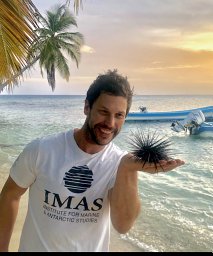 Scott D. Ling合作论文数School of Zoology;Tasmanian Aquaculture & Fisheries Institute;University of Tasmania;Tasmanian Aquaculture & Fisheries Institute, University of Tasmania9
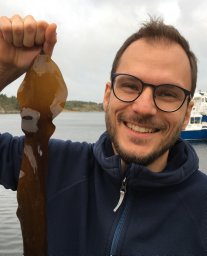 Wouter Visch合作论文数Inst Marine & Antarctic Studies, Univ Tasmania8
 Alecia Bellgrove合作论文数School of Ecology and Environment, Deakin University7
 Jeffrey T. Wright合作论文数Institute for Conservation Biology and School of Biological Sciences, University of Wollongong7
 Craig Johnson合作论文数Institute for Marine and Antarctic Studies, University of Tasmania6
 Catriona MacLeod合作论文数Institute for Marine and Antarctic Studies, University of Tasmania;Australian Sustainable Seaweed Alliance;Marine Bioproducts CRC;New Zealand King Salmon4Glenn Farrington合作论文数3Ellie R. Paine合作论文数3
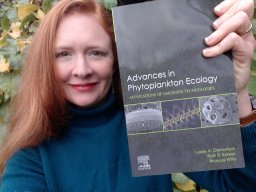 Anusuya Willis合作论文数Australian Rivers Institute, Griffith University3
 S. Bennett合作论文数School of Marine and Tropical Biology, James Cook University3
 Stewart Frusher合作论文数Australian Institute of Marine Science3Hugh Pederson合作论文数Tasmanian Aquaculture and Fisheries Institute, University of Tasmania3
 Gerald T Kraft合作论文数3
 John A. West合作论文数2Barbara Labbe合作论文数2Jakop Schwoerbel合作论文数2
 Allyson Nardelli合作论文数Oceanog Inst, Univ Sao Paulo2
 Jon Waters合作论文数Department of Zoology, University of Otago2
 Thomas Wernberg合作论文数School of Biological Sciences, University of Western Australia;Oceans Institute, University of Western Australia;Institute of Marine Research2Redd K S合作论文数2
 Graham Edgar合作论文数Institute for Marine and Antarctic Studies, University of Tasmania2
 Sean Connell合作论文数Faculty of Sciences, Engineering and Technology, The University of Adelaide;School of Biological Sciences,The University of Adelaid2
 Cayne Layton合作论文数2
 Alejandro Buschmann合作论文数Centro I-mar, Universidad de Los Lagos;Research and Development Centre for Coastal Resources and Environments, Universidad de Los Lagos2
 Giuseppe C. Zuccarello合作论文数2
 Caleb Gardner合作论文数Tasmanian Aquaculture and Fisheries Institute, University of Tasmania2
 Carlos F. D. Gurgel合作论文数2
 Neville S. Barrett合作论文数Tasmanian Aquaculture and Fisheries Institute, University of Tasmania2
 Mads Thomsen合作论文数School of Biological Sciences, Faculty of Science, University of Canterbury2
 Pamela Fernández合作论文数2Matthias Schmid合作论文数1charles o gardner合作论文数1Andrea Garvetto合作论文数1
 Cecilia Biancacci合作论文数1Damien N Stringer合作论文数1Ah Young Park合作论文数1
 Gwang Hoon Kim合作论文数1Dean Greeno合作论文数1
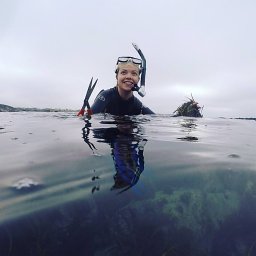 Erin E. Cumming合作论文数School of Life and Environmental Sciences, Deakin University1
 Masayuki Tatsumi合作论文数1
 Emma B Flukes合作论文数Institute for Marine and Antarctic Studies, University of Tasmania1
 Ian Jameson合作论文数1Sam Karpiniec合作论文数1
 Victor Shelamoff合作论文数Institute for Marine and Antarctic Studies, University of Tasmania1Damon Britton合作论文数Inst Marine & Antarctic Studies, Univ Tasmania1
 Sterling Tebbett合作论文数James Cook University1
 Bradley Evans合作论文数Donald Danforth Plant Science Center1
 Juan Diego Gaitan-Espitia合作论文数Research Division for Ecology & Biodiversity, Faculty of Science, The University of Hong Kong1




