Using data collected with the OPAL detector at LEP, we have searched for the processes ee → Z → pe−,pμ− and the charge conjugate final-states. These would violate the conservation of the baryon-number B, lepton-number L and the fermion-number n = (B+L). No evidence for such decays has been found, and the 95 % confidence level upper limits on the partial widths Γ(Z → pe) and Γ(Z → pμ) are found to be 4.6 and 4.4 keV respectively. (Submitted to Physics Letters B) The OPAL Collaboration G.Abbiendi, K.Ackerstaff, G.Alexander, J. Allison, N.Altekamp, K.J.Anderson, S.Anderson, S.Arcelli, S.Asai, S.F.Ashby, D.Axen, G.Azuelos, A.H.Ball, E. Barberio, R.J. Barlow, R.Bartoldus, J.R.Batley, S. Baumann, J. Bechtluft, T.Behnke, K.W.Bell, G.Bella, A.Bellerive, S. Bentvelsen, S. Bethke, S. Betts, O.Biebel, A.Biguzzi, S.D.Bird, V.Blobel, I.J. Bloodworth, P. Bock, J. Böhme, D.Bonacorsi, M.Boutemeur, S. Braibant, P. Bright-Thomas, L. Brigliadori, R.M.Brown, H.J. Burckhart, P.Capiluppi, R.K.Carnegie, A.A.Carter, J.R.Carter, C.Y.Chang, D.G.Charlton, D.Chrisman, C.Ciocca, P.E.L.Clarke, E.Clay, I. Cohen, J.E.Conboy, O.C.Cooke, C.Couyoumtzelis, R.L.Coxe, M.Cuffiani, S.Dado, G.M.Dallavalle, R.Davis, S.De Jong, A. de Roeck, P.Dervan, K.Desch, B.Dienes, M.S.Dixit, J.Dubbert, E.Duchovni, G.Duckeck, I.P.Duerdoth, D. Eatough, P.G.Estabrooks, E. Etzion, F. Fabbri, M. Fanti, A.A. Faust, F. Fiedler, M. Fierro, I. Fleck, R. Folman, A. Fürtjes, D.I. Futyan, P.Gagnon, J.W.Gary, J.Gascon, S.M.Gascon-Shotkin, G.Gaycken, C.Geich-Gimbel, G.Giacomelli, P.Giacomelli, V.Gibson, W.R.Gibson, D.M.Gingrich, D.Glenzinski, J.Goldberg, W.Gorn, C.Grandi, K.Graham, E.Gross, J.Grunhaus, M.Gruwé, G.G.Hanson, M.Hansroul, M.Hapke, K.Harder, A.Harel, C.K.Hargrove, C.Hartmann, M.Hauschild, C.M.Hawkes, R.Hawkings, R.J.Hemingway, M.Herndon, G.Herten, R.D.Heuer, M.D.Hildreth, J.C.Hill, P.R.Hobson, M.Hoch, A.Hocker, K.Hoffman, R.J.Homer, A.K.Honma, D.Horváth, K.R.Hossain, R.Howard, P.Hüntemeyer, P. Igo-Kemenes, D.C. Imrie, K. Ishii, F.R. Jacob, A. Jawahery, H. Jeremie, M. Jimack, C.R. Jones, P. Jovanovic, T.R. Junk, D.Karlen, V.Kartvelishvili, K.Kawagoe, T.Kawamoto, P.I.Kayal, R.K.Keeler, R.G.Kellogg, B.W.Kennedy, D.H.Kim, A.Klier, S.Kluth, T.Kobayashi, M.Kobel, D.S.Koetke, T.P.Kokott, M.Kolrep, S.Komamiya, R.V.Kowalewski, T.Kress, P.Krieger, J. von Krogh, T.Kuhl, P.Kyberd, G.D. Lafferty, H. Landsman, D. Lanske, J. Lauber, S.R. Lautenschlager, I. Lawson, J.G. Layter, D. Lazic, A.M. Lee, D. Lellouch, J. Letts, L. Levinson, R. Liebisch, B. List, C. Littlewood, A.W.Lloyd, S.L. Lloyd, F.K. Loebinger, G.D. Long, M.J. Losty, J. Ludwig, D. Liu, A.Macchiolo, A.Macpherson, W.Mader, M.Mannelli, S.Marcellini, C.Markopoulos, A.J.Martin, J.P.Martin, G.Martinez, T.Mashimo, P.Mättig, W.J.McDonald, J.McKenna, E.A.Mckigney, T.J.McMahon, R.A.McPherson, F.Meijers, S.Menke, F.S.Merritt, H.Mes, J.Meyer, A.Michelini, S.Mihara, G.Mikenberg, D.J.Miller, R.Mir, W.Mohr, A.Montanari, T.Mori, K.Nagai, I. Nakamura, H.A.Neal, B.Nellen, R.Nisius, S.W.O’Neale, F.G.Oakham, F.Odorici, H.O.Ogren, M.J.Oreglia, S.Orito, J. Pálinkás, G. Pásztor, J.R. Pater, G.N.Patrick, J. Patt, R. Perez-Ochoa, S. Petzold, P. Pfeifenschneider, J.E. Pilcher, J. Pinfold, D.E. Plane, P. Poffenberger, J. Polok, M.Przybycień, C.Rembser, H.Rick, S. Robertson, S.A.Robins, N.Rodning, J.M.Roney, K.Roscoe, A.M.Rossi, Y.Rozen, K.Runge, O.Runolfsson, D.R.Rust, K. Sachs, T. Saeki, O. Sahr, W.M. Sang, E.K.G. Sarkisyan, C. Sbarra, A.D. Schaile, O. Schaile, F. Scharf, P. Scharff-Hansen, J. Schieck, B. Schmitt, S. Schmitt, A. Schöning, M. Schröder, M. Schumacher, C. Schwick , W.G. Scott, R. Seuster, T.G. Shears, B.C. Shen, C.H. Shepherd-Themistocleous , P. Sherwood, G.P. Siroli, A. Sittler, A. Skuja, A.M. Smith, G.A. Snow, R. Sobie, S. Söldner-Rembold,
Results are presented on the production of excited charm and excited charm-strange mesons in hadronic Z0 decays. The results are obtained from approximately 4.3 million hadronic Z0 decays, collected on or near the Z0 resonance using the OPAL detector at LEP. The D~(2420) and D2°(2460) mesons are reconstructed in the n•+"final state and their separate production rates in charm fragmentation and in weak decays of bhadrons are determined. From these measurements, the charm hadronization fractions and the inclusive branching ratios ofb-hadrons to these neutral P-wave charm mesons are determined to be f(cD~) f(c-D2°) f(bD~) f(bD2°) 0.021 ± 0.007( stat) ± 0.003( syst ), 0.052 ± 0.022(stat) ± 0.013( syst ), 0.050 ± 0.014(stat) ± 0.006(syst), 0.04 7 ± 0.024(stat) ± 0.013( syst ). We also present the first observation at LEP of the D;i (2536) meson which is reconstructed in both the D*+K~ and D*°K+ final states. After correcting for the expected contribution from bb events, these results are used to derive the charm hadronization fraction f( c ~ D;i): f(c ~ D;i) = 0.016 ± 0.004(stat) ± 0.003(syst). (To be submitted to Zeitschrift fiir Physik C) The OPAL Collaboration K. Ackersta:ffS, G. Alexander23 , J. Allison16 , N. Altekamp5 , K.J. Anderson9 , S. Anderson12 , S.Arcell?, S.Asai , D.Axen 29 , G.Azuelos18·a, A.H.BalF 7 , E.Barberio , R.J.Barlow , R.Bartoldus3 , J.R.Batley5 , S.Baumann3 , J.Bechtluft1\ C.Beeston , T.Behnke , A.N.BelF, K.W. Bell20 , G. Bella , S. Bentvelsen , P. Berlich , S. Bethke1\ 0. BiebeF\ A. Biguzzi5 , S.D. Bird16 , V. BlobeJ2 , I.J. Bloodworth1 , J .E. Bloomer , M. Bobinski , P. BocPl, D. Bonacors?, M. Boutemeur3\ B.T. Bouwens , S. Braibant , L. Brigliador?, R.M. Brown , H.J. Burckhart8 , C. Burgard8 , R. Biirgin10 , P. Capilupp?, R.K. Carnegie6 , A.A. Carter13, J.R. Carter5 , C.Y. Chang17 , D.G. Charlton1•b, D. Chrisman\ P.E.L. Clarke15 , I. Cohen23 , J.E.Conboy15 , O.C.Cooke16 , M.Cuffian?, S.Dado , C.Dallapiccola , G.M.Dallavalle , S.De Jong , L.A. del Pozo\ K.Desch , M.S.Dixit 7 , E. do Couto e Silva , M.Doucet , E. Duchovn?6 , G. Duckeck\ I.P. Duerdoth , D. Eatough , J.E.G. Edwards , P.G. Estabrooks6 , H.G. Evans9 , M. Evans13 , F. Fabbr?, M. Fanti2 , A.A. Faust30 , F. Fiedler27 , M. Fierro , H.M. Fischer\ I. Fleck , R. Folman , D.G. Fong , M. Foucher , A. Fiirtjes , D.I. Futyan16, P. Gagnon', J.W. Gary\ J. Gascon , S.M. Gascon-Shotkin17 , N.I. Geddes 20 , C. Geich-Gimbel , T. Geralis20 , G. Giacomelli , P. Giacomelli , R. Giacomell?, V. Gibson , W.R.Gibson13 , D.M.Gingrich30·", D.Glenzinski , J.Goldberg , M.J.Goodrick , W.Gorn\ C.Grandi2 , E.Gross 26 , J.Grunhaus 23 , M.Gruwe , C.Hajdu32 , G.G.Hanson , M.Hansroul8 , M. Hapke13 , C.K. Hargrove , P.A. Hart , C. Hartmann , M. Hauschild , C.M. Hawkes", R.Hawkings27 , R.J.Hemingway , M.Herndon, G.Herten, R.D.Heuer , M.D.Hildreth , J .C. HillS, S.J. Hillier1 , T. Hilse10 , P.R. Hobson25 , R.J. Homer\ A.K. Honma28·", D. Horvath ·c, R. Howard29 , D.E. Hutchcroft5 , P. Igo-Kemenes , D.C. Imrie , M.R. Ingram , K. Ishii\ A.Jawahery17 , P.W.Jeffreys20 , H.Jeremie, M.Jimackl, A.Joly , C.R.Jones , G.Jones , M.Jones6 , U.Jost11, P.Jovanovic , T.R.Junk", D.Karlen6 , V.Kartvelishvili , K.Kawagoe\ T. Kawamoto2\ R.K. Keeler28 , R.G. Kellogg , B.W. Kennedy, J. Kirk , A. Klier , S. Kluth8 , T. Kobayash?\ M. KobeF0 , D.S. Koetke , T.P. Kokotts, M. Kolrep , S. Komamiya2\ T. Kress 11 , P. Krieger6 , J. von Krogh1 \ P. Kyberds, G.D. Lafferty , R. Lahmann17 , W.P. Lai19 , D. Lanske1\ J. Lauber15 , S.R. Lautenschlagers\ J.G. Layter\ D.Lazic22 , A.M.Lee31, E.Lefebvre18 , D.Lellouch , J.Letts12 , L.Levinson , S.L.Lloyds, F .K. Loebinger16 , G.D. Long28 , M.J. Losty7 , J. Ludwig10 , A. Macchiolo , A. Macpherson so, M. Mannelli8 , S. Marcellini2 , C. Markuss, A.J. Martin1s, J.P. Martin18 , G. Martinez , T. Mashimo2\ P. Miittigs, W.J. McDonald , J. McKenna , E.A. Mckigney, T.J. McMahon\ R.A. McPherson8 , F. Meijers8 , S. Menkes, F.S. Merritt9 , H. Mes7 , J. Meyer27, A. Michelin?, G. Mikenberg26 , D.J. Miller15 , A. Mincer22·e, R. Mir , W. Mohr10 , A. Montanari , T. Mor?\ M.Morii2\ U.Miillers, K.Nagai26 , I.Nakamura\ H.A.Neal , B.Nellen , R.Nisius , S.W. O'Neale\ F.G. Oakham , F. Odorici , H.O. Ogren , N.J. Oldershaw , M.J. Oreglia , S.Orito2\ J.Palinkas33·d, G.Pasztor32 , J.R.Pater16 , G.N.Patrick , J.Patt10 , M.J.Pearcel, S. Petzold27 , P. Pfeifenschneider14 , J .E. Pilcher9 , J. Pinfold , D.E. Plane , P. Poffenberger , B.Poli , A.Posthaus , H.Przysiezniak , D.L.Rees\ D. Rigby\ S.Robertson , S.A.Robins , N. Rodning , J.M. Roney, A. Rooke , E. Ros , A.M. Rossi', M. Rosvick , P. Routenburg , Y. Rozen22 , K. Runge10 , 0. Runolfsson8 , U. Ruppel\ D.R. Rust , R. Rylko , K. Sachs , T. Saeki2\ E.K.G. Sarkisyan2S, C. Sbarra29 , A.D. Schailes\ 0. Schaile\ F. Scharf\ P. Scharff-Hansen8 , P. Schenk3\ J. Schieck11 , P. Schleper11 , B. Schmitt , S. Schmitt ,
We present evidence for the existence of the strange b-flavoured meson B~ in a data sample of 470 628 hadronic Z decays recorded with the OPAL detector at LEP. A signal of 18.3±5.2(stat.)±0.9(syst.) D;;-£+ pairs (or charge conju,gate, R=e or R=Jl) is found after background subtraction, where the D, meson is detected in the )'lr and K*°K final states. Interpreting this signal as coming from the semileptonic deeay B~ --+ D; e+ v X and combining the two decay modes of the D., we find J(b--+ B~) · B(B~--+ D;;-R+vX) · B(D;;---+ >7r-)= (3.9±l.l(stat.)±0.8(syst.))x10-\ where J(b--+ B~) is the fraction of b quarks that result in a B~ meson in Z decays. This signal for the B~ is supported by our observation of an excess of 147±48 inclusive D, mesons in the >1r and K*°K modes above the number expected from B0 and B+ decays and from the fragmentation of primary c quarks. In addition, a search is made for the exclusive decay B~--+ JflP>. Based on one candidate event the 90% confidence level upper limit is determined to be f(b-+ B~) · B(B~ -+Jj./J>) < 0.22%. (Submitted to Physics Letters B) The 0 PAL Collaboration P.D. Acton, G. Alexander, J. Allison's, P.P. Allports, K.J. Anderson9 , S. Arcell?, A. Astbury2s, D. Axen29 , G. Azuelos1s,a, G.A. Bahan's, J.T.M. Baines's, A.H. Ball17, J. Banks's, R.J. Barlow's, S. Barnett's, J.R. Batley\ G. Bea.udoin18, A. Beck23, J. Becker10, T. Behnke27, K.W. BelP0, G. Bella, P. Berlich, S. Bethke , 0. Biebel', U. Binder10, l.J.Bloodworth , P.Bock11 , B.Boden3 , H.M.Bosch11 , S.Bougerolle29, H.Breukers, R.M. Brown20, A. Buijss, H.J. Burckharts, C. Burgard, I'. Capilupp?, R.K. Carnegies, A.A. Carter, J.R. CarterS, C.Y. Chang , D.G. Charlton8 , P.E.L. Clarke2S, I. Cohen23 , J.C. Clayton', W.J. Collins , J.E. Conboy , M. Cooper , M. Coupland , M. Cuffiani , S. Dado , G.M. Dallavalle, S. De Jong , L.A. del Pozos, H. Deng17, A. Dieckmann11 , M. Dittmar\ M.S. Dixit7 , E. do Couto e Silva12 , J.E. Duboscq , E. Duchovnis, G. Duckeck11 , l.P. Duerdoth1s, D.J.P. Dumass, P.A. ElcombeS, P.G. Estabrooks6 , E. Etzion23 , H. G. Evans9 , F. Fabbri2, M. Fincke-Keeler28, H.M. Fischer3, D.G. Fong17 , M. Foucher17, A. Gaidot 21 , 0. GaneFs, J.W. Gary\ J. Gascon , R.F. McGowan's, N.I. Geddes20, C. Geich-Gimbel3, S.W. Gensler , F.X. Gentit 21 , G. Giacomelli 2, V. Gibsons, W.R. Gibson13, J.D. Gillies20, J.Goldberg22 , M.J.Goodrick5 , W.Gorn\ C.Grandi , F.C.Grant5 , J.Hagemann27, G.G. Hanson , M. Hansroul8 , C.K. Hargrove7, P.F. Harrison1\ J. Hart8 , P.M. Hattersley', M. Hauschild , C.M. Haw kess, E. Heflin\ R.J. Hemingways, R.D. Heuer , J.C. Hill, S.J. Hillier', T. Hilse, D.A. Hinshaw, J.D. Hobbs , P.R. Hobson2s, D. Hochman26, R.J. Homer', A.K. Honma28·•, C.P. Howarth15 , R.E. Hughes-Jones16 , R. Humbert10, P. lgo-Kemenes11 , H. Ihssen11 , D.C. Imrie, A. C. Janissens, A. Jawahery, P.W. Jeffreys20 , H. Jeremie, M. Jimack2 , M. Jobes', R.W.L. Jones13, P. Jovanovic', C. Jui4 , D. Karlen6 , K. Kawagoe24, T. Kawamoto4, R.K. Keeler, R.G. Kellogg, B.W. Kennedy, S. Kluth', T. Kobayashi; T.P. Kokott3 , S. Komamiya24, L. Kopke8 , J.F. Krals, R. Kowalewski6, J. von Krogh11 , J. Kroll , M. Kuwano4, P. Kyberd, G.D. Lafferty's, F. Lamarche, J.G. Layter\ P. Le Du2', P. Leblanc1s, A.M. Lee17, M.H. Lehto15, D. Lellouch2s, P. Lennert11 , C. Leroy18, J. Letts\ S. Levegriin3 , L. Levinsons, S.L. Lloyd'', F.K. Loebinger16, J.M. Lorah17 , B. Lorazo , M.J. Losty7, X. C. Lou12 , J. Ludwig10 , M. Mannellis, S. Marcellini 2, G. Maringer3 , C. Markus3 , A.J. Martin, J.P. Martin, T. Mashimo<, P. Mattig , U. Maur', J. McKenna2s, T.J. McMahon', J.R. McNutt2s, F. Meijerss, D. Menszner11 , F.S. Merritt9 , H. Mes , A. Michelinis, R.P. Middleton, G. Mikenberg, J. Mildenberger, D.J. Miller, R. Mir, W. Mohr, C. Moisan18 , A. Montanari2 , T. Mori24, M. Mo:rii24, T. Mouthuy12 •b, B. Nellen3, H.H. Nguyen9 , M. Nozaki24, S.W. O'Neale•', F.G. Oakham, F. Odorici, H.O. Ogren12 , C.J. Oram•", M.J. Oreglia9 , S. Orito24, J.P. Pansart2', B. Panzer-Steindel8 , P. Paschievici2s, G.N. Patrick, N. Paz-Jaoshvili" , P. Pfister10 , J.E. Pilcher9 , D. Pitman28, D.E. Plane8 , P. Poffenberger28 , B. Poli2 , A. Pouladdejs, E. Prebys8 , T.W. Pritchard13, H. Przysiezniak1s, G. Quast, M.W. Redmond , D.L. Rees', G.E. RichardE
Events with four distinct jets from e + e − collisions, collected by the OPAL detector at centre-of-mass energies between 130 and 184 GeV, are analysed for a peak in the sum of dijet masses. This search is motivated by the ALEPH Collaboration's observation of a clear excess of events with dijet mass sums close to 105 GeV in data taken at centre-of-mass energies of 130 and 136 GeV in 1995. We have observed no significant excess of four-jet events compared to the Standard Model expectation for any dijet mass sum at any energy. Our observation is inconsistent with the excess observed by ALEPH in 1995. Upper limits are determined on the production cross-section as a function of the dijet mass sum.
A search for charginos and neutralinos, predicted by supersymmetric theories, is performed using a data sample of 182.1 pb−1 taken at a centre-of-mass energy of 189 GeV with the OPAL detector at LEP. No evidence for chargino or neutralino production is found. Upper limits on chargino and neutralino pair production (χ̃1 χ̃ − 1 , χ̃ 0 1χ̃ 0 2) cross-sections are obtained as a function of the chargino mass (mχ̃± 1 ), the lightest neutralino mass (mχ̃0 1 ) and the second lightest neutralino mass (mχ̃0 2 ). Within the Constrained Minimal Supersymmetric Standard Model framework, and for mχ̃± 1 −mχ̃0 1 ≥ 5 GeV, the 95% confidence level lower limits on mχ̃± 1 are 93.6 GeV for tan β = 1.5 and 94.1 GeV for tan β = 35. These limits are obtained assuming a universal scalar mass m0 ≥ 500 GeV. The corresponding limits for all m0 are 78.0 and 71.7 GeV. The 95% confidence level lower limits on the lightest neutralino mass, valid for any value of tan β are 32.8 GeV for m0 ≥ 500 GeV and 31.6 GeV for all m0. (Submitted to Phys. Lett. B) The OPAL Collaboration G. Abbiendi, K. Ackerstaff, G. Alexander, J. Allison, K.J. Anderson, S. Anderson, S. Arcelli, S. Asai, S.F. Ashby, D. Axen, G. Azuelos, A.H. Ball, E. Barberio, R.J. Barlow, J.R. Batley, S. Baumann, J. Bechtluft, T. Behnke, K.W. Bell, G. Bella, A. Bellerive, S. Bentvelsen, S. Bethke, S. Betts, O. Biebel, A. Biguzzi, I.J. Bloodworth, P. Bock, J. Böhme, O. Boeriu, D. Bonacorsi, M. Boutemeur, S. Braibant, P. Bright-Thomas, L. Brigliadori, R.M. Brown, H.J. Burckhart, P. Capiluppi, R.K. Carnegie, A.A. Carter, J.R. Carter, C.Y. Chang, D.G. Charlton, D. Chrisman, C. Ciocca, P.E.L. Clarke, E. Clay, I. Cohen, J.E. Conboy, O.C. Cooke, J. Couchman, C. Couyoumtzelis, R.L. Coxe, M. Cuffiani, S. Dado, G.M. Dallavalle, S. Dallison, R. Davis, S. De Jong, A. de Roeck, P. Dervan, K. Desch, B. Dienes, M.S. Dixit, M. Donkers, J. Dubbert, E. Duchovni, G. Duckeck, I.P. Duerdoth, P.G. Estabrooks, E. Etzion, F. Fabbri, A. Fanfani, M. Fanti, A.A. Faust, L. Feld, P. Ferrari, F. Fiedler, M. Fierro, I. Fleck, A. Frey, A. Fürtjes, D.I. Futyan, P. Gagnon, J.W. Gary, G. Gaycken, C. Geich-Gimbel, G. Giacomelli, P. Giacomelli, W.R. Gibson, D.M. Gingrich, D. Glenzinski, J. Goldberg, W. Gorn, C. Grandi, K. Graham, E. Gross, J. Grunhaus, M. Gruwé, C. Hajdu G.G. Hanson, M. Hansroul, M. Hapke, K. Harder, A. Harel, C.K. Hargrove, M. Harin-Dirac, M. Hauschild, C.M. Hawkes, R. Hawkings, R.J. Hemingway, G. Herten, R.D. Heuer, M.D. Hildreth, J.C. Hill, P.R. Hobson, A. Hocker, K. Hoffman, R.J. Homer, A.K. Honma, D. Horváth, K.R. Hossain, R. Howard, P. Hüntemeyer, P. Igo-Kemenes, D.C. Imrie, K. Ishii, F.R. Jacob, A. Jawahery, H. Jeremie, M. Jimack, C.R. Jones, P. Jovanovic, T.R. Junk, N. Kanaya, J. Kanzaki, D. Karlen, V. Kartvelishvili, K. Kawagoe, T. Kawamoto, P.I. Kayal, R.K. Keeler, R.G. Kellogg, B.W. Kennedy, D.H. Kim, A. Klier, T. Kobayashi, M. Kobel, T.P. Kokott, M. Kolrep, S. Komamiya, R.V. Kowalewski, T. Kress, P. Krieger, J. von Krogh, T. Kuhl, P. Kyberd, G.D. Lafferty, H. Landsman, D. Lanske, J. Lauber, I. Lawson, J.G. Layter, D. Lellouch, J. Letts, L. Levinson, R. Liebisch, J. Lillich, B. List, C. Littlewood, A.W. Lloyd, S.L. Lloyd, F.K. Loebinger, G.D. Long, M.J. Losty, J. Lu, J. Ludwig, D. Liu, A. Macchiolo, A. Macpherson, W. Mader, M. Mannelli, S. Marcellini, T.E. Marchant, A.J. Martin, J.P. Martin, G. Martinez, T. Mashimo, P. Mättig, W.J. McDonald, J. McKenna, E.A. Mckigney , T.J. McMahon, R.A. McPherson, F. Meijers, P. Mendez-Lorenzo, F.S. Merritt, H. Mes, I. Meyer, A. Michelini, S. Mihara, G. Mikenberg, D.J. Miller, W. Mohr, A. Montanari, T. Mori, K. Nagai, I. Nakamura, H.A. Neal , R. Nisius, S.W. O’Neale, F.G. Oakham, F. Odorici, H.O. Ogren, A. Okpara, M.J. Oreglia, S. Orito, G. Pásztor, J.R. Pater, G.N. Patrick, J. Patt, R. Perez-Ochoa, S. Petzold, P. Pfeifenschneider , J.E. Pilcher, J. Pinfold, D.E. Plane, P. Poffenberger, B. Poli, J. Polok, M. Przybycień, A. Quadt, C. Rembser, H. Rick, S. Robertson, S.A. Robins, N. Rodning, J.M. Roney, S. Rosati, K. Roscoe, A.M. Rossi, Y. Rozen, K. Runge, O. Runolfsson, D.R. Rust, K. Sachs, T. Saeki, O. Sahr, W.M. Sang, E.K.G. Sarkisyan, C. Sbarra, A.D. Schaile, O. Schaile, P. Scharff-Hansen, J. Schieck, S. Schmitt, A. Schöning, M. Schröder, M. Schumacher, C. Schwick, W.G. Scott, R. Seuster, T.G. Shears, B.C. Shen, C.H. Shepherd-Themistocleous , P. Sherwood, G.P. Siroli, A. Skuja, A.M. Smith, G.A. Snow, R. Sobie, S. Söldner-Rembold, S. Spagnolo, M. Sproston, A. Stahl, K. Stephens, K. Stoll, D. Strom, R. Ströhmer, B. Surrow, S.D. Talbot, P. Taras, S. Tarem, R. Teuscher, M. Thiergen, J. Thomas, M.A. Thomson, E. Torrence,
The forward-backward asymmetry of e + e ? ! Z 0 ! bb has been measured using approximately 2.15 million hadronic Z 0 decays collected at the LEP e + e ? collider with the OPAL detector. A lifetime tag technique was used to select an enriched bb event sample. The measurement of the bb asymmetry was then performed using a jet charge algorithm to determine the direction of the primary quark. were measured where, in each case, the rst error is statistical, the second is systematic and the third term gives the variation due to a change (? bb =? had) in the value of ? bb =? had = 0:216 assumed. The dependence on the assumed charm asymmetry at the same energy is (A b FB) +0:077(A c FB). Assuming the Standard Model form for the couplings, these measurements correspond to an eeective weak mixing angle of: sin 2 ee;e +16 ?19 GeV/c 2 , where the rst error is statistical and the second is systematic. The Higgs mass assumed is 300 GeV/c 2. A variation in the assumed mass of the Higgs boson between 60 and 1000 GeV/c 2 corresponds to an uncertainty in sin 2 ee;e W of 0:00006 and on M top of +20 ?26 GeV/c 2 .
We report a measurement of the branching ratio B(D + ! 0 ` + `)/ B(D + ! K 0 ` + `) from the Fermilab charm hadroproduction experiment E791. Based on signals of 49 17 events in the D + ! 0 e + e mode and 54 18 events in the D + ! 0 + mode, we measure Combining the results from both the electronic and muonic modes, we obtain 2 Semileptonic charm decays are useful in probing the dynamics of hadronic currents since the Cabibbo-Kobayashi-Maskawa matrix elements for the charm sector are well-known from unitarity constraints. Form factors for Cabibbo-suppressed (CS) c ! d semileptonic decays can be related via Heavy Quark EEective Theory (HQET) to those for b ! u semileptonic decays at the same four-velocity transfer 1]. Since knowledge of the form factors in b ! u transitions is vital for extracting V ub from b ! u semileptonic decays in a model-independent way, study of c ! d semileptonic decays can improve our knowledge of V ub. Although considerable progress has been made in studying CS semileptonic charm decays to pseudoscalar mesons 2], the only previous result on CS semileptonic charm decay to a vector meson is based on four D + ! 0 + events 3]. In this Letter, we report a new measurement from the Fermilab hadroproduction experiment E791 of B(D + ! 0 ` + `)=B(D + ! K 0 ` + `) based on more than 100 D + ! 0 ` + ` decays in the combined electronic and muonic modes. The E791 experiment 4] recorded 2 10 10 events from 500 GeV/c ? interactions in ve thin targets (one platinum, four diamond) separated by gaps of 1.34 to 1.39 cm. Precision tracking and vertexing information was provided by 23 silicon microstrip detectors (6 upstream and 17 downstream of the targets) and 35 drift chamber planes. Momentum was measured with two dipole magnets. Two segmented threshold Cerenkov counters provided =K separation in the 6 ? 60 GeV/c momentum range 5]. (charge-conjugate states are implied throughout this Letter) are selected by requiring a three-prong decay vertex of charge 1 with one of the decay particles being identiied as a lepton. A segmented lead and liquid-scintillator calorimeter 6] is used to identify the electrons, based on energy deposition and transverse shower shape. The probability that a (K) is misidentiied as …
The inclusive production of D (cid:3)(cid:6) mesons in photon-photon collisions has been measured using the OPAL detector at LEP at e + e − centre-of-mass energies p s ee of 183 and 189 GeV. The D (cid:3) + mesons are reconstructed in their decay to D 0 (cid:25) + with the D 0 observed in the two decay modes K − (cid:25) + and K − (cid:25) + (cid:25) − (cid:25) + . After background subtraction, 100 : 4 (cid:6) 12 : 6 (stat) D (cid:3)(cid:6) mesons have been selected in events without observed scattered beam electron (\anti-tagged") and 29 : 8 (cid:6) 5 : 9 (stat) D (cid:3)(cid:6) mesons in events where one beam electron is scattered into the detector (\single-tagged"). Direct and single-resolved events are studied separately. Di(cid:11)erential cross-sections d (cid:27)= d p D (cid:3) T and d (cid:27)= d j (cid:17) D (cid:3) j as functions of the D (cid:3)(cid:6) transverse momentum p D (cid:3) T and pseudorapidity (cid:17) D (cid:3) are presented in the kinematic region 2 GeV < p D (cid:3) T < 12 GeV and j (cid:17) D (cid:3) j < 1 : 5. They are compared to next-to-leading order (NLO) perturbative QCD calculations. The total cross-section for the process e + e − ! e + e − cc where the charm quarks are produced in the collision of two quasi-real photons is measured to be averaged
The production of charged hadrons and K 0 S mesons in the collisions of quasi-real photons has been measured using the OPAL detector at LEP. The data were taken at e + e − centre-of-mass energies of 161 and 172 GeV. The differential cross-sections as a function of the transverse momentum and the pseudorapidity of the charged hadrons and K 0 S mesons have been compared to the leading order Monte Carlo simulations of PHOJET and PYTHIA and to perturbative next-to-leading order (NLO) QCD calculations. The distributions have been measured in the range 10 < W < 125 GeV of the hadronic invariant mass W. By comparing the transverse momentum distribution of charged hadrons measured in γγ interactions with γ-proton and meson-proton data we find evidence for hard photon interactions in addition to the purely hadronic photon interactions.
The working group discussed several aspects of triple gauge coupling analysis viewed in the light of experiences with the first high-energy data recorded at energies above the W pair threshold. Some analysis methods were reviewed briefly, and consideration given to better ways of characterizing the data. The measurement of CP-violating parameters was discussed. Results were prepared to further quantify the precision attainable on anomalous couplings in the four-quark channel using jet-charge methods, and finally the trade-off between maximum LEP energy versus luminosity was quantified.
This paper describes a search for the Standard Model Higgs boson using data from e(+)e(-) collisions collected at center-of-mass energies of 161, 170 and 172 GeV by the OPAL detector at LEP. The data collected at these energies correspond to integrated luminosities of 10.0, 1.0 and 9.4 pb(-1), respectively. The search is sensitive to the main final states from the process in which the Higgs boson is produced in association with a fermion anti-fermion pair, namely four jets, two jets with missing energy. and two jets produced together with a pair of electron, muon or tau leptons. One candidate event is observed, in agreement with the Standard Model background expectation. In combination with previous OPAL searches at center-of-mass Energies close to the Z(0) resonance and the revised previous OPAL searches at 161 GeV, we derive a lower limit of 69.4 GeV for the mass of the Standard Model Higgs boson at the 95% confidence level.
An upper limit for the τ –neutrino mass has been determined from the decay τ → 5 π ± ν τ using data collected with the OPAL detector from 1991 to 1995 in e + e − collisions at √ s ≈ M Z . A limit of 43.2 MeV at 95% CL is obtained using a two–dimensional method in the 5 π invariant mass and energy distribution from 22 selected events. Combining this result with OPAL’s previously published measurement using τ + τ − → 3h ± ¯ ν τ + 3h ∓ ν τ decays, a new combined limit of m ν τ < 27.6 MeV (95% CL) is obtained.
New measurements are presented of the photon structure function F γ 2 (x, Q ) at four values of Q between 9 and 59 GeV based on data collected with the OPAL detector at centre-of-mass energies of 161−172 GeV, with a total integrated luminosity of 18.1 pb. The evolution of F γ 2 with Q 2 in bins of x is determined in the Q range from 1.86 to 135 GeV using data taken at centre-of-mass energies of 91 GeV and 161−172 GeV. F γ 2 is observed to increase with Q with a slope of αdF γ 2 /d lnQ = 0.10 −0.03 measured in the range 0.1 < x < 0.6. (Submitted to Physics Letters B) The OPAL Collaboration K.Ackerstaff, G.Alexander, J. Allison, N.Altekamp, K.J.Anderson, S.Anderson, S.Arcelli, S.Asai, D.Axen, G.Azuelos, A.H.Ball, E. Barberio, T.Barillari, R.J. Barlow, R.Bartoldus, J.R.Batley, S. Baumann, J. Bechtluft, C.Beeston, T.Behnke, A.N.Bell, K.W.Bell, G.Bella, S. Bentvelsen, S. Bethke, O.Biebel, A.Biguzzi, S.D.Bird, V.Blobel, I.J. Bloodworth, J.E.Bloomer, M.Bobinski, P. Bock, D.Bonacorsi, M.Boutemeur, B.T.Bouwens, S. Braibant, L. Brigliadori, R.M.Brown, H.J. Burckhart, C.Burgard, R.Bürgin, P.Capiluppi, R.K.Carnegie, A.A.Carter, J.R.Carter, C.Y.Chang, D.G.Charlton, D.Chrisman, P.E.L.Clarke, I. Cohen, J.E.Conboy, O.C.Cooke, M.Cuffiani, S.Dado, C.Dallapiccola, G.M.Dallavalle, R.Davies, S.De Jong, L.A. del Pozo, K.Desch, B.Dienes, M.S.Dixit, E. do Couto e Silva, M.Doucet, E.Duchovni, G.Duckeck, I.P.Duerdoth, D. Eatough, J.E.G.Edwards, P.G.Estabrooks, H.G.Evans, M.Evans, F. Fabbri, M.Fanti, A.A. Faust, F. Fiedler, M.Fierro, H.M.Fischer, I. Fleck, R. Folman, D.G.Fong, M.Foucher, A. Fürtjes, D.I. Futyan, P.Gagnon, J.W.Gary, J.Gascon, S.M.Gascon-Shotkin, N.I.Geddes, C.Geich-Gimbel, T.Geralis, G.Giacomelli, P.Giacomelli, R.Giacomelli, V.Gibson, W.R.Gibson, D.M.Gingrich, D.Glenzinski, J.Goldberg, M.J.Goodrick, W.Gorn, C.Grandi, E.Gross, J.Grunhaus, M.Gruwé, C.Hajdu, G.G.Hanson, M.Hansroul, M.Hapke, C.K.Hargrove, P.A.Hart, C.Hartmann, M.Hauschild, C.M.Hawkes, R.Hawkings, R.J.Hemingway, M.Herndon, G.Herten, R.D.Heuer, M.D.Hildreth, J.C.Hill, S.J.Hillier, P.R.Hobson, R.J.Homer, A.K.Honma, D.Horváth, K.R.Hossain, R.Howard, P.Hüntemeyer, D.E.Hutchcroft, P. Igo-Kemenes, D.C. Imrie, M.R. Ingram, K. Ishii, A. Jawahery, P.W. Jeffreys, H. Jeremie, M. Jimack, A. Joly, C.R. Jones, G. Jones, M. Jones, U. Jost, P. Jovanovic, T.R. Junk, D.Karlen, V.Kartvelishvili, K.Kawagoe, T.Kawamoto, P.I.Kayal, R.K.Keeler, R.G.Kellogg, B.W.Kennedy, J.Kirk, A.Klier, S.Kluth, T.Kobayashi, M.Kobel, D.S.Koetke, T.P.Kokott, M.Kolrep, S.Komamiya, T.Kress, P.Krieger, J. von Krogh, P.Kyberd, G.D. Lafferty, R. Lahmann, W.P. Lai, D. Lanske, J. Lauber, S.R. Lautenschlager, J.G. Layter, D. Lazic, A.M.Lee, E. Lefebvre, D. Lellouch, J. Letts, L. Levinson, S.L. Lloyd, F.K. Loebinger, G.D. Long, M.J. Losty, J. Ludwig, A.Macchiolo, A.Macpherson, M.Mannelli, S.Marcellini, C.Markus, A.J.Martin, J.P.Martin, G.Martinez, T.Mashimo, P.Mättig, W.J.McDonald, J.McKenna, E.A.Mckigney, T.J.McMahon, R.A.McPherson, F.Meijers, S.Menke, F.S.Merritt, H.Mes, J.Meyer, A.Michelini, G.Mikenberg, D.J.Miller, A.Mincer, R.Mir, W.Mohr, A.Montanari, T.Mori, M.Morii, U.Müller, S.Mihara, K.Nagai, I. Nakamura, H.A.Neal, B.Nellen, R.Nisius, S.W.O’Neale, F.G.Oakham, F.Odorici, H.O.Ogren, A.Oh, N.J.Oldershaw, M.J.Oreglia, S.Orito,
Deep inelastic electron-photon scattering is studied using e + e − data collected by the OPAL detector at centre-of-mass energies √ s ee ≈ M Z 0 . The photon structure function F γ 2 ( x, Q 2 ) is explored in a Q 2 range of 1.1 to 6.6 GeV 2 at lower x values than ever before. To probe this kinematic region events are selected with a beam electron scattered into one of the OPAL luminosity calorimeters at scattering angles between 27 and 55 mrad. A measurement is presented of the photon structure function F γ 2 ( x, Q 2 ) at h Q 2 i = 1.86 GeV 2 and 3.76 GeV 2 in five logarithmic x bins from 0.0025 to 0.2. The hadronic structure function F γ 2 of the photon has been measured in deep inelastic electron-photon scattering at various e + e −
This paper describes the measurement of the W boson mass, MW, and decay width, ΓW, from the direct reconstruction of the invariant mass of its decay products in W pair events collected at a mean centre-of-mass energy of √ s=172.12 GeV with the OPAL detector at LEP. Measurements of the W pair production cross-section, the W decay branching fractions and properties of the W decay final states are also described. A total of 120 candidate WW events has been selected for an integrated luminosity of 10.36 pb. The WW production cross-section is measured to be σWW = 12.3±1.3(stat.)±0.3(syst.) pb, consistent with the Standard Model expectation. The WW → qqlνl and WW → qqqq final states are used to obtain a direct measurement of ΓW = 1.30 −0.55(stat.) ± 0.18(syst.) GeV. Assuming the Standard Model relation between MW and ΓW, the W boson mass is measured to be MW = 80.32 ± 0.30(stat.) ± 0.09(syst.) GeV. The event properties of the fullyhadronic decays of WW events are compared to those of the semi-leptonic decays. At the current level of precision there is no evidence for effects of colour reconnection in the observables studied. Combining data recorded by OPAL at √ s ∼ 161–172 GeV, the W boson branching fraction to hadrons is determined to be 69.8 −3.2(stat.)±0.7(syst.)%, consistent with the prediction of the Standard Model. The combined mass measurement from direct reconstruction and from the WW production crosssections measured at √ s ∼ 161 and √s ∼ 172 GeV is MW = 80.35 ± 0.24(stat.) ± 0.07(syst.) GeV. To be submitted to Zeit. Phys. C The OPAL Collaboration K.Ackerstaff, G. Alexander, J. Allison, N. Altekamp, K.J.Anderson, S.Anderson, S.Arcelli, S.Asai, D. Axen, G. Azuelos, A.H. Ball, E. Barberio, R.J. Barlow, R. Bartoldus, J.R.Batley, S. Baumann, J. Bechtluft, C.Beeston, T.Behnke, A.N. Bell, K.W.Bell, G. Bella, S. Bentvelsen, S. Bethke, O.Biebel, A. Biguzzi, S.D. Bird, V.Blobel, I.J. Bloodworth, J.E.Bloomer, M.Bobinski, P. Bock, D. Bonacorsi, M. Boutemeur, B.T. Bouwens, S.Braibant, L. Brigliadori, R.M.Brown, H.J. Burckhart, C.Burgard, R.Bürgin, P. Capiluppi, R.K.Carnegie, A.A. Carter, J.R. Carter, C.Y.Chang, D.G. Charlton, D. Chrisman, P.E.L. Clarke, I. Cohen, J.E.Conboy, O.C. Cooke, M. Cuffiani, S.Dado, C.Dallapiccola , G.M. Dallavalle , R. Davis, S.De Jong, L.A. del Pozo, K.Desch, B. Dienes, M.S.Dixit, E. do Couto e Silva, M.Doucet, E.Duchovni, G.Duckeck, I.P. Duerdoth, D. Eatough, J.E.G.Edwards, P.G. Estabrooks, H.G. Evans, M.Evans, F. Fabbri, M. Fanti, A.A. Faust, F. Fiedler, M.Fierro, H.M. Fischer, I. Fleck, R. Folman, D.G. Fong, M. Foucher, A. Fürtjes, D.I. Futyan, P.Gagnon, J.W.Gary, J.Gascon, S.M.Gascon-Shotkin, N.I. Geddes, C.Geich-Gimbel, T.Geralis, G.Giacomelli, P.Giacomelli, R.Giacomelli, V.Gibson, W.R.Gibson, D.M.Gingrich, D.Glenzinski, J.Goldberg, M.J. Goodrick, W.Gorn, C.Grandi, E.Gross, J.Grunhaus, M.Gruwé, C.Hajdu, G.G. Hanson, M.Hansroul, M.Hapke, C.K.Hargrove, P.A.Hart, C.Hartmann, M.Hauschild, C.M.Hawkes, R.Hawkings, R.J.Hemingway, M.Herndon, G.Herten, R.D.Heuer, M.D. Hildreth, J.C.Hill, S.J.Hillier, P.R.Hobson, R.J.Homer, A.K.Honma, D. Horváth, K.R.Hossain, R.Howard, P. Hüntemeyer, D.E. Hutchcroft, P. Igo-Kemenes, D.C. Imrie, M.R. Ingram, K. Ishii, A. Jawahery, P.W. Jeffreys, H. Jeremie, M. Jimack, A. Joly, C.R. Jones, G. Jones, M. Jones, U. Jost, P. Jovanovic, T.R. Junk, D.Karlen, V.Kartvelishvili, K.Kawagoe, T.Kawamoto, P.I. Kayal, R.K.Keeler, R.G.Kellogg, B.W.Kennedy, J.Kirk, A.Klier, S.Kluth, T.Kobayashi, M.Kobel, D.S.Koetke, T.P.Kokott, M.Kolrep, S.Komamiya, T.Kress, P.Krieger, J. von Krogh, P.Kyberd, G.D. Lafferty, R. Lahmann, W.P. Lai, D. Lanske, J. Lauber, S.R. Lautenschlager, J.G. Layter, D. Lazic, A.M. Lee, E. Lefebvre, D. Lellouch, J. Letts, L. Levinson, S.L. Lloyd, F.K. Loebinger, G.D. Long, M.J. Losty, J. Ludwig, A.Macchiolo, A.Macpherson, M.Mannelli, S.Marcellini, C.Markus, A.J.Martin, J.P.Martin, G.Martinez, T.Mashimo, P.Mättig, W.J.McDonald, J.McKenna, E.A.Mckigney, T.J.McMahon, R.A.McPherson, F.Meijers, S.Menke, F.S.Merritt, H.Mes, J.Meyer, A.Michelini, G.Mikenberg, D.J.Miller, A.Mincer, R.Mir, W.Mohr, A.Montanari, T.Mori, M.Morii, U.Müller, S.Mihara, K. Nagai, I. Nakamura, H.A.Neal, B. Nellen, R. Nisius, S.W.O’Neale, F.G.Oakham, F. Odorici, H.O.Ogren, A.Oh, N.J. Oldershaw, M.J. Oreglia, S.Orito, J. Pálinkás, G. Pásztor, J.R. Pater, G.N. Patrick, J. Patt, M.J. Pearce, R. Perez-Ochoa, S. Petzold, P. Pfeifenschneider, J.E. Pilcher, J. Pinfold, D.E. Plane, P. Poffenberger, B. Poli, A. Posthaus, D.L. Rees, D. Rigby, S. Robertson, S.A. Robins, N.Rodning, J.M.Roney, A.Rooke, E.Ros, A.M. Rossi, P. Routenburg, Y. Rozen, K.Runge, O.Runolfsson, U. Ruppel, D.R. Rust, R.Rylko, K. Sachs, T. Saeki, E.K.G. Sarkisyan, C. Sbarra, A.D. Schaile, O. Schaile, F. Scharf, P. Scharff-Hansen, P. Schenk, J. Schieck, P. Schleper, B. Schmitt, S. Schmitt, A. Schöning, M. Schröder, H.C. Schultz-Coulon, M. Schumacher, C. Schwick, W.G. Scott, T.G. Shears, B.C. Shen, C.H. Shepherd-Themistocleous, P. Sherwood, G.P. Siroli, A. Sittler, A. Skillman, A. Skuja, A.M. Smith, G.A. Snow, R. Sobie, S. Söldner-Rembold, R.W. Springer, M. Sproston, K. Stephens, J. Steuerer, B. Stockhausen, K. Stoll, D. Strom, P. Szymanski, R.Tafirout, S.D. Talbot, S. Tanaka, P. Taras, S. Tarem, R. Teuscher, M. Thiergen, M.A. Thomson, E. von Törne, S. Towers, I. Trigger, Z. Trócsányi, E.Tsur, A.S.Turcot, M.F. Turner-Watson, P. Utzat, R.Van Kooten, M.Verzocchi, P. Vikas, E.H.Vokurka, H. Voss, F.Wäckerle ,
We measure the branching fraction of the decay B−→D0ρ(770)− using data collected with the Belle II detector. The data contain 387 million BB¯ pairs produced in e+e− collisions at the ϒ(4S) resonance. We reconstruct 8360±180 decays from an analysis of the distributions of the B− energy and the ρ(770)− helicity angle. We determine the branching fraction to be (0.939±0.021(stat)±0.050(syst))%, in agreement with previous results. Our measurement improves the relative precision of the world average by more than a factor of two. Published by the American Physical Society 2024
 Hans J. A. F. Mes合作论文数Centre for Research in Particle Physics, Carleton University20
 Heinrich Voß合作论文数Institute of Mathematics, Hamburg University of Technology14
 Paul de Jong合作论文数Institute of Physics, Faculty of Science, Universiteit van Amsterdam;Nikhef12
 Paul Kyberd合作论文数College of Engineering, Design and Physical Sciences, Brunel University London12J Letts合作论文数11S. Marcellini合作论文数11S. Dado合作论文数11R. Carnegie合作论文数11J. Layter合作论文数11F. Merritt合作论文数11P. Estabrooks合作论文数11S. O'Neale合作论文数11O. Runolfsson合作论文数11C. Hargrove合作论文数11
 David Axen合作论文数Department of Physics & Astronomy, The University of British Columbia11G. Giacomelli合作论文数11W. Gorn合作论文数11Ij Bloodworth合作论文数11Jim McKenna合作论文数11Silvia Arcelli合作论文数11
 Pauline Gagnon合作论文数Indiana University;European Organization for Nuclear Research11G. Mikenberg合作论文数11
 Abolhassan Jawahery合作论文数Department of Physics, College of Computer, Mathematical, & Natural Sciences, University of Maryland11
 Steve Lloyd合作论文数School of Physical and Chemical Sciences, Queen Mary University of London;Institute of Physics, Queen Mary University of London11D. Miller合作论文数11
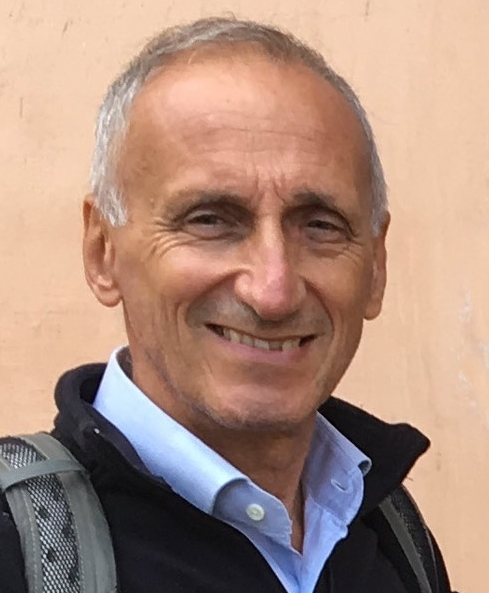 Fabrizio Fabbri合作论文数Istituto Nazionale di Fisica Nucleare Sezione di Bologna11
 Shoji Asai (浅井祥仁)合作论文数Department of Physics, Graduate School of Science, The University of Tokyo;International Center for Elementary Particle Physics, The University of Tokyo11
 Waad Mohr合作论文数11A. Ball合作论文数11T. McMahon合作论文数11D. G. Charlton合作论文数11
 G. N. Patrick合作论文数11A. Honma合作论文数11W. Scott合作论文数11P. Jovanovic合作论文数11
 Madhu S Dixit合作论文数11
 J. Allison合作论文数Geant4 Associates International Ltd11
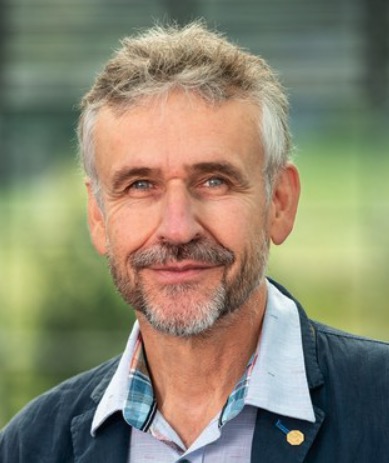 Michael Kobel合作论文数Technischen Universität Dresden;LHC, CERN11P. Capiluppi合作论文数11G. M. Dallavalle合作论文数11
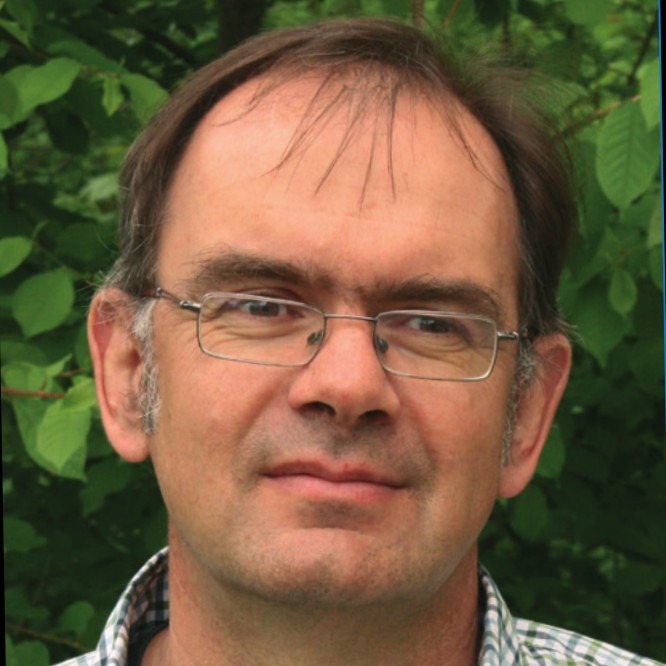 Günter Duckeck合作论文数Faculty of Physics, Ludwig Maximilian University of Munich11R.M. Brown合作论文数11
 Tara Shears合作论文数Department of Physics, School of Physical Sciences, Faculty of Science and Engineering, University of Liverpool11R. Keeler合作论文数11
 Georges Azuelos合作论文数Department of Physics, Faculty of Arts and Science, Université de Montréal;TRIUMF11
 Peter Krieger合作论文数Department of Physics, Faculty of Arts and Science, University of Toronto11
 Robert Homer合作论文数Pathology Faculty, Yale School of Medicine, Yale University11
 Roger Barlow合作论文数School of Computing and Engineering, University of Huddersfield11Runge K合作论文数11




