Cross-sections and angular distributions for hadronic and lepton pair final states in e+e− collisions at a centre-of-mass energy near 189 GeV, measured with the OPAL detector at LEP, are presented and compared with the predictions of the Standard Model. The results are used to measure the energy dependence of the electromagnetic coupling constant αem, and to place limits on new physics as described by four-fermion contact interactions or by the exchange of a new heavy particle such as a sneutrino in supersymmetric theories with R-parity violation. A search for the indirect effects of the gravitational interaction in extra dimensions on the μ+μ− and τ+τ− final states is also presented. Submitted to European Journal of Physics C The OPAL Collaboration G.Abbiendi, K.Ackerstaff, G.Alexander, J. Allison, K.J.Anderson, S.Anderson, S.Arcelli, S.Asai, S.F.Ashby, D.Axen, G.Azuelos, A.H.Ball, E. Barberio, R.J. Barlow, J.R.Batley, S. Baumann, J. Bechtluft, T.Behnke, K.W.Bell, G.Bella, A.Bellerive, S. Bentvelsen, S. Bethke, S. Betts, O.Biebel, A.Biguzzi, I.J. Bloodworth, P. Bock, J. Böhme, O.Boeriu, D.Bonacorsi, M.Boutemeur, S. Braibant, P. Bright-Thomas, L. Brigliadori, R.M.Brown, H.J. Burckhart, P.Capiluppi, R.K.Carnegie, A.A.Carter, J.R.Carter, C.Y.Chang, D.G.Charlton, D.Chrisman, C.Ciocca, P.E.L.Clarke, E.Clay, I. Cohen, J.E.Conboy, O.C.Cooke, J. Couchman, C.Couyoumtzelis, R.L.Coxe, M.Cuffiani, S.Dado, G.M.Dallavalle, S.Dallison, R.Davis, S.De Jong, A. de Roeck, P.Dervan, K.Desch, B.Dienes, M.S.Dixit, M.Donkers, J.Dubbert, E.Duchovni, G.Duckeck, I.P.Duerdoth, P.G.Estabrooks, E. Etzion, F. Fabbri, A. Fanfani, M. Fanti, A.A. Faust, L. Feld, P. Ferrari, F. Fiedler, M. Fierro, I. Fleck, A. Frey, A. Fürtjes, D.I. Futyan, P.Gagnon, J.W.Gary, G.Gaycken, C.Geich-Gimbel, G.Giacomelli, P.Giacomelli, W.R.Gibson, D.M.Gingrich, D.Glenzinski, J.Goldberg, W.Gorn, C.Grandi, K.Graham, E.Gross, J.Grunhaus, M.Gruwé, C.Hajdu G.G.Hanson, M.Hansroul, M.Hapke, K.Harder, A.Harel, C.K.Hargrove, M.Harin-Dirac, M.Hauschild, C.M.Hawkes, R.Hawkings, R.J.Hemingway, G.Herten, R.D.Heuer, M.D.Hildreth, J.C.Hill, P.R.Hobson, A.Hocker, K.Hoffman, R.J.Homer, A.K.Honma, D.Horváth, K.R.Hossain, R.Howard, P.Hüntemeyer, P. Igo-Kemenes, D.C. Imrie, K. Ishii, F.R. Jacob, A. Jawahery, H. Jeremie, M. Jimack, C.R. Jones, P. Jovanovic, T.R. Junk, N.Kanaya, J.Kanzaki, D.Karlen, V.Kartvelishvili, K.Kawagoe, T.Kawamoto, P.I.Kayal, R.K.Keeler, R.G.Kellogg, B.W.Kennedy, D.H.Kim, A.Klier, T.Kobayashi, M.Kobel, T.P.Kokott, M.Kolrep, S.Komamiya, R.V.Kowalewski, T.Kress, P.Krieger, J. von Krogh, T.Kuhl, P.Kyberd, G.D. Lafferty, H. Landsman, D. Lanske, J. Lauber, I. Lawson, J.G. Layter, D. Lellouch, J. Letts, L. Levinson, R. Liebisch, J. Lillich, B. List, C. Littlewood, A.W.Lloyd, S.L. Lloyd, F.K. Loebinger, G.D. Long, M.J. Losty, J. Lu, J. Ludwig, D. Liu, A.Macchiolo, A.Macpherson, W.Mader, M.Mannelli, S.Marcellini, T.E.Marchant, A.J.Martin, J.P.Martin, G.Martinez, T.Mashimo, P.Mättig, W.J.McDonald, J.McKenna, E.A.Mckigney , T.J.McMahon, R.A.McPherson, F.Meijers, P.Mendez-Lorenzo, F.S.Merritt, H.Mes, I.Meyer, A.Michelini, S.Mihara, G.Mikenberg, D.J.Miller, W.Mohr, A.Montanari, T.Mori, K.Nagai, I. Nakamura, H.A.Neal, R.Nisius, S.W.O’Neale, F.G.Oakham, F.Odorici, H.O.Ogren, A.Okpara, M.J.Oreglia, S.Orito, G. Pásztor, J.R. Pater, G.N.Patrick, J. Patt, R. Perez-Ochoa, S. Petzold, P. Pfeifenschneider , J.E. Pilcher, J. Pinfold, D.E. Plane, P. Poffenberger, B. Poli, J. Polok, M.Przybycień, A.Quadt, C.Rembser, H.Rick, S. Robertson, S.A.Robins, N.Rodning, J.M.Roney, S. Rosati, K.Roscoe, A.M.Rossi, Y.Rozen, K.Runge, O.Runolfsson, D.R.Rust, K. Sachs, T. Saeki, O. Sahr, W.M. Sang, E.K.G. Sarkisyan, C. Sbarra, A.D. Schaile, O. Schaile, P. Scharff-Hansen, J. Schieck, S. Schmitt, A. Schöning, M. Schröder, M. Schumacher, C. Schwick, W.G. Scott, R. Seuster, T.G. Shears, B.C. Shen, C.H. Shepherd-Themistocleous , P. Sherwood, G.P. Siroli, A. Skuja, A.M. Smith, G.A. Snow, R. Sobie, S. Söldner-Rembold , S. Spagnolo, M. Sproston, A. Stahl, K. Stephens, K. Stoll, D. Strom, R. Ströhmer, B. Surrow, S.D.Talbot, P.Taras,
The product ion rate o f electrons with momentum p > 4 G e V / c and large m o m e n t u m transverse to the jet containing the electron has been measured in 136 000 hadronic decays o f the Z ~ recorded with the O P A L detector at LEP in 1990. The dominan t source o f these electrons is the semileptonic decay of hadrons containing b quarks. I f we assume that the semileptonic branching fraction o f b hadrons produced on the Z ~ resonance is the same as the branching fraction measured at the r ( 4 S) resonance, we determine Fse = 394 + 13 + 32 MeV, where the first error is statistical and the second error is systematic. The sensitivity o f the result to this assumption is discussed. We have reduced the dependence o f our result on the model o f b hadron semileptonic decay by taking into account the correlat ion between the model dependence o f the branching fractions measured at the Y (4 S ) and of our kinematic acceptance for electrons.
M easurem entsofthe lepton polarization and forward-backward polarization asym m etry near the Z resonance using the O PAL detector are described. The m easurem ents are based on analyses of ! e e , ! , ! , ! and ! a1 decays from a sam ple of 144;810 e e ! + candidates corresponding to an integrated lum inosity of 151 pb . Assum ing thatthe lepton decays according to V A theory,we m easure the average polarization near p s = M Z to be hP i = ( 14:10 0:73 0:55)% and the polarization forward-backward asym m etry to be A FB pol = ( 10:55 0:76 0:25)% ,where the rst error isstatisticaland the second system atic. Taking into account the sm alle ects ofthe photon propagator,photon-Z interference and photonic radiative corrections,these results can be expressed in term softhelepton neutralcurrentasym m etry param eters:
Events with four distinct jets from e + e − collisions, collected by the OPAL detector at centre-of-mass energies between 130 and 184 GeV, are analysed for a peak in the sum of dijet masses. This search is motivated by the ALEPH Collaboration's observation of a clear excess of events with dijet mass sums close to 105 GeV in data taken at centre-of-mass energies of 130 and 136 GeV in 1995. We have observed no significant excess of four-jet events compared to the Standard Model expectation for any dijet mass sum at any energy. Our observation is inconsistent with the excess observed by ALEPH in 1995. Upper limits are determined on the production cross-section as a function of the dijet mass sum.
The τ− → μ−ν̄μντ branching ratio has been measured using data collected from 1990 to 1995 by the OPAL detector at the LEP collider. The resulting value of B(τ− → μ−ν̄μντ ) = 0.1734 ± 0.0009(stat) ± 0.0006(syst) has been used in conjunction with other OPAL measurements to test lepton universality, yielding the coupling constant ratios gμ/ge = 1.0005± 0.0044 and gτ/ge = 1.0031± 0.0048, in good agreement with the Standard Model prediction of unity. A value for the Michel parameter η = 0.004 ± 0.037 has also been determined and used to find a limit for the mass of the charged Higgs boson, mH± > 1.28 tan β, in the Minimal Supersymmetric Standard Model. (To be submitted to Physics Letters B) The OPAL Collaboration G. Abbiendi2, C.Ainsley5, P.F. Åkesson3, G. Alexander22, J. Allison16, P.Amaral9, G. Anagnostou1, K.J.Anderson9, S.Arcelli2, S.Asai23, D. Axen27, G. Azuelos18,a, I. Bailey26, E.Barberio8,p, R.J. Barlow16, R.J. Batley5, P.Bechtle25 , T.Behnke25, K.W. Bell20, P.J. Bell1, G.Bella22, A. Bellerive6, G. Benelli4, S. Bethke32, O.Biebel31, I.J. Bloodworth1, O.Boeriu10, P.Bock11, D. Bonacorsi2, M. Boutemeur31, S. Braibant8, L. Brigliadori2, R.M. Brown20, K.Buesser25, H.J. Burckhart8, S. Campana4, R.K.Carnegie6, B. Caron28, A.A. Carter13, J.R.Carter5, C.Y. Chang17, D.G. Charlton1,b, A.Csilling8,g, M. Cuffiani2, S.Dado21, S.Dallison16, A.De Roeck8, E.A. De Wolf8,s, K.Desch25, B. Dienes30, M.Donkers6, J.Dubbert31, E.Duchovni24, G.Duckeck31 , I.P. Duerdoth16, E. Elfgren18, E. Etzion22, F. Fabbri2, L. Feld10, P. Ferrari8, F. Fiedler31, I. Fleck10, M. Ford5, A. Frey8, A. Fürtjes8, P.Gagnon12, J.W. Gary4, G. Gaycken25, C.Geich-Gimbel3, G. Giacomelli2, P.Giacomelli2 , M. Giunta4, J.Goldberg21, E. Gross24, J.Grunhaus22, M.Gruwé8, P.O. Günther3, A.Gupta9, C.Hajdu29, M. Hamann25, G.G. Hanson4, K.Harder25, A. Harel21, M. Harin-Dirac4, M. Hauschild8, J.Hauschildt25, C.M.Hawkes1, R.Hawkings8, R.J. Hemingway6, C.Hensel25, G. Herten10, R.D. Heuer25, J.C.Hill5, K.Hoffman9, R.J. Homer1, D. Horváth29,c, R. Howard27, P. Igo-Kemenes11, K. Ishii23, H. Jeremie18, P. Jovanovic1, T.R. Junk6, N. Kanaya26, J.Kanzaki23, G.Karapetian18, D. Karlen6, V.Kartvelishvili16, K.Kawagoe23, T.Kawamoto23, R.K.Keeler26, R.G. Kellogg17, B.W. Kennedy20, D.H. Kim19, K.Klein11,t, A. Klier24, S.Kluth32, T.Kobayashi23, M. Kobel3, S.Komamiya23, L.Kormos26, T.Krämer25, T.Kress4, P.Krieger6,l, J. von Krogh11, D. Krop12, K.Kruger8, T.Kuhl25, M. Kupper24, G.D. Lafferty16, H. Landsman21, D. Lanske14, J.G. Layter4, A. Leins31, D. Lellouch24, J. Letts, L. Levinson24, J. Lillich10, S.L. Lloyd13, F.K. Loebinger16, J. Lu27, J. Ludwig10, A.Macpherson28,i, W. Mader3, S.Marcellini2, T.E.Marchant16, A.J.Martin13, J.P. Martin18, G.Masetti2, T.Mashimo23, P. Mättig, W.J. McDonald28, J.McKenna27, T.J. McMahon1, R.A.McPherson26, F. Meijers8, P. Mendez-Lorenzo31, W. Menges25, F.S. Merritt9, H.Mes6,a, A. Michelini2, S.Mihara23, G. Mikenberg24, D.J. Miller15, S.Moed21, W.Mohr10, T.Mori23, A.Mutter10, K.Nagai13, I. Nakamura23, H.A. Neal33, R. Nisius32, S.W.O’Neale1, A. Oh8, A.Okpara11, M.J. Oreglia9, S.Orito23, C. Pahl32, G.Pásztor4,g, J.R.Pater16, G.N. Patrick20, J.E. Pilcher9, J. Pinfold28, D.E. Plane8, B. Poli2, J. Polok8, O.Pooth14, M. Przybycień8,n, A. Quadt3, K. Rabbertz8,r, C.Rembser8, P. Renkel24, H.Rick4, J.M. Roney26, S.Rosati3, Y. Rozen21, K. Runge10, K. Sachs6, T. Saeki23, O. Sahr31, E.K.G. Sarkisyan8,j , A.D. Schaile31, O. Schaile31, P. Scharff-Hansen8, J. Schieck32, T. Schörner-Sadenius8, M. Schröder8, M. Schumacher3, C. Schwick8, W.G. Scott20, R. Seuster14,f , T.G. Shears8,h, B.C. Shen4, P. Sherwood15, G. Siroli2, A. Skuja17, A.M. Smith8, R. Sobie26, S. Söldner-Rembold10,d, F. Spano9, A. Stahl3, K. Stephens16, D. Strom19, R. Ströhmer31, S. Tarem21, M.Tasevsky8, R.J.Taylor15, R.Teuscher9, M.A. Thomson5, E.Torrence19, D. Toya23, P. Tran4, T.Trefzger31, A. Tricoli2, I. Trigger8, Z.Trócsányi30,e, E.Tsur22, M.F. Turner-Watson1, I. Ueda23, B. Ujvári30,e, B. Vachon26, C.F. Vollmer31, P.Vannerem10, M. Verzocchi17, H. Voss8,q, J.Vossebeld8,h, D.Waller6, C.P. Ward5, D.R. Ward5, P.M. Watkins1, A.T.Watson1, N.K.Watson1, P.S.Wells8, T.Wengler8, N. Wermes3, D. Wetterling11 G.W. Wilson16,k, J.A. Wilson1, G. Wolf24, T.R.Wyatt16, S.Yamashita23, D. Zer-Zion4, L. Zivkovic24 1School of Physics and Astronomy, University of Birmingham, Birmingham B15 2TT, UK 2Dipartimento di Fisica dell’ Università di Bologna and INFN, I-40126 Bologna, Italy 3Physikalisches Institut, Universität Bonn, D-53115 Bonn, Germany 4Department of Physics, University of California, Riverside CA 92521, USA 5Cavendish Laboratory, Cambridge CB3 0HE, UK 6Ottawa-Carleton Institute for Physics, Department of Physics, Carleton University, Ottawa, Ontario K1S
We have analysed the data collected by OPAL at centre-of-mass energies between 189 and 209 GeV searching for Higgs boson candidates from the process ee → hZ followed by the decay of h → AA where A is the CP-odd Higgs boson. The search is done in the region where the A mass, mA, is below the production threshold for bb̄, and the CP-even Higgs boson mass mh is within the range 45–86 GeV/c . In this kinematic range, the decay of h → AA may be dominant and previous Higgs boson searches have very small sensitivities. This search can be interpreted within any model that predicts the existence of at least one scalar and one pseudoscalar Higgs boson. No excess of events is observed above the expected Standard Model backgrounds. Model-independent limits on the cross-section for the process ee → hZ are derived assuming 100% decays of the h into AA and 100% decays of the AA into each of the following final states: cc̄cc̄, gggg, ττττ, cc̄gg, ggττand cc̄ττ. The results are also interpreted in the CP-conserving no-mixing MSSM scenario, where the region 45 ≤ mh ≤ 85 GeV/c and 2 ≤ mA ≤ 9.5 GeV/c is excluded. To be submitted to European Physics Journal C G.Abbiendi, C.Ainsley, P.F. Åkesson, G.Alexander, J. Allison, P.Amaral, G.Anagnostou, K.J.Anderson, S.Arcelli, S.Asai, D.Axen, G.Azuelos, I. Bailey, E. Barberio, R.J. Barlow, R.J. Batley, P. Bechtle, T.Behnke, K.W.Bell, P.J. Bell, G.Bella, A.Bellerive, G.Benelli, S. Bethke, O.Biebel, I.J. Bloodworth, O.Boeriu, P. Bock, D.Bonacorsi, M.Boutemeur, S. Braibant, L. Brigliadori, R.M.Brown, K.Buesser, H.J. Burckhart, S. Campana, R.K.Carnegie, B.Caron, A.A.Carter, J.R.Carter, C.Y.Chang, D.G.Charlton, A.Csilling, M.Cuffiani, S.Dado, G.M.Dallavalle, S.Dallison, A.De Roeck, E.A.De Wolf, K.Desch, B.Dienes, M.Donkers, J.Dubbert, E.Duchovni, G.Duckeck, I.P.Duerdoth, E. Elfgren, E. Etzion, F. Fabbri, L. Feld, P. Ferrari, F. Fiedler, I. Fleck, M.Ford, A. Frey, A. Fürtjes, P.Gagnon, J.W.Gary, G.Gaycken, C.Geich-Gimbel, G.Giacomelli, P.Giacomelli, M.Giunta, J.Goldberg, E.Gross, J.Grunhaus, M.Gruwé, P.O.Günther, A.Gupta, C.Hajdu, M.Hamann, G.G.Hanson, K.Harder, A.Harel, M.Harin-Dirac, M.Hauschild, J. Hauschildt, C.M.Hawkes, R.Hawkings, R.J.Hemingway, C.Hensel, G.Herten, R.D.Heuer, J.C.Hill, K.Hoffman, R.J.Homer, D.Horváth, R.Howard, P.Hüntemeyer, P. Igo-Kemenes, K. Ishii, H. Jeremie, P. Jovanovic, T.R. Junk, N.Kanaya, J.Kanzaki, G.Karapetian, D.Karlen, V.Kartvelishvili, K.Kawagoe, T.Kawamoto, R.K.Keeler, R.G.Kellogg, B.W.Kennedy, D.H.Kim, K.Klein, A.Klier, S.Kluth, T.Kobayashi, M.Kobel, S.Komamiya, L.Kormos, R.V.Kowalewski, T.Krämer, T.Kress, P.Krieger, J. von Krogh, D.Krop, K.Kruger, M.Kupper, G.D. Lafferty, H. Landsman, D. Lanske, J.G. Layter, A. Leins, D. Lellouch, J. Letts, L. Levinson, J. Lillich, S.L. Lloyd, F.K. Loebinger, J. Lu, J. Ludwig, A.Macpherson, W.Mader, S.Marcellini, T.E.Marchant, A.J.Martin, J.P.Martin, G.Masetti, T.Mashimo, P.Mättig, W.J.McDonald, J.McKenna, T.J.McMahon, R.A.McPherson, F.Meijers, P.Mendez-Lorenzo, W.Menges, F.S.Merritt, H.Mes, A.Michelini, S.Mihara, G.Mikenberg, D.J.Miller, S.Moed, W.Mohr, T.Mori, A.Mutter, K.Nagai, I. Nakamura, H.A.Neal, R.Nisius, S.W.O’Neale, A.Oh, A.Okpara, M.J.Oreglia, S.Orito, C. Pahl, G. Pásztor, J.R.Pater, G.N.Patrick, J.E. Pilcher, J. Pinfold, D.E.Plane, B. Poli, J. Polok, O. Pooth, M.Przybycień, A.Quadt, K.Rabbertz, C.Rembser, P.Renkel, H.Rick, J.M.Roney, S. Rosati, Y.Rozen, K.Runge, K. Sachs, T. Saeki, O. Sahr, E.K.G. Sarkisyan , A.D. Schaile, O. Schaile, P. Scharff-Hansen, J. Schieck, T. Schörner-Sadenius, M. Schröder, M. Schumacher, C. Schwick, W.G. Scott, R. Seuster , T.G. Shears, B.C. Shen, C.H. Shepherd-Themistocleous , P. Sherwood, G. Siroli, A. Skuja, A.M. Smith, R. Sobie, S. Söldner-Rembold, S. Spagnolo, F. Spano, A. Stahl, K. Stephens, D. Strom, R. Ströhmer, S. Tarem, M.Tasevsky, R.J.Taylor, R.Teuscher, M.A.Thomson, E.Torrence, D.Toya, P.Tran, T.Trefzger, A.Tricoli, I. Trigger, Z. Trócsányi, E.Tsur, M.F.Turner-Watson, I. Ueda, B.Ujvári, B.Vachon, C.F.Vollmer, P.Vannerem, M.Verzocchi, H.Voss, J. Vossebeld, D.Waller, C.P.Ward, D.R.Ward, P.M.Watkins, A.T.Watson, N.K.Watson, P.S.Wells, T.Wengler, N.Wermes, D.Wetterling G.W.Wilson, J.A.Wilson, G.Wolf, T.R.Wyatt, S.Yamashita, D. Zer-Zion, L. Zivkovic School of Physics and Astronomy, University of Birmingham, Birmingham B15 2TT, UK Dipartimento di Fisica dell’ Università di Bologna and INFN, I-40126 Bologna, Italy
A search for charginos and neutralinos, predicted by supersymmetric theories, is performed using a data sample of 182.1 pb−1 taken at a centre-of-mass energy of 189 GeV with the OPAL detector at LEP. No evidence for chargino or neutralino production is found. Upper limits on chargino and neutralino pair production (χ̃1 χ̃ − 1 , χ̃ 0 1χ̃ 0 2) cross-sections are obtained as a function of the chargino mass (mχ̃± 1 ), the lightest neutralino mass (mχ̃0 1 ) and the second lightest neutralino mass (mχ̃0 2 ). Within the Constrained Minimal Supersymmetric Standard Model framework, and for mχ̃± 1 −mχ̃0 1 ≥ 5 GeV, the 95% confidence level lower limits on mχ̃± 1 are 93.6 GeV for tan β = 1.5 and 94.1 GeV for tan β = 35. These limits are obtained assuming a universal scalar mass m0 ≥ 500 GeV. The corresponding limits for all m0 are 78.0 and 71.7 GeV. The 95% confidence level lower limits on the lightest neutralino mass, valid for any value of tan β are 32.8 GeV for m0 ≥ 500 GeV and 31.6 GeV for all m0. (Submitted to Phys. Lett. B) The OPAL Collaboration G. Abbiendi, K. Ackerstaff, G. Alexander, J. Allison, K.J. Anderson, S. Anderson, S. Arcelli, S. Asai, S.F. Ashby, D. Axen, G. Azuelos, A.H. Ball, E. Barberio, R.J. Barlow, J.R. Batley, S. Baumann, J. Bechtluft, T. Behnke, K.W. Bell, G. Bella, A. Bellerive, S. Bentvelsen, S. Bethke, S. Betts, O. Biebel, A. Biguzzi, I.J. Bloodworth, P. Bock, J. Böhme, O. Boeriu, D. Bonacorsi, M. Boutemeur, S. Braibant, P. Bright-Thomas, L. Brigliadori, R.M. Brown, H.J. Burckhart, P. Capiluppi, R.K. Carnegie, A.A. Carter, J.R. Carter, C.Y. Chang, D.G. Charlton, D. Chrisman, C. Ciocca, P.E.L. Clarke, E. Clay, I. Cohen, J.E. Conboy, O.C. Cooke, J. Couchman, C. Couyoumtzelis, R.L. Coxe, M. Cuffiani, S. Dado, G.M. Dallavalle, S. Dallison, R. Davis, S. De Jong, A. de Roeck, P. Dervan, K. Desch, B. Dienes, M.S. Dixit, M. Donkers, J. Dubbert, E. Duchovni, G. Duckeck, I.P. Duerdoth, P.G. Estabrooks, E. Etzion, F. Fabbri, A. Fanfani, M. Fanti, A.A. Faust, L. Feld, P. Ferrari, F. Fiedler, M. Fierro, I. Fleck, A. Frey, A. Fürtjes, D.I. Futyan, P. Gagnon, J.W. Gary, G. Gaycken, C. Geich-Gimbel, G. Giacomelli, P. Giacomelli, W.R. Gibson, D.M. Gingrich, D. Glenzinski, J. Goldberg, W. Gorn, C. Grandi, K. Graham, E. Gross, J. Grunhaus, M. Gruwé, C. Hajdu G.G. Hanson, M. Hansroul, M. Hapke, K. Harder, A. Harel, C.K. Hargrove, M. Harin-Dirac, M. Hauschild, C.M. Hawkes, R. Hawkings, R.J. Hemingway, G. Herten, R.D. Heuer, M.D. Hildreth, J.C. Hill, P.R. Hobson, A. Hocker, K. Hoffman, R.J. Homer, A.K. Honma, D. Horváth, K.R. Hossain, R. Howard, P. Hüntemeyer, P. Igo-Kemenes, D.C. Imrie, K. Ishii, F.R. Jacob, A. Jawahery, H. Jeremie, M. Jimack, C.R. Jones, P. Jovanovic, T.R. Junk, N. Kanaya, J. Kanzaki, D. Karlen, V. Kartvelishvili, K. Kawagoe, T. Kawamoto, P.I. Kayal, R.K. Keeler, R.G. Kellogg, B.W. Kennedy, D.H. Kim, A. Klier, T. Kobayashi, M. Kobel, T.P. Kokott, M. Kolrep, S. Komamiya, R.V. Kowalewski, T. Kress, P. Krieger, J. von Krogh, T. Kuhl, P. Kyberd, G.D. Lafferty, H. Landsman, D. Lanske, J. Lauber, I. Lawson, J.G. Layter, D. Lellouch, J. Letts, L. Levinson, R. Liebisch, J. Lillich, B. List, C. Littlewood, A.W. Lloyd, S.L. Lloyd, F.K. Loebinger, G.D. Long, M.J. Losty, J. Lu, J. Ludwig, D. Liu, A. Macchiolo, A. Macpherson, W. Mader, M. Mannelli, S. Marcellini, T.E. Marchant, A.J. Martin, J.P. Martin, G. Martinez, T. Mashimo, P. Mättig, W.J. McDonald, J. McKenna, E.A. Mckigney , T.J. McMahon, R.A. McPherson, F. Meijers, P. Mendez-Lorenzo, F.S. Merritt, H. Mes, I. Meyer, A. Michelini, S. Mihara, G. Mikenberg, D.J. Miller, W. Mohr, A. Montanari, T. Mori, K. Nagai, I. Nakamura, H.A. Neal , R. Nisius, S.W. O’Neale, F.G. Oakham, F. Odorici, H.O. Ogren, A. Okpara, M.J. Oreglia, S. Orito, G. Pásztor, J.R. Pater, G.N. Patrick, J. Patt, R. Perez-Ochoa, S. Petzold, P. Pfeifenschneider , J.E. Pilcher, J. Pinfold, D.E. Plane, P. Poffenberger, B. Poli, J. Polok, M. Przybycień, A. Quadt, C. Rembser, H. Rick, S. Robertson, S.A. Robins, N. Rodning, J.M. Roney, S. Rosati, K. Roscoe, A.M. Rossi, Y. Rozen, K. Runge, O. Runolfsson, D.R. Rust, K. Sachs, T. Saeki, O. Sahr, W.M. Sang, E.K.G. Sarkisyan, C. Sbarra, A.D. Schaile, O. Schaile, P. Scharff-Hansen, J. Schieck, S. Schmitt, A. Schöning, M. Schröder, M. Schumacher, C. Schwick, W.G. Scott, R. Seuster, T.G. Shears, B.C. Shen, C.H. Shepherd-Themistocleous , P. Sherwood, G.P. Siroli, A. Skuja, A.M. Smith, G.A. Snow, R. Sobie, S. Söldner-Rembold, S. Spagnolo, M. Sproston, A. Stahl, K. Stephens, K. Stoll, D. Strom, R. Ströhmer, B. Surrow, S.D. Talbot, P. Taras, S. Tarem, R. Teuscher, M. Thiergen, J. Thomas, M.A. Thomson, E. Torrence,
The forward-backward asymmetry of e + e ? ! Z 0 ! bb has been measured using approximately 2.15 million hadronic Z 0 decays collected at the LEP e + e ? collider with the OPAL detector. A lifetime tag technique was used to select an enriched bb event sample. The measurement of the bb asymmetry was then performed using a jet charge algorithm to determine the direction of the primary quark. were measured where, in each case, the rst error is statistical, the second is systematic and the third term gives the variation due to a change (? bb =? had) in the value of ? bb =? had = 0:216 assumed. The dependence on the assumed charm asymmetry at the same energy is (A b FB) +0:077(A c FB). Assuming the Standard Model form for the couplings, these measurements correspond to an eeective weak mixing angle of: sin 2 ee;e +16 ?19 GeV/c 2 , where the rst error is statistical and the second is systematic. The Higgs mass assumed is 300 GeV/c 2. A variation in the assumed mass of the Higgs boson between 60 and 1000 GeV/c 2 corresponds to an uncertainty in sin 2 ee;e W of 0:00006 and on M top of +20 ?26 GeV/c 2 .
We report a measurement of the branching ratio B(D + ! 0 ` + `)/ B(D + ! K 0 ` + `) from the Fermilab charm hadroproduction experiment E791. Based on signals of 49 17 events in the D + ! 0 e + e mode and 54 18 events in the D + ! 0 + mode, we measure Combining the results from both the electronic and muonic modes, we obtain 2 Semileptonic charm decays are useful in probing the dynamics of hadronic currents since the Cabibbo-Kobayashi-Maskawa matrix elements for the charm sector are well-known from unitarity constraints. Form factors for Cabibbo-suppressed (CS) c ! d semileptonic decays can be related via Heavy Quark EEective Theory (HQET) to those for b ! u semileptonic decays at the same four-velocity transfer 1]. Since knowledge of the form factors in b ! u transitions is vital for extracting V ub from b ! u semileptonic decays in a model-independent way, study of c ! d semileptonic decays can improve our knowledge of V ub. Although considerable progress has been made in studying CS semileptonic charm decays to pseudoscalar mesons 2], the only previous result on CS semileptonic charm decay to a vector meson is based on four D + ! 0 + events 3]. In this Letter, we report a new measurement from the Fermilab hadroproduction experiment E791 of B(D + ! 0 ` + `)=B(D + ! K 0 ` + `) based on more than 100 D + ! 0 ` + ` decays in the combined electronic and muonic modes. The E791 experiment 4] recorded 2 10 10 events from 500 GeV/c ? interactions in ve thin targets (one platinum, four diamond) separated by gaps of 1.34 to 1.39 cm. Precision tracking and vertexing information was provided by 23 silicon microstrip detectors (6 upstream and 17 downstream of the targets) and 35 drift chamber planes. Momentum was measured with two dipole magnets. Two segmented threshold Cerenkov counters provided =K separation in the 6 ? 60 GeV/c momentum range 5]. (charge-conjugate states are implied throughout this Letter) are selected by requiring a three-prong decay vertex of charge 1 with one of the decay particles being identiied as a lepton. A segmented lead and liquid-scintillator calorimeter 6] is used to identify the electrons, based on energy deposition and transverse shower shape. The probability that a (K) is misidentiied as …
We have studied hadronic events from ee annihilation data at centre-of-mass energies from 91 to 209 GeV. We present distributions of event shape observables and their moments at each energy and compare with QCD Monte Carlo models. From the event shape distributions we extract the strong coupling αs and test its evolution with energy scale. The results are consistent with the running of αs expected from QCD. Combining all data, the value of αs(MZ) is determined to be αs(MZ) = 0.1191 ± 0.0005 (stat.) ± 0.0010 (expt.) ± 0.0011 (hadr.) ± 0.0044 (theo.) . The energy evolution of the moments is also used to determine a value of αs with slightly larger errors: αs(MZ) = 0.1223±0.0005(stat.)±0.0014(expt.)±0.0016(hadr.) −0.0036(theo.). (Submitted to European Physical Journal C) The OPAL Collaboration G.Abbiendi, C.Ainsley, P.F. Åkesson , G.Alexander, J. Allison, P.Amaral, G.Anagnostou, K.J.Anderson, S.Asai, D.Axen, I. Bailey, E. Barberio, T.Barillari, R.J. Barlow, R.J. Batley, P. Bechtle, T.Behnke, K.W.Bell, P.J. Bell, G.Bella, A.Bellerive, G.Benelli, S. Bethke, O.Biebel, O.Boeriu, P. Bock, M.Boutemeur, S. Braibant, R.M.Brown, H.J. Burckhart, S. Campana, P.Capiluppi, R.K.Carnegie, A.A.Carter, J.R.Carter, C.Y.Chang, D.G.Charlton, C.Ciocca, A.Csilling, M.Cuffiani, S.Dado, A.De Roeck, E.A.De Wolf, K.Desch, B.Dienes, M.Donkers, J.Dubbert, E.Duchovni, G.Duckeck, I.P.Duerdoth, E. Etzion, F. Fabbri, P. Ferrari, F. Fiedler, I. Fleck, M.Ford, A. Frey, P.Gagnon, J.W.Gary, C.Geich-Gimbel, G.Giacomelli, P.Giacomelli, M.Giunta, J.Goldberg, E.Gross, J.Grunhaus, M.Gruwé, P.O.Günther, A.Gupta, C.Hajdu, M.Hamann, G.G.Hanson, A.Harel, M.Hauschild, C.M.Hawkes, R.Hawkings, R.J.Hemingway, G.Herten, R.D.Heuer, J.C.Hill, K.Hoffman, D.Horváth, P. Igo-Kemenes, K. Ishii, H. Jeremie, P. Jovanovic, T.R. Junk, J.Kanzaki, D.Karlen, K.Kawagoe, T.Kawamoto, R.K.Keeler, R.G.Kellogg, B.W.Kennedy, S.Kluth, T.Kobayashi, M.Kobel, S.Komamiya, T.Krämer, P.Krieger, J. von Krogh, T.Kuhl, M.Kupper, G.D. Lafferty, H. Landsman, D. Lanske, D. Lellouch, J. Letts, L. Levinson, J. Lillich, S.L. Lloyd, F.K. Loebinger, J. Lu, A. Ludwig, J. Ludwig, W.Mader, S.Marcellini, A.J.Martin, G.Masetti, T.Mashimo, P.Mättig, J.McKenna, R.A.McPherson, F.Meijers, W.Menges, F.S.Merritt, H.Mes, N.Meyer, A.Michelini, S.Mihara, G.Mikenberg, D.J.Miller, W.Mohr, T.Mori, A.Mutter, K.Nagai, I. Nakamura, H.Nanjo, H.A.Neal, R.Nisius, S.W.O’Neale, A.Oh, M.J.Oreglia, S.Orito, C. Pahl, G. Pásztor, J.R.Pater, J.E. Pilcher, J. Pinfold, D.E.Plane, O. Pooth, M.Przybycień, A.Quadt, K.Rabbertz, C.Rembser, P.Renkel, J.M.Roney, A.M.Rossi, Y.Rozen, K.Runge, K. Sachs, T. Saeki, E.K.G. Sarkisyan , A.D. Schaile, O. Schaile, P. Scharff-Hansen, J. Schieck, T. Schörner-Sadenius , M. Schröder, M. Schumacher, R. Seuster , T.G. Shears, B.C. Shen, P. Sherwood, A. Skuja, A.M. Smith, R. Sobie, S. Söldner-Rembold, F. Spano, A. Stahl, D. Strom, R. Ströhmer, S. Tarem, M.Tasevsky , R.Teuscher, M.A.Thomson, E.Torrence, D.Toya, P.Tran, I. Trigger, Z. Trócsányi, E.Tsur, M.F.Turner-Watson, I. Ueda, B.Ujvári, C.F.Vollmer, P.Vannerem, R.Vértesi, M.Verzocchi, H.Voss, J. Vossebeld, C.P.Ward, D.R.Ward, P.M.Watkins, A.T.Watson, N.K.Watson, P.S.Wells, T.Wengler, N.Wermes, G.W.Wilson, J.A.Wilson, G.Wolf, T.R.Wyatt, S.Yamashita, D. Zer-Zion, L. Zivkovic School of Physics and Astronomy, University of Birmingham, Birmingham B15 2TT, UK Dipartimento di Fisica dell’ Università di Bologna and INFN, I-40126 Bologna, Italy Physikalisches Institut, Universität Bonn, D-53115 Bonn, Germany
The Time Projection Chamber (TPC) for the International Linear Collider will need to measure about 200 track points with a resolution close to 100 $\mu$m. A Micro Pattern Gas Detector (MPGD) readout TPC could achieve the desired resolution with existing techniques using sub-millimeter width pads at the expense of a large increase in the detector cost and complexity. We have recently applied a new MPGD readout concept of charge dispersion to a prototype GEM-TPC and demonstrated the feasibility of achieving good resolution with pads similar in width to the ones used for the proportional wire TPC. The charge dispersion studies were repeated with a Micromegas TPC amplification stage. We present here our first results on the Micromegas-TPC resolution with charge dispersion. The TPC resolution with the Micromegas readout is compared to our earlier GEM results and to the resolution expected from electron statistics and transverse diffusion in a gaseous TPC.
We present measurements of track resolution from two gas electron multiplier TPC prototypes under study in Canada. The results are from measurements of cosmic rays using relatively large rectangular pads that rely on diffusion to spread the charge across more than one pad per row. Results with magnet fields up to 5.3 Tesla are shown and compared to Monte Carlo simulations. This represents the first demonstration of the tracking capabilities of a GEM TPC in magnetic fields.
The mass and width of the W boson are measured using ee → WW events from the data sample collected by the OPAL experiment at LEP at centre-of-mass energies between 170GeV and 209GeV. The mass (mW) and width (ΓW) are determined using direct reconstruction of the kinematics of WW → qq̄lν and WW → qq̄qq̄ events. When combined with previous OPAL measurements using WW → lνlν events and the dependence on mW of the WW production cross-section at threshold, the results are determined to be mW = 80.415± 0.042 ± 0.030 ± 0.009 GeV ΓW = 1.996 ± 0.096 ± 0.102± 0.003 GeV where the first error is statistical, the second systematic and the third due to uncertainties in the value of the LEP beam energy. By measuring mW with several different jet algorithms in the qq̄qq̄ channel, a limit is also obtained on possible final-state interactions due to colour reconnection effects in WW → qq̄qq̄ events. The consistency of the results for the W mass and width with those inferred from other electroweak parameters provides an important test of the Standard Model of electroweak interactions. This paper is dedicated to the memory of Steve O’Neale Submitted to Eur. Phys. J. C.
The inclusive production of D (cid:3)(cid:6) mesons in photon-photon collisions has been measured using the OPAL detector at LEP at e + e − centre-of-mass energies p s ee of 183 and 189 GeV. The D (cid:3) + mesons are reconstructed in their decay to D 0 (cid:25) + with the D 0 observed in the two decay modes K − (cid:25) + and K − (cid:25) + (cid:25) − (cid:25) + . After background subtraction, 100 : 4 (cid:6) 12 : 6 (stat) D (cid:3)(cid:6) mesons have been selected in events without observed scattered beam electron (\anti-tagged") and 29 : 8 (cid:6) 5 : 9 (stat) D (cid:3)(cid:6) mesons in events where one beam electron is scattered into the detector (\single-tagged"). Direct and single-resolved events are studied separately. Di(cid:11)erential cross-sections d (cid:27)= d p D (cid:3) T and d (cid:27)= d j (cid:17) D (cid:3) j as functions of the D (cid:3)(cid:6) transverse momentum p D (cid:3) T and pseudorapidity (cid:17) D (cid:3) are presented in the kinematic region 2 GeV < p D (cid:3) T < 12 GeV and j (cid:17) D (cid:3) j < 1 : 5. They are compared to next-to-leading order (NLO) perturbative QCD calculations. The total cross-section for the process e + e − ! e + e − cc where the charm quarks are produced in the collision of two quasi-real photons is measured to be averaged
The production of charged hadrons and K 0 S mesons in the collisions of quasi-real photons has been measured using the OPAL detector at LEP. The data were taken at e + e − centre-of-mass energies of 161 and 172 GeV. The differential cross-sections as a function of the transverse momentum and the pseudorapidity of the charged hadrons and K 0 S mesons have been compared to the leading order Monte Carlo simulations of PHOJET and PYTHIA and to perturbative next-to-leading order (NLO) QCD calculations. The distributions have been measured in the range 10 < W < 125 GeV of the hadronic invariant mass W. By comparing the transverse momentum distribution of charged hadrons measured in γγ interactions with γ-proton and meson-proton data we find evidence for hard photon interactions in addition to the purely hadronic photon interactions.
This paper describes a search for the Standard Model Higgs boson using data from e(+)e(-) collisions collected at center-of-mass energies of 161, 170 and 172 GeV by the OPAL detector at LEP. The data collected at these energies correspond to integrated luminosities of 10.0, 1.0 and 9.4 pb(-1), respectively. The search is sensitive to the main final states from the process in which the Higgs boson is produced in association with a fermion anti-fermion pair, namely four jets, two jets with missing energy. and two jets produced together with a pair of electron, muon or tau leptons. One candidate event is observed, in agreement with the Standard Model background expectation. In combination with previous OPAL searches at center-of-mass Energies close to the Z(0) resonance and the revised previous OPAL searches at 161 GeV, we derive a lower limit of 69.4 GeV for the mass of the Standard Model Higgs boson at the 95% confidence level.
An upper limit for the τ –neutrino mass has been determined from the decay τ → 5 π ± ν τ using data collected with the OPAL detector from 1991 to 1995 in e + e − collisions at √ s ≈ M Z . A limit of 43.2 MeV at 95% CL is obtained using a two–dimensional method in the 5 π invariant mass and energy distribution from 22 selected events. Combining this result with OPAL’s previously published measurement using τ + τ − → 3h ± ¯ ν τ + 3h ∓ ν τ decays, a new combined limit of m ν τ < 27.6 MeV (95% CL) is obtained.
 David Plane合作论文数European Organization for Nuclear Research;OPAL Collaboration33
 Steve Lloyd合作论文数School of Physical and Chemical Sciences, Queen Mary University of London;Institute of Physics, Queen Mary University of London31G. Mikenberg合作论文数28
 Peter Mättig合作论文数University of Wuppertal25Hans J. A. F. Mes合作论文数Centre for Research in Particle Physics, Carleton University25
 Gideon Alexander合作论文数School of Physics and Astronomy, Tel-Aviv University25
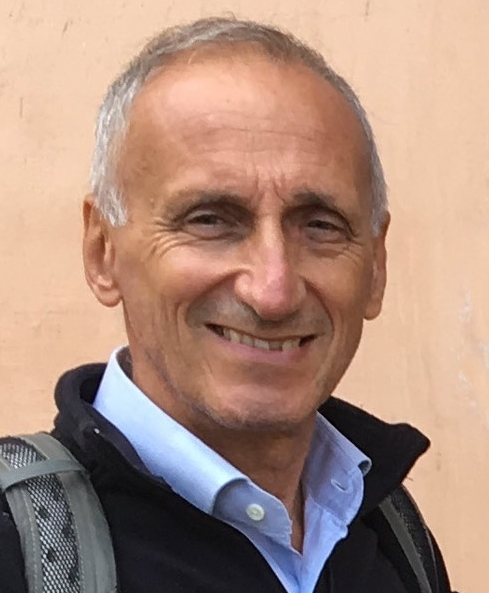 Fabrizio Fabbri合作论文数Istituto Nazionale di Fisica Nucleare Sezione di Bologna24Antony A. Carter合作论文数Queen Mary University of London24P. Bock合作论文数24
 David Axen合作论文数Department of Physics & Astronomy, The University of British Columbia23G. Giacomelli合作论文数23D. G. Charlton合作论文数23
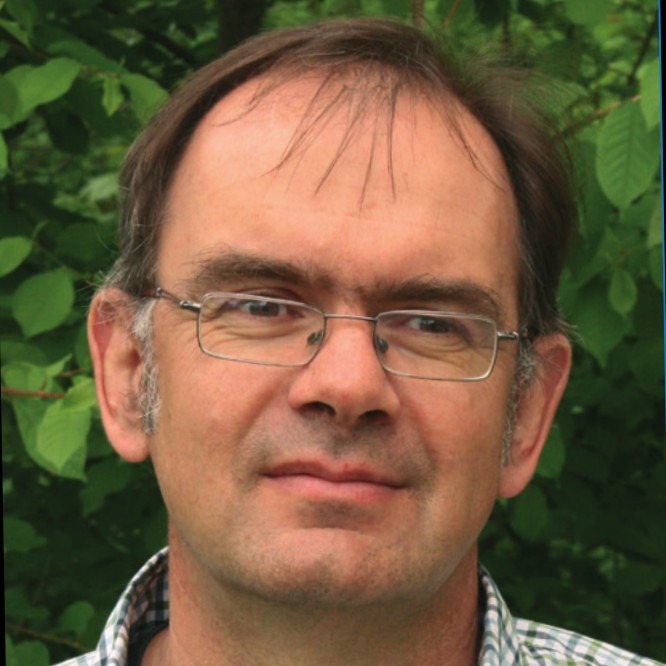 Günter Duckeck合作论文数Faculty of Physics, Ludwig Maximilian University of Munich23
 Eilam Gross合作论文数Department of Particle Physics and Astrophysics, Faculty of Physics, Weizmann Institute of Science23F. K. Loebinger合作论文数23Ties Behnke合作论文数23
 Sylvie Braibant合作论文数Department of Physics and Astronomy "Augusto Righi", University of Bologna;Department of Physics, European Organization for Nuclear Research23J. Goldberg合作论文数23S. Dado合作论文数22
 Pauline Gagnon合作论文数Indiana University;European Organization for Nuclear Research22P. Capiluppi合作论文数22
 Roger Barlow合作论文数School of Computing and Engineering, University of Huddersfield22
 Janet Carter合作论文数The Cavendish Laboratory, Department of Physics, University of Cambridge22
 Otmar Biebel合作论文数Fakultät für Physik, Ludwig-Maximilians-Universität München22M. Boutemeur合作论文数Laboratoire de Physique Nucléaire Université de Montréal H3C 3J7 Montréal Quebec Canada22
 Ian Duerdoth合作论文数22
 Ken Bell合作论文数Rutherford Appleton Laboratory22F. Fiedler合作论文数21
 J. Allison合作论文数Geant4 Associates International Ltd21L. Levinson合作论文数21
 Norbert Wermes合作论文数Physikalisches Institut, Universitat Bonn21
 Siegfried Bethke合作论文数Max Planck Institute for Physics21A. D. Schaile合作论文数21Gabor Bella合作论文数Department of Physics and Astronomy Tel Aviv University 69978 Tel Aviv Israel21Richard J Hemingway合作论文数21
 Paolo Giacomelli合作论文数Istituto Nazionale di Fisica Nucleare, Sezione di Bologna;CERN21
 Elisabetta Barberio合作论文数School of Physics, Faculty of Science, The University of Melbourne;Arc Centre of Excellence for Dark Matter Particle Physics21P. Estabrooks合作论文数20S. O'Neale合作论文数20Jim McKenna合作论文数20Silvia Arcelli合作论文数20
 Shoji Asai (浅井祥仁)合作论文数Department of Physics, Graduate School of Science, The University of Tokyo;International Center for Elementary Particle Physics, The University of Tokyo20r so合作论文数20R. Keeler合作论文数20
 Dean Karlen合作论文数University of Victoria and TRIUMF20Ij Bloodworth合作论文数19Y. Rozen合作论文数19P. Clarke合作论文数19csaba hajdu合作论文数19




