The centrality dependence of the mean charged-particle multiplicity as a function of pseudorapidity is measured in approximately 1 mu b(-1) of proton-lead collisions at a nucleon-nucleon centre-of-mass energy of root s(NN) = 5.02 TeV using the ATLAS detector at the Large Hadron Collider. Charged particles with absolute pseudorapidity less than 2.7 are reconstructed using the ATLAS pixel detector. The p + Pb collision centrality is characterised by the total transverse energy measured in the Pb-going direction of the forward calorimeter. The charged-particle pseudorapidity distributions are found to vary strongly with centrality, with an increasing asymmetry between the proton-going and Pb-going directions as the collisions become more central. Three different estimations of the number of nucleons participating in the p + Pb collision have been carried out using the Glauber model as well as two Glauber-Gribov inspired extensions to the Glauber model. Charged-particle multiplicities per participant pair are found to vary differently for these three models, highlighting the importance of including colour fluctuations in nucleon-nucleon collisions in the modelling of the initial state of p + Pb collisions.
The ATLAS muon spectrometer uses drift-tube chambers for precision tracking. The performance of these chambers in the presence of magnetic field and high radiation fluxes is studied in this article using test-beam data recorded in the Gamma Irradiation Facility at CERN. The measurements are compared to detailed predictions provided by the Garfield drift-chamber simulation programme.
Using a data sample of 106 million $\psi(3686)$ events collected with the BESIII detector operated at the BEPCII storage ring, we study for the first time the decay $\chi_{cJ}\to\phi K^{0}_S K^{\pm}\pi^{\mp}$ and $\chi_{cJ}\to\phi K^{+} K^{-}\pi^{0}$ in the E1 radiative transition $\psi(3686)\to\gamma\chi_{cJ}$. The decays are dominated by the three-body decay $\chi_{cJ}\to \phi K^*(892)\bar{K}$. We measure branching fractions for this reaction via the neutral and charged $K^*(892)$ and find them consistent with each other within the expectation of isospin symmetry. In the $K\bar{K}\pi$ invariant mass distribution a structure near the $K^*(892)\bar{K}$ mass threshold is observed, and the corresponding mass and width are measured to be $1412\pm4(\mathrm{stat.})\pm8(\mathrm{sys.}) \mathrm{MeV}/c^2$ and $\Gamma$ = $84\pm12(\mathrm{stat.})\pm40(\mathrm{sys.}) \mathrm{MeV}$, respectively. The observed state favors an assignment to the $h_1(1380)$, considering its possible $J^{PC}$ and comparing its mass, width and decay mode to those reported in the Particle Data Group.
The jet energy scale (JES) and its systematic uncertainty are determined for jets measured with the ATLAS detector using proton-proton collision data with a centre-of-mass energy of [Formula: see text] TeV corresponding to an integrated luminosity of [Formula: see text][Formula: see text]. Jets are reconstructed from energy deposits forming topological clusters of calorimeter cells using the anti-[Formula: see text] algorithm with distance parameters [Formula: see text] or [Formula: see text], and are calibrated using MC simulations. A residual JES correction is applied to account for differences between data and MC simulations. This correction and its systematic uncertainty are estimated using a combination of in situ techniques exploiting the transverse momentum balance between a jet and a reference object such as a photon or a [Formula: see text] boson, for [Formula: see text] and pseudorapidities [Formula: see text]. The effect of multiple proton-proton interactions is corrected for, and an uncertainty is evaluated using in situ techniques. The smallest JES uncertainty of less than 1 % is found in the central calorimeter region ([Formula: see text]) for jets with [Formula: see text]. For central jets at lower [Formula: see text], the uncertainty is about 3 %. A consistent JES estimate is found using measurements of the calorimeter response of single hadrons in proton-proton collisions and test-beam data, which also provide the estimate for [Formula: see text] TeV. The calibration of forward jets is derived from dijet [Formula: see text] balance measurements. The resulting uncertainty reaches its largest value of 6 % for low-[Formula: see text] jets at [Formula: see text]. Additional JES uncertainties due to specific event topologies, such as close-by jets or selections of event samples with an enhanced content of jets originating from light quarks or gluons, are also discussed. The magnitude of these uncertainties depends on the event sample used in a given physics analysis, but typically amounts to 0.5-3 %.
This paper presents cross sections for the production of a W boson in association with jets, measured in proton–proton collisions at √ s = 7 TeV with the ATLAS experiment at the large hadron collider. With an integrated luminosity of 4.6 fb−1, this data set allows for an exploration of a large kinematic range, including jet production up to a transverse momentum of 1 TeV and multiplicities up to seven associated jets. The production cross sections for W bosons are measured in both the electron and muon decay channels. Differential cross sections for many observables are also presented including measurements of the jet observables such as the rapidities and the transverse momenta as well as measurements of event observables such as the scalar sums of the transverse momenta of the jets. The measurements are compared to numerous QCD predictions including next-toleading-order perturbative calculations, resummation calculations and Monte Carlo generators.
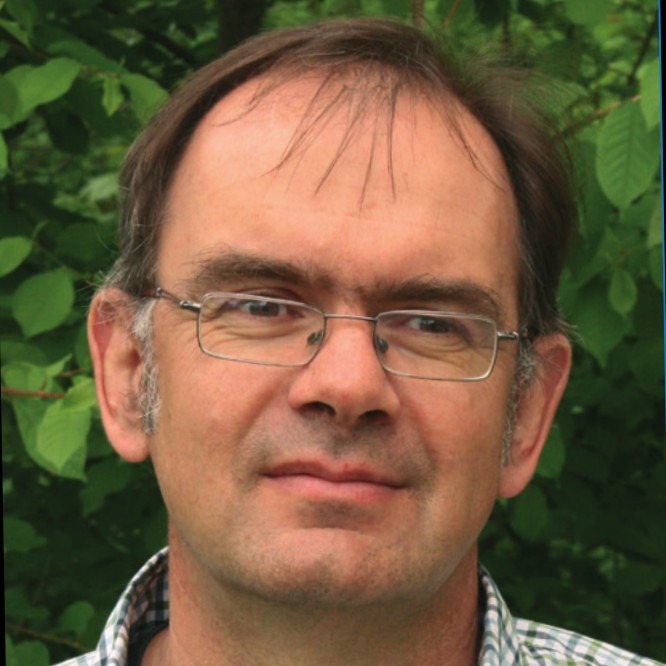 Günter Duckeck合作论文数Faculty of Physics, Ludwig Maximilian University of Munich214
 Ivor Fleck合作论文数Center for Particle Physics Siegen, University of Siegen;Department of Physics, University of Siegen211
 Otmar Biebel合作论文数Fakultät für Physik, Ludwig-Maximilians-Universität München209
 Klaus Desch合作论文数Physikalisches Institut, Universität Bonn;Faculty of Mathematics and Natural Sciences, Universität Bonn207
 Erez Etzion合作论文数School of Physics and Astronomy, Tel Aviv University;European Organization for Nuclear Research207
 R. Keeler合作论文数204Gabor Bella合作论文数Department of Physics and Astronomy Tel Aviv University 69978 Tel Aviv Israel204
 Gideon Alexander合作论文数School of Physics and Astronomy, Tel-Aviv University204F. Fiedler合作论文数201M. Hauschild合作论文数European Organisation for Particle Physics CERN CH-1211 Geneva 23 Switzerland199
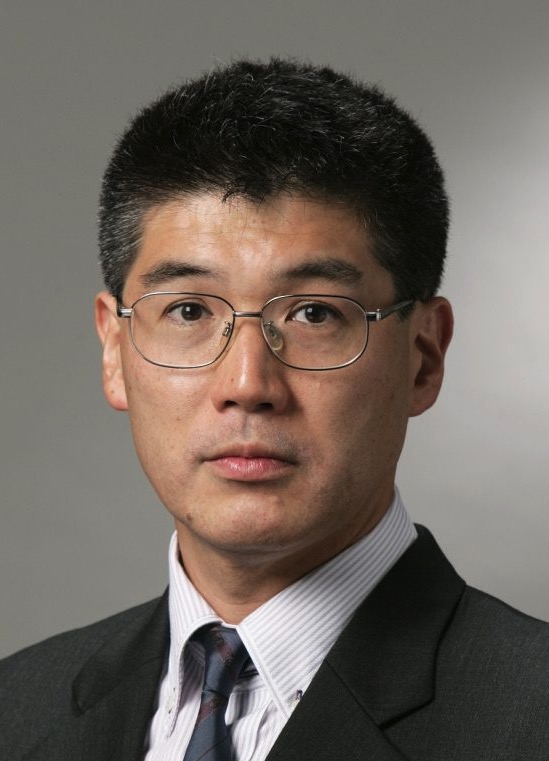 Shoji Asai (浅井祥仁)合作论文数Department of Physics, Graduate School of Science, The University of Tokyo;International Center for Elementary Particle Physics, The University of Tokyo198D. G. Charlton合作论文数195
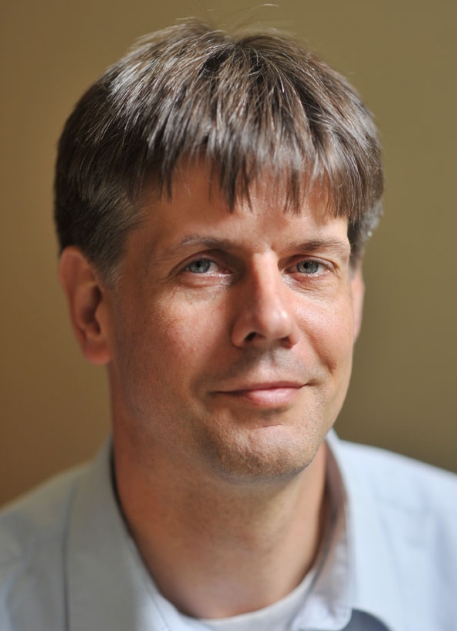 Paul de Jong合作论文数Institute of Physics, Faculty of Science, Universiteit van Amsterdam;Nikhef195
 Georges Azuelos合作论文数Department of Physics, Faculty of Arts and Science, Université de Montréal;TRIUMF192G. Herten合作论文数191
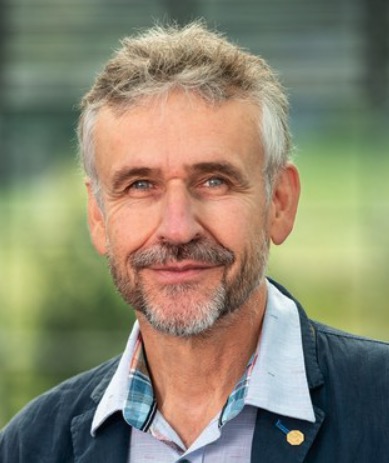 Michael Kobel合作论文数Technischen Universität Dresden;LHC, CERN190
 Eilam Gross合作论文数Department of Particle Physics and Astrophysics, Faculty of Physics, Weizmann Institute of Science190
 Elisabetta Barberio合作论文数School of Physics, Faculty of Science, The University of Melbourne;Arc Centre of Excellence for Dark Matter Particle Physics188Antony A. Carter合作论文数Queen Mary University of London186
 David Axen合作论文数Department of Physics & Astronomy, The University of British Columbia183
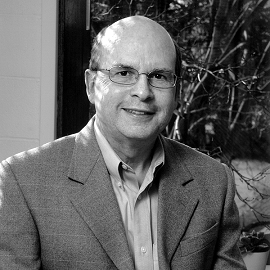 James E. Pilcher合作论文数Department of Physics, The University of Chicago183D. Lellouch合作论文数183F. K. Loebinger合作论文数183
 Peter Krieger合作论文数Department of Physics, Faculty of Arts and Science, University of Toronto180Y. Rozen合作论文数175G. Mikenberg合作论文数173r so合作论文数172
 Richard Batley合作论文数The Cavendish Laboratory, Department of Physics, University of Cambridge172
 Roger Barlow合作论文数School of Computing and Engineering, University of Huddersfield172
 Gabriella Pásztor合作论文数Department of Atomic Physics, Faculty of Natural Sciences, Eötvös Loránd University171R. A. McPherson合作论文数171
 James Pinfold合作论文数Department of Physics, Faculty of Science, University of Alberta171
 Shlomit Tarem合作论文数Department of Physics, Technion–Israel Institute of Technology;The Center of Research Excellence in The Quantum Universe170
 Janet Carter合作论文数The Cavendish Laboratory, Department of Physics, University of Cambridge170
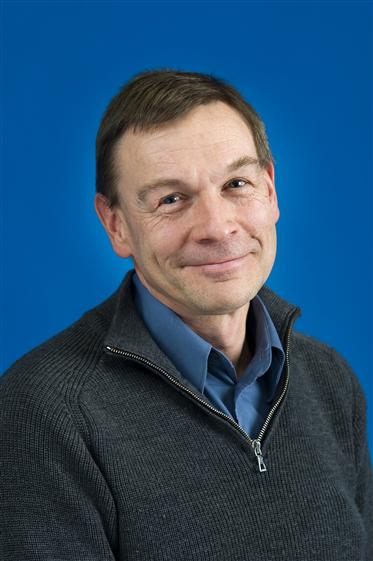 Peter Mättig合作论文数University of Wuppertal169L. Levinson合作论文数169
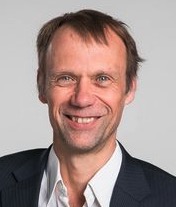 Stefan Kluth合作论文数Max Planck Institute for Physics169K. J. Anderson合作论文数168
 Steve Lloyd合作论文数School of Physical and Chemical Sciences, Queen Mary University of London;Institute of Physics, Queen Mary University of London168I.P. Duerdoth合作论文数168H. J. Burckhart合作论文数European Organisation for Particle Physics CERN CH-1211 Geneva 23 Switzerland167K. Kawagoe合作论文数International Centre for Elementary Particle Physics and Department of Physics University of Tokyo 113 Tokyo167
 Heinrich Voß合作论文数Institute of Mathematics, Hamburg University of Technology167P. Sherwood合作论文数166J. Ludwig合作论文数166W. Mader合作论文数165C. Rembser合作论文数164
 Eric Torrence合作论文数Institute for Fundamental Science, Department of Physics, College of Arts and Sciences, University of Oregon163P. M. Watkins合作论文数162




