We present a momentum measurement method based on multiple Coulomb scattering (MCS) in the FASERν emulsion detector. The measurement of charged-particle momenta is essential for studying neutrino interactions in the TeV energy range at the FASER experiment. This method exploits the sub-micron spatial resolution and long tracking length of the FASERν detector, enabling momentum determination from a few GeV up to a few TeV. The performance was evaluated using Geant4-based Monte Carlo simulations and validated with muon test beam data in the momentum range 100-300 GeV. As a first probe of the method for higher momentum muons, background muons recorded by the FASERν detector were examined, showing reconstructed momenta consistent with expectations from their angular spread.
This Letter presents the measurement of the energy-dependent neutrino-nucleon cross section in tungsten and the differential flux of muon neutrinos and antineutrinos. The analysis is performed using proton-proton collision data at a center-of-mass energy of 13.6 TeV and corresponding to an integrated luminosity of (65.6±1.4) fb^{-1}. Using the active electronic components of the FASER detector, 338.1±21.0 charged current muon neutrino interaction events are identified, with backgrounds from other processes subtracted. We unfold the neutrino events into a fiducial volume corresponding to the sensitive regions of the FASER detector and interpret the results in two ways: (i) we use the expected neutrino flux to measure the cross section, and (ii) we use the predicted cross section to measure the neutrino flux. Both results are presented in six bins of neutrino energy, achieving the first differential measurement in the TeV range. The observed distributions align with standard model predictions. Using this differential data, we extract the contributions of neutrinos from pion and kaon decays.
This paper presents the reconstruction and performance evaluation of the FASERν emulsion detector, which aims to measure interactions from neutrinos produced in the forward direction of proton-proton collisions at the CERN Large Hadron Collider. The detector, composed of tungsten plates interleaved with emulsion films, records charged particles with sub-micron precision. A key challenge arises from the extremely high track density environment, reaching 𝒪(10^5) tracks per cm^2. To address this, dedicated alignment techniques and track reconstruction algorithms have been developed, building on techniques from previous experiments and introducing further optimizations. The performance of the detector is studied by evaluating the single-film efficiency, position and angular resolution, and the impact parameter distribution of reconstructed vertices. The results demonstrate that an alignment precision of 0.3 micrometers and robust track and vertex reconstruction are achieved, enabling accurate neutrino measurements in the TeV energy range.
The FASER experiment at CERN has opened a new window in collider neutrino physics by detecting TeV-energy neutrinos produced in the forward direction at the LHC. Building on this success, this document outlines the scientific case and design considerations for an upgraded FASER neutrino detector to operate during LHC Run 4 and beyond. The proposed detector will significantly enhance the neutrino physics program by increasing event statistics, improving flavor identification, and enabling precision measurements of neutrino interactions at the highest man-made energies. Key objectives include measuring neutrino cross sections, probing proton structure and forward QCD dynamics, testing lepton flavor universality, and searching for beyond-the-Standard Model physics. Several detector configurations are under study, including high-granularity scintillator-based tracking calorimeters, high-precision silicon tracking layers, and advanced emulsion-based detectors for exclusive event reconstruction. These upgrades will maximize the physics potential of the HL-LHC, contribute to astroparticle physics and QCD studies, and serve as a stepping stone toward future neutrino programs at the Forward Physics Facility.
A bstract The first FASER search for a light, long-lived particle decaying into a pair of photons is reported. The search uses LHC proton-proton collision data at $$ \sqrt{s} $$ s = 13 . 6 TeV collected in 2022 and 2023, corresponding to an integrated luminosity of 57 . 7 fb − 1 . A model with axion-like particles (ALPs) dominantly coupled to weak gauge bosons is the primary target. Signal events are characterised by high-energy deposits in the electromagnetic calorimeter and no signal in the veto scintillators. One event is observed, compared to a background expectation of 0 . 44 ± 0 . 39 events, which is entirely dominated by neutrino interactions. World-leading constraints on ALPs are obtained for masses up to 300 MeV and couplings to the Standard Model W gauge boson, g aWW , around 10 − 4 GeV − 1 , testing a previously unexplored region of parameter space. Other new particle models that lead to the same experimental signature, including ALPs coupled to gluons or photons, U(1) B gauge bosons, up-philic scalars, and a Type-I two-Higgs doublet model, are also considered for interpretation, and new constraints on previously viable parameter space are presented in this paper.
The muon puzzle – an excess of muons relative to simulation predictions in ultra-high-energy cosmic-ray air showers – has been reported by many experiments. This suggests that forward particle production in hadronic interactions is not fully understood. Some of the scenarios proposed to resolve this predict reduced production of forward neutral pions and enhanced production of forward kaons (or other particles). The FASER experiment at the LHC is located 480 m downstream of the ATLAS interaction point and is sensitive to neutrinos and muons, which are the decay products of forward charged pions and kaons. In this study, the latest measurements of electron and muon neutrino fluxes are presented using the data corresponding to 9.5 fb^-1 and 65.6 fb^-1 of proton-proton collisions with √(s)=13.6 TeV by the FASERν and the FASER electronic detector, respectively. These fluxes are compared with predictions from recent hadronic interaction models, including EPOS-LHCr, SIBYLL 2.3e, and QGSJET 3. The predictions are generally consistent with the measured fluxes from FASER, although some discrepancies appear in certain energy bins. More precise flux measurements with additional data will follow soon, enabling validation of pion, kaon, and charm meson production with finer energy binning, reduced uncertainties, and multi-differential analyses.
The FASER experiment at the LHC is designed to search for light, weakly-interacting particles produced in proton-proton collisions at the ATLAS interaction point that travel in the far-forward direction. The first results from a search for dark photons decaying to an electron-positron pair, using a dataset corresponding to an integrated luminosity of 27.0 fb$^{-1}$ collected at center-of-mass energy $\sqrt{s} = 13.6$ TeV in 2022 in LHC Run 3, are presented. No events are seen in an almost background-free analysis, yielding world-leading constraints on dark photons with couplings $\epsilon \sim 2 \times 10^{-5} - 1 \times 10^{-4}$ and masses $\sim$ 17 MeV - 70 MeV. The analysis is also used to probe the parameter space of a massive gauge boson from a U(1)$_{B-L}$ model, with couplings $g_{B-L} \sim 5 \times 10^{-6} - 2 \times 10^{-5}$ and masses $\sim$ 15 MeV - 40 MeV excluded for the first time.
The Forward Search Experiment (FASER) at CERN's Large Hadron Collider (LHC) has recently directly detected the first collider neutrinos. Neutrinos play an important role in all FASER analyses, either as signal or background, and it is therefore essential to understand the neutrino event rates. In this study, we update previous simulations and present prescriptions for theoretical predictions of neutrino fluxes and cross sections, together with their associated uncertainties. With these results, we discuss the potential for possible measurements that could be carried out in the coming years with the FASER neutrino data to be collected in LHC Run 3 and Run 4.
The first results of the study of high-energy electron neutrino (νe) and muon neutrino (νμ) charged-current interactions in the FASERν emulsion-tungsten detector of the FASER experiment at the LHC are presented. A 128.8 kg subset of the FASERν volume was analyzed after exposure to 9.5 fb−1 of s=13.6 TeV pp data. Four (eight) νe (νμ) interaction candidate events are observed with a statistical significance of 5.2σ (5.7σ). This is the first direct observation of νe interactions at a particle collider and includes the highest-energy νe and νμ ever detected from an artificial source. The interaction cross section per nucleon σ/Eν is measured over an energy range of 560–1740 GeV (520–1760 GeV) for νe (νμ) to be (1.2−0.7+0.8)×10−38 cm2 GeV−1 [(0.5±0.2)×10−38 cm2 GeV−1], consistent with standard model predictions. These are the first measurements of neutrino interaction cross sections in those energy ranges. Published by the American Physical Society 2024
FASER, the ForwArd Search ExpeRiment, is an experiment dedicated to searching for light, extremely weakly-interacting particles at CERN's Large Hadron Collider (LHC). Such particles may be produced in the very forward direction of the LHC's high-energy collisions and then decay to visible particles inside the FASER detector, which is placed 480 m downstream of the ATLAS interaction point, aligned with the beam collisions axis. FASER also includes a sub-detector, FASER$\nu$, designed to detect neutrinos produced in the LHC collisions and to study their properties. In this paper, each component of the FASER detector is described in detail, as well as the installation of the experiment system and its commissioning using cosmic-rays collected in September 2021 and during the LHC pilot beam test carried out in October 2021. FASER will start taking LHC collision data in 2022, and will run throughout LHC Run 3.
We report the first direct observation of neutrino interactions at a particle collider experiment. Neutrino candidate events are identified in a 13.6 TeV center-of-mass energy pp collision data set of 35.4 fb^-1 using the active electronic components of the FASER detector at the Large Hadron Collider. The candidates are required to have a track propagating through the entire length of the FASER detector and be consistent with a muon neutrino charged-current interaction. We infer 153^+12_-13 neutrino interactions with a significance of 16 standard deviations above the background-only hypothesis. These events are consistent with the characteristics expected from neutrino interactions in terms of secondary particle production and spatial distribution, and they imply the observation of both neutrinos and anti-neutrinos with an incident neutrino energy of significantly above 200 GeV.
A bstract A search for the exclusive decays of the Higgs and Z bosons to a ϕ or ρ meson and a photon is performed with a pp collision data sample corresponding to an integrated luminosity of up to 35 . 6 fb −1 collected at $$ \sqrt{s}=13 $$ s = 13 TeV with the ATLAS detector at the CERN Large Hadron Collider. These decays have been suggested as a probe of the Higgs boson couplings to light quarks. No significant excess of events is observed above the background, as expected from the Standard Model. Upper limits at 95% confidence level were obtained on the branching fractions of the Higgs boson decays to ϕ γ and ρ γ of 4 . 8 × 10 −4 and 8 . 8 × 10 −4 , respectively. The corresponding 95% confidence level upper limits for the Z boson decays are 0 . 9 × 10 −6 and 25 × 10 −6 for ϕ γ and ρ γ, respectively.
A search for leptoquarks decaying into the bτ final state is performed using Run 2 proton-proton collision data from the Large Hadron Collider, corresponding to an integrated luminosity of 139 fb−1 at √(s) = 13 TeV recorded by the ATLAS detector. The benchmark models considered in this search are vector leptoquarks with electric charge of 2/3e and scalar leptoquarks with an electric charge of 4/3e. No significant excess above the Standard Model prediction is observed, and 95
The total and differential Higgs boson production cross-sections are measured through a combined statistical analysis of the H → ZZ* → 4ℓ and H → γγ decay channels. The results are based on a dataset of 139 fb−1 of proton–proton collisions at a centre-of-mass energy of 13 TeV, recorded by the ATLAS detector at the Large Hadron Collider. The measured total Higgs boson production cross-section is 55.5_-3.8^+4.0 pb, consistent with the Standard Model prediction of 55.6 ± 2.5 pb. All results from the two decay channels are compatible with each other, and their combination agrees with the Standard Model predictions. A combined statistical interpretation of the measured fiducial cross-sections as a function of the Higgs boson transverse momentum is performed in order to probe the Yukawa couplings to the bottom and charm quarks. A similar interpretation is performed by including also the constraints from the measurements of Higgs boson production in association with a W or Z boson in the H → bb and cc decay channels.
The FASER experiment is a new small and inexpensive experiment that is located 480 meters downstream of the ATLAS experiment at the CERN LHC. The experiment will shed light on currently unexplored phenomena, having the potential to make a revolutionary discovery. FASER is designed to capture decays of exotic particles, produced in the very forward region, beyond the ATLAS detector acceptance. The experiment installation was completed at the end of March 2021 and the experiment is now getting ready for the LHC Run 3 data-taking. This presentation will focus mostly on the trigger and data acquisition (TDAQ) system of the experiment. The TDAQ system is going to combine information from the tracker, scintillators, and calorimeter and will send them to the PC that is going to be located on the ground at the expected physics trigger rate of 650 Hz. The presentation will include information about the commissioning of the system on the ground and in the LHC tunnel as well as it will be presenting various tests performed during the commissioning phase including first test runs using cosmic particles.
This Letter reports the observation of WWW production and a measurement of its cross section using 139 fb^{-1} of proton-proton collision data recorded at a center-of-mass energy of 13 TeV by the ATLAS detector at the Large Hadron Collider. Events with two same-sign leptons (electrons or muons) and at least two jets, as well as events with three charged leptons, are selected. A multivariate technique is then used to discriminate between signal and background events. Events from WWW production are observed with a significance of 8.0 standard deviations, where the expectation is 5.4 standard deviations. The inclusive WWW production cross section is measured to be 820±100 (stat)±80 (syst) fb, approximately 2.6 standard deviations from the predicted cross section of 511±18 fb calculated at next-to-leading-order QCD and leading-order electroweak accuracy.
This white paper briefly summarized key conclusions of the recent US Community Study on the Future of Particle Physics (Snowmass 2021) workshop on Software and Computing for Small High Energy Physics Experiments.
FASER is a new experiment designed to search for new light weakly-interacting long-lived particles (LLPs) and study high-energy neutrino interactions in the very forward region of the LHC collisions at CERN. The experimental apparatus is situated 480 m downstream of the ATLAS interaction-point aligned with the beam collision axis. The FASER detector includes four identical tracker stations constructed from silicon microstrip detectors. Three of the tracker stations form a tracking spectrometer, and enable FASER to detect the decay products of LLPs decaying inside the apparatus, whereas the fourth station is used for the neutrino analysis. The spectrometer has been installed in the LHC complex since March 2021, while the fourth station is not yet installed. FASER will start physics data taking when the LHC resumes operation in early 2022. This paper describes the design, construction and testing of the tracking spectrometer, including the associated components such as the mechanics, readout electronics, power supplies and cooling system.
A search for the Higgs boson decaying into a photon and a pair of electrons or muons with an invariant mass m (cid:3)(cid:3) < 30 GeV is presented. The analysis is performed using 139 fb − 1 of proton–proton collision data, produced by the LHC at a centre-of-mass energy of 13 TeV and collected by the ATLAS experiment. Evidence for the H → (cid:3)(cid:3) γ process is found with a significance of 3.2 over the background-only hypothesis, compared to an expected significance of 2.1 for the Standard Model prediction. The best-fit value of the signal-strength parameter, defined as the ratio of the observed signal yield to the one expected in the Standard Model, is μ = 1 . 5 ± 0 . 5. The Higgs boson production cross-section times the H → (cid:3)(cid:3) γ branching ratio for m (cid:3)(cid:3) < 30 GeV is determined to be 8 . 7 + 2 . 8 − 2 . 7 fb.
This letter presents a search for narrow, high-mass resonances in the Zγ final state with the Z boson decaying into a pair of electrons or muons. The s=13 TeV pp collision data were recorded by the ATLAS detector at the CERN Large Hadron Collider and have an integrated luminosity of 140 fb−1. The data are found to be in agreement with the Standard Model background expectation. Upper limits are set on the resonance production cross section times the decay branching ratio into Zγ. For spin-0 resonances produced via gluon–gluon fusion, the observed limits at 95% confidence level vary between 65.5 fb and 0.6 fb, while for spin-2 resonances produced via gluon–gluon fusion (or quark–antiquark initial states) limits vary between 77.4 (76.1) fb and 0.6 (0.5) fb, for the mass range from 220 GeV to 3400 GeV.
 David Leith合作论文数Stanford Linear Accelerator Center933
 Roger Barlow合作论文数School of Computing and Engineering, University of Huddersfield932
 Blair Ratcliff合作论文数SLAC National Accelerator Laboratory;Stanford University903
 George Lafferty合作论文数School of Physics and Astronomy, The University of Manchester900J. Brau合作论文数894
 Masahiro Morii合作论文数Department of Physics, Harvard University886
 Heiko Lacker合作论文数Institut für Physik, Mathematisch-Naturwissenschaftliche Fakultät, Humboldt-Universität zu Berlin;Department of Physics, Humboldt-Universität zu Berlin861J. Ocariz合作论文数854
 Bruce Schumm合作论文数Physical & Biological Sciences Division, Physics Department, University of California, Santa Cruz;Santa Cruz Institute for Particle Physics, University of California, Santa Cruz849
 Glen Cowan合作论文数Centre for Particle Physics and Astronomy, Department of Physics, Royal Holloway, University of London846
 Gerald Eigen合作论文数Department of Physics and Technology, University of Bergen846
 Bjarne Sandvik Stugu合作论文数Department of Physics and Technology University of Bergen846
 Carlo Dallapiccola合作论文数Department of Physics, College of Natural Sciences, University of Massachusetts Amherst842
 Fabio Anulli合作论文数Istituto Nazionale di Fisica Nucleare838N. B. Sinev合作论文数838
 James Cochran合作论文数Department of Physics and Astronomy, College of Liberal Arts and Sciences, Iowa State University831S. Passaggio合作论文数811L. Piemontese合作论文数800
 Uriel Nauenberg合作论文数College of Arts and Sciences, University of Colorado, Boulder796
 Terry L. Schalk合作论文数Division of Physical & Biological Sciences, Department of Physics, University of California, Santa Cruz;Santa Cruz Institute for Particle Physics, University of California, Santa Cruz794J.W. Gary合作论文数793
 Rolf Dubitzky合作论文数CARIAD787
 Bob Kowalewski合作论文数Victoria Subatomic Physics & Accelerator Research Centre, Department of Physics and Astronomy, Faculty of Science, University of Victoria785
 Richard D. Kass合作论文数Department of Physics, College of Arts and Sciences, The Ohio State University781
 Adrian Bevan合作论文数School of Physical and Chemical Sciences, Queen Mary University of London;CERN779
 Abolhassan Jawahery合作论文数Department of Physics, College of Computer, Mathematical, & Natural Sciences, University of Maryland778
 Lucien Cremaldi合作论文数Department of Physics and Astronomy, University of Mississippi778
 Abraham Seiden合作论文数Santa Cruz Institute for Particle Physics, University of California, Santa Cruz;Department of Physics, University of California, Santa Cruz777Serednyakov Sergey Ivanovich合作论文数Budker Institute of Nuclear Physics, Siberian Division, Russian Academy of Sciences775
 Robert Kroeger合作论文数Department of Physics and Astronomy, University of Mississippi774
 Raymond E. Frey合作论文数Physics Department, University of Oregon772
 Claudio Campagnari合作论文数Physics Department, University of California Santa Barbara;CERN769
 Tim Adye合作论文数Particle Physics Department, Rutherford Appleton Laboratory769
 Philip J Clark合作论文数Institute for Particle and Nuclear Physics, School of Physics and Astronomy, The University of Edinburgh765Erwin Gabathuler合作论文数University of Liverpool764Gilbert Grosdidier合作论文数Laboratoire de l'Accélérateur Linéaire, Institut National de Physique Nucléaire et de Physique des Particules763G. Finocchiaro合作论文数762T. S. Mattison合作论文数761
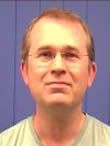 Alan Watson合作论文数School of Physics and Astronomy, College of Engineering and Physical Sciences, University of Birmingham760
 Francesca Di Lodovico合作论文数Department of Physics, Faculty of Natural, Mathematical & Engineering Sciences, King’s College London758
 Andrew J. Lankford合作论文数Department of Physics & Astronomy, School of Physical Sciences, University of California, Irvine757
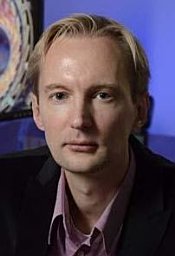 A. V. Gritsan合作论文数Johns Hopkins University756
 Michel Davier合作论文数Université Paris-Saclay755G. Marchiori合作论文数755S. Prell合作论文数755
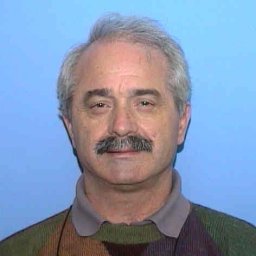 Fernando Palombo合作论文数Department of Physics, University of Milan755
 Gr Bonneaud合作论文数University of Paris754
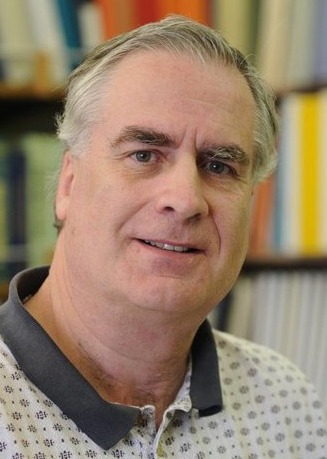 Frank C. Porter合作论文数The Division of Physics, Mathematics and Astronomy, California Institute of Technology752
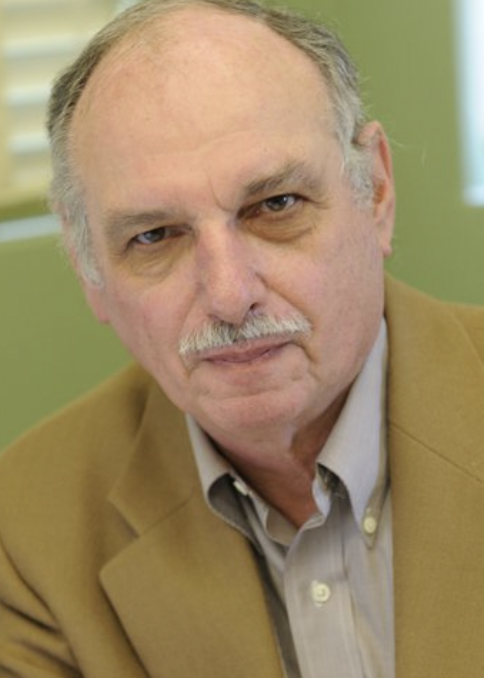 David Hitlin合作论文数Division of Physics Mathematics and Astronomy, California Institute of Technology751




