A molecular beam epitaxy system was used to deposit a ferro/anitiferromagnet (Fe/KCoF3) structures. Depending on the deposition conditions the fluoride grew either in the single crystal or polycrystalline forms, which was initially confirmed by the RHEED patterns and X-ray studies. The crystalline form of the KCoF3 significantly affected magnetic properties, in particular exchange bias and magnetocrystalline anisotropy. Extensive transmission electron microscopy (TEM) studies have been made in order to reveal more details on the microstructure of the fluoride and of the Fe/KCoF3 interface.
Molecular beam epitaxy was used to grow a ferromagnet/antiferromagnet (Fe/KCoF3) system. A series of structural, surface, and magnetic characterization techniques were used to understand the correlation between microstructural and magnetic properties in this exchange bias system. Depending on deposition conditions, the fluoride grew either in a single crystal or a polycrystalline form, which was initially confirmed by reflection high energy electron diffraction patterns and x-ray studies. The crystalline form of the KCoF3 significantly affected the magnetic properties, in particular the exchange bias and the magnetocrystalline anisotropy of the Fe layer. Transmission electron microscopy (TEM) studies were carried out to shed more light on the microstructure of the fluoride and on the interface between Fe and KCoF3 layers. Single crystals KCoF3 layers grown at elevated temperature on (001) Fe template have a (001) orientation. On the other hand, the cross-sectional TEM images of the polycrystalline fluoride deposited at room temperature show columnar structure of the grains with a column diameter of about 10 nm. In addition, planar defects were observed in the Fe layer due to the slight mismatch between Fe and KCoF3 lattices. These defects and grain boundaries in the antiferromagnet are responsible for considerable modification of magnetic properties of the structures with polycrystalline fluoride compared to those with the single crystal KCoF3. Magnetic anisotropy and the exchange bias were measured using ferromagnetic resonance and superconducting quantum interference device magnetometry, respectively. The exchange bias and blocking temperature in the samples with polycrystalline fluoride were significantly reduced, however, the low-temperature fourfold anisotropy was enhanced by a factor of 3 for the samples with 1-nm-thick Fe and polycrystalline fluoride compared to the samples with the same thickness of Fe but single crystal fluoride.
Ball-milling method was applied to dissolve Fe into titanium dioxide (TiO2). X-ray diffraction indicated the starting anatase changed to a rutile-type structure with oxygen deficiency after ball milling. Transmission electron microscopy and X-ray absorption experiments were conducted to examine the possible existence of magnetic impurities in the ball-milled powders after they were leached in HCl solutions. Temperature dependence of the resistivity shows semiconducting behavior and the magnetic hysteresis loops at 5 and 300 K exhibit ferromagnetic characteristics. Fe-doped TiO2 films were also prepared by pulsed laser deposition. The magnetic properties of the films are discussed.
Small CrO2 particles with mean diameters ranging from 11 to 25 nm have been prepared by ball milling. X-ray diffraction studies show a continuous lattice expansion with increasing milling time. A phase transition to Cr2O3 also occurs with a sudden increase in the amount of Cr2O3 found between 5 and 8 h of milling. The decreases of low-field magnetoresistance with increasing milling time is correlated to the expansion of the lattice parameters of CrO2, which probably leads to the reduction in its spin polarization. High-field magnetoresistance increases with the milling possibly due to the enhanced mixed valence of the chromium, which supports the double exchange model.
We report the unexpected synthesis of SiC nanorods during thermally annealing single-walled carbon nanotube sheets (SWNTs) at 1000 °C between two silicon wafers. The exterior layers of the carbon nanotube sheets were converted into a network of SiC nanorods, while the carbon nanotubes interior to the sheet remain unchanged. The nanotube sheets that underwent this reaction were comprised of small diameter nanotubes made by a high-pressure carbon monoxide process (HiPco), which contain iron catalyst. Using the same reaction conditions, SiC formation was not observed for sheets of purified, larger diameter nanotubes made by laser ablation, which contained a small amount of residual metal catalysts.
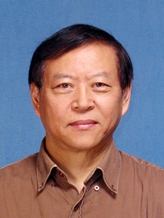 Luwei Zhou (周鲁卫)合作论文数Department of Physics, Fudan University3
 T O'Keevan合作论文数2
 Claus Michael Schneider合作论文数Forschungszentrum Jülich2Michael Hecker合作论文数2Charles J. O'Connor合作论文数University of New Orleans2
 J. Szade合作论文数Institute of Physics, University of Silesia2
 Zbigniew Celinski合作论文数Physics Department, Simon Fraser University2Danuta Skrzypek合作论文数2
 Jinke Tang合作论文数Department of Physics and Astronomy, College of Engineering and Physical Sciences, University of Wyoming2
 Weillie Zhou合作论文数Department of Physics and Materials Science, University of New Orleans;Advanced Materials Research Institute, University of New Orleans2Leonard Spinu合作论文数Advanced Materials Research Institute, University of New Orleans2Leszek Malkinski合作论文数2Robert Camley合作论文数1Y. Chen合作论文数1C-C Wang合作论文数1B. McCarthy合作论文数1S. Collins合作论文数1
 Jun Fang (方俊)合作论文数中国科学院武汉测量与地球物理研究所1
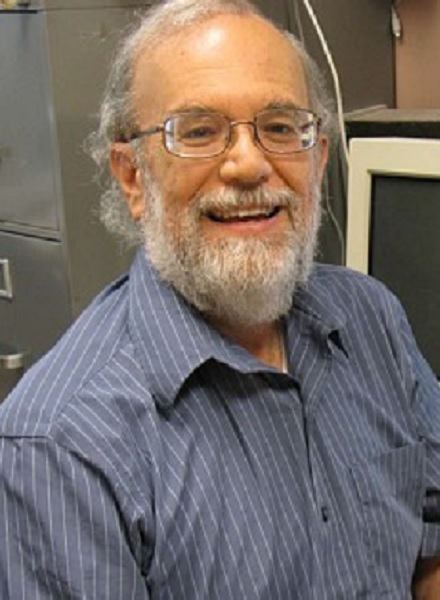 Bob Camley合作论文数Department of Physics and Energy Science, College of Letters, Arts and Sciences, University of Colorado Colorado Springs1J. Fang合作论文数1
 Kaiying Wang (汪开英)合作论文数College of Biosystems Engineering and Food Science, Zhejiang University1
 Edgar Munoz合作论文数Instituto de Carboquímica (CSIC), Miguel Luesma Castán 4, 50018 Zaragoza, Spain1Junko Yano合作论文数1
 Werner Blau合作论文数Trinity College Dublin, The University of Dublin;Shanghai Institute of Optics and Fine Mechanics, Chinese Academy of Science;Northwest University;East China Universtiy of Science and Technology1T Pivoda合作论文数1Jianbiao Dai合作论文数Advanced Materials Research Institute, University of New Orleans1
 A. Vovk合作论文数1
 Alan Dalton合作论文数School of Mathematical and Physical Sciences, University of Sussex1Detong Jiang合作论文数1
 Ray Baughman合作论文数Alan G. MacDiarmid NanoTech Institute, School of Natural Sciences and Mathematics, The University of Texas at Dallas1
 Anvar Zakhidov合作论文数School of Natural Sciences and Mathematics, The University of Texas at Dallas;The Alan G MacDiarmid NanoTech Institute, The University of Texas at Dallas1




