This study investigates the impact of Hurricane Fiona on sandy beaches and foredunes within Prince Edward Island National Park (PEINP). Fiona was the strongest storm to strike the island in nearly a century, with significant wave heights reaching 8 metres. Its impact on sandy beach-dune systems provides an opportunity to gauge the effectiveness of current PEINP's management policies and practices, and to consider potential changes that enhance the role of foredunes and beaches as natural defences against future storms and rise in relative sea level. Survey data and ground/UAV photography were used to compare various locations before (October 2021 to July 2022) and after (October 2022 and May 2023) the storm. High dunes experienced stoss slope erosion without significant changes in the height or position of the foredune crest, offering protection to landward areas. Low dunes were substantially eroded, leading to overwash in certain areas, and dunes located on bedrock and till were completely eroded, exposing the underlying surface. Hurricane Fiona's impact highlights the need of reinforcing current management strategies in PEINP that aim at safeguarding the natural biotic and abiotic components of beach-dune systems, and securing the accommodation space needed for their natural inland migration with rising sea level.
Future optical systems in the sub-mm range require low loss, low reflectance and broadband optics. Presented here is the development process for a hot press technique for making broadband multi-layer anti-reflection coatings for plastic lenses and optical components. The elevated temperatures used in this method induce a change in index and mechanical deformation in the substrate material due to polymer chain rearrangements. To avoid this, these components are annealed before they are machined to their intended form and prior to the application of any coating. Study of precise dimensional and refractive index changes between 115-130 degrees C across repeated annealing cycles shows that ultra-high molecular weight polyethylene (UHMWPE) requires 3-4 annealing cycles above 125 degrees C before stabilisation. We then present 3 and 5 layer test coating recipes for 90-225GHz with comparison between experimental measurements and theory. Preliminary results show good agreement. In this study, the methods presented are kept generic for any sub-mm band focusing broadly on 60-600GHz; however future work will apply what is achieved for future CMB experiments.
Convective systems are responsible for energy transfers between the lower and upper atmospheric layers and play a fundamental role in the water cycle, weather and climate evolution. With a tandem of high resolution and wide swath all-sky atmospheric sounders, the C 2 OMODO concept allows the estimation of vertical dynamics within deep convective systems.
Recent developments of transition-edge sensors (TESs), based on extensive experience in ground-based experiments, have been making the sensor techniques mature enough for their application on future satellite CMB polarization experiments. LiteBIRD is in the most advanced phase among such future satellites, targeting its launch in Japanese Fiscal Year 2027 (2027FY) with JAXA's H3 rocket. It will accommodate more than 4000 TESs in focal planes of reflective low-frequency and refractive medium-and-high-frequency telescopes in order to detect a signature imprinted on the cosmic microwave background (CMB) by the primordial gravitational waves predicted in cosmic inflation. The total wide frequency coverage between 34GHz and 448GHz enables us to extract such weak spiral polarization patterns through the precise subtraction of our Galaxy's foreground emission by using spectral differences among CMB and foreground signals. Telescopes are cooled down to 5Kelvin for suppressing thermal noise and contain polarization modulators with transmissive half-wave plates at individual apertures for separating sky polarization signals from artificial polarization and for mitigating from instrumental 1/f noise. Passive cooling by using V-grooves supports active cooling with mechanical coolers as well as adiabatic demagnetization refrigerators. Sky observations from the second Sun-Earth Lagrangian point, L2, are planned for three years. An international collaboration between Japan, USA, Canada, and Europe is sharing various roles. In May 2019, the Institute of Space and Astronautical Science (ISAS), JAXA selected LiteBIRD as the strategic large mission No. 2.
Coastal foredune evolution involves complex processes and controls that result from the interaction of aeolian and nearshore dynamics. No studies to date have quantified and examined the role of large woody debris (LWD) as a modulator of sediment delivery across the backshore and as a control on foredune development and maintenance. Results from a 4-year research initiative on a high-energy, macrotidal beach, and foredune system show that storm events lead to wave-induced erosion of the backshore and consequent reworking of the LWD matrix. The exposed LWD matrix subsequently traps wind-blown sand on the upper beach, reducing sediment delivery to the foredune by 99% in some cases. In turn, deposition within the LWD matrix leads to rapid burial of the LWD, at least until the next reworking or dune erosion event occurs. Interannual observations at this site indicate that infilling of the accommodation space within the LWD matrix can be rapid, so sediment starvation of the foredune is typically a relatively short-lived phase. This suggests that that the LWD matrix is a highly effective, yet ephemeral, sand-trapping reservoir. Critical to these interactions is the frequency and magnitude of nearshore events that erode the beach periodically and reorganize the LWD matrix, which directly impacts the ability of LWD to modulate onshore sand transport to the foredune, store sediment in the backshore, and act as a buffer against erosive events. An empirically derived conceptual model explaining these relationships is presented.
Assessing aeolian beach-surface dynamics using a remote sensing 1 approach 2 3 Irene Delgado-Fernandez, Robin Davidson-Arnott, Bernard O.Bauer, Ian J. 4 Walker, Jeff Ollerhead, Hosahng Rhew 5 6 7 1Centre for Coastal & Marine Research, School of Environmental Sciences, University of Ulster, 8 Coleraine, UK, BT52 1SA 9 2Department of Geography, University of Guelph, Guelph, ON, Canada, N1G 2W1, 10 rdarnott@uoguelph.ca 11 3Earth & Environmental Sciences and Geography, University of British Columbia, Kelowna, BC, 12 Canada, V1V 1V7, bernard.bauer@ubc.ca 13 4Department of Geography, University of Victoria, Victoria, BC, Canada, V8W 3R4, 14 ijwalker@uvic.ca 15 5Department of Geography & Environment, Mount Allison University, Sackville, NB, Canada, 16 jollerhead@mta.ca 17 6Coastal and Estuarine Morphodynamics Laboratory, Department of Oceanography, INHA 18 University, 253 YongHyun-Dong, Nam-gu, Incheon, 402-751, Korea, 19 rhew0503@hanmail.net 20 21 22
Kinetic Inductance Detectors (KIDs) offer excellent sensitivity in the THz region combined with ease of operation. The SPACEKIDS project is working on developments needed to enable this technology for space. It includes development of antenna-coupled and lumped-element KIDS, and of the necessary readout electronics. KID arrays have been developed for both low-background (astrophysical) and high-background (Earth-observing) applications. Two laboratory demonstrator systems are now being used to evaluate kilo-pixel array characteristics and performance in an environment representative of both astronomy (low background) and Earth observing (high-background) applications.
Airflow dynamics over dunes differ significantly from those over flat terrain due to topographically generated pressure fields that cause deviations in flow behavior (e.g., streamline compression, expansion and/or curvature, flow separation and/or reversal). Recent research using ultrasonic anemometry, modeling of computational fluid dynamics (CFD), wind tunnel simulations, and detailed field experiments have enhanced our understanding of boundary layer flow over dunes and, thus, advanced recent efforts to model the interactions between dune geomorphology, airflow dynamics, and sand transport. This chapter reviews principally the fundamentals of airflow over and in the lee of transverse dunes and discusses several key advances and limitations in measurement and modeling of flow dynamics. Although progress in our understanding has been made mostly via study of transverse desert dunes, due to their relatively simple shape and surface roughness characteristics (i.e., no vegetation), research advances from other dune settings (e.g., coastal foredunes) are also reviewed briefly. Though covered more extensively in other chapters, implications for sediment transport and dune morphodynamics are also discussed. Areas for further research are identified based on gaps in knowledge on the implications of flow dynamics for mesoscale (i.e., landform to landscape scale) dune sediment budgets, migration and morphological evolution.
Topographic changes from erosion pins and on-site meteorological data document the spatial and temporal patterns of aeolian sediment transport at monthly to annual timescales across an active parabolic dune within a vegetation-stabilized inland, prairie dune field. Over two years, the sediment budget, calculated from digital elevation models, shows that the total volume of erosion (9890 m(3)) is greater than the amount of deposition (6990 m(3)). indicating a net loss of 2900 m(3) of sediment (or similar to 29% of eroded sediment) from the dune. Sediment erosion occurred mainly on the stoss slope (3600 m(3); similar to 36% of eroded sediment), but also on the south (2100 m(3): similar to 21%) and north sides of the dune head (1700 m(3); similar to 17%), the blowouts along the arms (1740 m(3), similar to 18%) and the crest (650 m(3); similar to 7%). Erosion from the deflation basin is limited by surface roughness and armoring effects of a gravel lag deposit (100 m(3): similar to 1%). Thus, the blowouts currently contribute to maintaining dune mobility because no other sediment input occurs from upwind. Sediment deposition onto the dune occurred primarily beyond the brink on the south and southeast lee slopes (5500 m(3); similar to 80%), coinciding with the southeasterly resultant transport direction for November 2004-05. The net loss of about 2900 m(3) (similar to 29%) may be attributed to sediment carried in suspension over and beyond the dune.Correlation analysis between sediment transport and meteorological variables suggests that monthly to seasonal changes of surface conditions (e.g., vegetation cover, ground freezing, moisture) buffer the relative importance of temperature and precipitation on rates of sediment transport. Conversely, wind correlates well on a monthly to seasonal basis because it is a driver of transport under all types of surface conditions. Seasonal effects produce a complex interaction between wind, climate and surface conditions. This leads to a dynamic range of threshold velocities, which in turn causes spatial and temporal variations in transport-limiting and supply-limiting conditions. Collectively, these findings have implications for modeling parabolic dune morphodynamics and sediment transport in mid- to high-latitude inland settings. (C) 2008 Elsevier B.V. All rights reserved.
Temporal and spatial changes in wind speed, wind direction, and moisture content are ubiquitous across sandy coastal beaches. Often these factors interact in unknown ways to create complexity that confounds our ability to model sediment transport at any point across the beach as well as our capacity to predict sediment delivery into the adjacent foredunes. This study was designed to measure wind flow and sediment transport over a beach and foredune at Greenwich Dunes, Prince Edward Island National Park, with the express purpose of addressing these complex interactions.
The Holocene coastal landscape of northeastern Graham Island, British Columbia is reconstructed from ca. 9.5 ka to present based on surfi cial geology and geomorphic mapping using light detection and ranging techniques, high-resolution aerial photographs and ground truthing, and dating of coastal deposits using optical and radiocarbon dating methods. Six evolutionary phases are defi ned over the Holocene. A predominantly erosional shoreline, initially featuring steep, bluff-backed shorelines and river inlets, evolved into an increasingly depositional coastal landscape with raised marine terraces, a northward-extending spit complex, and prograding lowland foredune and beach ridge systems. The modern system hosts an eroding shoreline backed by landward-migrating parabolic dunes and foredunes with localized erosional bluffs. Shoreline reconstructions indicate a Holocene marine highstand of about 15.5 m a.m.s.l. at ca. 9.5 ka. By 5 ka, a deep embayment, acting as a depositional sink, was formed when Tow Hill joined the mainland which, in turn, initiated rapid progradation of North Beach. Since about 2.7 ka, rapid and possibly accelerating rates of beach ridge and foredune progradation have occurred, coupled with extension of the Rose Spit complex. During this period, the 'East beach' shoreline eroded, removing evidence of past shorelines and older geomorphic features. Nearshore sediment transport has occurred along both North Beach and East beach coupled with high eolian activity. West of Tow Hill, geoarcheological evidence dating to ca. 3.1 ka from atop a high bluff promontory may indicate a possible Haida occupation site at that time. Beach progradation has also occurred along this section of shoreline in the last 3.0 ka, with Yakan Point becoming attached to the mainland by about 1.2 ka.
We describe the capabilities of SCUBA-2, the first CCD-like imager for submillimeter astronomy, and the technologies that make it possible. Unlike previous detectors using discrete bolometers, SCUBA-2 has two dc-coupled, monolithic arrays with a total of ~10,000 bolometers. SCUBA-2’s absorber-coupled pixels use superconducting transition edge sensors operating at ~ 120mK for photon-noise limited performance and a SQUID time-domain multiplexer for readout. It will offer simultaneous imaging of an 8 × 8 arcmin field of view at wavelengths of 850 μm and 450 μm. SCUBA-2 is expected to have a huge impact on the study of galaxy formation and evolution in the early Universe as well as star and planet formation in our own Galaxy. Mapping the sky to the same S/N up to 1000 times faster than SCUBA, SCUBA-2 will also act as a pathfinder for submillimeter interferometers such as ALMA. SCUBA-2 will begin operation on the JCMT in 2006.
SCUBA-2 is an innovative 10,000 pixel submillimeter camera due to be delivered to the James Clerk Maxwell Telescope in late 2006. The camera is expected to revolutionize submillimeter astronomy in terms of the ability to carry out wide-field surveys to unprecedented depths addressing key questions relating to the origins of galaxies, stars and planets. This paper presents an update on the project with particular emphasis on the laboratory commissioning of the instrument. The assembly and integration will be described as well as the measured thermal performance of the instrument. A summary of the performance results will be presented from the TES bolometer arrays, which come complete with in-focal plane SQUID amplifiers and multiplexed readouts, and are cooled to 100mK by a liquid cryogen-free dilution refrigerator. Considerable emphasis has also been placed on the operating modes of the instrument and the "common-user" aspect of the user interface and data reduction pipeline. These areas will also be described in the paper.
SCUBA-2, which replaces SCUBA (the Submillimeter Common User Bolometer Array) on the James Clerk Maxwell Telescope (JCMT) in 2006, is a large-format bolometer array for submillimeter astronomy. Unlike previous detectors which have used discrete bolometers, SCUBA-2 has two dc-coupled, monolithic, filled arrays with a total of ∼10,000 bolometers. It will offer simultaneous imaging of a 50 sq-arcmin field of view at wavelengths of 850 and 450 μm. SCUBA-2 is expected to have a huge impact on the study of galaxy formation and evolution in the early Universe as well as star and planet formation in our own Galaxy. Mapping the sky to the same S/N up to 1000 times faster than SCUBA, it will also act as a pathfinder for the new submillimeter interferometers such as ALMA. SCUBA-2’s absorber-coupled pixels use superconducting transition edge sensors operating at 120 mK for performance limited by the sky background photon noise. The monolithic silicon detector arrays are deep-etched by the Bosch process to isolate the pixels on silicon nitride membranes. Electrical connections are made through indium bump bonds to a SQUID time-domain multiplexer (MUX). We give an overview of the SCUBA-2 system and an update on its status, and describe some of the technological innovations that make this unique instrument possible.
SCUBA-2, which replaces the Submillimetre Common User Bolometer Array (SCUBA) (Mon. Not. R. Astron. Soc. 303 (1999) 659) on the James Clerk Maxwell telescope in 2006, will be the first CCD-like array for submillimeter astronomy. Unlike previous detectors which have used discrete bolometers, SCUBA-2 has two DC-coupled, monolithic, filled arrays with a total of ∼10,000 bolometers. It will offer simultaneous imaging of an 8×8 arcmin field of view at wavelengths of 850 and 450μm. SCUBA-2 is expected to have a huge impact on the study of galaxy formation and evolution in the early Universe as well as star and planet formation in our own Galaxy. Mapping the sky to the same S/N up to 1000 times faster than SCUBA, it will also act as a pathfinder for the new submillimetre interferometers such as ALMA. SCUBA-2's absorber-coupled pixels use superconducting transition edge sensors (Ph.D. Thesis, Stanford, 1995) operating at ∼120mK for photon noise limited performance. The monolithic silicon detector arrays are deep-etched by the Bosch process to isolate the pixels on silicon nitride membranes (Nucl. Instr. and Meth. A, these proceedings). Electrical connections are made through indium bump bonds to a backplane that incorporates a SQUID time-domain multiplexer. We describe the key technologies that make SCUBA-2 possible and give an update on the considerable progress in the detector development and instrument design that has taken place over the last 2 years.
 Gene Hilton合作论文数Zanvyl Krieger School of Arts & Sciences, Johns Hopkins University;National Institute of Standards and Technology6
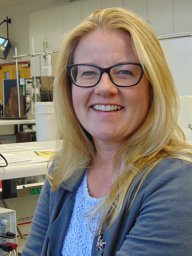 C. Tucker合作论文数School of Physics and Astronomy;Cardiff University;School of Physics and Astronomy, Cardiff University5
 Giampaolo Pisano合作论文数School of Physics and Astronomy;University of Manchester;School of Physics and Astronomy, University of Manchester5
 Kent Irwin合作论文数Physics Department, School of Humanities and Sciences, Stanford University;Hansen Experimental Physics Laboratory, Stanford University5
 Wayne Holland合作论文数UK Astronomy Technology Centre5
 Michel Fich合作论文数University of Waterloo Physics Department5A Walton合作论文数4m macintosh合作论文数4
 Peter Ade合作论文数4i robson合作论文数4
 P. C. Hargrave合作论文数Dept Phys & Astron, Cardiff Univ4
 Mark Halpern合作论文数Department of Physics & Astronomy, Faculty of Science, The University of British Columbia4
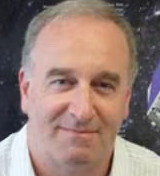 Matt Griffin合作论文数Cardiff Hub for Astrophysics Research and Technology, School of Physics and Astronomy, Cardiff University4
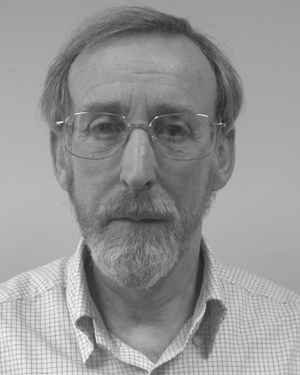 William Parkes合作论文数4G Mitchell合作论文数4
 Michael D. Audley合作论文数UK Astronomy Technology Centre4W. Duncan合作论文数4T Hodson合作论文数4Jan Bronislaw Kycia合作论文数Department of Physics, Northwestern University4Dan Bintley合作论文数Joint Astronomy Centre4
 Pierre Bastien合作论文数4
 Joel Ullom合作论文数Quantum Sensors Division, National Institute of Standards and Technology4I Smith合作论文数3C Dunare合作论文数3M Ellis合作论文数3D Kelly合作论文数3C. Reintsema合作论文数3A. Woodcraft合作论文数3
 Jon E. Gudmundsson合作论文数Dept Phys, Stockholm Univ3
 Giorgio Savini合作论文数Physics and Astronomy Department, Faculty of Mathematical & Physical Sciences, University College London3Xiaofeng Gao合作论文数3M Cliffe合作论文数3Helen Mcgregor合作论文数3D. Naylor合作论文数3
 Patrick Hesp合作论文数School of the Environment, College of Science and Engineering, Flinders University3F. Gannaway合作论文数3D Gostick合作论文数2t peacocke合作论文数2Berend Winter合作论文数2
 Irene Delgado-Fernandez合作论文数2L. Vale合作论文数2R. Sudiwala合作论文数2
 Bernard Bauer合作论文数Department of Earth, Environmental and Geographic Sciences, Irving K. Barber Faculty of Science, The University of British Columbia2
 Barry, P.合作论文数2
 Jin Zhang合作论文数2
 S. Doyle合作论文数Cardiff School of Physics and Astronomy;Cardiff University;Cardiff School of Physics and Astronomy, Cardiff University2
 David Atkinson合作论文数Department of Imaging, Active parent page:Faculty of Medical Sciences, University College London;Centre for Medical Imaging, Active parent page:Faculty of Medical Sciences, University College London2
 Alexey Shitvov合作论文数University of Belfast Belfast2




