The internal gauge space of electrodynamics considered as a U(1) gauge field theory is a scalar. This leads to the result that in free space, and for plane waves, the Poynting vector and energy vanish. This result is consistent with the fact that U(1) gauge field theory results in a null third Stokes parameter, meaning again that the field energy vanishes in free space. A self consistent definition of the stress energy momentum tensor is obtained with a Yang Mills theory applied with an O(3) symmetry internal gauge space. This theory produces the third Stokes parameter self consistently in terms of the self-dual Evans-Vigier fields B (3).
The general theory of gauge fields is used to develop a theory of electrodynamics in which the fundamental structure is non-Abelian and in which the internal gauge field symmetry is O(3), based on the existence of circular polarization and the third Stokes parameter. The theory is used to provide an explanation for the Sagnac effect with platform at rest and in motion. The Sagnac formula is obtained by considering the platform in motion to be a gauge transformation. The topological phases can be described straightforwardly with non Abelian electrodynamics, which produces a novel magnetic field component for all types of radiation, a component which is proportional to the third Stokes parameter. The theory provides a natural explanation for the inverse Faraday effect without phenomenology.
The Evans wave equation [1-3] is developed in the weak-field limit to give the Poisson equation and an electrogravitic equation expressing the electric field strength E in terms of the acceleration g due to gravity and a fundamental scalar potential φ (0) with the units of volts (joules per coulomb). The electrogravitic equation shows that an electric field strength can be obtained from the acceleration due to gravity, which in general relativity is non-Euclidean spacetime. Therefore an electric field strength can be obtained, in theory, from scalar curvature R . This inference is supported by recent experimental data from the patented motionless electromagnetic generator [5].
The inverse Faraday effect is described from the first principles of general relativity, using the irreducible representations of the Einstein group.
General relativity is reduced to O (3) electrodynamics by consideration of the irreducible representations of the Einstein group and through a particular choice of basis. The photon is shown always to possess a scalar curvature R , and so the origin of quantization is found in general relativity.
The archetypical and phaseless vacuum magnetic flux density of O(3) electrodynamics, the B(3) field, is derived from the irreducible representation of the Einstein group and is shown to be accompanied by a vacuum energy density which depends directly on the square of the scalar curvature R of curved spacetime. The B(3) field and the vacuum energy density are obtained respectively from the non-Abelian part of the field tensor F μν and the non-Abelian part of the metrical field equation. Both of these terms are given by Sachs [5].
It is shown that the principles of general relativity as developed by Sachs [1] can be used to explain the principles of the motionless electromagnetic generator (MEG), which takes electromagnetic energy from Riemannian curved space-time and in consequence outputs about twenty times more energy than inputted [2]. Therefore, it is shown in the most general manner that electromagnetic energy can be extracted from vacuum and used to power working devices such as the MEG, devices which are reproducible and repeatable [2].
Recently, Bearden el al. developed a device which is known as a motionless electromagnetic generator (MEG) and which produces a coefficient of performance (COP) far in excess of unity. The device has been independently replicated by Naudin. In this communication, the fundamental operational principle of the MEG is explained using a version of higher symmetry electrodynamics known as O(3) electrodynamics, which is based on the empirical existence of two circular polarization states of electromagnetic radiation, and which has been developed extensively in the literature. The theoretical explanation of the MEG with O(3) electrodynamics is straightforward: Magnetic energy is taken directly ex vacua and used to replenish the permanent magnets of the MEG device, which therefore produces a source of energy that, in theory, can be replenished indefinitely from the vacuum. Such a result is incomprehensible in U(1) Maxwell-Heaviside electrodynamics.
The far infrared torsional oscillatory absorption of a nematic liquid crystal has been isolated for the first time free of higher frequency proper modes. This has been achieved using a molecule specially synthesised for this purpose with a dipole moment engineered perpendicular to the long axis so that torsional oscillation about this axis modulates this component only. The far infra-red power absorption of the liquid crystal in the isotropic, nematic, solid and supercooled conditions is therefore a Poley absorption, i.e. the torsional oscillation about the rigid long axis of the liquid crystal molecule itself. The effect of phase changes on a macroscopic level is to sharpen and intensify this absorption. This is clear evidence to the effect that phase changes in liquid crystals are cooperative phenomena, the molecular librational dynamics about the long axis are little different from those in a regular molecular liquid.
 B. Lehnert合作论文数8Greg J Evans合作论文数8Robert a Flower合作论文数8M. W. Evans合作论文数8C. Ciubotariu合作论文数8
 Sisir Roy合作论文数Physics and Applied Mathematics Unit;Indian Statistical Institute;Physics and Applied Mathematics Unit, Indian Statistical Institute8
 William Thomas Coffey合作论文数Department of Electronic and Electrical Engineering, Trinity College Dublin, The University of Dublin8A. Labounsky合作论文数8Lb Crowell合作论文数7T. E. Bearden合作论文数CTEC Inc.7M. Mészáros合作论文数7P. R. Molnár合作论文数7P. K. Anastasovski合作论文数6Jeanpierre Vigier合作论文数5Peter K. Anastasovski合作论文数2Erasmo Recami合作论文数Facoltà di Ingegneria, Universita Staduale di Bergamo2S. Jeffers合作论文数2Dino Leporini合作论文数Dipartimento di Fisica;Universita di Pisa;Dipartimento di Fisica, Universita di Pisa2
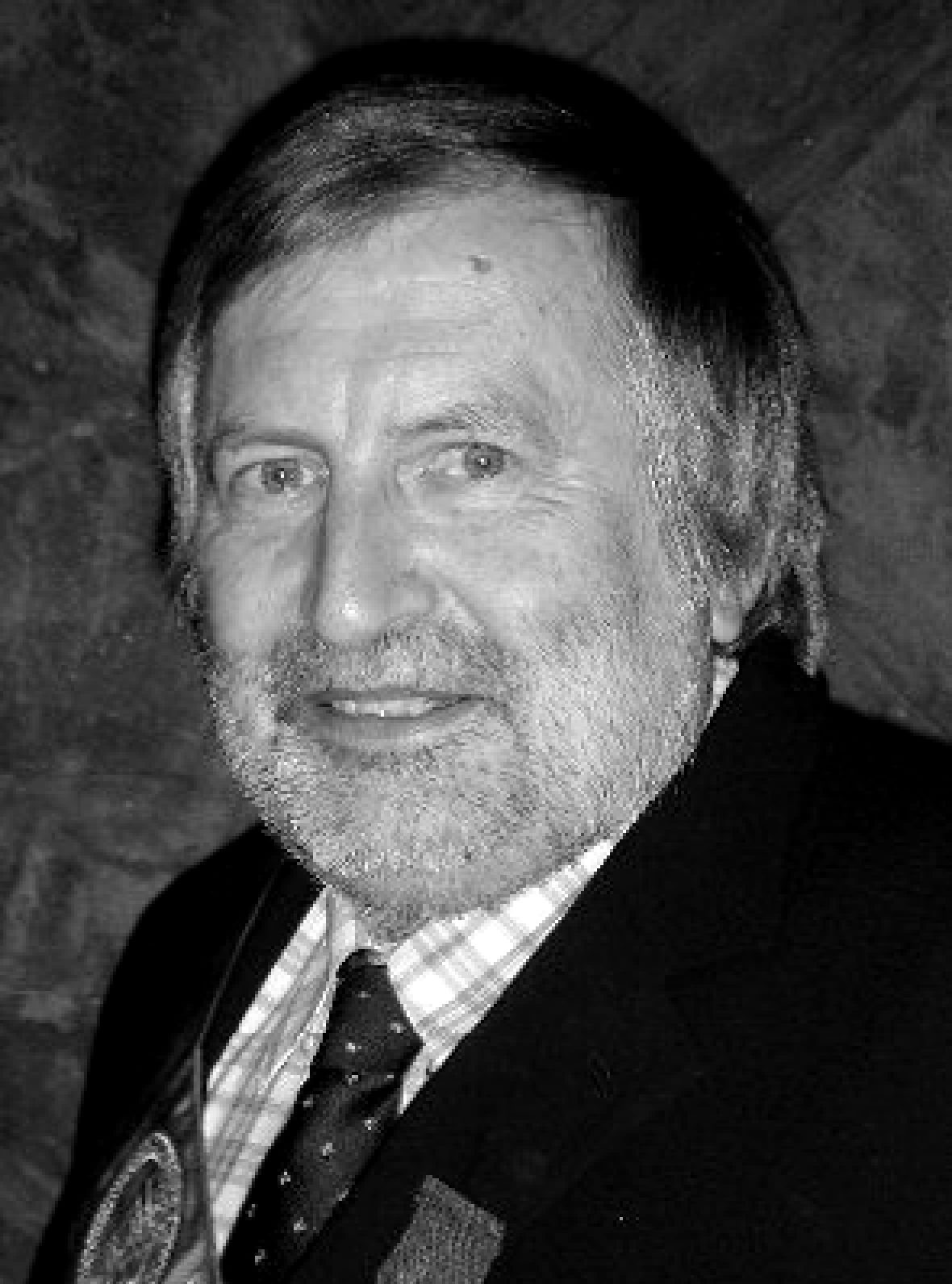 Myron W. Evans合作论文数Alpha Institute for Advanced Study (AIAS)1Donald R Hamilton合作论文数1P. Carpenter合作论文数1James Hart合作论文数1
 Gareth John Evans合作论文数1




