The internal gauge space of electrodynamics considered as a U(1) gauge field theory is a scalar. This leads to the result that in free space, and for plane waves, the Poynting vector and energy vanish. This result is consistent with the fact that U(1) gauge field theory results in a null third Stokes parameter, meaning again that the field energy vanishes in free space. A self consistent definition of the stress energy momentum tensor is obtained with a Yang Mills theory applied with an O(3) symmetry internal gauge space. This theory produces the third Stokes parameter self consistently in terms of the self-dual Evans-Vigier fields B (3).
The general theory of gauge fields is used to develop a theory of electrodynamics in which the fundamental structure is non-Abelian and in which the internal gauge field symmetry is O(3), based on the existence of circular polarization and the third Stokes parameter. The theory is used to provide an explanation for the Sagnac effect with platform at rest and in motion. The Sagnac formula is obtained by considering the platform in motion to be a gauge transformation. The topological phases can be described straightforwardly with non Abelian electrodynamics, which produces a novel magnetic field component for all types of radiation, a component which is proportional to the third Stokes parameter. The theory provides a natural explanation for the inverse Faraday effect without phenomenology.
By considering the irreducible representations of the Einstein group (the Lie group of general relativity), Sachs [1] has shown that the electromagnetic field tensor can be developed in terms of a metric qμ, which is a set of four quaternion-valued components of four-vector. Using this method, it is shown that the electromagnetic field vanishes [1] in flat spacetime, and that electromagnetism in general is a non-Abelian field theory. In this paper the non-Abelian component of the field tensor is developed to show the presence of the B(3) field of the O(3) electrodynamics, and the basic structure of O(3) electrodynamics is shown to be a sub-structure of general relativity as developed by Sachs. The extensive empirical evidence for both theories is summarized.
It is shown that the Aharonov Bohm effect is not consistently described in the received view. A self-inconsistency is demonstrated in the U(1) gauge theory applied to electrodynamics that is the basis of the effect. A self-consistent description of the effect is suggested using a novel O(3) invariant form of electrodynamics, a form which also reproduces the experimental data available on the effect.
A transition from the pure vacuum to the pure gauge vacuum is considered and shown to generate energy through the covariant derivative for all gauge group symmetries. The source of this energy is space-time curvature. A local gauge transformation of lagrangians made up of components of the four potential of the pure gauge vacuum generates a topological charge g, the electromagnetic field, and a locally gauge invariant and conserved charge current density which acts as the source for the electromagnetic field in the vacuum. Therefore there emerges a vacuum Poynting Theorem. The energy inherent in the vacuum is not bounded above, and in principle can be used as the source of energy for working devices.
The inverse Faraday effect is described from the first principles of general relativity, using the irreducible representations of the Einstein group.
General relativity is reduced to O (3) electrodynamics by consideration of the irreducible representations of the Einstein group and through a particular choice of basis. The photon is shown always to possess a scalar curvature R , and so the origin of quantization is found in general relativity.
It is shown that the vacuum four-current first introduced empirically by Lehnert { l-4) can be derived from a local gauge transformation. The novelty of this approach lies in the use of electromagnetic field components for the scalar field which is being subjected to a local gauge transformation. A Higgs mechanism is used to derive a locally gauge invariant Proca equation in a U( 1) and O(3) invariant electrodynamics. The advantages of an O(3) over a U( 1) invariant electrodynamics are discussed.
The Aharonov-Bohm effect shows that the vacuum is structured, and that there can exist a finite vector potentialA in the vacuum when the electric field strengthE and magnetic flux densityB are zero. It is shown on this basis that gauge theory produces energy inherent in the vacuum. The latter is considered as the internal space of the gauge theory, containing a field made up of components ofA, to which a local gauge transformation is applied to produce the electromagnetic field tensor, a vacuum charge/current density, and a topological charge g. Local gauge transformation is the result of special relativity and introduces spacetime curvature, which gives rise to an electromagnetic field whose source is a vacuum charge current density made up ofA and g. The field carries energy to a device which can in principle extract energy from the vacuum. The development is given forU(1) andO(3) invariant gauge theory applied to electrodynamics.
The archetypical and phaseless vacuum magnetic flux density of O(3) electrodynamics, the B(3) field, is derived from the irreducible representation of the Einstein group and is shown to be accompanied by a vacuum energy density which depends directly on the square of the scalar curvature R of curved spacetime. The B(3) field and the vacuum energy density are obtained respectively from the non-Abelian part of the field tensor F μν and the non-Abelian part of the metrical field equation. Both of these terms are given by Sachs [5].
It is shown that the principles of general relativity as developed by Sachs [1] can be used to explain the principles of the motionless electromagnetic generator (MEG), which takes electromagnetic energy from Riemannian curved space-time and in consequence outputs about twenty times more energy than inputted [2]. Therefore, it is shown in the most general manner that electromagnetic energy can be extracted from vacuum and used to power working devices such as the MEG, devices which are reproducible and repeatable [2].
Recently, Bearden el al. developed a device which is known as a motionless electromagnetic generator (MEG) and which produces a coefficient of performance (COP) far in excess of unity. The device has been independently replicated by Naudin. In this communication, the fundamental operational principle of the MEG is explained using a version of higher symmetry electrodynamics known as O(3) electrodynamics, which is based on the empirical existence of two circular polarization states of electromagnetic radiation, and which has been developed extensively in the literature. The theoretical explanation of the MEG with O(3) electrodynamics is straightforward: Magnetic energy is taken directly ex vacua and used to replenish the permanent magnets of the MEG device, which therefore produces a source of energy that, in theory, can be replenished indefinitely from the vacuum. Such a result is incomprehensible in U(1) Maxwell-Heaviside electrodynamics.
The most general form of electrodynamics has been derived by Sachs [1] from the irreducible representations of the Einstein group. In this paper the Sachs theory is developed as a gauge theory with a vacuum four-current i μ j . The B Cyclic Theorem O(3) electrodynamics is derived from a consideration of four-vectors appearing in the Sachs theory, and electromagnetic helicity, expressed in terms of the B (3) field of O(3) electrodynamics, is derived from the more general Sachs theory.
It is demonstrated to a first approximation that anti-gravity effects can occur in the most general theory of electromagnetism, developed by Sachs [1] from the irreducible representations of the Einstein group.
Recent data obtained by LEP1 are discussed and their potential implication for the existence of a Z ′ particle. This letter advocates that this fits within the basic tenet of an SU (2)× SU (2) extended theory of the standard model of electroweak interactions. This extended electroweak model is motivated by nonabelian electrodynamics that provides an effective calculus for nonlinear optics.
Using covariant derivatives and the operator definitions of quantum mechanics, gauge invariant Proca and Lehnert equations are derived and the Lorenz condition is eliminated in U(1) invariant electrodynamics. It is shown that the structure of the gauge invariant Lehnert equation is the same in an O(3) invariant theory of electrodynamics.
It is shown that the Lehnert field equations in vacuum, with concomitant space charge and current, can be derived straightforwardly from standard gauge theory applied in vacuum, using the concept of covariant derivative and Feynman's universal influence. The Lehnert and Proca field equations are shown to be inter-related through the well-known de Broglie theorem, in which the photon mass can be interpreted as finite. These ideas go some way towards addressing the inconsistency inherent in Maxwell's famous displacement current, which has no concomitant vacuum space charge.
Two homomorphic versions of the non-Abelian equations of electrodynamics are developed and their advantages discussed over the received Maxwell-Heaviside equations. The internal gauge field symmetry in these equations is respectively SU(2) and O(3), signifying, on the quantized levels, three electromagnetic bosons, and on the classical level, three components of the electromagnetic field, right and left circularly polarized ((1) and (2)) and longitudinally polarized (3). The reduction of these equations to the Maxwell-Heaviside equations is discussed in terms of the coupling constant of the non-Abelian covariant derivatives. The development of these equations follows the original intent and logic of Yang and Mills in 1955 to generalize pure classical electrodynamics.
It is shown that the Maxwell–Heaviside theory is incomplete and limited, for example, it is unable to describe the Sagnac effect, either with platform at rest or in motion. An electrodynamical theory based on a physical internal O(3) gauge space is shown to provide the correct explanation in classical electrodynamics for the Sagnac effect, and for interferometry in general, for example Sagnac and Michelson interferometry. The U(1) sector of unified field theory must therefore be replaced by an SU(2) sector broken to O(3). This has numerous consequences for unified field theory.
 M. W. Evans合作论文数26C. Ciubotariu合作论文数26T. E. Bearden合作论文数CTEC Inc.26Greg J Evans合作论文数25Robert a Flower合作论文数25
 William Thomas Coffey合作论文数Department of Electronic and Electrical Engineering, Trinity College Dublin, The University of Dublin25A. Labounsky合作论文数25P. R. Molnár合作论文数24B. Lehnert合作论文数21M. Mészáros合作论文数21Jeanpierre Vigier合作论文数20
 Sisir Roy合作论文数Physics and Applied Mathematics Unit;Indian Statistical Institute;Physics and Applied Mathematics Unit, Indian Statistical Institute20P. K. Anastasovski合作论文数18S. Jeffers合作论文数12J. K. Moscicki合作论文数7Petar K. Anastasovski合作论文数5Peter K. Anastasovski合作论文数3Erasmo Recami合作论文数Facoltà di Ingegneria, Universita Staduale di Bergamo3
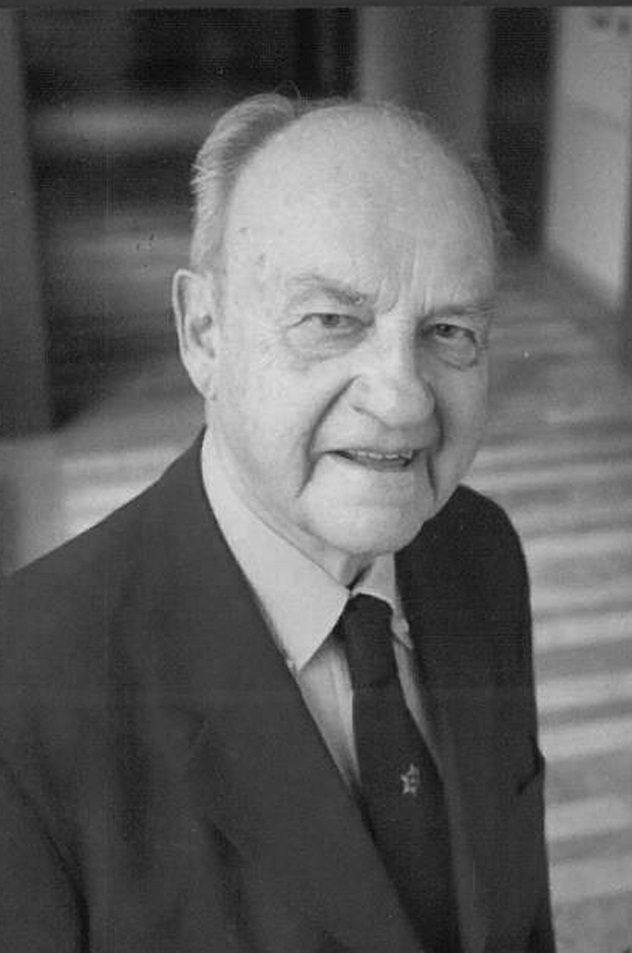 Bo Peter Lehnert合作论文数Division of Fusion Plasma Physics, KTH Royal Institute of Technology3
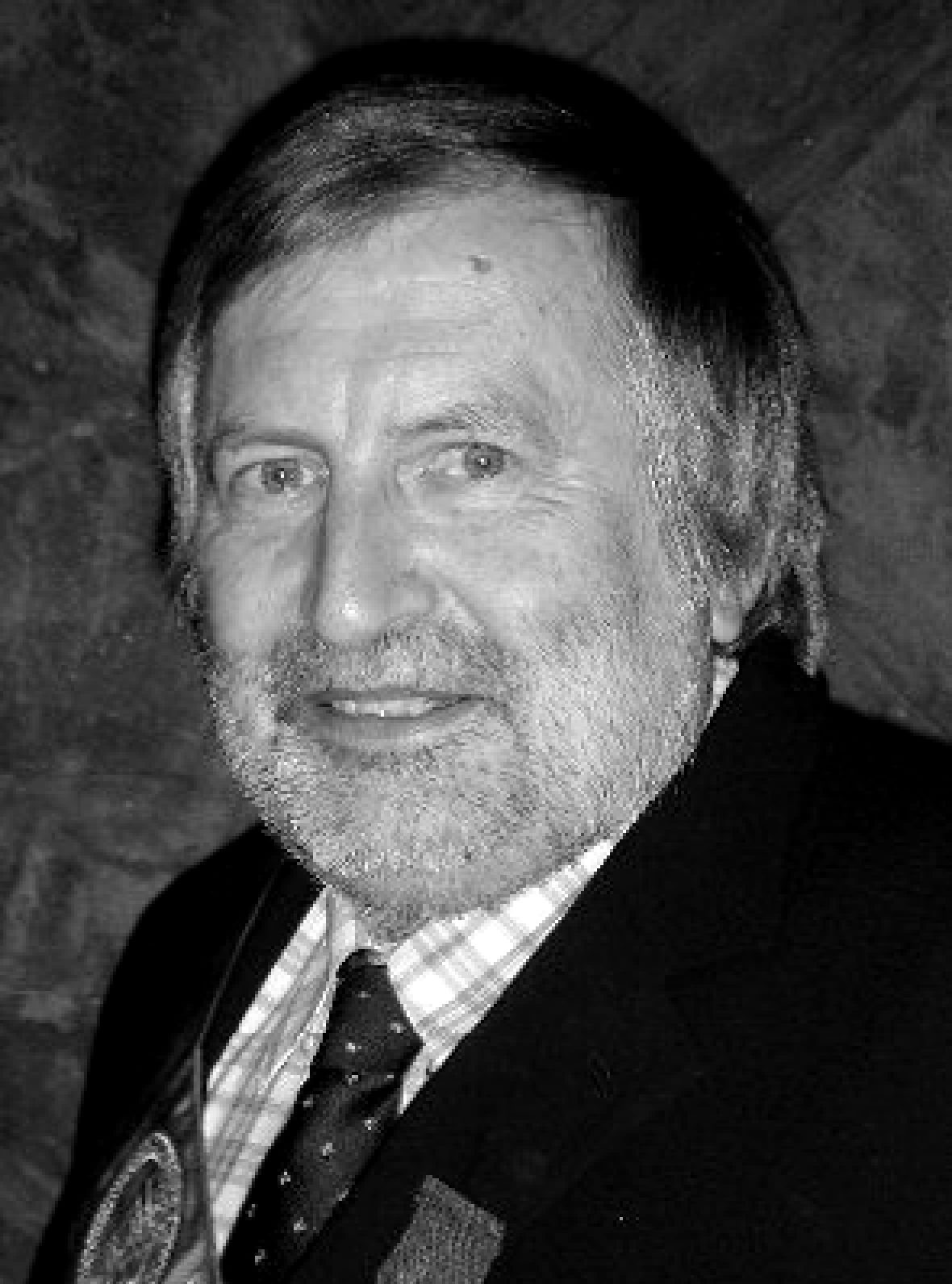 Myron W. Evans合作论文数Alpha Institute for Advanced Study (AIAS)2Dino Leporini合作论文数Dipartimento di Fisica;Universita di Pisa;Dipartimento di Fisica, Universita di Pisa2milan meszaros合作论文数1
 Subrata Roy合作论文数Computational Plasma Dynamics Laboratory;Kettering University;Computational Plasma Dynamics Laboratory, Kettering University1
 Gareth John Evans合作论文数1
 Subhasish Roy合作论文数Tata Institute of Fundamental Research1David F Roscoe合作论文数1




