The internal gauge space of electrodynamics considered as a U(1) gauge field theory is a scalar. This leads to the result that in free space, and for plane waves, the Poynting vector and energy vanish. This result is consistent with the fact that U(1) gauge field theory results in a null third Stokes parameter, meaning again that the field energy vanishes in free space. A self consistent definition of the stress energy momentum tensor is obtained with a Yang Mills theory applied with an O(3) symmetry internal gauge space. This theory produces the third Stokes parameter self consistently in terms of the self-dual Evans-Vigier fields B (3).
The general theory of gauge fields is used to develop a theory of electrodynamics in which the fundamental structure is non-Abelian and in which the internal gauge field symmetry is O(3), based on the existence of circular polarization and the third Stokes parameter. The theory is used to provide an explanation for the Sagnac effect with platform at rest and in motion. The Sagnac formula is obtained by considering the platform in motion to be a gauge transformation. The topological phases can be described straightforwardly with non Abelian electrodynamics, which produces a novel magnetic field component for all types of radiation, a component which is proportional to the third Stokes parameter. The theory provides a natural explanation for the inverse Faraday effect without phenomenology.
By considering the irreducible representations of the Einstein group (the Lie group of general relativity), Sachs [1] has shown that the electromagnetic field tensor can be developed in terms of a metric qμ, which is a set of four quaternion-valued components of four-vector. Using this method, it is shown that the electromagnetic field vanishes [1] in flat spacetime, and that electromagnetism in general is a non-Abelian field theory. In this paper the non-Abelian component of the field tensor is developed to show the presence of the B(3) field of the O(3) electrodynamics, and the basic structure of O(3) electrodynamics is shown to be a sub-structure of general relativity as developed by Sachs. The extensive empirical evidence for both theories is summarized.
It is shown that the Aharonov Bohm effect is not consistently described in the received view. A self-inconsistency is demonstrated in the U(1) gauge theory applied to electrodynamics that is the basis of the effect. A self-consistent description of the effect is suggested using a novel O(3) invariant form of electrodynamics, a form which also reproduces the experimental data available on the effect.
A transition from the pure vacuum to the pure gauge vacuum is considered and shown to generate energy through the covariant derivative for all gauge group symmetries. The source of this energy is space-time curvature. A local gauge transformation of lagrangians made up of components of the four potential of the pure gauge vacuum generates a topological charge g, the electromagnetic field, and a locally gauge invariant and conserved charge current density which acts as the source for the electromagnetic field in the vacuum. Therefore there emerges a vacuum Poynting Theorem. The energy inherent in the vacuum is not bounded above, and in principle can be used as the source of energy for working devices.
This invention pertains to the treatment of matter with electromagnetic energy to cause specified changes in the matter. More particularly, this invention deals with methods, systems and apparatus for the creation and application of conditioned electromagnetic potentials, fields, and waves, wherein the conditioning comprises the selection and combination of identified constituent electromagnetic waves, in order to produce desired interactions with matter. The matter may be chemicals, nuclear materials, living cells, and the like, and the results of the interactions may be the time-reversal of the matter to a previous state, or the application of a chosen delta to the matter’s current state, so as to effect desired chemical reactions, nuclear reactions, or biological changes, respectively. The invention covers two versions of the conditioning process, depending upon whether EM conditioning is externally accomplished or internally accomplished. The two versions of the process are: (1) the formation of the conditioning of the electromagnetic potentials, fields, and waves outside the body, and then irradiating the body with EM radiation carrying the desired conditioning, and (2) the irradiation of the body dielectric with the same EM waves, fields, and potentials emitted by the body dielectric, but amplified. In the latter process, the formation of the desired conditioning of the induced EM potentials, fields, and waves into every part of the body is accomplished by the highly nonlinear characteristics of the body and cellular material at every level, in every location in the body dielectric.
A fully licensed transportation system for Radioisotope Thermoelectric Generators and Light‐Weight Radioisotope Heater Units is currently being designed and built. The system will comply with all applicable U.S. Department of Transportation regulations without the use of a ‘‘DOE Alternative.’’ The U.S. Department of Transportation has special ‘‘double containment’’ requirements for plutonium. The system packaging uses a doubly contained ‘‘bell jar’’ concept. A refrigerated trailer is used for cooling the high‐heat payloads. The same packaging is used for both high‐ and low‐heat payloads. The system is scheduled to be available for use by mid‐1992.
The inverse Faraday effect is described from the first principles of general relativity, using the irreducible representations of the Einstein group.
General relativity is reduced to O (3) electrodynamics by consideration of the irreducible representations of the Einstein group and through a particular choice of basis. The photon is shown always to possess a scalar curvature R , and so the origin of quantization is found in general relativity.
It is shown that the vacuum four-current first introduced empirically by Lehnert { l-4) can be derived from a local gauge transformation. The novelty of this approach lies in the use of electromagnetic field components for the scalar field which is being subjected to a local gauge transformation. A Higgs mechanism is used to derive a locally gauge invariant Proca equation in a U( 1) and O(3) invariant electrodynamics. The advantages of an O(3) over a U( 1) invariant electrodynamics are discussed.
The most general form of the vector potential is deduced in curved spacetime using general relativity. It is shown that the longitudinal and timelike components of the vector potential exist in general and are richly structured. Electromagnetic energy from the vacuum is given by the quaternion valued canonical energy-momentum. It is argued that a dipole intercepts such energy and uses it for the generation of electromotive force. Whittaker’s U (l) decomposition of the scalar potential applied to the potential between the poles of a dipole, shows that the dipole continuously receives electromagnetic energy from the complex plane and emits it in real space. The known broken 3-symmetry of the dipole results in a relaxation from 3-flow symmetry to 4-flow symmetry. Considered with its clustering virtual charges of opposite sign, an isolated charge becomes a set of composite dipoles, each having a potential between its poles that, in U (1) electrodynamics, is composed of the Whittaker structure and dynamics. Thus the source charge continuously emits energy in all directions in 3-space while obeying 4-space energy conservation. This resolves the long-vexing problem of the association of the “source” charge and its fields and potentials. In initiating 4-flow symmetry while breaking 3-flow symmetry, the charge, as a set of dipoles, initiates a reordering of a fraction of the surrounding vacuum energy, with the reordering spreading in all directions at the speed of light and involving canonical determinism between time currents and spacial energy currents. This constitutes a giant, spreading negentropy which continues as long as the dipole (or charge) is intact. Some implications of this previously unsuspected giant negentropy are pointed out for the Poynting energy flow theory, and as to how electrical circuits and loads are powered.
This chapter explains the operational principles of a motionless electromagnetic generator (MEG) experiment and invention where the generator is a system far from equilibrium in its energetic exchange with its active vacuum environment. The broken symmetry of a permanent magnet dipole is used as a transducer of vacuum energy, receiving longitudinal EM wave energy from the time domain (complex plane) and emitting it as real 3-space EM energy.
The Aharonov-Bohm effect shows that the vacuum is structured, and that there can exist a finite vector potentialA in the vacuum when the electric field strengthE and magnetic flux densityB are zero. It is shown on this basis that gauge theory produces energy inherent in the vacuum. The latter is considered as the internal space of the gauge theory, containing a field made up of components ofA, to which a local gauge transformation is applied to produce the electromagnetic field tensor, a vacuum charge/current density, and a topological charge g. Local gauge transformation is the result of special relativity and introduces spacetime curvature, which gives rise to an electromagnetic field whose source is a vacuum charge current density made up ofA and g. The field carries energy to a device which can in principle extract energy from the vacuum. The development is given forU(1) andO(3) invariant gauge theory applied to electrodynamics.
The archetypical and phaseless vacuum magnetic flux density of O(3) electrodynamics, the B(3) field, is derived from the irreducible representation of the Einstein group and is shown to be accompanied by a vacuum energy density which depends directly on the square of the scalar curvature R of curved spacetime. The B(3) field and the vacuum energy density are obtained respectively from the non-Abelian part of the field tensor F μν and the non-Abelian part of the metrical field equation. Both of these terms are given by Sachs [5].
It is shown that the principles of general relativity as developed by Sachs [1] can be used to explain the principles of the motionless electromagnetic generator (MEG), which takes electromagnetic energy from Riemannian curved space-time and in consequence outputs about twenty times more energy than inputted [2]. Therefore, it is shown in the most general manner that electromagnetic energy can be extracted from vacuum and used to power working devices such as the MEG, devices which are reproducible and repeatable [2].
Recently, Bearden el al. developed a device which is known as a motionless electromagnetic generator (MEG) and which produces a coefficient of performance (COP) far in excess of unity. The device has been independently replicated by Naudin. In this communication, the fundamental operational principle of the MEG is explained using a version of higher symmetry electrodynamics known as O(3) electrodynamics, which is based on the empirical existence of two circular polarization states of electromagnetic radiation, and which has been developed extensively in the literature. The theoretical explanation of the MEG with O(3) electrodynamics is straightforward: Magnetic energy is taken directly ex vacua and used to replenish the permanent magnets of the MEG device, which therefore produces a source of energy that, in theory, can be replenished indefinitely from the vacuum. Such a result is incomprehensible in U(1) Maxwell-Heaviside electrodynamics.
 C. Ciubotariu合作论文数27A. Labounsky合作论文数27Lb Crowell合作论文数26M. W. Evans合作论文数26Greg J Evans合作论文数25Robert a Flower合作论文数25
 William Thomas Coffey合作论文数Department of Electronic and Electrical Engineering, Trinity College Dublin, The University of Dublin25P. R. Molnár合作论文数24B. Lehnert合作论文数21M. Mészáros合作论文数21Jeanpierre Vigier合作论文数20
 Sisir Roy合作论文数Physics and Applied Mathematics Unit;Indian Statistical Institute;Physics and Applied Mathematics Unit, Indian Statistical Institute20P. K. Anastasovski合作论文数18S. Jeffers合作论文数12J. K. Moscicki合作论文数7Petar K. Anastasovski合作论文数6stephen l patrick合作论文数4james c hayes合作论文数4james l kenny合作论文数4kenneth d moore合作论文数4Peter K. Anastasovski合作论文数3Erasmo Recami合作论文数Facoltà di Ingegneria, Universita Staduale di Bergamo3
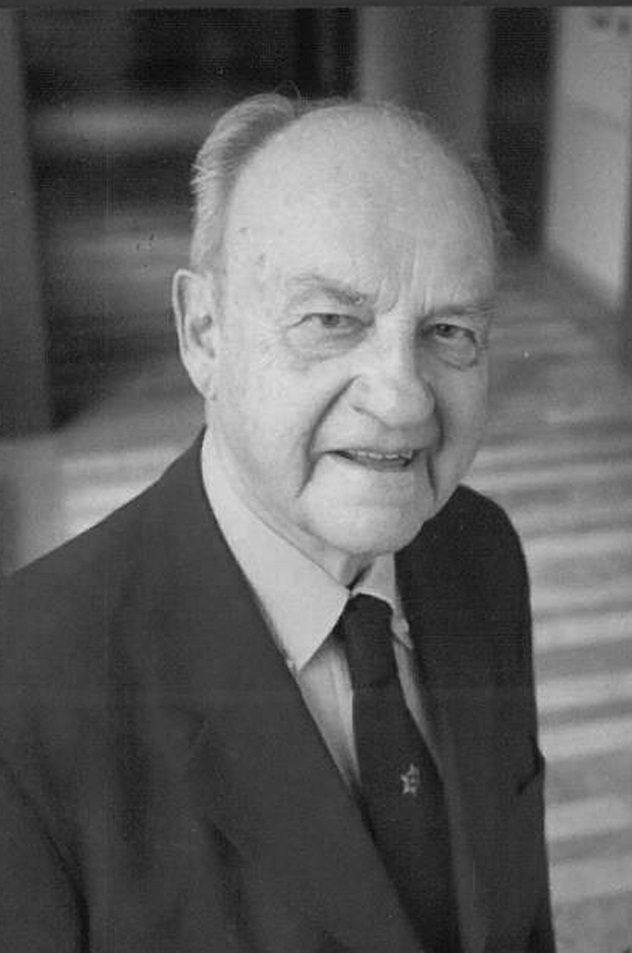 Bo Peter Lehnert合作论文数Division of Fusion Plasma Physics, KTH Royal Institute of Technology3w d rosenthal合作论文数2
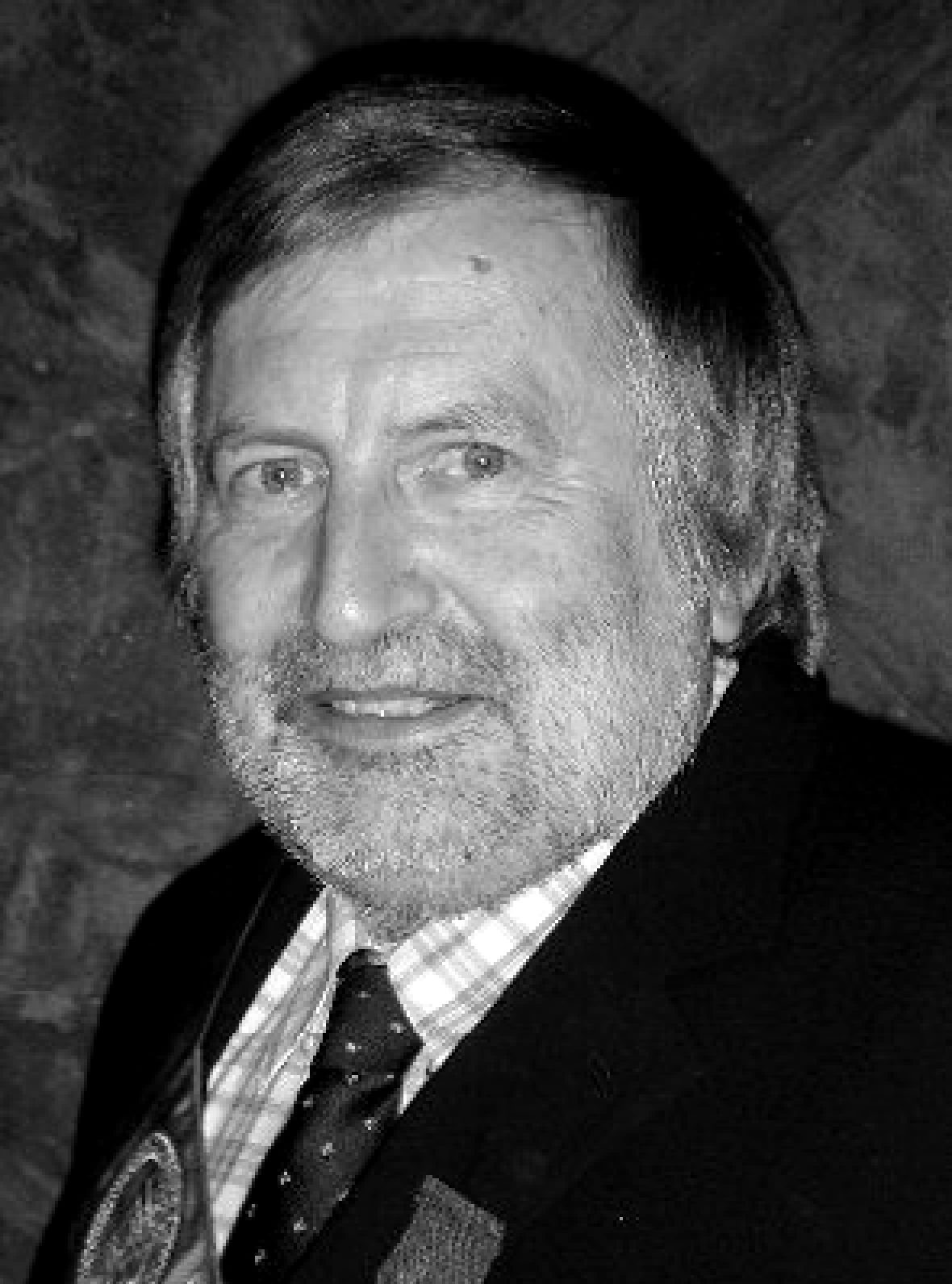 Myron W. Evans合作论文数Alpha Institute for Advanced Study (AIAS)2Dino Leporini合作论文数Dipartimento di Fisica;Universita di Pisa;Dipartimento di Fisica, Universita di Pisa2milan meszaros合作论文数1harold e adkins合作论文数1
 Subrata Roy合作论文数Computational Plasma Dynamics Laboratory;Kettering University;Computational Plasma Dynamics Laboratory, Kettering University1
 Gareth John Evans合作论文数1
 Subhasish Roy合作论文数Tata Institute of Fundamental Research1David F Roscoe合作论文数1




