The US NRC requires annual training for high dose rate (HDR) brachytherapy emergencies for authorized users. Previous training at our institution involved verbal instruction by the afterloader vendor, followed by a brief hands-on skills session. Based on perceived knowledge gaps and uncertainty in how to respond to HDR “stuck source” emergencies by staff, we developed and evaluated a new HDR emergency training protocol (HDR-ETP). Standardized HDR “stuck source” emergency procedures were developed based on recommendations from the afterloader vendor, modified to reflect clinical practicalities. Detailed action lists for three different HDR staff were developed. An HDR-ETP was then created, consisting of an instructional video, demonstrating use of emergency procedures for various scenarios, and a hands-on HDR emergency simulation. Protocol training commenced with HDR staff watching the short instructional video. Then, a hands-on HDR emergency drill was completed in a team setting, consisting of a physician, a physicist and a radiation therapist. Trained observers evaluated staff on their performance during the simulation and gave direct feedback to each participant. Both before and after completing the HDR-ETP, staff completed a survey to evaluate their knowledge of HDR emergency procedures (using multiple choice questions) and assess their comfort level performing these tasks (using a 5 point Likert scale). A total of 18 staff members participated in the new HDR-ETP. Prior to initiation of training, 22% of participants strongly agreed with the statements “I am familiar with the procedures to follow during an HDR emergency” and “I feel confident in performing my role during an HDR emergency”. After training, 93% and 87% of participants strongly agreed with the above statements, respectively. The average score for knowledge-based questions was 83% (range 60-100%) prior to training. After training, the average score improved to 90% (range 80-100%). Despite high pre-test scores, 44% (8/18) participants made one or more errors during the hands-on simulation. Simulation errors included failure to engage source-retract interlocks, failure to perform a survey for radioactivity at the end of the simulation and general process errors. After training completion, all participants either somewhat or strongly agreed to the statements “I found the video training useful” and “I found the hands-on practice useful”. A standardized HDR-ETP was developed that included an instructional video and a hands-on drill for brachytherapy staff. Our HDR-ETP resulted in improved familiarity and confidence with emergency procedures. Despite good pre-test knowledge and the instructional video, multiple participants made errors during the hands-on simulation, highlighting the necessity of simulated emergency events.
Background: Recurrent breast cancers arise from minimal residual disease (MRD): the pool of disseminated and circulating tumor cells (DTCs and CTCs) that survive in their host following treatment of primary breast cancer. Detection of DTCs in the bone marrow (BM) after treatment is strongly associated with an increased risk of recurrence. Through the analysis of novel genetically-engineered mouse models, we have generated a substantial body of evidence that autophagy and mTOR signaling play key roles in the survival of DTCs. Moreover, administration of agents that block these pathways in mice harboring MRD reduces DTC burden and concomitantly reduces tumor recurrence, providing the rationale for translating these findings to patients (pts). Trial Design: The PENN-SURMOUNT screening study uses a clinically validated IHC assay (DTC-IHC) to identify at-risk pts who harbor DTCs. DTC+ pts are eligible for enrollment on the CLEVER trial, which will determine the feasibility, safety and efficacy of administering hydroxychloroquine (HCQ) and/or everolimus (EVE) in DTC+ patients to target MRD and prevent recurrence. PENN-SURMOUNT is single center, prospective cohort study of pts who have completed therapy for primary breast cancer, are within 5 yrs of diagnosis and are at increased risk for relapse by virtue of nodal positivity, triple negative disease, ER+/Oncotype DX RS ≥ 25, or residual disease after neoadjuvant therapy. Pts undergo screening BM aspirate to test for DTCs following completion of adjuvant chemo and radiotherapy. The primary objective of the study is to determine the incidence and frequency of MRD in pts who have completed primary treatment for breast cancer and to ascertain eligibility for the CLEVER recurrence prevention trial. CLEVER is a randomized, controlled, open label phase II pilot trial. Target enrollment is 60 pts, with 15 pts allocated to each of 4 treatment arms: HCQ (600 mg BID), EVE (10mg daily), combination HCQ/EVE, or control/observation. A cycle is 28 days of continuous dosing. After a 3-month observation period, control pts will be offered HCQ/EVE therapy for 6 cycles; thus, the control group is actually a delayed treatment group and all pts will receive treatment. Pts who demonstrate persistent DTCs after 6 cycles will continue on combination therapy for an additional 6 cycles. The primary endpoint is feasibility of administering HCQ, EVE or the combination in this population. Secondary objectives include safety, efficacy (DTC reduction), and 3-year RFS. The principal translational objective is to assess the utility of a novel DTC assay, "DTC-Flow", for more sensitive detection and response to study therapy, compared to DTC-IHC. Additional translational objectives include determining whether patient DTCs, CTCs, and cell-free circulating plasma tumor DNA (ptDNA) biologically reflect the primary tumor and predict response. As of 5/23/17, 58 patients have been enrolled to PENN SURMOUNT, with a DTC-positivity rate of 22.6%; CLEVER opened in 2/2017; 11 patients are currently enrolled. Contact information: angela.demichele@uphs.upenn.edu Key words: Recurrence, disseminated tumor cells, dormancy, minimal residual disease, autophagy, mTOR, Everolimus, hydroxychloroquine Citation Format: Bayne LJ, Nivar I, Goodspeed B, Wileyto P, Savage J, Shih NNC, Feldman MD, Edwards J, Clark AS, Fox KR, Matro JM, Domchek SM, Bradbury AR, Shah PD, Chislock EM, Belka GK, Wang J, Amaravadi R, Chodosh LA, DeMichele AM. Detection and targeting of minimal residual disease in breast cancer to reduce recurrence: The PENN-SURMOUNT and CLEVER trials [abstract]. In: Proceedings of the 2017 San Antonio Breast Cancer Symposium; 2017 Dec 5-9; San Antonio, TX. Philadelphia (PA): AACR; Cancer Res 2018;78(4 Suppl):Abstract nr OT2-07-09.
Background: Reliable information reporting systems ensure that all malaria cases are tested, treated and tracked to avoid further transmission. Botswana aimed to eliminate malaria by 2018, and surveillance is key. This study focused on assessing the uptake of the new malaria case-based surveillance (CBS) system introduced in 2012, which captures information on malaria cases reported in the Integrated Disease Surveillance and Response (IDSR) system. Methods: This was a retrospective descriptive study based on routine data focusing on Ngami, Chobe and Okavango, three high-risk districts in Botswana. Aggregated data variables were extracted from the IDSR and compared with data from the CBS. Results: The IDSR reported 456 malaria cases in 2013 and 1346 in 2014, of which respectively only 305 and 884 were reported by the CBS. The CBS reported 34% fewer cases than the IDSR system, indicating substantial differences between the two systems. The key malaria indicators with the greatest variability among the districts included in the study were case identification number and date of diagnosis. Conclusion: The IDSR and CBS systems are essential for malaria elimination, as shown by the significant gaps in reporting between the two systems. These findings highlight the need for further investigation into these discrepancies. Strengthening the CBS system will help to reach the objective of malaria elimination in Botswana.
Tragedy in Antiphon 1, Againstt he StepmotherIt is ap rivileget oc ontributet oavolume in honour of Georgia Xanthankis-Karamanos, whose own contributions to the study of Greek drama, especiallyt ragedy, have been so extensive and influential, as alsoh as been her work on rhetoric and the relationship between tragedya nd rhetoric.¹That relationship has recentlyb een explored again by David Sansone,i nacontroversial book, Greek Drama and the Invention of Rhetoric,² which has receivedm ixed reviews.³My purpose here is not to consider the merits or otherwise of Sansone'sa rgument that 'the development of rhetoric was directlyi nspired by the creation of the new,e venr evolutionary,g enre of tragic drama',⁴ as opposed to the more traditional view that rhetoric influenced tragedy,⁵ but rather to takea nother look at the undoubtedlyt ragic elements in what has claims to being the earliest surviving speech in the corpus of Attic oratory,A ntiphon 1, Against the Stepmother.⁶ Anya ttempt to link these directlyt or ecent tragic performances is, to my mind, av ain one, simply because we do not know the dateso fm anyo ft he plays or indeed of the speech itself.⁷Rather,inm yopinion these elements, combined with other stylistic usages, should be taken first and foremost as indicators of Antiphon'sf ine oratorical technique.In Against the Stepmother Antiphon'su nnamed client prosecutes his stepmother for the killing of his father.The father was entertained to dinner in Pi- See her earlya rticle 1979,66-76. Sansone 2012. 'It is, indeed, one of those books that every reader is happy to have read even though she doubts that it will fullyc onvince anyone':
Background: Idiopathic granulomatous mastitis is a rare benign breast disease of women of reproductive age. It usually presents as a painful mass. Since the etiology is unclear, directed diagnosis and management is lacking. Methods: This is a retrospective chart review of 14 patients, over twelve years (2004-2016), identified through query of pathology findings. Results: Two asymptomatic patients were diagnosed after oncologic breast resection following neoadjuvant chemotherapy. The remaining twelve patients were young (31.7 years, range 23-43 years), predominantly non-white (50% African/African-American, 36% Hispanic, 7% Asian), pregnant within the last five years (86%), with no prior granulomatous disease. Evaluation included breast imaging, microbial cultures and staining, and biopsy. Treatment included antibiotics (57%), corticosteroids (21%), methotrexate (7%), and/or surgery (71%). Imaging suggests segmental masses, possibly abscess. Conclusion: Granulomatous mastitis is uncommon, and difficult to diagnose and manage. We review our experience, the literature, and propose an algorithm for diagnosis and management. (C) 2017 Elsevier Inc. All rights reserved.
Periodontitis is a serious disease that affects up to 50% of an adult population. It is a chronic condition involving inflammation of the periodontal ligament and associated tissues leading to eventual tooth loss. Some evidence suggests that trace metals, especially zinc and copper, may be involved in the onset and severity of periodontitis. Thus we have used synchrotron X-ray fluorescence imaging on cross sections of diseased and healthy teeth using a microbeam to explore the distribution of trace metals in cementum and adhering plaque. The comparison between diseased and healthy teeth indicates that there are elevated levels of zinc, copper and nickel in diseased teeth as opposed to healthy teeth. This preliminary correlation between elevated levels of trace metals in the cementum and plaque of diseased teeth suggests that metals may play a role in the progress of periodontitis.
Sydewynder is an open-source SMS receiver and sender application written in Python for the Nokia S60 phones. It can automate the responses of messages and can be used as a mobile application server in areas where setting up a traditional server may be difficult or illegal. It also is very useful for prototyping mobile applications, such as games, without the burden of expensive hosting. As such, it works very well in educational settings. It includes an emulator for developing scripts off of the phones as well as several example applications that students can modify to produce their own work. Sydewynder was tested as an educational tool in the fall of 2007 during classes in the Communication Design and Techonology Department at Parsons The New School for Design. Students developed many different kinds of applications, including using Sydewynder for prototyping mixed-reality games. They found the software to be reasonably easy to use for people with little prior programming experience, as well as a fast tool for rapid prototyping.
(S.) Ferrucci (ed.) Iseo. La successione di Kiron. Introduzione, testo critico, traduzione e commento. (Studi e Testi di Storia Antica 15.) Pp. 253. Pisa: Edizioni ETS, 2005. Paper, €18. ISBN: 978-88-467- 1194-6. - Volume 57 Issue 2
(M.R.) Dilts (ed.) Demosthenis Orationes. Recognovit apparatu testimoniorum ornavit adnotatione critica instruxit M.R. Dilts. Tomus II. Pp. xxiv + 394. Oxford: Oxford University Press, 2005. Cased, £45. ISBN: 978-0-19-872169-7. - Volume 57 Issue 2
Solucion de la notoria crux de Lys. 1.22, donde la mayoria de editores desde Reiske ha propuesto la existencia de una laguna. Propongo que la lectura preservada ??????? es una corrupcion del original ?? ?????.
Objective: To assess the short and long-term educational value of a highly structured, interactive Breast Cancer Structured Clinical Instruction Module (BCSCIM). Summary Background Data: Cancer education for surgical residents is generally unstructured, particularly when compared with surgical curricula like the Advanced Trauma Life Support (ATLS) course.Methods: Forty-eight surgical residents were randomly assigned to 1 of 4 groups. Two of the groups received the BCSCIM and 2 served as controls. One of the BCSCIM groups and 1 of the control groups were administered an 11-problem Objective Structured Clinical Examination (OSCE) immediately after the workshop; the other 2 groups were tested with the same OSCE 8 months later. The course was an intensive multidisciplinary, multistation workshop where residents rotated in pairs from station to station interacting with expert faculty members and breast cancer patients.Results: Residents who took the BCSCIM outperformed the residents in the control groups for each of the 7 performance measures at both the immediate and 8-month test times (P < 0.01). Although the residents who took the BCSCIM had higher competence ratings than the residents in the control groups, there was a decline in the faculty ratings of resident competence from the immediate test to the 8-month test (P < 0.004).Conclusions: This interactive patient-based workshop was associated with objective evidence of educational benefit as determined by a unique method of outcome assessment.
 S. Price合作论文数4Alex B. Lentsch合作论文数4Christopher Rowland合作论文数4yiteng bo (博 伊藤)合作论文数3bo zhi ji liu (博之 吉留)合作论文数3gongqi sheng (勝 宮崎)合作论文数3shen zhi zhong dao (伸之 中島)合作论文数3Polymnia Athanassiadi合作论文数3Ji Harty合作论文数2J Namboze合作论文数1I Nivar合作论文数1J. Benger合作论文数1E E Lower合作论文数1J. Homan合作论文数1slade roland culp合作论文数1S. Binks合作论文数1
 Bark Betzel合作论文数1M Manzi合作论文数1M.G. Hunter合作论文数1LM Wood合作论文数1KR Fox合作论文数1Jm Matro合作论文数1Nnc Shih合作论文数1hong zhi zhong chuan (宏治 中川)合作论文数1ansuan cong (聡 安蒜)合作论文数1hong ming qing shui (宏明 清水)合作论文数1
 Elizabeth Shaughnessy合作论文数1W Butt合作论文数1Fn Miller合作论文数1H Yoshidome合作论文数1A Millar合作论文数1
 Malcolm James Boyce合作论文数1
 Susan M. Domchek合作论文数Department of Medicine, Perelman School of Medicine, University of Pennsylvania;Basser Center for BRCA, Abramson Cancer Center, University of Pennsylvania1
 Angela M DeMichele合作论文数Center for Clinical Epidemiology and Biostatistics, University of Pennsylvania;Abramson Cancer Center, University of Pennsylvania;Department of Medicine, Perelman School of Medicine, University of Pennsylvania1
 Amy S. Clark合作论文数Division of Hematology and Oncology, Department of Medicine, Perelman School of Medicine, University of Pennsylvania1
 Ravi K. Amaravadi合作论文数Abramson Cancer Center, University of Pennsylvania;Perelman School of Medicine, University of Pennsylvania;Hospital of the University of Pennsylvania1
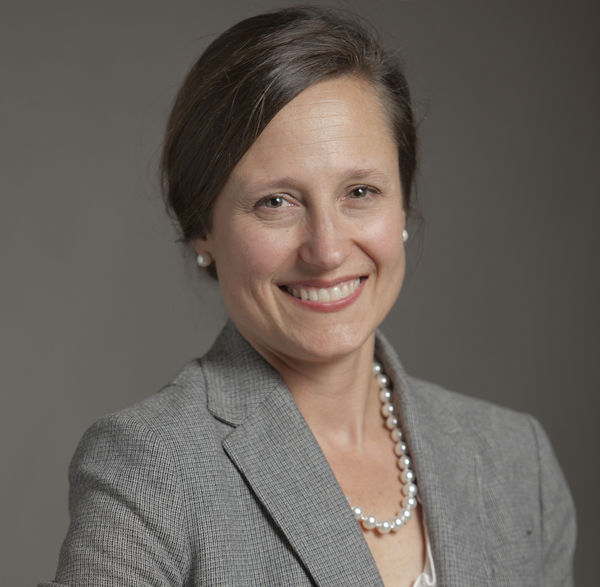 Angela R. Bradbury合作论文数Department of Medical Ethics and Health Policy, Perelman School of Medicine, University of Pennsylvania1
 Lewis A. Chodosh合作论文数Department of Cancer Biology, Perelman School of Medicine, University of Pennsylvania1Anderson J A合作论文数1
 Yvette Lowney合作论文数Exponent1
 Wenqing Sun合作论文数1
 Kudakwashe Collin Takarinda合作论文数1Wilson Gregory C合作论文数1
 Andrew Nelson合作论文数1Paola N. Alboni合作论文数1MacPherson Thomas C合作论文数1
 Lee Su-Ju合作论文数Barrett Breast Center, University of Cincinnati Medical Center1Elder Georgina合作论文数1Montgomery Alan A合作论文数1




