The effects of disturbing noise on the nonlinear electrical brain (EEG) dynamics were investigated in a sample of 12 healthy volunteers. The prediction that a high intensity noise increases the dimensional complexity of brain activity as compared to a low intensity noise, was confirmed using a deterministic chaos algorithm. Further, there was a tendency for rest conditions to have a higher dimensional complexity than the condition in which the low-intensity noise was presented. Although a Fourier-analysis of the EEG revealed a difference in the alpha power between the rest condition at the end of the experiment and the noise conditions, no effect of noise intensity on the EEG power spectrum was obtained. The data indicate that the disturbing effect of a loud noise results in the recruitment of additional cortical networks and thus increases the complexity of cortical cell assemblies.
OBJECTIVES:Severely paralyzed patients could learn to voluntarily generate slow cortical potential (SCP) shifts in their electroencephalogram and to use these signals to operate a communication device. To enhance the patients' autonomy, the present study describes the development of a permanently available communication system that can be turned on and off by locked-in patients without external assistance. A skill necessary for turning the system on is the ability to regulate one's slow potentials in the absence of continuous feedback.METHODS:A stepwise learning approach was employed to train two paralyzed patients to regulate their SCPs without continuous feedback. Elements of the original communication system were gradually removed and elements of the new stand-by mode were introduced.RESULTS:At the end of the learning procedure, both patients achieved correct response rates of above 84% in training sessions without continuous feedback. This skill enabled them to turn the communication device on and off without assistance from others.CONCLUSIONS:These findings suggest that severely paralyzed individuals can learn to operate an EEG-based communication device autonomously.
An algorithm for design of a spelling interface based on a modified Huffman's algorithm is presented. This algorithm builds a full binary tree that allows to maximize an average probability to reach a leaf where a required character is located when a choice at each node is made with possible errors. A means to correct errors (a delete-function) and an optimization method to build this delete-function into the binary tree are also discussed. Such a spelling interface could be successfully applied to any menu-orientated alternative communication system when a user (typically, a patient with devastating neuromuscular handicap) is not able to express an intended single binary response, either through motor responses or by using of brain-computer interfaces, with an absolute reliability.
The thought translation device trains locked-in patients to self-regulate slow cortical potentials (SCP's) of their electroencephalogram (EEG). After operant learning of SCP self-control, patients select letters, words or pictograms in a computerized language support program. Results of five respirated, locked-in-patients are described, demonstrating the usefulness of the thought translation device as an alternative communication channel in motivated totally paralyzed patients with amyotrophic lateral sclerosis.
Applications for the Self-Control of Slow Cortical Potentials It is well established that biofeedback and operant learning procedures can be used to enable humans to gain voluntary control over bodily functions such as heart rate, blood pressure, or muscle tension. Similarly, individuals can acquire control over their brain activity. In a typical training paradigm, visual feedback of slow cortical potential shifts is provided online on a computer monitor, and the desired changes of cortical behavior are reinforced. The efficacy of this approach has been demonstrated in numerous studies by Birbaumer and colleagues. The present paper presents two applications of slow cortical potential self-control. 1) Epilepsy patients show an increased brain potential negativity both before and during a seizure. A feedback paradigm has been used, teaching patients to produce positive potential shifts. A recent long-term study in 41 epileptic patients has demonstrated that the frequency of seizures can be reduced if patients are able to control their cortical potentials in the absence of feedback. 2) In recent years, self-control of slow cortical potentials has been applied to communication, creating a direct interface between brain and computer in completely paralyzed individuals. Birbaumer and co-workers developed a ‘Thought Translation Device’ (TTD) using self-regulation of slow cortical potentials to generate a binary signal. This response can be used to choose letters and words from a selection menu. Thus the TTD has enabled three completely paralyzed patients diagnosed with amyotrophic lateral sclerosis to communicate solely with their brain potentials.
When Jean-Dominique Bauby suffered from a cortico-subcortical stroke that led to complete paralysis with totally intact sensory and cognitive functions, he described his experience in The Diving-Bell and the Butterfly1 as “something like a giant invisible diving-bell holds my whole body prisoner”. This horrifying condition also occurs as a consequence of a progressive neurological disease, amyotrophic lateral sclerosis, which involves progressive degeneration of all the motor neurons of the somatic motor system. These ‘locked-in’ patients ultimately become unable to express themselves and to communicate even their most basic wishes or desires, as they can no longer control their muscles to activate communication devices. We have developed a new means of communication for the completely paralysed that uses slow cortical potentials (SCPs) of the electro-encephalogram to drive an electronic spelling device.
 Niels Birbaumer (尼尔斯拜尔博姆)合作论文数University Tubingen26
 Boris Kotchoubey合作论文数Institute of Medical Psychology, Universität Tübingen22
 Andrea Kübler合作论文数Institute for Psychology, Faculty of Human Sciences, Julius-Maximilians-Universitat Wurzburg;Department of Psychology I, Julius-Maximilians-Universitat Wurzburg21
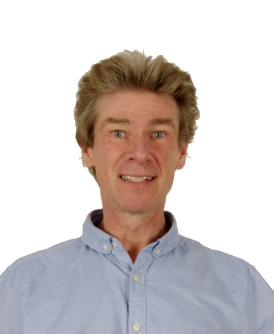 Thilo Hinterberger合作论文数Department of Psychosomatic Medicine, University Medical Center Regensburg;University Hospital Regensburg20
 Nicola Neumann合作论文数16
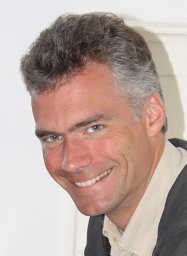 Jochen Kaiser合作论文数Institute of Medical Psychology, Johann Wolfgang Goethe-University14Ute Strehl合作论文数8A. Nanke合作论文数7Heidemarie Hinninghofen合作论文数7Paul Enck合作论文数6
 Walton T. Roth合作论文数Department of Psychiatry and Behavioral Sciences, School of Medicine, Stanford University6J. Heuser合作论文数5
 Frank Wilhelm合作论文数Division of Clinical Psychology and Psychopathology, Department of Psychology, University of Salzburg5Manfred Fichter合作论文数4
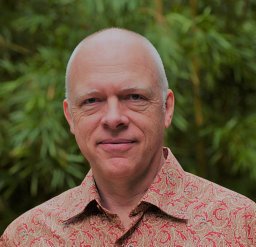 Iver Iversen合作论文数Department of Psychology, University of North Florida4C Fritsch合作论文数3Edward Taub合作论文数3
 Maggie Schauer合作论文数Department of Psychology, University of Konstanz3
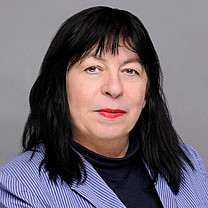 Herta Flor合作论文数Institut Für Neuropsychologie Und Klinische Psychologie, Zentralinstitut Für Seelische Gesundheit;Central Institute of Mental Health, Department of Cognitive and Clinical Neuroscience, Medical Faculty Mannheim, Heidelberg University2Manfred M. Fichter合作论文数2
 Winfried Rief合作论文数Department of Clinical Psychology, University of Marburg2
 Richard Gevirtz合作论文数2J Heuser合作论文数2
 Frauke Musial合作论文数Department of Community Medicine, UiT The Arctic University of Norway1Werner Lutzenberger合作论文数1Viktor Müller合作论文数1H.-P Salzmann合作论文数1Volker Homberg合作论文数1




