In this article, we present measurements of the low-frequency noise of a microstrip-coupled, lumped-element aluminum kinetic inductance detector design that uses a hydrogenated amorphous silicon parallel-plate capacitor (Al/a-Si:H MS-PPC-LEKID), a design under development for the next-generation extended wavelength multiband submillimeter inductance camera (NEW-MUSIC) on the Leighton Chajnantor telescope (LCT). We show that, under dark conditions, this design's noise power spectral density (PSD) is dominated by generation-recombination (GR) noise down to 0.1 Hz. Our measurements set upper limits on the low-frequency (0.01-1 Hz) two-level-system noise of the a-Si:H material that are consistent with prior measurements at 0.1-10 kHz. By extrapolating these measurements to optically loaded operating conditions and comparing to prior measurements above 100 Hz of noise dominated by photon and quasi-particle statistics under optical load, we project that the Al/a-Si:H MS-PPC-LEKID design's noise PSD will be photon- and GR-noise-dominated down to tenths of Hz under expected telescope on-sky optical loads. These results are an important milestone toward demonstrating that Al/a-Si:H MS-PPC-LEKIDs, and a-Si:H PPC-KIDs more generally, are a viable new detector technology for even low modulation-rate applications, such as astronomy.
We report on the characterization of AlMn kinetic inductance detectors (KIDs) under consideration for use in the next-generation extended wavelength-multiband sub/millimeter inductance camera (NEW-MUSIC) (Golwala et al., 2024) on the Leighton Chajnantor Telescope. NEW-MUSIC will cover 80-420 GHz, split into six spectral bands, with polarimetry. This broad spectral coverage will enable study of a range of scientific topics, such as the accretion and feedback in galaxies and galaxy cluster evolution via the Sunyaev-Zeldovich effect, the transient synchrotron emission from the explosive deaths of massive stars and other time-domain phenomena, and dusty sources from low to high redshift (with polarization). Al KIDs have already been demonstrated for four bands centered at 150, 220, 275, and 350 GHz and will also be used for the 405 GHz band (Golwala et al., 2024). AlMn KIDs are a candidate for the 90-GHz band, as Al's pair-breaking energy is too high. However, AlMn has only barely been explored as a KID material. To this end, we first improved the modeling techniques used for KIDs within Bardeen-Cooper-Schrieffer (BCS) theory by eliminating the use of analytical approximations for the expressions of the complex conductivity and found that these changes reduced fit parameter degeneracy in the analysis of AlMn. Then, we tested the addition of a gap smearing parameter, a standard extension to BCS theory in use for materials for which the BCS model appears unsatisfactory, such as high kinetic inductance materials, and found that the model without this term is preferred by the data. We thus conclude that our AlMn resonators do not suffer from significant gap smearing. Finally, we observed optical response of the AlMn KIDs to mm-wave radiation and attempted to measure their optical efficiency, but the small response of these devices to optical loading at the operating temperatures attempted prevented us from obtaining meaningful constraints. Nevertheless, our data display AlMn's potential as a KID material for the 60-100 GHz frequency range.
X-ray luminous cool-core (CC) galaxy clusters contain powerful cosmic ray (CR) sources. High-energy CRs powering GHz synchrotron lose energy rapidly, but long-lived ( Gyr-old) populations of 0.1-1 GeV CRs persist, propagating to 100 kpc distances and radiating via inverse-Compton (IC) scattering of CMB photons. We explore observable consequences of such CR-IC emission. This produces remarkably thermal X-ray spectra, which could contribute significantly to emission in CC centers. These naturally connect to ultra-steep radio sources and radio mini-halos at younger ages, but become undetectable in most radio, hard-X-ray, and γ-ray searches (though future imaging may detect them), while reproducing apparent density, temperature, entropy, and mass deposition rates of CCs. This would provide an alternative resolution of the cooling flow problem: clusters may appear as strong CCs because of strong CR-IC, while not actually cooling so rapidly. This predicts many observed correlations between AGN/jet properties, radio galaxy and minihalo properties, cooling radii, cavity radii and apparent X-ray cooling luminosity L_ X,cool. Since L_ X,cool is actually from CR-IC, the observed radio-X-ray (L_ radio-L_ X,cool), apparent cavity power (P_ cav-L_ X,cool-L_ radio), and strong CC-AGN correlations are predicted without free parameters. Since CR-IC leads to X-ray overestimates of thermal pressure, the ratio of SZ to X-ray pressures should drop in CC centers. CR-IC also suppresses abundances inferred from X-ray relative to optical/UV measurements in CC centers. Both of these appear to be seen in sufficiently-resolved CCs. Effects on cluster cosmology, hydrostatic mass estimation, and non-thermal pressure/turbulence estimators are small. Redshift evolution of CC surface brightness profiles could provide strong constraints or imply CR-IC at high-z.
Galaxy cluster abundance provides a powerful probe of the ΛCDM model and enables precise constraints on cosmological parameters. Millimeter-wavelength surveys detect clusters through the Sunyaev-Zeldovich (SZ) effect, and are particularly effective at high redshifts. However, the SZ signal can be significantly contaminated by emission from Active Galactic Nuclei (AGN), particularly AGN within the Central Galaxies (CGs). This contamination reduces the SZ signal strength at the frequencies most accessible from the ground, which reduces detection significances or converts cluster detections to non-detections, thereby diminishing survey completeness and introducing biases in cosmological analyses. In this work, we analyze three clusters that host bright AGN in their CGs using 30 and 90 GHz observations from the Combined Array for Research in Millimeter-wave Astronomy (CARMA). In each case the AGN emission overwhelms the cluster SZ signal, resulting in non-detections in the Atacama Cosmology Telescope (ACT) survey. We present signal to noise ratio (SNR) estimates for the clusters after subtracting the AGN signal from 90 GHz ACT maps using the CARMA measurements, demonstrating high SNR cluster detections once this contaminating emission is removed. Using cluster pressure profiles derived from Chandra X-ray data, we subtract the expected SZ signal from the 150 GHz ACT maps to estimate the flux density of the AGN in that band. Leveraging the time-asynchronous CARMA observations, we also assess temporal variability in the AGN emission, and find low fractional variability for our sample. Finally, we discuss the importance of modeling and mitigating AGN contamination in SZ cluster surveys.
Under the standard model of hierarchical structure formation, the overall geometry of galaxy clusters is better described by a triaxial ellipse than by a sphere. As a result, the application of spherically symmetric models can result in significant biases, with masses derived from weak-lensing observations being particularly sensitive. These biases can be mitigated by fitting a triaxial model, but this requires deep multi-probe data along with a set of physically motivated models to describe them. We present a multi-probe triaxial analysis method based on the data available for galaxy clusters in the Cluster Heritage project with XMM-Newton - Mass Assembly and Thermodynamics at Endpoint of structure formation (CHEX-MATE), which includes X-ray data from XMM-Newton, Sunyaev-Zel'dovich effect maps from Planck and ACT, and weak-lensing data from Subaru. This work builds upon our previous development of a gas-only X-ray and Sunyaev-Zel'dovich triaxial fitting formalism in Paper I. After verifying our approach using mock observations of model clusters with known properties, we applied it to the CHEX-MATE galaxy cluster PSZ2 G313.33+61.13 (Abell 1689). We found that the cluster is elongated along the line of sight relative to the plane of sky by a factor of & Rscr;(LP) = 1.20 +/- 0.04. As a result, the weak-lensing mass obtained from our triaxial fit, M-200c = (13.88(-1.43)(+1.73)) & times; 10(14)M(circle dot ) , is significantly lower than the value of (17.77(-1.75)(+2.00))& times;10(14)M(circle dot )obtained from a spherically symmetric fit that otherwise employed the same method. Our triaxial fit finds a concentration ofc(200c)=8.66(-1.70)(+2.08), consistent with the spherically symmetric value of 9.99+2.26-1.78, which suggests that the unexpectedly high concentration in Abell 1689 is not due to triaxiality and orientation. We also measured the nonthermal pressure fraction at radii between 0.18-1.37 Mpc and found a minimum of approximately 20% at intermediate radii, increasing to near 30% at the smallest and largest radii, and with a typical measurement precision of +/- 5%.
The conversion of gravitational potential to kinetic energy results in an intracluster medium (ICM) gas with a characteristic temperature near 10 keV in the most massive galaxy clusters. X-ray observations, primarily from Chandra and XMM-Newton, have revealed a wealth of information about the thermodynamics of this gas. However, two regimes remain difficult to study with current instruments: superheated gas well above 10 keV generated by shocks from major mergers, and distant systems strongly impacted by cosmological dimming. Relativistic corrections to the Sunyaev-Zel'dovich effect (rSZe) produce a fractional spectral distortion in the cosmic microwave background at submillimeter and millimeter wavelengths that could offer a complementary probe of both high-temperature and high-redshift ICM gas. Here we describe multiband measurements of the rSZe, including observations from the Fourier Transform Spectrometer on the Herschel-SPIRE instrument, that constrain the ICM thermodynamics of the major merger MACS J0717.5+3745. Within the seven observed lines of sight, we find an average temperature of TrSZe =15.1-3.3+3.8 keV, which is consistent with the values obtained from X-ray measurements of the same regions, with TChandra =18.0-1.1+1.1 keV and TXMM =13.9-0.9+0.9 keV. This work demonstrates that the rSZe signal can be detected with moderate spectral resolution submillimeter data, while also establishing the utility of such measurements for probing superheated regions of the ICM.
Perseus is the brightest X-ray strong cool-core (SCC) cluster, with a bright central radio and γ-ray source plus low-frequency radio mini and giant halos. It is the archetype of the cooling flow (CF) problem, with X-rays implying mass cooling rates orders-of-magnitude larger than observed in other channels. Recent work suggested that ancient (≳ Gyr-old) cosmic ray (CR) halos (ACRHs), injected by the central source, would produce thermal-like soft X-ray inverse-Compton (CR-IC) emission 'boosting' the CC and alleviating the CF problem. We examine Perseus and show that a simple model of CRs injected by NGC 1275 (+satellites) simultaneously accounts for the excess CF luminosity and minihalo. The models reproduce Perseus's soft X-ray surface brightness and X-ray inferred density/temperature/pressure/metallicity/cooling time/mass deposition rates; γ-ray spectra; extended hard X-rays; and radio surface brightness and spectral index data, from kpc-Mpc. These also reproduce independent constraints on magnetic field strengths and mass/potential models. The evolution of the minihalo spectral index and surface brightness are predicted by an aging population of CRs boosting the apparent SCC luminosity via CR-IC, and match well the observed hard X-ray slopes. The 'giant' low-frequency halo can be predicted by the sum of ACRHs around satellites distributed throughout the cluster, dominating diffuse synchrotron at ≳ 100kpc. Re-acceleration is neither needed nor important in these models, and implied CR transport speeds are consistent with buoyant advection. Previous claims of upper limits to non-thermal X-rays and CR pressure relied on strong assumptions which are not valid at the CR energies of interest, e.g. a power-law spectrum of CRs. This could resolve many historical puzzles about Perseus, and makes new predictions for future observations.
We present a weak-lensing shear analysis of 41 Planck SZ-selected galaxy clusters at 0.11≤ z≤ 0.55 from the CHEX-MATE sample, using wide-field Subaru/Suprime-Cam and CFHT/MegaPrime imaging from the AMALGAM project. We detect the azimuthally averaged weak-lensing signal around the X-ray peak of each cluster, achieving a median S/N of 6.5 per cluster. The 45^∘-rotated component has a median S/N of -0.1 and ranges from -1.8 to +1.8, consistent with zero. We model the excess surface mass density profile of each cluster with an NFW profile to infer weak-lensing mass and concentration constraints. The total systematic uncertainty in the weak-lensing mass calibration is assessed to be 8%. Using a hierarchical Bayesian framework, we then derive weak-lensing-calibrated scaling relations for the halo concentration, c_200, as a function of M_200 and redshift, and for the Planck SZ mass proxy, M_SZ, as a function of M_500 and redshift, while accounting for sample selection effects, weak-lensing modelling biases, and residual calibration uncertainty. At M_200=10^15M_⊙ and z=0.25, we find c_200=3.53±0.71 with an intrinsic scatter of 0.22±0.04 dex. The inferred normalisation and scatter are consistent with recent ΛCDM predictions for massive haloes, with no significant mass or redshift dependence over the probed range. For the Planck mass proxy, our baseline regression yields M_SZ/M_500=0.83±0.09 at M_500=7×10^14M_⊙ and z=0.25, with an intrinsic scatter of 0.10±0.02 dex. A restricted model with fixed unit mass slope and no redshift evolution gives 1-b=0.72±0.11. We also provide weak-lensing-calibrated posterior estimates of M_500 for the sample based on the baseline M_SZ–M_500–z relation. These results provide an initial weak-lensing mass calibration for CHEX-MATE multi-probe cluster studies.
We present a novel readout electronics system for large arrays of superconducting electromagnetic resonators, such as kinetic inductance detectors (KIDs), based on a Radio Frequency System on Chip (RFSoC) architecture. Each channel in the readout system is designed for frequency division multiplexing of up to 1024 high quality factor resonances placed on a single microwave transmission line at unique frequencies within a 512 MHz bandwidth. We describe the design of the digital and analog signal processing chains for the implementation of a two-channel 2048-resonator system on the Xilinx ZCU111 RFSoC evaluation board in combination with a custom intermediate frequency (IF) system to convert the RFSoC band to higher frequencies up to 4 GHz. We also detail an associated software interface that provides a range of tools commonly utilized for characterizing KID resonators and for operating them as part of a photometric millimeter-wave imager. We additionally provide noise characterizations of the individual readout components, along with the complete readout system in isolation and in operation to readout KID resonators.
The Cluster HEritage project with XMM-Newton - Mass Assembly and Thermodynamics at the Endpoint of structure formation (CHEX-MATE) is a programme to study a minimally biased sample of 118 galaxy clusters detected by Planck through the Sunyaev-Zeldovich effect. Accurate and precise mass measurements are required to exploit CHEX-MATE as an astrophysical laboratory and a calibration sample for cosmological probes in the era of large surveys. We measured masses based on the galaxy dynamics, which are highly complementary to weak-lensing or X-ray estimates. We analysed the sample with a uniform pipeline that is stable both for poorly sampled or rich clusters -using spectroscopic redshifts from public (NED, SDSS, and DESI) or private archives and dedicated observational programmes. We modelled the halo mass density and the anisotropy profile. Membership is confirmed with a cleaning procedure in phase space. We derived masses from measured velocity dispersions under the assumed model. We measured dynamical masses for 101 CHEX-MATE clusters with at least ten confirmed members within the virial radius r200c. Estimated redshifts and velocity dispersions agree with literature values when available. Validation with weak-lensing masses shows agreement within 8 +/- 16 (stat.) +/- 5 (sys.)%, and confirms dynamical masses as an unbiased proxy. Comparison with Planck masses shows them to be biased low by 34 +/- 3 (stat.) +/- 5 (sys.)%. A follow-up spectroscopic campaign is underway to cover the full CHEX-MATE sample.
X-ray bright cool-core (CC) clusters contain luminous radio sources accelerating cosmic ray (CR) leptons at prodigious rates. Near the acceleration region, high-energy leptons produce synchrotron (mini)halos and sometimes observable gamma rays, but these leptons have short lifetimes and so cannot propagate far from sources without some rejuvenation. However, low-energy ( 0.1-1 GeV) CRs should survive for >Gyr, potentially reaching 100 kpc before losing energy via inverse-Compton (IC) scattering of CMB photons to keV X-ray energies, with remarkably thermal X-ray spectra. In groups/clusters, this will appear similar to relatively 'cool' gas in cluster cores (i.e. CCs). In lower-mass (e.g. Milky Way/M31) halos, analogous CR IC emission will appear as hot (super-virial) gas at outer CGM radii, explaining recent diffuse X-ray observations. We show that for plausible (radio/gamma-ray observed) lepton injection rates, the CR-IC emission could contribute significantly to the X-ray surface brightness (SB) in CCs, implying that CC gas densities may have been overestimated and alleviating the cooling flow problem. A significant IC contribution to diffuse X-ray emission in CC clusters also explains the tight correlation between the X-ray 'cooling luminosity' and AGN/cavity/jet power, because the apparent CC emission is itself driven by the radio source. Comparing observed Sunyaev Zeldovich to X-ray inferred pressures at ≪ 100 kpc in CCs represents a clean test of this scenario, and existing data appears to favor significant CR-IC. A significant IC contribution also implies that X-ray inferred gas-phase metallicities have been underestimated in CCs, potentially explaining the discrepancy between X-ray (sub-Solar) and optical/UV (super-Solar) observed metallicities in the central 10 kpc of nearby CCs. We also discuss the model's connection to observations of multiphase gas in clusters.
We explore the possibility that inverse-Compton (IC) scattering of cosmic microwave background photons by ∼GeV cosmic rays (CRs) injected by the central active galactic nucleus (AGN) in cool core (CC) clusters produces a non-negligible continuum-like X-ray signal that is easily misinterpreted as intracluster medium (ICM) thermal bremsstrahlung continuum. This is particularly relevant to the cooling flow problem–the lack of star formation relative to X-ray-inferred ICM cooling rates. Using ZwCl 3146, a relaxed CC system at z = 0.291, we compare pressure profiles derived via X-rays and the thermal Sunyaev-Zel'dovich (SZ) effect. While SZ measurements probe only thermal ICM electrons, additional CR-IC emission would appear to boost the X-ray-inferred pressure. Relative to unity, we measure a ≃30% decrement in P_SZ/P_X within 100 kpc of the ZwCl 3146 center at a statistical significance of ≃ 3.3σ, consistent with predicted deficits from CR-IC contamination in reasonable models of central AGN-driven CR injection. X-ray spectral fits of a two-component model with thermal ICM and CR-IC emission are consistent with CR-IC as the cause of this deficit. We test alternative explanations and systematics that could drive such a decrement, with the leading order systematics associated with halo triaxiality. Collectively, these systematics are unlikely to produce a P_SZ/P_X decrement ≳10%. While our results establish that non-negligible CR-IC emission is plausible in ZwCl 3146, we stress that more detailed studies of larger cluster samples are required to robustly assess whether CR-IC is relevant to the cooling flow problem.
We analysed the kinematical properties of the CHEX-MATE galaxy cluster sample. Our study is based on the radial velocities retrieved from the SDSS DR18, DESI, and NED spectroscopic databases and new data obtained with the 10.4 m GTC and ESO-NTT telescopes. We derived cluster mass profiles for 75 clusters using the MG-MAMPOSST procedure, which recovers the gravitational potential and the anisotropy profiles from line-of-sight velocities and projected positions of galaxy members. The standard Navarro-Frenk-White (NFW) model and the Burkert model, with flatter cores than the NFW, both adequately fit the kinematic data, with only a marginal statistical preference for one model over the other. An estimation of the mass bias (1-B1) = M500SZ/M500M ( 1 - B 1 ) = M 500 SZ / M 500 M $ (1-B_1) = M<<^>>{\mathrm{SZ}}_{500}/M<<^>>{M}_{500} $ was performed via a comparison with Sunyaev-Zel'dovich-X-ray-calibrated mass estimates, resulting in a value of 0.54 +/- 0.11 when four evidently disturbed clusters are removed from the sample. We assessed the dynamical state of the clusters by inferring the Anderson-Darling coefficient (A2) and the fraction of galaxies in substructures (fsub). Except for a few cases, we find relatively low values for A2, which suggests that CHEX-MATE clusters are not too far from relaxation. Moreover, no significant trends emerge between A2 and fsub, nor between the log-masses estimated by MG-MAMPOSST and those based on the Sunyaev-Zel'dovich effect calibrated through X-rays measurements. We studied the concentration-mass relation for the sample; despite the large scatter, we observe signs of an increasing trend for high-mass clusters, in agreement with recent theoretical expectations. Finally, our analysis of the radial anisotropy profiles of member galaxies - stacked in five bins of mass and redshift - reveals that orbits tend to be isotropic at the centre and more radial towards the edge, as found in previous studies. A slight trend of increasing radial orbits at r200 is observed in clusters with larger velocity dispersions.
At sub-Kelvin temperatures, two-level systems (TLSs) present in amorphous dielectrics source a permittivity noise, degrading the performance of a wide range of devices using superconductive resonators such as qubits or kinetic inductance detectors. We report here on measurements of TLS noise in hydrogenated amorphous silicon (a-Si:H) films deposited by plasma-enhanced chemical vapor deposition in superconductive lumped element resonators using parallel-plate capacitors. The TLS noise results presented in this article for two recipes of a-Si:H improve on the best results achieved in the literature by a factor >5 for a-Si:H and other amorphous dielectrics and are comparable to those observed for resonators deposited on crystalline dielectrics.
In this article, we present the design, fabrication, and characterization of a 100 mm diameter, flat, gradient-index (GRIN) lens fabricated with high-resistivity silicon, combined with a three-layer antireflection (AR) structure optimized for 160-355 GHz. Multidepth, deep reactive-ion etching enables patterning of silicon wafers with subwavelength structures (posts or holes) to locally change the effective refractive index and, thus, create AR layers and a radial index gradient. The structures are nonresonant and, for sufficiently long wavelengths, achromatic. Hexagonal holes varying in size with distance from the optical axis create a parabolic index profile decreasing from 3.15 at the center of the lens to 1.87 at the edge. The AR structure consists of square holes and cross-shaped posts. We have fabricated a lens consisting of a stack of five 525 mu m thick GRIN wafers and one AR wafer on each face. We have characterized the lens over the frequency range 220-330 GHz, obtaining behavior consistent with Gaussian optics down to-14 dB and transmittance of 99 +/- 3%.
Passive imaging through optical obscurants is a promising application for mm-wave sensing. We have thus developed the Superconducting Kinetic Inductance Passive Radiometer (SKIPR), a 150 GHz polarization-sensitive photometric camera optimized for terrestrial imaging using a focal plane array with 3,840 kinetic inductance detectors (KIDs). We present a full description of the instrument design, with a particular emphasis on the cryogenic system based on a Gifford-McMahon cryocooler with a two-stage Adiabatic Demagnetization Refrigerator and a dedicated 1.59 m crossed Dragone telescope with an altitude/azimuth mount. We include a detailed lab-based characterization of the KIDs, which results in a determination of their superconducting resonator parameters and optical properties. We also present in situ measurements from the telescope, including point-spread functions and noise characterization. In sum, we find that SKIPR performs as expected, providing diffraction-limited imaging with detector noise performance set by the random arrivals of photons from the ambient background. There is minimal variation in detector characteristics over the full SKIPR focal plane array, and the overall detector yield is 92 per cent.
MACS J0600.1-2008 (MACS0600) is an X-ray-luminous, massive galaxy cluster at z(d)=0.43, studied previously by the REionization LensIng Cluster Survey and ALMA Lensing Cluster Survey projects which revealed a complex, bimodal mass distribution and an intriguing high-redshift object behind it. Here, we report on the results of a combined analysis of the extended strong lensing (SL), X-ray, Sunyaev-Zeldovich (SZ), and galaxy luminosity-density properties of this system. Using new JWST and ground-based Gemini-N and Keck data, we obtain 13 new spectroscopic redshifts of multiply-imaged galaxies and identify 12 new photometric multiple-image systems and candidates, including two multiply-imaged z similar to 7 objects. Taking advantage of the larger areal coverage, our analysis reveals an additional bimodal, massive SL structure which we measure spectroscopically to lie adjacent to the cluster and whose existence was implied by previous SL-modelling analyses. While based in part on photometric systems identified in ground-based imaging requiring further verification, our extended SL model suggests that the cluster may have the second-largest critical area and effective Einstein radius observed to date, A(crit)similar or equal to 2.16arcmin2 and theta(E)=49.7 ''+/- 5.0 '' for a source at z(s)=2, enclosing a total mass of M(<theta(E))=(4.7 +/- 0.7)x10(14)M(circle dot). These results are also supported by the galaxy luminosity distribution, and the SZ and X-ray data. Yet another, probably related massive cluster structure, discovered in X-rays 5 arcmin (1.7 Mpc) further north, suggests that MACS0600 is part of an even larger filamentary structure. This discovery adds to several recent detections of massive structures around SL galaxy clusters and establishes MACS0600 as a prime target for future high-redshift surveys with JWST.
Two-level systems (TLS) are an important, if not dominant, source of loss and noise for superconducting resonators such as those used in kinetic inductance detectors and some quantum information science platforms. They are similarly important for loss in photolithographically fabricated superconducting mm-wave/THz transmission lines. For both lumped-element and transmission-line structures, native amorphous surface oxide films are typically the sites of such TLS in nonmicrostripline geometries, while loss in the (usually amorphous) dielectric film itself usually dominates in microstriplines. We report here on the demonstration of low TLS loss at GHz frequencies in hydrogenated amorphous silicon (a-Si:H) films deposited by plasma-enhanced chemical vapor deposition in superconducting lumped-element resonators using parallel-plate capacitors (PPCs). The values we obtain from two recipes in different deposition machines, 7x10⁻⁶ and 12x10-6, improve on the best achieved in the literature by a factor of 2-4 for a-Si:H and are comparable to recent measurements of amorphous germanium. Moreover, we have taken care to extract the true zero-temperature, low-field loss tangent of these films, accounting for temperature and field saturation effects that can yield misleading results. Such robustly fabricated and characterized films render the use of PPCs with deposited amorphous films a viable architecture for superconducting resonators and they also promise extremely low loss and high quality factor for photolithographically fabricated superconducting mm-wave/THz transmission lines used in planar antennas and resonant filters.
 Sunil Golwala合作论文数The Division of Physics, Mathematics and Astronomy, California Institute of Technology83
 Nicole G. Czakon合作论文数44
 Keiichi Umetsu (梅津敬一)合作论文数Institute of Astronomy and Astrophysics, Academia Sinica37
 J. Glenn合作论文数University of Colorado36
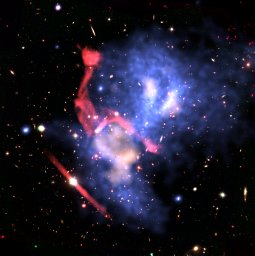 Tony Mroczkowski合作论文数Department of Astronomy;Columbia University;Department of Astronomy, Columbia University31Peter K. Day合作论文数28
 Adi Zitrin合作论文数Ben Gurion University27Philip R. Maloney合作论文数27
 Matthew I. Hollister合作论文数24
 Megan Donahue合作论文数Department of Physics & Astronomy, College of Natural Science, Michigan State University22
 Henry G. LeDuc合作论文数NASA22
 Seth R. Siegel合作论文数Natl Radio Astron Observ20Julian Merten合作论文数Dept Phys, Univ Oxford20
 Stefano Ettori合作论文数INAF–Astrophysics and Space Science Observatory in Bologna20
 Jonas Zmuidzinas合作论文数George W. Downs Laboratory of Physics, Division of Physics, Mathematics, and Astronomy, California Institute of Technology19James A. Schlaerth合作论文数18Mauro Sereno合作论文数Astrophysics and Space Science Observatory of Bologna, Italian National Institute for Astrophysics17
 Omid Noroozian合作论文数CALTECH, Pasadena, CA 91125 USA17Elena Rasia合作论文数Dipartimento di Astronomia;Universita di Padova;Dipartimento di Astronomia, Universita di Padova17
 James E. Aguirre合作论文数Department of Physics and Astronomy, University of Pennsylvania16
 Piero Rosati合作论文数Department of Physics and Earth Sciences, University of Ferrara16Mario Nonino合作论文数INAF16
 Adam Mantz合作论文数Kavli Institute for Particle Astrophysics and Cosmology, Stanford University16
 Leonidas Moustakas合作论文数Jet Propulsion Laboratory, California Institute of Technology16Benjamin A. Mazin合作论文数16Michael Zemcov合作论文数School of Physics and Astronomy;Cardiff University;School of Physics and Astronomy, Cardiff University15Anastasios Vayonakis合作论文数15
 Massimo Meneghetti合作论文数Osservatorio di Astrofisica e Scienza Dello Spazio, Istituto Nazionale di Astrofisica15
 James J. (Jamie) Bock合作论文数The Division of Physics, Mathematics and Astronomy, California Institute of Technology;Jet Propulsion Laboratory, California Institute of Technology15Hien T. Nguyen合作论文数14
 Anton M. Koekemoer合作论文数Space Telescope Science Institute14D. Haig合作论文数13Ran Duan (段然)合作论文数13Etienne Pointecouteau合作论文数13
 Philip Mauskopf合作论文数Department of Physics, School of Earth and Space Exploration, Arizona State University13
 Alberto Molino合作论文数Inst Astrofis Andalucia, CSIC13
 Brian S. Mason合作论文数National Radio Astronomy Observatory13Philippe Rossinot合作论文数13
 Marc Postman合作论文数Science Mission Office, Space Telescope Science Institute13John E. Vaillancourt合作论文数13
 Elinor Medezinski合作论文数Immunai13
 Elena Pierpaoli合作论文数Department of Physics & Astronomy, College of Letters, Arts and Sciences, University of Southern California13
 Lorenzo Lovisari合作论文数INAF12s f edgington合作论文数11H. T. Nguyen合作论文数11
 Charles Romero合作论文数11
 Peter Melchior合作论文数Department of Astrophysical Sciences, Princeton University11
 Narciso Benitez合作论文数Instituto de Astrofisica de Andalucia, CSIC11
 Fabio Gastaldello合作论文数Sezione di Milano " G. Occhialini "11




