The Belle II experiment searches for beyond-the-standard-model physics using the Belle II detector and SuperKEKB collider. The silicon vertex detector (SVD) is crucial for particle tracking. After the 1.5-year shutdown from June 2022, Run 2 began in January 2024; Run 2 operation shows stable noise levels, high signal-to-noise ratios, and hit efficiency over 99%. To manage higher beam background from increased luminosity, new techniques such as hit-time selection and cluster grouping are being developed. These methods increase the acceptable level of occupancy by distinguishing hits from triggered collisions and other sources.
We measure the time-integrated CP asymmetry in D-0 -> (KSKS0)-K-0 decays reconstructed in e(+)e(-) -> c (c) over bar events collected by the Belle and Belle II experiments. The corresponding data samples have integrated luminosities of 980 and 428 fb(-1), respectively. The D-0 decays are required to originate from the D*(+) -> D-0 pi(+) decay, which determines the charm flavor at production time. A control sample of D-0 -> K+K- decays is used to correct for production and detection asymmetries. The result, (-1.4 +/- 1.3(stat) +/- 0.1(syst))%, is consistent with previous determinations and with CP symmetry.
We present measurements of B → K*(892)γ decays using 365 fb−1 of data collected from 2019 to 2022 by the Belle II experiment at the SuperKEKB asymmetric-energy e+e− collider. The data sample contains (387 ± 6) × 106 Υ(4S) events. We measure branching fractions ( ℬ ) and CP asymmetries ( 𝒜_CP ) for both B0 → K*0γ and B+ → K*+γ decays. The difference in CP asymmetries ( Δ𝒜_CP ) and the isospin asymmetry (∆0+) between these neutral and charged channels are also measured. We obtain the following branching fractions and CP asymmetries: ℬ(B^0→K^*0γ)=(4.14± 0.10± 0.11)×10^-5 , ℬ(B^+→K^*+γ)=(4.04±0.13_-0.15^+0.13)×10^-5 , 𝒜_CP(B^0→K^*0γ)=(-3.3± 2.3± 0.4)% , and Δ𝒜_CP(B^+→K^*+γ)=(-0.7± 2.9± 0.5)% . The measured difference in CP asymmetries is Δ𝒜_CP=(+2.6±3.8± 0.6)% , and the measured isospin asymmetry is ∆0+ = (+4.8 ± 2.0 ± 1.8)
We perform the first search for CP violation in D_(s)^+→K_S^0K^-π^+π^+ decays. We use a combined data set from the Belle and Belle II experiments, which study e+e− collisions at center-of-mass energies at or near the Υ(4S) resonance. We use 980 fb−1 of data from Belle and 428 fb−1 of data from Belle II. We measure six CP-violating asymmetries that are based on triple products and quadruple products of the momenta of final-state particles, and also the particles’ helicity angles. We obtain a precision at the level of 0.5 D^+→K_S^0K^-π^+π^+ decays, and better than 0.3 D_s^+→K_S^0K^-π^+π^+ decays. No evidence of CP violation is found. Our results for the triple-product asymmetries are the most precise to date for singly-Cabibbo-suppressed D+ decays. Our results for the other asymmetries are the first such measurements performed for charm decays.
We present measurements of B+ -> rho(+) gamma and B-0 -> rho(0) gamma. decays using a combined data sample of 772 x 10(6) B (B) over bar pairs collected by the Belle experiment and 387 x 10(6) B (B) over bar pairs collected by the Belle II experiment in e(+) e(-) collisions at the Upsilon(4S) resonance. After an optimized selection, a simultaneous fit to the Belle and Belle II datasets yields 114 +/- 12 B+ -> rho(+) gamma. and 99 +/- 12 B-0 -> rho(0) gamma decays. The measured branching fractions are (13.1(-1.9-1.2)(+2.0+1.3)) x 10(-7) and (7.6 +/- 1.3(-0.8)(+1.0)) x 10(-7) for B+ -> rho(+) gamma. and B-0 -> rho(0) gamma. decays, respectively, where the first uncertainty is statistical and the second is systematic. We also measure the isospin asymmetry A(I)(B -> rho gamma) = (10.9(-11.7-7.3)(+11.2+7.8))% and the direct CP asymmetry A(CP)(B+ -> rho(+) gamma) = (-8.2 +/- 15.2(-1.3)(+2.0))%.
Abstract We report measurements of the absolute branching fractions $$\mathcal{B}\left({B}_{s}^{0}\to {D}_{s}^{\pm }X\right)$$ , $$\mathcal{B}\left({B}_{s}^{0}\to {D}^{0}/{\overline{D} }^{0}X\right)$$ , and $$\mathcal{B}\left({B}_{s}^{0}\to {D}^{\pm }X\right)$$ , where the latter is measured for the first time. The results are based on a 121.4 fb −1 data sample collected at the Υ(10860) resonance by the Belle detector at the KEKB asymmetric-energy e + e − collider. We reconstruct one $${B}_{s}^{0}$$ meson in $${e}^{+}{e}^{-}\to \Upsilon\left(10860\right)\to {B}_{s}^{*}{\overline{B} }_{s}^{*}$$ events and measure yields of $${D}_{s}^{+}$$ , D 0, and D + mesons in the rest of the event. We obtain $$\mathcal{B}\left({B}_{s}^{0}\to {D}_{s}^{\pm }X\right)=\left(68.6\pm 7.2\pm 4.0\right)\%$$ , $$\mathcal{B}\left({B}_{s}^{0}\to {D}^{0}/{\overline{D} }^{0}X\right)=\left(21.5\pm 6.1\pm 1.8\right)\%$$ , and $$\mathcal{B}\left({B}_{s}^{0}\to {D}^{\pm }X\right)=\left(12.6\pm 4.6\pm 1.3\right)\%$$ , where the first uncertainty is statistical and the second is systematic. Averaging with previous Belle measurements gives $$\mathcal{B}\left({B}_{s}^{0}\to {D}_{s}^{\pm }X\right)=\left(63.4\pm 4.5\pm 2.2\right)\%$$ and $$\mathcal{B}\left({B}_{s}^{0}\to {D}^{0}/{\overline{D} }^{0}X\right)=\left(23.9\pm 4.1\pm 1.8\right)\%$$ . For the $${B}_{s}^{0}$$ production fraction at the Υ(10860), we find $${f}_{s}=\left({21.4}_{-1.7}^{+1.5}\right)\%$$ .
We present a measurement of the branching fraction and time-dependent charge-parity (CP) decay-rate asymmetries in B0→J/ψπ0 decays. The data sample was collected with the Belle II detector at the SuperKEKB asymmetric e+e− collider in 2019–2022 and contains (387±6)×106 BB¯ meson pairs from ϒ(4S) decays. We reconstruct 392±24 signal decays and fit the CP parameters from the distribution of the proper-decay-time difference of the two B mesons. We measure the branching fraction to be (B0→J/ψπ0)=(2.00±0.12±0.09)×10−5 and the direct and mixing-induced CP asymmetries to be CCP=0.13±0.12±0.03 and SCP=−0.88±0.17±0.03, respectively, where the first uncertainties are statistical and the second are systematic. We observe mixing-induced CP violation with a significance of 5.0 standard deviations for the first time in this mode. Published by the American Physical Society 2025
A series of data samples was collected with the Belle II detector at the SuperKEKB collider from March 2019 to June 2022. We determine the integrated luminosities of these data samples using three distinct methodologies involving Bhabha (e(+) e(-) -> e(+) e(-)(n gamma)), digamma (e(+) e(-) -> gamma gamma(n gamma)), and dimuon (e(+) e(-) -> mu(+) mu(-)(n gamma)) events. The total integrated luminosity obtained with Bhabha, digamma, and dimuon events is (426.88 +/- 0.03 +/- 2.61) fb(-1), (429.28 +/- 0.03 +/- 2.62) fb(-1), and (423.99 +/- 0.04 +/- 3.83) fb(-1), where the first uncertainties are statistical and the second are systematic. The resulting total integrated luminosity obtained from the combination of the three methods is (427.87 +/- 2.01) fb(-1).
The European Strategy for Particle Physics (ESPP) reflects the vision and presents concrete plans of the European particle physics community for advancing human knowledge in fundamental physics. The ESPP is updated every five-to-six years through a community-driven process. It commences with the submission of specific proposals and other input from the community at large, outlining projects envisioned for the near-, mid-, and long-term future. All submitted contributions are evaluated by the Physics Preparatory Group (PPG), and a preliminary analysis is presented at a Symposium meant to foster a broad community discussion on the scientific value and feasibility of the various ideas proposed. The outcomes of the analysis and the deliberations at the Symposium are synthesized in the current Briefing Book, which provides an important input in the deliberations of the Strategy recommendations by the European Strategy Group (ESG).
We report measurements of time-dependent CP asymmetries in B^{0}→K_{S}^{0}π^{0}γ decays based on a data sample of (388±6)×10^{6} BB[over ¯] events collected at the ϒ(4S) resonance with the Belle II detector. The Belle II experiment operates at the SuperKEKB asymmetric-energy e^{+}e^{-} collider. We measure decay-time distributions to determine CP -violating parameters S and C. We determine these parameters for two ranges of K_{S}^{0}π^{0} invariant mass: m(K_{S}^{0}π^{0})∈(0.8,1.0) GeV/c^{2}, which is dominated by B^{0}→K^{*0}(→K_{S}^{0}π^{0})γ decays, and a complementary region m(K_{S}^{0}π^{0})∈(0.6,0.8)∪(1.0,1.8) GeV/c^{2}. Our results have improved precision as compared to previous measurements and are consistent with theory predictions.
We report on a search for a resonance X decaying to a pair of muons in e+e−→μ+μ−X events in the 0.212–9.000 GeV/c2 mass range, using 178 fb−1 of data collected by the Belle II experiment at the SuperKEKB collider at a center of mass energy of 10.58 GeV. The analysis probes two different models of X beyond the standard model: a Z′ vector boson in the Lμ−Lτ model and a muonphilic scalar. We observe no evidence for a signal and set exclusion limits at the 90% confidence level on the products of cross section and branching fraction for these processes, ranging from 0.046 fb to 0.97 fb for the Lμ−Lτ model and from 0.055 fb to 1.3 fb for the muonphilic scalar model. For masses below 6 GeV/c2, the corresponding constraints on the couplings of these processes to the standard model range from 0.0008 to 0.039 for the Lμ−Lτ model and from 0.0018 to 0.040 for the muonphilic scalar model. These are the first constraints on the muonphilic scalar from a dedicated search. Published by the American Physical Society 2024
We search for the rare decay B+ -> K+ v (v) over bar in a 362 fb(-1) sample of electron-positron collisions at the Upsilon(4S) resonance collected with the Belle II detector at the SuperKEKB collider. We use the inclusive properties of the accompanying B meson in Upsilon(4S) -> B (B) over bar events to suppress background from other decays of the signal B candidate and light-quark pair production. We validate the measurement with an auxiliary analysis based on a conventional hadronic reconstruction of the accompanying B meson. For background suppression, we exploit distinct signal features using machine learning methods tuned with simulated data. The signal-reconstruction efficiency and background suppression are validated through various control channels. The branching fraction is extracted in a maximum likelihood fit. Our inclusive and hadronic analyses yield consistent results for the B+ -> K+ v (v) over bar branching fraction of [2.7 +/- 0.5(stat) +/- 0.5(syst)] x 10(-5) and [1.1(-0.8)(+0.9)(stat)(-0.5)(+0.8)(syst)] x 10(-5), respectively. Combining the results, we determine the branching fraction of the decay B+ -> K+ v (v) over bar to be [2.3 +/- 0.5_stat)(-0.4)(+0.5)(syst)] x 10(-5), providing the first evidence for this decay at 3.5 standard deviations. The combined result is 2.7 standard deviations above the standard model expectation.
We present measurements of the branching fractions of eight B^0→ D^(*)+ K^- K^(*)0_(S), B^-→ D^(*)0 K^- K^(*)0_(S) decay channels. The results are based on data from SuperKEKB electron-positron collisions at the Υ(4S) resonance collected with the Belle II detector, corresponding to an integrated luminosity of 362 fb^-1. The event yields are extracted from fits to the distributions of the difference between expected and observed B meson energy, and are efficiency-corrected as a function of m(K^-K^(*)0_(S)) and m(D^(*)K^(*)0_(S)) in order to avoid dependence on the decay model. These results include the first observation of B^0→ D^+K^-K_S^0, B^-→ D^*0K^-K_S^0, and B^0→ D^*+K^-K_S^0 decays and a significant improvement in the precision of the other channels compared to previous measurements. The helicity-angle distributions and the invariant mass distributions of the K^- K^(*)0_(S) systems are compatible with quasi-two-body decays via a resonant transition with spin-parity J^P=1^- for the K^-K_S^0 systems and J^P= 1^+ for the K^-K^*0 systems. We also present measurements of the branching fractions of four B^0→ D^(*)+ D_s^-, B^-→ D^(*)0 D_s^- decay channels with a precision compatible to the current world averages.
We search for the e(+) e(-) -> eta(b)(1S)omega and e(+) e(-) -> chi(b0)(1P)omega processes at a center-of-mass energy of 10.745 GeV, which is close to the peak of the Upsilon(10753) state. We use data collected by the Belle II experiment during a special run, corresponding to an integrated luminosity of 9.8 fb(-1). We reconstruct omega -> pi(+) pi(-) pi(0) decays and use the. meson's recoil mass to search for the signals. We do not find evidence for either process, and set upper limits on the corresponding Born-level cross sections of 2.5 pb and 7.8 pb, respectively, at the 90% confidence level. The chi(b0)(1P)omega limit is the result of a combination of this analysis and a previous search using full reconstruction.
We measure the tau-to-light-lepton ratio of inclusive B-meson branching fractions R ( X tau= l ) equivalent to B ( B-* X tau nu ) = B ( B-* X l nu ) , where l indicates an electron or muon, and thereby test the universality of charged-current weak interactions. We select events that have one fully reconstructed B meson and a charged lepton candidate from 189 fb-1 - 1 of electron-positron collision data collected with the Belle II detector. We find R ( X tau= l ) = 0.228 + 0.016(stat) ( stat ) + 0.036(syst), ( syst ) , in agreement with standard-model expectations. This is the first direct measurement of R ( X tau= l ) .
Abstract We report results from a study of B±→ DK± decays followed by D decaying to the CP-even final state K+K− and CP-odd final state $$ {K}_S^0{\pi}^0 $$ K S 0 π 0 , where D is an admixture of D0 and $$ {\overline{D}}^0 $$ D ¯ 0 states. These decays are sensitive to the Cabibbo-Kobayashi-Maskawa unitarity-triangle angle ϕ3. The results are based on a combined analysis of the final data set of 772 × 106$$ B\overline{B} $$ B B ¯ pairs collected by the Belle experiment and a data set of 198 × 106$$ B\overline{B} $$ B B ¯ pairs collected by the Belle II experiment, both in electron-positron collisions at the Υ(4S) resonance. We measure the CP asymmetries to be $$ \mathcal{A} $$ A CP+ = (+12.5 ± 5.8 ± 1.4)% and $$ \mathcal{A} $$ A CP− = (−16.7 ± 5.7 ± 0.6)%, and the ratios of branching fractions to be $$ \mathcal{R} $$ R CP+ = 1.164 ± 0.081 ± 0.036 and $$ \mathcal{R} $$ R CP− = 1.151 ± 0.074 ± 0.019. The first contribution to the uncertainties is statistical, and the second is systematic. The asymmetries $$ \mathcal{A} $$ A CP+ and $$ \mathcal{A} $$ A CP− have similar magnitudes and opposite signs; their difference corresponds to 3.5 standard deviations. From these values we calculate 68.3% confidence intervals of (8.5° < ϕ3 < 16.5°) or (84.5° < ϕ3 < 95.5°) or (163.3° < ϕ3 < 171.5°) and 0.321 < rB < 0.465.
We report measurements of the e+e− → BB , BB^∗ , and B^∗B^∗ cross sections at four energies, 10653, 10701, 10746 and 10805 MeV, using data collected by the Belle II experiment. We reconstruct one B meson in a large number of hadronic final states and use its momentum to identify the production process. In the first 2 – 5 MeV above B^∗B^∗ threshold, the e+e− → B^∗B^∗ cross section increases rapidly. This may indicate the presence of a pole close to the threshold.
We present GFlaT, a new algorithm that uses a graph-neural-network to determine the flavor of neutral $B$ mesons produced in $\Upsilon(4S)$ decays. It improves previous algorithms by using the information from all charged final-state particles and the relations between them. We evaluate its performance using $B$ decays to flavor-specific hadronic final states reconstructed in a 362 $\text{fb}^{-1}$ sample of electron-positron collisions collected at the $\Upsilon(4S)$ resonance with the Belle II detector at the SuperKEKB collider. We achieve an effective tagging efficiency of $(37.40 \pm 0.43 \pm 0.36) \%$, where the first uncertainty is statistical and the second systematic, which is $18\%$ better than the previous Belle II algorithm. Demonstrating the algorithm, we use $B^{0}\to J/\psi K^0_\text{S}$ decays to measure the mixing-induced and direct $CP$ violation parameters, $S = (0.724 \pm 0.035 \pm 0.009)$ and $C = (-0.035 \pm 0.026 \pm 0.029)$.
We report a measurement of decay-time-dependent charge-parity (CP) asymmetries in B0→KS0KS0KS0 decays. We use 387×106 BB¯ pairs collected at the ϒ(4S) resonance with the Belle II detector at the SuperKEKB asymmetric-energy electron-positron collider. We reconstruct 220 signal events and extract the CP-violating parameters S and C from a fit to the distribution of the decay-time difference between the two B mesons. The resulting confidence region is consistent with previous measurements in B0→KS0KS0KS0 and B0→(cc¯)K0 decays and with predictions based on the standard model. Published by the American Physical Society 2024
We report a determination of the CKM angle ϕ3, also known as γ, from a combination of measurements using samples of up to 711 fb−1 from the Belle experiment and up to 362 fb−1 from the Belle II experiment. We combine results from analyses of B+ → DK+, B+ → Dπ+, and B+ → D*K+ decays, where D is an admixture of D0 and D^0 mesons, in a likelihood fit to obtain ϕ3 = (75.2 ± 7.6)°. We also briefly discuss the interpretation of this result.
 M. Pappagallo合作论文数1029G. Mancinelli合作论文数1019
 Steve Playfer合作论文数School of Physics and Astronomy, University of Edinburgh;Institute for Particle and Nuclear Physics, University of Edinburgh1018
 Concezio Bozzi合作论文数Istituto Nazionale di Fisica Nucleare Sezione di Ferrara989George Lafferty合作论文数School of Physics and Astronomy, The University of Manchester988
 Ulrich Uwer合作论文数Fakultät für Physik und Astronomie, Physikalisches Institut, Universität Heidelberg984
 Roger Barlow合作论文数School of Computing and Engineering, University of Huddersfield975
 Antimo Palano合作论文数University of Bari966
 Eugeni Graugés Pous合作论文数Department of Quantum Physics and Astrophysics, Facultat de Física, Universitat de Barcelona965Bernhard Spaan合作论文数950
 Vincent Tisserand合作论文数Laboratoire de Physique Corpusculaire de Clermont-Ferrand947
 Marie-Hélène Schune合作论文数Laboratoire De L’accélérateur Linéaire, CNRS921
 David Hutchcroft合作论文数Department of Physics, School of Physical Sciences, Faculty of Science and Engineering, University of Liverpool877
 Fergus Wilson合作论文数Particle Physics Division A, Science and Technology Facilities Council830M. Rotondo合作论文数821
 Glen Cowan合作论文数Centre for Particle Physics and Astronomy, Department of Physics, Royal Holloway, University of London815
 Michael Sokoloff合作论文数Department of Physics, University of Cincinnati812
 Abolhassan Jawahery合作论文数Department of Physics, College of Computer, Mathematical, & Natural Sciences, University of Maryland810
 Eleonora Luppi合作论文数Dipartimento di Fisica e Scienze della Terra, Università degli Studi di Ferrara803Gp Wormser合作论文数798
 Arantza Oyanguren合作论文数Institute of Corpuscular Physics, University of Valencia797C. Patrignani合作论文数791L. Del Buono合作论文数LPNHE, Universités Paris VI and VII, IN2P3-CNRS, Paris, France786
 Diego Alejandro Milanes Carreño合作论文数Departamento De Física, Facultad De Ciencias, Universidad Nacional De Colombia780
 Gabriele Simi合作论文数Dipartimento di Fisica e Astronomia, Università degli Studi di Padova779
 Roberto Calabrese合作论文数Dipartimento Di Fisica E Scienze Della Terra, Università degli Studi di Ferrara;Istituto Nazionale di Fisica Nucleare768R. Cenci合作论文数758
 Roland Waldi合作论文数Institut für Physik, Universität Rostock750
 Franz Muheim合作论文数Institute for Particle and Nuclear Physics, School of Physics and Astronomy, The University of Edinburgh747M. Martinelli合作论文数740
 Frédéric Blanc合作论文数Institute of Physics, School of Basic Sciences, Ecole Polytechnique Fédérale De Lausanne738Denis Derkach合作论文数711
 Tim Gershon合作论文数Department of Physics, University of Warwick707
 Olivier Schneider合作论文数High Energy Physics Laboratory, Institute of Physics, School of Basic Sciences, Ecole Polytechnique Fédérale De Lausanne705Jean-Pierre Lees合作论文数Laboratoire d'Annecy-le-Vieux de Physique des Particules705Francesco Polci合作论文数LPNHE, CNRS704S. Ricciardi合作论文数704E. Ben Haim合作论文数702M. Rama合作论文数697
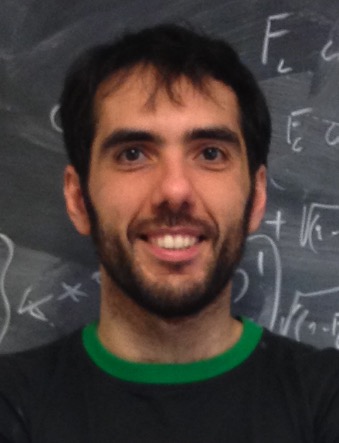 Nicola Serra合作论文数Physik-Institut, Universität Zürich697
 Tara Shears合作论文数Department of Physics, School of Physical Sciences, Faculty of Science and Engineering, University of Liverpool695Adalberto Sciubba合作论文数Faculty of Civil and Industrial Engineering, Sapienza Università di Roma693
 Anton Poluektov合作论文数Centre National De La Recherche Scientifique;Center for Particle Physics of Marseille, Aix-Marseille University693D. Martinez Santos合作论文数691
 Emanuele Santovetti合作论文数Dipartimento di Fisica, Università degli studi di Tor Vergata;INFN689Paul Seyfert合作论文数689
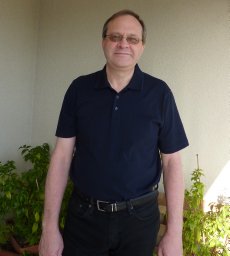 A. Tsaregorodtsev合作论文数European Organization for Nuclear Research (CERN), Geneva, Switzerland686
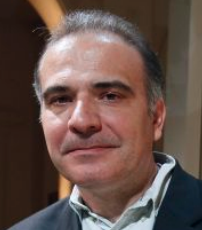 Frederic Teubert合作论文数European Organization for Nuclear Research686
 Barbara Sciascia合作论文数Laboratori Nazionali di Frascati, Istituto Nazionale di Fisica Nucleare685




