Assay automation is the key for successful transformation of modern biotechnology into routine workflows. Yet, it requires considerable investment in processing devices and auxiliary infrastructure, which is not cost-efficient for laboratories with low or medium sample throughput or point-of-care testing. To close this gap, we present the LabTube platform, which is based on assay specific disposable cartridges for processing in laboratory centrifuges. LabTube cartridges comprise interfaces for sample loading and downstream applications and fluidic unit operations for release of prestored reagents, mixing, and solid phase extraction. Process control is achieved by a centrifugally-actuated ballpen mechanism. To demonstrate the workflow and functionality of the LabTube platform, we show two LabTube automated sample preparation assays from laboratory routines: DNA extractions from whole blood and purification of His-tagged proteins. Equal DNA and protein yields were observed compared to manual reference runs, while LabTube automation could significantly reduce the hands-on-time to one minute per extraction.
L'invention concerne un procede consistant a melanger des liquides dans une chambre de melange (13) d'un systeme microfluidique base sur la force centrifuge afin de produire des bulles de gaz (11) dans une chambre (10) du systeme base sur la force centrifuge. Les bulles de gaz sont introduites dans la chambre de melange (13) au moyen d'une structure permettant le transfert (12) des bulles de gaz realise sensiblement sans liquide.
Contamination of foods is a public health hazard that episodically causes thousands of deaths and sickens millions worldwide. To ensure food safety and quality, rapid, low-cost and easy-to-use detection methods are desirable. Here, the LabSystem is introduced for integrated, automated DNA purification, amplification and detection. It consists of a disposable, centrifugally driven DNA purification platform (LabTube) and a low-cost UV/vis-reader (LabReader). For demonstration of the LabSystem in the context of food safety, purification of Escherichia coli (non-pathogenic E. coli and pathogenic verotoxin-producing E. coli (VTEC)) in water and milk and the product-spoiler Alicyclobacillus acidoterrestris (A. acidoterrestris) in apple juice was integrated and optimized in the LabTube. Inside the LabReader, the purified DNA was amplified, readout and analyzed using both qualitative isothermal loop-mediated DNA amplification (LAMP) and quantitative real-time PCR. For the LAMP-LabSystem, the combined detection limits for purification and amplification of externally lysed VTEC and A. acidoterrestris are 10(2)-10(3) cell-equivalents. In the PCR-LabSystem for E. coli cells, the quantification limit is 10(2) cell-equivalents including LabTub-eintegrated lysis. The demonstrated LabSystem only requires a laboratory centrifuge (to operate the disposable, fully closed LabTube) and a low-cost LabReader for DNA amplification, readout and analysis. Compared with commercial DNA amplification devices, the LabReader improves sensitivity and specificity by the simultaneous readout of four wavelengths and the continuous readout during temperature cycling. The use of a detachable eluate tube as an interface affords semi-automation of the LabSystem, which does not require specialized training. It reduces the hands-on time from about 50 to 3 min with only two handling steps: sample input and transfer of the detachable detection tube.
Massachusetts Institute of Technology, MIT, Department of Mechanical Engineering, Cambridge, MA, 02139, USA Harvard-MIT Division of Health Sciences and Technology, Cambridge, MA, 02139, USA Robert Bosch GmbH, Department of Microsystems Technology, Research and Advance Engineering, GerlingenSchillerhöhe, Germany. d HSG-IMIT – Institut für Mikround Informationstechnik, Georges-Köhler-Allee 103, 79110 Freiburg, Germany. *to whom correspondence should be addressed: E. mail: slocum@mit.edu; melanie.hoehl@alum.mit.edu
This paper introduces a disposable battery-driven heating system for loop-mediated isothermal DNA amplification (LAMP) inside a centrifugally-driven DNA purification platform (LabTube). We demonstrate LabTube-based fully automated DNA purification of as low as 100 cell-equivalents of verotoxin-producing Escherichia coli (VTEC) in water, milk and apple juice in a laboratory centrifuge, followed by integrated and automated LAMP amplification with a reduction of hands-on time from 45 to 1 min. The heating system consists of two parallel SMD thick film resistors and a NTC as heating and temperature sensing elements. They are driven by a 3 V battery and controlled by a microcontroller. The LAMP reagents are stored in the elution chamber and the amplification starts immediately after the eluate is purged into the chamber. The LabTube, including a microcontroller-based heating system, demonstrates contamination-free and automated sample-to-answer nucleic acid testing within a laboratory centrifuge. The heating system can be easily parallelized within one LabTube and it is deployable for a variety of heating and electrical applications.
We present a new method for the distinct specific chemical stimulation of single cells and small cell clusters within their natural environment. By single-drop release of chemical agents with droplets in size of typical cell diameters (d <30 μm) on-demand micro gradients can be generated for the specific manipulation of single cells. A single channel and a double channel agent release cartridge with integrated fluidic structures and integrated agent reservoirs are shown, tested, and compared in this publication. The single channel setup features a fluidic structure fabricated by anisotropic etching of silicon. To allow for simultaneous release of different agents even though maintaining the same device size, the second type comprises a double channel fluidic structure, fabricated by photolithographic patterning of TMMF. Dispensed droplet volumes are V = 15 pl and V = 10 pl for the silicon and the TMMF based setups, respectively. Utilizing the agent release cartridges, the application in biological assays was demonstrated by hormone-stimulated premature bud formation in Physcomitrella patens and the individual staining of one single L 929 cell within a confluent grown cell culture.
To ensure food, medical and environmental safety and quality, rapid, low-cost and easy-to-use detection methods are desirable. Here, the LabSystem is introduced for integrated, automated DNA purification and amplification. It consists of a disposable, centrifugally-driven DNA purification platform (LabTube) and the subsequent amplification in a low-cost UV/vis-reader (LabReader). In this paper, food safety was chosen as the first sample application with pathogenic verotoxin-producing (VTEC) Escherichia coli (E.coli) in water and milk, and the product-spoiler Alicyclobacillus acidoterrestris (A acidoterrestris) in apple juice as sample organisms. DNA was amplified qualitatively using isothermal loop-mediated DNA amplification (LAMP) and quantitatively using real-time PCR. By optimizing manual purification protocols inside the LabTube, as little as 45 inserted DNA copies were extracted from E.coli and A.acidoterrestris lysates in real samples (milk, juice and water). To run isothermal DNA amplification (LAMP) and PCR inside the LabReader, temperature control as well as data analysis methods were implemented. Combined detection limits for DNA purification and amplification from bacteria lysates in real samples at 10 2 -10 3 inserted copies were achieved. The demonstrated LabSystem runs with standard laboratory equipment and reduces hands-on times from 30min to 3min.
L'invention concerne un dispositif d'analyse (140) servant a l'analyse optique d'un materiau a analyser (210). Le dispositif d'analyse (140) comprend une unite de reception de materiau a analyser (215) destinee a recevoir un recipient (200) comprenant un materiau a analyser (210) et au moins une unite d'eclairage (230a, 230b, 230c) servant a eclairer un materiau a analyser (210) dispose dans l'unite de reception de materiau a analyser (215) avec une lumiere d'une bande predefinie du spectre lumineux optique. Enfin, le dispositif d'analyse (140) comprend au moins une unite de detecteur (250a, 250b, 250c) pour recevoir la lumiere emise par l'unite d'eclairage (230a, 230b, 230c), l'unite de detecteur (250a, 250b, 250c) etant concue pour effectuer ou preparer une analyse du materiau a analyser (210) en utilisant la lumiere recue.
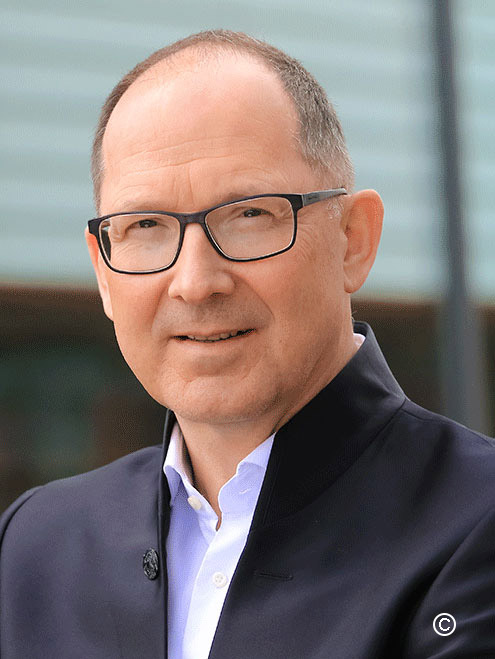 Roland Zengerle合作论文数Laboratory for MEMS Applications, Department of Microsystems Engineering, University of Freiburg27
 Martina Daub合作论文数University of Freiburg;Laboratory for MEMS;Laboratory for MEMS, University of Freiburg20
 Nils Paust合作论文数University of Freiburg Laboratory for MEMS Applications, Department of Microsystems Engineering (IMTEK)13
 Jens Ducrée合作论文数School of Physical Sciences, Dublin City University;Biomedical Diagnostics Institute11
 Lutz Riegger合作论文数11Markus Grumann合作论文数10
 Felix von Stetten合作论文数Laboratory for MEMS Applications, University of Freiburg9
 Melanie M Hoehl合作论文数8Kloke A合作论文数8T Brenner合作论文数7
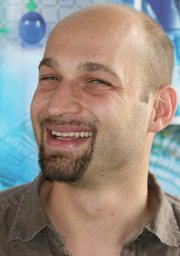 Guenter Roth合作论文数Lab MEMS Applicat, Univ Freiburg6
 Nicolai Wangler合作论文数6
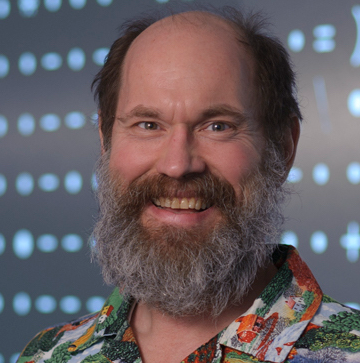 Alexander Slocum合作论文数Department of Mechanical Engineering, Massachusetts Institute of Technology5
 Peter Koltay合作论文数Laboratory for MEMS Applications, University of Freiburg5M Strasser合作论文数4O. Brett合作论文数4
 Isabella Moser合作论文数3c mueller合作论文数3Bocholt Eva Schulte合作论文数3S. Lutz合作论文数3
 Holger Reinecke合作论文数Medizinische Klinik und Poliklinik C (Kardiologie und Angiologie) Münster, Universitätsklinikum Münster3J. Rühe合作论文数2K Mittmann合作论文数2T Brefka合作论文数2M Dube合作论文数2christian dorrer合作论文数2
 Jochen Rupp合作论文数2Stefan Haeberle合作论文数2
 Wolfgang Streule合作论文数2Franz Laermer合作论文数2Chris P. Steinert合作论文数2
 Gerald Urban合作论文数BIOSS Centre for Biological Signalling Studies, Albert-Ludwigs-Universität Freiburg/Institut für Mikrosystemtechnik, University of Freiburg2J. Riegler合作论文数1
 Michael Stumber合作论文数1peter rothacher合作论文数1
 Sven Zinober合作论文数1C. Müller合作论文数1Shangkun Zhang合作论文数1N Gottschlich合作论文数1
 Klaus Palme合作论文数Center of Biological Systems Analysis;Freiburg Institute For Advanced Studies, Head of Department, University of Freiburg1Steller Ulf合作论文数1Cavalar Markus合作论文数1Münch Susanne合作论文数1Schmidt Manuela合作论文数1
 Michal M. Mielnik合作论文数1Panthel K合作论文数1Kneusel R合作论文数1Hoehl M M合作论文数1Niekrawietz S合作论文数1




