The use of intramedullary lengthening nails (ILN) is now an accepted limb reconstruction technique. The most popular motorised systems enable optimal conditions for lengthening, namely stability, sub-millimetre accurate lengthening or retraction and an avoidance of common complications associated with external fixators, such as pin site infections, muscle tethering and regenerate deformity or fracture. The fitbone stainless steel implant utilises an electrical current transmitted by a subcutaneous antenna to drive the motor. The precise intramedullary system, made of titanium, is lengthened by a rotating magnet driven by an electronic remote controller. To prevent nail breakage or deformity, protected partial weight-bearing is initially advised and weight-bearing permitted when sufficient regenerate has formed in the distraction gap. Purpose:The aim of our study was to evaluate and compare the regenerate formation following lengthening using two different motorised ILN. Methods:A retrospective review identified 13 patients (13 nails) who underwent femoral lengthening using the fitbone and 14 patients (16 nails) lengthened with the precise. Patients were matched for age, sex, aetiology and length achieved.Regenerate analysis was undertaken using the pixel ratio value (PVR), calculated on the radiographs when at the desired length, followed at 4, 8, and 12 weeks. The mean of the two highest ratio values were also assessed, as an indicator that full weight-bearing would be permitted. Complications were recorded in relation to bone, soft tissues and implant. Results:Seven males and 6 females underwent 10 antegrade and 3 retrograde fitbone lengthening. Nine male and 5 female underwent 14 antegrade and one retrograde precise lengthening. The mean age at surgery was 36 years in both groups. Mean length in the fitbone group was 41.7, and 46.8 mm in the precise group. All except one fitbone patient reached the desired length (6 mm short). The regenerate fully consolidated in all patients.There was no statistical difference between the PVR measurements of the cortices at any time interval. There was no difference seen in the time for full weight-bearing or a difference seen in the mean PVR measured at this particular time. There were complications seen in the fitbone group including bolt migration, premature consolidation, and soft tissue irritation from the antenna requiring early surgical removal. There were no complications recorded in the precise group. Discussion:This study has demonstrated no difference between the regenerate formation following femoral lengthening, with either the fitbone or precise ILN. All patients had full bone consolidation and there was no difference seen in time to full weight-bearing following completion of lengthening. The rate of complications seen in the fitbone group may be explained by the learning curve of a new implant.There are several limitations including a retrospective review of a small cohort of patients. However, we conclude that both implants successfully lengthen and form excellent regenerate bone. We would recommend that the choice of implant should not be determined by the potential regenerate formation. How to cite this article:Calder P, Robertson A, Tissingh EK, et al. Fitbone vs Precice: Is There a Difference in Regenerate Healing? Strategies Trauma Limb Reconstr 2024;19(3):156-160.
An abstract is not available for this content. As you have access to this content, full HTML content is provided on this page. A PDF of this content is also available in through the 'Save PDF' action button.
We report on a sib pair who manifest a pattern of anomalies which appears to be unique and for which we are unable to provide a cytogenetic or molecular genetic explanation. While a number of their physical features are distinct, their overall appearance and pattern of neurological impairment suggest they suffer from the same genetic disorder.
Local use of practice guidelines requires paying close attention to the concerns of the patient within the framework of society, to the professional and educational needs of the provider, and to the realities of cost. One Veterans Affairs facility took the challenge of balancing these factors and developed their own algorithms for three cardiovascular disorders.
Perindopril erbumine, a new long-acting, non-sulfhydryl-containing angiotensin converting enzyme inhibitor, was evaluated in 289 patients with hypertension in a 16-week, double-blind, placebo-controlled dose-ranging study. After 4 weeks of single-blind placebo treatment, patients with supine diastolic arterial pressures from 95 to 114 mm Hg were randomized to receive placebo, 4 mg perindopril once daily, or 2 mg perindopril twice daily. The daily dose of perindopril was increased by 4 mg every 4 weeks to a maximum of 16 mg per day. Mean decreases in systolic and diastolic arterial pressure were greater with perindopril than with placebo (p < 0.05). The dose-response curve flattened after 8 mg per day, and there was no difference in arterial pressure reduction or in the percentage of responders between once- and twice-daily administration of perindopril. Adverse reactions with perindopril were generally mild and, with the exception of cough, were similar with placebo. The findings of this study indicate that perindopril is effective, well tolerated, and suitable for once-daily administration for the treatment of hypertension.
An increasing number of antiarrhythmic agents have become avaiable for the treatment of ventricular tachyarrhythmias. Appropriate application of pharmacokinetic principles is essential to determine dosage amount and frequency, particularly because of the life-threatening consequences of inadequate therapy. Therefore absorption, distribution, metabolism, and elimination of antiarrhythmic agents must be considered in their use. Although some may be given intramuscularly, antiarrhythmic drugs are usually administered either intravenously for rapid onset of action or orally during long-term therapy. Distribution of antiarrhythmic drugs may be influenced by physicochemical properties of the drug (i.e., protein binding) or by tissue blood flow. Drug interactions and half-life are also important considerations. Finally, the major routes of elimination of antiarrhythmics are hepatic metabolism and renal and biliary excretion. The pharmacokinetic profiles of drugs used for the treatment of ventricular tachyarrhythmia, all of which are types I and III antiarrhythmic agents, are discussed.
Hospital-based "firms" provide a means for combatting the fragmentation experienced by both patients and caregivers in the modern teaching hospital environment. A "firm" is an academic group practice that includes attending physicians, physician trainees, nurses, other staff, and patients. Each person's relationship with a firm lasts throughout his or her association with a particular institution. This article describes the firm system that was recently implemented on the Medical Service of the Cleveland VAMC. This system incorporates both inpatient and outpatient general medical services and provides for unbiased assignment of patients, physicians, and nurses.
Rat kidney NAIY-dependent 15-hydroxyprostaglandin dehydrogenase (PGDH) was measured in zones and substructure of the rat kidney nephron. This was accomplished utilizing an assay procedure based upon determining the amount of prostaglandin E1 present before and after the reaction with the 15-hydroxyprostaglandin dehydrogenase contained in the tissue sample. The enzyme activity was assayed in freeze dried, quick frozen rat kidney sections and its distribution within the rat kidney was determined. In kidney zones, it was localized to medullary rays and inner cortex. In kidney substructure, activity was highest in collecting tubule, pars recti tubule, distal convoluted tubule and the ascending limb of Henle (14.2, 11.5, 6.4 and 9.2 mM kghr�, respectively). Activity in glomeruli, proximal convoluted tubule and small arteries was lower (2.1, 2.8 and 2.1 mM kghr�, respectively). The assay procedure was verified by established assays (spectrophotometric, fluorometric and radiometric TLC) which are often used in homogenate and purified PGDH preparations.
 Peter R Calder合作论文数2S. Gala-Peralta合作论文数1D. Timms合作论文数1J McQuiston合作论文数1C Paddock合作论文数1JN AUCOTT合作论文数1André Weltman合作论文数1
 Michael O'Reilly合作论文数Department of Anesthesiology, Perioperative and Pain Medicine, School of Medicine, Stanford University1
 Anne Taylor合作论文数1Rh Mcdonald合作论文数1A. Narayanan合作论文数1Duncan Macrae合作论文数Sidra Medicine, Cardiac Critical Care and ECMO1Chrysant Steven G合作论文数1Stone John H合作论文数1Hawkins R J合作论文数1
 Margaret P Rayman合作论文数School of Biosciences and Medicine, Faculty of Health and Medical Sciences, University of Surrey1Walter Alan合作论文数1
 Bath Sarah C合作论文数Faculty of Health and Medical Sciences, University of Surrey1Aresh Hashemi-Nejad合作论文数1
 John Burn合作论文数Translational and Clinical Research Institute, Newcastle University;Faculty of Medical Sciences, Newcastle University;Northern Genetics Service1
 Andrew James Taylor合作论文数1A. Ryan合作论文数1Dunn J Kay合作论文数1
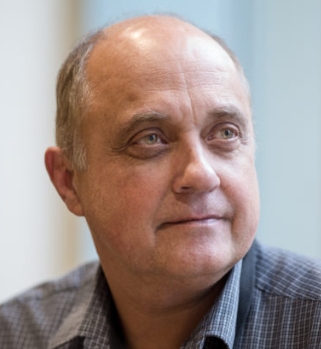 Sherif Zaki合作论文数Infectious Diseases Pathology Branch, Centers for Disease Control and Prevention1Christian Wolpert合作论文数1
 Richard J Lederman合作论文数1Margarita Burmester合作论文数Children’s Hospital Boston1Sue Court合作论文数1Janice G. Douglas合作论文数1J. Christoph Geller合作论文数1Kenneth R. Harkin合作论文数1
 David Aron合作论文数Louis Stokes Cleveland Department of Veterans' Affairs Medical Center (DCA), Cleveland, Ohio1
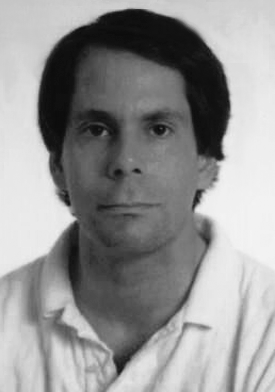 David Blythe合作论文数Rosenstiel School of Marine and Atmospheric Sciences, NIEHS Marine and Freshwater Biomedical Sciences1
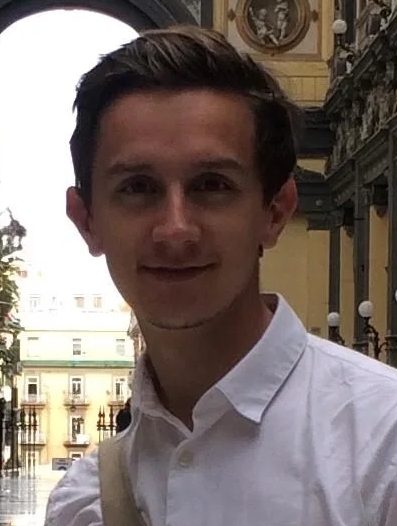 Timothy Fredsgaard-Jones合作论文数The Jenner Institute, Nuffield Department of Medicine, University of Oxford1
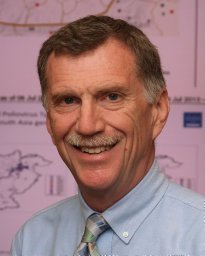 Allen S. Craig合作论文数Tennessee Department of Health, Nashville, Tennessee, USA1
 Kevin J. Keen合作论文数University of Alabama in Huntsville1David D Barwick合作论文数1Robert J. Weiss合作论文数1
 Charles Seth Landefeld合作论文数Department of Medicine, Heersink School of Medicine, University of Alabama at Birmingham1J. Clayton Smith合作论文数1B Huegl合作论文数1
 John N Aucott合作论文数Veterans Affairs Medical Center1Sn Selvachandran合作论文数1
 Abdullah Jibawi合作论文数1Jonathan I. Ravdin合作论文数1
 Gary Elliot Rosenthal合作论文数Department of Internal Medicine, Wake Forest School of Medicine1D Cade合作论文数1
 Hans-Heinrich Minden合作论文数Department of Cardiology, Oberhavel Kliniken1




