Newly collected 'higher' true crab specimens from the superfamily Tepexicarcinoidea n. Status are reported from Cenomanian-Turonian (95-90 Ma) plattenkalk deposits within the M & uacute;zquiz Municipality, Coahuila, northeastern Mexico. Although the new specimens from Coahuila are represented by only four crushed carapaces in ventral view, it is possible to recognize them as members of the superfamily Tepexicarcinoidea n. Status. (Tepexicarcinidae), first reported from the Albian-Cenomanian Tlay & uacute;a Formation, Puebla, Central Mexico. This new record extends the stratigraphic, paleogeographic, and paleoenvironmental range of the superfamily Tepexicarcinoidea n. Status. In addition, based on the ventral morphology and appendages of the new material, several previously unknown morphological features for the superfamily are herein reported. To illustrate and describe the morphology of the Tepexicarcinoidea, we compared several specimens from the type locality (Tlay & uacute;a Formation, Albian-Cenomanian) with the new crab specimens from the Cenomanian-Turonian Eagle Ford succession in Coahuila. Morphological comparisons between tepexicarcinoids and similar forms, e.g., superfamily Dorippoidea MacLeay, 1838 (families Dorippidae, Ethusidae, Telamonocarcinidae, and Goniochelidae), allow us to recognize the suprafamiliar status of this particular eubrachyuran lineage based upon different dorsal, ventral, and appendicular features observed across representatives of both superfamilies. The Cenomanian-Turonian age of the new crab specimens from NE Mexico is based on identification of associated planktic foraminifera (e.g., Whiteinella archaeocretacea Pessagno, W. praehelvetica (Trujillo), Dicarinella algeriana (Caron). The fine, calcareous layers from the Cenomanian-Turonian El Milagro Quarry, Coahuila, show accumulations of organic matter, possibly related to the effects of the OAE-2 anoxic event reported worldwide. The planktic foraminifera suggest a shallow continental shelf paleoenvironment, but not as shallow as the lagoon interpreted for the Albian-Cenomanian Tlay & uacute;a Formation. Therefore, either the carapaces were transported basinward, or the habitat of those early eubrachyuran crabs was not only restricted to shallow marine environments. Mass mortality events associated with anoxia are suggested for the Tepexicarcinoidea from specimens of the type locality as well as the new location.
Barro Colorado Island (BCI), in central Panama, is one of the sites with the longest-running biological and ecological studies of tropical rainforests. Its geology, however, has received less attention, even though it offers clues to the evolutionary history of its biota and landscape. Here, we reconstruct the Neogene paleoenvironmental history of BCI, based on new field, petrographic, geochronological, foraminiferal, molluscan, and calcareous nannofossil data. We link two main environmental shifts to the evolution of Canal Basin in the context of the emergence of the Isthmus of Panama. A first shift from terrestrial to marine conditions is recorded by the transition from coarse, volcanic-rich fluvial deposits of the lower Bohio Formation to fossil-bearing deltaic and shallow-marine sediments of the upper Bohio Formation. A newly dated volcaniclastic deposit interbedded with marine deposits firmly places the upper Bohio Formation in the Early Miocene (23.2 ± 0.6 Ma). Coeval terrestrial volcaniclastic deposits in the vicinity of BCI indicate a landscape of scattered volcanic highs surrounded by marine platforms in the Canal Basin. Continued basin deepening and flooding until ca. 19 Ma is recorded by transgressive deposits of the Culebra Formation and its marine equivalent, the Caimito Formation in BCI. A second environmental transition during the latest Early Miocene reflects a return to terrestrial settings, represented by deltaic-to-fluvial deposits of the upper Culebra and Cucaracha formations. At the same time, marine sedimentation persisted locally in BCI, indicating an asymmetric topographic growth in the Canal Basin. Since ~16 Ma, BCI has likely remained a subaerial topographic high. These environmental shifts align with regional tectonic and magmatic reorganizations driven by interactions among the Caribbean, Nazca, and South American plates, which shaped the Miocene paleogeography of the Isthmus of Panama.
The lowermost Upper Cretaceous (Cenomanian) Kem Kem Group of Morocco is renowned for its rich fossil record, particularly that of macrofossils from freshwater facies, which includes insects, fish, and the penaeid prawn Cretapenaeus berberus Garassino, Pasini & Dutheil, 2006 (Dendrobranchiata: Penaeidae). Here, we provide information on growth in this extinct species, based on a sample of 65 specimens. These provide valuable insight into its moulting behaviour and development, while their exceptional preservation enables detailed examination of cuticle microstructure. Moults were identified based on a repeated pattern of preservation characterised by the absence of the carapace, as a result of exuviation, and/or the absence of muscles, which are exceptionally well-preserved in carcasses. Among the 65 specimens of C. berberus, only eight moults were identified. These moults reveal a similar moulting mechanism to extant penaeids. Scanning electron microscopy revealed a thicker inner endocuticle than outer exocuticle, with one specimen showing what is likely the membranous layer. Lamination is present in the exo- and endocuticle, with fewer lamination present in the exocuticle, and the endocuticle generally shows laminae that are more widely spaced in the outer layers. No difference in cuticle lamination, luminescence or reflection were observed between carcasses and moults. Carapace lengths range from ∼2 to 20 mm, and a detailed morphological analysis of the smallest specimens revealed that early larval stages (nauplius, protozoeae) were absent, with the smallest individual being either a late postlarva or a juvenile. Morphological changes likely occurred during development from juvenile to adult, with adults having a proportionally longer and more spinous rostrum and proportionally longer antennae and elongated fourth and fifth pereiopods. The adults also exhibit pleopods with more equally sized rami that are more curled, annulated, thinner distally than in juveniles. C. berberus, a rare representative of freshwater-dwellers among penaeids and dendrobranchiates, is assessed for its potential development strategies in freshwater environments, in comparison with other freshwater decapod taxa in Pleocyemata.
La Dra. María Eurídice Páramo-Fonseca, mentora y académica, falleció el 4 de enero de 2025. Reconocida por sus investigaciones sobre la fauna de vertebrados marinos del Cretácico de Colombia, su legado perdurará en las generaciones de estudiantes y colegas que la conocieron.
We describe a new assemblage of frog crabs (Raninoidea) from the lower Eocene Serraduy Formation in Huesca, Northeastern Spain, representing five species from five genera and four subfamilies, from which there are two new genera and four new species: i.e., Alloranina arjae gen. et sp. nov. (subfamily Ranininae), Huescarina vanbakeli gen. et sp. nov., Notopoides ovaloides sp. nov., Quasilaeviranina arafita sp. nov. (subfamily Raninoidinae), plus another indeterminate raninoid species. Although Eocene raninoids are represented by > 100 species in 32 genera worldwide, they are mainly associated with siliciclastic environments, contrasting with the material here studied, associated to a reef environment surrounded by muddy substrates and linked to a rich invertebrate fauna. Besides the abundance and diversity of the new assemblage, it preserves some of the oldest representatives of a modern genus (Notopoides), emphasizing the importance of the Eocene epoch for understanding the origins of modern groups. UUID: http://zoobank.org/pub:9E78087F-E0C3-4420-AB69-2FE100CAE848.
The Upper Cretaceous (Cenomanian to Coniacian, 100.5e86.3 Ma) strata of the northern Krasnoyarsk Krai (Russia) yielded new fossil brachyuran crab material, based on which a new species, Necrocarcinus sibiricus, is described. Although the specimens come from settings of slightly different ages, all of them display dorsal carapace characteristics consistent with variation attributable to ontogenetic changes related to growth, for instance, the narrowing of the orbitofrontal margin, and a continuous smoothing and widening of the carapace. Interestingly, due to these ontogenetic changes, the largest of the studied specimens exhibits a morphology close to that previously described in Camarocarcinus, a related necrocarcinoid crab genus known from Paleocene strata. The newly described species shows that the dorsal carapace morphology typical for Camarocarcinus can be observed in at least some fully grown necrocarcinids, prompting a re-evaluation of the relationship between Necrocarcinidae and Camarocarcinidae. We propose that camarocarcinids may be derived from within Necrocarcinidae, with the particular morphology of Camarocarcinus resulting from heterochronous developmental processes, i.e., peramorphosis. (c) 2024 Elsevier Ltd. All rights are reserved, including those for text and data mining, AI training, and similar technologies.
Despite the rich geological and paleontological record of Colombia, the Putumayo region near Ecuador remains one of the least explored regions in the equatorial Neotropics, mainly due to its thick vegetation, deep rock weathering, soil formation, and ground cover, geographic remoteness, and inaccessibility of well-exposed outcrops. This has resulted in limited comparisons with neighboring basins and thus the generation of more comprehensive biostratigraphic correlations with western and northern South America, as well as other paleobiogeographic regions (e.g., Tethys, Western Interior Seaway). Here, we present 67 occurrences of uppermost Lower Cretaceous to lowermost Upper Cretaceous ammonoids and other macrofossils (e.g., bivalves, decapod crustaceans, osteichthyan fish remains, plant remains), as well as a δ13Corg chemostratigraphic curve derived from 105 samples from the middle Albian of the uppermost Caballos Formation and the upper Albian to lower Cenomanian lower Villeta Formation, collected in situ from a stratigraphic section exposed along the Mocoa–San Francisco Road, Putumayo, Colombia, here called the San Francisco section. The chemostratigraphic, carbon-isotope curve for the region shows a great similarity with the shape of the accepted curve for the late Albian Oceanic Anoxic Event 1d, which is characterized by a worldwide long positive δ13C excursion anomaly. The new biostratigraphic and isotopic data serve as a point of reference to compare the Putumayo Basin with neighboring basins (e.g., Marañon Basin in Perú, Oriente Basin in Ecuador, Upper Magdalena Valley Basin in Colombia), and thus the generation of more comprehensive upper Lower Cretaceous and lower Upper Cretaceous biostratigraphic and chemostratigraphic correlations for northwestern South America.
The brachyurans Tehuacana tehuacana Stenzel, 1944 and Dromilites americana Rathbun, 1935 have historically been difficult to place in families. A reevaluation of type and referred material from several institutions suggests that the two species are referrable to separate genera in Palaeoxanthopsidae. Hyphalocarcinus new genus is erected to accommodate H. americanus new combination, and Tehuacana remains a distinct genus. Palaeoxanthopsidae evolved and radiated in the Atlantic Ocean, ranging from Late Cretaceous (Maastrichtian) to early Eocene (Ypresian) in age. This work adds to the known diversity of Palaeoxanthopsidae and demonstrates that the family survived and thrived in the Atlantic Ocean in the wake of the end-Cretaceous extinction. Differential preservation of specimens must be evaluated carefully when placing superficially similar taxa at the family, genus, and species level. UUID: http://zoobank.org/73da26c7-aff7-4abe-8aa5-768944bbf6ee
The arthropod exoskeleton consists of a chitin–protein meshwork that is reinforced by incorporated minerals, such as in decapod crustaceans. Such naturally biomineralized cuticle forms the bulk of arthropod bodily remains in the rock record. However, the extent to which this organic–inorganic composite material is transformed during the fossilization process remains incompletely understood. We examined the composition of Cretaceous crab cuticle, focusing on exceptionally preserved ommatidial lenses. These were compared against optic tissues in extant sesarmid crabs to determine how post-burial processes affect the long-term (geological) survival of corneal cuticle. Our analyses show that rather than calcium carbonate (the presumed main inorganic phase of crustacean cuticle), the exocuticle of sesarmid eyes is strengthened solely by calcium phosphate. The ancient lenses are likewise phosphatized; however, in these, the originally chitinous endocuticle has also been replaced by phosphatic deposits, resulting in a fully mineralized cornea. This finding has implications for interpretations of the optic capabilities of other extinct arthropods; notably the Palaeozoic trilobites, which are generally thought to have possessed mineralized ommatidial lenses in life.
For much of terrestrial biodiversity, the evolutionary pathways of adaptation from marine ancestors are poorly understood and have usually been viewed as a binary trait. True crabs, the decapod crustacean infraorder Brachyura, comprise over 7600 species representing a striking diversity of morphology and ecology, including repeated adaptation to non-marine habitats. Here, we reconstruct the evolutionary history of Brachyura using new and published sequences of 10 genes for 344 tips spanning 88 of 109 brachyuran families. Using 36 newly vetted fossil calibrations, we infer that brachyurans most likely diverged in the Triassic, with family-level splits in the late Cretaceous and early Paleogene. By contrast, the root age is underestimated with automated sampling of 328 fossil occurrences explicitly incorporated into the tree prior, suggesting such models are a poor fit under heterogeneous fossil preservation. We apply recently defined trait-by-environment associations to classify a gradient of transitions from marine to terrestrial lifestyles. We estimate that crabs left the marine environment at least 7 and up to 17 times convergently, and returned to the sea from non-marine environments at least twice. Although the most highly terrestrial- and many freshwater-adapted crabs are concentrated in Thoracotremata, Bayesian threshold models of ancestral state reconstruction fail to identify shifts to higher terrestrial grades due to the degree of underlying change required. Lineages throughout our tree inhabit intertidal and marginal marine environments, corroborating the inference that the early stages of terrestrial adaptation have a lower threshold to evolve. Our framework and extensive new fossil and natural history datasets will enable future comparisons of non-marine adaptation at the morphological and molecular level. Crabs provide an important window into the early processes of adaptation to novel environments, and different degrees of evolutionary constraint that might help predict these pathways. [Brachyura; convergent evolution; crustaceans; divergence times; fossil calibration; molecular phylogeny; terrestrialization; threshold model.].
Volcanism from large igneous provinces leads to increases in the Earth’s surface temperature and acidity, thus triggering mass extinction events. However, the dependence of acidity on latitudinal position has remained underexplored and is key to better understand, and react to, global environmental changes today. Here, we study biotic recovery after the catastrophic end-Permian mass extinction, in Early Triassic continental environments. We quantify strontium-rich hydrated aluminum phosphate-sulfate minerals in 179 samples from tropical to circumpolar paleolatitudes in both hemispheres. We provide evidence that latitude controls acidity and its impact on biotic recovery. Subequatorial latitudes concentrate volcanic aerosols through wind circulation patterns, enhancing the impact of acidity on the environment. In contrast, high latitudes provide refuge against environmental change, hosting accelerated recovery after the end-Permian biotic crisis.
Warmer temperatures and higher sea level than today characterized the Last Interglacial interval [Pleistocene, 128 to 116 thousand years ago (ka)]. This period is a remarkable deep-time analog for temperature and sea-level conditions as projected for 2100 AD, yet there has been no evidence of fossil assemblages in the equatorial Atlantic. Here, we report foraminifer, metazoan (mollusks, bony fish, bryozoans, decapods, and sharks among others), and plant communities of coastal tropical marine and mangrove affinities, dating precisely from a ca. 130 to 115 ka time interval near the Equator, at Kourou, in French Guiana. These communities include ca. 230 recent species, some being endangered today and/or first recorded as fossils. The hyperdiverse Kourou mollusk assemblage suggests stronger affinities between Guianese and Caribbean coastal waters by the Last Interglacial than today, questioning the structuring role of the Amazon Plume on tropical Western Atlantic communities at the time. Grassland-dominated pollen, phytoliths, and charcoals from younger deposits in the same sections attest to a marine retreat and dryer conditions during the onset of the last glacial (ca. 110 to 50 ka), with a savanna-dominated landscape and episodes of fire. Charcoals from the last millennia suggest human presence in a mosaic of modern-like continental habitats. Our results provide key information about the ecology and biogeography of pristine Pleistocene tropical coastal ecosystems, especially relevant regarding the—widely anthropogenic—ongoing global warming.
Comma shrimp, or cumaceans, are diverse benthic crustaceans, yet they are one of the groups with the poorest fossil record, hindering our understanding of the evolution of the group in deep time. Here, we describe a new species of fossil comma shrimp, Makrokylindrus itoi sp. nov., from the Plio-Pleistocene of Japan. The singular fossil is exceptionally preserved, including details of the carapace, cuticle, and some appendages, and it represents the first known fossil of the family Diastylidae and only the fourth fossil crown group cumacean known to date. We suggest that the scarce and sparsely known fossil record of cumaceans likely reflects a lack of recognition due to their small size and unfamiliar anatomy, making fossil cumaceans easy to misidentify, be confused with crustacean larvae of unknown affinities, or be interpreted as fragments of other crustaceans (taxonomic bias), rather than a lack of fossilization potential (taphonomic bias). Los camarones coma, o cum & aacute;ceos, son un grupo diverso de crust & aacute;ceos bent & oacute;nicos, pero cuentan con uno de los registros f & oacute;siles m & aacute;s pobres entre los crust & aacute;ceos, lo que obstaculiza nuestra comprensi & oacute;n de la evoluci & oacute;n del grupo en tiempos geol & oacute;gicos profundos. Aqu & iacute;, describimos una nueva especie de camar & oacute;n coma f & oacute;sil, Makrokylindrus itoi sp. nov., del Plio-Pleistoceno de Jap & oacute;n. El singular f & oacute;sil est & aacute; excepcionalmente bien conservado, incluyendo detalles del caparaz & oacute;n, cut & iacute;cula, y algunos ap & eacute;ndices, y representa el primer f & oacute;sil conocido de la familia Diastylidae y solo el cuarto f & oacute;sil conocido del grupo corona de los cum & aacute;ceos. Sugerimos que el escaso y poco conocido registro f & oacute;sil de los cum & aacute;ceos probablemente refleja una falta de reconocimiento debido a su peque & ntilde;o tama & ntilde;o y anatom & iacute;a poco familiar, lo que hace que los f & oacute;siles de cum & aacute;ceos sean f & aacute;ciles de malinterpretar, confundirse con larvas de crust & aacute;ceos de afinidades desconocidas, o interpretarse como fragmentos de otros crust & aacute;ceos (sesgo taxon & oacute;mico), m & aacute;s que una falta de potencial de fosilizaci & oacute;n (sesgo tafon & oacute;mico).
ABSTRACT True crabs, or Brachyura, comprise over 7,600 known species and are among the most ecologically dominant, economically significant, and popularly recognized group of extant crustaceans. There are over 3,000 fossil brachyuran species known from mid and upper Jurassic, Cretaceous, and Cenozoic deposits across the globe, many of them preserved in exquisite detail, but the origins and early evolution of true crabs remain unresolved. This uncertainty hinders the identification of the stratigraphically earliest occurrence of major brachyuran groups in the fossil record, obscuring our understanding of their phylogenetic relationships and thus the ability to estimate divergence times to answer large scale macroevolutionary questions. Here, we present 36 vetted fossil node calibration points for molecular phylogenetic analysis of crabs (one Anomura and 35 Brachyura) and reassess the earliest occurrences of several key clades based on recent fossil discoveries or re-examination of previous studies. For each calibrated node, we provide the minimum and tip maximum ages for the stratigraphically oldest fossil that can be reliably assigned to the group. Disentangling the anatomical disparity of fossil forms and their phylogenetic relationships is crucial to recognize the earliest branching members among brachyuran groups. This represents a critical first step understanding the evolution of carcinization and decarcinization in true crabs, the appearance of key adaptations, and the transition from sea to land and freshwater. The identification of reliable fossils for deep time calibrations, both as tips and nodes, is pivotal to ensure not only precise but more accurate divergence time estimations when reconstructing the crab tree of life. PLAIN LANGUAGE SUMMARY We present 36 vetted fossil calibration points for molecular phylogenetic analysis of crabs (one Anomura and 35 Brachyura) and reassess the earliest occurrences of several key groups based on recent fossil discoveries or re-examination of previous studies, together with discussions for each taxon. We also provide some general observations and recommendations on fossil age selection and stratigraphic considerations. The identification of reliable fossils for deep time calibrations, both as tips and nodes, is pivotal to ensure not only precise but more accurate divergence time estimations when reconstructing phylogenetic trees.
This contribution contains the 3D models described and figured in: New remains of Neotropical bunodont litopterns and the systematics of Megadolodinae (Mammalia: Litopterna). Geodiversitas.
 José F. Barrenechea合作论文数Inst Geociencias, Univ Complutense Madrid26magdalena rodas gonzalez合作论文数22jacinto alonso azcarate合作论文数14José López-Gómez合作论文数Instituto de Geología Económica (CSIC-UCM),, Universidad Complutense14
 Nuria Sanchez-Pastor合作论文数Univ . Complutense12Raúl de la Horra合作论文数12
 Magdalena Rodas合作论文数12
 Carrie E. Schweitzer合作论文数Dept Geol, Kent State Univ Stark11Francisco J. Vega合作论文数Instituto de Geología;Universidad Nacional Autónoma de México;Instituto de Geología, Universidad Nacional Autónoma de México11
 Lorena Ortega合作论文数Dept Cristalog & Mineral, Univ Complutense Madrid10ruben pina garcia合作论文数9
 M. Isabel Benito合作论文数9Alfredo Arche合作论文数8
 Hector Porras Muzquiz合作论文数7
 Hiroaki Karasawa合作论文数Mizunami Fossil Museum7Carlos Jaramillo合作论文数6Ana-Belen Galan-Abellan合作论文数6Torrey Nyborg合作论文数6Violeta Borruel-Abadia合作论文数Universidad de Salamanca5
 Joanna M. Wolfe合作论文数Department of Organismic & Evolutionary Biology, Harvard University5
 Pedro Patarroyo合作论文数5
 Rojas Alexis合作论文数University of Florida, University of Florida;Email: arojas@flmnh.ufl.edu.;University of Florida, University of Florida5Elena Crespo Feo合作论文数5David Millward合作论文数5
 Rodney M. Feldmann (Rodney Feldmann)合作论文数Department of Earth Sciences, College of Arts & Sciences,
Kent State University;Department of Geology, Kent State University5
Rodney M. Feldmann (Rodney Feldmann)合作论文数Department of Earth Sciences, College of Arts & Sciences,
Kent State University;Department of Geology, Kent State University5 Sylvain Charbonnier合作论文数centre de recherche sur la paléobiodiversité et les paléoenvironnements, Muséum national d’histoire naturelle5
 Catalina Suarez合作论文数Serv Geol Colombiano4
 Derek Briggs合作论文数Department of Earth and Planetary Sciences, Yale University4
 Juan D. Carrillo合作论文数Paläontologisches Institut und Museum, University of Zurich Zurich;Smithsonian Tropical Research Institute Panama City;University of Zurich Zurich, Smithsonian Tropical Research Institute Panama City4
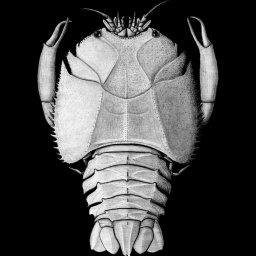 Denis Audo合作论文数4
 Heather D. Bracken-Grissom合作论文数Department of Biology, Brigham Young University4
 Edwin Cadena合作论文数Florida Museum Nat Hist, Univ Florida4Olivier Beyssac合作论文数équipe géobiosphère actuelle et primitive, Universités Paris 6 et 74Belen Galan-Abellan合作论文数3Alfredo Arche Miralles合作论文数3greg kovalchuk合作论文数3
 Jaime Escobar合作论文数3
 Dirley Cortés合作论文数Redpath Museum, McGill Univ3
 Hermann Dario Bermudez合作论文数Department of Geological Sciences, University of Caldas3
 Carrillo Briceño Jorge D合作论文数Palaeontological Institute and Museum, University of Zürich3
 Lida Xing (邢立达)合作论文数School of Earth Sciences and Resources, China University of Geosciences, Beijing3
 Adiël A. Klompmaker合作论文数Department of Geology, Kent State University3
 Marceliano Lago合作论文数Departamento de Ciencias de la Tierra, Universidad de Zaragoza3
 Allison Richard Palmer (A. Richard Palmer)合作论文数Department of Biological Sciences, Faculty of Science, University of Alberta3
 Beatriz Gonzalez-Corrochano合作论文数3
 Ausonio Ronchi合作论文数Laboratorio di Igiene Industriale, Fondazione Clinica del Lavoro3María Victoria Villar合作论文数Departamento de Medio Ambiente, Centro Investigaciones Energeticas, Medioambientales y Tecnologicas3Andres Link合作论文数Department of Anthropology;New York University;Department of Anthropology, New York University3
 Ryan C McKellar合作论文数Royal Saskatchewan Museum3




