The National Severe Storms Laboratory (NOAA-NSSL) and the Advanced Radar Research Center at the University of Oklahoma (OU-ARRC) are presently involved in the design, development and construction of a cylindrical polarimetric phased array radar (CPPAR) to demonstrate polarimetric capabilities for weather sensing within the Multi-function Phased Array Radar (MPAR) project. In this paper we present preliminary system design of CPPAR.
School of Meteorology, Atmospheric Radar Research Center, University of Oklahoma, Norman, OklahomaSchool of Electrical and Computer Engineering, Atmospheric Radar Research Center, University of Oklahoma, Norman, OklahomaSchool of Meteorology, University of Oklahoma, Norman, OklahomaSchool of Civil Engineering and Environmental Science, University of Oklahoma, Norman, OklahomaCooperative Institute for Mesoscale Meteorological Studies, University of Oklahoma, Norman, OklahomaCORRESPONDING AUTHOR: Robert D. Palmer, Atmospheric Radar Research Center, University of Oklahoma, 120 David L. Boren Blvd., Suite 4610, Norman, OK 73072, E-mail: rpalmer@ou.edu
It is becoming widely accepted that radar polarimetry provides accurate and informative weather measurements, while phased-array technology can shorten data updating time. In this paper, a theory of phased array radar (PAR) polarimetry is developed to establish the relation between electric fields at the antenna of the PAR and the fields in a resolution volume filled with hydrometeors. It is shown that polarimetric measurements with an electronically steered beam can cause measurement biases that are comparable to or even larger than the intrinsic polarimetric characteristics of hydrometeors. However, these biases are correctable if the transmitted electric fields are known. A correction to the measured scattering matrix that removes biases in meteorological variables is derived. The challenges and opportunities for weather sensing with a polarimetric PAR are discussed.
It is becoming widely accepted that radar polarimetry provides accurate and informative weather measurements, while phased array technology can shorten data updating time. In this paper, a theory of phased array radar polarimetry is developed, and the relationship between the wave field at the radar antenna coordinate and that at the hydrometeors is established, along with the correction matrix to the scattering matrix. The challenges and opportunities for the weather sensing are discussed.
The Atmospheric Radar Research Center (ARRC) at the University of Oklahoma (OU) is focused on weather radar research and education. This center is a result of a significant investment by the university to accelerate research and learning in an area of great importance to Oklahoma and to the meteorological community in Norman. The ARRC is comprised of a growing research faculty, comprehensive test facilities, and an established, multidisciplinary education program at both the graduate and undergraduate levels. Faculty members and students from the OU Schools of Meteorology (SoM) and Electrical and Computer Engineering (ECE), and from the Cooperative Institute for Mesoscale Meteorological Studies (CIMMS) comprise the ARRC and are actively engaged in collaborative research in pursuit of defining the next generation of weather radar sensors. The study of the atmosphere using remote sensing techniques cuts across traditional disciplinary boundaries. Therefore, the breadth of research topics investigated within the ARRC is multi-disciplinary by necessity. An artist’s depiction of these topics is provided in Figure 1. Weather radar is the centerpiece technology, which focuses the ARRC activities. Close collaborations with NOAA’s National Severe Storms Laboratory (NSSL) and Radar Operations Center (ROC) enable the ARRC to participate in a diversity of projects. Ongoing research topics include radar polarimetry, phased array radar, profiling radar, advanced signal processing, retrieval algorithms, clutter mitigation, severe storm observations and detection, quantitative precipitation estimation, and general studies of atmospheric physics. Members of the ARRC are deeply committed to the underlying theme of interdisciplinary education. ARRC faculty members have developed a rather unique curriculum focused on weather radar. Section 3 describes the program, which exploits the expertise represented within the SoM and ECE. Meteorology and engineering experts at NSSL and the ROC are often called upon to provide lectures in our formal OU courses. As a result, our students are afforded an enriched educational opportunity in the field of instrumented studies of the atmosphere.
 Guifu Zhang (张规富)合作论文数School of Meteorology, The University of Oklahoma;School of Electrical and Computer Engineering and Advanced Radar Research Center, The University of Oklahoma5
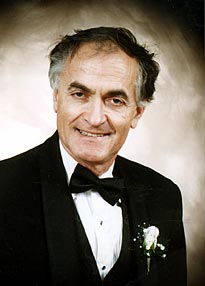 Dusan S. Zrnic合作论文数National Severe Storms Laboratory5
 William Benner合作论文数3Ron Ferek合作论文数3James F. Kimpel合作论文数3
 douglas forsyth合作论文数3Jf Heimmer合作论文数3
 Alan Shapiro合作论文数School of Meteorology;University of Oklahoma;School of Meteorology, University of Oklahoma3Tom Mcnellis合作论文数3
 Richard J. Vogt合作论文数3
 Yan Zhang合作论文数University of Oklahoma2
 Robert Palmer合作论文数College of Atmospheric and Geographic Sciences, School of Meteorology, University of Oklahoma;Advanced Radar Research Center, University of Oklahoma2
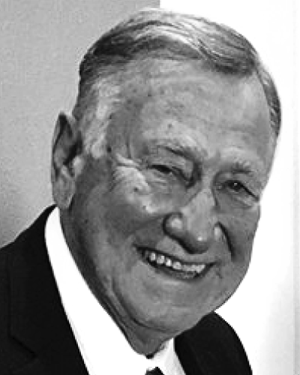 Richard Doviak合作论文数2
 Tian-You Yu合作论文数School of Meteorology, University of Oklahoma/Advanced Radar Research Center, University of Oklahoma/School of Electrical and Computer Engineering, University of Oklahoma2
 Mark Yeary合作论文数School of Electrical and Computer Engineering, Gallogly College of Engineering, The University of Oklahoma;Advanced Radar Research Center, The University of Oklahoma2
 Michael Biggerstaff合作论文数University of Oklahoma2
 Sebastián M. Torres合作论文数2
 Phillip B. Chilson合作论文数School of Meteorology;University of Oklahoma;School of Meteorology, University of Oklahoma2Jamie Bergin合作论文数1David Zasada合作论文数1Bill Melvin合作论文数1peter willett合作论文数1
 Michael L Picciolo合作论文数1Doviak, D.合作论文数1
 B Himed合作论文数Air Force Research Laboratory1
 Fulvio Gini合作论文数Department of Ingegneria dell’Informazione, University of Pisa1
 Yang Hong (洪阳)合作论文数Hydrometeorology and Remote Sensing Laboratory, School of Civil Engineering and Environmental Sciences, Gallogly College of Engineering, The University if Oklahoma;School of Meteorology, The University if Oklahoma1
 Alexander Ryzhkov合作论文数School of Meteorology, University of Oklahoma;Cooperative Institute of Mesoscale Meteorological Studies, University of Oklahoma1
 Maria Sabrina Greco合作论文数Department of Information Engineering, University of Pisa1
 Yoann Paichard合作论文数1
 Svein-Erik Hamran合作论文数Centre for Space Sensors and Systems, Department of Technology Systems, The Faculty of Mathematics and Natural Sciences, University of Oslo1
 Joseph R. Guerci合作论文数Defense Advanced Research Projects Agency1
 Michael R. Inggs合作论文数Dept Elect Engn, Univ Cape Town1
 Muralidhar Rangaswamy合作论文数Air Force Research Laboratory Sensors Directorate1Robert Linnehan合作论文数1Terry J. Schuur合作论文数Cooperative Institute for Mesoscale Meteorological Studies;National Severe Storms Laboratory;National Severe Storms Laboratory, Cooperative Institute for Mesoscale Meteorological Studies1
 Pierfrancesco Lombardo合作论文数Department of Information Engineering, Electronics and Telecommunications, Università degli Studi di Roma La Sapienza1
 Igal Bilik合作论文数Department of Electrical & Computer Engineering, School of Electrical and Computer Engineering, Ben Gurion University of the Negev1
 Michele Galletti合作论文数Microwaves and Radar Institute;German Aerospace Center;Microwaves and Radar Institute, German Aerospace Center1
 David Staiman合作论文数1
 Kelvin K Droegemeier合作论文数Department of Climate, Meteorology & Atmospheric Sciences, School of Earth, Society & Environment, University of Illinois Urbana-Champaign1
 Eric L. Mokole合作论文数MITER Corporation1
 Shannon Blunt合作论文数Department of Electrical Engineering & Computer Science, School of Engineering, University of Kansas;Radar Systems Lab, University of Kansas;Kansas Applied Research Lab, University of Kansas1
 Dusan S. Zrnic (Dusan Zrnic)合作论文数University of Oklahoma;NOAA National Severe Storms Laboratory1
 Yasser Al-Rashid合作论文数1




