Cullin-RING ligases (CRLs) ubiquitylate specific substrates selected from other cellular proteins. Substrate discrimination and ubiquitin transferase activity were thought to be strictly separated. Substrates are recognized by substrate receptors, such as Fbox or BCbox proteins. Meanwhile, CRLs employ assorted ubiquitin-carrying enzymes (UCEs, which are a collection of E2 and ARIH-family E3s) specialized for either initial substrate ubiquitylation (priming) or forging poly-ubiquitin chains. We discovered specific human CRL-UCE pairings governing substrate priming. The results reveal pairing of CUL2-based CRLs and UBE2R-family UCEs in cells, essential for efficient PROTAC-induced neo-substrate degradation. Despite UBE2R2’s intrinsic programming to catalyze poly-ubiquitylation, CUL2 employs this UCE for geometrically precise PROTAC-dependent ubiquitylation of a neo-substrate and for rapid priming of substrates recruited to diverse receptors. Cryo-EM structures illuminate how CUL2-based CRLs engage UBE2R2 to activate substrate ubiquitylation. Thus, pairing with a specific UCE overcomes E2 catalytic limitations to drive substrate ubiquitylation and targeted protein degradation.
E3 ubiquitin ligases, in collaboration with E2 ubiquitin-conjugating enzymes, modify proteins with poly-ubiquitin chains. Cullin-RING ligase (CRL) E3s use Cdc34/UBE2R-family E2s to build Lys48-linked poly-ubiquitin chains to control an enormous swath of eukaryotic biology. Yet the molecular mechanisms underlying this exceptional linkage specificity and millisecond kinetics of poly-ubiquitylation remain unclear. Here we obtain cryogenic-electron microscopy (cryo-EM) structures that provide pertinent insight into how such poly-ubiquitin chains are forged. The CRL RING domain not only activates the E2-bound ubiquitin but also shapes the conformation of a distinctive UBE2R2 loop, positioning both the ubiquitin to be transferred and the substrate-linked acceptor ubiquitin within the active site. The structures also reveal how the ubiquitin-like protein NEDD8 uniquely activates CRLs during chain formation. NEDD8 releases the RING domain from the CRL, but unlike previous CRL–E2 structures, does not contact UBE2R2. These findings suggest how poly-ubiquitylation may be accomplished by many E2s and E3s.
E3 ligase recruitment of proteins containing terminal destabilizing motifs (degrons) is emerging as a major form of regulation. How those E3s discriminate bona fide substrates from other proteins with terminal degron-like sequences remains unclear. Here, we report that human KLHDC2, a CRL2 substrate receptor targeting C-terminal Gly-Gly degrons, is regulated through interconversion between two assemblies. In the self-inactivated homotetramer, KLHDC2's C-terminal Gly-Ser motif mimics a degron and engages the substrate-binding domain of another protomer. True substrates capture the monomeric CRL2KLHDC2, driving E3 activation by neddylation and subsequent substrate ubiquitylation. Non-substrates such as NEDD8 bind KLHDC2 with high affinity, but its slow on rate prevents productive association with CRL2KLHDC2. Without substrate, neddylated CRL2KLHDC2 assemblies are deactivated via distinct mechanisms: the monomer by deneddylation and the tetramer by auto-ubiquitylation. Thus, substrate specificity is amplified by KLHDC2 self-assembly acting like a molecular timer, where only bona fide substrates may bind before E3 ligase inactivation.
Ubiquitylation is catalyzed by coordinated actions of E3 and E2 enzymes. Molecular principles governing many important E3-E2 partnerships remain unknown, including those for RING-family GID/CTLH E3 ubiquitin ligases and their dedicated E2, Ubc8/UBE2H (yeast/human nomenclature). GID/CTLH-Ubc8/UBE2H-mediated ubiquitylation regulates biological processes ranging from yeast metabolic signaling to human development. Here, cryoelectron microscopy (cryo-EM), biochemistry, and cell biology reveal this exquisitely specific E3-E2 pairing through an unconventional catalytic assembly and auxiliary interactions 70-100 Å away, mediated by E2 multisite phosphorylation. Rather than dynamic polyelectrostatic interactions reported for other ubiquitylation complexes, multiple Ubc8/UBE2H phosphorylation sites within acidic CK2-targeted sequences specifically anchor the E2 C termini to E3 basic patches. Positions of phospho-dependent interactions relative to the catalytic domains correlate across evolution. Overall, our data show that phosphorylation-dependent multivalency establishes a specific E3-E2 partnership, is antagonistic with dephosphorylation, rigidifies the catalytic centers within a flexing GID E3-substrate assembly, and facilitates substrate collision with ubiquitylation active sites.
Protein ubiquitylation typically involves isopeptide bond formation between the C-terminus of ubiquitin to the side-chain amino group on Lys residues. However, several ubiquitin ligases (E3s) have recently been identified that ubiquitylate proteins on non-Lys residues. For instance, HOIL-1 belongs to the RING-in-between RING (RBR) class of E3s and has an established role in Ser ubiquitylation. Given the homology between HOIL-1 and ARIH1, an RBR E3 that functions with the large superfamily of cullin-RING E3 ligases (CRLs), a biochemical investigation was undertaken, showing ARIH1 catalyzes Ser ubiquitylation to CRL-bound substrates. However, the efficiency of ubiquitylation was exquisitely dependent on the location and chemical environment of the Ser residue within the primary structure of the substrate. Comprehensive mutagenesis of the ARIH1 Rcat domain identified residues whose mutation severely impacted both oxyester and isopeptide bond formation at the preferred site for Ser ubiquitylation while only modestly affecting Lys ubiquitylation at the physiological site. The results reveal dual isopeptide and oxyester protein ubiquitylation activities of ARIH1 and set the stage for physiological investigations into this function of emerging importance.
 Brenda Schulman合作论文数Max Planck Institute of Biochemistry;Department of Chemistry, Technical University of Munich;St. Jude Children's Research Hospital5
 Gary Kleiger合作论文数Laboratory of Structural Biology;Molecular Medicine;Molecular Biology Institute;Laboratory of Structural Biology, Molecular Biology Institute5Daniel C Scott合作论文数4
 Nicholas Purser合作论文数4J Rajan Prabu合作论文数3
 Ishita Tripathi-Giesgen合作论文数2
 Joanna Liwocha合作论文数2Kheewoong Baek合作论文数2Barbara Steigenberger合作论文数2
 Arno Alpi合作论文数*Research Institute of Molecular Pathology;Institute for Molecular Bioscience, University of Queensland;and;*Research Institute of Molecular Pathology, University of Queensland2D. Tung Vu合作论文数1
 Holly Byers合作论文数1Spencer Hill合作论文数1Susanne von Gronau合作论文数1Judith Mueller合作论文数1Moeko King合作论文数1Jakub Chrustowicz合作论文数1Samuel Maiwald合作论文数1Laura A Hehl合作论文数1Trent Hinkle合作论文数MPL, Genentech1Richard E Lee合作论文数1Dawafuti Sherpa合作论文数1
 Kurt M Reichermeier合作论文数Genentech Inc1Daniel Horn-Ghetko合作论文数Max Planck Inst Biochem, Dept Mol Machines & Signaling, Martinsried, Germany1Viola Beier合作论文数Max Planck Inst Biochem, Mol Membrane & Organelle Biol, Klopferspitz 18, D-82152 Martinsried, Germany1Fynn M Hansen合作论文数Max Planck Inst Biochem, Dept Prote & Signal Transduct, Martinsried, Germany1Sergio C Chai合作论文数Dept Chem Biol & Therapeut, St Jude Childrens Res Hosp1Radhakrishnan Senthil K合作论文数Department of Medicine, University of Illinois at Chicago1Langlois Christine R合作论文数1Gee Clifford T合作论文数Department of Chemistry, University of Minnesota1
 Krist David T合作论文数1
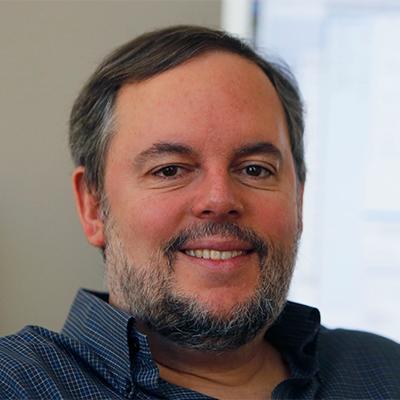 Stephen J. Elledge合作论文数Division of Genetics, Brigham and Women's Hospital;Howard Hughes Medical Institute;Department of Genetics, Harvard Medical School, Harvard University1
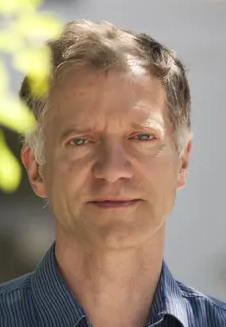 Matthias Mann合作论文数Department of Proteomics and Signal Transduction, Max-Planck-Institute of Biochemistry;Novo Nordisk Foundation Center for Protein Research, Faculty of Health and Medical Sciences, University of Copenhagen;Ludwig-Maximilians-University1Amanda Nourse合作论文数1
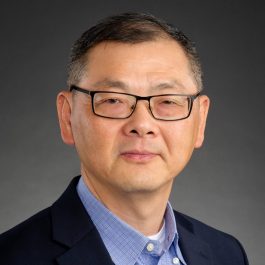 Taosheng Chen合作论文数Department of Chemical Biology and Therapeutics, St. Jude Children's Research Hospital1
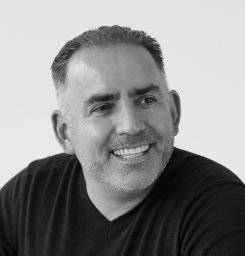 Donald S. Kirkpatrick合作论文数Department of Microchemistry, Proteomics and Lipidomics, Genentech, South San Francisco, CA, USA1
 Ravi C. Kalathur合作论文数The New York Consortium on Membrane Protein Structure (NYCOMPS),, New York Structural Biology Center1
 Vaithiyalingam Sivaraja合作论文数1




