Rapport-based approaches have become a central tenet of investigative interviewing with suspects and sources. Here we explored the utility of using rapport-building tactics (i.e., self-disclosure and interviewer feedback) to overcome barriers to cooperation in the interviewing domain. Across two experiments using the illegal behaviors paradigm (Dianiska et al.. 2019). participants completed a checklist of illegal behaviors and were then interviewed about their background and interests (the interpersonal interview) as well as about their prior participation in an illegal act (the illegal behavior interview). During the interpersonal interview, we manipulated whether the participant's disclosure was unilateral or reciprocal (Experiment 1; N = 124). and whether the interviewer self-disclosed and/or provided the participant with verifying feedback in response to the participant's disclosures (Experiment 2; N = 210). Participants were then asked to provide a statement about the most serious illegal behavior to which they had admitted. For both experiments, participants provided more information about the prior illegal act when the interviewer provided information about themselves. Furthermore, there was a significant increase in the amount of information elicited from the participant when the interviewer highlighted similarity with the participant. In line with prior work, we found support for an indirect relationship between the use of rapport-building tactics and disclosure that was mediated by the participant's perception of rapport and their decision to cooperate.
Recent findings suggest that priming may be useful for facilitating disclosure in investigative interviews; however, the effects of priming on behavioral outcomes have been mixed. The current studies attempted to replicate the increase in information disclosure when the concept of "openness" is primed. We assessed the separate and combined influence of context reinstatement instructions and activation of the concept of openness (via lexical primes in Experiment 1, via contextual and embodiment primes in Experiment 2) on information disclosure. In doing so, we introduced a novel paradigm to investigate factors contributing to the elicitation of sensitive personal information that participants provided in written (Experiment 1) or verbal (Experiment 2) form. Participants (Experiment 1: N = 173; Experiment 2: N = 194) completed a checklist of illegal behaviors and misdeeds, then engaged in an unrelated task that was used to administer the priming manipulation (either the concept of "open" or "closed," or a neutral prime). Participants then described a life event related to the most serious illegal behavior to which they had admitted, following either a direct request for information or a context reinstatement instruction. Across both experiments, context reinstatement led to robust increases in information disclosure. Although we failed to replicate prior effects of priming on disclosure, our observed effect sizes fell within the confidence intervals of previous studies. A meta-analytic assessment of priming across the two studies suggested a small but significant increase in information elicitation, suggesting that investigators are best served using evidence-based interviewing tactics during investigative interviews.
We sought to identify motivations to resist cooperation in intelligence interviews and develop techniques to overcome this resistance. One source of resistance can arise because of concerns for affiliations (e.g., "I do not want to inform on my friends/family/fellow countryman"). We investigated two avenues of rapport building-approach and avoidance-designed to overcome this concern. In a modified cheating paradigm, our participants (N = 116) became affiliated with a confederate who they then witnessed cheating. Participants were interviewed about the event in a 2 (approach: present vs. absent) x 2 (avoid: present vs. absent) design. The interviewer used either an approach technique that aligned them with the interviewer (portrayed as a morally good person) or an avoid technique that moved them away from the culprit (portrayed as nefarious), neither, or both. The approach technique increased rapport between the interviewer and participant. However, the avoid technique decreased the amount information elicited. When submitted to a mediation model, the approach technique had a positive indirect effect on information yield via perceived rapport and cooperation, while this was not the case for the avoid technique. An exploratory moderator analysis revealed that sympathy for the confederate moderated the effect of the avoid technique on information disclosed, where the more sympathy a participant felt for the confederate, the less information he or she provided. Implications for interviewing are discussed.
While research on interrogation has traditionally focused on problematic practices that lead to false confessions, more recent research has addressed the need to develop scientifically validated techniques that lead to accurate information from both suspects and sources. In the present review, we summarize this recent research on building and maintaining rapport, eliciting information, presenting evidence, and assessing credibility. Research is described in the context of accusatorial (guilt-presumptive and psychologically manipulative) versus information-gathering (cooperative and evidence based) approaches to interviewing and interrogation. We also suggest future directions for research to continue to improve the efficacy of interviews and interrogations.
The potentially exploitative effects of power and incentive were examined. In the study, 250 participants heard a confederate admit or deny a misdeed and were pressured by the experimenter to inform on the confederate, sometimes in exchange for a small reward. The majority of participants knowingly falsely informed on the confederate when put in a position of high power and offered an incentive. Participants truthfully informed on the confederate regardless of power or incentive. Results are interpreted in light of social psychological theories of social power, which suggest that harmful opportunism is a likely but not inevitable effect of empowerment.
Trying to remember something now typically improves your ability to remember it later. However, after watching a video of a simulated bank robbery, participants who verbally described the robber were 25% worse at identifying the robber in a lineup than were participants who instead listed U.S. states and capitals—this has been termed the “verbal overshadowing” effect (Schooler u0026 Engstler-Schooler, 1990). More recent studies suggested that this effect might be substantially smaller than first reported. Given uncertainty about the effect size, the influence of this finding in the memory literature, and its practical importance for police procedures, we conducted two collections of preregistered direct replications (RRR1 and RRR2) that differed only in the order of the description task and a filler task. In RRR1, when the description task immediately followed the robbery, participants who provided a description were 4% less likely to select the robber than were those in the control condition. In RRR2, when the description was delayed by 20 min, they were 16% less likely to select the robber. These findings reveal a robust verbal overshadowing effect that is strongly influenced by the relative timing of the tasks. The discussion considers further implications of these replications for our understanding of verbal overshadowing.
Trying to remember something now typically improves your ability to remember it later. However, after watching a video of a simulated bank robbery, participants who verbally described the robber were 25% worse at identifying the robber in a lineup than were participants who instead listed U.S. states and capitals-this has been termed the "verbal overshadowing" effect (Schooler & Engstler-Schooler, 1990). More recent studies suggested that this effect might be substantially smaller than first reported. Given uncertainty about the effect size, the influence of this finding in the memory literature, and its practical importance for police procedures, we conducted two collections of preregistered direct replications (RRR1 and RRR2) that differed only in the order of the description task and a filler task. In RRR1, when the description task immediately followed the robbery, participants who provided a description were 4% less likely to select the robber than were those in the control condition. In RRR2, when the description was delayed by 20 min, they were 16% less likely to select the robber. These findings reveal a robust verbal overshadowing effect that is strongly influenced by the relative timing of the tasks. The discussion considers further implications of these replications for our understanding of verbal overshadowing.
One hundred ninety-two students participated in an experimental simulation testing whether incentives would reduce the reluctance of informants to implicate a close other. Half of the students were made to feel interpersonally close to a confederate who either admitted to or denied a misdeed. All students were interrogated and encouraged to sign a secondary confession stating that the confederate had confessed to the misdeed; half were offered an incentive to do so. Contrary to expectations, closeness did not induce reluctance. Instead, the offer of incentive increased the number of participants willing to sign a secondary confession implicating a close other. Further analyses revealed that this increase occurred only for false secondary confessions. Implications for interrogation practices are discussed.
Two laboratory studies with 332 student participants investigated secondary confessions (provided by an informant instead of the suspect). Participants allegedly caused or witnessed a simulated computer crash, then were asked to give primary or secondary confessions during interrogation. Study 1 replicated the false evidence effect for primary confessions. Secondary confessions were obtained at a high rate, which was increased by false evidence in combination with incentive to confess. In Study 2 a confederate either confessed to or denied crashing the computer. Incentive increased the rate of secondary confession only in the presence of a denial; that is, incentive increased the number of false secondary confessions only. Implications for the use of incentives during informant interrogation are discussed.
The present study presents one of the first investigations of the effects of accomplice witnesses and jailhouse informants on jury decision-making. Across two experiments, participants read a trial transcript that included either a secondary confession from an accomplice witness, a jailhouse informant, a member of the community or a no confession control. In half of the experimental trial transcripts, the participants were made aware that the cooperating witness providing the secondary confession was given an incentive to testify. The results of both experiments revealed that information about the cooperating witness' incentive (e.g., leniency or reward) did not affect participants' verdict decisions. In Experiment 2, participant jurors appeared to commit the fundamental attribution error, as they attributed the motivation of the accomplice witness and jailhouse informant almost exclusively to personal factors as opposed to situational factors. Furthermore, both experiments revealed that mock jurors voted guilty significantly more often when there was a confession relative to a no confession control condition. The implications of the use of accomplice witness and jailhouse informant testimony are discussed.
 Christian Meissner合作论文数Department of Psychology, College of Liberal Arts and Sciences, Iowa State University8
 Denise R. Beike合作论文数Department of Psychology, The University of Arkansas5
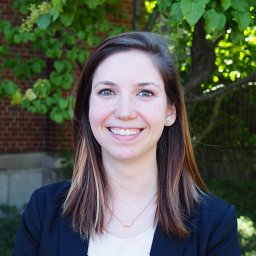 Rachel E Dianiska合作论文数Dept Psychol, Iowa State Univ4M. A. Kunar合作论文数3k s dellapaolera合作论文数3m mugayarbaldocchi合作论文数3r todaro合作论文数3c romig合作论文数3e rubinova合作论文数3a rancourt合作论文数3k buswell合作论文数3m colarusso合作论文数3j shaheed合作论文数3J C Jackson合作论文数3
 Emma Portch合作论文数Dept Psychol, Bournemouth Univ3p aucoin合作论文数3
 bradlee w gamblin合作论文数Northwest Missouri State Univ3
 m k attaya合作论文数Suffolk University3
 Laure Brimbal合作论文数School of Criminal Justice and Criminology, Texas State University3Liam Satchell合作论文数Dept Psychol, Univ Winchester3M. Rainsford合作论文数3
 Robert B Michael合作论文数Psychol Dept, Univ Louisiana Lafayette3d hirsch合作论文数3c ng合作论文数3g franco合作论文数3g sullivan合作论文数3K Wiseman合作论文数3
 Tara Zaksaite合作论文数School of Psychology, University of Plymouth3r gentry合作论文数3
 Dawn R. Weatherford合作论文数Texas A&M Univ San Antonio3
 Jonathan Jong合作论文数Coventry Univ3
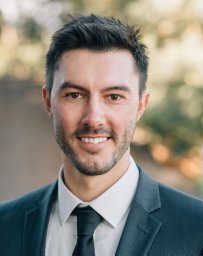 Daniel V Zuj合作论文数School of Psychological Sciences, University of Tasmania3
 Di Domenico Alberto合作论文数Dept Psychol Hlth & Terr Sci, Univ G dAnnunzio3
 Melissa Colloff合作论文数School of Psychology, College of Life and Environmental Sciences, University of Birmingham3
 Kehn Andre合作论文数University of North Dakota3
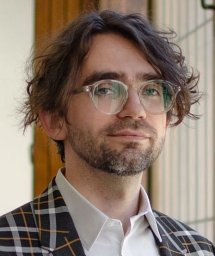 Marek Vranka合作论文数Faculty of Arts, Charles University Prague3
 Elizabeth Gilbert合作论文数University of Virginia3
 Lai Calvin K合作论文数University of Virginia3
 Bahnik Stepan合作论文数Institute of Physiology, Academy of Sciences of the Czech Republic;Department of Psychology II, University of Würzburg;Institute of Physiology, University of Würzburg3Ulatowska Joanna合作论文数3
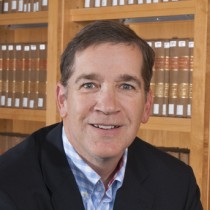 Brian H. Bornstein合作论文数238 Burnett Hall, Department of Psychology, University of Nebraska-Lincoln, Lincoln, NE 68588-0308, USA. bbornstein2@unl.edu3Stephen Birch合作论文数3Beth Fairfield合作论文数Online University “L. DaVinci”,3
 Faye Skelton合作论文数3Jamin Halberstadt合作论文数University of Otago3
 Samantha Bouwmeester合作论文数Department of Methodology and Statistics FSW, Tilburg University3
 Austin Lee Nichols合作论文数University of Central Florida3
 Nicola Mammarella合作论文数Dipartimento di Psicologia Generale, Università di Padova3
 Gerald Echterhoff合作论文数Jacobs University Bremen3




