Lidar-based perception pipelines rely on 3D object detection models to interpret complex scenes. While multiple representations for lidar exist, the range view is enticing since it losslessly encodes the entire lidar sensor output. In this work, we achieve state-of-the-art amongst range view 3D object detection models without using multiple techniques proposed in past range view literature. We explore range view 3D object detection across two modern datasets with substantially different properties: Argoverse 2 and Waymo Open. Our investigation reveals key insights: (1) input feature dimensionality significantly influences the overall performance, (2) surprisingly, employing a classification loss grounded in 3D spatial proximity works as well or better compared to more elaborate IoU-based losses, and (3) addressing non-uniform lidar density via a straightforward range subsampling technique outperforms existing multi-resolution, range-conditioned networks. Our experiments reveal that techniques proposed in recent range view literature are not needed to achieve state-of-the-art performance. Combining the above findings, we establish a new state-of-the-art model for range view 3D object detection - improving AP by 2.2% on the Waymo Open dataset while maintaining a runtime of 10 Hz. We are the first to benchmark a range view model on the Argoverse 2 dataset and outperform strong voxel-based baselines. All models are multi-class and open-source. Code is available at https://github.com/benjaminrwilson/range-view-3d-detection.
Neural Scene Flow Prior (NSFP) is of significant interest to the vision community due to its inherent robustness to out-of-distribution (OOD) effects and its ability to deal with dense lidar points. The approach utilizes a coordinate neural network to estimate scene flow at runtime, without any training. However, it is up to 100 times slower than current state-of-the-art learning methods. In other applications such as image, video, and radiance function reconstruction innovations in speeding up the runtime performance of coordinate networks have centered upon architectural changes. In this paper, we demonstrate that scene flow is different---with the dominant computational bottleneck stemming from the loss function itself (i.e., Chamfer distance). Further, we rediscover the distance transform (DT) as an efficient, correspondence-free loss function that dramatically speeds up the runtime optimization. Our fast neural scene flow (FNSF) approach reports for the first time real-time performance comparable to learning methods, without any training or OOD bias on two of the largest open autonomous driving (AV) lidar datasets Waymo Open [62] and Argoverse [8].
Neural priors are a promising direction to capture low-level vision statistics without relying on handcrafted regularizers. Recent works have successfully shown the use of neural architecture biases to implicitly regularize image denoising, super-resolution, inpainting, synthesis, scene flow, among others. They do not rely on large-scale datasets to capture prior statistics and thus generalize well to out-of-the-distribution data. Inspired by such advances, we investigate neural priors for trajectory representation. Traditionally, trajectories have been represented by a set of handcrafted bases that have limited expressibility. Here, we propose a neural trajectory prior to capture continuous spatio-temporal information without the need for offline data. We demonstrate how our proposed objective is optimized during runtime to estimate trajectories for two important tasks: Non-Rigid Structure from Motion (NRSfM) and lidar scene flow integration for self-driving scenes. Our results are competitive to many state-of-the-art methods for both tasks.
Before the deep learning revolution, many perception algorithms were based on runtime optimization in conjunction with a strong prior/regularization penalty. A prime example of this in computer vision is optical and scene flow. Supervised learning has largely displaced the need for explicit regularization. Instead, they rely on large amounts of labeled data to capture prior statistics, which are not always readily available for many problems. Although optimization is employed to learn the neural network, the weights of this network are frozen at runtime. As a result, these learning solutions are domain-specific and do not generalize well to other statistically different scenarios. This paper revisits the scene flow problem that relies predominantly on runtime optimization and strong regularization. A central innovation here is the inclusion of a neural scene flow prior, which uses the architecture of neural networks as a new type of implicit regularizer. Unlike learning-based scene flow methods, optimization occurs at runtime, and our approach needs no offline datasets -- making it ideal for deployment in new environments such as autonomous driving. We show that an architecture based exclusively on multilayer perceptrons (MLPs) can be used as a scene flow prior. Our method attains competitive -- if not better -- results on scene flow benchmarks. Also, our neural prior's implicit and continuous scene flow representation allows us to estimate dense long-term correspondences across a sequence of point clouds. The dense motion information is represented by scene flow fields where points can be propagated through time by integrating motion vectors. We demonstrate such a capability by accumulating a sequence of lidar point clouds.
We address the generalization ability of recent learning-based point cloud registration methods. Despite their success, these approaches tend to have poor performance when applied to mismatched conditions that are not well-represented in the training set, such as unseen object categories, different complex scenes, or unknown depth sensors. In these circumstances, it has often been better to rely on classical non-learning methods (e.g., Iterative Closest Point), which have better generalization ability. Hybrid learning methods, that use learning for predicting point correspondences and then a deterministic step for alignment, have offered some respite, but are still limited in their generalization abilities. We revisit a recent innovation-PointNetLK [1]-and show that the inclusion of an analytical Jacobian can exhibit remarkable generalization properties while reaping the inherent fidelity benefits of a learning framework. Our approach not only outperforms the state-of-the-art in mismatched conditions but also produces results competitive with current learning methods when operating on real-world test data close to the training set.
We introduce Argoverse 2 (AV2) - a collection of three datasets for perception and forecasting research in the self-driving domain. The annotated Sensor Dataset contains 1,000 sequences of multimodal data, encompassing high-resolution imagery from seven ring cameras, and two stereo cameras in addition to lidar point clouds, and 6-DOF map-aligned pose. Sequences contain 3D cuboid annotations for 26 object categories, all of which are sufficiently-sampled to support training and evaluation of 3D perception models. The Lidar Dataset contains 20,000 sequences of unlabeled lidar point clouds and map-aligned pose. This dataset is the largest ever collection of lidar sensor data and supports self-supervised learning and the emerging task of point cloud forecasting. Finally, the Motion Forecasting Dataset contains 250,000 scenarios mined for interesting and challenging interactions between the autonomous vehicle and other actors in each local scene. Models are tasked with the prediction of future motion for "scored actors" in each scenario and are provided with track histories that capture object location, heading, velocity, and category. In all three datasets, each scenario contains its own HD Map with 3D lane and crosswalk geometry - sourced from data captured in six distinct cities. We believe these datasets will support new and existing machine learning research problems in ways that existing datasets do not. All datasets are released under the CC BY-NC-SA 4.0 license.
The explicit derivation considers that the local voxel frame can be transformed to the global frame explicitly. Formally, let {v} be the voxel coordinate frame, and {g} be the global coordinate frame. The twist parameters w.r.t the local frame {v} are ξv=(ωv,υv), and the twist parameters w.r.t the global frame {g} are ξg=(ωg,υg), where ω and υ are the rotations and translations along the xyz axis respectively. We define the transformation matrix, in homogeneous coordinates, from the local frame {v} to the global frame {g} as
Scene flow is the three-dimensional (3D) motion field of a scene. It provides information about the spatial arrangement and rate of change of objects in dynamic environments. Current learning-based approaches seek to estimate the scene flow directly from point clouds and have achieved state-of-the-art performance. However, supervised learning methods are inherently domain specific and require a large amount of labeled data. Annotation of scene flow on real-world point clouds is expensive and challenging, and the lack of such datasets has recently sparked interest in self-supervised learning methods. How to accurately and robustly learn scene flow representations without labeled real-world data is still an open problem. Here we present a simple and interpretable objective function to recover the scene flow from point clouds. We use the graph Laplacian of a point cloud to regularize the scene flow to be "as-rigid-as-possible". Our proposed objective function can be used with or without learning—as a self-supervisory signal to learn scene flow representations, or as a non-learning-based method in which the scene flow is optimized during runtime. Our approach outperforms related works in many datasets. We also show the immediate applications of our proposed method for two applications: motion segmentation and point cloud densification.
There has been remarkable progress in the application of deep learning to 3D point cloud registration in recent years. Despite their success, these approaches tend to have poor generalization properties when attempting to align unseen point clouds at test time. PointNetLK has proven the exception to this rule by leveraging the intrinsic generalization properties of the Lucas & Kanade (LK) image alignment algorithm to point cloud registration. The approach relies heavily upon the estimation of a gradient through finite differentiation -- a strategy that is inherently ill-conditioned and highly sensitive to the step-size choice. To avoid these problems, we propose a deterministic PointNetLK method that uses analytical gradients. We also develop several strategies to improve large-volume point cloud processing. We compare our approach to canonical PointNetLK and other state-of-the-art methods and demonstrate how our approach provides accurate, reliable registration with high fidelity. Extended experiments on noisy, sparse, and partial point clouds depict the utility of our approach for many real-world scenarios. Further, the decomposition of the Jacobian matrix affords the reuse of feature embeddings for alternate warp functions.
Implicit shape representations, such as Level Sets, provide a very elegant formulation for performing computations involving curves and surfaces. However, including implicit representations into canonical Neural Network formulations is far from straightforward. This has consequently restricted existing approaches to shape inference, to significantly less effective representations, perhaps most commonly voxels occupancy maps or sparse point clouds. To overcome this limitation we propose a novel formulation that permits the use of implicit representations of curves and surfaces, of arbitrary topology, as individual layers in Neural Network architectures with end-to-end trainability. Specifically, we propose to represent the output as an oriented level set of a continuous and discretised embedding function. We investigate the benefits of our approach on the task of 3D shape prediction from a single image; and demonstrate its ability to produce a more accurate reconstruction compared to voxel-based representations. We further show that our model is flexible and can be applied to a variety of shape inference problems.
Representing 3D shape in deep learning frameworks in an accurate, efficient and compact manner still remains an open challenge. Most existing work addresses this issue by employing voxel-based representations. While these approaches benefit greatly from advances in computer vision by generalizing 2D convolutions to the 3D setting, they also have several considerable drawbacks. The computational complexity of voxel-encodings grows cubically with the resolution thus limiting such representations to low-resolution 3D reconstruction. In an attempt to solve this problem, point cloud representations have been proposed. Although point clouds are more efficient than voxel representations as they only cover surfaces rather than volumes, they do not encode detailed geometric information about relationships between points. In this paper we propose a method to learn free-form deformations (Ffd) for the task of 3D reconstruction from a single image. By learning to deform points sampled from a high-quality mesh, our trained model can be used to produce arbitrarily dense point clouds or meshes with fine-grained geometry. We evaluate our proposed framework on synthetic data and achieve state-of-the-art results on surface and volumetric metrics. We make our implementation publicly available (Tensorflow implementation available at github.com/jackd/template_ffd .).
One challenge that remains open in 3D deep learning is how to efficiently represent 3D data to feed deep networks. Recent works have relied on volumetric or point cloud representations, but such approaches suffer from a number of issues such as computational complexity, unordered data, and lack of finer geometry. This paper demonstrates that a mesh representation (i.e. vertices and faces to form polygonal surfaces) is able to capture fine-grained geometry for 3D reconstruction tasks. A mesh however is also unstructured data similar to point clouds. We address this problem by proposing a learning framework to infer the parameters of a compact mesh representation rather than learning from the mesh itself. This compact representation encodes a mesh using free-form deformation and a sparse linear combination of models allowing us to reconstruct 3D meshes from single images. In contrast to prior work, we do not rely on silhouettes and landmarks to perform 3D reconstruction. We evaluate our method on synthetic and real-world datasets with very promising results. Our framework efficiently reconstructs 3D objects in a low-dimensional way while preserving its important geometrical aspects.
Existing 3D surface representation approaches are unable to accurately classify pixels and their orientation lying on the boundary of an object. Thus resulting in coarse representations which usually require post-processing steps to extract 3D surface meshes. To overcome this limitation, we propose an end-to-end trainable model that directly predicts implicit surface representations of arbitrary topology by optimising a novel geometric loss function. Specifically, we propose to represent the output as an oriented level set of a continuous embedding function, and incorporate this in a deep end-to-end learning framework by introducing a variational shape inference formulation. We investigate the benefits of our approach on the task of 3D surface prediction and demonstrate its ability to produce a more accurate reconstruction compared to voxel-based representations. We further show that our model is flexible and can be applied to a variety of shape inference problems.
A novel two-stage age prediction approach with group-specific features is proposed in this paper. Aging process is captured through a highly discriminating feature representation that models shape, appearance, skin spots, and wrinkles. The two-stage method consists of a multi-class Support Vector Machine (SVM) to predict the age bracket while the final age prediction is carried out using Support Vector Regression (SVR). The novelty of our work is that the feature extraction is group-specific and can therefore be tailored to each age bracket in the specific age prediction step. The FG-NET Aging dataset was used to evaluate the proposed method and an impressive mean absolute error (M A E) of 3.98 was achieved. Our approach outperforms the current state-of-the-art while increasing the robustness to blur, expression and lighting variation with local phase features.
3D reconstruction from 2D images is a central problem in computer vision. Recent works have been focusing on reconstruction directly from a single image. It is well known however that only one image cannot provide enough information for such a reconstruction. A prior knowledge that has been entertained are 3D CAD models due to its online ubiquity. A fundamental question is how to compactly represent millions of CAD models while allowing generalization to new unseen objects with fine-scaled geometry. We introduce an approach to compactly represent a 3D mesh. Our method first selects a 3D model from a graph structure by using a novel free-form deformation FFD 3D-2D registration, and then the selected 3D model is refined to best fit the image silhouette. We perform a comprehensive quantitative and qualitative analysis that demonstrates impressive dense and realistic 3D reconstruction from single images.
Age estimation from facial images is increasingly receiving attention to solve age-based access control, age-adaptive targeted marketing, amongst other applications. Since even humans can be induced in error due to the complex biological processes involved, finding a robust method remains a research challenge today. In this paper, we propose a new framework for the integration of Active Appearance Models (AAM), Local Binary Patterns (LBP), Gabor wavelets (GW) and Local Phase Quantization (LPQ) in order to obtain a highly discriminative feature representation which is able to model shape, appearance, wrinkles and skin spots. In addition, this paper proposes a novel flexible hierarchical age estimation approach consisting of a multi-class Support Vector Machine (SVM) to classify a subject into an age group followed by a Support Vector Regression (SVR) to estimate a specific age. The errors that may happen in the classification step, caused by the hard boundaries between age classes, are compensated in the specific age estimation by a flexible overlapping of the age ranges. The performance of the proposed approach was evaluated on FG-NET Aging and MORPH Album 2 datasets and a mean absolute error (MAE) of 4.50 and 5.86 years was achieved respectively. The robustness of the proposed approach was also evaluated on a merge of both datasets and a MAE of 5.20 years was achieved. Furthermore, we have also compared the age estimation made by humans with the proposed approach and it has shown that the machine outperforms humans. The proposed approach is competitive with current state-of-the-art and it provides an additional robustness to blur, lighting and expression variance brought about by the local phase features.
 Simon Lucey合作论文数Australian Institute for Machine Learning, University of Adelaide;School of Computer Science and Information Technology, University of Adelaide;Robotics Institute, Carnegie Mellon University9
 Xueqian Li (李雪倩)合作论文数Department of Mathematical & Computer Sciences, The University of Adelaide6
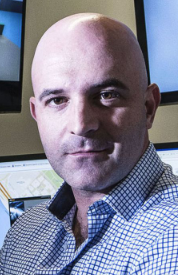 Clinton Fookes合作论文数School of Electrical Engineering & Robotics, Faculty of Engineering, Queensland University of Technology5
 Anders Eriksson合作论文数Enovis5
 Sridha Sridharan合作论文数Faculty of Engineering, School of Electrical Engineering & Robotics, Queensland University of Technology;School of Electrical Engineering and Computer Science, Queensland University of Technology3
 James Hays合作论文数School of Interactive Computing, College of Computing, Georgia Institute of Technology3
 Dominic Jack合作论文数Smart Linework3
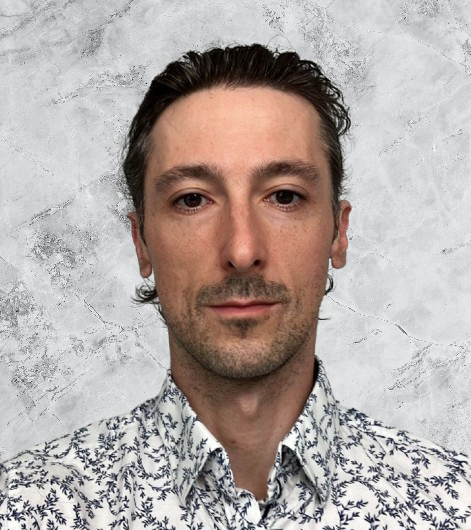 Mateusz Michalkiewicz合作论文数Electrical and Computer Engineering Department, Rice University2
 Benjamin Wilson合作论文数2
 Chen Kong合作论文数2
 Alessandro Lameiras Koerich合作论文数Department of Software Engineering and IT, École de technologie supérieure, University of Quebec;The Johns Hopkins University;InviSys Computer Vision Ltd;Pontifícia Universidade Católica do Paraná2
 Alceu de Souza Britto Jr合作论文数Pontifícia Universidade Católica do Paraná2
 Mahsa Baktashmotlagh合作论文数School of Electrical Engineering and Computer Science, Faculty of Engineering, Architecture and Information Technology, University of Queensland2
 Siddhesh Khandelwal合作论文数1Tanmay Agarwal合作论文数1William Qi合作论文数1
 Jagjeet Singh合作论文数Latitude AI1
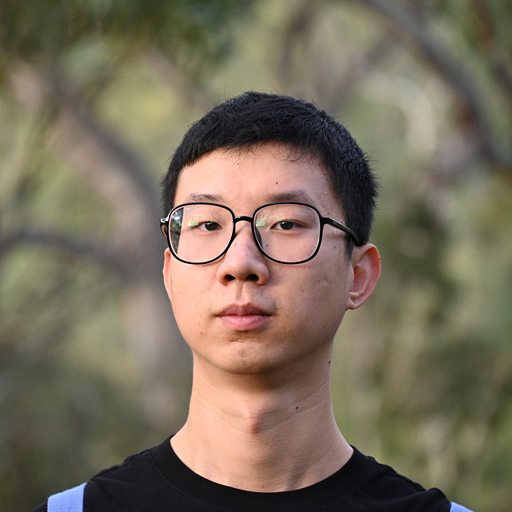 Jianqiao Zheng (郑剑桥)合作论文数School of Computer and Mathematical Sciences, Faculty of Sciences, Engineering and Technology, University of Adelaide;Australian Institute for Machine Learning, University of Adelaide1
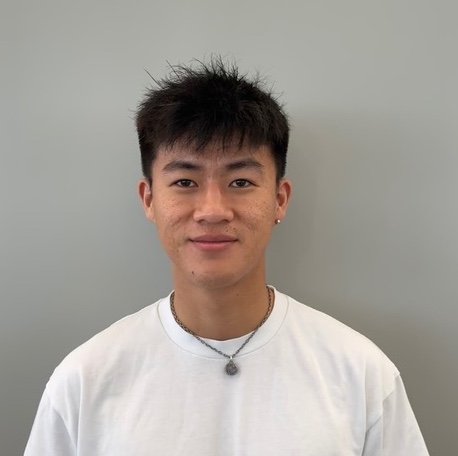 Bowen Pan (潘柏文)合作论文数Apple1
 Ratnesh Kumar合作论文数NVIDIA1Francesco Ferroni合作论文数1
 Andrew Hartnett合作论文数Latitude AI1
 Chaoyang Wang合作论文数Snap Inc1
 Sareh Rowlands合作论文数University of Exeter1
 Peter Carr合作论文数Latitude AI1
 Frederic Maire合作论文数Queensland University of Technology1
 Deva Ramanan合作论文数Center for Autonomous Vehicle Research, Robotics Institute, School of Computer Science, Carnegie Mellon University1
 John Lambert合作论文数DeepMind1




