We introduce Argoverse 2 (AV2) - a collection of three datasets for perception and forecasting research in the self-driving domain. The annotated Sensor Dataset contains 1,000 sequences of multimodal data, encompassing high-resolution imagery from seven ring cameras, and two stereo cameras in addition to lidar point clouds, and 6-DOF map-aligned pose. Sequences contain 3D cuboid annotations for 26 object categories, all of which are sufficiently-sampled to support training and evaluation of 3D perception models. The Lidar Dataset contains 20,000 sequences of unlabeled lidar point clouds and map-aligned pose. This dataset is the largest ever collection of lidar sensor data and supports self-supervised learning and the emerging task of point cloud forecasting. Finally, the Motion Forecasting Dataset contains 250,000 scenarios mined for interesting and challenging interactions between the autonomous vehicle and other actors in each local scene. Models are tasked with the prediction of future motion for "scored actors" in each scenario and are provided with track histories that capture object location, heading, velocity, and category. In all three datasets, each scenario contains its own HD Map with 3D lane and crosswalk geometry - sourced from data captured in six distinct cities. We believe these datasets will support new and existing machine learning research problems in ways that existing datasets do not. All datasets are released under the CC BY-NC-SA 4.0 license.
Urban traffic optimization using traffic cameras as sensors is driving the need to advance state-of-the-art multi-target multi-camera (MTMC) tracking. This work introduces CityFlow, a city-scale traffic camera dataset consisting of more than 3 hours of synchronized HD videos from 40 cameras across 10 intersections, with the longest distance between two simultaneous cameras being 2.5 km. To the best of our knowledge, CityFlow is the largest-scale dataset in terms of spatial coverage and the number of cameras/videos in an urban environment. The dataset contains more than 200K annotated bounding boxes covering a wide range of scenes, viewing angles, vehicle models, and urban traffic flow conditions. Camera geometry and calibration information are provided to aid spatio-temporal analysis. In addition, a subset of the benchmark is made available for the task of image-based vehicle re-identification (ReID). We conducted an extensive experimental evaluation of baselines/state-of-the-art approaches in MTMC tracking, multi-target single-camera (MTSC) tracking, object detection, and image-based ReID on this dataset, analyzing the impact of different network architectures, loss functions, spatio-temporal models and their combinations on task effectiveness. An evaluation server is launched with the release of our benchmark at the 2019 AI City Challenge (https://www.aicitychallenge.org/) that allows researchers to compare the performance of their newest techniques. We expect this dataset to catalyze research in this field, propel the state-of-the-art forward, and lead to deployed traffic optimization(s) in the real world.
In comparison with person re-identification (ReID), which has been widely studied in the research community, vehicle ReID has received less attention. Vehicle ReID is challenging due to 1) high intra-class variability (caused by the dependency of shape and appearance on viewpoint), and 2) small inter-class variability (caused by the similarity in shape and appearance between vehicles produced by different manufacturers). To address these challenges, we propose a Pose-Aware Multi-Task Re-Identification (PAMTRI) framework. This approach includes two innovations compared with previous methods. First, it overcomes viewpointdependency by explicitly reasoning about vehicle pose and shape via keypoints, heatmaps and segments from pose estimation. Second, it jointly classifies semantic vehicle attributes (colors and types) while performing ReID, through multi-task learning with the embedded pose representations. Since manually labeling images with detailed pose and attribute information is prohibitive, we create a large-scale highly randomized synthetic dataset with automatically annotated vehicle attributes for training. Extensive experiments validate the effectiveness of each proposed component, showing that PAMTRI achieves significant improvement over state-of-the-art on two mainstream vehicle ReID benchmarks: VeRi and CityFlow-ReID.
Characterizing an image region by its feature intercorrelations is a modern trend in computer vision. In this paper, we introduce a new image descriptor that can be seen as a natural extension of a standard covariance descriptor with the advantage of capturing nonlinear and nonmonotone dependencies. Inspired from the recent advances in mathematical statistics of Brownian motion, we can express highly complex structural information in a compact and computationally efficient manner. We show that our Brownian covariance descriptor can capture richer image characteristics than the covariance descriptor. Additionally, a detailed analysis of the Brownian manifold reveals that opposite to the classical covariance descriptor, the proposed descriptor lies in a relatively flat manifold, which can be treated as a Euclidean. This brings significant boost in the efficiency of the descriptor. The effectiveness and the generality of our approach is validated on two challenging vision tasks, pedestrian classification, and person reidentification. The experiments are carried out on multiple datasets achieving promising results.
Typical pose tracking algorithms first obtain a set of plausible pose hypotheses in all image frames of a video and subsequently stitch compatible detections across time to form a pose-track. This approach to tracking is commonly termed tracking-by-detections, and has been very successful in other areas such as multiple object tracking, video segmentation using object proposals. Often models in this category can only incorporate local spatio-temporal evidence due to exponentially increased cost when using global information. Local spatio-temporal evidence can be ambiguous, thus leading to an inferior objective modeling. To deal with ambiguities in local information it is necessary to incorporate global information over multiple frames into a model. Based on the recent advances in generating multiple solutions from a probabilistic model, we first generate multiple plausible pose-track hypotheses, and subsequently employ a mixture of local and global features to express the quality of these solutions with high fidelity. We perform extensive experiments and competitive results across varied datasets demonstrate the robustness of our approach.
In this paper, we view multiple object tracking as a graph partitioning problem. Given any object detector, we build the graph of all detections and aim to partition it into trajectories. To quantify the similarity of any two detections, we consider local cues such as point tracks and speed, global cues such as appearance, as well as intermediate ones such as trajectory straightness. These different clues are dealt jointly to make the approach robust to detection mistakes (missing or extra detections). We thus define a Conditional Random Field and optimize it using an efficient combination of message passing and move-making algorithms. Our approach is fast on video batch sizes of hundreds of frames. Competitive and stable results on varied videos demonstrate the robustness and efficiency of our approach.
In this thesis we propose novel algorithms for video analysis. The first contribution of this thesis is in the domain of video segmentation wherein the objective is to obtain a dense and coherent spatio-temporal segmentation. We propose joining both spatial and temporal aspects of a video into a single notion Fiber. A fiber is a set of trajectories which are spatially connected by a mesh. Fibers are built by jointly assessing spatial and temporal aspects of the video. Compared to the state-of-the-art, a fiber based video segmentation presents advantages such as a natural spatio-temporal neighborhood accessor by a mesh, and temporal correspondences for most pixels in the video. Furthermore, this fiber-based segmentation is of quasi-linear complexity w.r.t. the number of pixels. The second contribution is in the realm of multiple object tracking. We proposed a tracking approach which utilizes cues from point tracks, kinematics of moving objects and global appearance of detections. Unification of all these cues is performed on a Conditional Random Field. Subsequently this model is optimized by a combination of message passing and an Iterated Conditional Modes (ICM) variant to infer object-trajectories. A third, minor, contribution relates to the development of suitable feature descriptor for appearance matching of persons. All of our proposed approaches achieve competitive and better results (both qualitatively and quantitatively) than state-of-the-art on open source datasets.
Dans cette these nous proposons de nouveaux algorithmes d'analyse video. La premiere contribution de cette these concerne le domaine de la segmentation de videos avec pour objectif d'obtenir une segmentation dense et spatio-temporellement coherente. Nous proposons de combiner les aspects spatiaux et temporels d'une video en une seule notion, celle de Fibre. Une fibre est un ensemble de trajectoires qui sont spatialement connectees par un maillage. Les fibres sont construites en evaluant simultanement les aspects spatiaux et temporels. Par rapport a l’etat de l'art une segmentation de video a base de fibres presente comme avantages d’acceder naturellement au voisinage grâce au maillage et aux correspondances temporelles pour la plupart des pixels de la video. De plus, cette segmentation a base de fibres a une complexite quasi lineaire par rapport au nombre de pixels. La deuxieme contribution de cette these concerne le suivi d'objets multiples. Nous proposons une approche de suivi qui utilise des caracteristiques des points suivis, la cinematique des objets suivis et l'apparence globale des detections. L'unification de toutes ces caracteristiques est effectuee avec un champ conditionnel aleatoire. Ensuite ce modele est optimise en combinant les techniques de passage de message et une variante de processus ICM (Iterated Conditional Modes) pour inferer les trajectoires d'objet. Une troisieme contribution mineure consiste dans le developpement d'un descripteur pour la mise en correspondance d'apparences de personne. Toutes les approches proposees obtiennent des resultats competitifs ou meilleurs (qualitativement et quantitativement) que l’etat de l'art sur des base de donnees.
This paper introduces an image region descriptor and applies it to the problem of appearance matching. The proposed descriptor can be seen as a natural extension of covariance. Driven by recent studies in mathematical statistics related to Brownian motion, we design the Brownian descriptor. In contrast to the classical covariance descriptor, which measures the degree of linear relationship between features, our novel descriptor measures the degree of all kinds of possible relationships between features. We argue that the proposed covariance is a richer descriptor than the classical covariance, especially when fusing non-linearly dependent features. We evaluate our approach on tracking related applications, demonstrating that the Brownian descriptor outperforms the classical covariance in terms of matching accuracy and efficiency.
We propose a new representation of videos, as spatio-temporal fibers. These fibers are clusters of trajectories that are meshed spatially in the image domain. They form a hierarchical partition of the video into regions that are coherent in time and space. They can be seen as dense, spatially-organized, long-term optical flow. Their robustness to noise and ambiguities is ensured by taking into account the reliability of each source of information.As fibers allow users to handle easily moving objects in videos, they prove useful for video editing, as demonstrated in a video inpainting example.
Our purpose is to develop a classification system f or the automatic detection of harmful insects in greenhous e plants. This paper deals with evaluation of three f ature extraction techniques for classification of insects . Feature extraction methods used are Gabor Filters, Pyramida l Histogram of Gradients and color data. The aim of t he classification machine apart from achieving high de gree of accuracy is to reduce number of false negatives. Di fferent feature extraction methods is evaluated based on to tal accuracy, number of false positives & false negativ es, Precision Recall & ROC curves and computation time.
Eye detection is required in many applications like eye-gaze tracking, iris detection, video conferencing, auto-stereoscopic displays, face detection and face recognition. This paper proposes a novel technique for eye detection using color and morphological image processing. It is observed that eye regions in an image are characterized by low illumination, high density edges and high contrast as compared to other parts of the face. The method proposed is based on assumption that a frontal face image (full frontal) is available. Firstly, the skin region is detected using a color based training algorithm and six-sigma technique operated on RGB, HSV and NTSC scales. Further analysis involves morphological processing using boundary region detection and detection of light source reflection by an eye, commonly known as an eye dot. This gives a finite number of eye candidates from which noise is subsequently removed. This technique is found to be highly efficient and accurate for detecting eyes in frontal face images.
Eye detection is required in many applications like eye-gaze tracking, iris detection, video conferencing, auto-stereoscopic displays, face detection and face recognition. This paper proposes a novel technique for eye detection using color and morphological image processing. It is observed that eye regions in an image are characterized by low illumination, high density edges and high contrast as compared to other parts of the face. The method proposed is based on assumption that a frontal face image (full frontal) is available. Firstly, the skin region is detected using a color based training algorithm and six-sigma technique operated on RGB, HSV and NTSC scales. Further analysis involves morphological processing using boundary region detection and detection of light source reflection by an eye, commonly known as an eye dot. This gives a finite number of eye candidates from which noise is subsequently removed. This technique is found to be highly efficient and accurate for detecting eyes in frontal face images.
 Monique Thonnat合作论文数French National Institute for Research in Computer Science and Control3
 Guillaume Charpiat合作论文数Pulsar Project INRIA Sophia Antipolis Sophia Antipolis France c3
 Xiaodong Yang合作论文数NVIDIA Research2
 Stan Birchfield合作论文数NVIDIA2
 Slawomir Bak合作论文数Apple2
 Shuo Wang合作论文数NVIDIA2Tanmay Rajpathak合作论文数2
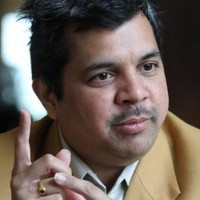 Milind Naphade合作论文数Capital One2
 François Brémond合作论文数Institut National de Recherche en Informatique et en Automatique2Eric Schwartz合作论文数1
 Benjamin Wilson合作论文数1Siddhesh Khandelwal合作论文数1Tanmay Agarwal合作论文数1Hodge William合作论文数NVIDIA, Santa Clara, CA 95051 USA1William Qi合作论文数1
 Jagjeet Singh合作论文数Latitude AI1
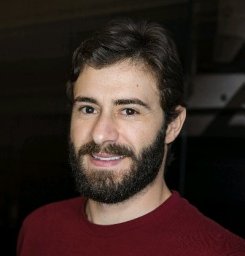 Jhony K Pontes合作论文数Queensland University of Technology Brisbane1
 Bowen Pan (潘柏文)合作论文数Apple1
 Jonathan Tremblay合作论文数NVIDIA1
 Andrew Hartnett合作论文数Latitude AI1
 Ming-Yu Liu (劉洺堉)合作论文数NVIDIA1
 James Hays合作论文数School of Interactive Computing, College of Computing, Georgia Institute of Technology1Sabine Moisan合作论文数1
 Peter Carr合作论文数Latitude AI1
 Vittorio Murino合作论文数Dipartimento di Informatica, University of Verona;Italian Institute of Technology1
 Marco San Biagio合作论文数Pattern Anal. & Comput. Vision, Ist. Italiano di Tecnol.;c;Pattern Anal. & Comput. Vision, Ist. Italiano di Tecnol.1
 Deva Ramanan合作论文数Center for Autonomous Vehicle Research, Robotics Institute, School of Computer Science, Carnegie Mellon University1
 John Lambert合作论文数DeepMind1
 Jenq-Neng Hwang合作论文数Department of Electrical & Computer Engineering, University of Washington1
 Ikhlef Bechar合作论文数1
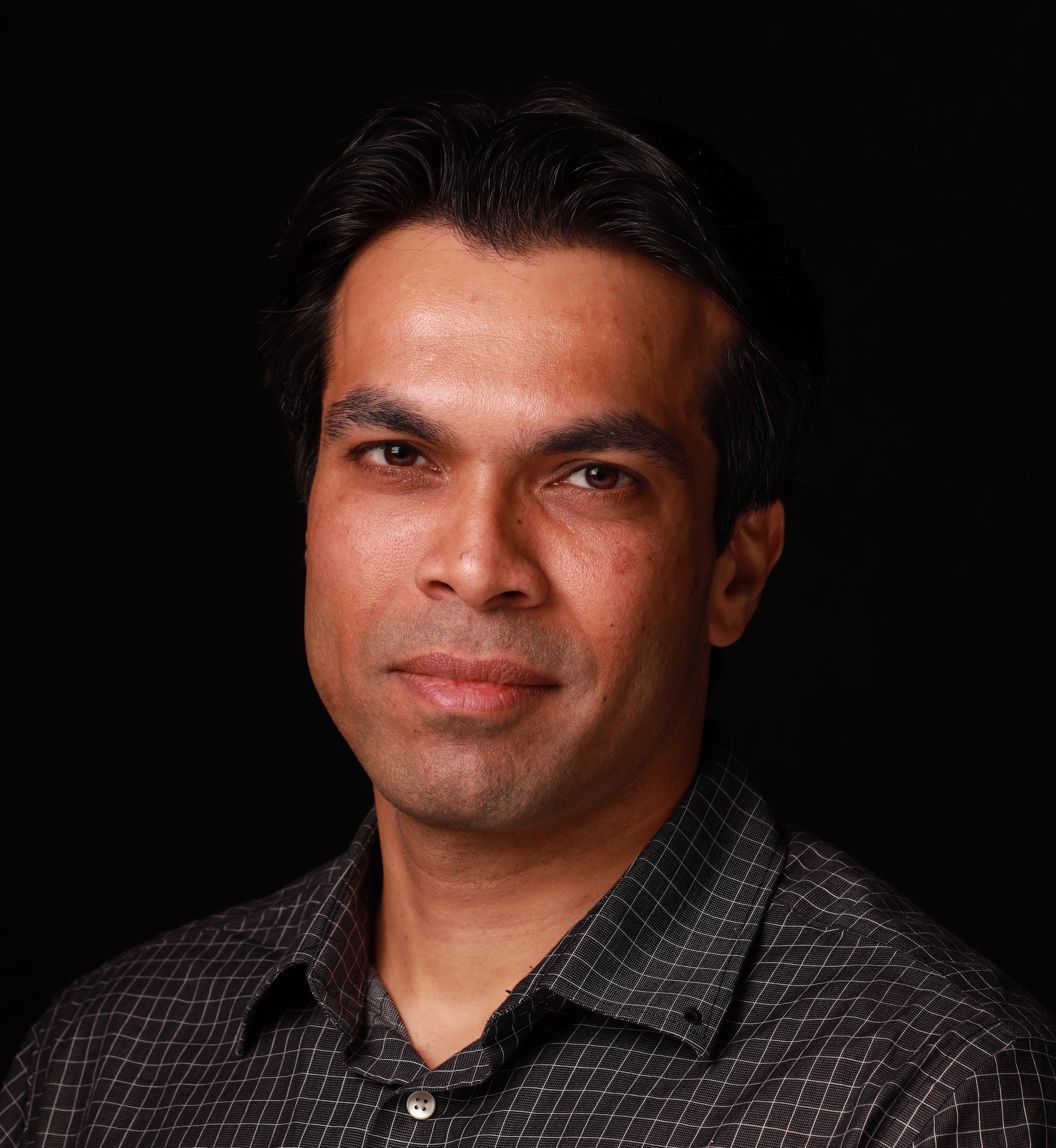 Dhruv Batra合作论文数Yutori1
 David C. Anastasiu合作论文数Computer Science and Engineering Department, Santa Clara University.1




