Unified multimodal Large Language Models (LLMs) that can both understand and generate visual content hold immense potential. However, existing open-source models often suffer from a performance trade-off between these capabilities. We present Manzano, a simple and scalable unified framework that substantially reduces this tension by coupling a hybrid image tokenizer with a well-curated training recipe. A single shared vision encoder feeds two lightweight adapters that produce continuous embeddings for image-to-text understanding and discrete tokens for text-to-image generation within a common semantic space. A unified autoregressive LLM predicts high-level semantics in the form of text and image tokens, with an auxiliary diffusion decoder subsequently translating the image tokens into pixels. The architecture, together with a unified training recipe over understanding and generation data, enables scalable joint learning of both capabilities. Manzano achieves state-of-the-art results among unified models, and is competitive with specialist models, particularly on text-rich evaluation. Our studies show minimal task conflicts and consistent gains from scaling model size, validating our design choice of a hybrid tokenizer.
Quantizing deep networks with adaptive bit-widths is a promising technique for efficient inference across many devices and resource constraints. In contrast to static methods that repeat the quantization process and train different models for different constraints, adaptive quantization enables us to flexibly adjust the bit-widths of a single deep network during inference for instant adaptation in different scenarios. While existing research shows encouraging results on common image classification benchmarks, this paper investigates how to train such adaptive networks more effectively. Specifically, we present two novel techniques for quantizing deep neural networks with adaptive bit-widths of weights and activations. First, we propose a collaborative strategy to choose a high-precision teacher for transferring knowledge to the low-precision student while jointly optimizing the model with all bit-widths. Second, to effectively transfer knowledge, we develop a dynamic block swapping method by randomly replacing the blocks in the lower-precision student network with the corresponding blocks in the higher-precision teacher network. Extensive experiments on multiple image classification datasets including video classification benchmarks for the first time, well demonstrate the efficacy of our approach over state-of-the-art methods.
Mixture-of-Experts (MoE) language models can reduce computational costs by 2-4$\times$ compared to dense models without sacrificing performance, making them more efficient in computation-bounded scenarios. However, MoE models generally require 2-4$\times$ times more parameters to achieve comparable performance to a dense model, which incurs larger GPU memory requirements and makes MoE models less efficient in I/O-bounded scenarios like autoregressive generation. In this work, we propose a hybrid dense training and sparse inference framework for MoE models (DS-MoE) which achieves strong computation and parameter efficiency by employing dense computation across all experts during training and sparse computation during inference. Our experiments on training LLMs demonstrate that our DS-MoE models are more parameter-efficient than standard sparse MoEs and are on par with dense models in terms of total parameter size and performance while being computationally cheaper (activating 30-40% of the model's parameters). Performance tests using vLLM show that our DS-MoE-6B model runs up to $1.86\times$ faster than similar dense models like Mistral-7B, and between $1.50\times$ and $1.71\times$ faster than comparable MoEs, such as DeepSeekMoE-16B and Qwen1.5-MoE-A2.7B.
AbstractStudying the neural basis of human dynamic visual perception requires extensive experimental data to evaluate the large swathes of functionally diverse brain neural networks driven by perceiving visual events. Here, we introduce the BOLD Moments Dataset (BMD), a repository of whole-brain fMRI responses to over 1,000 short (3s) naturalistic video clips of visual events across ten human subjects. We use the videos’ extensive metadata to show how the brain represents word- and sentence-level descriptions of visual events and identify correlates of video memorability scores extending into the parietal cortex. Furthermore, we reveal a match in hierarchical processing between cortical regions of interest and video-computable deep neural networks, and we showcase that BMD successfully captures temporal dynamics of visual events at second resolution. With its rich metadata, BMD offers new perspectives and accelerates research on the human brain basis of visual event perception.
We explore the use of language as a perceptual representation for vision-and-language navigation (VLN), with a focus on low-data settings. Our approach uses off-the-shelf vision systems for image captioning and object detection to convert an agent's egocentric panoramic view at each time step into natural language descriptions. We then finetune a pretrained language model to select an action, based on the current view and the trajectory history, that would best fulfill the navigation instructions. In contrast to the standard setup which adapts a pretrained language model to work directly with continuous visual features from pretrained vision models, our approach instead uses (discrete) language as the perceptual representation. We explore several use cases of our language-based navigation (LangNav) approach on the R2R VLN benchmark: generating synthetic trajectories from a prompted language model (GPT-4) with which to finetune a smaller language model; domain transfer where we transfer a policy learned on one simulated environment (ALFRED) to another (more realistic) environment (R2R); and combining both vision- and language-based representations for VLN. Our approach is found to improve upon baselines that rely on visual features in settings where only a few expert trajectories (10-100) are available, demonstrating the potential of language as a perceptual representation for navigation.
The field of brain-to-stimuli reconstruction has seen significant progress in the last few years, but techniques continue to be subject-specific and are usually tested on a single dataset. In this work, we present a novel technique to reconstruct videos from functional Magnetic Resonance Imaging (fMRI) signals designed for performance across datasets and across human participants. Our pipeline accurately generates 2 and 3-second video clips from brain activity coming from distinct participants and different datasets by leveraging multi-dataset and multi-subject training. This helps us regress key latent and conditioning vectors for pretrained text-to-video and video-to-video models to reconstruct accurate videos that match the original stimuli observed by the participant. Key to our pipeline is the introduction of a 3-stage approach that first aligns fMRI signals to semantic embeddings, then regresses important vectors, and finally generates videos with those estimations. Our method demonstrates state-of-the-art reconstruction capabilities verified by qualitative and quantitative analyses, including crowd-sourced human evaluation. We showcase performance improvements across two datasets, as well as in multi-subject setups. Our ablation studies shed light on how different alignment strategies and data scaling decisions impact reconstruction performance, and we hint at a future for zero-shot reconstruction by analyzing how performance evolves as more subject data is leveraged.
Building an interactive AI assistant that can perceive, reason, and collaborate with humans in the real world has been a long-standing pursuit in the AI community. This work is part of a broader research effort to develop intelligent agents that can interactively guide humans through performing tasks in the physical world. As a first step in this direction, we introduce HoloAssist, a large-scale egocentric human interaction dataset, where two people collaboratively complete physical manipulation tasks. The task performer executes the task while wearing a mixed-reality headset that captures seven synchronized data streams. The task instructor watches the performer's egocentric video in real time and guides them verbally. By augmenting the data with action and conversational annotations and observing the rich behaviors of various participants, we present key insights into how human assistants correct mistakes, intervene in the task completion procedure, and ground their instructions to the environment. HoloAssist spans 166 hours of data captured by 350 unique instructor-performer pairs. Furthermore, we construct and present benchmarks on mistake detection, intervention type prediction, and hand forecasting, along with detailed analysis. We expect HoloAssist will provide an important resource for building AI assistants that can fluidly collaborate with humans in the real world. Data can be downloaded at https://holoassist.github.io/.
Videos capture events that typically contain multiple sequential, and simultaneous, actions even in the span of only a few seconds. However, most large-scale datasets built to train models for action recognition in video only provide a single label per video. Consequently, models can be incorrectly penalized for classifying actions that exist in the videos but are not explicitly labeled and do not learn the full spectrum of information present in each video in training. Towards this goal, we present the Multi-Moments in Time dataset (M-MiT) which includes over two million action labels for over one million three second videos. This multi-label dataset introduces novel challenges on how to train and analyze models for multi-action detection. Here, we present baseline results for multi-action recognition using loss functions adapted for long tail multi-label learning, provide improved methods for visualizing and interpreting models trained for multi-label action detection and show the strength of transferring models trained on M-MiT to smaller datasets.
Network quantization has rapidly become one of the most widely used methods to compress and accelerate deep neural networks on edge devices. While existing approaches offer impressive results on common benchmark datasets, they generally repeat the quantization process and retrain the low-precision network from scratch, leading to different networks tailored for different resource constraints. This limits scalable deployment of deep networks in many real-world applications, where in practice dynamic changes in bit-width are often desired. All at Once quantization addresses this problem, by flexibly adjusting the bit-width of a single deep network during inference, without requiring re-training or additional memory to store separate models, for instant adaptation in different scenarios. In this paper, we develop a novel collaborative knowledge transfer approach for efficiently training the all-at-once quantization network. Specifically, we propose an adaptive selection strategy to choose a high-precision \enquote{teacher} for transferring knowledge to the low-precision student while jointly optimizing the model with all bit-widths. Furthermore, to effectively transfer knowledge, we develop a dynamic block swapping method by randomly replacing the blocks in the lower-precision student network with the corresponding blocks in the higher-precision teacher network. Extensive experiments on several challenging and diverse datasets for both image and video classification well demonstrate the efficacy of our proposed approach over state-of-the-art methods.
Performing inference on deep learning models for videos remains a challenge due to the large amount of computational resources required to achieve robust recognition. An inherent property of real-world videos is the high correlation of information across frames which can translate into redundancy in either temporal or spatial feature maps of the models, or both. The type of redundant features depends on the dynamics and type of events in the video: static videos have more temporal redundancy while videos focusing on objects tend to have more channel redundancy. Here we present a redundancy reduction framework, termed VA-RED$^2$, which is input-dependent. Specifically, our VA-RED$^2$ framework uses an input-dependent policy to decide how many features need to be computed for temporal and channel dimensions. To keep the capacity of the original model, after fully computing the necessary features, we reconstruct the remaining redundant features from those using cheap linear operations. We learn the adaptive policy jointly with the network weights in a differentiable way with a shared-weight mechanism, making it highly efficient. Extensive experiments on multiple video datasets and different visual tasks show that our framework achieves $20\% - 40\%$ reduction in computation (FLOPs) when compared to state-of-the-art methods without any performance loss. Project page: http://people.csail.mit.edu/bpan/va-red/.
The self-attention-based model, transformer, is recently becoming the leading backbone in the field of computer vision. In spite of the impressive success made by transformers in a variety of vision tasks, it still suffers from heavy computation and intensive memory costs. To address this limitation, this paper presents an Interpretability-Aware REDundancy REDuction framework (IA-RED$^2$). We start by observing a large amount of redundant computation, mainly spent on uncorrelated input patches, and then introduce an interpretable module to dynamically and gracefully drop these redundant patches. This novel framework is then extended to a hierarchical structure, where uncorrelated tokens at different stages are gradually removed, resulting in a considerable shrinkage of computational cost. We include extensive experiments on both image and video tasks, where our method could deliver up to 1.4x speed-up for state-of-the-art models like DeiT and TimeSformer, by only sacrificing less than 0.7% accuracy. More importantly, contrary to other acceleration approaches, our method is inherently interpretable with substantial visual evidence, making vision transformer closer to a more human-understandable architecture while being lighter. We demonstrate that the interpretability that naturally emerged in our framework can outperform the raw attention learned by the original visual transformer, as well as those generated by off-the-shelf interpretation methods, with both qualitative and quantitative results. Project Page: http://people.csail.mit.edu/bpan/ia-red/.
We also explore training with straight-through Gumbel instead of REINFORCE to be part of our approach. However, we find that Gumbel does not consistently highlight the informative region. In most cases, it highlights the background region instead of foreground objects. Here we provide the comparison of the REINFORCE method and straight-through Gumbel method on the DeiT-S model. Under the same level of FLOPs of 3.0G (Gumbel) versus 2.9G (REINFORCE), the Top-1 accuracy on ImageNet-1K dataset are 78.8% and 79.1% respectively. The results of the Gumbel method are obtained by discarding the patch tokens which have relatively higher softmax value due to the fact that, in Gumbel method, the background region tends to have higher softmax value.
We introduce Argoverse 2 (AV2) - a collection of three datasets for perception and forecasting research in the self-driving domain. The annotated Sensor Dataset contains 1,000 sequences of multimodal data, encompassing high-resolution imagery from seven ring cameras, and two stereo cameras in addition to lidar point clouds, and 6-DOF map-aligned pose. Sequences contain 3D cuboid annotations for 26 object categories, all of which are sufficiently-sampled to support training and evaluation of 3D perception models. The Lidar Dataset contains 20,000 sequences of unlabeled lidar point clouds and map-aligned pose. This dataset is the largest ever collection of lidar sensor data and supports self-supervised learning and the emerging task of point cloud forecasting. Finally, the Motion Forecasting Dataset contains 250,000 scenarios mined for interesting and challenging interactions between the autonomous vehicle and other actors in each local scene. Models are tasked with the prediction of future motion for "scored actors" in each scenario and are provided with track histories that capture object location, heading, velocity, and category. In all three datasets, each scenario contains its own HD Map with 3D lane and crosswalk geometry - sourced from data captured in six distinct cities. We believe these datasets will support new and existing machine learning research problems in ways that existing datasets do not. All datasets are released under the CC BY-NC-SA 4.0 license.
Sensing surroundings plays a crucial role in human spatial perception, as it extracts the spatial configuration of objects as well as the free space from the observations. To facilitate the robot perception with such a surrounding sensing capability, we introduce a novel visual task called Cross-view Semantic Segmentation as well as a framework named View Parsing Network (VPN) to address it. In the cross-view semantic segmentation task, the agent is trained to parse the first-view observations into a top-down-view semantic map indicating the spatial location of all the objects at pixel-level. The main issue of this task is that we lack the real-world annotations of top-down-view data. To mitigate this, we train the VPN in 3D graphics environment and utilize the domain adaptation technique to transfer it to handle real-world data. We evaluate our VPN on both synthetic and real-world agents. The experimental results show that our model can effectively make use of the information from different views and multi-modalities to understanding spatial information. Our further experiment on a LoCoBot robot shows that our model enables the surrounding sensing capability from 2D image input. Code and demo videos can be found at https://view-parsing-network.github.io .
Combining multiple information streams has shown obvious improvements in video action recognition. Most existing works handle each stream independently or perform a simple combination on temporally simultaneous samples in multi-streams, which fails to make full use of the stream wise complementary property due to the negligence of the temporal pattern gaps among streams. In this paper, we propose a cross-stream selective network (CSN) to properly integrate and evaluate information in multi-streams. The proposed CSN first introduces a local selective-sampling module (LSM), which can find asynchronous correspondences among streams and construct high-correlated sample groups across multiple information streams. This LSM can effectively deal with the temporal dis-alignment among different streams, leading to a better integration of cross-stream information. We further introduce a global adaptive weighting module (GAM). It adaptively evaluates the importance weights for each cross-stream sample group and selects temporally more important ones in action recognition. With the integration of cross-stream information, our GAM can obtain more reasonable importance than the existing single-stream weighting schemes. Extensive experiments on benchmark datasets of UCF101 and HMDB51 demonstrate the effectiveness of our approach over previous state-of-the-art methods.
As most recently proposed methods for human detection have achieved a sufficiently high recall rate within a reasonable number of proposals, in this paper, we mainly focus on how to improve the precision rate of human detectors. In order to address the two main challenges in precision improvement, i.e., i) hard background instances and ii) redundant partial proposals, we propose the novel PoseHD framework, a top-down pose-based approach on the basis of an arbitrary state-of-the-art human detector. In our proposed PoseHD framework, we first make use of human pose estimation (in a batch manner) and present pose heatmap classification (by a convolutional neural network) to eliminate hard negatives by extracting the more detailed structural information; then, we utilize pose-based proposal clustering and reranking modules, filtering redundant partial proposals by comprehensively considering both holistic and part information. The experimental results on multiple pedestrian benchmark datasets validate that our proposed PoseHD framework can generally improve the overall performance of recent state-of-the-art human detectors (by 2-4% in both mAP and MR metrics). Moreover, our PoseHD framework can be easily extended to object detection with large-scale object part annotations. Finally, in this paper, we present extensive ablative analysis to compare our approach with these traditional bottom-up pose-based models and highlight the importance of our framework design decisions.
Deep convolutional neural networks (CNNs) have made impressive progress in many video recognition tasks such as video pose estimation and video object detection. However, CNN inference on video is computationally expensive due to processing dense frames individually. In this work, we propose a framework called Recurrent Residual Module (RRM) to accelerate the CNN inference for video recognition tasks. This framework has a novel design of using the similarity of the intermediate feature maps of two consecutive frames, to largely reduce the redundant computation. One unique property of the proposed method compared to previous work is that feature maps of each frame are precisely computed. The experiments show that, while maintaining the similar recognition performance, our RRM yields averagely 2x acceleration on the commonly used CNNs such as AlexNet, ResNet, deep compression model (thus 8-12x faster than the original dense models using the efficient inference engine), and impressively 9x acceleration on some binary networks such as XNOR-Nets (thus 500x faster than the original model). We further verify the effectiveness of the RRM on speeding up CNNs for video pose estimation and video object detection.
 Aude Oliva合作论文数Schwarzman College of Computing, Massachusetts Institute of Technology;MIT-IBM Watson AI Lab;MIT Computer Science and Artificial Intelligence Laboratory9
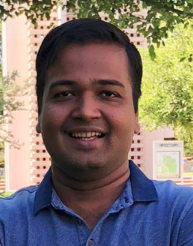 Rameswar Panda合作论文数MIT-IBM Watson AI Lab, IBM Research6
 Rogerio Schmidt Feris合作论文数MIT-IBM Watson AI Lab, IBM Research6
 Alex Andonian合作论文数Computer Science and Artificial Intelligence Laboratory, Massachusetts Institute of Technology4
 Alex Lascelles合作论文数massachusetts institute of technology3
 Kate Saenko合作论文数Department of Computer Science, Boston University Arts & Sciences;Meta3
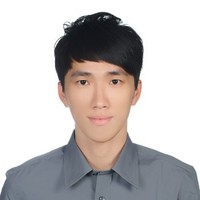 Chun-Fu (Richard) Chen合作论文数JPMorgan Chase & Co.2
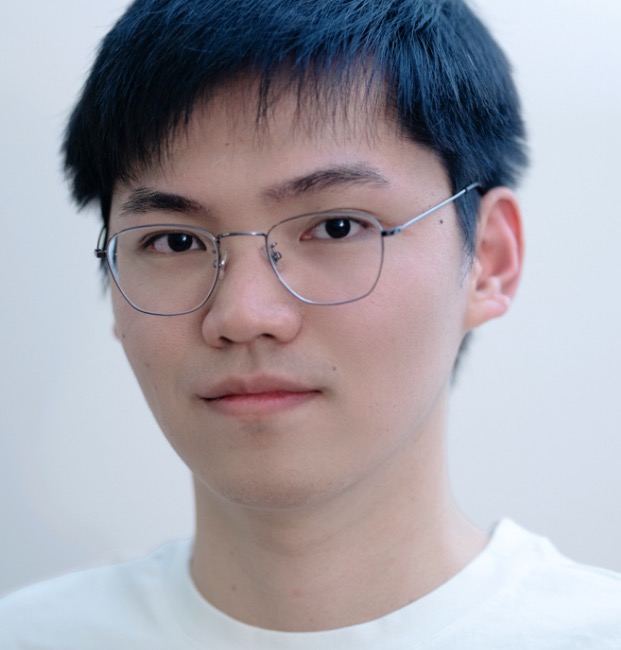 Yifan Jiang (江亦凡)合作论文数Apple2
 Benjamin Lahner合作论文数Computer Science and Artificial Intelligence Laboratory, MIT2
 Naigang Wang合作论文数2
 Wuwei Lin合作论文数Shanghai Jiao Tong Univ, Shanghai, Peoples R China2
 Zhangyang “Atlas” Wang (汪张扬)合作论文数XTX Markets2
 Camilo Luciano Fosco合作论文数Memorable2
 Ximeng Sun合作论文数Department of Computer Science, Boston University2
 Jiankai Sun合作论文数Multi-Robot Systems Lab, Stanford University;Stanford Center for AI Safety, Stanford University;Autodesk2
 Cewu Lu (卢策吾)合作论文数School of Artificial Intelligence, Shanghai Jiao Tong University;Center for DNA Information Storage, Shanghai Jiao Tong University2
 SouYoung Jin合作论文数University of Massachusetts Amherst2
 Bolei Zhou (周博磊)合作论文数Computer Science Department, Samueli School of Engineering, University of California, Los Angeles;Coco2
 Kailash Gopalakrishnan合作论文数EnCharge AI1
 Chen Chen合作论文数Apple1
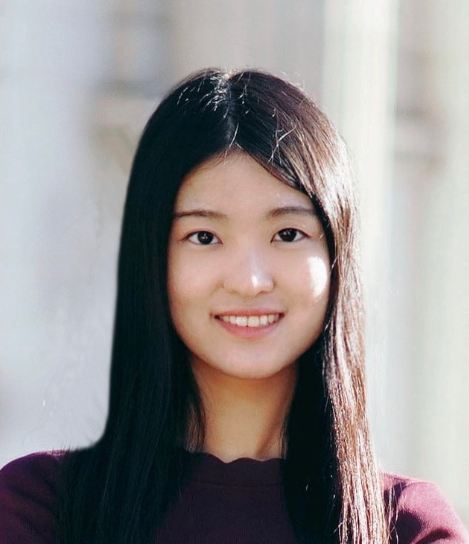 Xin Wang合作论文数Computer Vision Group, Microsoft Research1
 Zhifeng Chen合作论文数Apple1
 Benjamin Wilson合作论文数1Alessandro T. Gifford合作论文数1
 Limin Wang (王利民)合作论文数Multimedia Computing Group, State Key Laboratory for Novel Software Technology, Department of Computer Science and Technology, Nanjing University1Monika Graumann合作论文数1
 Polina Iamshchinina合作论文数Dept Educ & Psychol, Free Univ Berlin1Siddhesh Khandelwal合作论文数1Emilie L Josephs合作论文数Harvard Univ, Dept Psychol, 33 Kirkland St, Cambridge, MA 02143 USA1Tanmay Agarwal合作论文数1William Qi合作论文数1
 Jagjeet Singh合作论文数Latitude AI1
 Haotian Zhang合作论文数Apple1
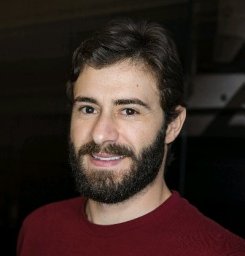 Jhony K Pontes合作论文数Queensland University of Technology Brisbane1
 Barry Anthony McNamara III合作论文数Asana1
 Haokun Liu (刘昊坤)合作论文数University of Toronto;Vector Institute1
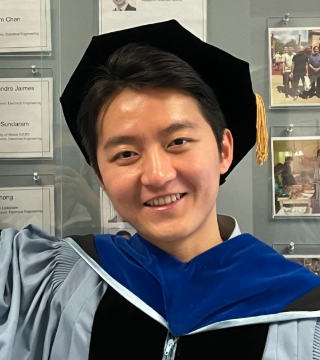 Haoxuan You (有昊轩)合作论文数Meta1
 N. Apurva Ratan Murty合作论文数1
 Gaoyuan Zhang合作论文数IBM1
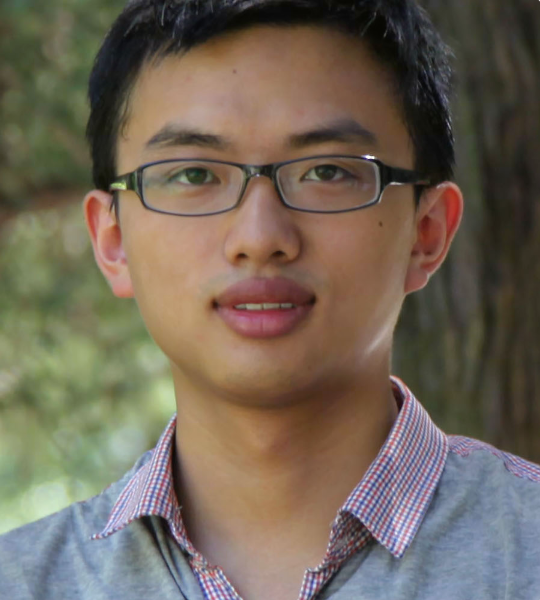 Yanghao Li合作论文数OpenAI1Feniello, A.合作论文数Robot. Group, Microsoft Res.;c1
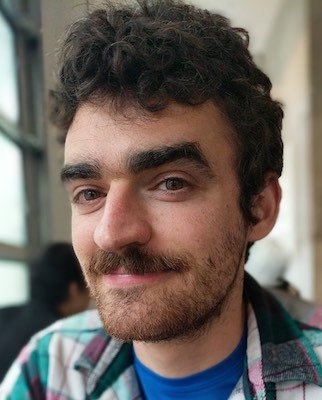 Colin Raffel合作论文数Department of Computer Science, University of Toronto;Vector Institute;Hugging Face1
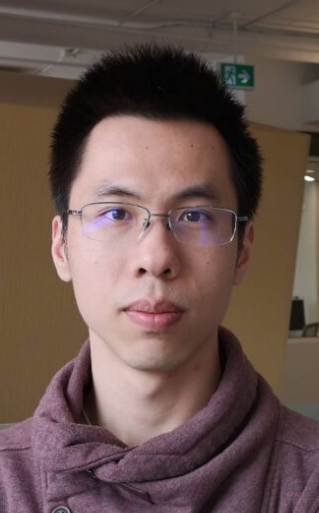 Yikang Shen合作论文数MIT-IBM Watson Lab1
 Mathew Monfort合作论文数Amazon1
 Ratnesh Kumar合作论文数NVIDIA1
 Bowen Zhang合作论文数Apple1
 Kendrick Kay合作论文数Department of Radiology, University of Minnesota1
 Bugra Tekin合作论文数Meta Reality Labs1
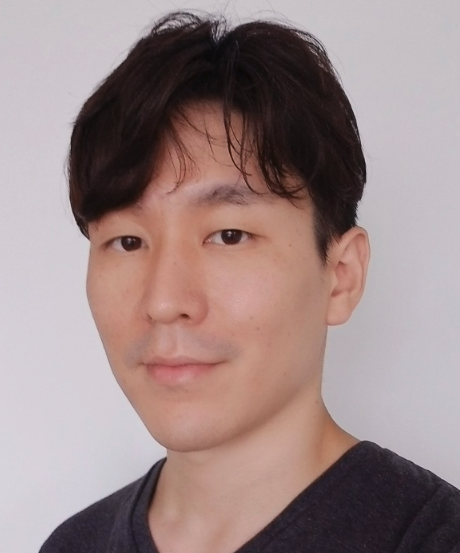 Yoon Kim合作论文数Massachusetts Institute of Technology1




