Given a collection of multi-view images, we perform consistent multi-view editing with a training-free framework using pre-trained 2D editing models and a generative multi-view model.While 2D editing models can independently edit each image in a set of multi-view images of a 3D scene, they do not maintain consistency across views.Existing approaches typically rely on explicit 3D representations to average out the inconsistencies, but they suffer from a lengthy optimization, instability under sparse view settings, and can produce blurry results.We address the problem from a different lens, where we use the 2D editing model to steer a multi-view generative model in the diffusion sampling process.This is achieved through our novel coupled diffusion sampling process. We concurrently sample two trajectories from both a multi-view image distribution and a 2D edited image distribution, and connect the samples with a coupling term. Effectively, the two models guide each other during sampling, and the resulting sample from the multi-view model remains consistent while satisfying the desired edit.We validate the effectiveness and generality of this framework on three distinct multi-view image editing tasks, and demonstrate its applicability across various model architectures. We further illustrate the effects of coupling on SoTA image and video generation models, highlighting the potential of our method beyond multi-view editing.
We study object motion path editing in videos, where the goal is to alter a target object's trajectory while preserving the original scene content. Unlike prior video editing methods that primarily manipulate appearance or rely on point-track-based trajectory control, which is often challenging for users to provide during inference, especially in videos with camera motion, we offer a practical, easy-to-use approach to controllable object-centric motion editing. We present Trace, a framework that enables users to design the desired trajectory in a single anchor frame and then synthesizes a temporally consistent edited video. Our approach addresses this task with a two-stage pipeline: a cross-view motion transformation module that maps first-frame path design to frame-aligned box trajectories under camera motion, and a motion-conditioned video re-synthesis module that follows these trajectories to regenerate the object while preserving the remaining content of the input video. Experiments on diverse real-world videos show that our method produces more coherent, realistic, and controllable motion edits than recent image-to-video and video-to-video methods.
Camera and object motions are central to a video's narrative. However, precisely editing these captured motions remains a significant challenge, especially under complex object movements. Current motion-controlled image-to-video (I2V) approaches often lack full-scene context for consistent video editing, while video-to-video (V2V) methods provide viewpoint changes or basic object translation, but offer limited control over fine-grained object motion. We present a track-conditioned V2V framework that enables joint editing of camera and object motion. We achieve this by conditioning a video generation model on a source video and paired 3D point tracks representing source and target motions. These 3D tracks establish sparse correspondences that transfer rich context from the source video to new motions while preserving spatiotemporal coherence. Crucially, compared to 2D tracks, 3D tracks provide explicit depth cues, allowing the model to resolve depth order and handle occlusions for precise motion editing. Trained in two stages on synthetic and real data, our model supports diverse motion edits, including joint camera/object manipulation, motion transfer, and non-rigid deformation, unlocking new creative potential in video editing.
Generative models have empowered human creators to visualize their imaginations without artistic skills and labor. A prominent example is large-scale text-to-image/video generation models. However, these models are often difficult to control and do not respect 3D perspective geometry and the temporal consistency of videos. In this talk, I will showcase several of our recent efforts to improve controllability for visual imagination. Specifically, I will discuss how we enable semantic and spatial control for 2D image generation, facilitate layered decompositions for video editing, and synthesize object and camera motions from monocular videos.
Video models absorb rich priors over how the visual world moves, interacts, and responds to contact, making them promising substrates for robotic world modeling. The central challenge is how to communicate action to such models in a form aligned with the visual space in which they learned these interaction priors, yet still grounded in physical manipulation. We introduce Masked Visual Actions, a pixel-space control interface that expresses action as a partially revealed trajectory of an arbitrary entity in a video. Revealing robot motion makes the model act as a forward dynamics model that predicts the scene's response to low-level robot actions, while revealing desired object motion makes the same model recover robot behavior consistent with that outcome. Finetuned with only 15 hours of masked examples from real videos and simulation, a single checkpoint achieves strong visual fidelity and controllability across diverse scenes and multiple embodiments. In downstream manipulation settings, the model produces imagined rollouts whose outcomes correlate with real-world execution for policy evaluation, improves decision making by ranking candidate futures in model-based planning, and supports inverse modeling by synthesizing robot motion from desired object motion.
Robot manipulation critically depends on perception that preserves the action-relevant aspects of a scene. Yet most robot learning pipelines are built upon visual encoders pre-trained for static recognition or vision-language alignment, leaving motion understanding to downstream policies. We introduce DynaFLIP, a dynamics-aware multimodal pre-training framework that pushes motion understanding upstream into perception. We construct image-language-3D flow triplets from heterogeneous human and robot videos, and use these triplets as training-time supervision to shape an image-only encoder. Our key idea is to encourage the three modalities to span a small simplex volume in the shared hyperspherical space – a smaller simplex volume indicating stronger alignment. To avoid the geometric ambiguity and trivial collapse of naive volume minimization, we combine simplex-volume minimization with a cosine regularizer and a contrastive objective. Our analyses show that DynaFLIP focuses on control-relevant regions critical for manipulation. The resulting dynamics-aware representations serve as reusable visual backbones and consistently outperform baselines across diverse downstream policies, including VLAs. We validate this across diverse simulation and real-world setups, with gains reaching +22.5
World models that capture how actions induce physical change enable scalable robot learning without reliance on embodiment-specific action labels. Pixel-space video models provide broad visual priors but expend model capacity on dense appearance reconstruction, while direct action models require embodiment-specific labels that hinder scalability. We present μ_0, a scalable world model based on 3D traces. Rather than predicting dense pixels or directly modeling actions, μ_0 forecasts smooth 3D trajectories for salient interaction points such as objects, tools, hands, and contact regions, yielding a compact, embodiment-agnostic motion interface. To enable training from diverse video sources, our TraceExtract system automatically extracts 3D supervision by selecting keypoints, constructing globally aligned traces, and associating motion segments with hierarchical language captions. This TraceExtract supervision pretrains μ_0 by combining a pretrained vision-language backbone with a modular trace expert, which represents each query via B-spline control points and predicts future traces. Experiments show that μ_0 outperforms baselines in both 2D and 3D trace prediction, including trace prediction models and tokenized VLM methods. Because μ_0 is frozen and reusable, it can be paired with action experts for downstream robot embodiments. Despite action-free pretraining, the resulting trace-conditioned policies achieve performance competitive with VLA models pretrained with action supervision, such as π_0. These results establish 3D traces as a scalable and transferable representation for cross-embodiment manipulation.
Personalized visual understanding has advanced significantly, yet existing approaches struggle to localize and extract specific concepts when input images contain multiple objects. Many prior methods rely heavily on segmentation-based supervision or exhibit poor compositional generalization, limiting their ability to accurately disentangle and manipulate individual concepts. In this work, we propose UniVerse, a Unified Modulation Framework for segmentation-free, disentangled multi-concept personalization in diffusion transformers. Our method allows for composable and decomposable concept extraction, enabling fine-grained localization and representation of target objects without explicit segmentation masks. UniVerse learns to decompose complex scenes into concept-specific representations and then compose them in a unified manner, enabling robust personalization across diverse visual contexts. Through extensive experiments on multiple benchmarks, we demonstrate that UniVerse significantly outperforms state-of-the-art baselines in both localization accuracy and visual fidelity. Qualitative and quantitative results show that our approach can precisely extract target concepts in cluttered scenes, paving the way for more flexible, interpretable, and personalized visual generation and understanding.
Learning new robot tasks on new platforms and in new scenes from only a handful of demonstrations remains challenging. While videos of other embodiments---humans and different robots---are abundant, differences in embodiment, camera, and environment hinder their direct use. We address the small-data problem by introducing a unifying, symbolic representation---a compact 3D "trace-space" of scene-level trajectories---that enables learning from cross-embodiment, cross-environment, and cross-task videos. We present TraceGen, a world model that predicts future motion in trace-space rather than pixel space, abstracting away appearance while retaining the geometric structure needed for manipulation. To train TraceGen at scale, we develop TraceForge, a data pipeline that transforms heterogeneous human and robot videos into consistent 3D traces, yielding a corpus of 123K videos and 1.8M observation--trace--language triplets. Pretraining on this corpus produces a transferable 3D motion prior that adapts efficiently: with just five target robot videos, TraceGen attains 80% success across four tasks while offering 50-600x faster inference than state-of-the-art video-based world models. In the more challenging case where only five uncalibrated human demonstration videos captured on a handheld phone are available, it still reaches 67.5% success on a real robot, highlighting TraceGen’s ability to adapt across embodiments without relying on object detectors or heavy pixel-space generation.
We present CineVerse, a novel framework for the task of cinematic scene composition. Similar to traditional multi-shot generation, our task emphasizes the need for consistency and continuity across frames. However, our task also focuses on addressing challenges inherent to filmmaking, such as multiple characters, complex interactions, and visual cinematic effects. In order to learn to generate such content, we first create the CineVerse dataset. We use this dataset to train our proposed two-stage approach. First, we prompt a large language model (LLM) with task-specific instructions to take in a high-level scene description and generate a detailed plan for the overall setting and characters, as well as the individual shots. Then, we fine-tune a text-to-image generation model to synthesize high-quality visual keyframes. Experimental results demonstrate that CineVerse yields promising improvements in generating visually coherent and contextually rich movie scenes, paving the way for further exploration in cinematic video synthesis.
Vision-Language Models (VLMs) exhibit remarkable common-sense and semantic reasoning capabilities. However, they lack a grounded understanding of physical dynamics. This limitation arises from training VLMs on static internet-scale visual-language data that contain no causal interactions or action-conditioned changes. Consequently, it remains challenging to leverage VLMs for fine-grained robotic manipulation tasks that require physical understanding, reasoning, and corresponding action planning. To overcome this, we present SIMPACT, a test-time, SIMulation-enabled ACTion Planning framework that equips VLMs with physical reasoning through simulation-in-the-loop world modeling, without requiring any additional training. From a single RGB-D observation, SIMPACT efficiently constructs physics simulations, enabling the VLM to propose informed actions, observe simulated rollouts, and iteratively refine its reasoning. By integrating language reasoning with physics prediction, our simulation-enabled VLM can understand contact dynamics and action outcomes in a physically grounded way. Our method demonstrates state-of-the-art performance on five challenging, real-world rigid-body and deformable manipulation tasks that require fine-grained physical reasoning, outperforming existing general-purpose robotic manipulation models. Our results demonstrate that embedding physics understanding via efficient simulation into VLM reasoning at test time offers a promising path towards generalizable embodied intelligence. Project webpage can be found at https://simpact-bot.github.io
Reconstructing 3D scenes from sparse, unposed images remains challenging under real-world conditions with varying illumination and transient occlusions. Existing methods rely on scene-specific optimization with appearance embeddings or dynamic masks, requiring extensive per-scene training and failing under sparse views. Moreover, evaluations on limited scenes raise questions about generalization. We present GenWildSplat, a feed-forward framework for sparse-view outdoor reconstruction that requires no per-scene optimization. Given unposed internet images, GenWildSplat predicts depth, camera parameters, and 3D Gaussians in a canonical space using learned geometric priors. An appearance adapter modulates appearance for target lighting conditions, while semantic segmentation handles transient objects. Through curriculum learning on synthetic and real data, GenWildSplat generalizes across diverse illumination and occlusion patterns. Evaluations on PhotoTourism and a new 20-scene MegaScenes benchmark demonstrate state-of-the-art feed-forward reconstruction quality, achieving real-time inference without test-time optimization.
Reconstructing the geometry and appearance of objects from photographs taken in different environments is difficult as the illumination and, therefore, the object appearance vary across captured images. This is particularly challenging for specular objects whose appearance strongly depends on the viewing direction. Some prior approaches model appearance variation across images using a perimage embedding vector, while others use physically-based rendering to recover the materials and per-image illumination. Such approaches fail at faithfully recovering view-dependent appearance given the significant variation in input illumination and tend to produce mostly diffuse results. We present an approach that reconstructs objects from images taken under different illuminations by first relighting the images under a single reference illumination with a multiview relighting diffusion model and then reconstructing the object's geometry and appearance with a radiance field architecture that is robust to the minor remaining inconsistencies among the relit images. We validate our approach on synthetic and real datasets and demonstrate that it out-performs existing techniques at reconstructing high-fidelity appearance from images taken under extreme illumination variation. Moreover, our approach is particularly effective at recovering view-dependent "shiny" appearance which cannot be reconstructed by prior methods.
We present Large Inverse Rendering Model (LIRM), a transformer architecture that jointly reconstructs high-quality shape, materials, and radiance fields with view-dependent effects in less than a second. Our model builds upon the recent Large Reconstruction Models (LRMs) that achieve state-of-the-art sparse-view reconstruction quality. However, existing LRMs struggle to reconstruct unseen parts accurately and cannot recover glossy appearance or generate relightable 3D contents that can be consumed by standard Graphics engines. To address these limitations, we make three key technical contributions to build a more practical multi-view 3D reconstruction framework. First, we introduce an update model that allows us to progressively add more input views to improve our reconstruction. Second, we propose a hexa-plane neural SDF representation to better recover detailed textures, geometry and material parameters. Third, we develop a novel neural directional-embedding mechanism to handle view-dependent effects. Trained on a large-scale shape and material dataset with a tailored coarse-to-fine training scheme, our model achieves compelling results. It compares favorably to optimization-based dense-view inverse rendering methods in terms of geometry and relighting accuracy, while requiring only a fraction of the inference time.
We present PAD3R, a method for reconstructing deformable 3D objects from casually captured, unposed monocular videos. Unlike existing approaches, PAD3R handles long video sequences featuring substantial object deformation, large-scale camera movement, and limited view coverage that typically challenge conventional systems. At its core, our approach trains a personalized, object-centric pose estimator, supervised by a pre-trained image-to-3D model. This guides the optimization of deformable 3D Gaussian representation. The optimization is further regularized by long-term 2D point tracking over the entire input video. By combining generative priors and differentiable rendering, PAD3R reconstructs high-fidelity, articulated 3D representations of objects in a category-agnostic way. Extensive qualitative and quantitative results show that PAD3R is robust and generalizes well across challenging scenarios, highlighting its potential for dynamic scene understanding and 3D content creation.
3D Gaussian Splatting (3DGS) has emerged as the state-of-the-art 3D reconstruction technique, offering high-quality results with fast training and rendering. However, its expressivity is limited as pixels covered by the same Gaussian share identical colors aside from a Gaussian falloff scaling factor, and individual Gaussians can only represent simple ellipsoids geometrically. To overcome these limitations, we integrate texture and alpha mapping from traditional graphics with 3DGS. Our approach augments each Gaussian with alpha, RGB, or RGBA texture maps to model spatially varying color and opacity across each Gaussian's extent. This allows Gaussians to represent richer texture patterns and geometric structures beyond single-color ellipsoids. Notably, alpha-only texture maps significantly improve Gaussian expressivity, while further augmenting with RGB texture maps achieve maximum expressivity. We validate our method on a wide variety of standard benchmark datasets and our own custom captures at both the object and scene levels, and demonstrate image quality improvements over existing methods while using a similar or lower number of Gaussians.
Image retargeting aims to change the aspect-ratio of an image while maintaining its content and structure with less visual artifacts. Existing methods still generate many artifacts or fail to maintain original content or structure. To address this, we introduce HALO, an end-to-end trainable solution for image retargeting. Since humans are more sensitive to distortions in salient areas than non-salient areas of an image, HALO decomposes the input image into salient/non-salient layers and applies different wrapping fields to different layers. To further minimize the structure distortion in the output images, we propose perceptual structure similarity loss which measures the structure similarity between input and output images and aligns with human perception. Both quantitative results and a user study on the RetargetMe dataset show that HALO achieves SOTA. Especially, our method achieves an 18.4% higher user preference compared to the baselines on average.
We explore how body shapes influence human motion synthesis, an aspect often overlooked in existing text-to-motion generation methods due to the ease of learning a homogenized, canonical body shape. However, this homogenization can distort the natural correlations between different body shapes and their motion dynamics. Our method addresses this gap by generating body-shape-aware human motions from natural language prompts. We utilize a finite scalar quantization-based variational autoencoder (FSQ-VAE) to quantize motion into discrete tokens and then leverage continuous body shape information to de-quantize these tokens back into continuous, detailed motion. Additionally, we harness the capabilities of a pretrained language model to predict both continuous shape parameters and motion tokens, facilitating the synthesis of text-aligned motions and decoding them into shape-aware motions. We evaluate our method quantitatively and qualitatively, and also conduct a comprehensive perceptual study to demonstrate its efficacy in generating shape-aware motions. Project URL: https://shape-move.github.io/.
Video super-resolution (VSR) models achieve temporal consistency but often produce blurrier results than their image-based counterparts due to limited generative capacity. This prompts the question: can we adapt a generative image upsampler for VSR while preserving temporal consistency? We introduce VideoGigaGAN, a new generative VSR model that combines high-frequency detail with temporal stability, building on the large-scale GigaGAN image upsampler. Simple adaptations of GigaGAN for VSR led to flickering issues, so we propose techniques to enhance temporal consistency. We validate the effectiveness of VideoGigaGAN by comparing it with state-of-the-art VSR models on public datasets and showcasing video results with 8x upsampling. [GRAPHICS] .
Exploration is essential for general-purpose robotic learning, especially in open-ended environments where dense rewards, explicit goals, or task-specific supervision are scarce. Vision-language models (VLMs), with their semantic reasoning over objects, spatial relations, and potential outcomes, present a compelling foundation for generating high-level exploratory behaviors. However, their outputs are often ungrounded, making it difficult to determine whether imagined transitions are physically feasible or informative. To bridge the gap between imagination and execution, we present IVE (Imagine, Verify, Execute), an agentic exploration framework inspired by human curiosity. Human exploration is often driven by the desire to discover novel scene configurations and to deepen understanding of the environment. Similarly, IVE leverages VLMs to abstract RGB-D observations into semantic scene graphs, imagine novel scenes, predict their physical plausibility, and generate executable skill sequences through action tools. We evaluate IVE in both simulated and real-world tabletop environments. The results show that IVE enables more diverse and meaningful exploration than RL baselines, as evidenced by a 4.1 to 7.8x increase in the entropy of visited states. Moreover, the collected experience supports downstream learning, producing policies that closely match or exceed the performance of those trained on human-collected demonstrations.
 Ming-Hsuan Yang合作论文数Vision and Learning Lab, University of California, Merced;Google DeepMind37
 Johannes Kopf合作论文数Meta24
 Changil Kim合作论文数Facebook;Meta18
 Narendra Ahuja合作论文数Department of Electrical & Computer Engineering, The Grainger College of Engineering, University of Illinois at Urbana-Champagn;Computer Vision and Robotics Laboratory, University of Illinois at Urbana-Champagn17
 Wei-Sheng (Jason) Lai合作论文数Google15
 Chen Gao (髙谌)合作论文数Reality Labs, Meta14
 Songwei Ge合作论文数Department of Computer Science, University of Maryland;Berkeley AI Research11
 Yu-Lun Liu (劉育綸)合作论文数Department of Computer Science, National Yang Ming Chiao Tung University10
 Yuliang Zou (邹瑜亮)合作论文数Waymo LLC9
 Hung-Yu Tseng合作论文数Meta9
 Ayush Saraf合作论文数Meta Reality Labs9
 Yung-Yu Chuang (莊永裕)合作论文数Department of Computer Science and Information Engineering, National Taiwan University9
 Yiran Xu (许亦冉)合作论文数University of Maryland;Adobe Research8
 Badour Albahar合作论文数8
 Hadi Alzayer合作论文数University of Maryland8
 Jinwoo Choi合作论文数Virginia Tech8
 Delu Zeng (曾德炉)合作论文数School of Electronic and Information Engineering, South China University of Technology;LAB of Data and Computation Intelligence Modeling, South China University of Technology;Department of Infromation and Computatonal Science, South China University of Technology8
 Hsin-Ying Lee合作论文数Creative Vision Team, Snap Research7
 Eli Shechtman合作论文数Imaging Lab, Adobe Research6
 Xinghao Ding (丁兴号)合作论文数School of Informatics, Xiamen University;Lab of Smart Data and Signal Processing, Xiamen University6
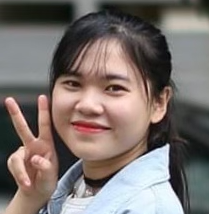 Quynh Phung合作论文数Department of Computer Science, University of Maryland5
 Qinbo Li合作论文数5
 Chu-Song Chen (陳祝嵩)合作论文数AI Application and Integration Lab, Department of Computer Science & Information Engineering, National Taiwan University5
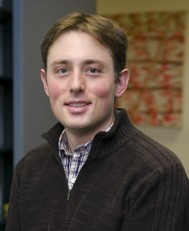 John Paisley合作论文数Department of Electrical Engineering, Columbia University5
 Shengjin Wang (王生进)合作论文数Department of Electronic Engineering, Tsinghua University4Ashrarul Haq Sifat合作论文数4
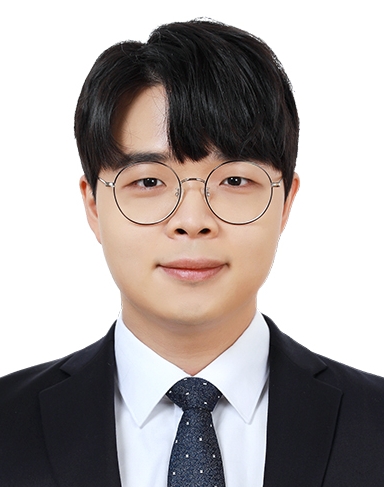 Seungjae (Jay) Lee合作论文数Department of Computer Science, University of Maryland4
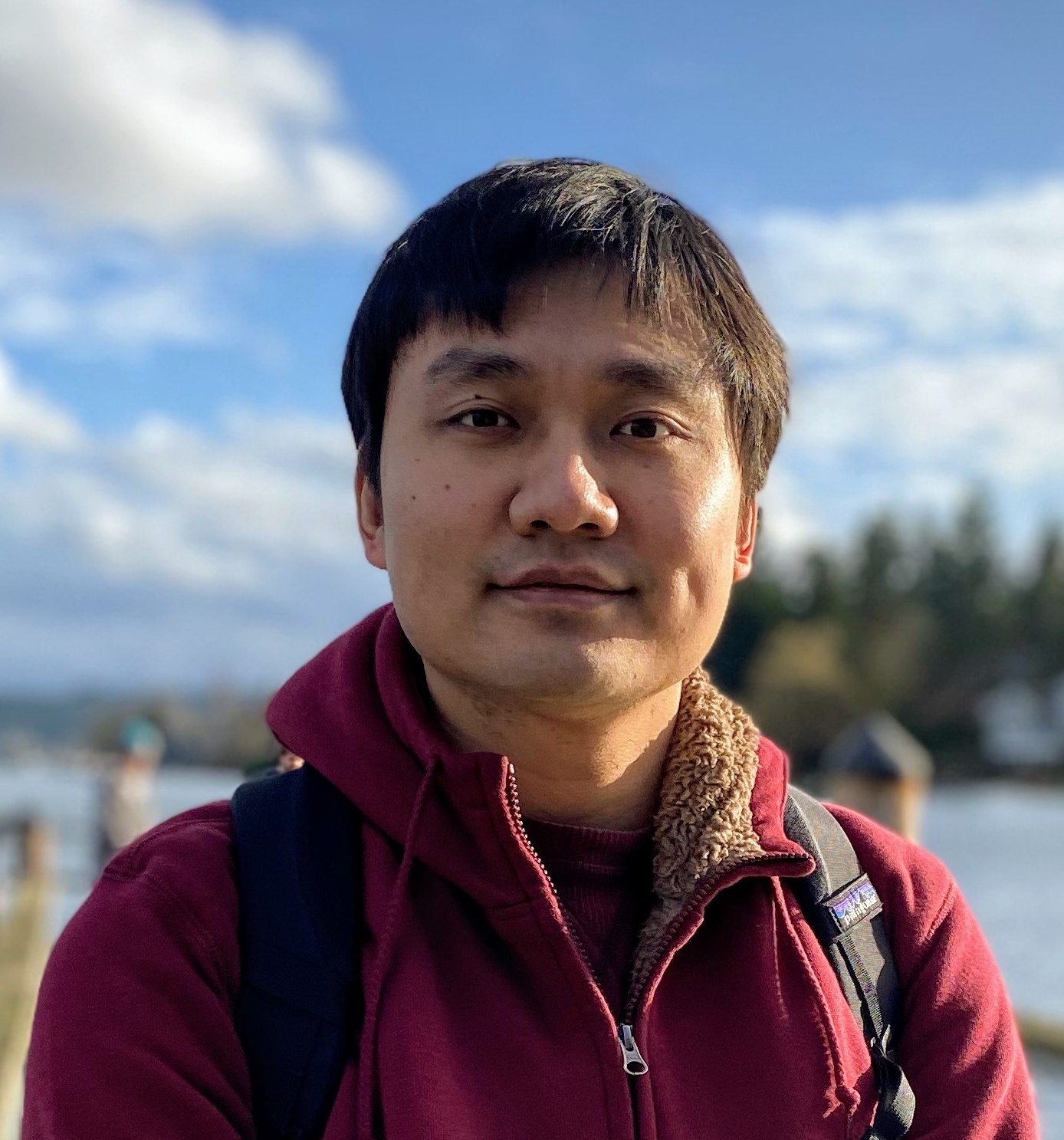 Zhao Dong (董朝)合作论文数Meta Reality Labs Research4
 Brandon Y. Feng合作论文数Computer Science and Artificial Intelligence Laboratory, Massachusetts Institute of Technology4
 Feng Liu合作论文数Department of Computer Science, Maseeh College of Engineering and Computer Science, Portland State University;Adobe Research4
 Shenlong Wang (王申龙)合作论文数Department of Computer Science, The Grainger College of Engineering, University of Illinois at Urbana-Champaign4
 Yun-Chun Chen合作论文数Department of Computer Science, University of Toronto;Adobe Research;Dynamic Graphics Project Lab, Data Sciences Institute, University of Toronto4
 Yuan-Ting Hu合作论文数FAIR, Meta AI4
 Zhengqin Li (李正钦)合作论文数4
 Haibo Zeng (曾海波)合作论文数4
 Aisling Kelliher合作论文数Department of Computer Science, Virginia Tech4
 Ryan Williams合作论文数Department of Electrical Engineering and Computer Science, Massachusetts Institute of Technology4
 Alexander Schwing合作论文数Coordinated Science Laboratory, Computer Science Department, University of Illinois in Urbana-Champaign;Department of Electrical and Computer Engineering, The Grainger College of Engineering, University of Illinois in Urbana-Champaign4
 Furong Huang合作论文数Department of Computer Science, University of Maryland;Center for Machine Learning, University of Maryland;Institute for Advanced Computer Studies, University of Maryland4
 Thanassis Rikakis合作论文数Arizona State University4Yipeng Wang合作论文数3Xuanliang Deng合作论文数3
 Han Zhang合作论文数Reve AI3
 Yao-Chih Lee (李曜至)合作论文数University of Maryland College Park3
 Esther Robb合作论文数Virginia Tech3Joseph Messou合作论文数Virginia Tech, Blacksburg, VA 24060 USA3Shulian Cai合作论文数Xiamen University3
 Jiajun Wu (吴佳俊)合作论文数Computer Science Department, Stanford University3