Automated video analysis is critical for wildlife conservation. A foundational task in this domain is multi-animal tracking (MAT), which underpins applications such as individual re-identification and behavior recognition. However, existing datasets are limited in scale, constrained to a few species, or lack sufficient temporal and geographical diversity - leaving no suitable benchmark for training general-purpose MAT models applicable across wild animal populations. To address this, we introduce SA-FARI, the largest open-source MAT dataset for wild animals. It comprises 11,609 camera trap videos collected over approximately 10 years (2014-2024) from 741 locations across 4 continents, spanning 99 species categories. Each video is exhaustively annotated culminating in ~46 hours of densely annotated footage containing 16,224 masklet identities and 942,702 individual bounding boxes, segmentation masks, and species labels. Alongside the task-specific annotations, we publish anonymized camera trap locations for each video. Finally, we present comprehensive benchmarks on SA-FARI using state-of-the-art vision-language models for detection and tracking, including SAM 3, evaluated with both species-specific and generic animal prompts. We also compare against vision-only methods developed specifically for wildlife analysis. SA-FARI is the first large-scale dataset to combine high species diversity, multi-region coverage, and high-quality spatio-temporal annotations, offering a new foundation for advancing generalizable multianimal tracking in the wild. The dataset is available at $\href{https://www.conservationxlabs.com/sa-fari}{\text{conservationxlabs.com/SA-FARI}}$.
We present Segment Anything Model 2 (SAM 2), a foundation model towards solving promptable visual segmentation in images and videos. We build a data engine, which improves model and data via user interaction, to collect the largest video segmentation dataset to date. Our model is a simple transformer architecture with streaming memory for real-time video processing. SAM 2 trained on our data provides strong performance across a wide range of tasks. In video segmentation, we observe better accuracy, using 3x fewer interactions than prior approaches. In image segmentation, our model is more accurate and 6x faster than the Segment Anything Model (SAM). We believe that our data, model, and insights will serve as a significant milestone for video segmentation and related perception tasks. We are releasing our main model, the dataset, an interactive demo and code.
Single-view RGB-D human reconstruction with implicit functions is often formulated as per-point classification. Specifically, a set of 3D locations within the view-frustum of the camera are first projected independently onto the image and a corresponding feature is subsequently extracted for each 3D location. The feature of each 3D location is then used to classify independently whether the corresponding 3D point is inside or outside the observed object. This procedure leads to sub-optimal results because correlations between predictions for neighboring locations are only taken into account implicitly via the extracted features. For more accurate results we propose the occupancy planes (OPlanes) representation, which enables to formulate single-view RGB-D human reconstruction as occupancy prediction on planes which slice through the camera's view frustum. Such a representation provides more flexibility than voxel grids and enables to better leverage correlations than per-point classification. On the challenging S3D data we observe a simple classifier based on the OPlanes representation to yield compelling results, especially in difficult situations with partial occlusions due to other objects and partial visibility, which haven't been addressed by prior work.
Reconstructing the 3D shape of objects observed in a single image is a challenging task. Recent approaches rely on visual cues extracted from a given image learned from a deep net. In this work, we leverage recent advances in monocular scene understanding to incorporate an additional geometric cue of surface normals. For this, we proposed a novel optimization layer that encourages the face normals of the reconstructed shape to be aligned with estimated surface normals. We develop a computationally efficient conjugate-gradient-based method that avoids the computation of a high-dimensional sparse matrix. We show this framework to achieve compelling shape reconstruction results on the challenging Pix3D and ShapeNet datasets.
Modern hierarchical vision transformers have added several vision-specific components in the pursuit of supervised classification performance. While these components lead to effective accuracies and attractive FLOP counts, the added complexity actually makes these transformers slower than their vanilla ViT counterparts. In this paper, we argue that this additional bulk is unnecessary. By pretraining with a strong visual pretext task (MAE), we can strip out all the bells-and-whistles from a state-of-the-art multi-stage vision transformer without losing accuracy. In the process, we create Hiera, an extremely simple hierarchical vision transformer that is more accurate than previous models while being significantly faster both at inference and during training. We evaluate Hiera on a variety of tasks for image and video recognition. Our code and models are available at https://github.com/facebookresearch/hiera.
Optimization within a layer of a deep-net has emerged as a new direction for deep-net layer design. However, there are two main challenges when applying these layers to computer vision tasks: (a) which optimization problem within a layer is useful?; (b) how to ensure that computation within a layer remains efficient? To study question (a), in this work, we propose total variation (TV) minimization as a layer for computer vision. Motivated by the success of total variation in image processing, we hypothesize that TV as a layer provides useful inductive bias for deep-nets too. We study this hypothesis on five computer vision tasks: image classification, weakly supervised object localization, edge-preserving smoothing, edge detection, and image denoising, improving over existing baselines. To achieve these results we had to address question (b): we developed a GPU-based projected-Newton method which is 37× faster than existing solutions.
Designing equivariance as an inductive bias into deep-nets has been a prominent approach to build effective models, e.g., a convolutional neural network incorporates translation equivariance. However, incorporating these inductive biases requires knowledge about the equivariance properties of the data, which may not be available, e.g., when encountering a new domain. To address this, we study how to discover interpretable equivariances from data. Specifically, we formulate this discovery process as an optimization problem over a model's parameter-sharing schemes. We propose to use the partition distance to empirically quantify the accuracy of the recovered equivariance. Also, we theoretically analyze the method for Gaussian data and provide a bound on the mean squared gap between the studied discovery scheme and the oracle scheme. Empirically, we show that the approach recovers known equivariances, such as permutations and shifts, on sum of numbers and spatially-invariant data.
Extracting detailed 3D information of objects from video data is an important goal for holistic scene understanding. While recent methods have shown impressive results when reconstructing meshes of objects from a single image, results often remain ambiguous as part of the object is unobserved. Moreover, existing image-based datasets for mesh reconstruction don't permit to study models which integrate temporal information. To alleviate both concerns we present SAIL-VOS 3D: a synthetic video dataset with frame-by-frame mesh annotations which extends SAIL-VOS. We also develop first baselines for reconstruction of 3D meshes from video data via temporal models. We demonstrate efficacy of the proposed baseline on SAIL-VOS 3D and Pix3D, showing that temporal information improves reconstruction quality. Resources and additional information are available at http://sailvos.web.illinois.edu.
Video inpainting is an important technique for a wide variety of applications from video content editing to video restoration. Early approaches follow image inpainting paradigms, but are challenged by complex camera motion and non-rigid deformations. To address these challenges flow-guided propagation techniques have been proposed. However, computation of flow is non-trivial for unobserved regions and propagation across a whole video sequence is computationally demanding. In contrast, in this paper, we propose a video inpainting algorithm based on proposals: we use 3D convolutions to obtain an initial inpainting estimate which is subsequently refined by fusing a generated set of proposals. Different from existing approaches for video inpainting, and inspired by well-explored mechanisms for object detection, we argue that proposals provide a rich source of information that permits combining similarly looking patches that may be spatially and temporally far from the region to be inpainted. We validate the effectiveness of our method on the challenging YouTube VOS and DAVIS datasets using different settings and demonstrate results outperforming state-of-the-art on standard metrics.
We propose Chirality Nets, a family of deep nets that is equivariant to the "chirality transform," i.e., the transformation to create a chiral pair. Through parameter sharing, odd and even symmetry, we propose and prove variants of standard building blocks of deep nets that satisfy the equivariance property, including fully connected layers, convolutional layers, batch-normalization, and LSTM/GRU cells. The proposed layers lead to a more data efficient representation and a reduction in computation by exploiting symmetry. We evaluate chirality nets on the task of human pose regression, which naturally exploits the left/right mirroring of the human body. We study three pose regression tasks: 3D pose estimation from video, 2D pose forecasting, and skeleton based activity recognition. Our approach achieves/matches state-of-the-art results, with more significant gains on small datasets and limited-data settings.
We propose Chirality Nets, a family of deep nets that is equivariant to the “chirality transform,” i.e., the transformation to create a chiral pair. Using parameter sharing, odd and even symmetry, we develop variants of standard building blocks of deep nets that satisfy the equivariance property, including fully connected layers, convolutional layers, batch-normalization, and LSTM/GRU cells. The proposed layers lead to a more data efficient representation and a reduction in computation due to their symmetry. To assess efficacy, we study three pose regression tasks: 3D pose estimation from video, 2D pose forecasting, and skeleton based activity recognition. Our approach achieves/matches state-of-the-art results, with more significant gains on small datasets and limited-data settings.
Generative adversarial nets (GANs) and variational auto-encoders have significantly improved our distribution modeling capabilities, showing promise for dataset augmentation, image-to-image translation and feature learning. However, to model high-dimensional distributions, sequential training and stacked architectures are common, increasing the number of tunable hyper-parameters as well as the training time. Nonetheless, the sample complexity of the distance metrics remains one of the factors affecting GAN training. We first show that the recently proposed sliced Wasserstein distance has compelling sample complexity properties when compared to the Wasserstein distance. To further improve the sliced Wasserstein distance we then analyze its `projection complexity' and develop the max-sliced Wasserstein distance which enjoys compelling sample complexity while reducing projection complexity, albeit necessitating a max estimation. We finally illustrate that the proposed distance trains GANs on high-dimensional images up to a resolution of 256x256 easily.
We introduce SAIL-VOS (Semantic Amodal Instance Level Video Object Segmentation), a new dataset aiming to stimulate semantic amodal segmentation research. Humans can effortlessly recognize partially occluded objects and reliably estimate their spatial extent beyond the visible. However, few modern computer vision techniques are capable of reasoning about occluded parts of an object. This is partly due to the fact that very few image datasets and no video dataset exist which permit development of those methods. To address this issue, we present a synthetic dataset extracted from the photo-realistic game GTA-V. Each frame is accompanied with densely annotated, pixel-accurate visible and amodal segmentation masks with semantic labels. More than 1.8M objects are annotated resulting in 100 times more annotations than existing datasets. We demonstrate the challenges of the dataset by quantifying the performance of several baselines. Data and additional material is available at http://sailvos.web.illinois.edu.
Video object segmentation is challenging yet important in a wide variety of applications for video analysis. Recent works formulate video object segmentation as a prediction task using deep nets to achieve appealing state-of-the-art performance. Due to the formulation as a prediction task, most of these methods require fine-tuning during test time, such that the deep nets memorize the appearance of the objects of interest in the given video. However, fine-tuning is time-consuming and computationally expensive, hence the algorithms are far from real time. To address this issue, we develop a novel matching based algorithm for video object segmentation. In contrast to memorization based classification techniques, the proposed approach learns to match extracted features to a provided template without memorizing the appearance of the objects. We validate the effectiveness and the robustness of the proposed method on the challenging DAVIS-16, DAVIS-17, Youtube-Objects and JumpCut datasets. Extensive results show that our method achieves comparable performance without fine-tuning and is much more favorable in terms of computational time.
Unsupervised video segmentation plays an important role in a wide variety of applications from object identification to compression. However, to date, fast motion, motion blur and occlusions pose significant challenges. To address these challenges for unsupervised video segmentation, we develop a novel saliency estimation technique as well as a novel neighborhood graph, based on optical flow and edge cues. Our approach leads to significantly better initial foreground-background estimates and their robust as well as accurate diffusion across time. We evaluate our proposed algorithm on the challenging DAVIS, SegTrack v2 and FBMS-59 datasets. Despite the usage of only a standard edge detector trained on 200 images, our method achieves state-of-the-art results outperforming deep learning based methods in the unsupervised setting. We even demonstrate competitive results comparable to deep learning based methods in the semi-supervised setting on the DAVIS dataset.
Instance level video object segmentation is an important technique for video editing and compression. To capture the temporal coherence, in this paper, we develop MaskRNN, a recurrent neural net approach which fuses in each frame the output of two deep nets for each object instance -- a binary segmentation net providing a mask and a localization net providing a bounding box. Due to the recurrent component and the localization component, our method is able to take advantage of long-term temporal structures of the video data as well as rejecting outliers. We validate the proposed algorithm on three challenging benchmark datasets, the DAVIS-2016 dataset, the DAVIS-2017 dataset, and the Segtrack v2 dataset, achieving state-of-the-art performance on all of them.
Machine learning improves all aspects of our life and very few days pass where we don't interact with a machine learning driven application. For example, we may use fitness trackers that monitor the quality of our sleep. Before leaving to work, we may check the weather forecast. To get to work, we use a navigation system that predicts the fastest route to our first meeting. On the road, we use voice commands to interact with our phone. Web searches and e-commerce recommendations are based on machine learning. Cameras detect faces when we take a picture and our email inboxes are protected by spam filters, which are designed using machine learning tools.
Instance level video object segmentation is an important technique for video editing and compression. To capture the temporal coherence, in this paper, we develop MaskRNN, a recurrent neural net approach which fuses in each frame the output of two deep nets for each object instance — a binary segmentation net providing a mask and a localization net providing a bounding box. Due to the recurrent component and the localization component, our method is able to take advantage of long-term temporal structures of the video data as well as rejecting outliers. We validate the proposed algorithm on three challenging benchmark datasets, the DAVIS-2016 dataset, the DAVIS-2017 dataset, and the Segtrack v2 dataset, achieving state-of-the-art performance on all of them.
We address two difficulties in establishing an accurate system for image matching. First, image matching relies on the descriptor for feature extraction, but the optimal descriptor often varies from image to image, or even patch to patch. Second, conventional matching approaches carry out geometric checking on a small set of correspondence candidates due to the concern of efficiency. It may result in restricted performance in recall. We aim at tackling the two issues by integrating adaptive descriptor selection and progressive candidate enrichment into image matching. We consider that the two integrated components are complementary: The high-quality matching yielded by adaptively selected descriptors helps in exploring more plausible candidates, while the enriched candidate set serves as a better reference for descriptor selection. It motivates us to formulate image matching as a joint optimization problem, in which adaptive descriptor selection and progressive correspondence enrichment are alternately conducted. Our approach is comprehensively evaluated and compared with the state-of-the-art approaches on two benchmarks. The promising results manifest its effectiveness.
 Alexander Schwing合作论文数Coordinated Science Laboratory, Computer Science Department, University of Illinois in Urbana-Champaign;Department of Electrical and Computer Engineering, The Grainger College of Engineering, University of Illinois in Urbana-Champaign14
 Raymond A. Yeh合作论文数Department of Computer Science, Purdue University7
 Yen-Yu Lin (林彥宇)合作论文数Department of Computer Science, National Chiao Tung University;Research Center for Information Technology Innovation, Academia Sinica;Institute of Multimedia Engineering, National Yang Ming Chiao Tung University4
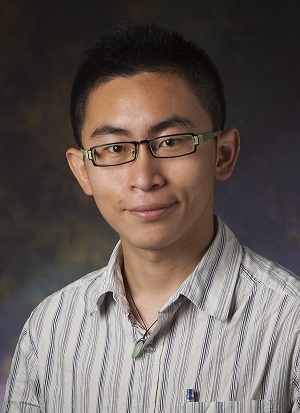 Jia-Bin Huang合作论文数Department of Computer Science, University of Maryland;Reality Labs, Meta4
 Chaitanya K. Ryali合作论文数University of California, San Diego3Jiahong Wang合作论文数2
 Laura Gustafson合作论文数Meta2
 Jason Ren (任中正)合作论文数Adobe;Department of Computer Science, University of Illinois Urbana-Champaign2
 Hsin-Yi Chen合作论文数2
 Robin Bing-Yu Chen (陳炳宇)合作论文数Department of Computer Science and Information Engineering, National Taiwan University;Department of Information Management, National Taiwan University;College of Design and Innovation, National Taiwan University2
 Kuang-Jui Hsu (許洸睿)合作论文数Qualcomm2
 Christoph Feichtenhofer合作论文数Meta2
 Dante Wasmuht合作论文数Conservation X Labs1Roman Rädle合作论文数1Tengyu Ma合作论文数1Valentin Gabeur合作论文数1
 Nikhila Ravi合作论文数Meta AI Research1
 Chloé Rolland合作论文数Meta1
 Eleanor Flatt合作论文数1
 Mark Hasegawa-Johnson合作论文数Department of Electrical and Computer Engineering, The Grainger College of Engineering, University of Illinois at Urbana-Champaign1Bram Wasti合作论文数Meta1
 Andrew Westbury合作论文数Meta1
 Ayis Pyrros合作论文数Dupage Med Grp, Glen Ellyn, IL USA1
 Jason Holmberg合作论文数Wild Me, Portland, OR USA1
 Haitham Khedr合作论文数Meta1
 Eric Mintun合作论文数Meta1
 vaibhav aggarwal合作论文数1Hong-Shuo Chen合作论文数University of Southern California, Los Angeles, California, USA1
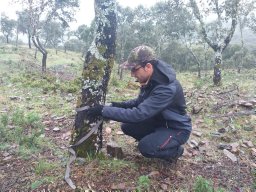 Pablo Palencia合作论文数SaBio Instituto de Investigación en Recursos Cinegéticos (IREC), CSIC-UCLM-JCCM1
 Andrew Whitworth合作论文数Center for Energy, Environment, and Sustainability, Wake Forest University1
 Nicolas Carion合作论文数Meta1
 Daniel Bolya合作论文数Meta1
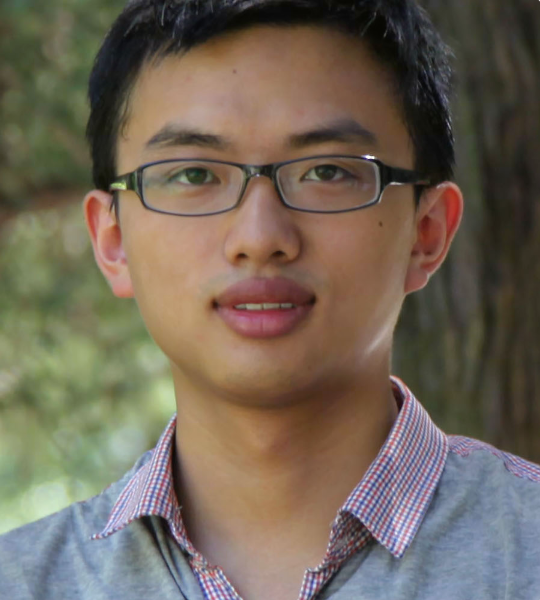 Yanghao Li合作论文数OpenAI1
 Omid Poursaeed合作论文数Meta AI1
 Kalyan Vasudev Alwala合作论文数Meta1
 Haoqi Fan合作论文数ByteDance Seed1
 Bernie Huang合作论文数Facebook AI Research1Nicolas Ballas合作论文数Meta AI Research1
 Ronghang Hu (胡戎航)合作论文数1
 Zhizhen Jane Zhao合作论文数Department of Electrical & Computer Engineering, The Grainger College of Engineering, University of Illinois at Urbana-Champaign;Department of Mathematics, University of Illinois at Urbana-Champaign;Department of Statistics, University of Illinois at Urbana-Champaign1
 Junting Pan (潘俊廷)合作论文数Multimedia Lab, The Chinese University of Hong Kong1
 Beirne Christopher合作论文数College of Life and Environmental Sciences, University of Exeter1
 Ruoyu Sun (孙若愚)合作论文数School of Data Science, The Chinese University of Hong Kong, Shenzhen1
 Tilo Burghardt合作论文数School of Computer Science, Faculty of Science and Engineering, University of Bristol1
 Siddiqui Nasir合作论文数1
 Kristen Grauman合作论文数Department of Computer Science, University of Texas at Austin;Facebook AI Research1
 Chao-Yuan Wu合作论文数World Labs1
 Chen Wei合作论文数Rice University1
 Heng Wang合作论文数TikTok1




